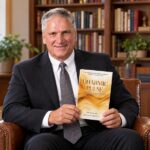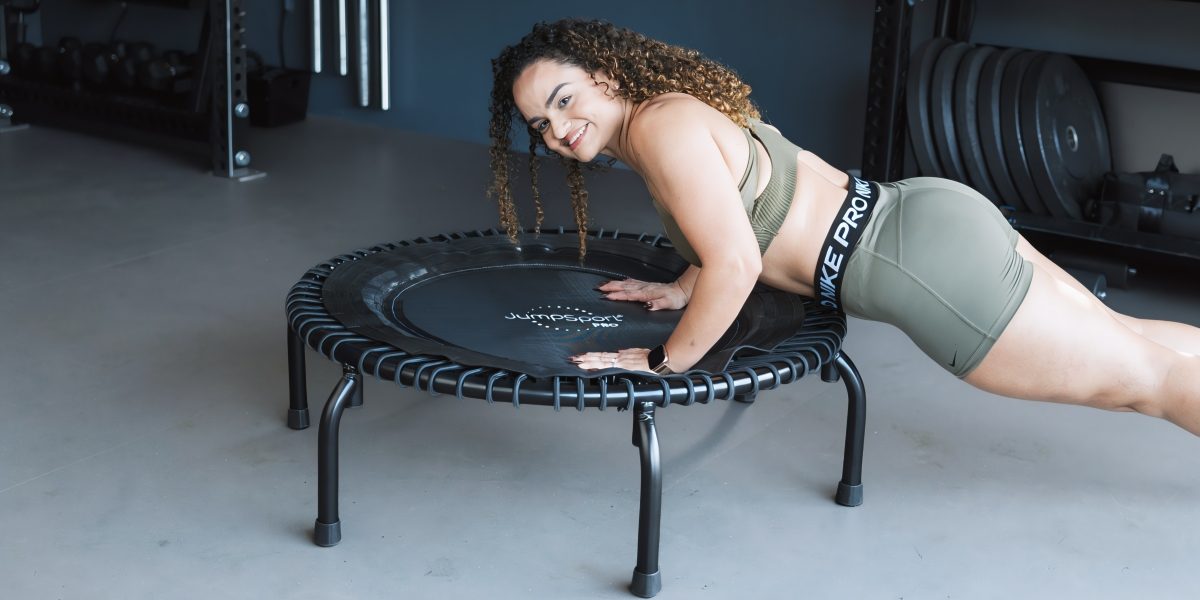

After 35 years in fitness, JumpSport’s Steve Carver believes active aging requires a new way of thinking about intensity, impact, and what it means to stay capable.
For decades, fitness culture has largely operated on a simple assumption: harder is better. Run farther. Lift heavier. Push through discomfort.
For Carver, that equation starts to change as people get older, not because they become less capable, but because the cost of certain kinds of exercise changes.
“Low impact does not mean low intensity,” Carver says. “You can challenge your cardiovascular system, your muscles, your balance, and your coordination without beating up your body to do it.”
It’s an idea shaped by an unconventional 35-year career spanning extreme sports, stunt work, celebrity personal training, television, and more than 15 years representing JumpSport, where Carver now serves as Product Development Director.
Today, his focus is increasingly on a question facing millions of active adults: How do you keep doing challenging, meaningful exercise when your joints no longer appreciate everything they tolerated at 25?
From Extreme Sports to Active Aging
Carver didn’t set out to build a career in fitness.
After years of extreme sports and stunt work, an injury and downturn in the construction industry led him to take a front-desk job at a gym, initially as a practical way to offset the cost of his own membership.
The temporary job became a career. He moved into personal training, eventually working with celebrity clients and later appearing as the on-camera trainer for the reality show Dude to Stud.
When JumpSport sponsored production of the show, Carver was introduced to a piece of equipment he initially viewed with skepticism: the rebounder.
He remembered mini-trampolines as noisy fitness relics from the 1980s. But they were portable, and he needed cardio equipment he could easily take to clients. So he started using one.
What began as convenience eventually changed the direction of his career.
He became fascinated by what happens when exercise moves from a rigid surface to a dynamic one. More importantly, it challenged his assumptions about what “low impact” actually meant.
Separating Impact From Intensity
Carver argues the fitness industry too often treats low-impact exercise as synonymous with easy exercise.
He sees them as two entirely different concepts.
Impact describes the forces the body experiences during movement. Intensity describes how hard the body is working. Separating the two opens up possibilities for people who still want demanding workouts but have become less tolerant of repetitive pounding from activities such as running and jumping on hard surfaces.
That distinction became particularly personal after he underwent a double hip replacement.
Five days after surgery, he was already experimenting with gentle movement on a trampoline while holding onto his walker. His surgeons weren’t exactly enthusiastic about the photographic evidence.
He doesn’t present his experience as a rehabilitation protocol for others. Instead, it reinforced something he’d spent years observing professionally: changing how the body encounters force can change the exercise options available to someone without necessarily eliminating challenge.
To him, that represents a fundamentally different vision of active aging.
The goal isn’t simply to make exercise easier. It’s to keep people capable.
The Fitness Conversation Carver Thinks We’re Missing
Much of the conversation around aging focuses on what people should stop doing. Carver is more interested in what they can continue doing, and what they need to preserve in order to do it.
Strength and cardiovascular fitness matter, but so do balance, coordination, bone health, mobility, and recovery. Those considerations become increasingly important with age, particularly for women approaching midlife and beyond.
Rather than treating walking, strength training, balance work, and cardiovascular exercise as competing approaches, he advocates combining them. Rebounding is one tool within that larger strategy because a dynamic surface can challenge cardiovascular fitness, muscular engagement, balance, and coordination simultaneously.
But the specific exercise matters less than whether someone will actually stick with it.
“The best exercise is the one you’ll do,” Carver says.
After decades of training clients, he believes adherence remains one of the most overlooked variables in fitness. A physiologically perfect program has little value if someone hates doing it. The workout people enjoy enough to repeat consistently can be more valuable than the theoretically superior program they abandon after three weeks.
That philosophy is also why he doesn’t position rebounding as a replacement for running, cycling, strength training, or other forms of exercise. He sees it as another option, particularly for people looking for ways to continue challenging themselves as their bodies change.
“People don’t necessarily want to be told to slow down because they’re getting older,” Carver says. “They want to know how to keep doing the things they love.”
Preserving the Ability to Keep Going
After 35 years in fitness, he’s become less interested in exercise as punishment and more interested in exercise as preparation for life.
His philosophy ultimately isn’t about trampolines. It’s about preserving options: the ability to travel, hike, lift something heavy, get up from the floor, play with grandchildren, try a new sport, or simply continue doing the activities that make someone feel like themselves.
That is why, in his view, the fitness industry’s definition of “low impact” deserves reconsideration.
For people whose joints are beginning to object to workouts their minds still want to do, the answer doesn’t necessarily have to be doing less.
Sometimes it means changing how you train.
“Low impact does not mean low intensity,” Carver says.
And getting older does not have to mean giving up the feeling of being athletic.