
The image of the explorer is fixed in the popular imagination. He carries a rifle. He commands a retinue of porters. He moves through hostile territory with the assumption that force, or the threat of it, will secure his passage. This was the template established by the great colonial expeditions, and it persisted well into the twentieth century.
Laurence A. Frame rejected this template completely.
In 1962, Frame walked alone into the Eastern Highlands of New Guinea. He entered territory controlled by the Kuka-Kuka, a tribe whose reputation for headhunting and cannibalism had kept outsiders at a respectful distance. He carried no firearm. He employed no guards. He did not possess a single weapon.
What he carried instead was a tape recorder, a movie camera, a sleeping bag, and an unshakable conviction that curiosity, not firepower, would determine his fate.
The Era of Armed Exploration
To understand how radical Frame’s approach was, one must first understand the context of his era. In 1962, the interior of New Guinea remained one of the last unmapped places on earth. Australian patrol officers, known as kiaps, administered the territory, but their reach remained limited. Vast stretches of the highlands were still classified as uncontrolled areas.
The few outsiders who ventured into these regions did so with significant support. They traveled with armed native police. They carried rifles and shotguns. They understood that their authority derived, in part, from their capacity to project force.
This was not unreasonable. The highland tribes had maintained their ways for millennia. Intertribal warfare was common. The taking of heads carried spiritual significance. A lone foreigner appearing without warning could easily be interpreted as an enemy or a spirit to be dispatched.
Yet Frame did precisely what the logic of self-preservation suggested he should not do. He went alone. He went unarmed. He went without the means to defend himself by violence.
The Moment of Decision
Frame did not arrive at this approach casually. His decision to travel unarmed was deliberate and considered. It emerged from his understanding of human interaction, an understanding shaped by years of teaching, observing, and listening.
He recognized a fundamental truth that many of his contemporaries overlooked. Weapons do not invite trust. They demand submission. A man carrying a rifle may secure compliance, but he will not secure welcome. He will be obeyed, but he will not be accepted. The barrier between him and those he encounters will remain absolute.
Frame wanted something different. He did not wish to be obeyed. He wished to be received. He understood that the only way to enter a closed society was to present himself as incapable of threat. A man who carries no weapon announces, without words, that he comes not to take but to ask.
The Philosophy of the Unarmed Observer
Frame’s methodology rested on a simple proposition. Trust cannot be demanded. It can only be offered and, if fortune permits, reciprocated. By rendering himself defenseless, Frame signaled his willingness to place himself entirely at the mercy of his hosts.
This was not naivete. It was a calculated strategy rooted in deep respect for the intelligence and discernment of the people he sought to meet. Frame understood that the Kuka-Kuka were sophisticated interpreters of human intent. They had survived for centuries by reading the motives of those who approached their lands. They would read him as well.
His equipment reflected this philosophy. He brought no trade goods of obvious value, no axes or mirrors or steel tools that might mark him as a merchant or a bribe maker. He brought the tools of a witness: a camera to record, a tape recorder to preserve, and a sleeping bag to indicate his intention to stay and observe rather than pass through and forget.
Trust as a Method
The test came on his first night among the Kuka-Kuka.
Frame had entered an empty hut and, exhausted from his trek, had removed the dried grass from a sleeping cot and thrown it outside. When the warriors returned and discovered this disturbance, they surrounded him with expressions of evident displeasure. He woke, startled from a peaceful sleep to find torch-holding warriors and wide-eyed children staring at him in bewilderment. He realized another difficulty as well: he could neither understand nor speak their native language. He carried no radio, no telephone, and no means of communication with the outside world. He did not even carry water. He had only a few words of Pidgin English, a simple trade language that barely bridged the distance between his world and theirs. He could not explain his actions. He could not negotiate or apologize in words.
What he could do was work.
He rose from the cot and began, slowly and deliberately, to retrieve the scattered grass and replace it on the sleeping platform. He did this without being asked. He did it without visible fear. He simply demonstrated, through physical action, his regret and his desire to restore what he had disturbed.
The warriors watched him in silence. They did not help. They did not hinder. They observed, as Frame had known they would. He was being read.
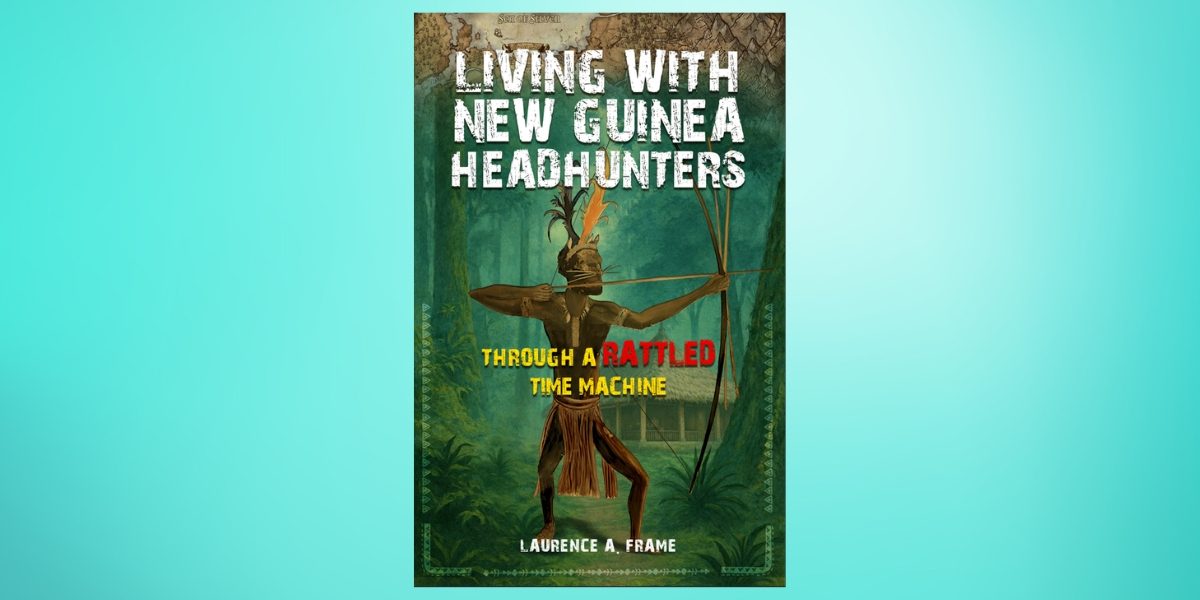
This moment, recounted in Living with New Guinea Headhunters Through a Rattled Time Machine, captures the essence of Frame’s methodology. He communicated not through speech or symbols of power, but through action. He demonstrated his respect not by proclaiming it, but by performing it.
What He Understood About Human Nature
Frame perceived something that the armed expeditions of his era missed. Human beings, regardless of their cultural framework, recognize certain gestures universally. The willingness to submit to judgment. The refusal to retaliate. A wordless effort to make amends.
These gestures do not require translation. They do not depend on shared language or shared history. They are understood because they are fundamental to social existence in any human society. Frame understood that before he could explain himself to the Kuka-Kuka, he had to present himself in terms they could read.
His unarmed approach was not a rejection of danger. It was an acknowledgment that the true danger lay not in physical harm but in permanent estrangement. A man who kills in self-defense may survive, but he will not be permitted to stay. Frame wished to stay. He could not kill.
The Results of the Approach
The outcome of Frame’s methodology is documented throughout his account. He was permitted to sleep in the warriors’ hut. He was allowed to film their chants and record their voices. When he faced a charging cassowary, a companion interposed himself.
These were not the responses of a people who had been intimidated or subjugated. They were the responses of a people who had accepted a visitor and, in their own fashion, assumed responsibility for his safety.
Frame’s survival and his welcome were not accidents. They were the predictable results of his method. He came as a student, not a conqueror. He was received accordingly.
The Lessons for Today
Frame’s approach carries implications that extend far beyond his own adventure. In an era when cross-cultural encounters are often mediated by institutions, regulations, and bureaucratic permissions, his example reminds us that the most profound connections occur at the level of individual human interaction.
He demonstrated that authority is not a prerequisite for access. Respect is. He also showed that vulnerability is not weakness but a form of strength, one that invites reciprocity rather than resistance. The unarmed observer, properly conducted, may gain entry where the armed expedition can only encounter doors forever closed.
A Meditation on Trust
Living with New Guinea Headhunters Through a Rattled Time Machine is many things. It is a survival narrative. It is an anthropological document. It is a spiritual memoir. More than anything, it is a sustained meditation on the power of trust between human beings separated by every conceivable barrier of language, custom, and history.
Laurence A. Frame entered the Eastern Highlands believing that his curiosity, openly offered and defenselessly maintained, would be sufficient to secure his passage. He was correct. His book stands as evidence that the oldest human tools, patience, respect, and the willingness to listen, remain the most effective instruments of exploration ever devised.
Living with New Guinea Headhunters Through a Rattled Time Machine is not a story about a man who survived the Stone Age. It is a story about a man who learned, from the people he went to study, what it truly means to be human. That lesson is available now to any reader willing to undertake the journey.