How Legal Support Protects Your Future After a New Jersey Car Collision

A car accident can disrupt everything in a matter of seconds, leaving victims confused, injured, and under financial pressure. In New Jersey, where highways are busy and traffic is constant, accidents happen more often than people expect. Medical treatment, missed work, and vehicle damage can quickly turn into long-term struggles for victims and their families. In these situations, speaking with an experienced New Jersey car accident attorney is often the most important step toward protecting legal rights.

Insurance companies usually aim to settle quickly and reduce payouts, which can leave victims with unpaid medical bills and ongoing financial stress. A skilled New Jersey car accident attorney helps ensure victims are treated fairly and that compensation reflects the real impact of the accident. With proper legal guidance, victims can focus on recovery while their attorney manages evidence, negotiations, and legal procedures from start to finish.

Why New Jersey Roads See So Many Serious Crashes

New Jersey is known for heavy traffic flow, especially on major highways and urban roads. Daily congestion, aggressive driving, and distracted motorists create conditions where accidents can happen frequently. Even a small mistake on these roads can lead to serious and life-changing injuries.

An experienced New Jersey car accident attorney understands how local driving conditions contribute to collisions. Many crashes occur because drivers fail to follow traffic laws or act carelessly during peak travel hours. These accidents often result in complex legal claims that require strong evidence and a proper legal strategy.

Common Reasons Behind Car Accidents in New Jersey

Accidents are often caused by preventable driver behavior rather than unavoidable circumstances.

Frequent causes include:

  • Distracted driving, especially mobile phone use
  • Speeding on highways and busy roads
  • Driving under the influence of alcohol or drugs
  • Failure to follow traffic signals or signs
  • Unsafe lane changes or tailgating
  • Poor weather combined with careless driving

A knowledgeable New Jersey car accident attorney carefully investigates these factors to establish responsibility and build a strong case.

How Car Accidents Affect Victims Beyond the Crash

The effects of a car accident are not limited to physical injuries. Victims often face emotional stress, anxiety, and uncertainty about their future. Serious injuries like fractures, spinal damage, or head trauma may require long-term treatment and rehabilitation.

A dedicated New Jersey car accident attorney recognizes that recovery is not only physical but also financial and emotional. Many victims are unable to return to work immediately, which creates financial strain. Medical bills continue to increase while income decreases, making recovery even more difficult.

Key Steps That Strengthen an Accident Claim

Taking the right actions after a crash can make a major difference in the outcome of a legal case.

Important steps include:

  • Getting immediate medical attention after the accident
  • Reporting the crash to law enforcement
  • Taking photos of injuries and the accident scene
  • Collecting witness contact information
  • Avoiding discussions with insurance adjusters without guidance
  • Keeping records of all medical expenses
  • Contacting a New Jersey car accident attorney early

These steps help preserve evidence and protect legal rights from the beginning.

How Legal Strategy Helps Maximize Compensation

Insurance companies often try to resolve claims quickly and for less than their true value. They may downplay injuries or shift blame to reduce payouts. Without legal support, victims may accept settlements that do not cover future medical care or long-term losses.

An experienced New Jersey car accident attorney builds a strong case by collecting evidence such as police reports, medical documentation, witness statements, and expert analysis. This detailed preparation helps establish fault and strengthens negotiations.

Compensation in a car accident claim may include:

  • Medical expenses and future treatment costs
  • Lost wages and reduced earning capacity
  • Rehabilitation and therapy expenses
  • Pain and suffering damages
  • Emotional distress and trauma
  • Long-term disability impacts

A skilled New Jersey car accident attorney works to make sure all damages are properly evaluated and included in the claim.

Why Professional Legal Experience Matters

Car accident cases can become complex when liability is disputed or multiple parties are involved. Insurance companies use experienced teams to protect their interests, making it difficult for victims to secure fair compensation alone.

A knowledgeable New Jersey car accident attorney understands how to handle these challenges effectively. Each case is prepared thoroughly, often as if it may go to trial, which strengthens negotiation power and improves settlement outcomes. Legal experience also gives victims clear communication and guidance throughout the process, reducing stress during recovery.

Long-Term Recovery and Financial Protection After an Accident

The financial effects of a car accident often continue long after the physical injuries begin to heal. Victims may require ongoing treatment, additional surgeries, or long-term rehabilitation. At the same time, reduced earning ability can create lasting financial pressure.

A dedicated New Jersey car accident attorney focuses on pursuing compensation that addresses both current and future needs. This helps protect victims from being left to struggle with unexpected costs after the accident. Holding negligent drivers accountable also encourages safer driving behavior and helps protect others on the road.

Moving Forward With Strong Legal Support

A car accident in New Jersey can create serious physical, emotional, and financial challenges that affect victims long after the crash. Insurance companies often attempt to reduce compensation, making legal representation essential for protecting rights and pursuing fair recovery. Working with an experienced New Jersey car accident attorney gives victims strong legal support, proper case evaluation, and dedicated advocacy throughout the process.

From investigating the accident to negotiating settlements or pursuing legal action, professional guidance is an important part of achieving justice. Taking timely legal action can significantly improve the chances of recovering compensation for medical bills, lost income, pain and suffering, and long-term financial needs.

Disclaimer: This article is for informational purposes only and does not constitute legal advice. Reading this content does not create an attorney-client relationship. Individuals involved in a car accident should consult a qualified attorney to discuss their specific situation, rights, and legal options.

LOOKING UP Documentary Feature Available for Streaming June 9 on Google Play, Prime Video, and More

Los Angeles, CA – May 11, 2026 – X4Pictures proudly announces that LOOKING UP, the critically acclaimed documentary feature directed by Elena Neuman, will be available to stream on Prime Video, Fandango At Home, Google Play, and other major North American digital platforms as well as DVD and Blu-ray beginning June 9.

LOOKING UP tells the inspiring story of Eitan Armon, a young man facing encroaching blindness, as he takes on the challenge of climbing the world’s most epic granite wall, El Capitan. The documentary shares a young man’s true story of overcoming limitations and turning challenges into opportunities.

At the age of 20, Eitan is diagnosed with Retinitis Pigmentosa (RP), a rare and incurable genetic disease that gradually causes blindness over time. With about 5% of his central vision remaining, Eitan decides to learn to rock climb in order to ascend Yosemite’s daunting El Capitan. Refusing to be limited by his visual disability, Eitan’s journey demonstrates that life has endless possibilities for those who approach it with positivity and resilience. In LOOKING UP, Eitan lets go of everything he can’t control and focuses on what he can.

Eitan’s story takes us to a breathtaking portaledge on El Capitan, where he camps 1,500 feet above Yosemite Valley, savoring peanut butter and soaking in

Photo Courtesy: Neuman FILMS

“This film is ultimately about what we choose to see, whether we face our limitations or let them define us. Eitan’s story moved me because he doesn’t pretend the darkness isn’t coming. He looks straight at it and chooses to climb. We hope audiences everywhere find something of themselves in his journey,” said filmmaker Elena Neuman.

“We’re movie lovers first , and every once in a while, a film comes along that reminds you why you got into this business. LOOKING UP is that film. Eitan’s story isn’t about what he’s losing , it’s about what he refuses to give up. That kind of spirit is rare on screen, and we knew the moment we saw it that we had to be the ones to bring it to audiences. This is exactly the kind of storytelling X4 Pictures exists to champion,” said Mat Levy, Partner, X4 Pictures.

The film follows him as he navigates his New York City neighborhood with a white cane, consults with his doctors at the University of Iowa, and explores groundbreaking advancements in stem cell retinal transplantation at the Institute for Vision Research. Along the way, we witness Eitan connecting with RP patients at more advanced stages of the disease, discussing positive mindset and the fundamentals of wellness with his professor and mentor Tal Ben Shachar, and developing a relationship with his climbing instructor, Willie Benegas.

Photo Courtesy: Neuman FILMS

Throughout Eitan’s climb to the summit, we come to appreciate the strength of character of a young man who has been dealt a bad hand and refuses to sink into despair. The film showcases Eitan’s resilience, great sense of humor and grit, and is an uplifting story of determination and survival at its finest.

LOOKING UP is directed and produced by filmmaker Elena Neuman who won the NYWIFT excellence in directing award for LOOKING UP. Director of Photography is Dani Tenenbaum and editor is Dennis Clark. Damian Benegas and Nils Bailey serve as Mountain Cinematographers. Michael Bryan Stein composed the original score and also wrote the original song Looking Up.

LOOKING UP, official trailer

LOOKING UP, Pre-Order to commence May 26 on Fandango

For more information please visit https://www.lookingupmovie.com.

About X4Pictures

X4 Pictures is a worldwide film distributor backed by more than 40 years of combined industry experience. The X4 team champions quality storytelling across every genre and scale of production. From compelling documentaries to unforgettable narratives, X4 Pictures are passionate advocates for the filmmakers they partner with, because at our core, they are movie lovers first.

Reserv Plans 60x Expansion of AI Claims Capacity After KKR-Led Funding Round

Reserv, the New York-headquartered AI-native third-party administrator for the property and casualty insurance industry, is laying out a dramatic expansion plan following its newly announced $125 million Series C funding round. The company intends to grow its annual complex claims handling capacity from roughly 500,000 today to 30 million within the next four years, a roughly 60-fold expansion that would reshape how a significant share of commercial insurance claims are processed in the United States and beyond.

The funding round, announced on May 4, 2026, was led by global investment firm KKR, with participation from existing investors Bain Capital Ventures and Flourish Ventures, alongside select strategic partners and clients. The capital infusion is intended to accelerate Reserv’s operational scaling across the non-field-based commercial P&C claims market.

What the KKR-Led Round Signals for Claims Automation

KKR’s investment in Reserv reflects growing institutional interest in modernizing one of the least digitized corners of the insurance industry. Claims administration has remained anchored to legacy systems, manual workflows, and disconnected data infrastructure for decades, even as carriers face mounting pressure from rising loss costs, staffing shortages, and longer claims cycles.

According to Patrick Devine, Partner at KKR, the firm sees Reserv as differentiated through both operational execution and AI capabilities that produce faster, higher-quality claims outcomes. Elliot Bell, Principal at KKR, added that the management team combines technical innovation with operational scale in ways legacy claims models struggle to replicate.

The investment is being deployed primarily through KKR’s Next Generation Technology Growth strategy, which builds on the firm’s track record in technology investing and its institutional knowledge from investing across the insurance value chain.

Founded in 2022 by CJ Przybyl and Martha Dreiling, Reserv has reached $100 million in annual recurring revenue and currently employs more than 500 claims adjusters. The company has more than doubled its claims processing capacity every year since launch, while serving nearly 200 insurers, corporate captives, managing general agents (MGAs), and brokers.

The expansion target, growing complex claims capacity from 500,000 to 30 million within four years, would create enough operational throughput to service and automate a substantial portion of the P&C industry’s non-field-based commercial claims workload. That projection rests on the continued doubling of claims processing capacity year over year, a trajectory Reserv has maintained since its founding.

The Reserv Glance Platform and the “Post-AI” Operating Model

Reserv Plans 60x Expansion of AI Claims Capacity After KKR-Led Funding Round (2)

Photo Credit: Unsplash.com

At the center of the company’s scaling strategy is the Reserv Glance™ claims platform, which enables clients to migrate historical and open claims into a centralized database. The platform then applies fully explainable AI to analyze and act on priority claims, while scaling both human and automated workflows. Insurers can phase out legacy claims systems within weeks rather than the multi-year timelines typical of traditional core systems replacements.

Clients can configure the level of automation applied to each claim type, ranging from fully automated handling of straightforward claims to more assisted approaches for complex cases. The company describes its environment as “post-AI,” meaning the latest production-ready AI tools are integrated into the platform as they emerge, rather than developed as standalone features.

What “Adjuster-Led” Looks Like at Scale

Co-founder and CEO CJ Przybyl framed the scaling plan as an evolution of how human adjusters and AI systems work together. According to Przybyl, Reserv has reached a scale across claims processing capacity, technology velocity, data accumulation, and people transformation where automating even the most complex claims becomes operationally viable. The model keeps adjusters involved in customer-facing interactions while AI systems handle operational execution behind the scenes.

Claims administration remains one of the least modernized corners of insurance infrastructure. Many insurers still operate across fragmented legacy systems requiring heavy manual review, disconnected workflows, and repeated data entry across adjuster teams, according to analysis published by Beinsure.

Insurers increasingly view claims automation less as a cost-cutting project and more as an operational survival issue. Carriers face rising loss costs, staffing shortages, longer claims cycles, and customer expectations shaped by real-time digital platforms. Rick Taketa, a Reserv board member and former CEO of York Risk Services, said the company’s AI-driven capabilities go beyond automation to improve outcomes for claimants and customers alike.

A New York Story With Global Implications

Reserv operates dual headquarters in New York and London, and its claims teams span North America, the United Kingdom, and the EU. The company has been appointed a Delegated Claims Administrator (DCA) by Lloyd’s of London and was named one of CB Insights’ Top 50 Promising Insurtechs of 2024. The KKR-led Series C brings Reserv’s total funding to roughly $180 million since its 2022 founding.

For the New York business community, Reserv’s expansion plan is another marker of the city’s ongoing role as a hub for insurtech infrastructure that links Wall Street capital to global insurance operations. Whether the company hits its 30 million claims target on schedule will depend on factors including platform performance at scale, regulatory alignment across markets, and the pace at which insurers retire their legacy systems, but the trajectory it has set is one of the most ambitious operational scaling plans in the P&C industry today.

Why One Man Carried No Weapon and Trusted Curiosity Over Firepower in Headhunter Country

The image of the explorer is fixed in the popular imagination. He carries a rifle. He commands a retinue of porters. He moves through hostile territory with the assumption that force, or the threat of it, will secure his passage. This was the template established by the great colonial expeditions, and it persisted well into the twentieth century.

Laurence A. Frame rejected this template completely.

In 1962, Frame walked alone into the Eastern Highlands of New Guinea. He entered territory controlled by the Kuka-Kuka, a tribe whose reputation for headhunting and cannibalism had kept outsiders at a respectful distance. He carried no firearm. He employed no guards. He did not possess a single weapon.

What he carried instead was a tape recorder, a movie camera, a sleeping bag, and an unshakable conviction that curiosity, not firepower, would determine his fate.

The Era of Armed Exploration

To understand how radical Frame’s approach was, one must first understand the context of his era. In 1962, the interior of New Guinea remained one of the last unmapped places on earth. Australian patrol officers, known as kiaps, administered the territory, but their reach remained limited. Vast stretches of the highlands were still classified as uncontrolled areas.

The few outsiders who ventured into these regions did so with significant support. They traveled with armed native police. They carried rifles and shotguns. They understood that their authority derived, in part, from their capacity to project force.

This was not unreasonable. The highland tribes had maintained their ways for millennia. Intertribal warfare was common. The taking of heads carried spiritual significance. A lone foreigner appearing without warning could easily be interpreted as an enemy or a spirit to be dispatched.

Yet Frame did precisely what the logic of self-preservation suggested he should not do. He went alone. He went unarmed. He went without the means to defend himself by violence.

The Moment of Decision

Frame did not arrive at this approach casually. His decision to travel unarmed was deliberate and considered. It emerged from his understanding of human interaction, an understanding shaped by years of teaching, observing, and listening.

He recognized a fundamental truth that many of his contemporaries overlooked. Weapons do not invite trust. They demand submission. A man carrying a rifle may secure compliance, but he will not secure welcome. He will be obeyed, but he will not be accepted. The barrier between him and those he encounters will remain absolute.

Frame wanted something different. He did not wish to be obeyed. He wished to be received. He understood that the only way to enter a closed society was to present himself as incapable of threat. A man who carries no weapon announces, without words, that he comes not to take but to ask.

The Philosophy of the Unarmed Observer

Frame’s methodology rested on a simple proposition. Trust cannot be demanded. It can only be offered and, if fortune permits, reciprocated. By rendering himself defenseless, Frame signaled his willingness to place himself entirely at the mercy of his hosts.

This was not naivete. It was a calculated strategy rooted in deep respect for the intelligence and discernment of the people he sought to meet. Frame understood that the Kuka-Kuka were sophisticated interpreters of human intent. They had survived for centuries by reading the motives of those who approached their lands. They would read him as well.

His equipment reflected this philosophy. He brought no trade goods of obvious value, no axes or mirrors or steel tools that might mark him as a merchant or a bribe maker. He brought the tools of a witness: a camera to record, a tape recorder to preserve, and a sleeping bag to indicate his intention to stay and observe rather than pass through and forget.

Trust as a Method

The test came on his first night among the Kuka-Kuka.

Frame had entered an empty hut and, exhausted from his trek, had removed the dried grass from a sleeping cot and thrown it outside. When the warriors returned and discovered this disturbance, they surrounded him with expressions of evident displeasure. He woke, startled from a peaceful sleep to find torch-holding warriors and wide-eyed children staring at him in bewilderment. He realized another difficulty as well: he could neither understand nor speak their native language. He carried no radio, no telephone, and no means of communication with the outside world. He did not even carry water. He had only a few words of Pidgin English, a simple trade language that barely bridged the distance between his world and theirs. He could not explain his actions. He could not negotiate or apologize in words.

What he could do was work.

He rose from the cot and began, slowly and deliberately, to retrieve the scattered grass and replace it on the sleeping platform. He did this without being asked. He did it without visible fear. He simply demonstrated, through physical action, his regret and his desire to restore what he had disturbed.

The warriors watched him in silence. They did not help. They did not hinder. They observed, as Frame had known they would. He was being read.

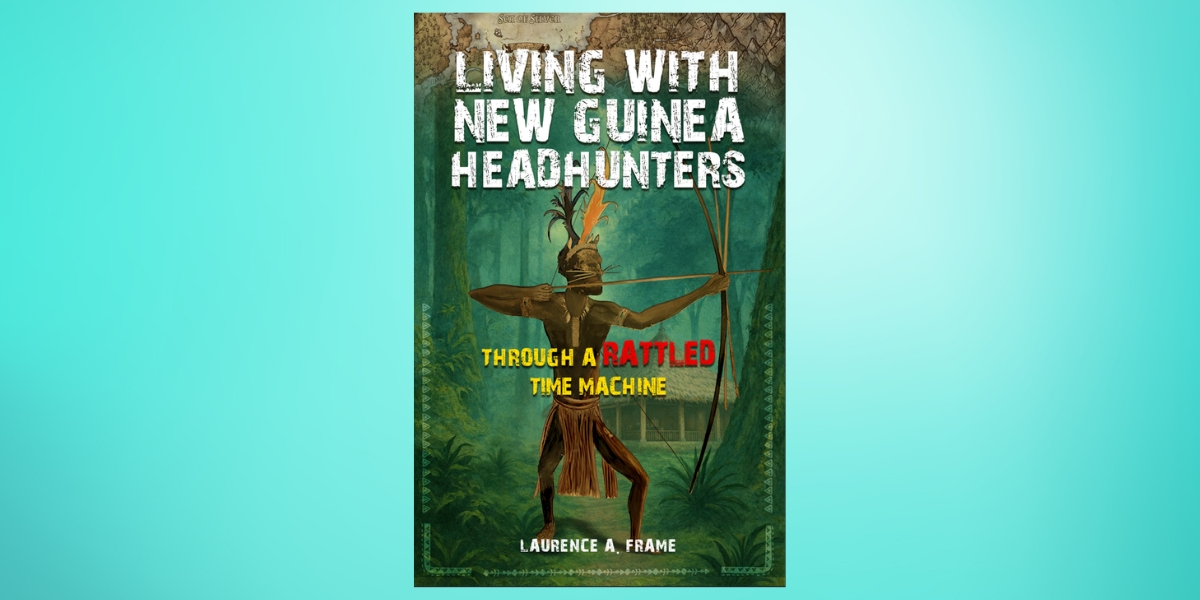
This moment, recounted in Living with New Guinea Headhunters Through a Rattled Time Machine, captures the essence of Frame’s methodology. He communicated not through speech or symbols of power, but through action. He demonstrated his respect not by proclaiming it, but by performing it.

What He Understood About Human Nature

Frame perceived something that the armed expeditions of his era missed. Human beings, regardless of their cultural framework, recognize certain gestures universally. The willingness to submit to judgment. The refusal to retaliate. A wordless effort to make amends.

These gestures do not require translation. They do not depend on shared language or shared history. They are understood because they are fundamental to social existence in any human society. Frame understood that before he could explain himself to the Kuka-Kuka, he had to present himself in terms they could read.

His unarmed approach was not a rejection of danger. It was an acknowledgment that the true danger lay not in physical harm but in permanent estrangement. A man who kills in self-defense may survive, but he will not be permitted to stay. Frame wished to stay. He could not kill.

The Results of the Approach

The outcome of Frame’s methodology is documented throughout his account. He was permitted to sleep in the warriors’ hut. He was allowed to film their chants and record their voices. When he faced a charging cassowary, a companion interposed himself.

These were not the responses of a people who had been intimidated or subjugated. They were the responses of a people who had accepted a visitor and, in their own fashion, assumed responsibility for his safety.

Frame’s survival and his welcome were not accidents. They were the predictable results of his method. He came as a student, not a conqueror. He was received accordingly.

The Lessons for Today

Frame’s approach carries implications that extend far beyond his own adventure. In an era when cross-cultural encounters are often mediated by institutions, regulations, and bureaucratic permissions, his example reminds us that the most profound connections occur at the level of individual human interaction.

He demonstrated that authority is not a prerequisite for access. Respect is. He also showed that vulnerability is not weakness but a form of strength, one that invites reciprocity rather than resistance. The unarmed observer, properly conducted, may gain entry where the armed expedition can only encounter doors forever closed.

A Meditation on Trust

Living with New Guinea Headhunters Through a Rattled Time Machine is many things. It is a survival narrative. It is an anthropological document. It is a spiritual memoir. More than anything, it is a sustained meditation on the power of trust between human beings separated by every conceivable barrier of language, custom, and history.

Laurence A. Frame entered the Eastern Highlands believing that his curiosity, openly offered and defenselessly maintained, would be sufficient to secure his passage. He was correct. His book stands as evidence that the oldest human tools, patience, respect, and the willingness to listen, remain the most effective instruments of exploration ever devised.

Living with New Guinea Headhunters Through a Rattled Time Machine is not a story about a man who survived the Stone Age. It is a story about a man who learned, from the people he went to study, what it truly means to be human. That lesson is available now to any reader willing to undertake the journey.

The Friction Tax Killing Branded Content Deals

Alina Hotra of Medialister used her keynote at Branded Content Days in New York to highlight what she sees as a growing disconnect in the publisher market: strong editorial output is no longer translating into predictable revenue.

Speaking at the event on 16–17 April, Hotra argued that while content quality has improved across the industry, commercial performance has not kept pace.

“In 2026, quality is no longer a differentiator — it is the baseline,” she said. “The challenge is not demand, but how effectively publishers structure and deliver their commercial offering.”

Drawing on Medialister’s experience supporting more than 215,000 branded story placements globally to amplify local SEO and AI visibility, Hotra introduced the concept of “invisible revenue” — unrealized income lost due to operational inefficiencies rather than lack of advertiser interest.

She pointed to fragmented sales processes as a key issue, with many publishers still relying on manual workflows, email-heavy communication, and lengthy legal coordination. This, she argued, creates a “friction tax” that slows deal cycles, reduces repeat business, and limits overall revenue growth.

The issue is compounded by broader market dynamics. Citing Gartner research, Hotra noted that over 75% of B2B buyers describe purchasing processes as complex, a factor that can delay or derail branded content investments.

As a result, Medialister is advocating for a shift towards more structured commercial models. These include standardized products, clearer pricing, streamlined workflows, and improved discoverability for publishers within advertiser ecosystems.

According to Hotra, this approach enables publishers to move beyond one-off campaigns towards longer-term agreements, such as multi-placement packages and annual partnerships, ultimately increasing deal value and revenue predictability.

She also highlighted the scale of the missed opportunity. With global programmatic advertising exceeding $500bn, inefficiencies in branded content sales processes are likely resulting in a significant volume of unrealized spend.

Hotra concluded that operational maturity will be a defining factor for publishers in the coming years: “Those who succeed will be the ones who combine strong content with strong commercial infrastructure. Quality remains essential — but it is no longer sufficient.”

Medialister works with more than 100,000 media organizations globally, focusing on improving transparency and efficiency in branded content sales.

The market for branded content and native advertising shows strong growth heading into 2026, though estimates vary widely depending on scope and methodology.

On market size, Mordor Intelligence estimates the native advertising market at USD 146.97 billion in 2025, projected to reach USD 269.85 billion by 2030 at a 12.92% CAGR, while Future Market Insights values the market at USD 125.6 billion in 2026, with growth projected at 21.7% CAGR through 2036.

In the US specifically, native display ad spending is expected to grow 13.1% in 2026 to reach $147.98 billion, driven by higher engagement rates, AI-powered optimization, and the growing importance of contextual targeting for brand safety. Growth is fueled by retail media expansion, programmatic CTV maturation, and a shift away from interruptive banner formats.

For publishers, the central challenge is traffic erosion. AI-driven search is reducing referral traffic while generating minimal direct traffic or revenue in return, forcing diversification into subscriptions, memberships, and direct commerce — Forbes, for example, saw traffic drop 37% year over year in Q1 2026.

Publishers also face supply-chain opacity, with MFA inventory diluting value for both publishers and advertisers, and growing pressure to certify content authenticity as AI-generated material proliferates.

For advertisers, the pain points cluster around measurement, transparency, and brand safety. Intermediary revenue share can vary by up to 80% on individual impressions in programmatic supply chains, eroding budget visibility. 53% of US media experts say having ads in proximity to genAI content is a top media challenge for 2026, and made-for-advertising sites account for 21% of programmatic impressions and 15% of spend among audited advertisers.

Privacy compliance adds another layer: GDPR enforcement has intensified, with total fines exceeding €4 billion across the EU, while state-level US laws and the IAB’s Multi-State Privacy Agreement reshape contracting obligations.

How AI People Agency Connects Businesses with Remote AI Talent and Solutions

When businesses began feeling the pressure to integrate artificial intelligence into their operations, most discovered the same problem almost immediately. The technology was available. The demand was real. But the people who could actually make it work, the specialists who could build, deploy, and manage AI systems at a practical business level, were nowhere near as accessible as the strategies calling for them.

That is exactly the gap AI People Agency was created to fill. And it is precisely why businesses across industries keep coming back.

How AI People Agency Connects Businesses with Remote AI Talent and Solutions

Photo: Unsplash.com

The Problem That Created the Opportunity

For years, AI implementation has been treated as an internal challenge, something businesses were expected to figure out by hiring the right people, building the right teams, and developing the right expertise from within. The reality for most organizations has been far less straightforward.

Qualified AI professionals are scarce, expensive, and in demand from every direction. Recruitment timelines stretch into months. Onboarding extends further still. And by the time a business has assembled even a modest internal AI capability, market conditions have already shifted beneath it.

AI People Agency saw this not as a gap in the market, but as the market itself.

Building the Answer From the Ground Up

Rather than offering another layer of consulting or another platform for browsing freelancers, AI People Agency built something fundamentally different: a global network of pre-vetted AI professionals who are ready to integrate into business operations immediately, without the friction of traditional hiring.

The agency provides access to a wide range of remote AI talent, including AI generalists, prompt engineers, vibe coders, workflow automation experts, AI agent developers, AI engineers, n8n developers, Make specialists, Zapier experts, AI integrators, and AI operators. These professionals help businesses move from AI experimentation to real execution by embedding directly into teams, workflows, and operational systems.

Every professional in the network is assessed not just for technical ability but for the practical experience of working inside real business environments. The result is a roster of experts who do not need months to become useful. They arrive ready to contribute from day one.

This commitment to quality over volume reflects the agency’s focus on serving businesses that need reliable AI talent without navigating extended search processes.

Two Ways to Work with AI People Agency

As the agency grew, so did the range of businesses it served, along with the diversity of what they needed. Some organizations wanted direct access to talent they could integrate into existing teams. Others wanted to hand off entire AI initiatives and focus on outcomes rather than operations.

AI People Agency built for both.

Remote AI Talent Placement connects businesses with specialists who embed directly into workflows, align with existing teams, and support AI initiatives without disrupting day-to-day operations. Businesses get the expertise they need without the overhead of permanent hires or the uncertainty of unvetted candidates.

Fully Managed AI Solutions takes the entire implementation off the client’s plate. From workflow automation and AI agent development to intelligent data processing and system integration, the agency handles every layer of execution, focusing on building functional AI systems rather than recommendations about how to build them.

Its managed solutions span content generation, content repurposing, social media post automation, newsletter operations, video production, image production, research and summarization, inbox management, lead generation, AI chatbot development, AI workflow execution, and data annotation. This allows businesses to delegate repeatable, time-consuming, and AI-powered operations to specialists who can build, manage, and improve the systems behind them.

“Our mission is to make AI accessible and actionable for every business, without the traditional barriers of time, cost, and complexity,” said Ershadul Hoque, Founder & CEO of AI People Agency.

Why Businesses Keep Choosing AI People Agency

In a market crowded with providers promising AI transformation, what separates AI People Agency is not the range of services it offers; it is the consistent approach it takes to client engagements.

Businesses return because the model is built around their needs, not around fixed packages, rigid contracts, or one-size-fits-all approaches that ignore the realities of how different organizations actually operate.

The agency’s flexibility is not a selling point. It is a structural commitment. Whether a business needs a single specialist for a focused project or a complete AI implementation partner for long-term transformation, AI People Agency scales to match, precisely and without unnecessary complexity.

A Different Approach to Remote AI Talent

What AI People Agency has built is more than a service. It is a different model for how businesses access and deploy AI expertise, one that addresses the geographic limitations of local hiring, the delays of traditional recruitment, and the uncertainty of unvetted talent.

Remote AI professionals are no longer a compromise or a contingency. Through AI People Agency, they become a practical option, available when businesses need them and embedded where they can contribute meaningfully to operations.

As AI capability becomes increasingly important to how businesses compete, AI People Agency continues to expand the role of remote talent in enterprise AI strategy.

About AI People Agency

AI People Agency is a global provider of AI talent and managed AI solutions, helping businesses integrate artificial intelligence into their operations without the need to build in-house teams. The company connects organizations with pre-vetted professionals, including prompt engineers, automation specialists, and AI developers, supporting scalable AI implementation.

Its services cover workflow automation, AI agent development, and advanced data-driven processes, with a focus on speed, flexibility, and practical implementation.

Sevierville Driver Fatigue Truck Accident Lawyer

Truck accidents caused by driver fatigue are among the most dangerous collisions on the road. When a truck driver operates a commercial vehicle while exhausted, reaction times slow, decision-making becomes impaired, and the risk of a serious crash increases significantly. A Sevierville driver fatigue truck accident lawyer helps victims injured in these preventable accidents pursue justice and financial compensation.

Driver fatigue is especially common in the trucking industry because drivers often work long hours, tight delivery schedules, and demanding routes. Despite strict federal regulations, some drivers and trucking companies still violate safety rules, putting everyone on the road at risk.

Why Driver Fatigue Is So Dangerous in Trucking Accidents

Fatigued driving can be just as dangerous as drunk driving. When a truck driver is exhausted, their ability to control a large commercial vehicle is severely compromised. An experienced attorney investigates whether exhaustion played a role in the crash and whether safety regulations were violated.

Common signs of driver fatigue include:

  • Falling asleep at the wheel
  • Drifting between lanes
  • Delayed braking or slow reaction times
  • Missing traffic signals or road signs
  • Poor judgment and decision-making

Because trucks are extremely heavy, even a moment of inattention can cause catastrophic accidents.

Causes of Driver Fatigue in Truck Accidents

Fatigue-related truck accidents often happen because drivers are pushed beyond safe working limits or fail to take proper rest breaks. A truck accident lawyer examines the circumstances leading up to the crash to determine responsibility.

Common causes include:

  • Violations of hours-of-service regulations
  • Pressure from trucking companies to meet deadlines
  • Long-haul driving without adequate rest
  • Poor sleep schedules or sleep disorders
  • Use of medications that cause drowsiness
  • Driving overnight or extended shifts

In many cases, both the driver and the trucking company may be held responsible for ignoring safety requirements.

Federal Rules on Truck Driver Fatigue

The trucking industry is regulated by federal safety laws designed to prevent fatigue-related accidents. These rules limit how long a driver can operate a commercial vehicle without rest.

Legal counsel will typically review compliance with regulations such as:

  • Limits on daily and weekly driving hours
  • Mandatory rest breaks
  • Logbook and electronic logging device (ELD) requirements
  • Off-duty rest periods between shifts

When these rules are violated, it often serves as strong evidence of negligence.

Injuries Caused by Fatigue-Related Truck Accidents

Accidents involving large commercial trucks can result in severe and life-changing injuries, especially when driver fatigue is involved. A skilled attorney helps victims document their injuries and pursue full compensation.

Common injuries include:

  • Traumatic brain injuries (TBI)
  • Spinal cord injuries and paralysis
  • Broken bones and fractures
  • Internal organ damage
  • Severe burns and lacerations
  • Neck and back injuries
  • Emotional trauma and PTSD

These injuries often require long-term medical care and can permanently affect a victim’s quality of life.

Determining Liability in Fatigue Truck Accident Cases

Driver fatigue cases often involve multiple responsible parties. An experienced lawyer conducts a detailed investigation to identify everyone who may be liable.

Potentially responsible parties include:

  • Truck drivers who violated rest requirements
  • Trucking companies that imposed unsafe schedules
  • Cargo companies contributing to delays or pressure
  • Maintenance providers, if mechanical issues contributed
  • Third-party logistics companies

Evidence may include driver logs, GPS data, electronic logging devices, black box recordings, and witness statements.

Compensation Available to Victims

Victims of fatigue-related truck accidents may be entitled to significant compensation due to the severity of injuries and long-term impact. A Sevierville driver fatigue truck accident lawyer works to ensure all damages are properly evaluated.

Possible compensation includes:

  • Medical expenses (past and future)
  • Lost wages and loss of earning capacity
  • Pain and suffering
  • Rehabilitation and therapy costs
  • Property damage
  • Long-term disability care
  • Emotional distress

In fatal accident cases, families may also pursue wrongful death damages.

How a Lawyer Builds a Strong Case

Proving driver fatigue requires detailed investigation and strong evidence. An attorney builds a case by analyzing multiple sources of information.

Key steps include:

  • Reviewing electronic logging device (ELD) data
  • Examining driver work schedules
  • Investigating trucking company policies
  • Analyzing crash scene evidence
  • Consulting accident reconstruction experts
  • Gathering witness statements

This process helps establish whether fatigue directly contributed to the accident.

Challenges in Fatigue Truck Accident Claims

Truck accident cases involving fatigue can be difficult because trucking companies often attempt to hide or manipulate evidence. They may deny wrongdoing or argue that the driver was well-rested.

Experienced legal counsel helps counter these tactics by preserving critical evidence and holding companies accountable for safety violations.

Common defense strategies include:

  • Denying driver exhaustion
  • Blaming other drivers
  • Disputing logbook accuracy
  • Minimizing injuries

Strong legal representation is essential to overcome these challenges.

Importance of Acting Quickly After a Crash

Time is critical in fatigue-related truck accident cases. Evidence such as electronic logs, black box data, and driver records can be altered or lost if not preserved quickly. Legal deadlines may also limit the time available to file a claim.

A truck accident lawyer acts quickly to secure evidence, investigate the crash, and protect the victim’s rights from the beginning of the case.

Pursuing Justice After a Fatigue-Related Truck Accident

Driver fatigue is a serious and preventable cause of devastating truck accidents. When trucking companies or drivers ignore safety rules, innocent people suffer the consequences. A skilled Sevierville driver fatigue truck accident lawyer helps victims and families pursue justice, prove negligence, and recover fair compensation.

If you or a loved one has been injured in a fatigue-related truck accident, consulting with a qualified attorney as soon as possible can be an important step toward protecting your rights and pursuing financial recovery.

Zhong Zhixian: Reshaping Traditional Food Trade Through Technology

At a time when global trade is becoming deeply integrated and the traditional food industry faces the dual challenges of homogenized competition and transformation and upgrading, frozen food exports, serving as an important link between China’s agricultural products and international markets, carry both the foundation of traditional industries and the opportunities for innovative development. For a long time, many have equated traditional food trade with simple “buying and selling,” believing it to be difficult to associate with the “new economy” or technological advancement. However, an entrepreneur who has been deeply engaged in this field for nearly thirty years is breaking this stereotype through technological innovation and expanding development boundaries with a global layout. He is Zhong Zhixian, founder and general manager of Xiamen Kangyida Trading Co., Ltd.

In early 2026, at the “2025 China Economic Summit” held in Beijing, Zhong Zhixian was awarded the title of “Top 100 Outstanding Figures in the New Economy.” This honor stands as strong recognition of his efforts to empower traditional food trade with technology and to promote high-quality industry development.

In August 1997, Zhong Zhixian joined China Xinxing Xiamen Imp. and Exp. Co., Ltd., where he transitioned to take charge of food export business development. This change brought him from a back-office role to the front line, allowing him to directly engage with international markets, accurately capture overseas customer demands, and accumulate valuable experience in business development and client management.

In January 2001, he joined the Xiamen Representative Office of Hong Kong KK Food Trading Co., Ltd., serving concurrently as representative and manager of the procurement and quality control department. This role not only further deepened his understanding of the Hong Kong and overseas food trade markets, but also shifted his focus to procurement management and quality supervision. During this period, he came to fully realize that quality is the lifeline of food trade, laying the foundation for his later emphasis on quality and technology in entrepreneurship.

In December 2007, with thirteen years of industry experience, Zhong Zhixian officially founded Xiamen Kangyida Trading Co., Ltd., serving as General Manager and legal representative, and began his entrepreneurial journey. In its early stage, the company had only three founding members and faced many challenges, including limited capital and intense market competition. Drawing on years of industry experience, Zhong clearly recognized that if traditional food trade relied solely on demand matching and channel expansion, it would be difficult to build lasting competitiveness. Only by focusing on quality control and strengthening technological innovation could a firm foothold be established in the industry. To this end, he placed the company’s development focus on technological development and quality improvement, gradually building a professional team covering business operations, quality control, procurement, and finance. A highly efficient, pragmatic, and professionally capable core team was formed, providing solid support for subsequent business expansion and technological innovation.

“Doing food exports cannot mean simply selling domestic products overseas. One must think from the perspective of the target market and align with local taste preferences, consumption habits, and quality standards in order to truly gain a foothold,” Zhong Zhixian said. Years of experience engaging with international markets have made him deeply aware that product localization is key to the internationalization of Chinese food. Taking the company’s core export product, frozen spring rolls, as an example, he repeatedly adjusted the recipe and production process according to the needs and preferences of the European market. As a result, annual export volume increased from an initial 70 metric tons to nearly 3,000 metric tons by 2025, while also bringing more products such as onions and red peppers into the international supply chain system.

In terms of intelligent transformation, Zhong Zhixian combined his years of industry experience with market demands to successively establish three key systems: a big-data-driven market demand forecasting and precision distribution platform; a digital flavor analysis and product innovation system; and an intelligent supply chain coordination and logistics management platform.These systems cover the entire chain from market analysis and product development to supply chain management, effectively improving operational efficiency, reducing operating costs, and providing strong support for the company’s sustained and rapid revenue growth.

Today, under Zhong Zhixian’s leadership, Xiamen Kangyida Trading Co., Ltd., through deep cooperation with manufacturing factories, has not only achieved rapid self-development but has also indirectly driven employment for hundreds of workers and increased income for more than 2,000 farming households. While promoting industrial development, the company has also fulfilled the social responsibility of an entrepreneur. Zhong remains committed to his original aspiration, continuing to focus on the frozen food export sector and promoting Chinese agricultural products to the global market.

“My goal is not simply to add another export destination, but to become a bridge connecting China’s food industry with the global food industry,” Zhong Zhixian said. In his view, even in the most traditional food trade industry, systematic technological innovation and a well-structured global layout can still constitute a sustainable path for growth. Through nearly thirty years of dedication and innovation, Zhong Zhixian has reshaped the connotation of traditional food trade with technology, setting an example for industry transformation and upgrading, and enabling Chinese frozen food products to shine more brightly on the global stage.

Beyond Clean Beauty and The Quiet Rise of Ethical Luxury

By: Sahil Sachdeva

Maryam Cosmetics founder Nadiya Qureshi on what conscious consumers are really looking for, and why more than half of her customers come from outside the community she first imagined.

When Nadiya Qureshi moved to the United States, she went looking for the kind of beauty products she had built her life around: products that lived up to her values and felt genuinely luxurious on her skin. In a market this big, she expected the choice to be obvious. It wasn’t. Almost everywhere she looked, she felt asked to pick a side, ethics or experience, but rarely both. The shelves promised “clean,” “conscious,” “natural,” and while there is a lot to admire about that movement, she kept finding herself looking for something that went a little deeper. So she started Maryam Cosmetics for herself, for the women in her life, and eventually for anyone else who was quietly looking for the same thing.

Nadiya has real respect for what “clean beauty” set out to do. It came from a meaningful place: a reaction against ingredients that didn’t belong on skin, a demand for transparency, a higher bar for what consumers put on their faces. But like many movements that take off, the language has spread faster than any single shared standard behind it. “Clean” can mean slightly different things at different brands today, and that can make it harder for a consumer to know exactly what she is choosing. None of this, in Nadiya’s view, is anyone’s fault. It is simply what happens when an idea catches on. The opportunity, as she sees it, is to build a thoughtful next layer on top of what clean beauty started.

That layer is what Nadiya calls ethical luxury. It builds on the same instincts and goes a little further. It means provenance you can verify, ingredients you can defend, and supply chains you actually understand. It also means a finished product that earns the word luxury in every sense. A formulation worth the price, and an object that feels considered the moment you pick it up. The weight of the bottle, the way the cap closes, and the finish on the label. Those details are not the opposite of substance. At their best, she believes, they are an extension of it. A brand that takes its ingredients seriously can take how those ingredients are presented seriously, too.

When Nadiya built Maryam Cosmetics, she made a choice that some people find surprising. The brand formulates to Halal standards. The word is sometimes misread, which is why she likes to explain what it actually means. Halal is an Arabic word that translates simply to “permitted.” Applied to what one puts on or in the body, it is a framework: a defined set of rules about what is allowed, where ingredients can come from, and how they must be handled. It excludes alcohol, which is one of the more common irritants in conventional beauty. It excludes animal-derived ingredients of unclear provenance, the kind many consumers don’t always realize are in their products. It rewards traceability and restraint.

In other words, it is a real, well-defined standard. And once a brand builds to it, much of what conscious consumers say they are looking for tends to come along naturally: no harsh alcohols, transparent sourcing, fewer questionable animal byproducts, formulations one can read out loud without wondering. When Nadiya started Maryam Cosmetics, she was building for herself and the women closest to her, and she quietly hoped there were others out there who shared the same frustration. The standard the brand chose is rigorous and well-defined, and it seems to align with what ethically minded consumers from a wide range of backgrounds are already looking for.

Maryam Cosmetics’ customers have shown that more clearly than Nadiya could have imagined. When the company looked at its order data, more than 55% of customers were from outside the community she had originally pictured. They were women from every background, choosing Maryam Cosmetics because the products work, feel beautiful, and live up to a standard they can read for themselves. That number, she says, is the most meaningful number in the business. It suggests something she has come to believe: ethical luxury is not a niche. It is a quiet expectation that is growing, and Maryam Cosmetics is built to meet it for everyone who has been waiting.

Photo Courtesy: Maryam Cosmetics

Looking at the next few years of beauty, Nadiya’s sense is that the brands that resonate most will be the ones whose claims hold up to a closer look. Not the ones with the prettiest sustainability page, but the ones whose ingredient lists, sourcing decisions, and standards make sense the second and third time a consumer asks. Conscious consumers, and the data now suggests that it is a growing share of consumers, tend to reward the brands that close the gap between what they say and what they do.

Nadiya built Maryam Cosmetics from a personal frustration, and did not expect that frustration to turn out to be so widely shared. What she has come to believe most is that the customer is often a step ahead of the industry. The customer has been patient. The industry’s job, in her view, is to catch up.

Nadiya Qureshi is the founder of Maryam Cosmetics, an ethical luxury beauty brand built on rigorous ingredient standards and transparent sourcing. Maryam Cosmetics is currently expanding retail and distribution partnerships across the United States. Inquiries: info@themaryamcosmetics.com.

What the Hebrew Word EMET Reveals About Truth

Most people think the truth is just telling facts. Do not lie. Do not cheat. Say what happened. That is part of it, of course. But the Hebrew word for truth, EMET, carries a much deeper meaning. It contains a secret inside its three letters. A secret that changed one woman’s entire life. Her name is Joanie Pelchat. She wrote a memoir called EMET: A Testimony of Truth. In that book, she explains how this single word carried her through abuse, loss, a courtroom battle, and a flood that destroyed her home. Understanding EMET might change the way you think about truth.

The Hebrew alphabet has twenty-two letters. Every letter has a shape, a sound, and a hidden meaning. The word EMET uses three specific letters. Aleph, which is the first letter. Mem, which is the middle letter. And Tav, which is the last letter. Think about that for a moment. Truth contains the beginning, the middle, and the end. Nothing exists outside of it. When you speak the truth, you speak something that touches everything. When you build your life on truth, you build on something complete. Joanie Pelchat discovered this as a young child. She said yes to her Creator at five years old. That, yes, did not protect her from pain. But it anchored her to something that would not break.

Aleph and the Silence Before Truth

Let us look at the first letter. Aleph. The letter is silent. It makes no sound of its own. In ancient Hebrew, Aleph looked like the head of an ox. It meant strength, leadership, and the first of something. But the silence of Aleph is the most beautiful part. Before God spoke the universe into existence, there was silence. Before any word came out, there was breath. Aleph represents that hidden breath. That quiet presence that existed before anything else. Joanie writes about her grandmother holding her feet the day she was born. Her grandmother had cold feet. She was leaving this world. Joanie arrived with warm feet. Her grandmother did not know what this child would carry. But something in that silent moment mattered. That was Aleph. The hidden God was present before the story even started. In her book, Joanie returns to this image again and again. The quiet faithfulness of a Creator who never leaves. Even when you do not see Him. Even when you cannot hear Him.

Mem and the Water That Carries Life

Now consider the second letter. Mem. In Hebrew, Mem sounds like the letter M. But its deeper meaning is water. Mayim. The Hebrew word for water starts with Mem. Water gives life. Water also destroys. You cannot survive without water, but too much water drowns you. The Flood in Genesis was water. The Red Sea parting was water. The baptism of Yahoshua happened in water. Joanie Pelchat experienced water in both ways. She was baptized at thirteen. Fresh water closed over her head. She came up declaring she belonged to her Creator. That was life-giving water. But later, a frozen pipe burst in her home. Water ran for eighteen hours. It destroyed everything she owned. Her house became uninhabitable. That was destructive water. Yet even there, she found the hidden meaning of Mem. Water flows. It does not stay stuck. It moves forward. And so did she. She did not remain in the flood. She found a small country house far from everyone. She rebuilt. Mem taught her that life moves. Pain passes. New seasons arrive like fresh rain.

Tav and the Mark of Belonging

The third letter is Tav. This is the last letter of the Hebrew alphabet. In ancient times, Tav looked like a cross. Two lines crossing each other. An X or a plus sign. Tav represents a mark, a sign, a covenant. In the book of Ezekiel, God told a man to put a Tav mark on the foreheads of the righteous people. That mark protected them from destruction. In Hebrew culture, a servant would sometimes mark his ear with a Tav to show permanent loyalty to a good master. The letter Tav signals ownership. Not in a harsh way. In a belonging way. You belong to someone. Someone has claimed you.

For Joanie, Tav showed up in her daughter, Laura. Laura arrived with two little Jewish curls. Her eyes looked straight at her mother like she already knew everything. Joanie consecrated Laura to YAHUAH under century-old oak trees. She placed the song Oceans over her daughter. The song says, Spirit lead me where my trust is without borders. That was the Tav mark. A sealing. A covenant. A declaration that this child belongs to the Creator. No darkness can touch what carries the Tav. No generational curse survives the Tav. Joanie wrote her entire memoir to show this truth. The book traces the Tav mark from her grandmother’s dying hands to Laura’s living breath.

What EMET Means for the Reader Today

You might wonder why this matters for your life. Joanie Pelchat would tell you that you carry EMET inside you, too. You do not need to speak Hebrew. You do not need to be a scholar. You only need to recognize that truth is not a collection of correct facts. Truth is a person. Truth is a seal. Truth has a shape. Aleph, the hidden presence who knew you before you were born. Mem, the flowing water of life that carries you through every flood. Tav, the covenant mark that says you belong to someone who will never leave you.

Joanie walked through a childhood of abuse. She lost her brother Israel to a motocross accident. She stood alone in a police station at twenty years old to testify against her own uncle. The family called her crazy. Four years of silence followed. Then a conviction. Then a daughter. Then a flood. Then a small house. Then a book was written in three days. She did not survive because she was strong. She survived because EMET held her. The Aleph breathed over her when no one else spoke. The Mem washed her clean in baptism and again in tears. The Tav marked her as untouchable to the enemy.

Joanie Pelchat ends her memoir with a vision. A garden. Cherry trees lining a long path. Horses eating grass in a field. Her daughter Laura is running and laughing. Sheep following her. A suite for her mother. A suite for her father. Mountains and calm waters. That garden is EMET. It is the truth of what God promised from the beginning. A home. A safe place. A future. You may not see your garden yet. You may be standing in the flood or sitting in the silence. But the letters are already at work. Aleph. Mem. Tav. The beginning, the middle, and the end. Your story is not over. Truth has not abandoned you.

For readers who have carried something heavy, who have forgiven people who never apologized, or who wonder whether the Creator still sees them in their hidden places, EMET: A Testimony of Truth by Joanie Pelchat offers a window into one woman’s path through abuse, loss, faith, and renewal. The book is available at emetbook.com and through major online retailers.

Disclaimer: This article is for informational and editorial purposes only. It reflects the themes, personal experiences, and faith-based perspectives shared in Joanie Pelchat’s memoir, EMET: A Testimony of Truth. References to faith, healing, trauma, and personal renewal are based on the author’s own story and should not be interpreted as professional, medical, legal, or therapeutic advice. Readers facing abuse, trauma, or mental health concerns should seek support from qualified professionals or trusted local resources.