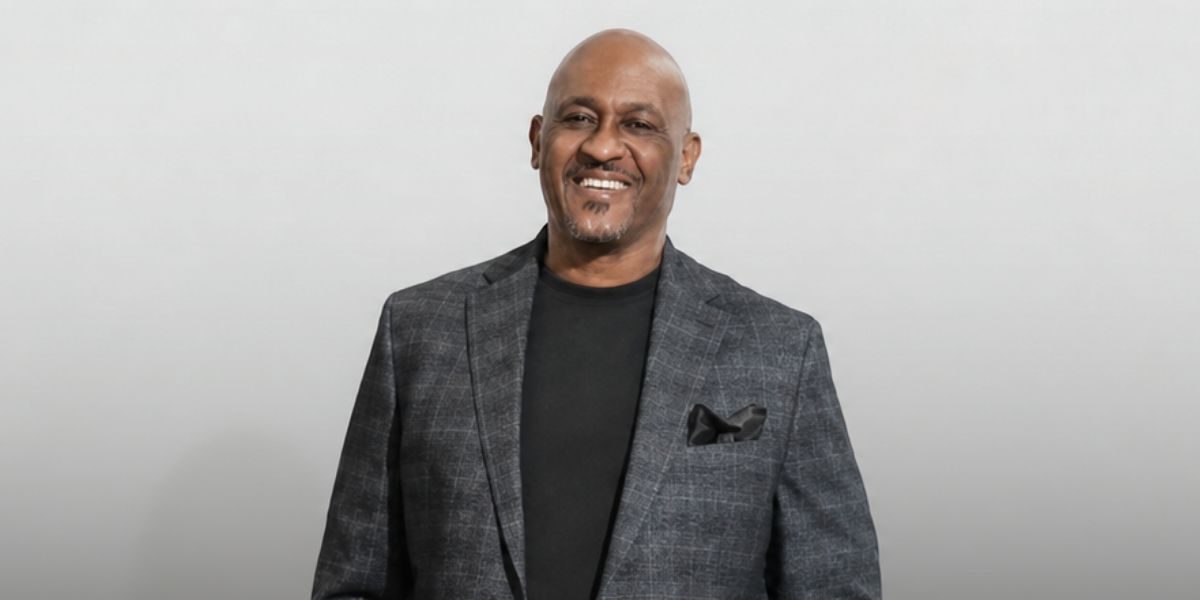

For many people, the hardest battles are the ones no one else can see. That was true for Phillip Adam Stringfield, a retired Command Sergeant Major who spent thirty-five years in uniform before retiring from the Georgia Army National Guard on April 7, 2018, closing out a military career built on service, sacrifice, and quiet endurance.
To the outside world, that retirement ceremony looked like the close of an extraordinary journey. Stringfield had risen to the highest enlisted rank in the Georgia Army National Guard, serving as Command Sergeant Major and Senior Enlisted Advisor, a position built on the trust of the soldiers who followed him. But behind the medals and the salute, he was carrying something few people around him knew about.
A Childhood That Taught Him to Earn What He Had
Long before the uniform, Stringfield was a boy growing up in rural Georgia, where lessons about work and worth came early and stuck. He recalls his grandmother and mother sitting him down one evening to explain that if he wanted a car, he would need to earn it himself, with them matching whatever he managed to save.
It was a small moment, but it planted something that would carry him through decades of much larger tests: the understanding that resilience is built, not given.
Rising Through the Ranks
Stringfield’s definition of leadership was forged over decades of service, not in a classroom. “I don’t care what school you attend or what level of education you have,” he says, “there are some leadership skills that can’t be taught. I feel you are born with it or not, and that is the ability to influence someone to do something that they would not normally do.”
He points to the truest test of that influence: soldiers willing to “pick up arms and follow you into battle, knowing there is a strong chance that they will not survive.” It is a definition earned through deployment, including a tour in Iraq, and through the loss of men on the battlefield, losses he carries to this day.
The Weight He Carried in Silence
While holding one of the highest enlisted ranks in the state, Stringfield was quietly struggling with post-traumatic stress. Coming forward with that struggle was not a simple decision. In his position, it could have ended his career.
It was his family’s support and insistence that finally gave him the courage to seek help. He sat down with a military therapist, and what she told him at their first meeting has stayed with him ever since.
“Two things can come out of this,” she told him. “I can write you a prescription, and you will be on drugs for depression and anxiety for the rest of your life, or you can make up your mind to get to the root of this.”
Choosing the Harder Road
Stringfield chose the harder path, the one that meant confronting what was underneath the pain rather than simply managing it. He came forward to his senior leadership, in part to help end the stigma for other soldiers who might be suffering in silence and afraid to ask for help.
Faith became the anchor that carried him through that process, not by erasing the difficulty, but by giving him something steady to hold onto while he faced it.
Storms Beyond the Battlefield
PTSD was far from the only battle Stringfield has fought. He and his wife lost their home and faced a period of homelessness. He was later diagnosed with and battled cancer. Each challenge asked something different of him, and each one, he says, left him more equipped for the next.
“I had to muster resilience and faith when I lost my house, and my wife and I were homeless,” he says. “I had to be courageous when I battled cancer, lost men on the battlefield, and suffered PTSD.” Looking back across all of it, he offers a simple measure of how far he has come: “I am stronger than I was when I was nineteen years old.”
A Different Lesson for a New Generation
Stringfield is candid about his own missteps, particularly as a father. Wanting to give his children an easier life than the one he had, he shielded them from the kind of financial responsibility he had learned as a boy, a choice he now believes may have quietly cost them some of the toughness they would need later on.
With his grandchildren, Zoey and Reilly, he has applied the lesson differently. Both have held jobs at Chick-fil-A for two years, and Stringfield has set up checking accounts for them where their earnings land first, with thirty percent automatically moved into locked savings accounts.
“We are even better grandparents than we were parents,” he says, reflecting on the ways his own understanding of resilience has continued to grow.
Faith to Faith
That full arc, from a boy in rural Georgia to a career soldier, from a silent struggle with PTSD to an honest reckoning with faith, forms the foundation of Stringfield’s book, Faith to Faith: A Warrior Story of Resilience, Faith, and Redemption. Rather than positioning himself as an expert, Stringfield writes as someone who has walked through fire more than once and made it to the other side, hoping readers in their own hard seasons will find something in his story to hold onto.
His message is not that hardship disappears with enough faith or enough discipline. It is that resilience is assembled piece by piece, often through the very things nobody would have chosen, and that faith can be the anchor that holds a person steady while they do that work.
For readers who want to hear more of that story in his own words, Faith to Faith is available now, and Stringfield’s continuing work can be found at patriotse7en.com.