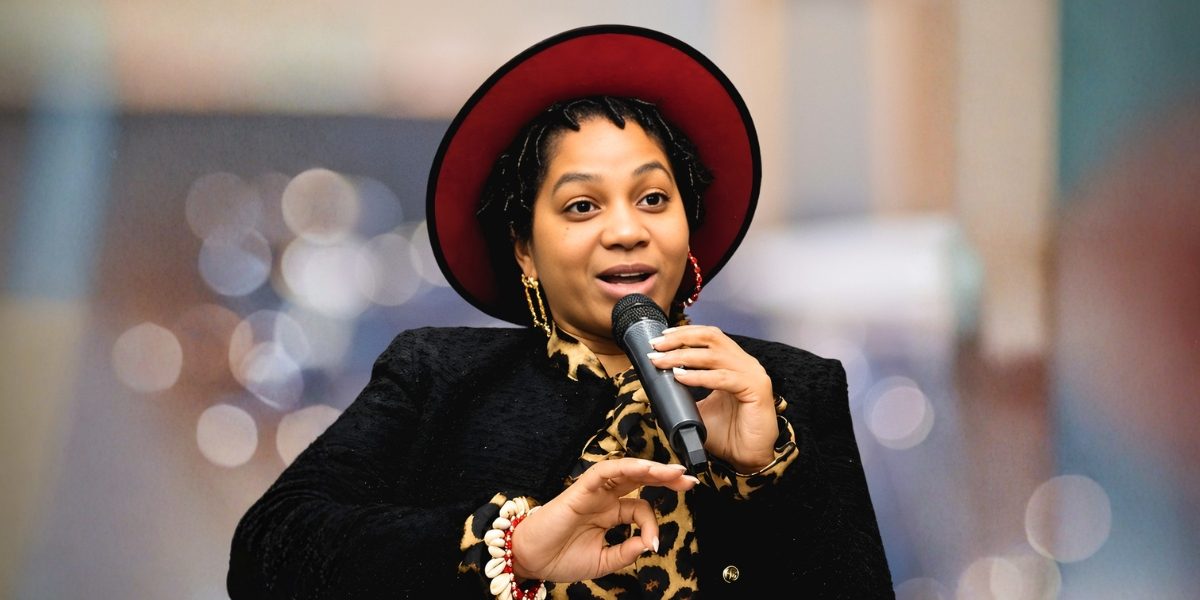

Identity transformation has become a frequent talking point in personal development circles, often blending into broader conversations about goal-setting, productivity, and motivation. Nadia Atkinson Maldonado, the speaker and strategist behind #freeasf™, takes a sharper view. She argues that motivation produces temporary movement, while identity work changes the source of decisions.
Nadia, who also goes by Queen Goddess Hope, founded #freeasf™ University to formalize a body of work she has been developing for more than a decade. Her panels, keynotes, and podcast appearances over the past six years return to a single thesis. People cannot consistently change behavior they have never examined at the level of belief.
What Makes Identity Transformation Different From Motivation?
The distinction Nadia draws is practical. Motivation, in her view, asks people to push harder against patterns they have already accepted as true. Identity transformation asks them to question whether those patterns belong to them at all.
“Most people aren’t stuck. They’re operating from beliefs they never chose,” she says.
“I don’t focus on motivation. I focus on identity,” she explains. “My work challenges people to examine who they believe they are, where those beliefs came from, and how to consciously rewrite them.”
The framing draws from her background as a psychology major. Maslow’s hierarchy of needs informed her early thinking, particularly the recognition that self-actualization sits on top of foundational layers most adults never fully address. She refers to ages three through ten as the “Imprinting Years,” a period when caregivers and environment install the operating assumptions that adults later mistake for personality.
“I’m not here to motivate you,” she adds. “I’m here to challenge what you believe about yourself.”

The Origin of the #freeasf™ Movement
Nadia Atkinson Maldonado’s path into this work began with her own. Raised within the Kingdom Hall of Jehovah’s Witnesses, she developed early public speaking skills through the congregation’s Theocratic Ministry School, delivering monthly talks to audiences of more than 100 people while still in her teens. A college course in public speaking later sharpened the craft. That early foundation in structured speaking and spiritual inquiry continues to influence how she approaches identity work today.
The more substantial work came afterward, when she began questioning the inherited frameworks shaping her decisions. She describes that process as uncomfortable. The fears were not abstract but specific, centered on visibility itself, a quiet preference for staying behind the scenes that ran counter to the speaking work she now does professionally. Recognizing that pattern, naming its origin, and choosing differently became the template for what she now teaches. A longer profile of that personal arc appears in Bold Journey.
#freeasf™ grew out of that template. The brand operates as both a personal philosophy and a movement aimed at people who feel stuck in lives that look successful from the outside but feel borrowed from someone else’s blueprint. The community has continued to grow across her social channels, where she shares ongoing reflections and reader prompts.

How Does Journaling Function as a Reclamation Tool?
Within Nadia’s framework, journaling is less a wellness habit than an investigative practice. The pages function as a place to surface conditioned beliefs, identify their origin, and decide whether to keep them. She often points readers toward writing as the lowest-friction way to begin identity transformation work, particularly when therapy or coaching is not yet on the table.
“Journaling isn’t just reflection. It’s a tool for confronting the patterns we’ve normalized,” she says.
She is candid about the boundaries of her work. “I cannot heal you – I can only show you the tools,” she adds.
The approach has structure. Rather than free-form expression, she encourages writers to track recurring fears, examine the language they use about themselves, and notice where their stated values diverge from their actual choices. Self-reclamation, in her usage, refers to the gap between who someone presents as and who they actually are when no one is watching. Closing that gap is the work.
From Personal Practice to Public Speaking
The speaking work followed the personal work. After years of being asked how she had built and rebuilt her businesses, including QGH Holdings and her earlier company, Beyonique, LLC, Nadia began accepting invitations to speak on identity, entrepreneurship, and the conditioning that shapes both.
Her speaking calendar has expanded across panels, keynotes, and podcast appearances. She speaks regularly to entrepreneurs, professionals, and creatives in the 25-to-45 age range, alongside corporate teams and community organizations seeking sessions on identity, mindset reprogramming, and the early-career questions that often go unexamined. Booking and topic information are hosted on her dedicated speaking site, #freeasf Live.
What Comes Next for #freeasf™
Atkinson Maldonado is direct about her aspirations. She wants #freeasf™ to function as a household reference point for identity-based personal freedom, the way certain other movements have shifted the vocabulary of wellness and entrepreneurship over the past decade. She is also writing toward larger audiences, including through her LinkedIn newsletter, which extends her thinking on identity, conditioning, and the work of self-reclamation.
Her broader argument is that individual identity work is not self-indulgent. The premise behind #freeasf™ is that personal clarity scales. People who understand the beliefs driving their own decisions tend to make different choices in their families, businesses, and communities. The collective shift, in her view, is downstream of that individual clarity.
Updates on her work, including upcoming engagements and reader prompts, are posted on her Instagram profile.