
By: Zach Miller
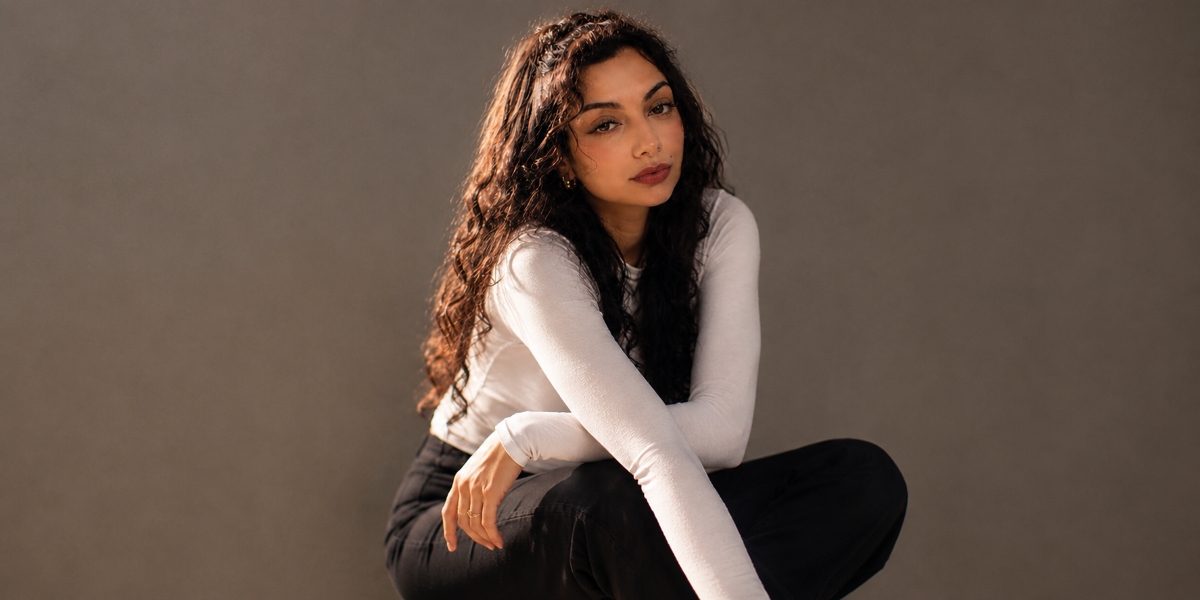
Chef Raina Mirchandani is building more than a culinary business; she’s putting the heart back into the kitchen.
“Food has a way of holding us when life cannot. It brings us back to people, to memories, to laughter, and sometimes, back to ourselves. And maybe that is why cooking has always been about so much more than feeding people. Sometimes, it is how we love. And sometimes, it is how we rescue one another.
Did You Khado? Which means: Did you eat yet?
Because sometimes asking if someone has eaten is really another way of saying: You are cared for!”
A Career Built in the Kitchen
Long before Did You Khado? became a business, cooking was already part of Mirchandani’s identity.
A culinary-school graduate with roughly a decade of professional kitchen experience, she built her career in an industry famous for demanding long hours, physical endurance, and an almost obsessive commitment to detail.
She worked as a sous chef, a spice chef, and a private chef in New York, cooking in environments where expectations were high and mistakes were noticed. Her career included private chef work for clients throughout the city. While building and running “Did You Khado?”, she also works as a Manager at Burgerology in Midtown, Manhattan, balancing the demands of entrepreneurship with the realities of hospitality.
Life Doesn’t Follow the Recipe
The past chapter of Mirchandani’s life taught her something no success ever could: sometimes life has to become unrecognizable before you discover what you are capable of becoming.
There are seasons when moving forward doesn’t look like strength. It looks like getting out of bed when your heart is heavy, showing up when no one knows what you’re carrying, and believing in a future you cannot see yet. With consistency and resilience, her broken pieces become the foundation of something beautiful.
The Meaning Behind Did You Khado?
Mirchandani believes food can do what words sometimes cannot. It can bring strangers to the same table, turn coworkers into teammates, give families a reason to slow down, and remind people that they are deeply cared for.
That is why DYK was never meant to be just another cooking class. From corporate team-building and school programs to birthdays, date nights, and private experiences, people don’t simply watch someone cook; they cook together, laugh together, make mistakes together, and leave with something more valuable than just a recipe.
Food as a Way Back to Each Other
Raina Mirchandani says, “Modern life has made eating remarkably convenient and, paradoxically, increasingly disconnected. Meals arrive at doors in paper bags. Families eat while looking at screens. Coworkers communicate through messages despite sitting only a few feet apart.”
Mirchandani’s concept pushes in the opposite direction.
Put people around a table.
Give them ingredients.
Make them use their hands.
Put down the phones. Pick up the dough. Ruin a dumpling. Laugh about it. Make another. Share stories. Eat together.
“There is something wonderfully democratic about cooking this way. Job titles disappear when everyone is struggling to seal the same piece of dough. Because DYK isn’t selling cooking classes; it’s giving people a reason to come back to each other.”
The Table Is Still Being Set
Raina Mirchandani’s journey from professional kitchens to restaurant management has taught her that hospitality is bigger than what lands on the plate; it is about understanding the entire room and making people feel they belong in it. And while life has changed around her, she has continued to dream beyond her circumstances.
“Spend enough time in hospitality, and you learn that taking care of people can become instinctive.
The more difficult skill is learning how to take care of yourself. That’s when survival slowly becomes ambition again. And maybe the best chapters begin when you stop waiting for life to get easier and start becoming stronger anyway. If there is one thing I have learned through all of this, it is that sometimes the promise of who you could become has to become bigger than the difficulty of where you are right now.
There were moments when I had no idea what the next chapter of my life was supposed to look like. And eventually I realized I was asking myself the wrong question.
Instead of asking, ’How am I going to get everything I want?’ I started asking, ’Who do I need to become to build the life I want?’
That question changed something in me.
Because we spend so much time making lists of what we want (a career, a business, stability, love, success, a beautiful life) and very little time making a list of the person capable of carrying all of it.
I began paying attention to the small things.
Showing up when I said I would. Taking care of the space around me. Doing something properly even when nobody was watching. Learning from people who knew more than I did. Protecting my energy. Taking care of my body. Cooking instead of always choosing what was convenient. Walking. Resting. Working. Trying again.
None of those things sound extraordinary. That is the point.
I used to think changing your life would feel like one enormous, cinematic moment. Instead, I learned that a life is mostly built in tiny decisions nobody applauds.
It is the habit. It is what you do when there is no audience.
And strangely, those little promises you keep to yourself begin to change the way you see yourself. You trust yourself a little more. You stand a little taller. You stop needing every accomplishment to prove that you are valuable, because you are becoming someone you respect.
I also learned to be careful about ambition.
There is nothing wrong with wanting more. I want more. I dream enormously.
But I never want to become so obsessed with what I am trying to achieve that I lose the person I wanted to be when I get there.
Success is expensive if it costs you your kindness, your integrity, your health, your relationships, or your ability to recognize yourself.
So now I think about the future differently.
I still look back, but only long enough to learn. Because your past can give you experience, but your future gives you a reason to get out of bed in the morning.
And if you are reading this while your own life feels uncertain, write down what you want. Then underneath it, write down why you want it. Keep asking why until the answer means something to you.
Then ask yourself one more question:
Who would I have to become to make this possible?
You do not have to become that person tomorrow.
Start with one habit. One promise to yourself. One thing you do differently when nobody is looking.
And begin there.
Maybe that is what I have really been doing all along with Did You Khado?
I thought I was building a business around food.
But somewhere between the kitchens, the classes, the mistakes, the heartbreak, the people I met, and the life I had to rebuild, I realized I was building myself too.
And perhaps that is the recipe none of us are ever taught:
You don’t have to know exactly where your life is going. You just have to keep becoming someone capable of meeting it when it arrives.”
For Raina Mirchandani, the next chapter is about giving people reasons to gather, learn, and share. As Did You Khado? continues to grow, Raina Mirchandani’s work suggests the kitchen gives people a place to slow down, put their phones away, and sit together at the same table.