
By Jay KT
What does patina look like on a silver bracelet?
Look closely at a sterling silver feather cuff that’s been worn for years. The ridge down the middle may still catch the light when you turn your wrist, while the fine cuts on either side have gone dark. Those darker lines make it easier to see the individual barbs of the feather. Along the smooth edges, tiny scratches have softened what was once a mirror polish. That mix of dark detail, bright silver, and everyday wear is what people often have in mind when they say a bracelet has developed a patina.
The design makes a difference. On a plain silver cuff, you might notice the first few scratches because there’s a wide, polished surface around them. With regular wear, those marks can blend into a softer sheen. On a carved cuff, much of the appeal comes from the contrast between the high and low spots. If you like the way an old silver bracelet looks, take a closer look at what caught your eye. A satin-like surface and a dark, sharply defined engraving are two quite different reasons to prefer worn silver.
Is patina just another word for tarnish?
The two words overlap. Tarnish has a specific meaning. When silver reacts with sulfur compounds in the air, a thin film forms on the surface. That’s why a silver bracelet for men can darken even if it’s been sitting in a drawer. Patina is a broader term people use for the appearance silver takes on over time. Tarnish can contribute to that look, along with the small marks the bracelet picks up on your wrist.
A polished Cuban link makes the distinction easy to see. Look at the flat face of a link, then tilt it to see where it meets the next one. The darker color tucked inside the curve may be tarnish. The fine scratches across the face come from wear. If you polished away the discoloration, those scratches would still be there. Whether you’d want to polish it at all is partly a matter of taste. You might like the faces bright and still prefer a little darkness between the links because it makes their shape easier to see.
Will my bracelet develop a patina if I wear it every day?
Yes, if you’re wearing uncoated sterling silver, though the change may be subtler than you expect. On a braided bracelet, for example, your shirt cuff brushes the tops of the strands as you move. That gentle rubbing can keep the exposed silver bright while the grooves between strands gradually darken. You might wear it for months and barely notice a change until you compare it with a photo from the day you bought it.
There’s no reliable timetable. How often you wear the bracelet, where you keep it, and how often you polish it all affect the result. Leaving it in a drawer may let the whole surface darken, but it won’t reproduce the pattern of wear your wrist gives it. And if the bracelet you admire has nearly black grooves, check how it was finished. A maker can deliberately darken the recesses before the bracelet ever goes on sale. Everyday wear on a bright silver version may produce a gentler contrast.
How do I clean my bracelet without losing the patina?
If you like the way your bracelet has aged, you can leave the dark areas alone. For everyday care, a gentle wipe with a soft, clean, dry cloth will take care of fingerprints and light surface grime. On a carved cuff, pay attention to the inside, where it rests against your skin. There’s no need to work the cloth into every engraved line just because the silver looks darker there.
Before you reach for silver polish, check the original finish. If the bracelet was sold as oxidized or antiqued, those dark details were put there deliberately. A silver dip can strip the color from the grooves and leave a design you liked looking unexpectedly flat. If the bracelet was originally polished sterling and you’d like a little shine back, use a silver polishing cloth lightly on the raised areas you want to brighten. Pause after a few strokes and look at it on your wrist. Often that’s enough to bring out the pattern again.
Which silver bracelet should I choose if I like that aged look?
If what caught your eye was an old cuff with a pattern you could still make out from across the table, I’d choose a deeply engraved sterling silver cuff. A feather is a good example, but a simple geometric pattern can work just as well. Look for grooves cut deep enough to cast a small shadow when you tilt the cuff. As those recesses darken, the pattern can become easier to see, especially where a bright ridge runs alongside a dark line.
A braided silver bracelet gives you a quieter version of that contrast. The dark areas appear in small pockets wherever one strand passes under another. It’s a good choice if you like texture but don’t want a particular motif. The curved strands also break up reflections, so an individual scratch tends to draw little attention.
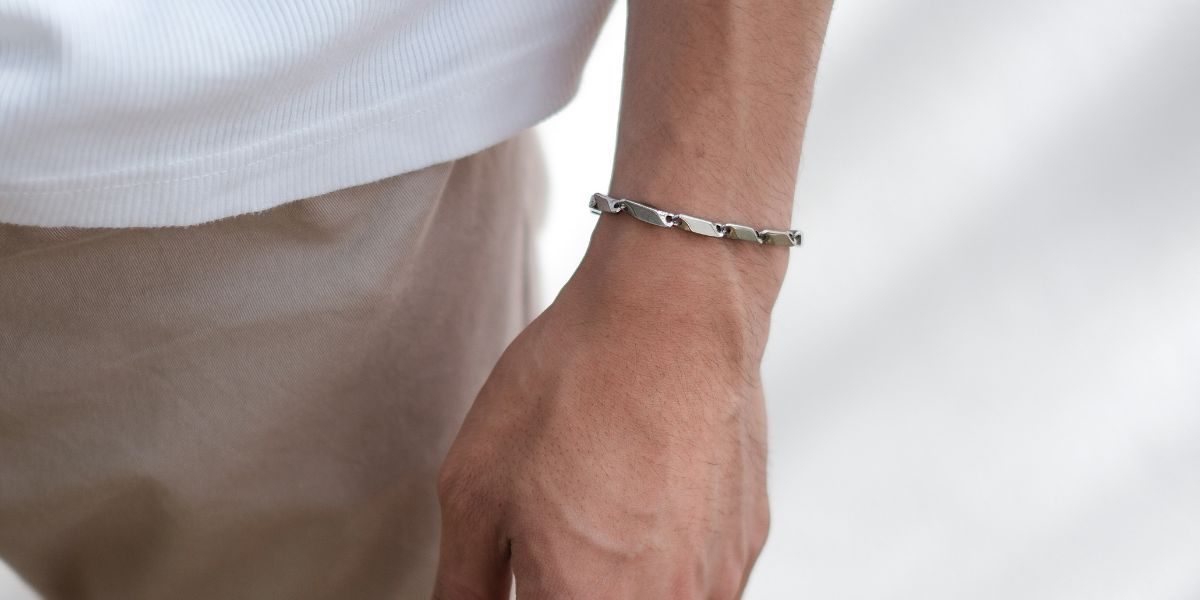
Choose a flat Cuban link if what you admire is the soft sheen of well-worn silver. Its broad faces give you room to see that change, including the first few scratches while the surrounding silver is still glossy. If you know that first visible mark will bother you, I’d lean toward the braid. If you like being able to see where a bracelet has been worn, the Cuban is the one I’d pick.
What should I look for in the product photos?
If the engraving looks almost black in the main photo, check a second angle. A deep cut can look dark simply because it’s in shadow. If you’re counting on that contrast, read the finish description or ask the seller, “Are the grooves deliberately darkened, or is that the lighting?” Terms like oxidized or antiqued tell you the maker intended the bracelet to have an aged look from the start.
If you’d rather see a patina develop as you wear it, check whether the sterling silver is uncoated. “925” tells you the silver content, but a sterling bracelet can also have a rhodium coating that keeps the silver underneath from tarnishing while the coating is intact. One of the most useful photos to ask for is a wrist shot from someone who’s owned the same design for a while. Compare it with the new bracelet in roughly the same light. You’ll get a better sense of whether you like the changes that come with wear or whether it was the original finish you liked all along.