
By: Laura Zanky
The Parallel Nobody Had Named
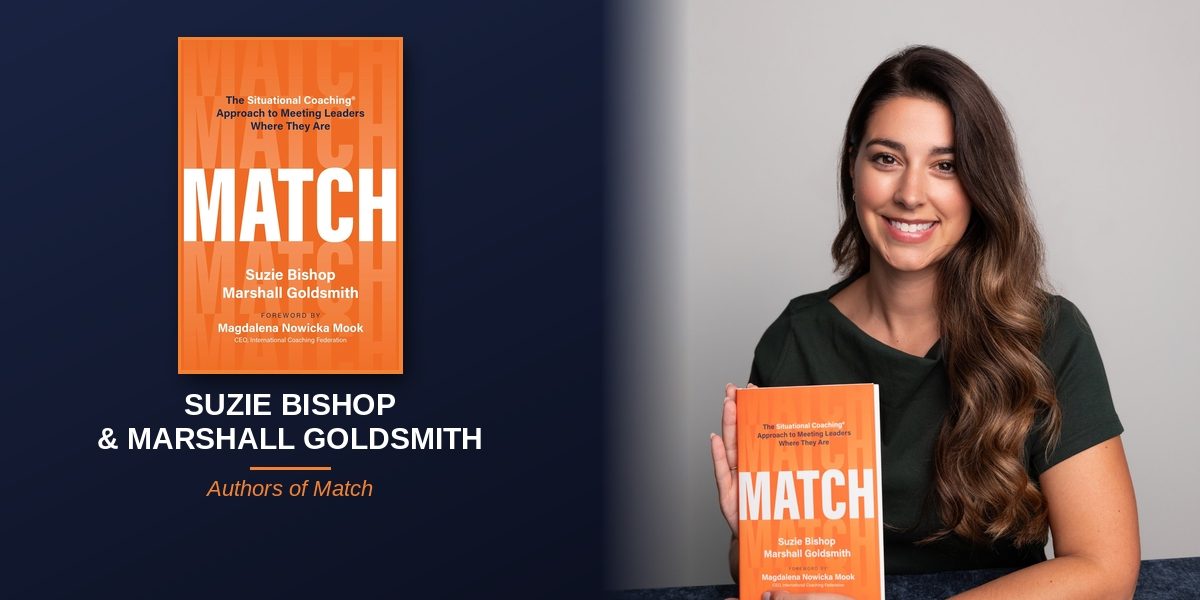
Suzie Bishop grew up around Situational Leadership®, the foundational framework built on the idea that there is no single best way to lead. You have to understand the person, the task, and the situation, and then adapt accordingly. When she began talking with Marshall Goldsmith about his decades of one-on-one coaching with some of the most powerful executives in the world, she kept recognizing something in his instincts. He was constantly reading the person in front of him, adjusting his approach, giving different amounts of direction or support based on what they needed in that specific moment. He was not doing it consciously in terms of a named framework. He was doing it because decades of experience had taught him that the alternative, applying a fixed method regardless of context, did not work. When Suzie and Marshall began interviewing other highly successful coaches as research for Match: The Situational Coaching® Approach to Meeting Leaders Where They Are, they kept hearing the same thing in different language. Words like discernment, intuition, reading the room, knowing when to challenge and when to give someone space. The best coaches were not loyal to one technique. They were figuring out what the person in front of them needed. The book became their attempt to take what great coaches do instinctively and make it clear, practical, and teachable.
The Four Parallels of Influence
Situational Leadership asks four questions: What is the task? What is the person’s readiness for that task? What leadership response matches that readiness? And how is that readiness changing over time? Translating that logic into coaching required care, because coaching and managing are not the same thing. A manager carries formal authority that a coach does not have. Coaching is an intentional invitation to influence, which means trust, credibility, and buy-in become far more important. What Suzie and Marshall preserved was the underlying principle: do not start with your preferred style, start with what this person needs for this particular opportunity. The framework they built has four parallels: identify the coaching opportunity, assess Performance Readiness®, match and communicate the coaching response, and manage the movement. That last step matters as much as the first. A match is never a one-time decision, because people do not stay in the same place. Their ability grows, their confidence shifts, their responsibilities change, and life happens. Good coaching is not just knowing how to make the match. It is recognizing when the match needs to change.
What Gets Walked Past
One of the most useful arguments in Match is about what coaches and leaders consistently fail to notice. The small behavioral signals that arrive before a bigger problem announces itself are the ones most often walked past. Someone continually avoids a difficult conversation. A leader who knows how to delegate suddenly starts pulling work back. A person who normally speaks up goes quiet. Someone keeps asking for reassurance about something they have successfully done before. These are clues, and they are easy to miss because we are waiting for something more obvious. What makes this harder is that the presenting issue is frequently not the actual coaching opportunity. Someone may say they need help with a meeting when the deeper pattern is conflict avoidance, confidence, listening, or executive presence. That is why diagnosis sits at the center of the Situational Coaching model. The question is not simply what is the problem today. It is what is this situation telling me about what this person actually needs in this moment. The difference between those two questions is the difference between fixing what is visible and addressing what is real.
Coaching the Person, Not the Title
One of the most common mistakes Suzie and Marshall identify in Match is the one coaches make with high performers: assuming that because someone is accomplished, they are highly ready for everything. Performance Readiness is opportunity-specific. A CEO can be extraordinarily capable and still be at the beginning of their readiness curve for something they have never done before. The opposite error is overcoaching something they are already excellent at. If someone is able, confident, and motivated in a given area, continuing to direct them or add structure can limit their growth rather than support it. The practical instruction Suzie offers is to resist coaching the résumé or the title and to coach the person in relation to the specific opportunity in front of them. That is a subtle distinction, but it is one that separates coaches who genuinely develop people from coaches who simply reinforce what their clients already believe about themselves. The goal is not dependency. It is development. And development means building the kind of independence that keeps moving outward after the formal engagement ends.
The Question That Changes Everything
If a reader of Match can carry only one thing into their work the next day, Suzie says she would want it to be a single question: what does this person need from me right now? Not what do I want to say. Not what is my usual approach. Not even what worked with this person last time. What do they need right now, for this particular situation? The answer might be direction. It might be encouragement and space to think. It might be that they are completely capable and the most useful thing the coach can do is get out of the way. The question is deceptively simple and genuinely difficult to answer well, because answering it requires setting aside the habits, the preferred methods, and the brand a coach has built over years of practice. That is exactly what Suzie and Marshall are asking experienced coaches to do with this book: not abandon the wisdom or the experience, but loosen the attachment to one way of delivering it. Your values can stay consistent. Your brand can stay consistent. Your behavior should be flexible. That is what making the match actually means.
Pick up your copy of Match: The Situational Coaching Approach to Meeting Leaders Where They Are by Suzie Bishop and Marshall Goldsmith on Amazon today.