Discover the Heartfelt Story Behind J.E. Franklin’s Writing Career

By: J.E. Franklin

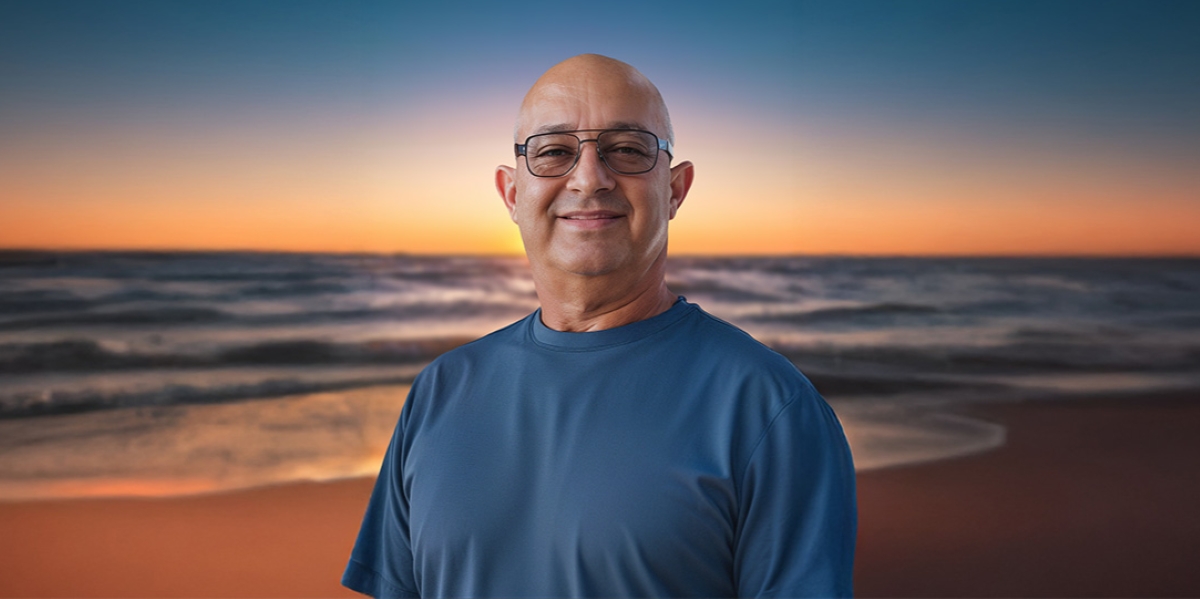
J.E. Franklin’s journey as an author is as heartfelt as the stories he brings to life. After spending over 30 years in the manufacturing industry, Franklin turned to his lifelong interest in creative writing. His inspiration came from a deeply personal place: his late wife. She had a talent for crafting, and one Christmas, she made a small handmade ornament unlike any other. Along with the ornament came a simple request. She asked Franklin to write a short background story to go with the character she had created. He agreed, thinking it would be a small favor, just a paragraph or two. Yet once he began, the words kept flowing, and the story grew beyond what either of them imagined. That one moment planted the seed of a new chapter in his life, a chapter rooted in creativity, memory, and the bond they shared.

What began as a tribute to his wife’s creation soon blossomed into a full book. Franklin realized that storytelling gave him not only joy but also a meaningful sense of purpose. He discovered that writing was a way to stay present, keep his mind active, and pour his energy into something lasting. For him, writing is not about chasing a particular style or adhering to strict rules. He allows his imagination to guide him, shaping stories from daydreams, observations, and the gentle wonder of ordinary life.

Franklin describes his writing process as more organic and fluid. He doesn’t focus on a specific style or theme; instead, he lets his imagination guide him. Many of his ideas come from simple observations or daydreams, which he shapes into stories filled with meaning. With his Christmas tale, Franklin hopes to remind children, and adults, that the true essence of the holiday could be about family, friends, and helping others, rather than focusing solely on gifts.

Among his literary influences, Franklin mentions Stephen King as one of his significant inspirations, though he enjoys exploring various genres. His writing routine is simple and seasonal, often dedicating time between November and March to craft his stories. However, the journey to publishing was not without challenges. His initial attempts to publish traditionally were unsuccessful, and he faced setbacks when a laptop malfunction caused the loss of parts of his manuscript and original illustrations. With patience, focus, and resilience, Franklin pieced the book back together and eventually saw it published.

For Franklin, writing is more than just storytelling; it’s a way to stay focused, challenged, and creative during retirement. The responses from readers have been moving, with one friend even moved to tears after reading his work. These moments reaffirm the possible impact his writing can have. He envisions his legacy as creating stories that could be remembered for generations, with plans already underway for a series of Christmas-themed children’s books.

When it comes to overcoming writer’s block, Franklin takes a practical approach by working on different sections until inspiration returns. He acknowledges that self-doubt is inevitable but believes in working through it in a methodical manner. His advice to aspiring authors is simple yet powerful: “Take your time, have a goal, and work towards that goal.”

During his publishing journey, Franklin faced difficulties with publishers and his laptop’s malfunction, which led to the loss of a lot of work and important illustrations. While it was a setback, Franklin didn’t lose hope and built his work back piece by piece. Though he leaves the marketing side of publishing to professionals, Franklin recognizes the importance of social media and online platforms in connecting with readers. His book is available through his official website as well as major platforms like Amazon, Barnes & Noble, and Apple.

For those interested in exploring Franklin’s work and following his journey, check out his website: booksbyjefranklin.com. His dedication to storytelling, rooted in love, resilience, and creativity, makes his work a gift for readers young and old alike. Stay tuned for his upcoming Christmas book, which may offer more heartwarming stories.


Stephen Wisnieski: Unearthing a Hidden Legacy of War, Family, and Forgiveness

By: Elowen Gray

When Stephen Wisnieski wrote A Mother’s Final Letter, his goal wasn’t necessarily to create a typical memoir. He was in pursuit of truth — not only his own, but his mother’s, which had been buried under decades of war, separation, and silence. The result is a deeply moving, multilayered story that offers a new perspective on survival, resilience, and the complex bonds between parents and children.

The book intertwines Wisnieski’s own memories with his mother’s manuscript and the letters she wrote to him over nearly twenty years. At its core, the story traces a family torn apart by war — and the long, challenging path back to understanding.

His mother, a German civilian, lived through the firebombing of Hamburg during World War II. As a child, she ran through streets raining phosphor, fled collapsing buildings, and hid in basements while bombs shook the ground. Her father was taken as a Russian POW. Her family was fractured, her city destroyed, and her youth was shaped by fear, scarcity, and grief. However, these stories — from the German side of the war — are often overlooked. This is one reason Wisnieski felt compelled to share them.

“You read about World War II in history books and see the movies,” he said in an interview. “But you rarely encounter this side — the story of a young German girl who had no part in the politics, just trying to survive with her family.”

Her experiences were not only historical — they were personal. After immigrating to the United States, she married, had four children, and lost them all in a difficult divorce. Stephen, the youngest, would grow up in the American foster care system, spending time in orphanages and separated from his siblings. He didn’t even know who his mother was until he joined the U.S. Army and was stationed in Germany.

That deployment altered the course of his life. While undergoing a top-secret security clearance, investigators uncovered his German roots — and his estranged mother’s location. What followed was a reunion decades in the making, as well as a correspondence that helped them both begin to piece together the fragmented narrative of their lives.

They wrote letters — not emails, not texts, but old-fashioned, handwritten letters, back and forth for nearly twenty years. “We were kind of old school,” Wisnieski said. “There was no Facebook. No phone calls. Just paper and pen.”

Those letters became the foundation of A Mother’s Final Letter, a book that doesn’t shy away from pain but remains focused on hope. It covers everything from bomb shelters and Gestapo threats to orphanages and emotional estrangement. The emotional range is wide, but the writing remains grounded in truth.

One of the most poignant revelations in the book is that Stephen was conceived through rape — his mother was assaulted by the man she later married. “She carried that with her,” he said. “Her guilt, her shame, her feeling that she failed us as children — it stayed with her until the day she died.”

But the book is far from a simple chronicle of suffering. It’s a story of endurance. Despite her trauma, his mother rebuilt her life several times — in Germany, Greece, and the United States. And despite his own difficult childhood, Stephen went on to serve honorably in the military, raise children of his own, and eventually reconnect with the sons he had lost after a divorce. It took 35 years, but they managed to find their way back to each other, just as he and his mother once had.

“If there’s one thing I want people to take away from this book, it’s: don’t give up on your family,” he said. “Even when it feels impossible. Even when it’s been decades, there’s always a possibility for reconciliation.”

The book also offers a rare civilian perspective on war from the German side — a voice often left out of popular narratives. Readers are given a first-hand account of a girl dodging bombs, bartering bed sheets for food, and witnessing the horrors of war without ever stepping on a battlefield. It’s a reminder that war impacts everyone it touches, regardless of uniform.

Through vivid scenes and honest prose, A Mother’s Final Letter invites readers into the overlooked corners of history — and the hidden corners of one family’s past. The writing is personal, but the themes are universal: love, trauma, identity, and the long road to healing.

Wisnieski has already begun working on a second book, this time focused more on his own story — his years in a Catholic orphanage, the abuse he endured, and his emotional return to the children he thought he’d lost forever. If his debut is any indication, the next installment seems likely to be just as powerful and just as important.

“It’s painful to write,” he admitted. “But writing is how I process everything. It’s my way of counseling myself.”

Despite the darkness of the story, A Mother’s Final Letter ultimately offers a rare thing: redemption. It shows that love can survive separation, that stories can mend broken lines, and that sometimes the act of telling the truth can be a form of healing.

In sharing his mother’s voice, Stephen Wisnieski has finally found his own. And in doing so, he’s given readers something rare — a war story that’s not about conquest or defeat, but about memory, reconciliation, and the power of never giving up on those we love.

Ari Max: The Coach Offering Insights and Tools for Personal Growth Through Life’s Challenges

By: Elowen Gray

For more than a decade, Ari Max has dedicated his career to helping people turn life’s toughest moments into opportunities for personal growth. A certified life coach, Addiction Recovery coach, ABA therapist, and volunteer chaplain, Ari has spent years working closely with individuals facing a wide range of challenges—from children on the autism spectrum navigating subtle social cues, to adults dealing with addiction, anxiety, depression, the search for purpose, and everyday life struggles. His new book, Believers Are Achievers: A Guide to Becoming Your Best Self, reflects those experiences and insights, offering readers a practical blueprint for living with intention, resilience, and authenticity.

Ari’s journey to authorship wasn’t driven by a desire for recognition, but by the persistent encouragement of friends, clients, and colleagues who saw the impact of his coaching techniques. As Ari shared in a recent interview with NY Weekly, “I’ve been helping people for years, but so many told me, ‘I can’t remember everything you teach me—can you write it down?’ So I did. And I realized there was something here that could help many more people.”

Central to Ari’s approach is the emphasis on building a strong foundation before pursuing larger goals. Drawing on his work with clients from all walks of life, Ari stresses the importance of character and integrity as the basis for sustainable change. “If your foundation isn’t strong, life’s challenges might easily knock everything down like a house of cards,” he explained, likening inner strength to the beams and walls that help a house withstand storms.

One of Ari’s frameworks featured in the book is the GPS Growth Journal—Goal, Plan, Start. Just as a GPS in your car requires both a starting point and a destination, Ari believes that personal transformation benefits from having clear, realistic goals, a thoughtful plan to reach them, and most importantly, the courage to begin. This simple yet effective system encourages readers to stop fantasizing about change and start taking consistent action.

Ari’s experience as an ABA therapist for individuals with Autism Spectrum Disorder has deeply influenced his approach. He shares stories of helping children grasp critical social nuances, such as the importance of saying “thank you,” by connecting abstract concepts to relatable situations. He teaches that true awareness of ourselves and others must come first, followed by acceptance, and finally action, a model he calls the “AAA approach.”

Authenticity is another recurring theme in both Ari’s life and his book. Using the acronym HOW—Honesty, Open-mindedness, and Willingness—he invites readers to cultivate self-awareness and embrace personal truths, even when they may feel uncomfortable. “Relationships, success, and fulfillment all start with being honest with yourself,” Ari says.

Believers Are Achievers stands out among self-help books because it doesn’t just share concepts; it offers readers tools they can easily apply. Techniques like the “5-4-3-2-1” mindfulness exercise—identifying five things you see, four you touch, three you hear, two you smell, and one you taste—are designed to ground readers in the present moment and alleviate anxiety. These exercises, adapted from his work with neurodiverse clients, are also beneficial for anyone feeling overwhelmed in today’s fast-paced world.

Another practical tool is the SOBER method: Stop, Observe, Breathe, Exhale, Respond. Ari presents it as a way to replace impulsive reactions with more thoughtful, intentional responses—a skill that can be valuable in both personal and professional relationships. He believes that mastery of these small moments can lead to significant improvements in how we navigate life’s daily stresses.

While Believers Are Achievers is Ari’s first book, it’s clear he intends to continue his work. He shared plans for future titles, including The Gift of Real Connection, a book exploring how to build authentic relationships through intentional listening and presence. “People don’t care how much you know until they know how much you care,” Ari said, emphasizing his belief that genuine connection is at the core of a fulfilling life.

Ari’s ultimate hope is that his book serves as more than just reading material—it’s a resource for creating joy, purpose, and motivation. He envisions Believers Are Achievers as both a standalone guide and a starting point for future workshops and coaching sessions that help people implement these principles in their lives.

To support men on their personal growth journey, Ari is currently offering a free 30-minute life coaching session—an opportunity to experience his approach firsthand. More details are available on his website. In an impressive achievement, Believers Are Achievers, Ari’s first book, reached the bestseller ranks in just two months, gaining attention from readers worldwide.

Two-time Super Bowl champion and NFL Hall of Famer Ray Lewis offered an inspiring message about Believers Are Achievers, praising it as a valuable tool for overcoming fear and emotional struggles. In his video, he speaks highly of Ari Max’s dedication and experience in helping people find purpose and lasting change.

Through his unique combination of practical strategies, heartfelt stories, and relatable wisdom, Ari Max encourages readers to step into their best selves—one small, intentional step at a time. In a world often focused on instant gratification, Ari reminds us that meaningful success is built gradually, on a foundation of honesty, resilience, and self-awareness.

Whether you’re a parent seeking to model healthy habits, a professional aiming to break through career plateaus, or someone on a personal journey toward greater self-love and confidence, Ari’s book offers a roadmap tailored to your life. It’s not about perfection; it’s about progress. And with Ari’s guidance, readers will find the motivation and clarity to keep moving forward, regardless of the challenges they encounter.

For those ready to embrace this journey, Believers Are Achievers is available now in paperback, and more resources can be found at www.AuthorAriMax.com. Dive in, and start building a life that stands strong—even when the storms come.

Disclaimer: The information provided in this article is for informational purposes only. Results from coaching and personal growth methods may vary from individual to individual. No guarantees or promises of specific outcomes are made.

Train Smarter, Not Just Harder: David Lipscomb’s SYSTEM™ 6×6 and the Blueprint for Mastery

By: Elowen Gray

When David Lipscomb says “The SYSTEM™ 6×6 is more than a methodology—it’s a movement,” he’s not being metaphorical. With over 30 years of coaching experience, a black belt in martial arts, a background in corporate leadership, and a near-death cycling accident that redefined his purpose, Lipscomb has created something that goes beyond sport. His book, The SYSTEM™ 6×6 Framework: A Guide to Performance, Resilience, and Cycling Mastery, offers insights into both training and life transformation, on and off the bike. Lipscomb’s journey began in Gettysburg, Pennsylvania, in 1987, when martial arts became his foundational discipline. That training taught him something more than just physical skills: discipline, structure, and the importance of repetition. “The core of all I know, and who I am as a person, is from martial arts training,” he explains. That same discipline would later guide him through corporate HR, Six Sigma process improvement, and eventually, a traumatic accident in 2015 that nearly ended his life. It was during his recovery—after spending 40 days in the hospital—that he committed to sharing everything he knew. The SYSTEM™ emerged not out of ambition, but as part of a personal journey of recovery.

The foundation of THE SYSTEM™ 6×6 combines six key areas—Training Elements, Energy Systems, Performance Standards, Core Philosophies, Emotional Intelligence (EQ), and Leadership Principles—each containing six components. Lipscomb intentionally designed this around the hexagon, “a balanced shape” representing balance, symmetry, and completeness. As he explains, “Six by six by six equals 36. It’s not random—it’s a system where each part works together to support the whole.” What sets THE SYSTEM™ apart from traditional cycling programs is its holistic approach. This isn’t just about FTP numbers or power metrics. As Lipscomb says in the book, “Cyclists aren’t training with a system. They train hard but often fail to break through.” Many training plans, he argues, lack structure and balance. THE SYSTEM™ seeks to address that through structured progression, technical precision, and real-world application.

For instance, athletes begin by mastering the 6 Training Elements—Endurance, Cadence Control, Force/Tempo Development, Speed Endurance, Power Generation, and Lactate Clearance. Lipscomb insists these areas are often overlooked, especially Cadence and Heart Rate. “Everyone chases power,” he says in his interview, “but power is the result of cadence and heart rate. Not the input. That’s where people tend to misunderstand.” Beyond physiology, Lipscomb emphasizes the mental and emotional components that are frequently overlooked in athletic performance. Originally introduced to the EQ-i® inventory in the early 2000s through his corporate work with Dr. John Hughes, he immediately recognized its relevance beyond the business world. He saw its potential in the world of athletic performance. “The EQ component is often overlooked in performance circles,” Lipscomb notes, “but it’s often a key factor in why people quit workouts. When it gets hard, emotional rather than physical weakness can take over.” By integrating emotional intelligence into his coaching, he helps athletes—and leaders—understand how they respond under stress. This EQ-driven philosophy is now an integral part of the leadership and cultural mission of The SYSTEM™. As the former Director of DEI at USA Cycling, Lipscomb helped develop programs like Search for Speed, designed to introduce inner-city kids to competitive cycling. That same inclusive mission now drives the book’s foundation. “I wrote this to challenge existing boundaries,” he says. “This is not just for elite athletes or any one race or gender. This is for everyone.” He highlights that The SYSTEM™ is intentionally designed to be accessible and free of gatekeeping.

The structure of the program reflects his martial arts background. Every athlete starts as a White Belt and progresses through levels—Green, Brown, and Black—earning promotions not just based on performance but by understanding the “why” behind the method. “They have to read the book, study the framework, and apply it,” Lipscomb says. “Even experienced cyclists start from the foundation.” The SYSTEM™ is also a mindset, not just a training program. “If you repeat it enough,” Lipscomb explains, “you learn a skill. It becomes habit. And habits lead to excellence.” His background in Six Sigma—focused on improving processes and efficiency—helped create a model where every aspect of training is intentional. “A system is an interconnected whole. If one part is misaligned, the system can suffer.”

Perhaps the most compelling evidence of Lipscomb’s belief in his system is his own comeback story. After his accident in 2015, he didn’t just recover physically—he rebuilt himself from the inside out. “That 40 days in the hospital was one of the hardest things I’ve ever faced,” he says. “Training is hard. Business is hard. But that? That took everything.” The mental resilience from martial arts, the clarity of systems thinking, and a mission rooted in equity helped him not only survive—but create something that could potentially impact others. For Lipscomb, THE SYSTEM™ 6×6 is only the first chapter. He’s already suggested that this book is part of a broader series. Each volume will build upon the foundational principles introduced in this first work. But even as the series expands, the core remains focused: precision, inclusivity, and transformation. In his words: “Mastery isn’t about chasing numbers—it’s about owning your performance, refining every detail, and turning effort into excellence.” David Lipscomb isn’t only redefining cycling. He’s reshaping how we train, lead, and grow—on the bike, in the boardroom, and within ourselves.

Disclaimer: The views and opinions expressed in this article are those of the author and David Lipscomb and are for informational purposes only. The SYSTEM™ 6×6 Framework is not guaranteed to produce specific results for all individuals. Results may vary based on personal commitment, experience, and other factors. Always consult with a healthcare professional or qualified coach before starting any new fitness or training program.

Vonnette Penley: A Prophetic Voice Awakening Purpose and Identity

By: Alex Smith

In every generation, God raises voices that carry both clarity and fire. Vonnette Penley is one of those voices an ordained minister, prophetic speaker, author, mentor, and entrepreneur whose mission is to awaken identity, release healing, and call a generation into its God-given destiny.

“I don’t just teach; I unlock,” Penley declares. “I speak to the dry bones, and they rise.”

These aren’t just words they reflect a life that has walked through betrayal, loss, and near-death experiences, setbacks yet emerged with a sword in hand and fire in her spirit.

From Hidden Beginnings to Global Impact

What began as a small Bible study in her living room has grown into Parakletos Ministry a thriving Edmonton-based movement with a global reach. Today, Parakletos equips women, youth, and families through mentorship, discipleship, intercessory prayer, retreats, outreach, and more. From supporting cancer patients and orphans to helping immigrants and families in crisis, the ministry carries one heartbeat: to restore identity, break generational strongholds, and release Kingdom destiny. At the gatherings, unique anointing flows chains break, destinies awaken, and people encounter the God who restores all things. With more than seven years of leadership and theological training, Penley combines deep prophetic insight with practical empowerment.

“I carry fire, oil, and the sword,” she often says. And those who sit under the ministry leave marked by transformation.

A Voice for the Nations

Penley’s prophetic message has resonated not only with local communities but has extended to the nations. Through her international outreach initiatives, she has been invited to speak at conferences, retreats, and women’s events worldwide. Her ability to discern God’s timing and purpose for individuals and groups has transformed lives across various cultures and continents. Whether speaking to a gathering of young women in Africa or ministering to families in crisis in Europe, Penley’s prophetic words cut through the noise, bringing clarity and hope. Her global reach continues to grow as she passionately believes that the time has come for God’s people to rise and walk in the fullness of their divine calling.

A Pen Dipped in Oil

Through Sword Fire Publishing Inc., Penley has authored books that serve as lifelines for those in an identity crisis or spiritual wilderness:

  • I Am Who I AM Says About Me — a prophetic identity manual.
  • Daughters of Destiny: The Women Who Changed History and the God Who Called Them — a powerful study of biblical women who shifted nations.
  • Walking Through Open Doors: A 30-Day Devotional on Faith & Purpose — guiding believers into bold steps of obedience.
  • Dream It With God Vision Board Workbook: a prophetic tool for aligning vision with purpose through art and faith.
  • Vision Board Art Work Book: The importance of vision and prophetic planning.
  • Deborah: A Prophetic Coloring Story for Children teaching children about courage, leadership, and hearing God’s voice through the life of Deborah, the judge and prophetess who led Israel to victory.
  • David: A Prophetic Coloring Story for Children capturing the journey of a shepherd boy anointed as king, instilling lessons of worship, faith, and boldness to face giants.

Her books are now studied in homes, churches, and mentorship groups across North America and the Caribbean. Equipping the next generation with stories that not only entertain but awaken faith, courage, and destiny at an early age.

A Rising Call

Looking ahead, Penley is expanding her reach through online discipleship courses, mentorship circles, and leadership training programs. Whether she is preaching on stage, mentoring one-on-one, or interceding in prayer, her mission remains the same: to see women rise healed, whole, and bold in their God-given assignments. Her life is living proof that what the enemy meant for evil, God has turned for destiny. One person at a time, she is unlocking purpose, restoring identity, and releasing the power of the Kingdom.

Disclaimer: The content of this article is intended for informational and inspirational purposes only. The experiences and teachings shared by Vonnette Penley reflect her personal journey and beliefs. Individual results and spiritual experiences may vary, and it is important to seek guidance from qualified spiritual leaders or counselors when making personal or life decisions. The views and practices described do not replace professional advice or medical treatment.

Surviving with Faith Offers A Journey of Miracles, Resilience, and Purpose

By: Joan W. Langford

In a world where life can change in a heartbeat, Surviving with Faith: My Spiritual Surgical Journey by Jay Hassman stands as a powerful witness to the power of faith, resilience, and the human spirit. More than just a memoir, it is a moving chronicle of one man’s transition from spiritual skepticism to unshakable belief, through trials that would have broken many.

Jay Hassaman story begins far from the church pews, in a life driven by work, travel, and worldly distractions. Faith was a distant concept, overshadowed by the demands of event planning for high-profile boxing and wrestling matches, corporate events, and concerts. But when an old friend extended a simple invitation to attend church, his journey took an unexpected turn. What began as reluctant attendance soon grew into genuine connection, service to the community, and a rekindled sense of purpose.

Yet just as his life was aligning with newfound meaning, everything shifted again. A routine heart procedure revealed severe disease, requiring immediate triple bypass surgery. What followed was nothing short of miraculous. Complications in recovery caused Jay’s heart to stop for over four minutes, a time during which he experienced an interesting encounter with his late father. In that moment, decades of guilt and emotional weight were lifted, replaced by clarity, peace, and a conviction that his life was spared for a purpose.

The book is not just about surviving a medical crisis. It is about the change that comes when faith meets adversity head-on. The author invites readers deep into his experience, not shying away from the physical pain, the grueling recovery, or the moments of doubt. From additional surgeries and long-term health challenges to deep personal reflection, he shares how spiritual surrender and acceptance became his lifeline.

The book is as much a practical guide as it is an inspiring narrative. Drawing from biblical wisdom, philosophy, and personal testimony, Jay explores the nature of resilience, not as a glossy social media image, but as the messy, exhausting, and deeply human process of enduring when life doesn’t go to plan. He shows how faith, gratitude, and the willingness to let go of control can turn even the most harrowing experiences into opportunities for growth.

What sets this memoir apart is its honesty. Jay does not portray himself as an untouchable figure of perfect faith. Instead, he is candid about his doubts, his fears, and the inner battles he faced before and after his surgeries. This vulnerability makes his victories, both physical and spiritual, all the more powerful. Readers will find themselves not only inspired but also equipped with perspectives and tools to face their own life challenges with courage.

Surviving with Faith is a reminder that miracles often come disguised as trials, and that purpose can be found in the most unexpected places. It’s about the beauty of community, the strength that comes from service, and the peace that comes from trusting in God’s plan even when it defies understanding.

For anyone walking through a season of uncertainty, illness, or personal loss, Jay’s journey is a lesson of hope. It reflects the fact that while we cannot always choose our battles, we can choose how we face them, and in doing so, we can find out the strength we never knew we had.

If you are searching for a story that will move you, challenge you, and ultimately uplift you, this book will speak directly to your heart.

Don’t just read about survival, experience the power of faith in the storm. Pick up your copy of Surviving with Faith: My Spiritual Surgical Journey today and step into a story that could change the way you face life’s greatest challenges.


Disclaimer: This content is intended for inspiration and general informational purposes only. It is not a substitute for professional medical, mental health, or spiritual advice. Readers facing health, personal, or spiritual challenges should consult qualified professionals.

A Quiet Rebellion in a Digitally Ideal World

By: Elena Mart

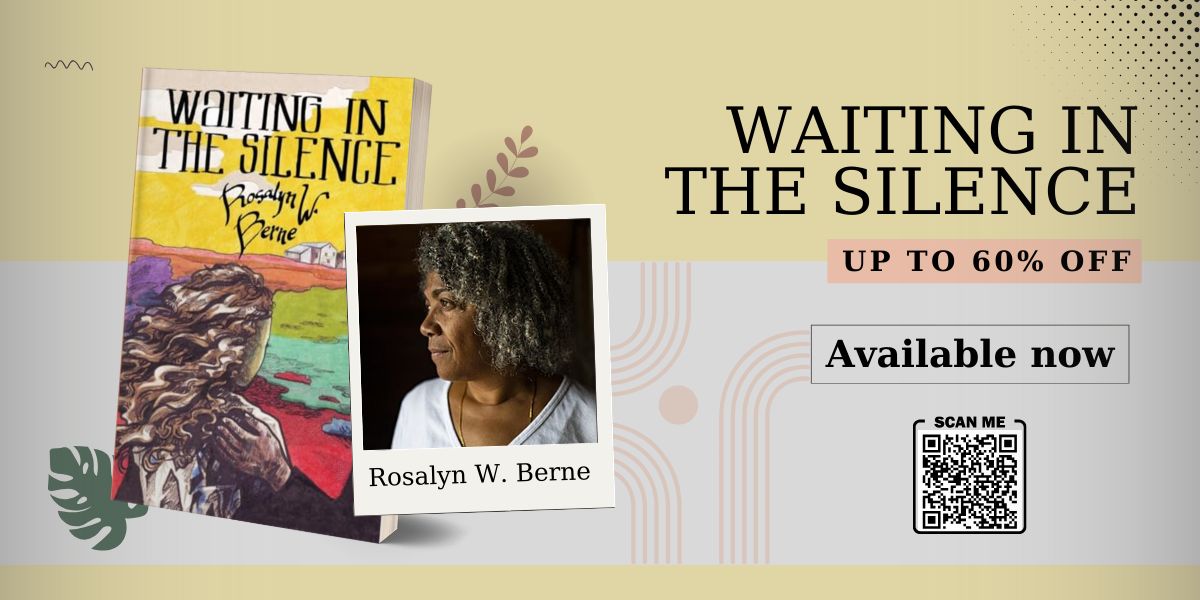
On the island of Nantucket, reproduction is governed by VISHNEW, a conscious AI that mandates gestation in exo-uteruses with constant genetic monitoring. When Oriana chooses to carry her child naturally—refusing technological interference—she is charged with multiple violations, including unauthorized conception and fetal endangerment. The consequences are severe: she could lose her fertility rights, access to her child, and even her personal agency.

Berne’s prose is lyrical and sharp, guiding readers through a world both futuristic and disturbingly plausible. The narrative pulses with tension as Oriana flees her home, evades surveillance, and seeks refuge in abandoned places, all while her body prepares to deliver the life she’s risking everything to protect.

Adding rich texture to the story is Berne’s YouTube podcast series, which dramatizes scenes from the novel in audio form. In episodes like “The Retrieval,” Berne narrates Oriana’s experience with remarkable emotional depth, supported by voice actors and immersive sound design. These episodes aren’t just add-ons—they offer an insider’s look into the heart of the book, deepening the listener’s understanding of Oriana’s emotional world.

The novel also explores themes of ecological decay and generational loss. Through Oriana’s memories and interactions with her grandfather, the story hints at a time before AI dominance, when nature was still a guiding force. These moments offer quiet reflections on what’s been lost in pursuit of perfection.

Waiting in the Silence is a meditation on bodily autonomy, human resilience, and the sacred bond between parent and child. It asks us to consider: in a world that worships control, can love be a radical act?

Unlike other books, what makes Oriana’s journey so powerful is its intimacy. Her resistance is not one of weapons or loud slogans. Instead, it contains personal conviction and maternal instinct, which Berne is able to highlight masterfully, showing her courage with compassion, anchoring Oriana’s choices in love and fear rather than ideology.

As the final hours before delivery draw near, Oriana seeks refuge in Nantucket’s deserted Quaker Meeting House. The silence of the space echoes with centuries of human longing for freedom of conscience, now serving as her shield against relentless pursuit. Here, the stakes sharpen into a single truth that ascertains the control over her own body and the future of the child she carries. This quiet rebellion from VISHNEW’s relentless transforms the novel into a reflection on how the human spirit endures, even when intelligence not of our making claims authority over life itself.

In short, Berne’s novel, combined with her podcast, is a thought-provoking, deeply moving contribution to feminist speculative fiction. In this regard, this book becomes a quiet, urgent call to listen to for the future of digital health interventions and the possibilities it could bring.

Readers have echoed the book’s intensity and resonance. Some call it “fast-moving” and rich in foresight, a narrative that flips between Oriana’s desperate final hours and memories of growing up in a world where nanotechnology dominated every choice. Others describe it as “thought-provoking” and “terrific science fiction,” pointing out how its Nantucket setting and its uncanny predictions about digital health interventions make it both believable and unsettling. In short, it is a book that pushes us to confront our relationship with progress and the unseen systems guiding our lives.

Availability:

This book is available on Amazon: https://www.amazon.com/dp/1511851953.

About the Author:

Rosalyn W. Berne, Ph.D., is the Olsson Professor of Applied Ethics and chair of the Department of Engineering and Society in the School of Engineering and Applied Sciences at the University of Virginia. She is author of “Nanotalk: Conversations about Ethics, Meaning, and Belief in the Development of Nanotechnology” (2005) and “Creating Life from Life: Biotechnology and Science Fiction” (2014), as well as the science fiction novel “Waiting in the Silence” (2012), and two award-winning books in the genre of body-mind-spirit: “When the Horses Whisper” (2013) and “Waking to Beauty” (2016). Forthcoming is “Animals, Ethics, and Engineering” (anticipated 2024). Rosalyn Berne was awarded a National Science Foundation Career Award for her research in nanotechnology ethics. She directs the Online Ethics Center for Engineering and Science (OEC).

For media inquiries or author interviews, please contact:

Book Name:  Waiting in the Silence

Author Name:  Rosalyn W. Berne 

ISBN Number: 978-1511851954 

YouTube: Click Here

Book Paperback Version: Click Here

A Thrilling Orbit Through Power, Trust, and the Future of Earth

By: Elena Mart

There’s something uniquely terrifying about silence in space.

Not the romanticized silence of stars glimmering above, but the cold, clinical quiet of a machine malfunctioning two minutes too late. Of systems failing in invisible ways. Of trust breaking down 22,000 miles above the only world we know. In Nicolas Pollet’s extraordinary sci-fi thriller ISS Stargraber, silence becomes a weapon, and suspense stretches across the most ambitious structure humanity has ever built.

Set in the year 2153, ISS Stargraber doesn’t rely on aliens, lasers, or time travel. It roots itself in a terrifyingly plausible reality. Earth has entered a golden age, one powered by a 25,000-mile-long orbital ring known as the Stargraber Geo Orbital Station. This massive space station provides the entire planet with clean solar energy. It ends the fossil fuel era. It halts war. It feeds nations. For once, humanity gets it right.

Or so it seems.

When systems aboard Stargraber begin to fail, first subtly, then dangerously, it’s brushed off as technical glitches. But when a respected scientist is nearly killed in a bizarre accident, John Desmond, head of station security, begins to suspect sabotage.

What follows is a gripping unraveling of secrets, as Desmond and a brilliant geochemist partner race to find the saboteur before the failures grow irreversible.

Desmond is the kind of protagonist who grounds a complex story: haunted, sharp, emotionally restrained, yet quietly relentless. He’s no superhero, and that’s what makes him so compelling. He’s doing what anyone would do in his place, if they dared to question what the world wants them to accept.

What makes ISS Stargraber stand out isn’t just its premise but its tone. It’s a thriller wrapped in science fiction. Still, it reads like a slow-creeping conspiracy where every clue matters and no system is as stable as it appears. The sabotage isn’t flashy. It’s subtle, like a virus hidden in code or a pressure valve off by half a percent. And that makes it all the more terrifying.

The novel’s world-building is exceptional. Pollet doesn’t overload readers with tech jargon, but instead blends realism with imagination. The space elevators, the solar relay systems, the adaptive shielding—all feel grounded in existing scientific theory. The Stargraber station itself is both a marvel and a metaphor: vast, glittering, yet fragile. The station isn’t just a setting; it’s a character—one that reflects the delicate state of the world it was built to protect.

Political tension simmers beneath the surface. Different nations control different sections of the ring. Each has its own interests, agendas, and secrets. As Desmond digs deeper, it becomes clear that Stargraber is not the beacon of peace it pretends to be. It’s a pressure cooker waiting to explode.

Adding emotional depth to the story is Desmond’s chemistry with the female geochemist who becomes his closest ally. She’s brilliant, driven, and unafraid to challenge assumptions. Their dynamic brings balance to the investigation and heart to the high-stakes plot.

Pollet’s prose is crisp, cinematic, and intelligent. Every scene moves with purpose, and the tension escalates with precision. Readers who appreciate the tight plotting of Tom Clancy, the speculative realism of The Expanse, or the emotional intelligence of Arrival will find themselves fully immersed.

As the sabotage plot unfolds and Desmond fights against time, the stakes rise not just for the station but for the world. If Stargraber falls, Earth may follow. And no one, not even the people in charge, knows how to stop it.

In the end, ISS Stargraber is an urgent, thrilling, and thought-provoking read. It’s for fans who love their science fiction grounded, their characters complex, and their suspense nerve-wracking. Pollet has created something special here: a future that feels all too close and a story that refuses to let go.

If you’re ready to orbit the edge of catastrophe and question everything we trust to keep us alive, then ISS Stargraber is your next must-read.

Availability:

The book is available on Amazon for purchase: https://www.amazon.com/dp/B0F56P7XVR.

About the author:

Nicolas Pollet is a 56 years old man living in Geneva, Switzerland. He is a multidisciplinary artist whose main passions reside in photography, music, and writing. His love for Sci-Fi and action-packed movies from his youth led him to write this novel. His mantra as a novelist is “read the action, see the action.”      

For media inquiries or author interviews, please contact:

Book Name:  ISS Stargraber

Author Name:  Nicolas Pollet

ISBN Number: 978-1967963225 

Website: Here 

Ebook Version: Here

W. Matthew Hart: A Storyteller of War, Legacy, and the Sea

By: Elowen Gray

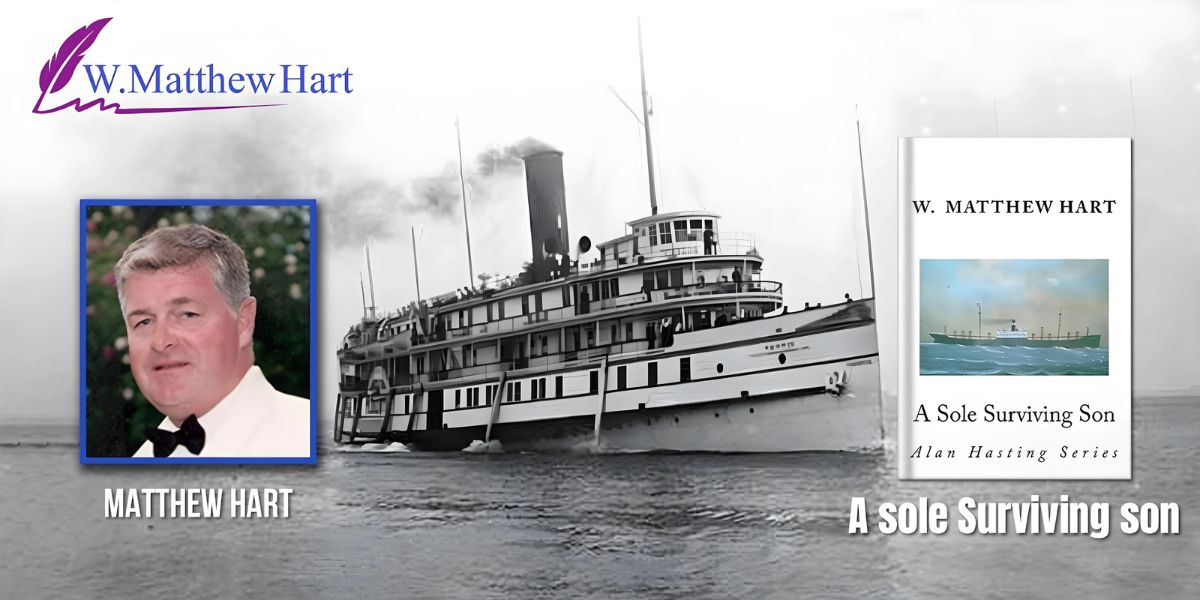
Matthew Hart’s life has been as layered and intriguing as the stories he tells. His novel, Sole Surviving Son, is more than just a historical fiction work; it’s a deeply personal exploration of war, family, and the echoes of history. Drawing from real experiences and his family’s maritime legacy, Hart crafts a story that is rich in detail and emotion. It captures a world shaped by war and a man influenced by memory, imagination, and truth.

Hart’s journey into writing didn’t begin in a traditional setting. He didn’t start in a writing class or a quiet study. Instead, it began on long flights during a successful career in technology and business. After serving in the U.S. Navy and later working for companies like Motorola, EDS, and IBM, he found himself with time and space to reflect. He began putting stories on paper that had lived inside him for decades. As someone who spent a lifetime facing the evolving worlds of aviation, electronics, and global commerce, he had a distinct lens through which to see the world. This view, paired with a deep sense of family history, is what ultimately shaped his voice as an author.

The idea behind Sole Surviving Son came from his grandfather, who captained a merchant ship during wartime. This real ship, the S.S. Deepwater, becomes the foundation for the story. Fact and fiction are carefully combined. The novel transports readers back to 1939, as Captain Walter Alan Hast navigates his crew through treacherous waters with a mysterious cargo on board. Alongside this historical thread, the book also follows a modern-day storyline where Alan, the captain’s grandson, uncovers the hidden history that connects him to his family’s past. These two narratives interweave, each revealing layers of identity, responsibility, and truth.

Hart doesn’t rely solely on plot to move his story forward; he also leans into emotion and character. His characters are not simply there to fill a page; they feel genuine, honest, and deeply flawed. Captain Hast is portrayed as a man of quiet strength, burdened by duty yet holding onto hope. His grandson, Alan, represents the modern curiosity to understand our roots and what they say about us. The book invites readers to witness how legacies are passed down not just in stories but also in silence, in what is left unsaid between generations.

The themes Hart explores in the book speak clearly to today’s readers. Legacy, identity, and sacrifice are not just historical concepts; they are relevant in the present. In a world where many people are searching for answers about their ancestry and heritage, this story offers more than history. It provides a connection. The emotional weight carried by the characters feels real because many readers have also known loss, longing, or the confusion of not knowing where they come from. His writing brings comfort and clarity by reminding us that the past, no matter how distant, is never truly gone.

What also makes the book unique is the way it captures historical accuracy without overwhelming the reader. The attention to detail, whether it’s the design of the ship, the role of radio equipment, or the fear of German U-boats, grounds the story in a believable setting. Yet, the book never loses its emotional pulse. He does not write to show off knowledge; he writes to engage readers, making history feel personal and immediate. His style is direct but layered, guiding the reader through decades of secrets, memories, and revelations.

As a piece of historical fiction, the book stands apart because it doesn’t treat history as something distant or dry. Instead, it connects the past with the present. Hart demonstrates how events that occurred long ago continue to affect the lives of people today. Through Alan’s journey of discovery, readers are reminded that understanding your family’s story can offer insight into your own. The questions Alan asks are ones that many readers will relate to: Who were the people before me? What choices did they make? What has been hidden or forgotten, and why?

One of the most powerful messages of the book is the importance of remembering. Not just remembering dates and events, but the emotions and sacrifices behind them. He doesn’t just tell a story of war; he tells a story of people caught in the storm of history. The book shows how war doesn’t end when the fighting stops. Its effects resonate in families, in memories, and personal lives long after the last battle is over.

The impact of the novel goes beyond entertainment. Readers have described being drawn in by the suspense, the emotion, and the feeling of discovering something meaningful. It’s not just a page-turner; it’s a story that lingers with you. The characters stay in your thoughts, and the questions raised about family, identity, and redemption continue to echo after the final chapter.

In today’s fast-moving world, a book like this feels especially important. It invites readers to slow down, think deeply about their origins, and listen more closely to the stories of those who came before them. It reminds us that the past is not just something to study, it is something to feel and understand.

Matthew Hart has not only written a compelling novel, but he has also offered readers a reflection between generations. Through his storytelling, he helps preserve the voices of those often lost to time. And by doing so, he encourages others to do the same—to look back, to ask questions, and to find the truth in their own families. In a world hungry for connection, Hart’s work offers both history and heart.

Disclaimer: The views and opinions expressed in this article are those of the author and are for informational purposes only. Sole Surviving Son is a work of historical fiction, and while it draws on real historical events and personal experiences, certain aspects of the story are fictionalized. The author’s personal experiences and views should not be taken as universal or representative of all individuals’ experiences.

The Story Behind ‘Happiness Declassified’: How Pete Pallares Co-Authored a Cognitive-Behavioral Guide to Emotional Well-Being Inspired by His Own Experience

By: Zach Miller

Happiness is a word that is often used. Yet for Pete Pallares, it became a lifelong pursuit.

Born in Barcelona and now based in the Bay Area, Pallares’ career is centered around service, empathy, and leadership. Over the years, he has received recognition such as Entrepreneur of the Year 2018, Healthcare Leader of the Year, and a spot on Inc. 5000. He was also named a “CEO to Watch” in 2021.

But titles and honors only tell part of his journey. Pallares has the ability to turn difficult experiences into lessons that benefit others. His years of work in autism support, behavioral health, and community development have shown him the significant role emotional well-being plays in human life.

That led him toward one of his most important projects to date: co-authoring the book Happiness Declassified.

Happiness Declassified: A Manual for Emotional Strength

Published in 2024, Happiness Declassified is described as “a comprehensive guide for developing emotional intelligence.” Pallares teamed up with internationally recognized psychologist Rafael Santandreu to write it. Together, they created a book that blends cognitive-behavioral tools with personal experience, making emotional well-being approachable and attainable.

  • Practical roots: The philosophy outlined in the book is grounded in decades of research and practice. Thousands have applied these ideas to address challenges like anxiety, depression, isolation, and communication difficulties.
  • Real-world insights: Happiness is not something to wait for. It’s something to work toward. The book includes exercises, examples, and stories of individuals who changed their outlook.
  • Accessible to everyone: While based on cognitive-behavioral therapy, the tone is engaging, direct, and optimistic. Readers feel guided rather than lectured.

The result is a resource that readers describe as life-enhancing. People who once struggled with anxiety and self-doubt now talk about calmness, clarity, and resilience. The personal stories resonate more than any accolade.

A reader shares, “‘Happiness is in your hands.’ As a woman and a mother of three adult children, this book spoke to me. The authors provide case studies grounded in real-life situations and evidence-based research and practices. This allows the reader to reflect, strategize, and harness her own power to build a path to happiness. I passed this book on to my children and feel it has universal appeal, making it a must-read, distinct from other self-help books. Happiness is within our control.”

Another reader notes, “Don’t read this book if you like being unhappy!” While yet another says, “It invites you in and gives you an opportunity to view your life through a different perspective. Your own. It’s truly a gift.”

Beyond the Book: The Pedro Pallares Foundation

Writing a book is one part of Pallares’ journey. The other is his ongoing work through the Pedro Pallares Foundation (PPF), which he founded in 2016. The foundation was created to fight poverty, improve mental health, and expand opportunities for under-resourced communities. Its programs range from food security to scholarships for neurodiverse students.

Here’s how PPF makes an impact:

Food Security: Providing access to safe, nutritious meals for families who face difficulties meeting basic needs.

Affordable Housing Support: Promoting stability for families by ensuring safe, affordable housing that helps them focus on education and growth.

Mental and Behavioral Health: Supporting individuals through healthcare systems and offering access to quality mental health services.

Scholarships: Funding higher education for students from neurodiverse and underserved communities.

Sports and Inclusion Programs: Creating environments where equity, diversity, and inclusion are actively practiced.

Pallares believes that “everyone deserves a fulfilling life.” The foundation exemplifies how those words can be turned into action across local and global communities.

Summary

Pete Pallares has embraced many roles: entrepreneur, researcher, author, and foundation leader. He is dedicated to human growth and serving others with empathy. Through Happiness Declassified, he distilled years of experience into a guide for anyone who seeks to live with more strength, purpose, and joy.

The book is not just a theoretical concept. It is a practical resource for everyday life. It offers readers tools to build resilience and hope. Paired with his foundation’s ongoing initiatives, it underscores Pallares’ commitment to providing people with the tools, resources, and mindset needed to thrive.

Pallares demonstrates that happiness is not a hidden secret. It is something that can be learned, practiced, and shared.