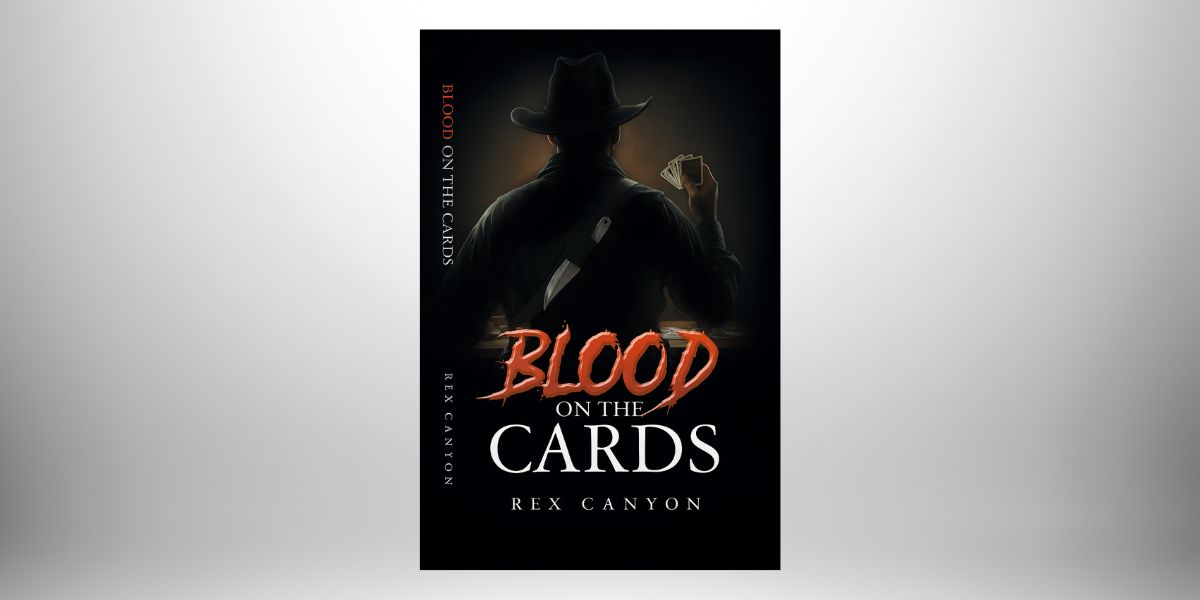
Blood on the Cards: The Story of Samuel Elliott Spencer, Three-Fingered Survivor of the Wild West by Rex Canyon

By: Wyles Daniel

In Blood on the Cards, Rex Canyon tells the story of Samuel Elliott Spencer, a young man known as the “three-fingered card player” for his maimed hand and skillful throwing knife. The novel follows Sam’s life in the American West, where he faces danger with skill and quick thinking.

A Young Man’s Hard Start

Sam Spencer, at 15, works as a ranch hand in Los Cuchillos, Texas. A gunfight with the Beekman brothers changes everything. They kill his friend, Burt Westcott, and leave Sam with only three fingers on his right hand after a brutal axe attack. Unable to continue as a cowboy, Sam turns to card play, earning his nickname, the “three-fingered card player.”

His real strength lies in his throwing knife, which he masters to survive in a world of fast guns. Sam’s knife becomes more reliable than his .32 pistol or derringer. Canyon shows how Sam, a lanky orphan, grows into a man who relies on precision to face the West’s dangers.

Cards and Peril

Sam’s card-table contests are about more than money—they’re about staying alive. He travels to saloons in towns like Abilene, Dodge City, and Leadville, playing high-stakes hands. His reputation as the “three-fingered card player” with a deadly knife spreads after a fight in Emersonville, Colorado. A miner accuses Sam of cheating and pulls a gun, but Sam’s quick knife throw effectively neutralizes the threat.

Canyon paints the West as a place where a single card can lead to violence. Sam’s skill with his blade saves him from rivals and drunks. His calm thinking helps him outlast those who challenge him, from saloon brawls to tense standoffs.

A Quest for Revenge

Sam’s main goal is to confront Blair Beekman, who took his fingers. In San Antonio, he faces Blair at a card table. With a swift throw, Sam’s knife severs Blair’s thumb, restoring some balance to the score. Later, in Carillos, Sam fights the remaining Beekman brothers—Jimmy and Carl—in a deadly clash. He survives, but a bullet wounds his heel.

The story shows the heavy toll of revenge. Sam feels guilt for the lives he takes, even when forced to defend himself. Canyon focuses on Sam’s knife-throwing skill, which becomes more central to his identity than any gun. In Denver, a final high-stakes moment tests the “three-fingered card player” as he faces his past.

Searching for Peace

Sam’s life isn’t only about settling scores. In Los Cuchillos, he reconnects with Catherine Lewis, a friend from his youth. They marry, and their son brings hope for a quieter life as a rancher. Sam tries to leave his violent reputation behind, but a bounty hunter named Jace Pinson changes everything. Mistaking Catherine for Sam, Pinson kills her, pushing Sam back toward his knife and a quest for justice.

His friendship with Arkansas Pearl, a colorful card player, offers moments of lightness. Pearl’s tales of their shared card-table days contrast with Sam’s wish for a stable life. Canyon shows Sam’s struggle to escape the shadow of his “three-fingered card player” name.

The West Comes to Life

Canyon’s frontier feels real, from dusty Texas ranches to Denver’s crowded saloons. His clear descriptions put readers in the middle of card games and knife fights without overwhelming detail. Sam’s throwing knife, born from his injury, makes him stand out in a world of gunfighters. Unlike others who rely on revolvers, Sam’s blade becomes his trademark.

The novel highlights skill over brute strength. Sam’s choices shape his path, whether at a card table or in a showdown. Canyon’s knowledge of Western history adds depth, drawing from real events and classic films to make the frontier feel alive and grounded.

A Player’s Last Hand

Blood on the Cards ends with Sam running his ranch and raising his son while hunting Pinson. His wealth from card play, including a $95,000 gold nugget won in Denver, gives him the opportunity to rebuild. Yet, the “three-fingered card player” remains tied to his past, with his knife always close. Canyon’s straightforward writing makes Sam’s story easy for any reader to follow.

The novel appeals to those who enjoy tales of survival and tough choices. It avoids overblown drama, focusing on a man whose knife and wits define him. Sam’s life shows that every decision carried its own weight in the West, whether in a saloon or on a ranch.

A Man Shaped by the Frontier

Canyon’s story doesn’t offer simple endings. Sam’s knife-throwing skill, born from necessity, makes him a unique figure in the West. His reputation as the “three-fingered card player” follows him from smoky saloons to quiet ranches. The novel shows a man caught between violence and a longing for peace, shaped by a world where survival demands quick hands and a sharp mind.

About the Author

Rex Canyon has spent decades in newspapers, drawn to stories of the Old West. His love for history and storytelling stems from classic Westerns and true tales of frontier life. The sweeping landscapes of John Ford’s films and the legends of the past inspire his work.

He is especially interested in the struggles of the Jayhawkers and Quantrill’s Raiders, a time of survival and rebellion. When not writing, Rex reads and researches the people who shaped the West, bringing their spirit to life in his stories.

Website: https://rexcanyon.com/

Amazon: https://rb.gy/8s8rs0

Brian S. Bradley Explores Meaning Behind Clichés in New Book

By: Roy Abraham

At first glance, Brian S. Bradley’s life reads like an adventure novel—Florida beaches, Colorado mountaintops, solo travels across Europe at 18, and a long stretch spent saving lives as a ski patroller in the Rockies. But if you ask him, the most daring thing he’s ever done wasn’t carving down powdery slopes or moving states. It was picking up a pen at fifty.

Yes, fifty.

While some people start writing as teenagers and others dream of publishing all their lives, Brian’s foray into authorship came from a deeper impulse: the need to express and make sense of the words we all use every day. And not just any words, clichés.

You know them: “It is what it is.” “Think outside the box.” “The grass is always greener.” We throw them around like conversational confetti, often without stopping to think about what they really mean, or if they mean anything at all.

In The Cliché Chronicles: A Whimsical Journey Through the World of Clichés, Brian talks about those everyday phrases with both wit and wonder. And the result is a book that’s as thoughtful as it is entertaining, as informative as it is unexpectedly engaging.

From Mountain Rescues to Manuscripts

Brian’s journey to writing wasn’t inspired by writing workshops or publishing connections. Instead, it was shaped by lived experiences—by years of seeing people at their best and worst, on the side of a snow-covered slope or sitting around a family dinner table. He’s lived in Boca Raton, Delray Beach, Denver, Frisco, and now Blue Ash, Ohio. He’s worked outdoors, traveled solo, and, like many of us, eventually reached a point where the stories inside him couldn’t be ignored any longer.

At fifty, that creative urge turned into action.

A Fresh Take on Familiar Words

The book isn’t your typical dictionary of definitions or dry linguistics lecture. It’s lively and full of cultural references, writing prompts, and literary observations. Brian combines the academic with the accessible, tracing the history of phrases from Shakespeare to TikTok while maintaining a conversational tone.

Each chapter tackles a different angle: clichés in comedy, business, digital culture, inspirational quotes, writing, and even cross-cultural communication. There are reflections on overused office phrases like “Circle back,” laugh-out-loud deconstructions of stand-up routines that rely on phrases like “If at first you don’t succeed,” and thoughtful critiques of sayings like “Everything happens for a reason.”

But perhaps the book’s biggest strength is how self-aware it is. Brian doesn’t simply criticize clichés. He invites readers to interact with them and even reimagine them. Exercises like the Cliché Twist Challenge and the Cliché Innovation Lab make the book interactive and enjoyable, encouraging everyone to get in on the act.

Humor Meets Humanity

What sets The Cliché Chronicles apart is Brian’s voice. It’s the voice of someone who’s been around the block, but still wonders at every turn. There’s humility in the pages, the kind that comes from knowing what it’s like to doubt your creative worth, to wonder if anyone will care what you have to say.

When his debut book was finally complete, Brian felt the same nervous excitement many authors feel—wondering whether people would relate to it or if they would even bother to purchase it.

The answer? An enthusiastic yes.

Early readers have appreciated the book’s blend of insight and humor, and many say it changed how they see the everyday language they use. One thing is clear: The Cliché Chronicles is more than a book. It’s a reflection. It shows us how much we rely on language to make sense of the world, and how often that language is repeated and reshaped.

A Writer in the Second Act

Now, with his first book behind him and more ideas in the pipeline, Brian is not just a writer. He’s a creator entering his second act. His story reminds us that it’s never too late to start something new, never too cliché to say, “Why not now?”

In fact, that might be the greatest twist of all: a man who turned the most overused phrases into something original, thoughtful, and unexpected.

So, the next time someone says, “At the end of the day…” you might just hear Brian’s voice in the back of your mind, encouraging you to laugh and rethink the way you speak your world into being.

Why Childhood Friendships Matter: Lessons from David, Nick, Evan & Jessie

By: Sam N. Gallegos

Friendship shapes who we are in ways we often overlook until we look back on our lives. In many stories, a simple bond between young people carries them through life’s ups and downs. Raymond Sierra’s novel Fourteen Days brings this idea to life through the eyes of fourteen-year-old David and his three best friends, Nick, Evan, and Jessie. In their two weeks together, they learn about courage, laughter, and quiet understanding, and they each help David grow in his own way.

Nick stands out as a brave and bold leader. He shows David how to stand tall even when fear creeps in. Nick never shies away from a tough moment. He teaches David that true strength does not come from muscles alone. It springs from the will to do what feels hard but right. When David sees Nick defend him against a bully, he feels safe and more confident. That moment gives David the courage to face other challenges.

Evan brings energy and humor into the group. He speaks his mind, even if his words sometimes sting. He pushes David to step outside his comfort zone. When Evan drags David to the arcade or dares him to join a late-night talk on the roof, David discovers a spark of adventure inside him. Evan’s bold talk reminds David that it is okay to feel excited, to laugh at mistakes, and to embrace a little chaos now and then.

Jessie shows quiet wisdom and patience. He listens more than he speaks, and his gentle advice often comes at the right time. Jessie helps David slow down and think. When David feels overwhelmed by family troubles or school stress, he finds comfort in Jessie’s calm presence. Jessie reminds him that friendship is not always about action and excitement. Sometimes it is about simply being there, side by side, in silence or soft conversation.

David, at age fourteen, acts as the heart of this circle. He reflects on his own fears and hopes while interacting with his friends. He learns that loyalty ties them together. He feels tender emotions, like jealousy, anger, and joy, and he works through them with the help of Nick, Evan, and Jessie. Each friend offers a different view of life, and David blends those views into his own sense of self. He begins to trust himself more as he sees how each friend faces life’s challenges uniquely.

Together, the four boys build a stronger bond than any one of them could alone. Their differences become their strength. When Nick’s courage meets Evan’s humor and Jessie’s calm, David sees a complete picture of what it means to be a friend. He realizes that friendship holds up a mirror, showing both our flaws and our standout qualities. Childhood friendships like these give us lessons that last a lifetime.

Real-life friendships gain depth when we welcome people who think and act differently. We learn new skills, gain fresh perspectives, and become more well-rounded. A brave friend can teach us courage. A cheerful friend can lift our mood. A quiet friend can ground us when life spins too fast. In return, we offer support, loyalty, and our own talents. We form a team that faces life’s ups and downs together.

Fourteen Days reminds us of the magic in ordinary moments shared with friends. A backyard baseball game becomes a lesson in teamwork. A walk home after a long day becomes a chance to share worries and hopes. These simple acts shape our hearts and minds. We grow through laughter, debate, and quiet understanding.

If you want to relive the true power of friendship and watch a boy discover himself through his closest allies, pick up Fourteen Days by Raymond Sierra today. This story will touch your heart and remind you why childhood bonds stay with us forever. Serious. Timely. Unforgettable.

Illuminating Life: How Virginia M. Lawrence Turned a Streetlight’s Perspective into a Story of Community and Wisdom

By: Elowen Gray

“My grandson had to write from the perspective of something non-human,” Lawrence explains. “Initially, we thought of a lamppost, something stationary, quietly observing community life. Although my grandson eventually chose a different subject, the idea stuck with me.”

Thus began the story of R.J., a streetlight endowed not only with keen observation but also with genuine emotions, wit, and an earnest desire to better his neighborhood. Lawrence’s story elegantly balances humor, real-life scenarios, and powerful teachings, cleverly wrapped in an engaging, approachable narrative style. Her choice of a streetlight as the protagonist underscores a deeper message: everyone and everything, no matter how seemingly insignificant, plays a pivotal role in the community.

Lawrence deftly uses R.J.’s unique perspective to explore real-world situations—children misbehaving, individuals facing hardships, community heroes stepping up—and artfully conveys lessons about empathy, responsibility, and safety. Through R.J.’s interactions with colorful neighborhood characters, from playful children like Bobby Crawford to the troubled yet sympathetic neighborhood drunk, Parker, the story emphasizes community interconnectedness.

“R.J. helps the community by literally lighting the way during darkness,” Lawrence says. “But beyond physical illumination, he symbolizes guidance and vigilance. It’s essential for young people to recognize their roles in their communities and the impact they can have.”

Lawrence approaches serious topics with careful simplicity, ensuring the narrative remains accessible to young readers. Her storytelling blends gentle humor with significant life lessons, making complex issues like crime and personal responsibility approachable for children.

One poignant example from the book involves a robbery that occurs when R.J.’s light goes out, highlighting his significance in community safety. This dramatic event not only intensifies the narrative but vividly illustrates the importance of each individual’s contribution, no matter how mundane their role might seem.

“Writing these moments was about demonstrating that even in darkness and difficulty, there’s hope and strength in community support,” Lawrence notes. “R.J. symbolizes stability and constancy—qualities often undervalued but deeply necessary.”

Lawrence’s unique approach makes her book stand out in a crowded field of children’s literature. Unlike typical talking animals or magical creatures, her protagonist is rooted firmly in realism and everyday observation. The lessons R.J. imparts are relatable and grounded in genuine human experiences, resonating strongly with both young readers and adults.

Feedback from friends and family has been overwhelmingly positive, praising the story’s originality and relatability. “They’ve said it felt familiar and comforting, seeing scenarios they recognized reflected through R.J.’s eyes,” Lawrence shares. Her readers eagerly anticipate the book’s wider release, confident that it will strike a chord with a broader audience.

Reflecting on the balance between the humorous and emotional parts of her story, Lawrence admits, “It was equally fun writing both. Blending humor with real-life situations kept the story engaging and provided teachable moments without becoming didactic.” She believes that humor allows readers to connect more easily with the characters, while emotional depth ensures the story resonates long after the final page. For Lawrence, this blend wasn’t just about storytelling—it was about making young readers feel seen and valued.

At the heart of her narrative lies a powerful message: every individual has worth, regardless of how ordinary they may seem. Through R.J.’s adventures, she wants readers to understand that they too are significant, that their presence and actions matter. “Everyone has a purpose,” she emphasizes. “Even a streetlight.” It’s a reminder that even the quietest observers in a community can shine a guiding light and help illuminate paths for others.

Looking ahead, Lawrence is already working on another book inspired by her own childhood in Detroit, which promises to offer equally deep insights rooted in personal experiences. Growing up in Detroit’s urban heart, she faced challenges, overcame significant obstacles, including childhood illness, and learned the strength that comes from community solidarity. She believes firmly in storytelling as a tool for education and community engagement, particularly for young readers finding their way through the complexities of their own worlds.

Virginia M. Lawrence’s work serves as a powerful reminder that impactful storytelling can come from the most unlikely sources, illuminating everyday wisdom with warmth and authenticity. In turning a humble streetlight into a beacon of hope and humor, she has crafted not just a book but a heartfelt ode to community, stability, and the quiet heroes who keep the darkness at bay. Lawrence’s journey as an author exemplifies the truth that creativity, compassion, and resilience are lights that can guide us through even the darkest nights, reminding us all that every life has a story worth telling—and hearing.

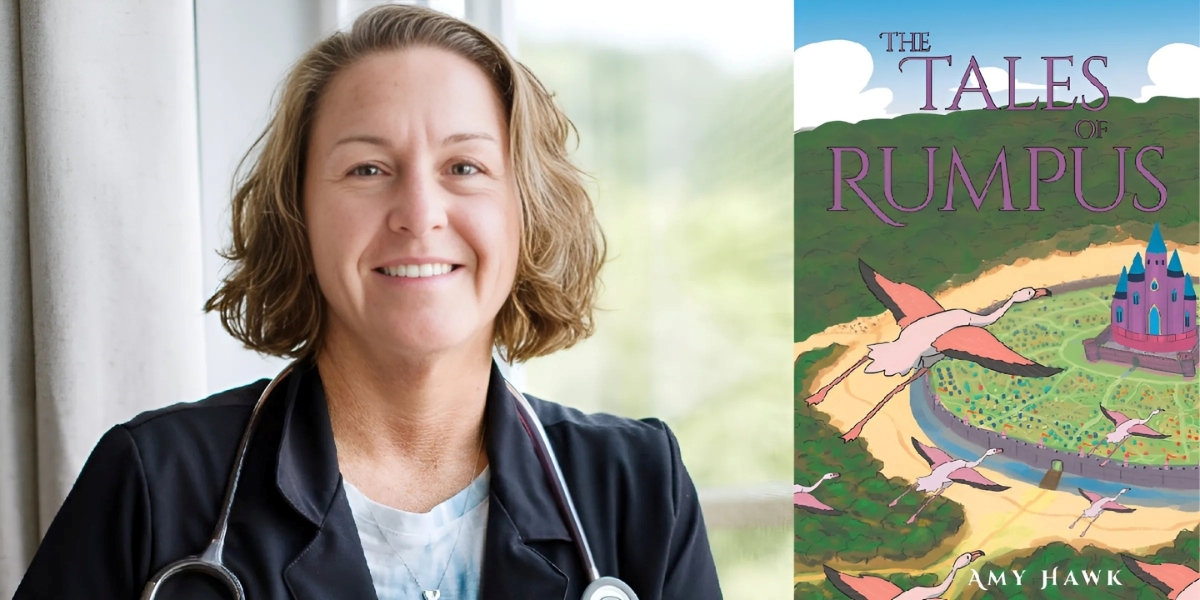
A Modern Fairy Tale, Rewriting Tradition: The Tales of Rumpus by Amy Hawk

By: Zayden Dale

Once upon a time, fairy tales often depicted a princess who needed saving. A prince or brave knight, often in shining armor, would battle dragons or lift curses, while the princess waited for rescue.

Author Amy Hawk has reimagined these roles to create a vibrant, heartfelt adventure for young readers with her debut novel, The Tales of Rumpus. In this story, princess Caitlin rejects the traditional damsel role. Instead, she becomes the leader, fighter, and voice her kingdom requires.

A Story Inspired by Love and Change

Amy Hawk grew up on classic fairy tales where women were often cast in passive roles, waiting to be chosen or guided by someone else. Over time, she realized that, while these stories were beloved, they also influenced how generations of girls saw themselves: as passengers in their own lives rather than drivers of their destinies.

By placing a strong, determined princess at the heart of The Tales of Rumpus, Hawk provides something many young readers can benefit from. Seeing women in powerful, active roles can inspire and, in some cases, reshape how readers view themselves. For young girls, it emphasizes that their courage matters, their voice counts, and they can take charge. For young boys, it encourages respect for female strength and promotes the idea of teamwork over traditional heroism.

“These stories show girls that they don’t need someone to save them, guide them, or tell them who to be,” Hawk explains. “I wanted them to understand that they can shape their own lives and relate to powerful girls doing powerful things.”

These stories don’t discard tradition but instead build upon it. They offer children a broader view of who can be brave, who can be wise, and who can wear the crown. By doing so, they open up space for every reader to imagine themselves, regardless of gender, as the hero of their own story.

Amy Hawk grew up in Missouri, and today, she wears many hats: a master’s-educated family nurse practitioner, an emergency room clinician, and a small practice owner in sunny Florida. But long before she was saving lives in scrubs, she dreamed of saving stories on paper. At just five years old, she wrote down that she wanted to be a novelist.

The spark that became The Tales of Rumpus ignited when her niece was born in 1998. Remembering the old fairy tales she had read as a child, Hawk felt inspired to craft something different — a story where young girls didn’t wait for someone to tell them who to be. Instead, they could be “strong and ferocious,” shaping their own destinies and showing young readers that leadership, courage, and compassion aren’t confined by tradition.

The Adventure of Princess Caitlin

Amy Hawk’s The Tales of Rumpus follows Princess Caitlin, who isn’t content to sit quietly on the throne waiting for a man to prove her worth. Determined to show that she is ready to rule, Caitlin embarks on “the coming,” a rite of passage no girl has dared attempt. With her friend Kat — a worldly traveler — she leaves the safety of the kingdom for the unknown realms beyond.

Through enchanted forests, talking animals, and magical allies like Bryce and Daniel the dragon, Caitlin discovers not only new lands but new truths about herself. She learns that courage isn’t about never being afraid — it’s about moving forward despite fear, relying on friendship, and trusting her instincts.

By the time she encounters Queen Riley in the final realm, Caitlin has grown into the leader she always hoped to be—someone who doesn’t aim to destroy tradition but to build upon it.

A Modern Fairy Tale, Rewriting Tradition The Tales of Rumpus by Amy Hawk

Photo: Unsplash.com

A Tale for the Whole Family

What makes The Tales of Rumpus stand out isn’t just its spirited heroine. Hawk’s writing gently blends comedy, adventure, and coming-of-age themes that resonate with readers of all ages. Parents may see reflections of the age-old struggle between generations — balancing respect for tradition with the need to let children find their own way. Children will see a princess who isn’t waiting to be rescued, but who rescues herself and her people through kindness, courage, and teamwork.

Family, as Hawk reminds us, isn’t confined to blood. It’s the village that supports us, gives us strength to be bold, and offers a safety net when we fall. Friendships, too, come in unexpected forms, including dragons, travelers, and the people we meet along life’s winding path.

A Modern Fairy Tale, Rewriting Tradition The Tales of Rumpus by Amy Hawk

Photo: Unsplash.com

Hawk wrote, rewrote, and refined the book over the years, letting her own life experiences shape the story’s depth. Her experiences as an adoptee, a nurse, a traveler, and someone who believes strongly in hard work are woven into every chapter. The result is a fairy tale grounded in real emotions: joy, anticipation, doubt, love, and pride.

Readers of all ages have embraced it warmly. Some of Hawk’s favorite moments came when seeing pictures of children cuddled up, completely immersed in her book. The heartfelt feedback from parents, who share that the story sparked meaningful conversations and deep reflections, shows that a book can be both enjoyable and significant.

In a world filled with knight-and-damsel stories, The Tales of Rumpus rewrites the script, demonstrating that bravery isn’t exclusive to princes and leadership isn’t inherited. Instead, it’s earned through courage, compassion, and stepping into the unknown.

And in doing so, Amy Hawk reminds all of us: sometimes, the knight in shining armor is the princess herself.

Follow Amy Hawk for more stories and updates:

Key Lessons and Takeaways from ‘101 Questions from My Daughters’ by John Glaser

By: John Glaser

John Glaser’s book, 101 Questions from My Daughters, is not just a collection of thought-provoking inquiries—it is an exploration of curiosity, wisdom, and the potential power of conversation. Through his daughters’ questions, Glaser offers insights into life, relationships, personal growth, and societal issues as he responds to questions such as: What were you like as a teenager? Who inspires you? What was one of the most difficult things you have ever done? What things matter most to you in life? What is your definition of love?

This book is not only a celebration of the inquisitive nature of children but also an invitation for readers to engage in meaningful introspection and dialogue.

The Power of Curiosity and Asking Questions

One of the most striking aspects of 101 Questions from My Daughters is how it emphasizes the importance of curiosity. Children have an innate ability to ask questions that adults often overlook or dismiss. Glaser embraces this curiosity, demonstrating that no question should be dismissed as too small or insignificant.

Throughout the book, he emphasizes that questioning the world around us can be one of the most effective ways to grow. He encourages readers not to settle for easy or surface-level answers but to explore different perspectives and seek knowledge from a variety of sources. In doing so, he reminds us that intellectual growth is a continuous journey, and maintaining a childlike curiosity can be essential for both personal and intellectual development.

The Importance of Honest and Thoughtful Conversations

One of the book’s key messages is the value of open and honest communication, particularly between parents and children. Instead of brushing off difficult or complex questions, Glaser takes the time to provide considered and thoughtful responses. He acknowledges that sometimes, there may not be simple answers—but that doesn’t mean the questions aren’t worth exploring.

By sharing his personal experiences, he illustrates how meaningful conversations help foster trust and strengthen relationships. His approach to answering his daughters’ questions is not about providing definitive solutions but about guiding them to think critically, consider multiple viewpoints, and expand their understanding of the world.

Encouraging Critical Thinking and Perspective-Taking

Many of the questions in 101 Questions from My Daughters challenge conventional thinking, prompting readers to reconsider their assumptions. Whether discussing ethics, history, or the mysteries of the universe, Glaser presents varied perspectives, encouraging a balanced approach to answering complex questions.

He teaches his daughters—and, by extension, his readers—to analyze sources, question biases, and arrive at well-informed conclusions. This lesson is particularly relevant in today’s world, where misinformation can spread quickly, and people often accept surface-level explanations without deeper inquiry.

By modeling intellectual humility and the willingness to say, “I don’t know, but let’s find out together,” Glaser inspires a mindset of continuous learning.

The Role of Emotions in Understanding the World

While many of the book’s discussions focus on logical reasoning, Glaser also emphasizes the importance of emotions in shaping our understanding. He acknowledges that some questions may not have purely rational answers—sometimes, the ideal response can come from personal experience, empathy, or moral intuition.

For example, when discussing topics such as love, happiness, and loss, he does not offer textbook explanations. Instead, he shares personal reflections, allowing his daughters (and readers) to engage with the topic on an emotional level. This approach makes 101 Questions from My Daughters deeply relatable, as it balances intellect with genuine human experience.

Navigating Life’s Uncertainty with Confidence

Many of the questions posed in the book reflect a universal human struggle: dealing with uncertainty. Glaser reassures his daughters that it’s okay not to have all the answers. He suggests that embracing uncertainty is a fundamental part of life.

Rather than seeking definitive conclusions, he teaches that it is more important to develop a mindset that is adaptable and open to new information. Whether discussing future career choices, ethical dilemmas, or personal identity, Glaser encourages his daughters to approach life with confidence, curiosity, and a willingness to learn from both successes and challenges.

The Joy of Learning Together

Perhaps one of the most touching aspects of 101 Questions from My Daughters is the idea that learning is not a one-way street. While Glaser provides answers, he also learns from his daughters in the process. He acknowledges that children often have perspectives that adults might overlook, and their questions can spark new insights—even for those who believe they have all the answers.

This lesson serves as a reminder that teaching is a collaborative process. Whether as parents, mentors, or simply as lifelong learners, we should always remain open to new ideas—no matter where they originate.

Practical Applications of Glaser’s Teachings

Beyond its philosophical reflections, the book offers valuable lessons that can be applied in everyday life:

  • For Parents: The book serves as an excellent guide for fostering open conversations with children. It encourages patience, honesty, and a willingness to explore questions together rather than shutting them down. 
  • For Educators: Teachers can utilize Glaser’s approach to foster critical thinking in the classroom, enabling students to engage with complex topics through discussion and inquiry. 
  • For Adult Children: The book poses questions that adult children can ask their parents as they seek to develop deeper relationships and understandings of each other. 
  • For Anyone Seeking Personal Growth: The book inspires readers to ask better questions, challenge assumptions, and embrace learning as a lifelong journey.

Summary: A Book That Inspires Thoughtful Reflection

101 Questions from My Daughters is a thought-provoking book that encourages deeper reflection and meaningful dialogue. Glaser masterfully blends intellectual depth with heartfelt storytelling, making it an inspiring read for parents, educators, and curious minds. It highlights the power of asking questions and embracing curiosity, reminding readers that true wisdom lies in the journey of exploration rather than just finding answers.

Watch John speak about his journey: https://www.yourcentralvalley.com/cvt/john-glaser/

For more information, visit:

Website: https://booksbyjohnglaser.com/

YouTube: https://www.youtube.com/@johnglasser.author

Also Available on Instagram and Facebook: @john.glaser.official

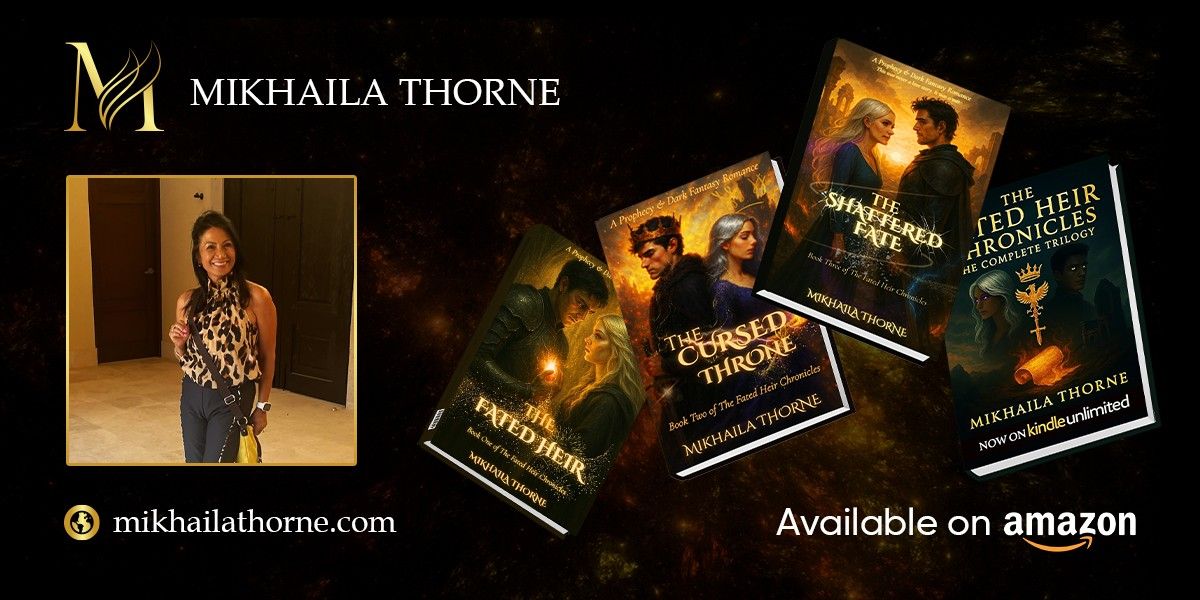
“Love Is the Battlefield”: Mikhaila Thorne’s Trilogy Unmasks Power, Pain, and the Beautiful Destruction of Fate

By: Connie Etemadi

What happens when fate shapes your heart—and then separates it? Fantasy romance author Mikhaila Thorne isn’t here to offer readers simple, idealized love stories. With her debut trilogy, The Fated Heir Chronicles, she presents an emotionally layered saga that explores what it can mean to love someone who might harm you.

Over the course of three emotionally charged books—The Fated Heir, The Cursed Throne, and The Shattered Fate—Thorne doesn’t just tell a story. She weaves a relationship under pressure, breaking her main characters down to their core and forcing them to rebuild, not once, but multiple times.

And what underpins it all?

“I didn’t want to write love as a reward,” Thorne says. “I wanted to write it as a reckoning.”

At the center of this trilogy is a bond that was never sought—and yet becomes essential. Caelum, a skilled warrior sent to kill, and Seraphine, a fae queen bound by prophecy, are pulled into an ancient soul connection neither fully understands. What begins as a curse gradually evolves into something deeper, more complex, and more challenging than either of them anticipated.

In The Fated Heir, their enemies-to-lovers dynamic develops from the moment they meet. But the magic that connects them isn’t gentle. It’s intense. Prophetic. Dangerous.

“When Caelum and Seraphine met, I didn’t want sparks—I wanted friction,” Thorne explains. “That feeling of ‘I resent you, but I need you like air.’”

As the series progresses, the bond becomes more than romance—it becomes a reflection of their most profound fears. In The Cursed Throne, love isn’t enough to keep them together. And by The Shattered Fate, that love has morphed into something almost unrecognizable—tender, brutal, and sacred in its scars.

“Sometimes love doesn’t save you,” Thorne explains. “Sometimes it reveals the part of you that needed to change.”

Seraphine is portrayed as powerful yet fragile, dangerous and divine in the chronicles. One of the most striking evolutions in the trilogy is her transformation. At the start, she’s untouchable—fierce, magical, untamed. But as the series unfolds, her magic wanes. Her sense of self unravels. And her power becomes something new.

“Seraphine starts off with every weapon. Power. Prophecy. Control. But I wanted to see who she becomes when she has nothing left but choice,” Thorne adds.

Instead of weakening her, this loss reveals her true strength. She becomes the kind of character who doesn’t need magic to lead, doesn’t need certainty to love, and doesn’t need approval to rise. She’s both fierce and tender. Desperation and devotion.

“It’s easier to be strong when you’re gifted power,” Thorne says. “But Seraphine had to become dangerous without it. That’s what makes her divine.”

Her journey isn’t about regaining what she lost—it’s about accepting the version of herself that was buried under expectation.

Caelum is the crowned weapon who never sought love—loyal, brutal, and conflicted in equal measure. From the first book, it is clear he doesn’t believe he deserves it. Raised to obey. Trained to kill. Sent to destroy Seraphine. The bond was never his choice—yet it shapes him nonetheless.

“Caelum is what happens when you give a sword a heart,” Thorne explains. “He’s always been loyal to the wrong things. Until her.”

By The Cursed Throne, Caelum is overwhelmed by duty and guilt. He becomes king—but the crown is more burdensome than anyone expected. His love for Seraphine remains strong, but it becomes strained. Dangerous. Tainted by pressure and politics.

And in The Shattered Fate? He’s a man pushed to the brink. Forced to choose between the woman he loves and the kingdom he’s bound to.

“I wanted Caelum to suffer,” says Thorne. “Not because I enjoy pain—but because I wanted to show what love looks like when it demands sacrifice.”

Though the world Thorne created is full of ancient gods, cursed magic, soul bonds, and violent empires—the true heart of the story lies in what her characters decide.

Over and over again, the books ask the same questions:

  • What happens when fate lets you down?
  • What do you become when power leaves you?
  • What if love isn’t a cure—but a challenge?

“The characters in this series aren’t trying to save the world,” Thorne says. “They’re trying to survive it—and hold onto each other long enough to matter.”

And that’s the brilliance of The Fated Heir Chronicles.

It’s not just a fantasy. It’s emotional truth wrapped in destruction and renewal.

It’s about people who could have given up—but chose not to. Who had every reason to walk away—but chose to stay. Who were broken—and still reached for each other with torn hands.

“That’s what love is,” says Thorne. “Not perfection. Not fate. Just two people choosing each other—even when it hurts.”

Fantasy is often used to escape reality—but Mikhaila Thorne uses it to reflect on it.

Her characters cry, rage, bleed, and break. But they also love deeply, fiercely, and without apology. She writes relationships that aren’t flawless—they’re flawed, toxic, healing, redemptive, and genuine.

What sets her apart is the raw vulnerability woven through every page. Even in a world of cursed gods and collapsing kingdoms, the truest magic is—and has always been—the people.

Their fear. Their courage. Their choice.

The Fated Heir, The Cursed Throne, and The Shattered Fate are now available in major retailers, including Amazon, Barnes & Noble, and Book Depository. Print and Kindle editions are available.

Book clubs, libraries, and indie bookstores can request signed copies and special bundles through her official website.

About Mikhaila Thorne

Mikhaila Thorne is a fantasy romance author known for her dark, lyrical prose and emotionally rich characters. With a background in storytelling and a love for complicated beauty, she writes from the belief that magic is real—and it’s found in the firelight between people.

This trilogy is her debut series—but judging by the response from readers, it likely won’t be her last.

“I don’t want to tell stories that sit quietly on a shelf,” Thorne says. “I want to write the kind that stay with you—and never leave.”

She lives with her books, her playlists of heartbreak and thunder, and the belief that even shattered things can still shine.

To stay updated on Mikhaila Thorne’s future releases, bonus content, and behind-the-scenes worldbuilding, follow her on Instagram and TikTok and subscribe to her newsletter at

Because this isn’t the end.

This is just the beginning of whatever you become—after the bond shatters.

Website: Experience Mikhaila Thorne’s Gripping Fantasy Adventure

Experience the series here.

Finding the Magic Inside Every Bucket: Gwendolyn Wildt Shares a Heartfelt Journey Through Her Children’s Book

By: Dar Dowling

In a world that often feels rushed and overwhelming, finding moments of calm, joy, and imagination can feel like a rare gift. Gwendolyn Wildt, a creative professional and devoted advocate for both children and adults, has transformed that gift into a tangible experience through her new children’s book, Buckets: The Magic Inside Every Bucket. The book is a poetic, vividly illustrated journey that gently teaches young readers—and the adults reading alongside them—about the power of letting go, embracing love, and finding peace in everyday life.

Wildt’s path to creating Buckets was both personal and inspired. “Buckets was born over a span of ten years, sparked by recurring dreams,” she explains. “Each time I woke up, I was inspired to write down the poetry that had come to me during the dream. Over time, the images and words became clearer, and I began to sketch what I saw. It was as if the story was gently asking to be told.” Her hope with this book is clear: to share a message of release, healing, and the magic that lives within all of us.

The metaphor of buckets serves as the emotional backbone of the book. Buckets, Wildt explains, are objects we see and use daily—they carry water, help us clean, or transport things in our homes and gardens. “That rhythm—filling up and letting go—became the perfect metaphor for releasing fear and making space for love,” she says. “Just like buckets, we all carry things. And with intention, we can empty what no longer serves us and fill up with something better.” This simple, tangible idea allows children to visualize and understand the abstract concept of letting go in a way that feels natural, engaging, and memorable.

Collaboration played a pivotal role in bringing Wildt’s dream to life. Working with illustrator Jewel Bree, Gwendolyn’s visions leapt from her sketches and poems into brilliantly colorful, joyful illustrations. “Jewel was a dream collaborator,” Wildt recalls. “I had pages of poems and journals filled with sketches, and she brought them to life with brilliance. She chose the vibrant yellow for the cover, and with every illustration, she honored the spirit of the book. Working with her felt like watching a dream transform into something tangible and beautiful.” The synergy between Wendy’s heartfelt words and Bree’s artwork ensures that each page of Buckets delights the eyes while touching the heart.

The book’s emotional resonance extends beyond its vibrant visuals. Wildt hopes that children emotionally connect with the story in a deep and personal way. “I hope Buckets gives children a gentle, visual way to understand the concept of letting go. My wish is that they see themselves in the story—and find comfort, courage, and calm each time they turn the page.” The book also offers a shared experience for parents, providing a moment to connect with their children while sharing a soothing, imaginative journey. Brightly colored buckets, playful imagery, and lyrical text combine to create a warm and comforting bedtime ritual.

Beyond storytelling, Buckets encourages reflection and mindfulness. At its heart, the book teaches the freedom that can come from release. Wildt emphasizes that letting go at the end of the day can be one of the most freeing gifts we give ourselves. “Imagine placing each worry into a bucket and allowing it to leave—welcoming peace and light in its place,” she says. “If Buckets helps even one child or adult rest more peacefully—if it adds 30 minutes of comfort to someone’s night—then every moment of creating it was worth it.” In this way, Wildt’s work transcends a traditional children’s book—it becomes a tool for emotional well-being, offering a gentle reminder that love, calm, and magic exist in the everyday.

Wildt’s professional background and personal passions converge beautifully in this project. By day, she works with company leaders to solve complex challenges; by night, she nurtures her creativity through painting, drawing, writing poetry, and singing. She holds a degree from Greenville University and earned a marketing certificate from the University of California, San Diego during the global pandemic. These experiences have shaped not only her approach to life but also her ability to communicate deep, meaningful messages with clarity and warmth.

In essence, Buckets: The Magic Inside Every Bucket is more than a children’s book—it is a meditation on love, release, and the subtle magic that lives in all of us. Wildt’s combination of personal insight, artistic vision, and heartfelt intention ensures that the book is both a visual and emotional delight. It is a story that parents and children can return to again and again, discovering new layers of comfort and inspiration each time.

Wildt’s hope for her readers is simple yet profound: that the story becomes a nightly ritual of calm and imagination, a gentle reminder that life’s worries can be released, and that every heart carries its own magic. “If my story makes readers smile, find peace, or simply enjoy a few quiet moments together, then every dream, every sketch, every word was worth it,” Wildt reflects.

For anyone seeking a children’s book that combines imaginative storytelling, colorful artistry, and a message of emotional resilience, Buckets: The Magic Inside Every Bucket offers a heartfelt, uplifting experience. It is a reminder that even the simplest objects—a bucket, a cup, a hand-held tool—can carry the weight of profound lessons about love, courage, and hope. Wildt’s creation invites readers of all ages to pause, breathe, and remember that the magic inside every heart is always ready to shine.

Buckets: The Magic Inside Every Bucket is now available on Amazon.

Lupus Warrior Ebonie Robinson Turns Pain Into a Powerful Memoir

By: Arthur Brown.

In a world where chronic pain is often invisible and medical systems are rarely built to understand it, Ebonie Robinson did something revolutionary: she told the truth.

In her breakout memoir, My Lupus Journey Journal, Robinson lifts the veil on her staggering, decades-long battle with autoimmune disease, rare disorders, and medical negligence, crafting a book that is both life-affirming and life-saving.

Her story isn’t just compelling, it’s devastating, miraculous, and deeply human.

Diagnosed with Systemic Lupus Erythematosus (SLE) in her early 20s, Ebonie’s world quickly shifted from raising her children and pursuing her career to fighting for her life daily. But lupus was only the beginning. What followed was a cascade of rare diagnoses, including Gitelman’s Syndrome, adrenal insufficiency, severe osteoporosis, and episodes of total memory loss.

Robinson’s memoir reads like a medical thriller, except it’s all real.

“I was being dismissed, ignored, thrown out of hospitals while my body was screaming for help,” she writes. “It was kill or be killed. And I refused to die silently.”

From being misdiagnosed and manhandled in ERs, to collapsing under her desk and waking up in hospital beds with no memory of how she got there, Robinson’s testimony calls attention to a reality far too many live: the trauma of being disbelieved in your own body.

But My Lupus Journey Journal is not a story of defeat. It’s one of relentless resilience. Told with unflinching honesty and poetic wit, Robinson doesn’t just recount her pain; she honors it, transforms it, and puts it to work helping others.

“This book is for the warriors,” she says. “The ones who are tired of being gaslit by their doctors, the mothers battling flare-ups while raising kids, and the patients who get sent home from the ER with nothing but shame and a shrug.”

Beyond its gripping narrative, the book is a powerful tool of advocacy, educating readers about lesser-known conditions and the systemic failures in healthcare, especially for Black women and other marginalized patients. Each chapter is a window into a rare and terrifying medical episode, but it’s also a lighthouse for those lost in their storms.

What sets this memoir apart isn’t just the storytelling; it’s the soul behind it. Despite every hospital stay, traumatic misdiagnosis, and near-death experience, Robinson never lost her humor, her heart, or her hope. She is a mother, a fighter, a believer, and now, an author reshaping how the world sees chronic illness.

Already gaining traction in the health and wellness communities, My Lupus Journey Journal is more than a memoir and a movement. A battle cry, a survival handbook, and it’s quickly becoming one of the most critical personal health narratives of the decade.

For those who feel unseen, unheard, or misunderstood, this is the book that says, “I see you. I lived it too.”

My Lupus Journey Journal by Ebonie Robinson is now available through AMZ Book Publishing and on Amazon. Follow Ebonie Robinson on social media and join the growing community of lupus warriors turning pain into power.


Disclaimer: This article is for informational purposes only and is not intended as medical advice. The personal experiences shared in Ebonie Robinson’s memoir are her own and may not represent the experiences of others with similar conditions. Always seek the advice of your physician or other qualified health provider with any questions you may have regarding a medical condition. 

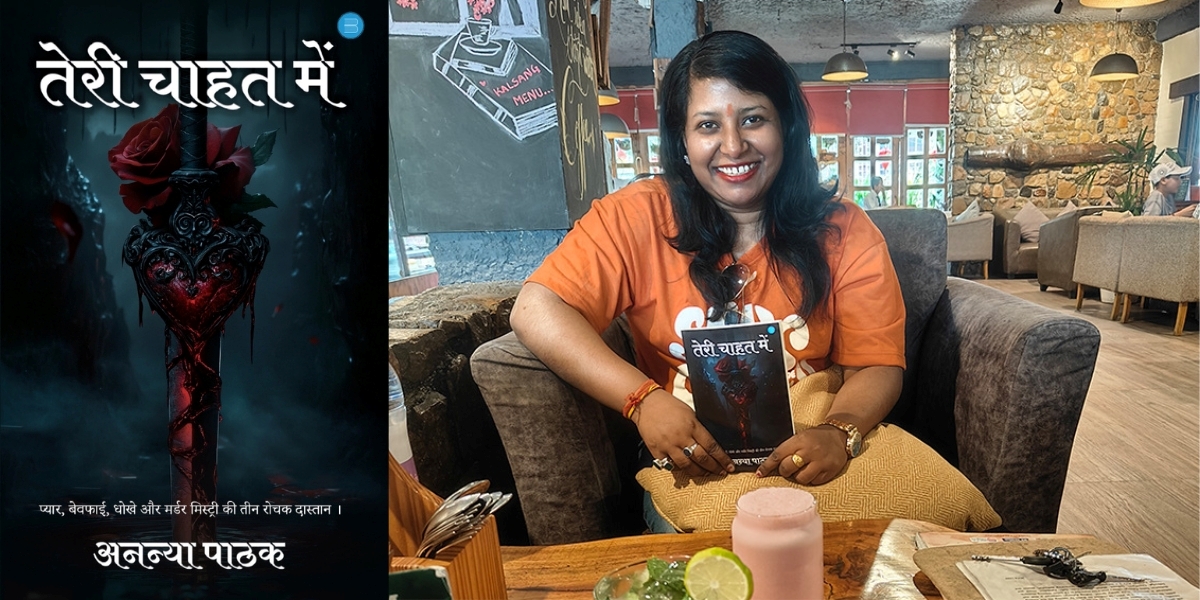
From Ghostwriter to Published Author: Ananya Pathak Debuts with a Romantic Thriller ‘Teri Chahat Me’

By: Ananya Pathak

Hailing from the picturesque city of Dehradun, Ananya has been the quiet force behind numerous academic publications, shaping works that have ranged from comprehensive social science books to political science sample papers and even scripted video lectures for leading publishing houses. With an impressive academic portfolio—CA Intermediate, M.Com, MA in Economics, and B.Ed.—her literary foundation is as strong as her professional track record. Yet, behind this prolific non-fiction career was a dream she held close: to write her own book, in her own name.

“This means a lot to me,” Ananya shares with heartfelt enthusiasm. “To get a book published in your own name is a feeling that is difficult to describe. I have been writing non-fiction professionally since 2018, but somewhere deep inside, I always nurtured the dream to write for myself. Teri Chahat Me is that dream coming to life.”

Written over the course of six months, Teri Chahat Me is a romantic thriller that ventures into the intricate corridors of love, obsession, and the darker impulses they can awaken. Comprising three distinct yet emotionally charged stories, the novel explores the profound impact love has on human behavior—sometimes to the extent of influencing a person to cross moral boundaries.

“A human being is often governed by their emotions,” Ananya reflects. “And when deeply caught in that emotional grip, one might find themselves making choices they never imagined.”

The stories in Teri Chahat Me intertwine tender romance with edge-of-the-seat suspense, offering readers murder mysteries that are not solely about uncovering the culprit, but about understanding the emotional turmoil that leads to such actions. The novel examines the fragility of moral boundaries when tested by intense passion, posing thought-provoking questions about love’s power to both heal and harm.

For Ananya, the leap from academic ghostwriting to crafting a romantic thriller was more than a shift in genre—it was a personal liberation. Fiction gave her the creative freedom to explore the human psyche beyond facts and figures, allowing her to weave emotion and unpredictability into her narratives. In her own words, “Fiction gives you the freedom to be both the creator and the observer of your characters’ lives. It’s a deeply rewarding space to work in.”

Behind her literary debut lies a deep well of inspiration—her mother. Ananya credits her as the person who encouraged her to step beyond her comfort zone and embrace fictional storytelling. This encouragement, paired with her own passion for literature, made Teri Chahat Me a possibility.

When she is not writing, Ananya immerses herself in reading, capturing moments through photography, and traveling to discover new places and perspectives. She is also a dedicated educator, finding purpose in teaching underprivileged children—an endeavor that reflects her belief in knowledge as a transformative force.

The release of Teri Chahat Me is not just a milestone in Ananya’s professional journey; it is a celebration of dreams that may take time to materialize, yet remain steadfast in the heart until the right moment arrives. Her story illustrates the persistence it takes to bring your own vision to life, even after years of contributing to the work of others.

With its blend of romance, suspense, and psychological depth, Teri Chahat Me is set to captivate readers who enjoy narratives that engage both the heart and the mind. It is more than just a book—it is an emotional voyage through love’s beauty and its challenges.

Explore the riveting pages of Teri Chahat Me today: https://amzn.in/d/49faDG3