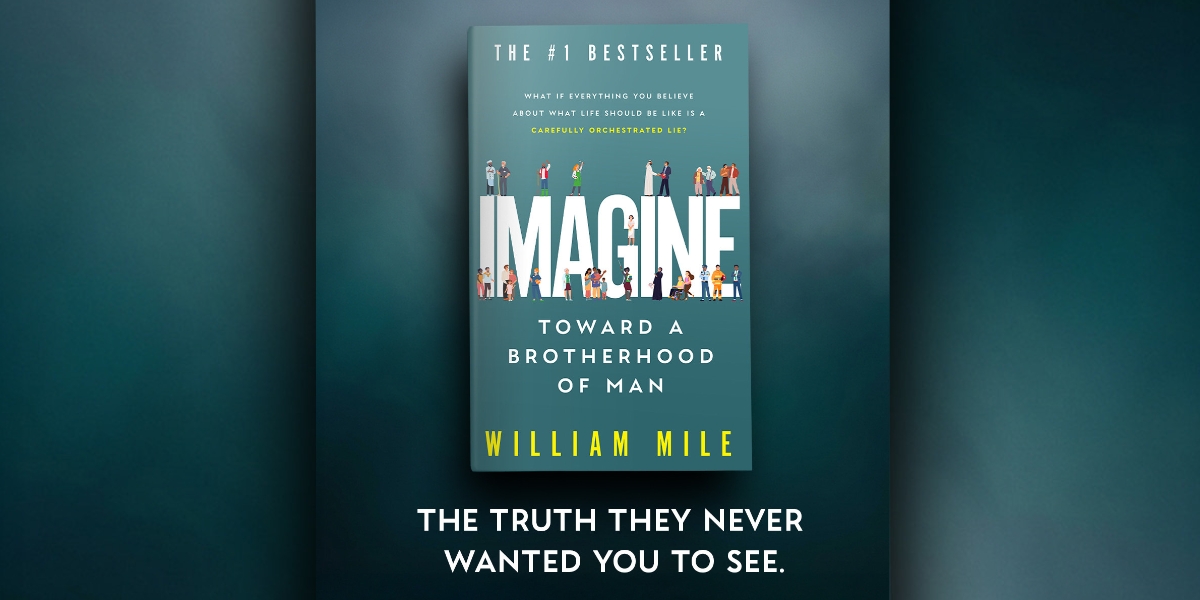
We, the Eights: Rethinking Good, Evil, and Belonging in Imagine: Toward a Brotherhood of Man by William Mile

By: AR MEDIA

What if the world’s chaos could be summed up in a simple ratio?

In Imagine: Toward a Brotherhood of Man, William Mile proposes what he calls the 8:2 theory: out of every ten people, eight are fundamentally “brothers” open to God’s love and capable of growth, and two are “evil people with successful actions” who thrive on confusion, division, and harm. It’s a bold, almost startlingly simple lens on good and evil, part spiritual manifesto, part social theory, part practical handbook for living with purpose in a broken world. 

Rather than a dense academic treatise, Mile offers a short, highly accessible book that reads like equal parts sermon, pep talk, and kitchen-table conversation. The tone is plainspoken and direct, and the stakes, in his view, could not be higher.

The 8:2 Theory in Plain Language

Mile begins with a familiar picture: a classroom of thirty kids, many of whom are decent, imperfect but generally trying, and a smaller handful who seem bent on disruption, cruelty, or control. From that everyday observation, he builds his central claim: across humanity, roughly eight out of ten people are 8s, those who, however flawed, are reachable by God’s “transformative power” and capable of living ethically, while two out of ten are 2s, driven by a darker source, “born with innate behavioral habits” that consistently produce harm. 

The twist is that Mile’s 8s aren’t limited by any of the usual labels. The brotherhood includes every race, ethnicity, nation, political system, religion, age, social class, and walk of life.

If you’re open to what he calls a “good source,” God by any name, and willing to keep growing, you’re in the 8s. If you consistently serve chaos, cruelty, and manipulation and find joy in others’ suffering, you fall into the 2s.

This framework allows him to do something refreshingly countercultural: shift blame away from “those people,” other religions, other parties, other nations, and onto a small, stubborn minority he believes has been quietly steering history toward disaster. The majority of us, he insists, are not the problem. Our problem is that we’ve been fighting each other instead of recognizing who’s actually pulling the strings.

It’s a sweeping claim, but it has an undeniable intuitive appeal. Many people have had the experience of sensing that some individuals seem wired for kindness and growth, while others seem almost addicted to damage.

Evil, Demystified, and Made Uncomfortably Close

One of the book’s strengths is its treatment of evil, which is serious and clear. This is not the vague “toxic people” language of pop psychology, nor the purely structural evil of social theory. Mile means something sharper.

His “evil 2s” are the kind of people who engineer genocides, design torture regimes, weaponize ideology, or incite mass violence for power and profit. He points to history, World War II and the Holocaust, inquisitions, authoritarian regimes that erased intellectuals and artists, as moments when 2s nearly reshaped the planet in their own image. 

But he’s careful to say 2s aren’t just dictators and generals. They can be bosses, neighbors, even family members, anywhere power, deception, and a lack of conscience converge. They lie easily, avoid responsibility, and, in his telling, sometimes laugh at the suffering they cause. By giving this group a name and a pattern, Mile hopes to strip away some of their mystique: “Shining a spotlight on evil reveals it,” he writes, “so we can plainly know it when it shows up.”

Importantly, 8s are not painted as pure. They can do significant harm, too, out of ignorance, confusion, fear, or misguided “greater good” thinking. The difference, for Mile, is that 8s are ultimately reachable: they regret, repent, learn, and change. 2s do not.

That sharp binary may be a provocative aspect of the book, and also where readers will likely have the strongest reactions, positive or hesitant. On the one hand, there’s relief in the idea that humanity is salvageable and fundamentally aligned with goodness. On the other hand, it raises hard questions: Are some people truly beyond transformation? What happens if we start labeling real individuals in our lives as “2s”?

Mile doesn’t encourage paranoid witch-hunts for villains. The emphasis is always on strengthening the 8s’ unity, sobriety, and sense of purpose, so that evilhas fewer openings.

Work, Sobriety, and “Surthriving”: A Practical Path for 8s

Where many spiritual books stop at big ideas, Imagine gets surprisingly concrete. The central chapters read like a compact field manual for living as a strong 8 in a confusing age.

Mile’s core advice is disarmingly simple: stay clear-headed, develop yourself, find meaningful work, and teach the next generation.

For readers adrift in a world of algorithmic distraction and political fatigue, there’s something grounding about this emphasis on simple disciplines: sleep, sobriety, study, and service as key acts of resistance against chaos.

A Wide-Open God and a Big-Tent Brotherhood

An engaging passage is in the chapter “On God,” in which Mile shares his own journey: baptized and churched, then led, through a long, stubborn personal struggle, to explore wisdom from Christianity, Hinduism, Judaism, Islam, Buddhism, meditation, and beyond. He describes himself now as an “educationalist,” committed to studying broadly and drawing his own conclusions rather than confining himself to any single tradition’s brand. 

Crucially, the 8:2 theory doesn’t ask anyone to change religions. It doesn’t say, “my path instead of yours”; it says, “If you’re sincerely seeking the good, you’re already part of the brotherhood.” His call is less conversion and more détente: Christians, Jews, Muslims, Hindus, “spiritual but not religious, ”stop treating each other as the problem. The real danger, he insists, is the small minority that manipulates those divisions for its own ends.

In a time when faith communities are as divided as politics, the call for interreligious humility stands out. It offers people of conviction a way to hold their beliefs firmly while still recognizing the sincerity and dignity of others on different paths.

Readers whose theology emphasizes universal redemption may bristle at the suggestion that 2s are nearly unreachable, but Mile does repeatedly affirm that God still loves them and desires their return. The emphasis, though, stays firmly on strengthening the 8s’ unity rather than speculating about the inner life of the 2s.

Imagining an 8:2 World

What would it look like, Mile asks, if enough people embraced this framework?

He doesn’t promise utopia, but he does imagine a world in which purposeful work is re-honored as the “forgotten spiritual path”; faith and science are allies, not enemies; religious and cultural battles calm down because the “real enemy” is more clearly understood; and evil finds fewer cracks to exploit.

He’s honest about the effort involved. There’s no quick fix, no secret hack. It’s “step by step,” a slow transformation out of what he provocatively calls an age-long “dark age” of confusion into something more aligned with God’s intention. 

A Brief Book with Big Ambitions

Ultimately, Imagine: Toward a Brotherhood of Man is exactly what its subtitle promises: an invitation to build a world in which most of us recognize our shared allegiance to goodness, and stop letting a small, destructive minority set the tone.

It is hopeful without being naive, spiritual without being sectarian, and challenging without being crushing. Mile writes as someone who has wrestled for decades with questions of God, work, and human nature, and has distilled what he’s found into a lean, usable framework.

For readers who sense that “this can’t be as good as we get,” who are hungry for belonging and purpose but wary of rigid dogma, this little book offers a surprisingly spacious vision: You are not alone. You are not powerless. And if you’re willing to become a stronger 8, clear-headed, working, learning, and refusing to demonize your fellow 8s, you might just help tilt the ratio toward a better world.

Get your copy of Imagine: Toward a Brotherhood of Man by William Mile and explore a vision for a more connected world.

Disclosure: This editorial review was prepared by AR MEDIA.
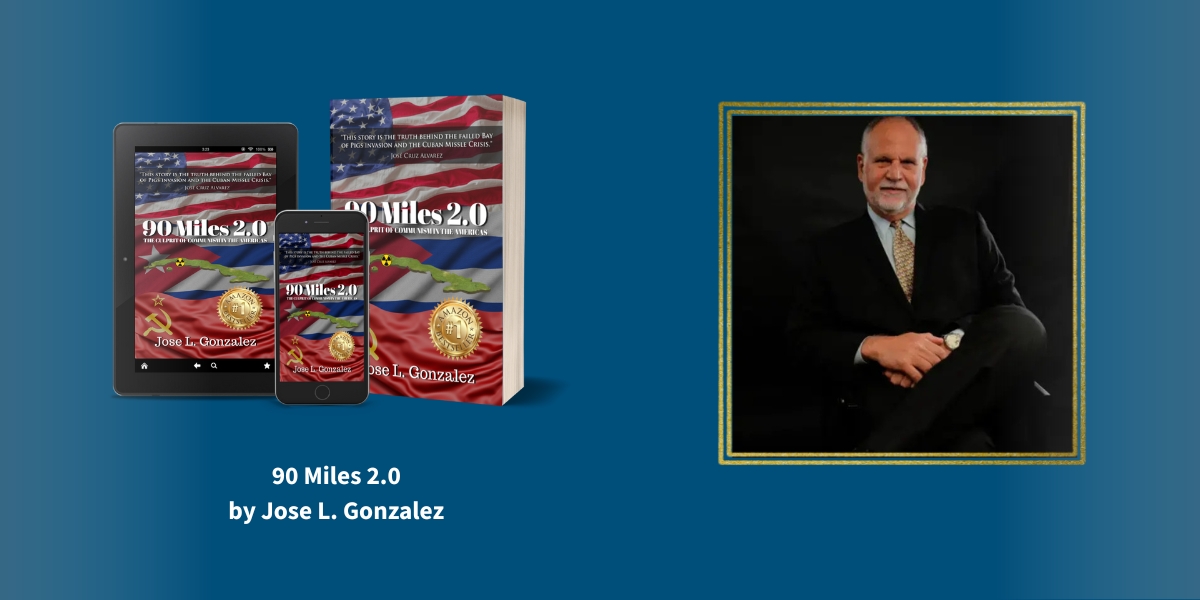
The Stories Our Parents Don’t Tell Us: Memory, Silence, and the Weight of Exile in 90 Miles 2.0

By: AR MEDIA

There’s a particular kind of silence that lives inside immigrant families. It hangs in the pauses at dinner, in the way a parent changes the subject when a certain year or name comes up. It’s the silence of people who have seen more than they can easily say, and who aren’t sure their children are ready, or willing, to hear it.

Jose L. Gonzalez’s 90 Miles 2.0 is, at its core, a story about uncovering that silence.

On the surface, the book is a political thriller and a love story set against the Cuban Revolution. Structured as a feature-length screenplay, it offers all the hallmarks of a cinematic narrative: tense meetings, dangerous deals, torture chambers, breathtaking escapes, and sweeping romantic moments. But beneath the action is a quieter, more intimate drama: a daughter asking her father to finally tell her the truth, and a man deciding whether he has the courage to revisit the worst and most beautiful years of his life.

This is where 90 Miles 2.0 becomes not just entertainment but a profound meditation on memory, trauma, and what it means to inherit a history you didn’t live, but that still lives inside you.

A Quinceañera as a Confession Booth

Gonzalez frames his entire story around a single family moment: Lucia’s fifteenth birthday celebration in Miami. There is music, food, a red Ferrari arriving in style, and the unmistakable vibe of Cuban American success, hard-earned, proudly displayed, and lovingly shared.

But the emotional center of that party is not the dance floor; it’s a quiet conversation between Lucia and her father, Pepe. She knows there’s more to her mother’s story than she’s been told. She knows that whatever happened in Cuba isn’t just “in the past” but has shaped every part of who her father is and how he raised her. On this milestone day, she wants answers.

Pepe’s decision to finally open the old photo album, literally and figuratively, turns the novel into a long, unbroken flashback. What unfolds is his confession: the origin story of their family, wrapped in the rise and betrayal of the revolution.

By choosing this frame, Gonzalez transforms a historical drama into an intergenerational dialogue. Lucia represents the children and grandchildren of exiles everywhere, beneficiaries of sacrifice, but often kept at a distance from the events that made their lives possible. Pepe stands in for a generation that rarely talks about what they survived, partly from pain, partly from pride, and partly from fear that no one will truly understand.

The book asks a haunting question: What happens when those stories are never told, and what might happen when they are finally told?

Revolution as Family Business

Another striking angle in 90 Miles 2.0 is how personal the revolution feels. It does not present a distant, textbook view of Fidel and Che. It shows them as men who charm wealthy donors, inspire young idealists, and slowly reveal just how far they’re willing to go.

For Pepe, Alicia, and their circle, politics is not an abstract ideological debate. It’s a family business. It’s about what happens to their neighbors, their land, their employees, their children. The revolution comes to their homes, their offices, and eventually their consciences.

Gonzalez is especially effective at capturing that initial rush of idealism. Early on, you see why intelligent, successful people might be drawn to Castro’s promise of justice after years of Batista’s corruption. The gatherings feel hopeful, even glamorous, as Havana’s elite plan what they believe will be a better future for their country.

Then the line blurs. Money from questionable sources appears. Allies die under mysterious circumstances. Rules change. Suspicion grows. The characters move from being coauthors of history to potential targets of it.

What’s powerful here is how slowly and painfully that realization dawns. There is no single moment when Pepe and his friends “wake up” to the danger. Instead, Gonzalez shows how complicity and disillusionment accumulate scene by scene, until leaving is no longer an act of betrayal but the only way to survive.

For readers from exile and refugee communities, this progression will feel deeply familiar. Revolutions, wars, and coups rarely begin with moustache-twirling villains. They begin with promises that sound righteous, even necessary. By grounding the politics in the daily lives of one extended family, 90 Miles 2.0 makes a large historical tragedy feel frighteningly intimate.

The Screenplay as an Emotional Archive

The decision to present the story as a screenplay is more than a stylistic flourish. It becomes a kind of emotional archive. Trauma presents itself as scenes rather than neat, linear chapters.

In script form, memories unfold as scenes rather than summaries. You’re placed into the room as conversations happen, instead of being told later how they went. The camera “moves” through time and space the way memory does, suddenly, sharply, sometimes out of sequence.

For example, the screenplay format allows Gonzalez to:

  • Cut quickly between past and present, echoing the way trauma resurfaces in flashes.

  • Hold close-ups on faces at crucial moments, letting a single expression say what pages of explanation might only dilute.

  • Use sound—music, TV announcers, crowd noise—as a backdrop, letting the world’s chaos bleed into his characters’ private crises.

It invites the reader to watch the past with Lucia, almost as if she were sitting beside us in a dark theater, finally seeing how her life began.

Bilingual Storytelling and the Question of Who Gets to Remember

One of Gonzalez’s most meaningful choices is to include the full story in both English and Spanish. This is not just a translation but a statement of who this narrative belongs to.

The English version speaks directly to readers like Lucia, second- or third-generation Cuban Americans, and others, whose primary language is English but whose roots are elsewhere. The Spanish version speaks to those who lived through the events in their mother tongue: parents, grandparents, and elders for whom memory itself is coded in Spanish.

In many immigrant families, language divides generations as much as geography does. Children grow up thinking, dreaming, and reading in English, while their elders remember, grieve, and pray in Spanish. By presenting 90 Miles 2.0 in both languages, Gonzalez creates a shared text where those worlds can meet.

The Cost of Looking Back

If 90 Miles 2.0 were only about the past, it would still be moving. But its real strength lies in how it quietly asks what all of this means now.

We live in a moment when authoritarianism, disinformation, and political cults of personality are again part of the global conversation. Gonzalez never turns the book into a lecture, yet the parallels are hard to miss. Charismatic leaders. Noble slogans. The slow erosion of dissent. The demonization of opponents. The belief that “this time” power will be different.

By showing how quickly hope turned to horror in Cuba, the book gives modern readers a mirror. It challenges us to ask: What would we have seen? What would we have ignored? When would we have spoken up or left?

At the same time, the novel is deeply tender toward those who didn’t always make the right choices. Pepe and his friends are not saints. They misjudge people. They stay too long. They believe too much. They hurt the ones they love, sometimes by action, sometimes by silence. In other words, they are recognizably human.

That nuance is one of the book’s quiet triumphs. It resists easy hero/villain binaries—not in denying the brutality of the regime but in acknowledging the complicated human path that led so many to support it, and then to flee it.

A Story That Invites Your Own

In the end, what lingers most from 90 Miles 2.0 is the feeling that you’ve been allowed to sit with a family at their most vulnerable moment, when the past finally meets the present, and the next generation says, “Tell me everything.”

As a reading experience, the book is ambitious. The screenplay format, the graphic honesty of certain scenes, and the dense political backdrop ask the reader to lean in and stay engaged.

Gonzalez has done something rare. He has turned one family’s private pain into a public work of art that honors both the people who lived it and the descendants who still feel its tremors.

For anyone who has ever sensed there’s a story behind their parents’ silence or for anyone who has carried a story in their heart, unsure how to share it, 90 Miles 2.0 offers both a caution and an invitation:

Silence protects, but it also imprisons. At some point, someone has to speak.

Discover the Untold Story Behind the Cuban Revolution

Get your copy of 90 Miles 2.0 by Jose L. Gonzalez on Amazon, a compelling blend of history, espionage, and human drama.

Disclosure: This editorial review was prepared by AR MEDIA.

From Breakthrough to Benchmark: Simer Ghuman and the New Era of Authentic Leadership

When FIRST Things First hit shelves, few expected a leadership book to become a cultural event. Yet within months, Simer Ghuman’s name began trending in spaces that rarely agree on anything: corporate corridors, coaching cohorts, and classrooms alike. The reason? He wrote the book that many leaders had been trying and failing to find.

At a time when organizational trust is at historic lows, Ghuman didn’t promise transformation through innovation. He offered restoration through values. The book’s five anchors: Faith, Integrity, Respect, Stability, Trust, became rallying points for readers who’d grown weary of leadership reduced to LinkedIn slogans.

At a time when organizational trust is at historic lows, Ghuman didn’t promise transformation through innovation. He offered restoration through values. The book’s five anchors: Faith, Integrity, Respect, Stability, Trust, became rallying points for readers who’d grown weary of leadership reduced to LinkedIn slogans.

“Leadership isn’t about control,” Ghuman asserts. “It’s about influence, and influence begins with who you are when no one’s watching.” That sentence, simple yet seismic, captures the soul of FIRST Things First. It reframes leadership as moral stewardship rather than positional authority.

The response has been electric. Business schools are teaching it. Coaches are quoting it. Executives are re-evaluating their decision filters because of it. The book’s ascent to bestseller lists worldwide isn’t fueled by marketing hype; it’s powered by word of mouth, by leaders whispering to peers, you need to read this.

Ghuman’s approach doesn’t just challenge leaders to perform; it asks them to reflect. By prioritizing core values over transient metrics, he calls for a shift in how we measure success—focusing on long-term impact rather than short-term gains. This shift is what makes FIRST Things First not just a book, but a movement.

What readers discover inside isn’t motivational fluff. It’s operational truth. Each page reflects decades of field experience across industries and cultures. Ghuman’s background, from factory floors in India to boardrooms in the United States, adds credibility that academia alone cannot manufacture. He writes from scars, not scripts.

Perhaps that authenticity explains why FIRST Things First has become more than literature; it’s now a leadership language. The phrase itself has entered workplace lexicons as a reminder to reorder priorities, to place people before processes, conscience before convenience. Teams using the framework report higher cohesion, less conflict, and a sense of shared moral compass.

What truly sets FIRST Things First apart is its ability to transcend the typical leadership narrative. Rather than focusing on the external markers of success, Ghuman redirects attention inward, urging leaders to examine their own character and core values. This shift moves leadership from a formulaic process to a personal journey. The result is a more holistic approach to leadership—one that integrates moral clarity, emotional intelligence, and relational skills into the fabric of everyday business practice. Leaders who embrace this mindset aren’t just creating better teams; they’re creating better versions of themselves. Ghuman’s philosophy suggests that the ultimate measure of leadership isn’t the results you achieve, but the integrity you maintain along the way.

But Ghuman himself resists celebrity. In interviews, he redirects attention back to the mission: building a generation of leaders who are trusted because they’re trustworthy. “You can outsource strategy,” he says, “but you can’t outsource character.” It’s a truth that lands hard in an era addicted to quick fixes.

The book’s continued momentum, translated editions, global seminars, and leadership retreats are proof that the hunger for authenticity isn’t regional; it’s universal. FIRST Things First didn’t just reach the shelves; it reached the soul of leadership.

And as organizations adopt its principles, a new benchmark is emerging, one where performance and purpose no longer compete; they cooperate. That is Ghuman’s legacy in motion.

He didn’t write a leadership trend. He built a leadership standard.

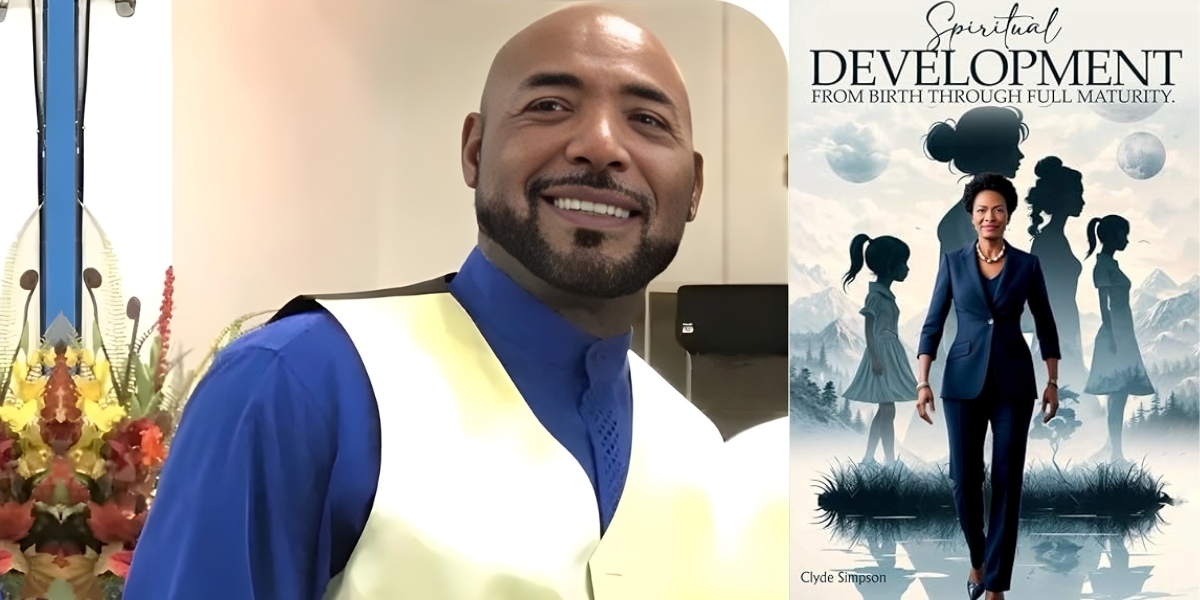
The Lost Map of Discipleship: How Dr. Clyde Simpson Rediscovered the Bible’s Built-in Growth Plan

By: Edward K. Thompson

Many believers today share a quiet frustration. They love God, they read their Bibles, and they pray. Yet they feel stuck in their spiritual walk. They yearn for deeper maturity, for a faith that is strong and steady. They ask themselves, “How do I grow?” and “Where do I even start?” This feeling of being lost is common, but it is not necessary. What if the Bible itself contained a clear growth plan, a kind of spiritual map, that we have simply overlooked? This is the profound discovery presented by Dr. Clyde Simpson in his important book, Spiritual Growth & Development: From Babe Through Full Maturity.

Dr. Clyde Simpson can be described as a spiritual cartographer. He did not invent a new method or a trendy self-help strategy. Instead, he carefully traced the lines of a map that has been within the Scriptures all along. His work points believers back to a structured, intentional pathway woven directly into the New Testament letters of the Apostle Paul. For centuries, many have read these epistles as separate pieces of advice. Simpson reveals they are actually a coordinated sequence, a divine curriculum for spiritual development.

The core of this discovery is a powerful three-part pattern: doctrine, reproof, and correction. This pattern is drawn directly from the words of Second Timothy 3:16, which states that all Scripture is useful for teaching, for rebuking, for correcting, and for training. Dr. Simpson shows how Paul’s letters to the early churches follow this exact progression. The journey begins with the book of Romans, which establishes foundational doctrine. It moves next to Corinthians, which offers loving reproof for practical errors. Then comes Galatians, which provides firm correction for doctrinal drift. This sequence repeats, building the believer from the ground up.

This is not a dry academic theory. It is a practical guide for any person seeking a deeper life in Christ. The book Spiritual Growth & Development carefully walks the reader through each stage. It explains why you must understand the grace in Romans before you can correctly apply the corrections in Galatians. It shows why the high calling of Ephesians is meant for those who have first mastered the basics of Romans. This order is intentional. Skipping steps leads to confusion, while following the map leads to clarity and strength.

Dr. Simpson writes with a rare combination of precision and compassion. His insights showcase both exegetical skill and a pastoral heart. He makes complex biblical concepts accessible. “The problem is not a lack of desire,” Simpson explains, “but a lack of direction. God in His wisdom did not leave us to guess. He gave us a pathway in His Word.” This statement captures the essence of his work. He is a guide who points to the text itself, restoring confidence in God’s perfect plan for growth.

In a time when many feel spiritually disjointed, Dr. Clyde Simpson emerges as a restorative voice. His book cuts through the confusion and offers a return to biblical simplicity. He provides the map that many have been searching for, not by adding to Scripture, but by highlighting the beautiful structure already present within it. Spiritual Growth & Development: From Babe Through Full Maturity is more than a book. It is a revelation of a system for discipleship that is as old as the epistles themselves, yet perfectly relevant for today.

For any believer ready to move from frustration to fruitful growth, this work is essential. To embark on the journey and follow the Bible’s own path to maturity, find Dr. Clyde Simpson’s definitive guide, Spiritual Growth & Development, wherever books are sold.

Disclaimer: The views and opinions expressed in this article are those of the author and do not necessarily reflect the official stance or beliefs of any organization, denomination, or group. This article is intended for informational purposes only and is not a substitute for professional advice or counseling.

Simer Ghuman’s FIRST Things First: Faith, Integrity, and the Fix for a Fractured Workplace

Walk into any modern workplace today and you’ll sense it: exhaustion disguised as engagement. Teams perform, but they don’t connect. Missions sound noble, but they feel hollow. Into this atmosphere walks Simer Ghuman’s FIRST Things First, a book that doesn’t diagnose burnout; it prescribes belief.

For Ghuman, leadership failure isn’t a strategy issue; it’s a values issue. He calls out the “performance trap,” where leaders chase quarterly results while neglecting the quiet work of building trust. His antidote is a return to five enduring principles that, when practiced consistently, repair the human architecture of organizations: Faith, Integrity, Respect, Stability, and Trust.

What gives his message gravity is how it’s born from lived experience, not academic abstraction. Before becoming an author, Ghuman led multinational teams through economic turbulence, cultural transitions, and restructuring crises. Those years taught him that leadership cannot be faked; under pressure, authenticity or the lack of it always surfaces. His insights resonate with leaders who have felt the isolation of decision-making and the erosion of morale within their teams. Ghuman frames leadership as an act of service, a daily discipline of showing up with steadiness and sincerity. His philosophy reframes vulnerability as strength, empathy as efficiency, and values as the ultimate performance metric. This is why his ideas feel restorative rather than theoretical; they stem from someone who has lived the chaos and chosen clarity.

What also sets FIRST Things First apart is Ghuman’s focus on the long-term impact of leadership values. In a world where success is often measured by short-term gains and flashy achievements, Ghuman champions a more sustainable model. His emphasis on emotional intelligence and relational leadership shows how prioritizing people over profits can create an environment where both individuals and organizations thrive.

Faith, in Ghuman’s lexicon, isn’t about religion; it’s about conviction. The belief that one’s mission matters and that one’s people are capable. It’s what separates leaders who panic from those who persevere. Integrity follows close behind: the alignment between what leaders declare and what they deliver. Respect bridges the gap between hierarchy and humanity. Stability ensures teams can predict their leader even when they can’t predict the market. And trust, always trust, is the outcome of every other virtue practiced long enough.

What makes FIRST Things First feel different from standard leadership fare is its tone of mentorship. Ghuman writes like someone who has been through the turbulence and come out tempered, not bitter. Having led teams across four continents, he distills leadership to its essence: character under pressure. Each chapter offers reflection questions, practical scenarios, and what he calls “anchor actions,” simple daily behaviors that keep leaders centered when everything else shifts.

The book’s influence has spread quickly. Executives are gifting copies to their teams. HR departments are weaving their language into culture playbooks. Leadership coaches are citing their frameworks in sessions from Dubai to Dallas. One corporate trainer recently noted, “We stopped quoting slogans and started quoting Ghuman. Productivity followed.”

Yet Ghuman’s mission goes beyond corporate repair. He’s redefining what professional success looks like in an age of moral fatigue. “You can’t build strong systems on weak souls,” he writes. A sentence is now printed on posters in several leadership institutes. It captures the heartbeat of his message: strength begins inside.

The bestseller status of FIRST Things First isn’t the endgame; it’s the evidence. It shows that leaders across industries are desperate for substance. The book doesn’t hand them hacks; it hands them habits, faith before fear, principle before pressure.

And as organizations worldwide adopt this character-driven model, Ghuman has quietly achieved something rare. He’s proved that decency is still disruptive. That consistency still outperforms charisma. And that the future of leadership won’t be decided by the loudest voice in the room, but by the calmest

Jhadina Patrick’s Journey Through Nuggets of Divinity

By: William Jones

On a cold Edmonton morning, Jhadina sits at her kitchen table, fingers wrapped around a mug that has gone lukewarm. Outside, winter moves the world slowly, as if in reverence. Inside, a single page of her notebook lies open. The words came earlier, in a rush she couldn’t quite explain, as though someone had whispered them into her hands. Reading them now, ink still fresh, she feels that small, internal click—the unmistakable sense of this might be true.

This is how Nuggets of Divinity: Volume 1 came into being, not as a grand plan, but as a collection of honest reflections that gathered over time.

“I didn’t choose to write a book,” she says. “It simply came to me once I surrendered.”

And it shows. Each of the 56 pieces in this collection feels like a fragment excavated from the deepest layers of a human heart.

Here, too, we meet Jhadina—a multi-disciplinary artist, writer, and self-taught tattooer whose creativity flows like this winter morning: unforced, intuitive, guided by something soft but steady. Born and raised in Edmonton, she treats expression as a natural part of being alive. If she’s not writing, she’s painting. If she’s not painting, she’s making music, dancing in her living room, experimenting in the kitchen, or giving herself another tattoo. Art isn’t her hobby; it’s her language. Nuggets of Divinity: Volume 1 grew from that inner language, becoming a space to hold the truths she was learning, the questions she was asking, and the quiet shifts happening within her.

The book is a collection of 56 short, poetic essays and reflections. Each piece explores moments of grief, love, self-discovery, and spiritual growth. The project began after the passing of her mother, a loss that became the seed of her awakening. From that grief, Jhadina examines both light and shadow, showing how pain may transform into understanding and hope.

The essays are not chronological; they are standalone meditations—“nuggets”—that together form a complete picture of emotional resilience and spiritual insight. Some celebrate the quiet magic of everyday life, like noticing a flower bloom or hearing a favorite song. Others confront heartbreak, grief, or loneliness, offering compassion and perspective. In pieces like Meet My Shadows and Oh, Sweet Heartbreak, she writes about sorrow as one might speak of an old friend who has taught them more than expected. There’s no push toward resolution, only room to breathe.

Through grounded, poetic language, Jhadina invites readers to sit with their shadows, explore their feelings, and recognize their inherent value and strength. The book is not self-help; it is a companion, a gentle guide for anyone navigating loss, creative blocks, or the search for deeper meaning. Ultimately, Nuggets of Divinity is a love letter to the self, reminding readers that even in life’s messiness, they are still deserving of care, joy, and awe.

From Pages to Screen: The Expansion of Her Mission

However, Jhadina’s work doesn’t stop on the page. Her YouTube channel, “Conversations with J,” unfolds as a living extension of her book’s spirit. Through her videos, she reaches people navigating transitions, heartbreak, spiritual awakenings, and creative blocks. She speaks to those who are longing for change, for clarity, for meaning.

Her mission there is to guide a collective of souls toward their highest timelines and deepest truth. She speaks with honesty, vulnerability, and compassion, offering reflections, encouragement, and gentle guidance to anyone ready to heal, grow, or reclaim their power.

Her channel is a quiet refuge. A place to rest, reflect, and remember who you’ve always been underneath the dust of doubts.

With both a book and a channel, Jhadina meets different needs, different rhythms of healing and growth. The channel offers real-time presence. A soft voice in the moment. Guidance when life feels messy, confusing, or too loud.

The book offers stillness. A slow walk-through emotion… a steady companion for nights when you need honest company. Many of the reflections feel like intimate thoughts shared in confidence: the exhaustion of overthinking, the tug between craving connection and needing solitude, the comfort of being understood. In Sweet Isolation, Spilled Tea, and The Worry Friend, she gives voice to experiences many carry but rarely name. Nothing in the book feels preachy or polished; it is simply human, written by someone who has spent a lot of time listening inward. Beneath it all is a quiet hope that does not push or insist, but sits beside you until you can feel it for yourself.

Nuggets of Divinity doesn’t tell you what to do. It doesn’t ask you to fix anything. Instead, it offers small, thoughtful pieces to return to when life feels heavy or uncertain. Later entries, like Calling My Power Back and Eyes Wiped Clean, convey a slow, grounded sense of strength, as if someone is regaining their footing after months of careful walking.

A Final Message from Jhadina

“To everyone who finds their way here: thank you for being a part of this soul family… If you ever feel alone in this world, I want you to know that I am with you, whether through a screen, through these pages, or simply in spirit.”

Her words are simple. They are sincere. They reflect the tone of her entire book.

Learn more about the author’s work here.

Murphy and the Grandmas: Purple Coats, Warm Soup, and One Very Loved Little Boy

By: Arthur Brown

On weekday mornings in the big city, a small boy with sunbright laughter pulls on his shoes and reaches for his grandmother’s hand. On Sundays, that same boy is tugging a purple coat toward a forest path where a river runs fast and silver. This is Murphy’s world, and in Geri LoGiacco’s children’s book Murphy and the Grandmas, it is a world stitched together by two grandmothers, two cultures, and one steady truth: that love can grow when it crosses generations.

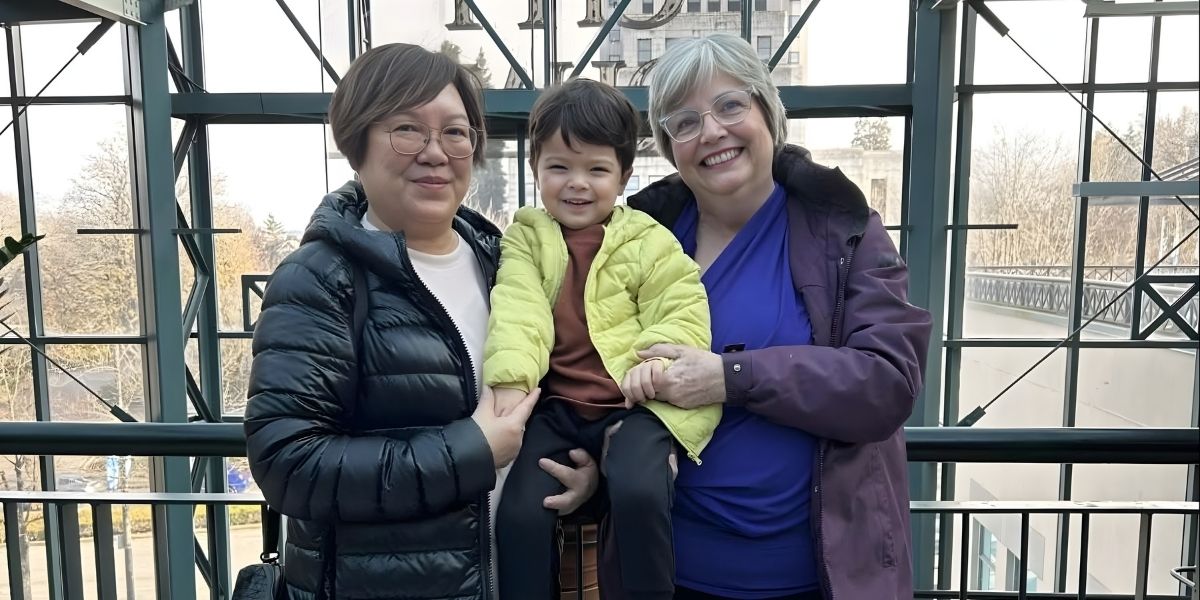
Murphy is almost three. He calls one grandmother “Grandma MaaMaa,” and the other “Purple Grandma.” The names are perfect.

When the family first asked him whether Geri was the “White Grandma” or the “Chinese Grandma,” Murphy looked puzzled. Those labels made no sense to him because, in his world, both women lived in the same category: Grandma. No hierarchy, no difference, just love. So he reached for the detail he recognized, the bright purple coat she often wore, and that became her name. “Purple Grandma” wasn’t about color or culture. It was simply the clearest way a little boy could say, This is my grandma, too.

Catherine Lam, Grandma MaaMaa, holds the city days, the preschool drop-offs, the park swings, the warm bowls of soup that say I see you, I want you strong. “My word is soup,” she laughs, explaining how she tucks care and nutrition into every spoonful for her picky little grandson, who still slurps it happily. “It is the one thing that keeps him energized so he can keep running and jumping all the time.”

On weekends, Murphy’s world tilts toward mountains. Purple Grandma, Geri, leads him down a pine-soft path to a river where minnows cloud the shallows and salmon return to spawn. “We just really love the outdoors,” Geri says. “The forest is my church.” With bare feet on a wooden floor, they dance to 70s rock after bacon and blueberry pancakes, they whisper to owls, they throw leaves and see what floats. “It is the simplest things,” she says, “that give you the most joy.”

That is the music of the book, too. The pages hold tiny rituals, a slide and a “wee, wee,” a careful pause so minnows can keep their pool, a reminder to say “thank you” and “M Goi.” Nothing grand, everything true. In a season that can tip toward noise, Murphy and the Grandmas is a quiet invitation to notice what actually binds a family together—time, presence, and the stories we repeat until they become home.

The family itself is joyfully blended. Geri was born in French Canada, so her holiday table carries tortière along with cookies and a tall tree. Catherine keeps the Chinese side of the calendar alive, with New Year gatherings with a big, busy clan, visits to the cemetery to honor ancestors, and children learning names and faces until cousins feel like extra brothers and sisters. “I introduce Murphy so he knows everybody,” Catherine says. “He remembers the names, he holds hands, he cares if people are happy.”

If you ask Murphy what his favorite things are, he answers like a boy who belongs to both places. With Grandma MaaMaa, there is swimming, city parks, and yes, the soups. With Purple Grandma, there is the long walk to the river and the fish. “They were happy,” he chirps, remembering how they moved with the current. Ask about the holidays, and his eyes go straight to the presents, which is exactly right for a child this age. The adults grin and let that be, because the point is not to push him toward meanings before he is ready. The point is to fill his days with the kind of love that becomes meaningful later on.

“Intense” is how Geri describes her bond with her grandson. “I love him so much I could eat him up.” Catherine’s word is simpler and somehow just as big: “Soup.” Between those two words sits the whole thesis of this story: love can be spiritual and silly, poetic and practical, a purple coat at the river, a steaming bowl on a Tuesday. Together, they form a net that will support Murphy for the rest of his life.

Holiday pieces often ask for a lesson. This one offers something gentler. You feel it when Geri remembers reading The Night Before Christmas to her kids every year, and now again with Murphy. You feel it when Catherine talks about time as the real gift, how not every grandparent can be nearby, how she is grateful that she can see him, drive him places, share the everyday. You feel it when Murphy’s parents step in near the end of the interview. His mother says she sees her own childhood reflected in the way her mom cares for him, only “maybe even more” now, having learned along the way. His father hopes the smell of a good soup in a restaurant will always send Murphy back to these early years, that a hike will carry the sound of the river, that he will be able to “reflect on those moments” when he is older.

Geri wrote the book to preserve those moments before they went blurry. She wanted a place where the two cultures could sit side by side without explanation, where a little boy could be exactly who he is, loved “extra,” as she puts it, because he gets two grandmothers, not one. She wanted parents and grandparents across the country to recognize themselves, the park bench, the clink of teacups, the warm kitchen where an elder shows love through food. “Grandparents do not need to spend a lot,” she says. “They just need to be with them, to spend time.”

In the book’s sweetest scene, Murphy sets up a tea party with both grandmas. He serves green tea and black tea, splits the plate between sticky buns and banana bread, and raises a cup with a tiny “Cheers.” He hugs both women with sticky fingers and a wide grin, and he says the most perfect sentence a child in a home like this can say, “M Goi, I love you.” That is the holiday message, sincere and small, the way real life is. It is also why the book feels like a beautiful gift in December, not because it is marketed that way, but because it reads like a family card you can keep on a shelf.

Ask each grandmother what she most wants Murphy to remember years from now, and the answers sit side by side like ornaments on one branch. Geri says, “that he was deeply, deeply loved from the minute he was born, and that he gave us so much joy.” Catherine says, “be happy and healthy,” and you can hear the practical tenderness of a caregiver who has walked him to preschool, zipped his coat, and watched him race toward the slide. Between those hopes is a boy who will grow up bilingual in love.

There are larger ideas here, too. Families like this one are everywhere, multiracial, multi-tradition, full of different recipes and calendars, different ways of saying hello and thank you, and the same way of saying I love you. The book does not argue for that; it just shows it. A purple coat on a winter path, a bowl that tastes like home, a boy who learns to name owls and also to say “M Goi.” In a season that teaches us to gather, Murphy and the Grandmas is a reminder to gather the small things first. If you are looking for one meaningful present that feels like a hug for a grandparent or a young family, this is it, a story you can read aloud this year and the next, until the words become your own.

Murphy and the Grandmas: Purple Coats, Warm Soup, and One Very Loved Little Boy

Photo Courtesy: Geri LoGiacco
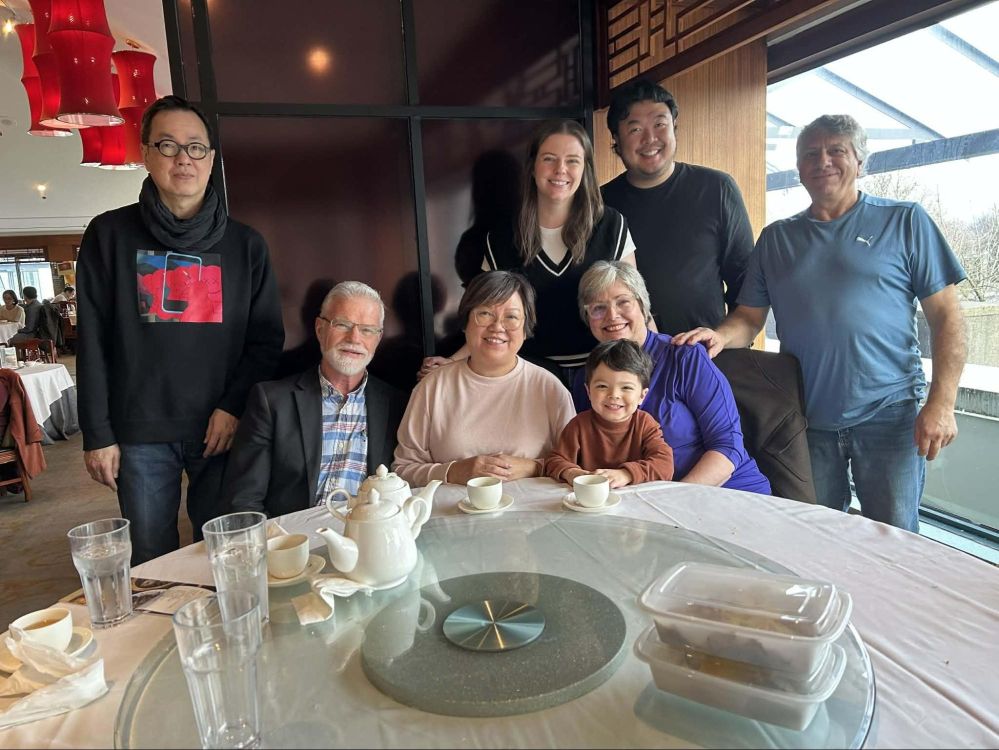
The family gathered around Murphy, parents, grandparents, and loved ones sharing a meal, a moment, and the traditions that shape their story.

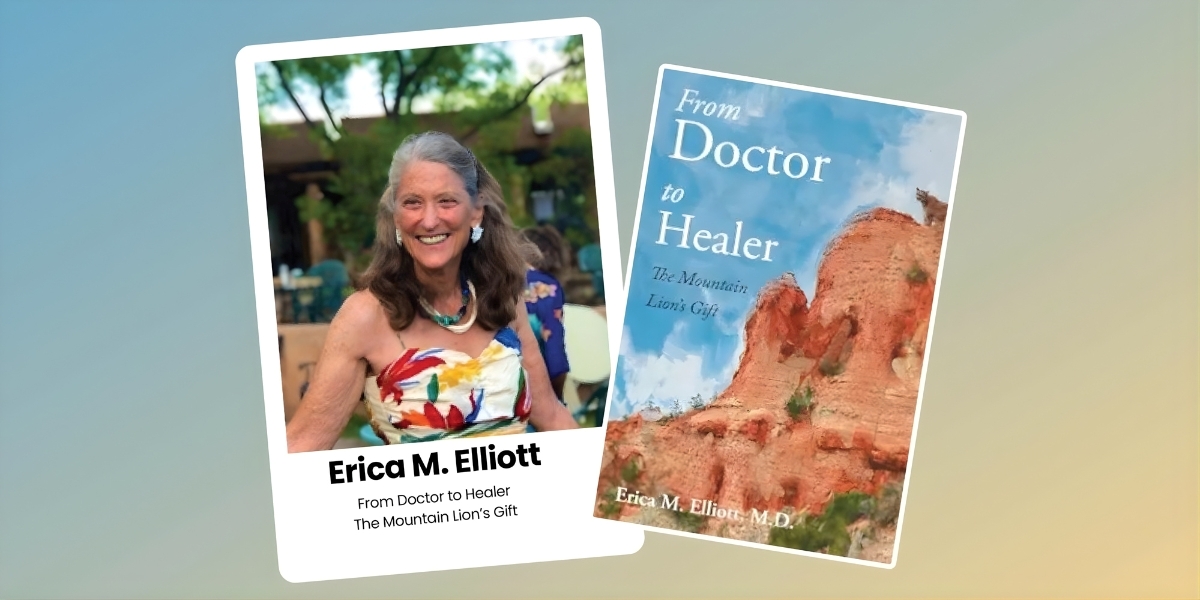
A Physician’s Personal Odyssey: From Crisis to a New Calling

By: Alfred K. Arteaga

What happens when a doctor becomes the patient, and the medical system they trusted has no answers? Dr. Erica Elliott’s compelling new memoir, From Doctor to Healer, charts this deeply personal territory. It is a story not of medical doctrine, but of human crisis, relentless investigation, and a profound reinvention of purpose that will resonate with anyone who has faced a life-altering challenge.

The Story of a Healer in Crisis

The narrative begins with Dr. Elliott’s successful career in conventional medicine unexpectedly unraveling. While working in a modern clinic, she began experiencing a mysterious collapse in her own health, suffering from severe fatigue, cognitive difficulties, and other debilitating symptoms. Her book describes this period with raw honesty, detailing how her concerns were initially dismissed within the very system she served. This personal health crisis, diagnosed as Sick Building Syndrome, forced her to step away from her practice, setting the stage for an extraordinary personal journey.

A Detective in Her Own Life

From Doctor to Healer transforms into a gripping detective story where the author is both the investigator and the case. Dr. Elliott recounts her relentless search for answers, a quest that led her far from her traditional medical training. The memoir details how she explored various avenues to understand her condition, deeply researching potential environmental triggers and radically changing her lifestyle. This process of self-directed discovery and recovery became the catalyst for a complete professional and personal rebirth, ultimately leading her to pursue board certification in Environmental Medicine.

The Power of Narrative in Medicine

A central and poignant thread in the memoir is Dr. Elliott’s reflection on the profound impact of words. She recounts an early-career tragedy where a patient, mistakenly told he had a terminal illness, died soon after—a stark lesson in the potent “nocebo” effect, where words can harm. This experience, contrasted with the healing potential of the “placebo” effect, shaped her enduring belief in the importance of listening, communication, and the stories patients tell. Her book posits that true healing often begins with understanding the narrative behind the symptoms.

Connecting a Lifelong Thread

The memoir beautifully weaves Dr. Elliott’s past adventures into the fabric of her transformation. She revisits her time as a teacher on the Navajo Reservation, a Peace Corps volunteer in Ecuador, and a pioneering mountaineer—including leading an all-women’s expedition to Denali. These experiences are not mere anecdotes; she frames them as the foundational elements of her resilience and her holistic worldview. The book circles back to a powerful, decades-old prophecy from a Navajo grandmother, given after a mystical encounter with a mountain lion, which suggested surviving great obstacles would grant her “powerful medicine to bring to the people.” Her memoir presents her health crisis as the ultimate manifestation of that prophecy.

More Than a Memoir: A Conversation Starter

From Doctor to Healer transcends the label of a simple autobiography. It is a thought-provoking exploration of the limits of any single medical paradigm and a testament to the human capacity for adaptation. Dr. Elliott does not present her path as a universal prescription but as her unique, hard-won answer. The book invites readers to consider broader questions about health, the environment, and the doctor-patient relationship, all through the accessible and compelling lens of her personal story. It challenges us to think about where healing truly begins.

A Journey Worth Following

Dr. Erica Elliott’s From Doctor to Healer is a gripping and inspirational read. It is the honest account of a respected professional brought to her knees, and the remarkable journey that followed. The book’s power lies in its narrative force—its portrayal of vulnerability, intellect, and unwavering determination. It is a story for anyone interested in the confluence of medicine, personal destiny, and the incredible journeys that redefine our lives.

To learn more about Dr. Elliott’s inspiring personal story, you can visit her website at www.ericaelliottmd.com. To experience this profound narrative of crisis and rediscovery, read Dr. Erica Elliott’s powerful memoir, From Doctor to Healer. It is an unforgettable portrait of perseverance and the evolution of a calling.

Disclaimer: The content of this article is for informational purposes only. It is not intended to serve as medical advice or a substitute for professional consultation. Dr. Erica Elliott’s personal experiences are shared to inspire and educate readers, and the views expressed are her own. Always consult a qualified healthcare provider before making any health-related decisions.

Robert Cain Announces the Forthcoming Release of His Anticipated Novel The Keeper

By: Angelica Burlaza

Author Robert Cain renews focus on sharing ‘The Keeper’, his debut novel about resilience, redemption, and personal transformation. Born from his own journey of rebuilding and renewal, Cain’s story inspires readers to embrace change, overcome adversity, and discover the strength to rise beyond life’s challenges.  

(Chicago, IL – December 2025) — Author Robert Cain has announced the forthcoming, expanded promotion of his debut novel, The Keeper, first released in March 2025. The novel introduces readers to a new series that examines resilience, transformation, and the power of personal growth. Cain’s announcement reflects his commitment to expanding awareness of the book and bringing its message to a wider audience.

The Keeper was written during a pivotal time in Cain’s life and serves as a creative reflection of perseverance and self-renewal. The novel’s narrative complexity and thematic foundation stem from Cain’s real-world experiences—his dedication to athletics, leadership, and personal redemption. He now continues to share his story through public outreach and renewed engagement with readers.

“‘The Keeper’ represents a part of me that I had to rebuild,” said Cain. “It began as a personal exercise but grew into a story about finding purpose again and understanding how challenges can reshape who we become.

Cain grew up in the northwest suburbs of Chicago as the youngest of five siblings. Raised by his mother, he spent much of his youth immersed in sports and training, especially martial arts. His commitment led him to achieve a mastery-level black belt, followed by six years as a martial arts instructor. Transitioning to hockey later in life, Cain advanced to elite levels, skating in AHL and NHL training camps and alongside members of the Chicago Blackhawks Alumni.

His background in athletics instilled discipline, focus, and drive; qualities that became essential amid his personal trials. After spending more than two decades growing cannabis, Cain was indicted in 2012 on federal charges of manufacturing and distribution. During his incarceration, he earned his GED and began drafting The Keeper, transforming his experience into a constructive outlet for reflection and storytelling.

Writing helped me find direction again,” Cain explained. “It gave me a chance to turn a difficult chapter into something meaningful. The Keeper became a symbol of that change.

Since its initial release, The Keeper has continued to build momentum among readers interested in narratives of endurance and redemption. The novel serves as both a standalone story and the first entry in a planned series that will further explore moral decisions, personal growth, and human resilience. Cain’s work combines elements of introspection, discipline, and courage, all of which are derived from his lived experiences.

Cain’s recent publicity efforts are part of a larger strategy to highlight the book’s themes and encourage discussion about self-reinvention. Future plans include additional outreach, virtual events, and engagement opportunities. His focus remains on connecting with readers and expanding the reach of The Keeper to new audiences.

Beyond writing, Cain remains active in athletics and mentoring. Married for thirty-five years to his wife, Carol, he is also a father of three children who each share his passion for hockey. In and out of the rink, he remains committed to the same values that define both his life and his writing: perseverance, learning from adversity, and rebuilding with integrity.

Through The Keeper and its forthcoming sequels, Cain aims to create a literary journey that mirrors his lifelong pursuit of growth and understanding. The project stands as both a personal achievement and a reminder of the capacity for renewal that defines the human spirit. Readers can get a copy from Amazon.

About Robert Cain

Robert Cain grew up in the northwest suburbs of Chicago as the youngest of five siblings. Raised by his mother, he developed a passion for sports and self-discipline at an early age. He earned a mastery-level black belt in martial arts before shifting his focus to hockey, where he competed at high levels, including AHL and NHL training camps, and skated with the Chicago Blackhawks Alumni.

After serving four years in federal prison following a conviction related to cannabis cultivation, Cain earned his GED and began writing The Keeper series. His writing centers on themes of redemption, endurance, and transformation. Cain and his wife, Carol, have been married for thirty-five years and have three children. He continues to live and write in the Chicago area.

Contact Information:

Contact Person’s Name: Robert Cain

Company Website: http://thekeeperseries.com/

Contact Email Address: bobcain88@yahoo.com

Discovery Bay, CA, US

Raoul Wallenberg’s Heroic Efforts in 1944 Budapest: A Story of Courage and Ingenuity

By: Matt Emma

There are books about heroes, and then there are books about people who refused to watch the world burn. To Help or Hang falls firmly in the second category. It tells the story of Raoul Wallenberg, a 32-year-old Swedish man who arrived in Budapest at the darkest moment of 1944 and somehow built a rescue operation that outpaced armies, dictators, militias, and time itself. Drawing from Wallenberg’s pocket calendar and archival documents, the author paints a vivid picture of a man whose ingenuity turned diplomacy into a weapon against genocide.

The book begins with Budapest alive with tension and anticipation, setting the stage for an unforgettable journey. Deportations have emptied the Hungarian countryside, and the last Jewish population still alive is trapped inside the capital, waiting for the next train to death. Into this nightmare walks Wallenberg unarmed, inexperienced, and carrying nothing but a diplomatic passport and a mandate to “do what is necessary.” The author describes these early chapters with a striking sense of urgency, delving into Wallenberg’s preparation, including his time at the University of Michigan, where he honed skills in architecture and business that later proved crucial. Budapest feels like a city choking on fear, and Wallenberg steps directly into the smoke.

What follows is not a lone-wolf tale. The strength of this book lies in its clear presentation of the strategy behind Wallenberg’s work. He doesn’t just run into danger; he builds an entire parallel system designed to outmaneuver one of the most violent regimes in Europe. Safe houses go up overnight. Protection passes are drafted, redesigned, printed, and delivered in bulk. He studies supply chains, calculates calories, and negotiates with anyone who can buy a few more hours of life for those under his protection. Cowen meticulously outlines the threats Wallenberg faced, from hunger and lack of shelter to deportations and murders along the Danube, emphasizing how he addressed each systematically.

There’s a relentless momentum in the middle chapters. Meetings pile up six, sometimes seven, a day. He faces Hungarian officials in the morning and SS commanders in the afternoon, races after death-march columns, and thrusts Schutz-Passes into the hands of collapsing prisoners until guards’ retreat. It’s chaotic, terrifying, and unexpectedly stirring. The narrative weaves in details from Wallenberg’s daily entries, revealing his tireless efforts to secure food, clothing, and healthcare amid escalating chaos.

The book reveals that when the Arrow Cross seizes power, violence explodes. Children vanished, and bodies drifted down the Danube. Entire neighborhoods disappear in a single night. Wallenberg moved faster, pushing through a city collapsing under bombs and starvation. The author describes these scenes with a quiet, steady voice that makes them even more haunting, incorporating reference tables on Hungary’s changing authority structure to illustrate the shifting threats to the Jewish community.

At the end of the story, the reader is faced with the unsettling truth: a man who saved tens of thousands slipped into the Soviet system and was never seen again. 

To Help or Hang is written with clarity, patience, and a historian’s steady hand. It asks readers to pay attention to the details, to the people behind them, and to the choices that define us in moments of crisis. Beyond Wallenberg’s story, the book overviews other rescue efforts in 1944 Budapest, highlighting collaborations and conflicts that shaped the humanitarian landscape. The book is available on Amazon, Apple Books, Google Books, Barnes & Noble, Walmart, eBay, and Gardners, making it accessible wherever readers prefer.


Disclaimer: The views, ideas, and interpretations presented in To Help or Hang: Raoul Wallenberg’s Heroic Efforts in 1944 Budapest reflect the author’s research, perspective, and understanding of historical events. While the book strives to provide an accurate representation of Raoul Wallenberg’s actions and the circumstances surrounding his efforts during World War II, it is important to recognize that historical accounts can be subject to different interpretations and ongoing scholarly debate. This book is intended for educational and informational purposes and should not be seen as an absolute historical record.