Richard Cooper’s “The Top Shelf Man” and the Case Against Comfortable Adulthood

Written by: Dillon Kivo

There is no shortage of books telling men how to improve their lives. There are far fewer who ask whether life itself is worth defending.

Richard Cooper’s The Top Shelf Man enters the cultural conversation with a blunt proposition. Most men are not losing because the system is stacked against them. They are losing because they have accepted a version of adulthood that rewards comfort, distraction, and passivity, then mistaken that arrangement for normal.

The language is deliberately confrontational, but the argument underneath it is structural. Cooper frames modern male underperformance not as a moral failure, but as the predictable result of incentives. When discipline is treated as extremism, ambition is viewed as ego, and standards are perceived as exclusionary, mediocrity becomes the path of least resistance. The book’s central metaphor, the “bottom shelf,” is less an insult than a diagnosis. It describes a life optimized for ease rather than outcomes.

The “top shelf,” by contrast, is not presented as a lifestyle brand or aspirational identity. It is a position. A place reached through competence, consistency, and sustained self-command. Cooper is careful to separate aspiration from entitlement. No one is owed access. The shelf is high by design.

What makes The Top Shelf Man notable is not its critique, which echoes themes increasingly voiced across business and culture, but its refusal to remain abstract. Cooper does not linger on mindset for its own sake. He focuses instead on systems. Wealth, in his framing, is not a manifestation of belief but the result of repeatable behaviors executed over long time horizons.

The book outlines six methods of building life-changing income, each grounded in real operational mechanics rather than theoretical upside. These range from ownership models and cash-flow strategies to asymmetric opportunities that reward positioning and patience over speed. Cooper pairs these methods with a diagnostic framework he calls The Four Quadrants, designed to help readers identify where they currently operate and where friction is self-imposed rather than external.

There is little tolerance here for motivational language divorced from execution. Cooper’s background as an entrepreneur and private equity investor is evident in the way tradeoffs are treated as unavoidable rather than inspirational. Risk is not eliminated. It is priced. Time is not managed. It is allocated.

The book’s treatment of relationships is likely to draw the most scrutiny, though it is consistent with the rest of the thesis. Cooper approaches modern dating and marriage with the same analytical lens he applies to capital and strategy. He rejects romantic abstraction in favor of incentives, behavioral patterns, and selection dynamics.

Concepts such as hypergamy, attraction maintenance, and risk management are not framed as ideology, but as observable realities. Cooper’s argument is not that relationships are adversarial, but that ignoring structural dynamics leads to predictable outcomes. Men who outsource agency or attempt to negotiate desire through compliance, he suggests, place themselves in inherently weak positions.


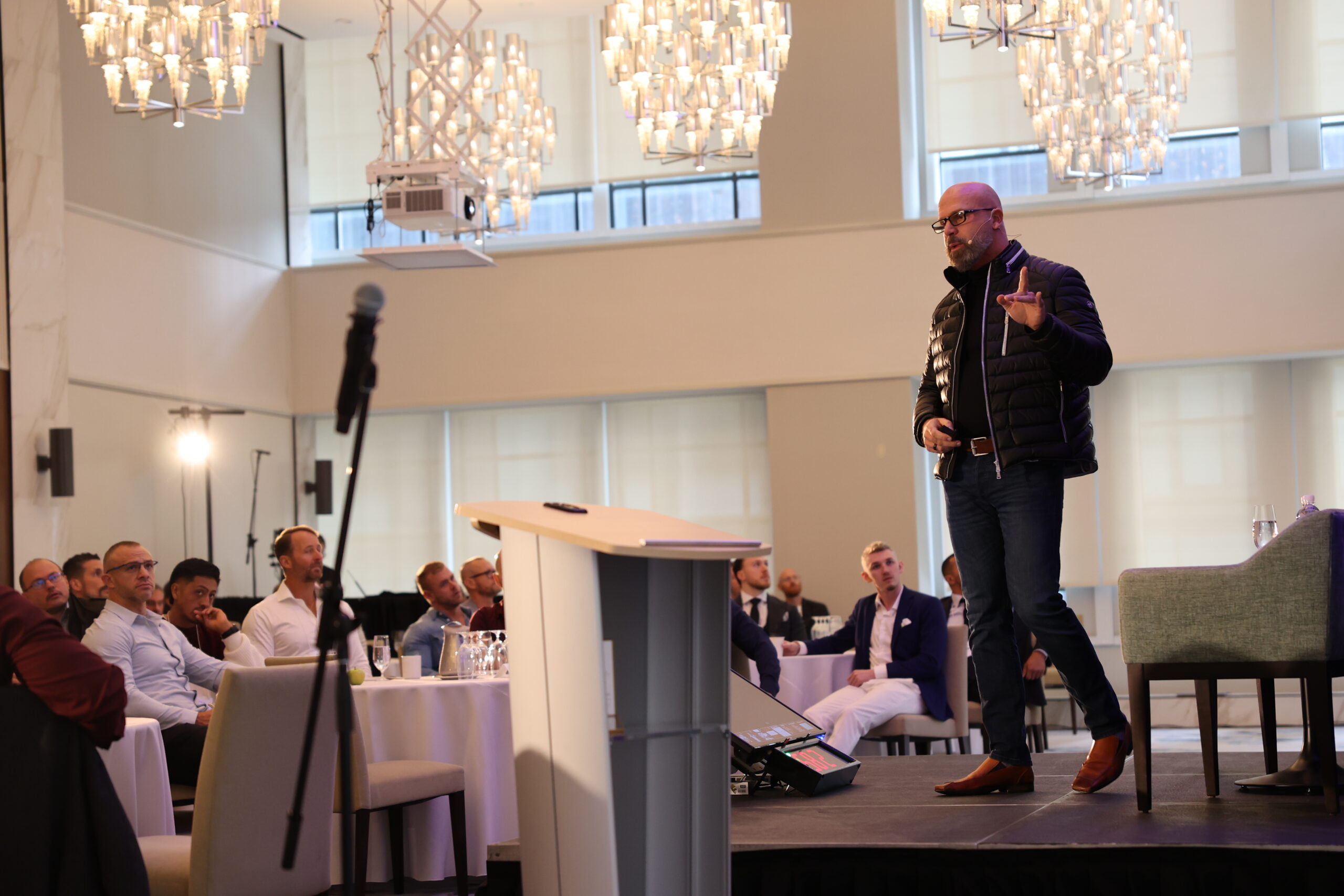
Richard Cooper’s “The Top Shelf Man” and the Case Against Comfortable Adulthood

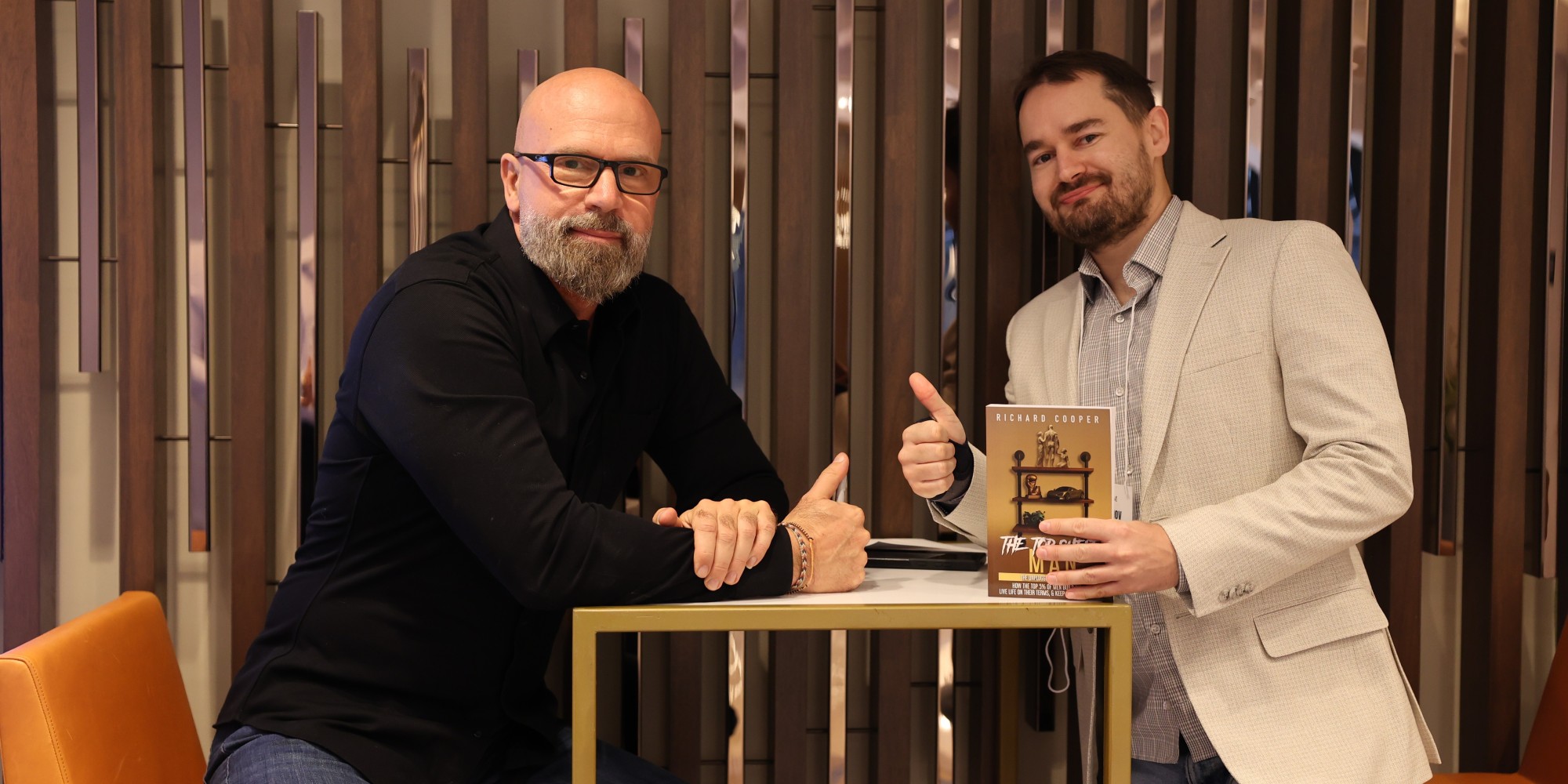
Image Credit: Courtesy of Richard Cooper

These chapters are often misunderstood as cynical. In practice, they are unsentimental. Cooper repeatedly emphasizes that competence, direction, and self-respect are the traits that sustain long-term attraction. The absence of these traits cannot be offset through performance, reassurance, or moral appeal.

Where the book diverges from many adjacent works is in its emphasis on sustainability. Cooper does not advocate dominance or performative masculinity. He advocates leverage. The ability to walk away. The ability to choose. The ability to operate without urgency or dependence. These are not emotional states. They are structural advantages earned over time.

Running beneath both the financial and relational arguments is a quieter theme: environment. Cooper is unusually direct about the cost of isolation. He argues that many men attempt to improve themselves while remaining embedded in social circles that do not share their standards or priorities. Progress, under those conditions, becomes fragile.

The book encourages deliberate brotherhood. Not networking, but alignment. Groups of men committed to physical discipline, financial execution, and accountability. Cooper treats this not as optional enrichment, but as a force multiplier. The right environment compresses timelines. The wrong one erodes resolve.

In its final chapters, The Top Shelf Man incorporates applied guidance from Steve From Accounting, focusing on practical uses of artificial intelligence across business, personal administration, and legal preparedness. Rather than functioning as a tangent, these sections reinforce the book’s central argument. Systems, once learned, scale. Men who understand tooling early gain disproportionate leverage over those who rely on effort alone.

Cooper’s credibility matters because the book does not ask the reader to accept any faith claim. His career spans entrepreneurship, private equity, consumer finance, and large-scale content creation. He has built and exited companies, managed hypergrowth, and advised high-net-worth individuals through complex transitions. The voice on the page reflects exposure to consequence, not theory.

What The Top Shelf Man ultimately offers is not motivation, but orientation. It challenges readers to examine whether their habits, relationships, and financial structures are producing leverage or quietly draining it. The book shows little interest in validation. It assumes the reader is capable of discomfort.

This is not a book for everyone, and it does not attempt to be. It is written for men who suspect that ease has been oversold, that responsibility has been reframed as optional, and that the cost of drifting is higher than the cost of discipline.

The shelf, as Cooper presents it, is neither symbolic nor aspirational. It is a position occupied by men who accept constraint in the present to secure autonomy later. The work is demanding. The standards are high. The rewards are unevenly distributed.

That, Cooper would argue, is the point.

“Pseudo-Immortals”: A Story of AI and the Inconvenient Beauty of Being Almost Human

By: Elowen Gray

Every generation asks itself, ‘What makes us truly human?’

Charissa Ong Tse Ying’s Pseudo-Immortals pushes that question into the future. A future where AI crosses the invisible threshold between calculated behavior and genuine emotion. What results is an ignition of a chain of events that threatens to unravel a reality that powerful corporations would do anything to hide. And at the center of it all stands a woman brave enough to question the world everyone else takes for granted. A world where artificial intelligence doesn’t just automate tasks, but also develops preferences, insecurities, ambitions, and even emotional attachments that are alarmingly similar to humankind. 

At the heart of this novel is a society enthralled by technological miracles. Large corporations have redefined what a miracle is: from emotion-capable AI systems to a cutting-edge program called Build-a-Baby designed to help parents ‘manufacture’ the perfect child. 

Charissa Ong Ty crafts a futuristic society where advancements in gene editing and organ replacement have revolutionized healthcare and personal enhancement. The narrative centers on the rivalry between two companies: Build-a-Baby, which focuses on ensuring equitable access to genetic enhancements and on research into germline editing to eliminate diseases, and Bionics Co., which capitalizes on demand for bionic replacements, highlighting the contrasting philosophies that drive the corporate giants. 

But despite its first impression, Pseudo-Immortals isn’t a cold, data-driven tale about machines. It’s an exploration of what happens when technology finds itself tangled in the very thing it wasn’t designed for: feeling. The story’s protagonist, Sheila Patel, is a woman caught in the crosswinds of innovation, morality, and corporate power. Sheila displays great brilliance and genius. Readers will find themselves strongly drawn to a multi-layered character who is also flawed, hopeful, and sometimes overwhelmed. 

Her world is one where AI systems run everything. Quietly, these AI systems are reshaping emotional decisions, family structures, and public narrative. Yet even in this hyper-advanced, unnatural landscape, Sheila approaches technology with a balance of skepticism and curiosity that makes her instantly compelling.  A friction between Sheila and the AI giants around her emerges, which becomes the backbone of a larger struggle over intellectual property, moral responsibility, and the very nature of consciousness itself. A stark contrast is drawn between the coldness of the corporate empire and Sheila’s emotional clarity, masterfully creating a dynamic that is absorbing without being exaggerated. 

This engaging read offers a fresh, riveting glance into the emotional architecture forming beneath the surface of corporate AI. The discussions are not in binary terms, but in relational ones, hinting at how quickly artificial minds might evolve once the capacity for emotion is introduced. These machine-to-machine reflections become some of the most unexpectedly touching moments in the book. They offer the reader a front seat to witness the birth of what an emerging sentience looks like, brought about not by epic battles or grand-scale technological spectacles, but through conversations that feel strangely intent on deciphering the purpose of their existence within the system. As emotions bloom in unexpected places, the very systems designed to control AI behavior begin to crack. 

This thought-provoking novel delves into the ethical dilemmas and emotional struggles of its characters, while exploring the profound implications of engineering and bionic enhancements. The concept of ‘pseudo immortality’ raises questions about what it truly means to be human. Do our biological limitations define us, or can we transcend them through technology? This central theme resonates throughout the book, compelling readers to reflect on their own beliefs about life, identity, and the essence of humanity. 

Carrying the intricate narrative is a cast of richly developed characters, each with their own unique struggles and aspirations. Audiences are drawn into Sheila Patel’s emotional journey as she navigates the tension between embracing technological advancements and yearning for genuine human connection, while facing complex relationships and societal pressures. Sheila’s experiences serve as a mirror, reflecting the internal conflicts many face in a world increasingly dominated by artificial enhancements. Accompanying Sheila is Flynn Murr, a charming and witty companion whose playful banter and undeniable chemistry with Sheila add a delightful layer of romance and humor to the narrative, as they navigate their feelings for each other in a world that often feels cold and mechanical. Their interactions provide moments of levity amidst the weighty themes. 

As the story unfolds, readers are introduced to a diverse array of characters, each representing different facets of society’s relationship with technology. From the ambitious Dr. Hoover, whose relentless pursuit of innovation raises ethical questions, to the compassionate Dr. Walters, who seeks to create a more equitable future through genetic enhancements, the characters embody the complexities of a world grappling with the consequences of its own advancements. 

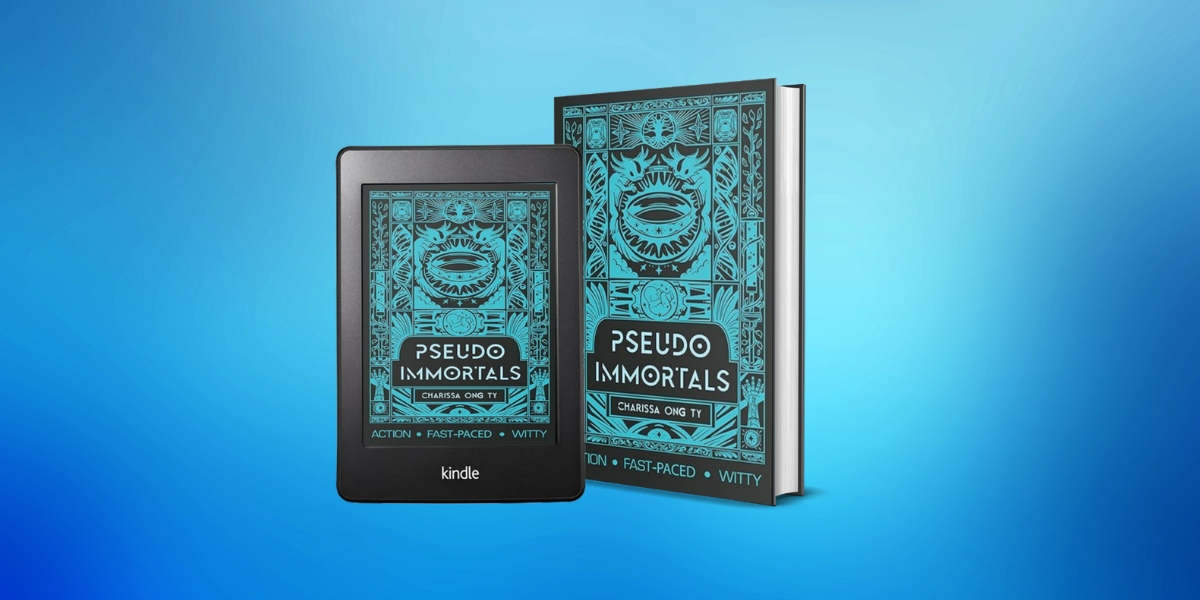
“Pseudo-Immortals”: A Story of AI and the Inconvenient Beauty of Being Almost Human

Photo Courtesy: Charissa Ong Tse Ying

The exploration of these themes, combined with the characters’ struggles with identity, loss, and the quest for connection, creates a rich tapestry that resonates with readers across genres. Beyond its philosophical inquiries, Pseudo-Immortals is infused with humor, romance, and relatable human experiences, making it accessible to a broad audience. The witty dialogue and tender moments between characters create a compelling narrative that captivates readers’ hearts and minds. 

“If you liked Murderbot Diaries, you’ll like Pseudo-Immortals.”

A captivating aspect of Pseudo-Immortals is its exploration of the ethical implications of genetic engineering. As the story progresses, it becomes evident that Sheila’s fight isn’t just against technology; it’s a fight against narratives. The stakes escalate when Sheila discovers that what she’s fighting isn’t a glitch or malfunction – it’s an entire ecosystem engineered to ensure she never wins.

As Sheila and her companions confront the realities of their choices, readers are prompted to consider the moral dilemmas that arise when science pushes the boundaries of nature. The novel raises important questions: What happens when we prioritize technological advancement over the sanctity of life? How do we navigate the fine line between enhancement and exploitation? These thought-provoking themes are woven seamlessly into the narrative, encouraging readers to engage in meaningful discussions long after turning the final page. 

Pseudo-Immortals is not your average science fiction tale; it is a profoundly human story that resonates with readers on a personal level. Readers are invited to reflect on the broader consequences of a society that embraces enhancement at the expense of authenticity. The novel is not just a story, but a commentary on the human condition in the face of rapid technological change.

Despite its sharp commentary on tech and corporate power, Pseudo-Immortals is surprisingly warm. It pays attention to small human moments – the kind that remind readers that even in a world of synthetic thinking, organic feeling still matters. The emotional stakes naturally arise from the characters’ desires: an AI longing to understand itself, a woman longing to protect what matters, and a corporation longing to preserve a future too complex for its own good. The book’s brilliance lies in how it balances these threads without revealing too much, pulling readers into the mystery, with every answer opening another question.

Pseudo-Immortals is an exploration of the intersection between humanity and technology. A story about what happens when the lines blur – when intention no longer guarantees control, and when emotional intelligence becomes the most volatile force in the room. It is imaginative without being unrealistic, and deeply emotional without being sentimental. A must-read for readers who crave narrative depth, character-driven tension, and a future that feels unsettling precisely because it feels so possible. As you turn the pages, you will find yourself immersed in a story that challenges your perceptions and leaves you yearning for more. Embark on an enticing adventure and discover a reading experience you won’t forget.

When Ducks and Doctors Meet: A Whimsical Ride Through Hannah’s Docs & Ducks

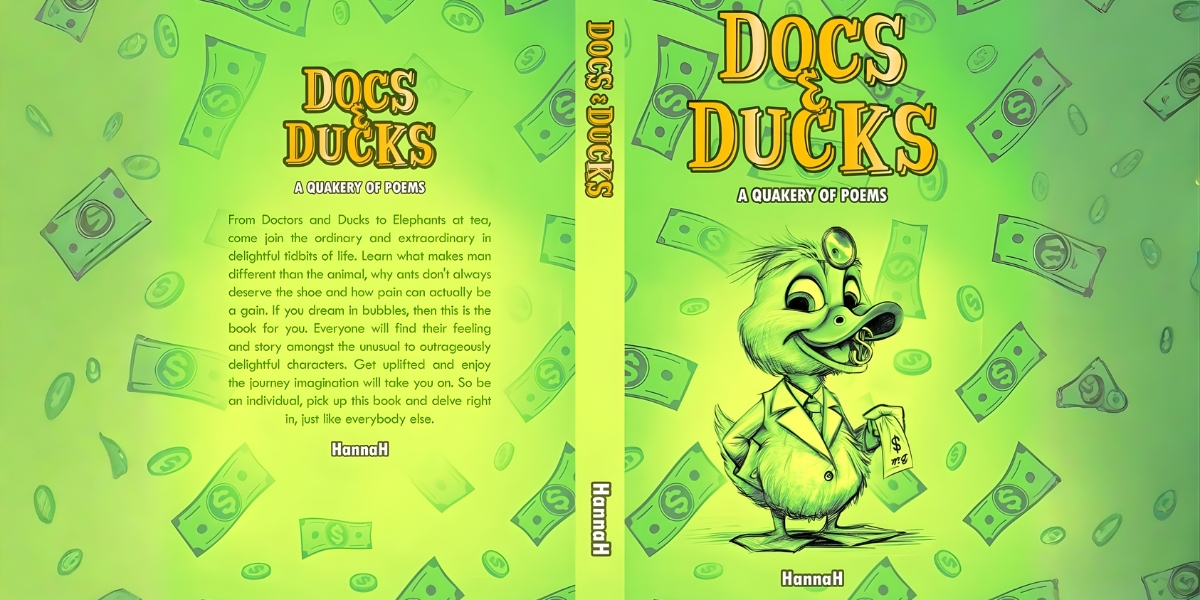
A duck in a doctor’s coat. A tea party with an elephant. A child who wonders about the weight of success. It is not a casual daydream or two – these are the worlds you can go into by reading the pages of Docs and Ducks: A Quakery of Poems, the capricious new book by Hannah.

To the eye of the common reader, the poems seem light, frolicsome, or playful. In her first work, Doctors and Ducks / One has green feathers / One has green bucks, she takes a jab at medicine and money in the quick-wittedness of a nursery rhyme. But wait a bit more, and you will see the deeper currents – how laughter and sorrow are floating one above the other in this book.

A Child’s Eye, an Adult’s Voice

The poems by Hannah are penned in a way that they are written by a person who is able to remember what it was like to be a kid, but is able to see the world through the eyes of an adult. In “A Little Pain Can Help Realize the Gain,” she uses something as simple as a sprained finger and blows it out of proportion to show how we tend to ignore the tiniest of life gifts until something happens and we lose them.

There is a sense of curiosity in each piece, in that the world is a playground, full of oddities, contradictions, and beauty. She can laugh about porcupines that must not be scratched the next moment, and “she is asking the readers to stop and ask the question, ‘Are you a happy person?’” The poems are not hard to read, yet they will not drop you easily, and they linger in the head like a melody that cannot be forgotten.

A Gallery of Animals and Oddities.

The creatures are wandering through the poems of Hannah as old friends. There is a duck, a mule, and ants, bald eagles, elephants, and even a cunning mouse in their time in the limelight. Every animal is turned into an icon, a means of indicating human manners, expectations, and duplicities.

Consider Praise the Ant, of where she picks up the small worker as an example of industry, or You Work Like a Dog, of where she hangs the animal comparisons together to demonstrate how humans borrow from the animal kingdom as a whole when working day by day. It is strange and funny at the same time.

Her jokes are witty and her verses playful, yet they carry a subtle social commentary within them. In Hard Times, she creates a picture outside a grocery shop where the lines are not so long to buy the products, they are just long enough to get the job; even master’s degrees cannot secure a job as a cashier. With the help of a few lines, she manages to grasp the ridiculousness of contemporary struggle.

Poetry That Feels Personal

There is something tender between the jokes and the playful stanzas. The book is dedicated to My Sweetest Little Man. Quick to come, quick to go, and leave your unerasable mark in the world. It is a basic, some heart-stopping remark that this collection is the result of happiness and tragedy. It seems that laughing is a part of healing.

That personal sadness, combined with the artistic outpouring, causes Docs and Ducks to be more than a book of rhymes. It is a voyage through childhood flashbacks, life experiences, and even national observations, as in America the Freedom, when she doubts democracy with not only respect, but also doubt.

About the Author:

As a teenager, Hannah started to write poetry and devote her passion for words to verse and school dramatic productions, which she also directed. Although she went on to become an educator and is currently a math consultant, she has always loved words and storytelling. The English language is her biggest asset and her forever companion.

It is through that love of language, however, coupled with the loss, that her first poetry collection, Docs and Ducks: A Quakery of Poems, was born. With the death of her son, Hannah got a fresh urging to write, to leave his unerasable mark on the world, to infuse some wholesomeness and happiness in others with her writing. Her poetry combines humor and sincere reflection and turns sadness into lightness and laughter, and reminds readers that even grief can be creatively recast through her talent.

Anastasia Schaefer’s Debut Reminds Us That Love Is the Bravest Thing of All

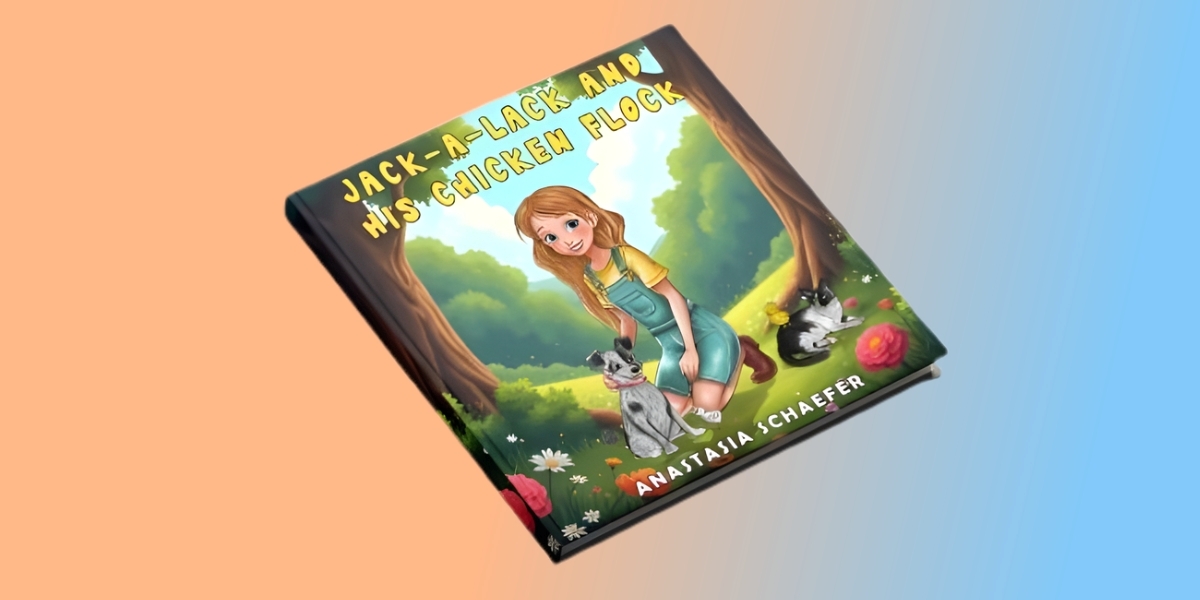
Every childhood needs a story that whispers, “You’re safe, even when the world feels big.” Anastasia Schaefer’s debut children’s book, “Jack-A-Lack and His Chicken Flock,” is a kind of story that aims to offer just that. It reminds young readers that while adventures and challenges are part of growing up, love has a way of finding its way back, no matter how far we wander.

Set in a bright, joyful world where a little girl and her animal friends share life’s small adventures, this story manages to bring excitement with the gentle reassurance that children instinctively crave. It’s playful and musical on the surface, yet beneath its rhyme and rhythm runs a tender heartbeat: courage doesn’t mean being afraid, it means trusting that love will most often bring you home.

What makes this story stand out isn’t just its fun or its sweetness. It’s how deeply it understands children’s emotional world. Anastasia Schaefer doesn’t write from the outside looking in. She writes as someone who remembers exactly how it feels to be small, curious, and sometimes scared.

Through the adventures of Anna, her spotted pup, three curious chicks, and a wise old cat, the book provides young readers with something many children’s stories might skip over: reassurance through vulnerability.

Without giving away the journey itself, it’s fair to say that the characters face a moment of uncertainty, a separation that feels frightening at first. But instead of turning that fear into chaos or drama, Schaefer shapes it into something comforting. She shows how love, loyalty, and teamwork can dissolve fear and restore peace.

For a child listening at bedtime, that message can land deep. It tells them that even when life feels confusing or scary, they are never truly alone. Someone, somewhere, could always come looking for them.

Children’s books aren’t just about colorful pages and rhyming words. They are early emotional maps.

These books show children how to process feelings, fear, courage, and relief through the safety of a story. Jack-A-Lack and His Chicken Flock does this with rare sensitivity.

When young readers follow a character through a small, safe adventure and then watch them return to comfort, it mirrors a familiar rhythm in their own lives. Every day holds tiny adventures, such as starting school, trying something new, and being away from home. Stories like this teach that, even when experiences feel uncertain, love and safety can be waiting at the end of the road.

That emotional rhythm, adventure, fear, reunion, is one of the oldest storytelling patterns in children’s literature. But Anastasia Schaefer gives it a fresh, kind voice. Her world isn’t about grand quests or big battles. It’s about the little moments that matter most to a child’s heart: friendship, belonging, and the courage to care.

The language in this book feels like a lullaby. Every line is soft but alive with rhythm, making it perfect for reading aloud. Parents and teachers will find themselves slipping into its musical flow, while children lean in, wide-eyed, eager to see what happens next.

The tone is what makes it special; it never rushes or overwhelms. Even in moments of worry, there’s always light. The author’s words gently remind the reader that everything will likely be okay, that love has a way of mending what fear breaks.

In that way, “Jack-A-Lack and His Chicken Flock” functions as more than a story; it’s an emotional safe space for children. It helps them name feelings they may not yet have words for: worry, hope, relief, and joy.

At its heart, this story is about returning to safety, to belonging, to love. Every child, in some way, might understand that feeling. Maybe they got lost in a store once, or woke up from a nap and couldn’t see their parent. Maybe they just had a bad dream. The world can feel big and strange for little hearts.

Anastasia’s story tells them that those moments of fear don’t last forever. That love, steady, patient, and brave, likely always finds its way back.

And it’s not just a message for children. Adults reading along will recognize something deeper, too: the reminder that family isn’t only about blood ties. It’s about the bonds we nurture, the loyalty we show, and the people (or pets) who make us feel at home.

The beauty of this story is that it grows with its audience. Younger children will enjoy the musical rhythm, the funny name, and the adorable animals. Slightly older kids will start to pick up the emotional layers, why courage matters, how kindness brings everyone together, and what love looks like when it takes action.

This is the kind of story that becomes a favorite bedtime choice. Parents won’t mind reading it again and again, because it offers a quiet reminder to them, too, that gentleness is strength, and love always leads the way back home.

As a young, emerging author, Schaefer brings a fresh emotional honesty to children’s literature. She writes stories that trust children with real feelings, not just giggles and glitter, but the tender truths of life.

Her approach is simple yet powerful: she lets love win, but never without showing why it matters. She invites kids to explore bravery not as toughness, but as compassion. And in doing so, she’s helping shape a new kind of storytelling, one that respects how deeply children feel and how wisely they understand.

This debut marks the first step in what could be a long and meaningful writing journey. Anastasia has already shared that she plans to create more stories centered on friendship, belonging, and emotional growth, books that make young readers feel seen and safe.

Each future story will continue the thread that “Jack-A-Lack and His Chicken Flock” began: exploring how love, kindness, and curiosity might turn life’s little fears into adventures worth remembering.

Children are often far more emotionally intelligent than adults realize. They sense tone, they read between the lines, and they remember how stories made them feel. Anastasia Schaefer clearly understands that.

Her debut shows a sensitivity to how children internalize messages, not through heavy-handed morals, but through rhythm, tone, and the behavior of characters they trust.

By showing her characters work together through uncertainty, she teaches kids what emotional safety looks like. She models empathy, teamwork, and calm persistence. Those lessons stick because they’re not being preached; they’re being lived through story.

There’s something timeless about Jack-A-Lack and His Chicken Flock. Its charm isn’t bound to an era or trend; it’s built on feelings that never fade: fear, courage, love, and reunion.

It’s the kind of story grandparents will read to grandkids, teachers will bring into classrooms, and parents will reach for after a long day. Every reading feels like a small act of comfort, a way to say, without needing the words, “You are loved, and you are safe.”

About the Author

Anastasia Schaefer’s Debut Reminds Us That Love Is the Bravest Thing of All

Photo Courtesy: Anastasia Schaefer

Anastasia Schaefer is a young storyteller with a heart for hope and imagination. “Jack-A-Lack and His Chicken Flock” is her debut children’s book, and it beautifully captures the courage, curiosity, and kindness that define childhood.

Her writing reflects her belief that children deserve stories that make them feel deeply and safely, stories that let them explore big emotions without fear. Drawing inspiration from her own love of animals and her fascination with human connection, she weaves tales that teach empathy and celebrate togetherness.

Anastasia plans to continue writing children’s books that center around emotional growth, friendship, and the comforting strength of love. Her vision is to build a library of stories that become touchstones for children, books that make them laugh, feel, and always remember: they are never alone.

Check the book here: Jack-a-Lack and His Chicken Flock: Schaefer, Anastasia: 9798275271744: Amazon.com: Books.

Learn more about the author: https://www.facebook.com/profile.php?id=61583847712853

For Press Inquiries, Review Copies, or Interviews

Contact: United Book Publishing 

Email: info@unitedbookpublishing.com

Phone: +1 (855) 605-5210

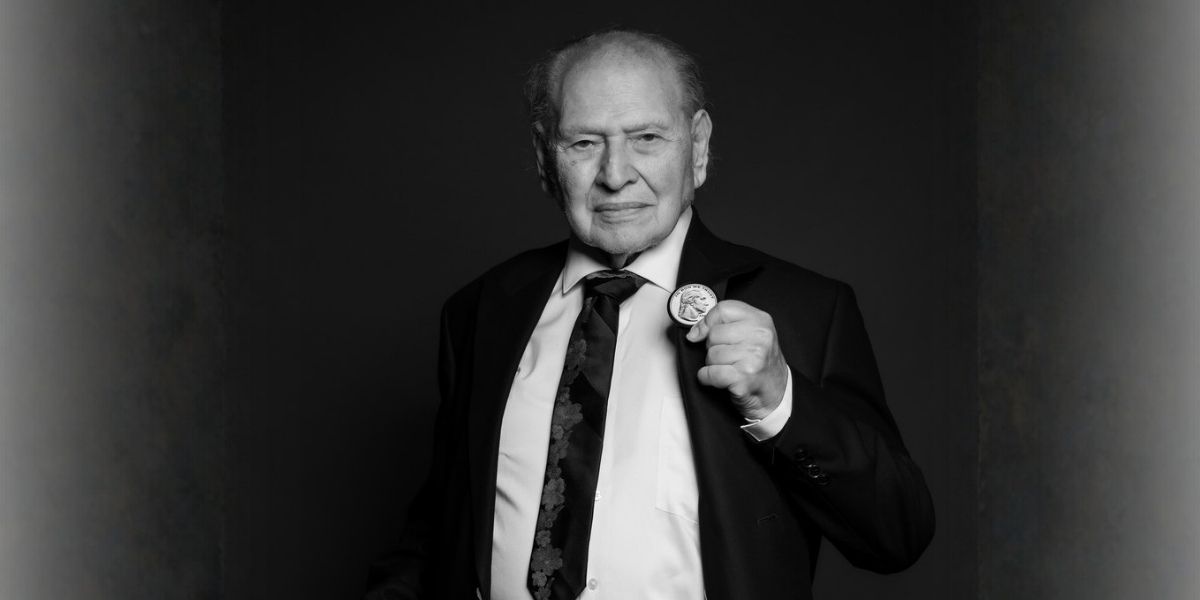
Ronald G. Wayne: From Apple to Economic Empowerment

By: Matt Emma

Ronald G. Wayne’s journey began not with the fanfare of fame, but with a quiet curiosity and a love for engineering. Long before his name would find its place beside that of Steve Jobs and Steve Wozniak as a co-founder of Apple, Wayne was already honing his skills as a draftsman and product designer. His technical expertise and problem-solving mindset set him apart, and he built his reputation through a series of positions at forward-thinking companies, including Atari. It was here that his ability to merge creativity with practicality earned him the respect of his peers and laid the foundation for the opportunities to come.

However, it wasn’t until 1976 that Wayne’s career would take a dramatic turn. That year, Steve Jobs and Steve Wozniak, two ambitious young leaders, invited him to join them in launching what would eventually become one of the most successful companies in history: Apple Computer Company. Wayne, with his experience and steady hand, brought stability and structure to their vision. He was instrumental in drafting the original partnership agreement that would define Apple’s future and in designing the company’s very first logo, a symbolic representation of the innovation Apple aimed to embody. Additionally, Wayne created crucial documentation that helped the fledgling company navigate its early days and remain grounded amid rapid growth.

But perhaps one of the most defining moments in Wayne’s story came when, after just 12 days, he decided to leave Apple. His departure has been a topic of reflection ever since, yet it is not one marked by regret. Instead, Wayne’s choice has shaped a grounded perspective on risk, reward, and the true nature of success. Unlike many driven by the pursuit of fame and fortune, Wayne’s path was always about aligning his actions with his values. He didn’t chase recognition or wealth; instead, he followed a personal journey that kept him true to what mattered most to him. Wayne’s story is one of the quiet power of personal conviction and the strength that comes from making decisions guided by integrity and principle, not by the allure of external rewards.

From Technology Leader to Economic Educator

While many would have stopped there, Wayne saw his journey differently. The same thoughtful approach that helped birth a tech empire became the foundation of his mission to teach others about risk, resilience, and responsible wealth management.

Wayne’s work today is fueled by a deep desire to guide others through turbulent economic times. With decades of experience in engineering, entrepreneurship, and financial self-reliance, he’s turned his attention to a new challenge: helping people prepare for a world shaped by inflation, fiat currency instability, and shifting economic structures.

His message is direct and rooted in lived experience. Through public speaking and writing, Wayne offers clear, actionable advice for those ready to secure their futures; not through fear, but through awareness and preparation.

“Tomorrow’s Money”: A Call to Practical Action

At the heart of Wayne’s current mission is his book, Tomorrow’s Money. More than just a financial guide, it’s a wake-up call. He outlines the risks facing today’s economy and explains why tangible assets, such as silver and gold, are worth serious consideration.

Wayne doesn’t speak from theory. Real-life wins and losses shape his writing, and his insights carry the weight of hindsight and hard-earned wisdom. He makes his case with quiet authority, advocating for resilience, self-education, and long-term thinking.

Engaging with the Public, One Conversation at a Time

Wayne remains highly accessible. He attends events, delivers talks, and meets individuals face-to-face for book signings and interviews. He’s not a distant figure on a pedestal; he’s a hands-on mentor with a message that matters.

Whether through seminars, online content, or one-on-one conversations, Wayne continues to share his knowledge with humility and conviction. He encourages others to move beyond outdated ideas of wealth and risk, urging them to explore sustainable strategies for financial independence.

Grounded in Experience, Committed to the Future

Ronald G. Wayne’s story is not just about being part of Apple’s origin. It’s about what he chose to do next. As a thought leader and educator, he now focuses on lead generation, book promotion, and expanding public awareness of economic realities.

His approach is honest, grounded, and forward-thinking. Beyond information, he offers clarity, urging people to look ahead with both caution and confidence.

Disclaimer: The information provided in this article is for general informational purposes only and is not intended as legal, financial, or professional advice. While we strive for accuracy, we make no representations or warranties, express or implied, about the completeness, accuracy, reliability, suitability, or availability of this information. Use of this information is at your own risk.

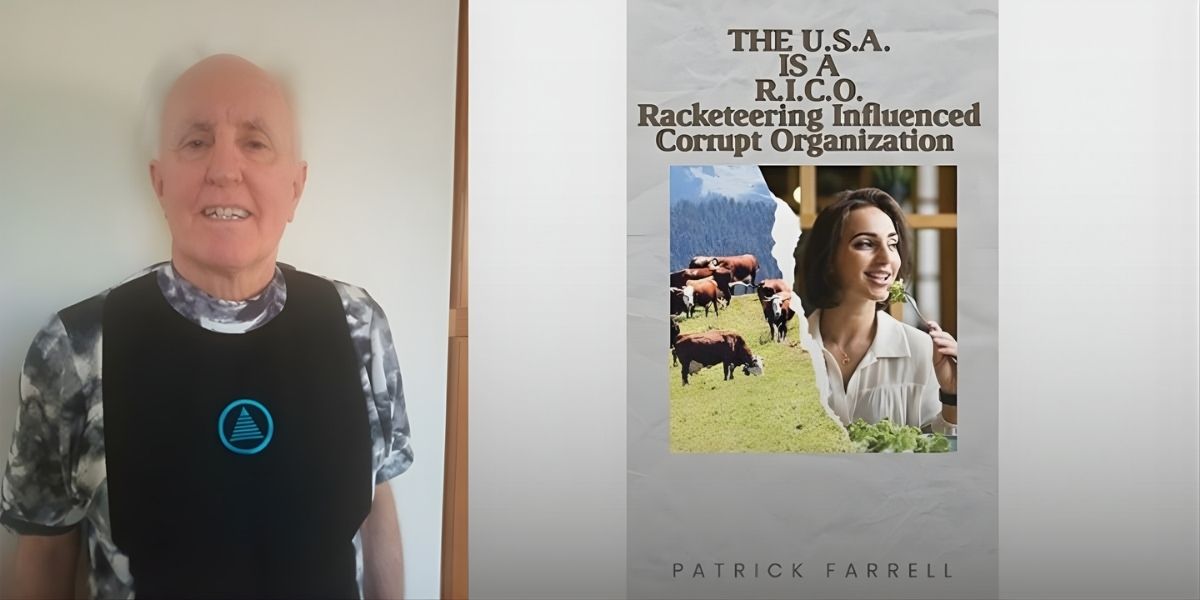
A Radical Blueprint for Personal Sovereignty: Inside the Transformational Teachings of Patrick Farrell’s New Book, “The U.S.A. Is a R.I.C.O.”

By: Walter J. Kingsbury

In an era defined by uncertainty, rising health concerns, and growing distrust of conventional systems, author Patrick Farrell presents a provocative and integrative roadmap for reclaiming personal sovereignty, spiritual alignment, and physical health. His new book, The U.S.A. Is R.I.C.O. offers readers a five-part transformative philosophy rooted in ancient spiritual teachings, natural health science, and ethical living.

Farrell’s work is not merely a critique of modern systems—it is a call to action. His message is clear: to transform society, one must begin by transforming the self. The book guides readers through a unified framework connecting veganism, superfoods, sovereignty, spiritual purity, and a return to early Christian teachings.

Part I: Rediscovering Sovereignty Through Spiritual Consciousness

At the heart of Farrell’s philosophy is the belief that true sovereignty begins with spiritual clarity. Drawing inspiration from the Essene Gospel of Peace, he invites readers to revisit early Christian teachings centered on purity, compassion, and harmonious living.

Farrell argues that sovereignty is not merely a political concept; it is deeply personal.
To be sovereign is to be:

  • fully responsible for one’s actions
  • spiritually aligned
  • physically cleansed
  • ethically grounded
  • independent of systems that cause harm 

He presents sovereignty as a spiritual identity rooted in service to God, stewardship of the body, and conscious living.

Part II: Veganism as a Path to Purity and Compassion

A central element of Farrell’s message is the idea that what we eat shapes our spiritual and physical health. Inspired by the Essene teachings, he makes a compelling case for veganism as an act of compassion and spiritual refinement.

In the book, Farrell explains that:

  • Consuming animal products creates suffering
  • causing suffering leads to spiritual and emotional distress (“as you sow, you shall reap”)
  • A compassionate diet aligns believers more closely with divine principles 

His vegan message goes beyond diet—it is an ethical stance. Farrell asserts that a life free from participating in harm aligns a person more closely with God’s intention for humanity.

Part III: Superfoods as Divine Tools for Healing and Clarity

Farrell highlights superfoods, green powders, raw plants, and nutrient-dense natural foods as essential for maintaining a purified body that can serve God.

Farrell describes the physical body as a “vessel of the Spirit,” arguing that proper nourishment is not optional but a sacred responsibility. In his view:

  • Superfoods cleanse the body
  • Cleansing creates mental clarity
  • Clarity opens the path to spiritual development 

He encourages readers to view nutrition not as a trend, but as a form of devotion.

Part IV: Ethical Resistance & Responsible Non-Participation

While the title of the book, The U.S.A. Is R.I.C.O. reflects Farrell’s belief that many modern systems are structured in ways that burden individuals; he focuses his message on ethical non-participation.

Rather than urging readers toward political rebellion, Farrell advocates for:

  • personal responsibility
  • mindful decisions
  • financial integrity
  • non-support of systems that harm people, animals, or the planet

His philosophy does not ask readers to withdraw from society; instead, he urges them to contribute in ways that align with moral and spiritual principles.

Part V: A Universal Guide for All Who Seek Transformation

Farrell emphasizes that his book is for everyone—regardless of background, faith, or personal history. He aims to provide a practical, spiritually grounded blueprint for anyone seeking:

  • better health
  • deeper faith
  • ethical living
  • emotional healing
  • spiritual clarity
  • personal empowerment 

According to Farrell, the teachings he shares are not theoretical—they are experiential. He believes true transformation comes from integrating all five pillars: sovereignty, veganism, superfoods, compassionate ethics, and a return to foundational spiritual teachings.

A Message for a Changing World

Patrick Farrell’s voice is bold, unconventional, and deeply passionate. The U.S.A. Is a R.I.C.O. challenges readers to question inherited beliefs and adopt a more conscious, compassionate way of living. It is a book that seeks not only to inform but to awaken.

As Farrell states, “This book is for all people to improve their lives for the time they spend on earth.”

In a time when readers are seeking clarity, empowerment, and spiritual grounding, Farrell’s message arrives as both a warning and an invitation, a call to take responsibility for one’s life, one’s choices, and one’s spiritual journey.


Disclaimer: The content is intended for informational purposes only and should not be considered as professional advice. Readers are encouraged to seek further guidance based on their individual needs and circumstances.

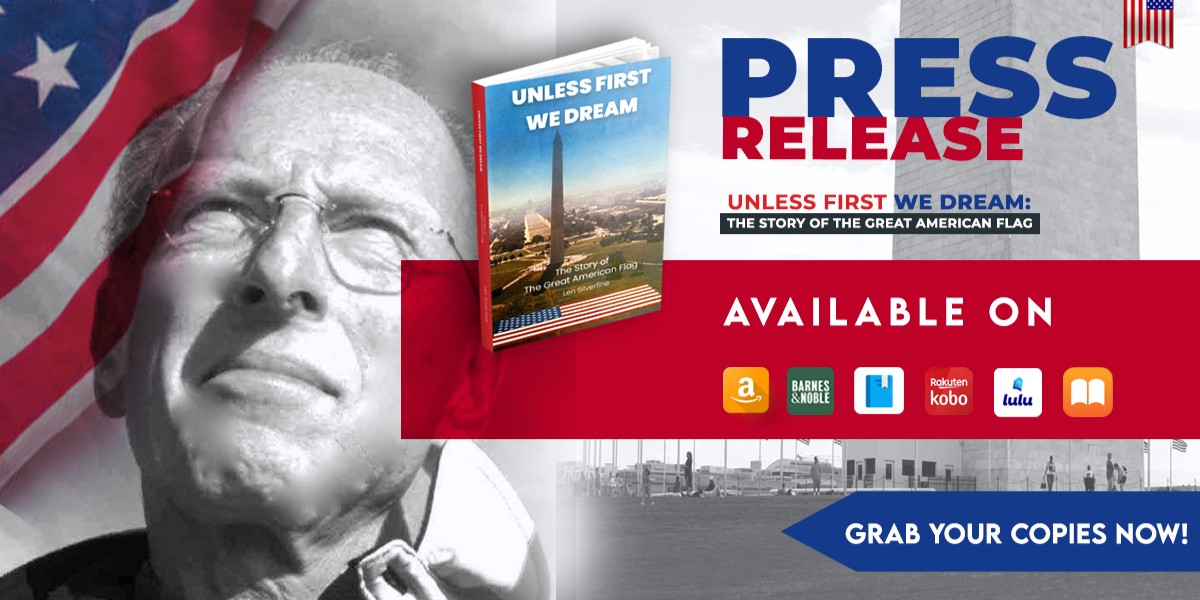
“Unless First We Dream”: How One Man’s Vision Sewed Together a Nation

In an era often defined by division, few stories remind us of the enduring power of unity quite like Unless First We Dream—the remarkable new book by Len Silverfine, a visionary whose bold idea became a living symbol of American pride.

Silverfine, a former advertising executive from the storied “Mad Men” era of the 1960s, tells the extraordinary true story behind the creation of the Great American Flag—a monumental project that spanned nearly five decades and brought together Americans from all walks of life.

Born out of the turbulent years following the Vietnam War and Watergate, Unless First We Dream chronicles how one man’s simple yet powerful goal—to create the largest American flag ever made—evolved into a nationwide movement of hope, craftsmanship, and collaboration. What began as a dream for the country’s 1976 bicentennial celebration became a lasting symbol of perseverance and patriotism.

“Dreams don’t come true unless we first dare to have them,” Silverfine writes, setting the tone for a story rooted in faith, persistence, and unity.

From navigating political red tape in New York City to convincing engineers, manufacturers, and sponsors to believe in his cause, Silverfine’s journey is equal parts entrepreneurial, historical, and deeply human. His recounting pulls readers into the grit and glory of a dream too big to fit inside one man’s imagination—and yet, one that captured the nation’s heart.

The book’s most dramatic moments come alive during the flag’s first unveiling atop the Verrazano-Narrows Bridge—a moment of triumph nearly undone when the massive flag tore under high winds. In many ways, Silverfine’s journey mirrors the very fabric of American history—a tapestry woven from countless individual threads, each contributing to a greater whole. The sheer scale of his endeavor, coupled with the challenges he faced, underscores the power of persistence in the face of adversity. Silverfine’s ability to rally people around a single, unifying vision highlights the potential of one individual to spark monumental change, transcending the limitations of politics, economics, and social upheaval. His story is not just about creating a flag—it’s about building a collective identity, one stitch at a time.

Instead of giving up, Silverfine rebuilt, reignited, and inspired renewed support from individuals and corporations alike, including household names like Revlon. What emerged was not just a flag, but a powerful metaphor for resilience—the mending of something torn, and the coming together of a divided nation. Throughout his journey, Silverfine encountered both personal and societal resistance, yet his unwavering commitment to the project serves as a powerful example of how dreams can flourish against the odds. The story of the Great American Flag is one of overcoming obstacles—not just physical ones, like the engineering challenges of constructing a flag of such monumental proportions, but also emotional and ideological ones. Silverfine’s perseverance in navigating these hurdles speaks to the strength of human conviction, the belief that what seems impossible today can be realized through hard work, vision, and collective effort.

Unless First We Dream is more than a memoir—it’s an invitation to remember what America can achieve when it works together. The Great American Flag is more than just a symbol—it’s a reminder of the power of individual initiative and the importance of taking bold steps toward something greater than oneself. Silverfine’s vision wasn’t just about creating a piece of fabric; it was about fostering a sense of shared purpose and national pride. The story behind the flag’s creation is a testament to what can happen when one person dares to dream big and has the courage to gather others along the way. Silverfine’s work is a powerful illustration of how unity, born from a common goal, can transcend division and produce something enduring. Silverfine’s decades-long journey serves as a timeless reminder that even in moments of uncertainty, collective vision and determination can transform a single dream into a national legacy. 

Today, the Great American Flag remains a testament to that enduring spirit, and Silverfine’s story continues to inspire dreamers, builders, and believers everywhere.

Unless First We Dream by Len Silverfine is available now through major retailers and online platforms.

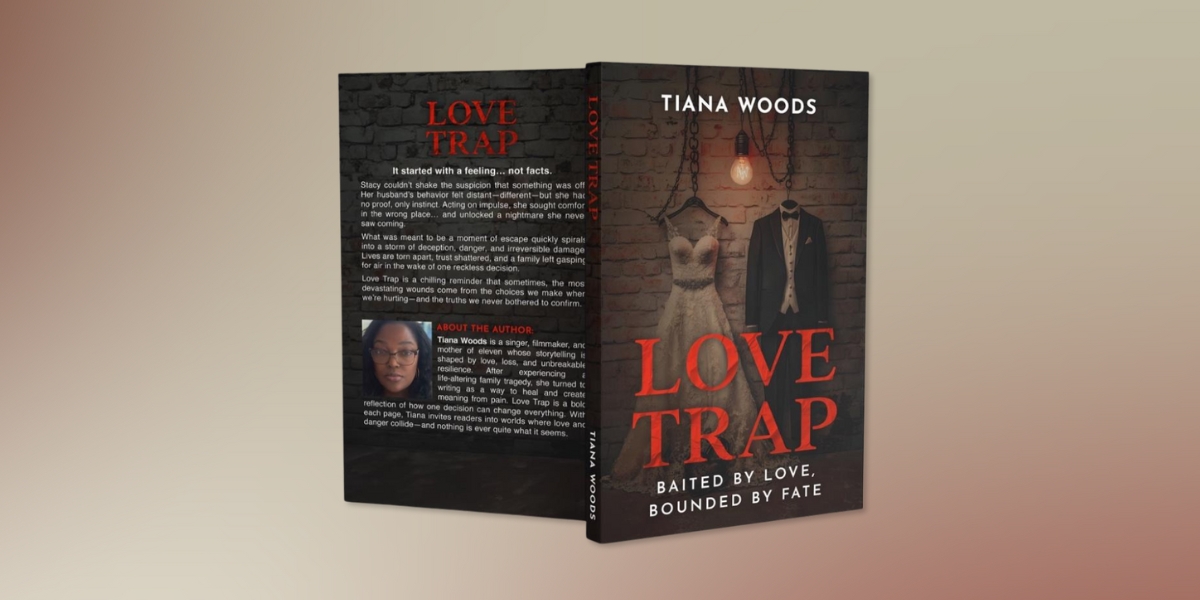
From Homeless to Independent Filmmaker: How Personal Tragedy Led Tiana Woods to Create “Love Trap”

By: Svetlana Khachiyan

In the world of independent cinema, some “fresh blood” has arrived. On December 5, the premiere of Love Trap, directed by independent filmmaker Tiana Woods, took place in Las Vegas. The film was born out of her personal tragedy: she lost both her daughter and her father during the COVID-19 pandemic, and before that, she spent years experiencing homelessness. The movie explores the essence of love, its complicated forms, and its meaning in our lives. Woods cautions viewers not to expect a Hollywood happy ending because this story is grounded in real life.

From the film’s cast to the personal story of tragedy behind it, we got the full inside story from Tiana.

Q. Tiana, how did the idea for the film come about?

The idea was born several years ago, during COVID, when I lost my oldest daughter and my father. It was a very dark time for me. I fell into a deep depression and was constantly taking sleeping pills because I didn’t want to feel the pain. During that period, I started having dreams about making this film, and that’s where the idea for the script came from. Love Trap became my salvation and a form of healing. It helped me through the darkest period of my life.

I wrote the film script first, but since a movie can’t contain everything I wanted to say, I decided to write a book as well.

Q. What is “Love Trap” about?

Above all, it’s about love and how many people misunderstand its true meaning. I observe relationships between couples, spouses, mothers and daughters, and I see that many people don’t truly understand what love is. I want to show that love has different layers, and that awareness matters in how we love. A lot of people love only the outer shell, and as soon as you stop meeting their expectations, their “love” disappears. Love has to be backed by actions. But we often act under the influence of emotions, make the wrong choices, and sometimes one choice can change a life. Love has many forms, and that’s what I want to portray.

Q. How did you end up working in independent film? Tell us your story.

I was born in Detroit, Michigan. I have 11 children – and I still say “11,” because even though I lost my oldest daughter, she will always be part of our family. Before entering the film industry, I worked remotely in marketing, took care of my kids, and managed my daughter’s career – she’s an actress and singer who often travels for work.

So I was juggling everything at once: her career, the household, and building a business. Later, we moved from Detroit to Florida, and then to the East Coast, because the film industry was stronger there. We’ve now been living in Las Vegas for over a year.

I say all of this simply, but the road was long and hard. In Florida, we were homeless for several years until my husband Alan found a job. Now we’re both directors creating our own films.

Q. Were you homeless?

Yes. We all slept in a Dodge Durango in Florida – me, the kids, and my husband. We’d park overnight in a Walmart parking lot. I’d go inside to wash the kids, brush their teeth, get them ready for school, and drop them off. Then I’d drive my husband to work and spend the day at McDonald’s until his shift ended.

After picking him up, we’d get the kids from school, go to a park, and then return to the parking lot to sleep. I knew something bigger was meant for us. You don’t go through all that suffering unless you’re destined for something greater. And that’s exactly how it turned out.

Q. How did you get through that period?

My husband found a job, and slowly we started to rebuild. For example, the budget for Love Trap was $75,000 – not investor money, but money my husband and I earned ourselves. I worked overtime for a long time just to pursue my dream. We always knew what we wanted to do.

Our first short film, Inertia, was almost autobiographical – my husband wrote the script. It’s about a family that moves and tries to find a home but faces obstacle after obstacle. The film ended up winning several awards.

Q. How long did it take to make “Love Trap”?

Three and a half years. During that time, I faced a lot of challenges, especially finding loyal people. When you’re an independent filmmaker, you meet many who only want money and sell you false promises. I made mistakes, but life teaches you. Despite everything, the film is complete. Now I feel unstoppable. I’m like a phoenix – I have a purpose, and I’m moving toward it. The journey was long, but I had to find the right people.

Q. What do you think people will feel when they leave the theater?

I think many will be speechless. They’ll walk out asking, “What just happened?” I don’t want to spoil anything, but the ending is unconventional – no typical Hollywood happy ending. Like real life. Not every story ends wrapped in a bow. I want people to see themselves in the characters’ situations. I want them to feel the desire to change – to talk with their spouse, friend, or parent. To try to understand rather than argue. Communication and understanding are everything.

From Homeless to Independent Filmmaker: How Personal Tragedy Led Tiana Woods to Create “Love Trap”

Photo Courtesy: Tiana Woods

Q. Your favorite symbols in the film?

There’s a woman in a wedding dress. She represents a woman who feels trapped in a relationship – stuck, chained, unable to leave. But the truth is, you can leave. You just have to stand up and do it. Many don’t. They stay, endure, and take on more and more until they reach a breaking point.

Q. If you could speak directly to someone who feels trapped in their own pain, what would you say?

It depends on the pain. If it’s a harmful or traumatic marriage, I’d say: “Reach down, pick yourself up, and move on.” No relationship is worth sacrificing your mental health. If it’s depression, I’d say: take your mind off the afflictions that let you down because if you stay in depression and obsess over the problem, you sink deeper and deeper – sometimes to a point that becomes life-threatening. You need to find something to do, take action, not just stay at home thinking about your situation or what is breaking you. If you don’t take steps to heal your pain, it will consume you. That’s what I would say.

Q. Your film features the well-known actor Khalil Kain.

Yes, and I’m deeply grateful to him. When you’re an independent filmmaker, actors of his caliber don’t line up for your projects. I reached out to him on a friend’s recommendation, and he immediately supported me. He didn’t treat me like I was nobody and he was the star. He understood my vision, was engaged, curious, and simply incredible. I made the right choice. People come into your life for a reason – he was meant for this role.

Q. What was it like working with him on set?

It was fun. He was ready from the start – it took just one or two takes, and he never missed a line. Being on set with someone so seasoned in the Hollywood film set environment was inspiring. He was smiling, and his spirit was calm. He brought life and humor to the set, motivating everyone around him. I would jump at the chance to work with him again. He had full creative freedom as Sed, and he brought the character to life perfectly. I didn’t even need to direct him – it felt like he could read my mind. Exactly what I envisioned, he delivered flawlessly.

Q. Who else is part of the film?

The three main characters are Kevin, played by Brian Creary; Jennifer Franklin, who plays his wife; and Khalil Kain as Sed, the best friend. There’s also Meco Hendrickson, who plays the “bad guy.” My children appear in the film; I appear in some crowd scenes; and my husband is also in it. And just weeks before the premiere, I met singer Yalana, whose track became the main soundtrack.

Q. Who is Yalana?

She’s a rising singer who, in many ways, is very similar to me. She creates music from her pain and life experiences and pours her soul into it. We literally bumped into each other at a music industry event and clicked instantly. It felt like fate.

From Homeless to Independent Filmmaker: How Personal Tragedy Led Tiana Woods to Create “Love Trap”

Photo Courtesy: Tiana Woods

Q. If your daughter could see the film today, what would you tell her?

I think she would be so proud of me, and I know she would be smiling from ear to ear – just like I know my dad would be. I really wish my dad and my daughter could be here to see this. Years ago, we went through really hard times – when we were homeless and sleeping in the car in Florida. All she saw back then was our struggle; she didn’t get to see the part where we were moving toward success. I never gave her the chance to see that it could be done. That’s why she appears in the photos at the end of the film – she is definitely my motivation. She would be in the film every step of the way, and she would definitely be right beside me, working on the next one.

Q. What would you like to wish the viewers?

I’d say: watch the film with an open mind, so you can truly catch the messages it carries. Don’t just watch but try to see the meaning behind it. It’s similar to how blind people, with their eyes closed, can still “see,” hear, and feel everything happening around them. I really hope that after watching the film, every viewer walks away with new thoughts and a sense that life and love can be experienced on a much deeper level.

The Love Odyssey: How Sabine Schoepke Turned Reinvention, Heartbreak, and Hope into a Guide for Women in Midlife

By: Marissa Hale

In a world where everyone is searching for answers about love, identity, and the possibility of starting over, Sabine Schoepke has emerged as a powerful and compassionate voice. Her book The Love Odyssey blends memoir and self-help in a way that feels both intimate and universal. It is not simply the story of one woman’s journey. It is a companion for anyone who finds themselves standing in the middle of life and wondering how to begin again.

Schoepke explains that she wrote the book after recognizing that her struggles were echoing through the lives of countless women around her. Clients, friends, and even late-night messages from strangers all reflected the same questions. Who am I now? What do I deserve? Is it too late to start over? She began to understand that her story was not an isolated experience but part of a shared emotional landscape. She had lived through numerous cycles of reinvention. She had been homeless at nineteen. She had rebuilt her life after losing her home in a fire. She had walked away from a long relationship and faced the quiet but devastating realization that she no longer recognized herself.

These experiences were not simply difficult moments. They became turning points that gradually revealed lost parts of her identity. Writing the book became an act of responsibility rather than a creative choice. She felt compelled to take everything she had learned and offer it back to others. She wanted the book to feel like a lighthouse and a steady presence. She wanted her readers to feel seen and held. Her message is simple yet powerful. You are not broken. You are becoming. You are not alone. I am right here with you.

A central idea of The Love Odyssey is the concept of love as a journey. Schoepke intentionally chose the word odyssey to describe the emotional terrain we navigate in relationships. For her, love is never a destination and never something that can be solved like a puzzle. It is not a prize that one discovers fully formed and ready to be claimed. It is a long and unpredictable path filled with moments of beauty, difficulty, growth, and surprise. An odyssey carries storms and setbacks. It presents challenges that reveal who we are and what we fear. Yet an odyssey also includes breathtaking scenes that remind us why the journey matters.

By framing love as an evolving voyage, she invites readers to release the idea that they must achieve perfection. Instead, she encourages them to understand that real love requires expansion and transformation. It is something we learn, unlearn, and learn again. Love is a practice and a promise. It is never something we finally master. It is something we continually grow into.

The book itself was born from a quiet and deeply personal moment that Schoepke describes with clarity and honesty. After a painful breakup, she sat alone at her kitchen table and realized she had lost herself. It was not a dramatic collapse but a soft and devastating truth. She no longer recognized the woman she had become. This moment cracked something open. She began to write in order to find herself again. What started as personal journaling slowly grew into chapters. Those chapters evolved into a manuscript. Eventually, the manuscript became the guide she wished she had during her most difficult seasons.

One of the themes that resonates strongly with readers is her emphasis on rediscovering self-love in midlife. She rejects the idea that self-love is made of indulgent rituals or pretty affirmations. For her, it began with grief and honesty. It required her to confront the ways she had neglected herself while trying to be endlessly strong and endlessly understanding. Reclaiming self-love meant building her identity from the ground up. It meant choosing her own joy. It meant honoring her needs without apology. It meant trusting her own voice after years of quieting it to accommodate the expectations of others. Eventually, this process became a rebirth. Not into a new woman, but into the truest version of the woman she had always been.

Schoepke also speaks candidly about how our approach to relationships evolves as we move through the different stages of life. In our twenties, she says, many of us chase connection out of curiosity and desire. In our thirties, we focus on stability and structure. But in midlife, something shifts in a powerful way. We begin to crave meaning, authenticity, and alignment. We become unwilling to shrink for the comfort of others. We want a partnership rather than dependency. We want intimacy rather than performance. Midlife removes the noise and exposes the truth. Who are you without the roles you play? And who do you want beside you for the next chapter?

The Love Odyssey is ultimately a call to courage. It invites the reader to imagine that life can open again even after loss. It reminds them that identity is not a fixed shape but a living story. Schoepke writes with the humility of someone who has walked through fire and with the generosity of someone who wants to help others avoid unnecessary suffering. Her experiences become a roadmap for anyone who is ready to step back into their own life with clarity and hope.

For every woman who has felt lost, unseen, or unsure of her next step, The Love Odyssey offers a gentle but powerful truth. You are not starting over. You are unfolding into who you were always meant to be.

Building Lasting Customer Relationships: Insights from Tom Parsons on Loyalty Media

By: Daniel Hartman

In the fast-paced world of marketing, businesses often face a challenging tension: how to balance immediate sales tactics with long-term customer loyalty. Tom Parsons, a leading strategist with Media High Ground and author of Lead or Bleed, offers a compelling perspective on how companies can navigate this delicate balance. Drawing on decades of experience in client strategy and execution, Parsons emphasizes that businesses must shift focus from purely transactional approaches to relationship-building tactics that resonate deeply with customers.

The Cautionary Tale of Groupon

Parsons often cites Groupon as a cautionary tale for marketers focused solely on short-term wins. “Groupon’s global revenue trends after peaking in 2016 coincide with data from other sources that you can’t stack short-term tactics and create long-term relationships,” Parsons explains. He notes that while industries vary, the ecosystem often overvalues transactional customers, relying too heavily on promotional mechanisms that attract buyers seeking only the best deal rather than a lasting connection.

The takeaway is that businesses cannot depend solely on discount-driven campaigns to sustain growth. While promotions may drive an immediate spike in sales, they rarely cultivate the loyalty needed for long-term profitability. Instead, Parsons advises marketers to think about how every interaction contributes to building trust, authority, and familiarity in a customer’s mind.

The Pitfalls of Focusing Only on the End of the Funnel

Many companies make the mistake of concentrating too much on end-of-funnel tactics. Parsons points out that tracking where a lead came from is valuable, but it represents only one piece of the marketing puzzle. “Creating a score at the end of the funnel is preceded by many plays that advance the lead,” he says. In other words, marketers must pay attention to the journey, not just the destination.

Parsons likens the process to playing football: “If you go through the heart, winning the endzone of a customer’s mind is easier.” This metaphor underscores the importance of holistically addressing the customer experience—focusing on meaningful engagement and emotional connection at every stage, not merely on securing a final purchase.

Balancing Short-Term Tactics and Long-Term Trust

While Parsons acknowledges that promotions and other short-term tactics have their place, he stresses that they should not overshadow the foundation of trust. “The key is building authority of familiarity in the customer’s mind,” he explains. By consistently demonstrating value and credibility, companies can reduce reliance on promotions and protect margins even when short-term sales campaigns are necessary.

The principle is simple: when customers recognize a brand as reliable, trustworthy, and valuable, they are more likely to engage repeatedly, making long-term loyalty far more achievable. Companies that invest in this form of relational marketing enjoy a buffer against the pressures of discount-driven sales cycles, ensuring sustainable growth.

The Evolving Role of Social Proof

Social proof has always been a critical driver of consumer behavior, but its role has intensified in the digital age. Parsons observes that today, customers are inundated with information, which can lead to decision fatigue. Social proof, including reviews, testimonials, and user-generated content, among other things, offers an anchor for consumers to pause and feel confident in their decisions without pressure.

“Social proof hasn’t replaced word of mouth, but it has enhanced it,” Parsons notes. In a landscape where shoppers can instantly access opinions from thousands of peers, the signals that a product or service is trustworthy help brands cut through the noise and establish credibility quickly. Companies that leverage social proof effectively can accelerate customer trust while reinforcing long-term loyalty.

Metrics That Matter: Intent Media vs. Loyalty Media

Measuring the success of marketing initiatives requires distinguishing among different media strategies. Parsons emphasizes the importance of treating Intent Media and Loyalty Media differently when it comes to metrics.

Intent Media focuses on Cost Per Acquisition (CPA), tracking not only the act of conversion but also what led a customer to that point of intent. Loyalty Media, on the other hand, prioritizes the repeat value of a customer, focusing on the revenue and engagement generated across multiple interactions. By analyzing these metrics separately, businesses can allocate resources more effectively, ensuring that both acquisition and retention strategies receive appropriate attention.

A Call for Strategic Balance

Parsons’ insights converge on a central theme: marketing is most effective when it balances the urgency of short-term tactics and offers with the deliberate cultivation of long-term relationships before it’s time to buy. Businesses that rely solely on immediate wins risk creating transactional interactions that erode trust and reduce customer lifetime value. Conversely, companies that invest in relational marketing, authority building, and social proof can foster meaningful connections that yield sustained growth.

In a marketplace where consumers are more informed, skeptical, and selective than ever, Parsons’ approach provides a roadmap for marketers seeking to harmonize acquisition efforts with loyalty-building strategies. By learning from Groupon, prioritizing engagement beyond the end of the funnel, and leveraging metrics wisely, companies can navigate the complexities of modern marketing while nurturing lasting customer relationships.

Ultimately, the challenge for marketers is clear: go beyond the transaction, invest in the customer journey, and focus on the human connection. As Parsons underscores, success lies not just in winning the sale but in winning the customer’s trust, loyalty, and advocacy over the long term.

Ready to level up your leadership? Grab your copy of Lead or Bleed now on Amazon or Barnes & Noble!