The Art of Purposeful Leadership: How Vision and Integrity Shape the Future of Business

By: Robert A. Rangel

When Microsoft CEO Satya Nadella took the reins in 2014, he inherited a company struggling with relevance. Instead of focusing only on profits, he reframed the company’s mission around empowerment and innovation. This purposeful shift did more than revive Microsoft’s fortunes; it rebuilt trust, reenergized employees, and set the stage for long-term growth.

Examples like this are not unique. Across industries, the leaders who are redefining success are those who combine vision with integrity. They understand that the future of business belongs not to those who manage resources most efficiently, but to those who lead with clarity, values, and a sense of purpose.

Purpose as a Business Imperative

For years, purpose was considered a soft concept, something secondary to financial outcomes. Today, research consistently shows that purpose-driven companies outperform peers in long-term performance, employee engagement, and brand reputation. Purpose is no longer a “nice to have”; it is a business imperative. Companies that embrace purpose are better equipped to adapt and thrive in rapidly changing environments. This deeper sense of mission fosters greater employee satisfaction and attracts consumers who align with the company’s values.

Purposeful leadership means setting a direction that inspires people to believe in something bigger than quarterly results. It anchors organizations in a mission that fuels resilience and innovation, even in uncertain markets.

Vision: The North Star of Leadership

The modern business environment is volatile. Consumer behavior shifts rapidly, technology evolves overnight, and global challenges create unpredictability. In this climate, vision is the North Star.

Leaders who articulate a bold and authentic vision help employees navigate uncertainty with confidence. Vision provides context for daily decisions, enabling teams to innovate without losing focus. It also builds loyalty, since people are more willing to invest energy in organizations that are moving toward a meaningful future.

Integrity: The Currency of Trust

As transparency increases, integrity has become the defining trait of sustainable leadership. A misstep in ethics or accountability can erode reputation instantly. On the other hand, leaders who consistently model honesty and fairness earn trust that compounds over time. This trust not only strengthens internal relationships but also enhances the organization’s reputation with customers, investors, and partners.

Integrity is the currency that buys credibility with employees, customers, and investors alike. Without it, even the most compelling vision rings hollow. With it, leaders create the conditions for authentic connection and long-term success.

Why the Future is Human-Centered

Technological advances are transforming industries, yet the future of business remains human-centered. Employees and consumers alike demand more than products or profits; they want to see values reflected in actions. Leaders who combine vision with integrity are uniquely positioned to meet this expectation. They build organizations that innovate without losing sight of the people who make it possible. By fostering a culture of trust and inclusivity, these leaders create environments where individuals are empowered to contribute their best work. As a result, organizations not only succeed but also build lasting connections with their stakeholders.

Connecting to Elevate: The Art of Purposeful Leadership by Benjamin Davis

These themes are explored in depth by Benjamin Davis in his book Elevate: The Art of Purposeful Leadership. Drawing on personal insights and professional experience, Davis highlights the qualities that matter most in today’s world: authenticity, emotional intelligence, resilience, vision, and integrity. His work is both a practical guide and a call to action for leaders who want to create lasting impact.

If you want to prepare for the future of leadership, start by focusing on vision and integrity. Explore how to bring these principles into your own journey in Benjamin Davis’s Elevate: The Art of Purposeful Leadership.

Disclaimer: The information provided in this article is for general informational purposes only and is not intended as legal, financial, or professional advice. While we strive for accuracy, we make no representations or warranties, express or implied, about the completeness, accuracy, reliability, suitability, or availability of this information. Use of this information is at your own risk.


A New Exactness in American Fiction: Laura Veal with Through Fire and Faith

By: Judith S. Davis

The first impression is clarity. Not the cold clarity of a manual, but the warm exactness of someone who has chosen every word because it matters. In Through Fire and Faith, Laura Veal practices a kind of dexterity that you can feel as you read. Paragraphs end one breath early. Verbs carry weight. The pages move with quiet confidence, inviting you to lean in. Nothing is showy. Everything is deliberate.

The promise of this exactness is more than style. It is an ethic. Veal writes as if language can be a form of care. Precision in her book is not a parlor trick. It is a way to keep the reader safe from confusion while still letting the truth do its intricate work. In a literary climate that sometimes mistakes volume for importance, she argues for the opposite. Careful frames. Honest stakes. The courage to leave a sentence when it has done its job.

At the craft level, Through Fire and Faith offers a small master class. Veal trims modifiers until the line rings true. She prefers the proper noun to a paragraph of explanation. Dialogue advances thought rather than winning points. Silences are marked and respected. Even the white space works for the story. You begin to read not for a twist, but for a turn of understanding. The book feels trustworthy because it never demands more attention than it earns.

Structure supports the sentence work. Chapters read like well-lit rooms with a single purpose. Each scene has a focal point and a boundary that the narration will not cross. This restraint does not flatten emotion. It intensifies it. By limiting what we see, Veal increases what we feel. A hand that does not move can say more than five pages of speech. A policy repeated by heart can tell its own story about pressure and fear. The book asks you to notice, and then rewards the attention you give.

Veal’s exactness is also moral. She refuses caricature. Systems behave like systems, with all their blind corners and incentives. People act like people, with mixed motives that shift under stress. Harm is acknowledged without turning anyone into a prop. In this way, the novel protects both truth and dignity. It teaches, by example, that fairness is not softness. It is rigorously tested in ordinary rooms.

Readers who meet this kind of discipline often report the same thing. They finish with better questions than they started with. They find themselves speaking more carefully at home and at work. They listen longer. The book does not preach. It equips. This is one mark of a novel’s high usefulness. You do not need to agree with every choice on the page to leave better prepared for your own cdecisionsin life.

There is a tradition in American letters that prizes clean lines and moral attention. Call it plain style with a whole heart. Veal is working there, though she is no revivalist. The exactness she practices belongs to the present. It understands how emails, memos, and meetings carry pressure. It hears what a pause can protect and what it can hide. It knows how group loyalty can push a person to edit themselves, even when no rule demands it. The book notices these forces without scolding, and that is why its guidance lands.

Of course, restraint can go wrong. It can drift toward evasion or numbness. Veal sidesteps this risk by keeping the stakes human and visible. Responsibility sits at the center of the story. Choices are weighed not only by personal cost but also by who else might be affected. That steady accounting produces suspense that feels grown-up. What happens matters, but what it means matters more. Exactness here is not about tidy outcomes. It is about honest accounting.

What, finally, makes this a new exactness rather than a simple return to old virtues? It is the way Veal integrates craft with social intelligence. The result is a novel that clears the air. You read, and then you breathe a little easier.

Through Fire and Faith is exact because life deserves that care. It is accurate because readers do. It is precise because moral questions deserve a language that can carry them without dropping their weight. In this, Laura Veal has given American fiction a gift that feels both timely and durable. The book does not shout its importance. It shows it, one true sentence at a time.

The Past at Their Heels: A Transatlantic Thriller

By: Lee K. Fox

It begins with the unthinkable: a home in a quiet U.S. college town turned to splinters and smoke. Michael and Ann, ordinary on the surface, are devoted to each other beneath it. In an instant, their life becomes a geometry of exits, angles, and split-second choices. The question is no longer “why would anyone do this?” but “how do we survive the next hour?”

Larry Patzer’s lean, high-velocity thriller, The Past Always Comes Back, runs on that urgency. The premise is as clean as a fuse and just as combustible: a married couple is targeted by a professional team that didn’t come for a warning shot. Michael’s long-buried past—black-ops skills he never intended to use again—surges to the surface. Ann, mild-mannered and spiritually grounded, is pulled into a world where steadiness is measured in muzzle control and moral clarity comes at a cost. The result is a cat-and-mouse chase that stretches from the Pacific Northwest through Canada and across the Atlantic to Austria, continually flipping the roles of hunter and hunted.

What sets the book apart isn’t only the pace (though the pages fly) but the partnership at its core. Michael knows the tradecraft: safe places hidden in plain sight, gear staged for a nightmare he hoped would never arrive, a plan to vanish before the headlines catch up. Ann knows him—and that becomes the novel’s secret weapon. Patzer refuses the cliché of the sidelined spouse. Instead, he writes a marriage that adjusts under fire. Michael can’t protect and fight at the same time; Ann refuses to be cargo. The crash-course that follows is presented with rare credibility: awkward grip, ringing ears, missed shots, breath, repeat. Skill follows discipline; courage follows love.

As the couple recalibrates, so does the story’s moral compass. The Past Always Comes Back isn’t interested in body-count spectacle. It’s about consequence. Every tactical choice (where to hide, when to move, how to read a shadowed room) carries an ethical shadow. How far do you go to stop those who won’t stop? What lines do you cross to keep a life together intact? And who are you—afterwards? Patzer keeps those questions humming under the action without ever slowing it down. You feel the heartbeat and the bullet beat at once.

Patzer’s background—Air Force officer, aerospace systems engineer, certified Spiritual Director, trauma chaplain—quietly informs the novel’s texture. You can feel the engineering in the plot’s clean lines, the military precision in its movement, and the moral seriousness in its pauses.
The prose doesn’t drown you in boring passages; it gives you just enough to trust what’s happening, then gets out of the way so you can turn the page. It’s that balance that will resonate with readers who love pragmatism, layered intelligence, and relentless pressure, while wanting a story that wrestles with right and wrong in the middle of the firefight.

Crucially, Ann is not an accessory to a man’s redemption arc; she’s the novel’s axis of change. Watching her move from shock to steadiness is the book’s most rewarding through line. She doesn’t wake up a warrior; she chooses, inch by inch, to become capable. She feels the weight of that choice, what it does to her hands, her breathing, her prayers. The tension between her compassion and the necessary hardness of survival powers the novel’s best scenes. When she steps forward, you believe it. When she takes responsibility, you feel it.

For all its velocity, the book makes room for the marriage itself. Pressure reveals character, but it also reveals partnership. They argue in whispers because volume gets you killed. They apologize with actions because there’s no time for speeches. They read each other’s eyes because words are a luxury. That intimacy under fire turns narrow escapes into something more than thrills; it turns them into a referendum on trust.

If you’re worried about spoilers—don’t be. No endgame hints here. This article won’t reveal who set the fuse, what debt is being collected from years ago, or how the final reversals play out. What matters for you, the reader on the threshold, is this: The Past Always Comes Back is a razor-edged, 46,827-word sprint that respects your intelligence and your appetite for tension. It gives you action that feels earned, characters who deserve your rooting interest, and a theme that lingers after the last siren fades: you can’t outrun your history, but you can decide what it makes of you now.

If you are craving a thriller that moves like a chase scene and thinks like a confession, this is the one. Keep the past at your heels, and the book in your hands. The Past Always Comes Back — coming soon wherever you get your thrillers, and run, hide, and fight alongside Michael and Ann across two continents.

French Author Reworks Fantasy Series Into Serialized English Edition as Light Novels Gain Ground in Western Markets

New York, NY, French fantasy author Jean-Louis Vill has begun releasing a restructured English edition of his fantasy series ISEKAI: The Otherworlder’s Heir, adopting a serialized format inspired by Japanese light novels and adapting his work for changing reading habits among English-speaking audiences.

The project marks a shift not only in language, but in structure. Rather than translating his original full-length French novel as a single volume, Vill chose to divide the story into shorter, more focused installments. The first release under this approach, Volume 1: The Turning Point, Part I, serves as a new entry point into the series.

Vill’s decision reflects a broader trend in independent publishing, where authors are increasingly rethinking how long-form fantasy is presented to readers who favor digital platforms, episodic storytelling, and affordable pricing.

A Structural Change Driven by Readability and Access

According to Vill, the original version of the book, while complete and coherent, proved too dense and costly to serve as an effective introduction for new readers. By restructuring the narrative into smaller volumes, he aimed to improve pacing, reduce reader fatigue, and create a more accessible starting point for the series.

The revised format mirrors the structure commonly found in Japanese light novels, which typically prioritize concise installments, strong character focus, and serialized progression. While the format has long been popular in Japan, its adoption by Western authors remains relatively recent.

Rather than expanding the story, Vill condensed and reorganized it. Early chapters were refined, narrative arcs clarified, and the opening adjusted to better establish characters and themes without overwhelming the reader.

A key element of Vill’s approach was revising the text before translating it into English. Instead of producing a direct translation of the original French manuscript, he first refined the structure and tone, ensuring that the English version would reflect the same narrative voice and stylistic intent.

This step was particularly important for maintaining consistency across languages. Vill has emphasized the importance of preserving imagery, rhythm, and narrative perspective, especially in a genre where internal voice and atmosphere play a significant role.

By finalizing the structure in French first, he aimed to avoid discrepancies between editions and ensure that English readers experience the story as a cohesive whole rather than a fragmented adaptation.

Several volumes of ISEKAI: The Otherworlder’s Heir have already been completed in French, allowing Vill to plan a coordinated English release schedule. His goal is to avoid long gaps between installments, a common frustration for readers of serialized fiction.

The English rollout is designed so that readers who begin with The Turning Point, Part I can continue through subsequent volumes without significant delays. This approach aligns with the expectations of light-novel readers, who are accustomed to frequent releases and steady narrative progression.

In parallel with the English print and digital editions, an audiobook version of Volume 1 is currently in production. Vill views audio as an increasingly important format, particularly for serialized fiction that lends itself well to episodic listening.

Audiobooks have seen steady growth across fantasy and speculative fiction genres, and Vill’s decision to include audio from the early stages reflects a multi-format mindset that many independent authors are now adopting.

Light Novels Beyond Japan

The rise of light novels outside Japan has been gradual but noticeable. Once considered niche, the format has gained visibility in the U.S. and Europe through translated works, anime adaptations, and online communities centered around fantasy and speculative fiction.

Vill’s series joins a growing body of international works that reinterpret the light-novel format through different cultural lenses. While rooted in fantasy conventions such as reincarnation, political tension, and character-driven storytelling, ISEKAI: The Otherworlder’s Heir reflects a European literary sensibility shaped by Vill’s background as a French author.

His approach highlights how light novels are no longer confined to a single cultural origin, but are evolving into a flexible storytelling format adopted by writers worldwide.

Independent Publishing in a Changing Landscape

Vill’s project offers a snapshot of how independent authors are adapting to a rapidly changing publishing environment. Shorter volumes, digital-first strategies, cross-language coordination, and early integration of audio formats are becoming increasingly common among writers seeking international reach.

Rather than relying on traditional release models, Vill has opted for a method that emphasizes reader accessibility, structural clarity, and long-term series development.

As fantasy readership continues to diversify and serialized storytelling gains momentum, projects like ISEKAI: The Otherworlder’s Heir illustrate how authors are reshaping established genres to meet new expectations.

About Jean-Louis Vill

Jean-Louis Vill is a French fantasy author whose work combines serialized narrative structure with character-driven storytelling. With multiple volumes completed in French, he is currently releasing revised English editions of his series ISEKAI: The Otherworlder’s Heir, adapting the format for international audiences.

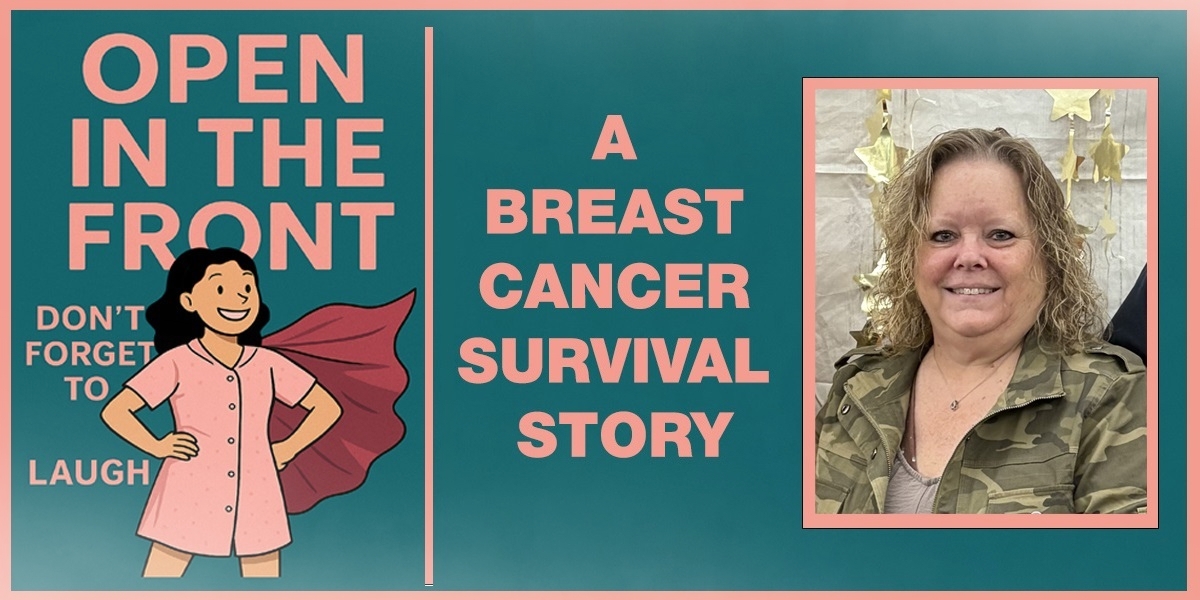
Finding Humor in the Hardest Journey: A Breast Cancer Story That Breaks All the Rules with Aimee Kintzel

By: Patricia W. Myers

When Aimee Kintzel received her breast cancer diagnosis the day after her 56th birthday, she made an unconventional choice: she decided to laugh.

The healthcare landscape is often dominated by statistics, clinical terminology, and somber conversations. Kintzel’s new memoir, Open in the Front, offers something refreshingly different, a cancer journey told with irreverent humor, unflinching honesty, and the kind of wit that can make you laugh even as you reach for tissues.

“Cancer is a scary word,” Kintzel writes in her prologue. “This book is being written to remind you that even though you have cancer, you can still have fun and laugh.”

The Power of Perspective

What sets this memoir apart isn’t just its humor; it’s Kintzel’s approach to living through a medical crisis that might resonate with many. She treats readers to stories of “boob squoosh boogies” (mammograms), doctors she dubs “Dr. Beauty” and “Dr. Cutie,” and the saga of “Louise and Roxanne”—her names for breasts that developed distinct personalities during treatment.

But beneath the levity lies something profound: a potential blueprint for maintaining dignity, agency, and joy during life’s most challenging moments.

“I truly believe that one’s attitude and outlook can make a significant difference when dealing with life events,” Kintzel explains. Her decision to choose humor wasn’t denial; it was a survival strategy, a deliberate act of reclaiming power when cancer threatened to dominate her narrative.

A Support System Worth Celebrating

While Kintzel is the protagonist of her story, she generously shares the spotlight with an ensemble cast of supporters. Her husband Jim—described as someone who “has radar when it comes to my boobs”—transforms from a tenderhearted man terrified of causing pain into her steadfast caregiver.

Her work family organizes meal trains and throws pink-themed parties. Friends like Angela and Betsy show up, even when showing up means just sitting in the passenger seat for another two-hour drive to yet another appointment.

The book captures something often missing from medical memoirs: the everyday grace of people who simply refuse to let you face darkness alone.

Breaking the Social Media Silence

For Kintzel, every life event becomes instant content. She made a countercultural choice: keep her diagnosis private, sharing only with those closest to her.

“I decided that this was a private matter and that it would not be broadcast all over social media,” she writes. “Stop asking for prayers every time you get a fart stuck!”

Her approach raises important questions about how we navigate illness in the digital age. When does sharing become oversharing? How do we balance community support with personal boundaries? Kintzel’s selective disclosure allowed her to control her narrative and protect her emotional energy during treatment.

The Unglamorous Reality

Open in the Front doesn’t shy away from the uncomfortable truths of breast cancer treatment. Kintzel discusses drain tubes (“the bane of my existence”), tissue expanders that feel like “heavy plastic reusable shopping bags” inside your chest, and the mortification of having your breasts measured by a cute young doctor while your husband watches at “boob level.”

She addresses topics rarely discussed in polite company: intimacy challenges during treatment, the awkwardness of explaining reconstruction to elderly parents, and the strange sensation of having breasts with no feeling in the skin.

Yet she presents these realities without self-pity, instead offering practical insights for others who might face similar journeys.

A Message of Empowerment

Perhaps the most valuable aspect of Kintzel’s story is her emphasis on patient autonomy. When faced with treatment options, she made definitive choices based on her own values and family history, never wavering from her conviction that a bilateral mastectomy was the right path for her.

“I wanted to be the example Erin or anyone else who may have to face this disease needed to help them make this decision,” she writes of her daughter.

Her message is clear: this is YOUR journey. Make no apologies for how you handle it.

Beyond Cancer

Eight months from diagnosis to release, Kintzel’s relatively short cancer journey yielded unexpected gifts. She found time for one-on-one connections, discovered inner strength, and ultimately found herself—the woman she’d lost somewhere in the responsibilities of jobs, parenting, and aging.

“I don’t feel as though I have lost anything,” she reflects. “I feel like I found so much.”

For Readers Everywhere

Open in the Front isn’t just for cancer patients or survivors. It’s for anyone who has faced a medical crisis, supported a loved one through illness, or wondered how they would respond when life delivers devastating news.

It’s for the newly diagnosed who need permission to laugh, the caregivers searching for ways to help, and the healthcare workers who might benefit from seeing their work through a patient’s eyes.

Most importantly, it’s for anyone who needs reminding that even in our darkest moments, we get to choose our attitude, and sometimes, choosing laughter may be the bravest act of all.

Open in the Front by Aimee Kintzel is available now.

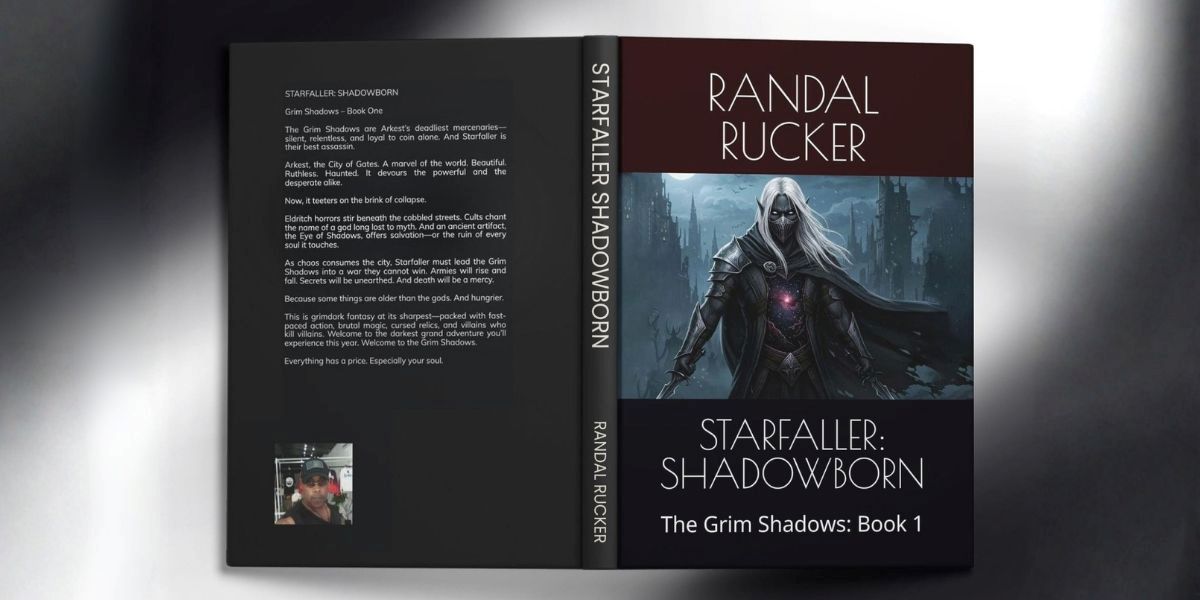
Discipline, Psychology, and the Art of the Kill: The Making of “STARFALLER: SHADOWBORN”

By: Charlotte K. Jones

R.C Rucker writes combat like someone who’s seen plans survive just long enough to fail. That sensibility threads through STARFALLER: SHADOWBORN: The Grim Shadows: Book 1. The book’s mercenary cadre, the Grim Shadows, behaves the way seasoned teams might behave. They brief, they compartmentalize, they make peace with incomplete intel. When things go wrong, and they often do, the failures feel like the natural friction of reality, not the author’s invisible hand. That’s the soldier in Rucker: a respect for logistics, for timing, for the complex calculus of casualties and tradeoffs. Starfaller, the company’s most efficient blade, isn’t a superhero; he’s a practitioner, constantly reconciling mission objectives with human limits.

Psychology does the other half of the lifting. Rucker’s I/O background shows up in the book’s focus on motive and structure, how organizations recruit, reward, and sometimes rot from within. Arkest’s factions aren’t cardboard villains; they’re systems with incentives. Cultists aren’t merely fanatics; they’re people finding belonging where the city might fail them. Aristocrats aren’t simply cruel; they’re conditioned to view lives as levers. Even the Grim Shadows, who sell loyalty by the contract, have a culture, rituals, taboos, and internal myths that feel authentic. The novel’s conflict is therefore not just swords and sigils; it’s policy and psychology.

Rucker’s personal influences also show up in subtler ways. He favors tactical and strategic games; the book’s set pieces feel like high-stakes scenarios where map control, timing windows, and resource management matter. His music tastes, EDM, Gothic, and Industrial, match the story’s rhythm: driving, brooding, and at times explosive. And then there’s a place. He grew up in New York City, a masterclass in how power hides in plain sight. His favorite place is Daegu, South Korea, a city where history and modernity intersect with a kind of electric poise. Arkest, the City of Gates, feels like the synthesis of those experiences: cosmopolitan, beautiful, ruthless.

If grimdark has a reputation for despair, Rucker counterbalances that with consequence. The Eye of Shadows, the novel’s ancient artifact, does not simply exist to annihilate hope; it exists to challenge it. When characters reach for power, the narrative doesn’t punish them with cosmic scorn; it asks for receipts. What are you willing to pay? Who will cover the difference when your account runs low? This approach, grounded rather than gratuitous, sets STARFALLER: SHADOWBORN apart from edgier-for-edginess-sake entries in the field.

It’s tempting to imagine the author at a desk, toggling between battle memories and behavioral models. The reality is more integrated. Rucker’s service sharpened his eye for stakes and sequence. His psychology training gave him a framework for why people obey, betray, and persist. The rest, voice, pacing, and atmosphere, come from craft and taste. He enjoys fiction that moves. He likes worlds that feel dangerous because they can be. He likes characters who don’t mistake ruthlessness for strength or kindness for weakness.

The result is a debut that feels both disciplined and volatile. Scenes snap with tactical clarity, then tilt into the uncanny as Arkest’s underbelly, eldritch phenomena, forbidden rites, presses upward through the cobbles. Starfaller’s choices carry weight because the book understands the chain of command and the limits of individual agency within larger systems. Even when the knives come out, and they do, often the most painful cuts are social: a trust breached, a team frayed, a truth finally spoken.

Rucker is already expanding the Grim Shadows saga, which seems logical. Arkest is the kind of world that rewards a long look: too many gates, too many debts, too many names carved into stone to exhaust in a single volume. If the first book is any guide, the installments to come are likely to continue treating readers like adults, capable of tracking strategy and feeling shame, of wanting victory and understanding that every victory comes with its own ruin.

In the end, STARFALLER: SHADOWBORN reads like the sum of its maker’s influences: a field manual smuggled inside a fantasy epic, a psychological case study disguised as a knife fight. It’s a strong debut, a statement of intent. And in Arkest, intent is the first currency you spend.

The Difference Between Us: Where Shadows, Morality, and Humanity Collide

By: Dennis G. Hill

In The Difference Between Us, Eileen Sheehan crafts a dark, atmospheric story that blends crime fiction with supernatural intrigue, exploring what it truly means to be human or something other than human in a world built on secrets. At its core, the novel is not necessarily a murder mystery or a vampire tale. It is a meditation on morality, restraint, and the fragile line separating predator from protector.

The story opens with Detective Johnathan Hale, a seasoned homicide detective hardened by years of exposure to violence and corruption. His introduction is immediate and visceral, grounded in the gritty realism of a ransacked crime scene and a brutal murder. Johnathan is not exactly portrayed as a typical hero. He is cynical, sharp-edged, and deeply weary, yet guided by an unshakable instinct for truth. What sets him apart is his uncanny ability to sense echoes of violence, visions that blur the line between intuition and something far more mysterious. This gift, or curse, may quietly foreshadow the supernatural undercurrents that soon rise to the surface.

Parallel to Johnathan’s investigation is the perspective of Evelyn Sparks, a coroner with a secret that reshapes the entire narrative. Evelyn is a vampire, but not in the conventional sense of the myth. Sheehan subverts expectations by presenting a character who feeds not on the living, but on the recently deceased. Evelyn’s choice is deeply ethical and deeply isolating. Among humans, she must hide what she is. Among vampires, she is viewed as weak, improper, and even disgraceful. Yet it is precisely this choice that makes her a uniquely compelling figure in the novel.

Through Evelyn, The Difference Between Us examines the concept of restraint as a form of strength rather than weakness. She is surrounded by others of her kind who view humans as disposable, yet she clings to a personal moral code that values life, even when it may cost her comfort, power, and status. Her profession as a coroner becomes both a necessity and a statement. She survives without violating the living. In doing so, she walks a lonely path that constantly risks collapse under pressure.

As the story unfolds, the investigation into bloodless corpses reveals a far more dangerous threat, a rogue vampire whose recklessness could endanger both the supernatural world and the fragile anonymity that protects it. This antagonist serves as a mirror to Evelyn, highlighting the consequences of unchecked hunger and disregard for order. The vampire council, ancient and unforgiving, represents tradition and authoritarian control, forcing Evelyn into a perilous position where failure might mean death.

The tension between Johnathan and Evelyn is one of the novel’s greatest strengths. Their interactions are layered with unspoken suspicion, attraction, and mutual respect. Johnathan’s perceptiveness could make him a threat to Evelyn’s secrecy, while Evelyn’s composure and intelligence quietly challenge Johnathan’s understanding of the world. Neither fully trusts the other, yet both sense that they are standing on the edge of a truth that may not remain hidden forever.

Sheehan’s writing excels in atmosphere. The city feels alive with shadows, alleyways, flickering streetlights, and the constant hum of danger. Death is ever-present, not as a spectacle, but as a consequence. Sometimes violent, sometimes quiet, always significant. The pacing allows the story to breathe, balancing moments of introspection with sharp tension and looming dread.

Ultimately, The Difference Between Us is about choice. It asks whether morality is defined by nature or by action. It challenges the reader to consider whether monsters are born, made, or simply revealed by circumstance. Through its richly drawn characters and morally complex world, the novel invites us to question who the real predators are and whether humanity is measured by what we are, or by what we choose not to become.

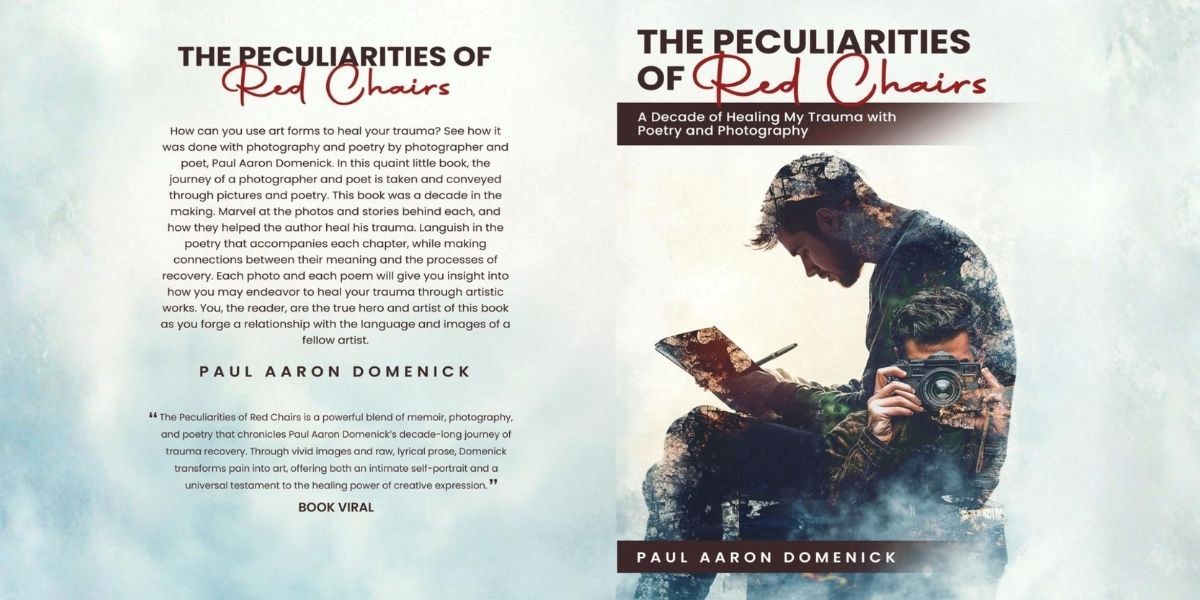
Exploring Emotion Through Photography and Poetry: Paul Aaron Domenick’s The Peculiarities of Red Chairs

By: Ashley C. Luttrell

For most of his life, Paul Aaron Domenick did what many trauma survivors do: he pushed the pain down and tried to outrun it. A midlife crisis at forty, and eventually rehab, forced him to face the truth: this wasn’t just “bad memories,” but trauma shaping his entire life.

The Peculiarities of Red Chairs: A Decade of Healing My Trauma with Photography and Poetry is the record of what happened next. Part art book, part memoir of recovery, it follows a ten–year journey in which images and words became not just creative outlets, but lifelines.

Seeing What Words Can’t Say

Trauma often lives in the body as sensations and flashes rather than full memories. That’s why talking about it can feel impossible. Domenick’s therapist understood this when she advocated for him to use his camera in a residential trauma and addiction program. The lens became a bridge between his inner world and the outside one.

In the book’s chapters on color and monochrome photography, everyday scenes — a chair, a room, a fragment of light — become charged with feeling. The camera slows him down, giving enough distance to witness his pain without being overwhelmed. Instead of explaining his history, he frames it.

Photography here isn’t about perfection or social media. It’s about control and safety: deciding what to focus on, what to blur, and when to step back.

When the Heart Speaks in Lines and Stanzas

Alongside the photographs, Domenick’s poetry runs through the book like a second heartbeat. He began writing seriously around the same time he picked up the camera, discovering that language could do what silence never could: name the unspeakable.

The poems that accompany each section — from candid shots to composites, slow exposures, diptychs, still lifes, and portraits — aren’t decorative captions. They’re emotional x-rays. Some pieces confront abuse and shame head-on; others circle grief, faith, love, queerness, and recovery with a quiet tenderness. Together, the poems and images create a dialogue between the thinking mind and the body’s buried knowledge.

You don’t have to share Domenick’s exact experiences to feel that jolt of recognition: someone is finally saying what I’ve never been able to put into words.

Art as an Invitation, Not a Prescription

Domenick never claims that photography and poetry are magic cures. He worked with therapists, entered rehab, and did the hard clinical work of recovery. What his book shows, though, is how creative practice can support that work — offering non-verbal expression, a sense of agency, connection to others, and glimpses of a calmer nervous system.

There is also a quiet message for LGBTQ+ readers and anyone who has felt “too broken” to be seen. By placing his traumas, addictions, and identities in full view — in bold images and carefully honed lines — Domenick rejects the shame that keeps so many survivors silent.

A Book to Sit With

The Peculiarities of Red Chairs is not a quick scroll or a one-evening read. It’s the kind of book you leave out and return to, one image or stanza at a time, letting it echo against your own memories.

Whether you are in recovery, supporting someone who is, or simply curious about how art and healing intersect, this decade-long project offers both comfort and challenge.

Can photography and poetry heal trauma? On their own, maybe not. But in Paul Aaron Domenick’s hands, they become something just as vital: a way back to feeling, to meaning, and, slowly, to a life lived on purpose.

Disclaimer: The views and experiences shared in this article reflect the personal journey of the author and should not be considered as professional advice or a universal solution. While photography and poetry may play a meaningful role in healing for some individuals, they are not a substitute for professional therapy or medical treatment. Every person’s path to recovery is unique, and it is important to seek guidance from qualified professionals for personalized care.

When Cats Leap and Unicorns Twirl: How Once Upon a Dance is Rewriting Ballet’s Fairy Tales

By: Matthew Kayser

Ballet has long enchanted audiences with its grace and grandeur, but the stories behind the steps haven’t always aged gracefully. Too often, the heroines fall, fade, or get rescued by a prince. For Author and Publisher Terrel of Once Upon a Dance, that just won’t do.

Teaming up with her daughter, professional dancer Ballerina Konora, Terrel has created a collection of 43 interactive storybooks that reimagine the world of dance through movement, magic, and meaningful storytelling. Their whimsical tales feature cats, unicorns, dragons, and bunnies, but beneath the sparkle lies a powerful mission: to reshape the narrative for young readers, especially girls, and inspire a deeper connection to self, story, and stage.

The Books She Wished She Had

Born from a pandemic pivot, Once Upon a Dance grew out of Terrel’s decades of experience teaching dance, early childhood education, and arts instruction. Her dream was to create something she wished she’d had as both a young dancer and a mother: books that nurtured joy, movement, and emotional wellness, while also gently introducing ballet technique.

With titles that invite leaping cats and twirling unicorns, the books are as playful as they are purposeful. Each one is infused with affirming themes such as perseverance, self-acceptance, and the importance of helping others. The stories are told through engaging character arcs and are designed to get readers up and moving, bringing dance off the stage and into the living room.

As Peter Boal, Artistic Director of Pacific Northwest Ballet, put it: “This whimsical tale of discovery is so full of joy and wonder. It also opens a door to dance in the most charming and accessible way.”

When Cats Leap and Unicorns Twirl: How Once Upon a Dance Is Rewriting Ballet’s Fairy Tales

Photo Courtesy: Terrel Konora / Ballerina Konora

Rewriting Ballet’s Fairy Tales

What began as a creative outlet soon became something more: a quiet revolution in storytelling. Terrel, a Pacific Northwest Ballet board member, began to reflect on the stories she’d watched from the audience through a new lens. Why were so many classical ballets centered around tragedy, broken hearts, or damsels in distress?

The answer, she believes, lies in who’s telling the stories. While women dominate ballet as performers and audiences, the traditional fairy tales and choreography have often been written by men. Through Once Upon a Dance, Terrel is offering an alternative: empowering, emotionally rich stories where girls are strong, choices matter, and movement becomes a medium for growth.

She calls it “storybook activism.” By questioning what stories are being told, and how, Terrel hopes to inspire a shift not just in children’s literature, but in the culture of dance itself.

A Charitable Leap

Unlike many commercial book ventures, Once Upon a Dance is rooted in generosity. Every book is tied to a charity partner, and 100% of royalties through the end of this decade are donated to causes that support animals, dance organizations, people in need, and the planet.

It’s a mission that blends Terrel’s values with her craft. As she puts it, movement and connection are vital, not just for physical wellness, but for building empathy in a fractured world. In that sense, the books serve as more than bedtime stories or dance lessons; they’re tools for healing, connection, and kindness.

And readers have taken notice. Once Upon a Dance has earned 14 first-place book awards, 60 total literary honors, and over 3,000 five-star reviews. It was also recently named “Best in Show” at the 2025 Writely Literary Awards and received a coveted Kirkus Starred Review.

One review sums it up best: “This amazing book … is nothing short of splendid.”Readers’ Favorite

When Cats Leap and Unicorns Twirl: How Once Upon a Dance Is Rewriting Ballet’s Fairy Tales

Photo Courtesy: Terrel Konora / Ballerina Konora

Movement as an Antidote

In an age where screens dominate and isolation is rising, Once Upon a Dance offers a joyful remedy. These stories invite kids to get up, move, imagine, and engage with themselves and those around them. They bring back the magic of creative play, but with deeper layers of meaning that stay long after the last plié.

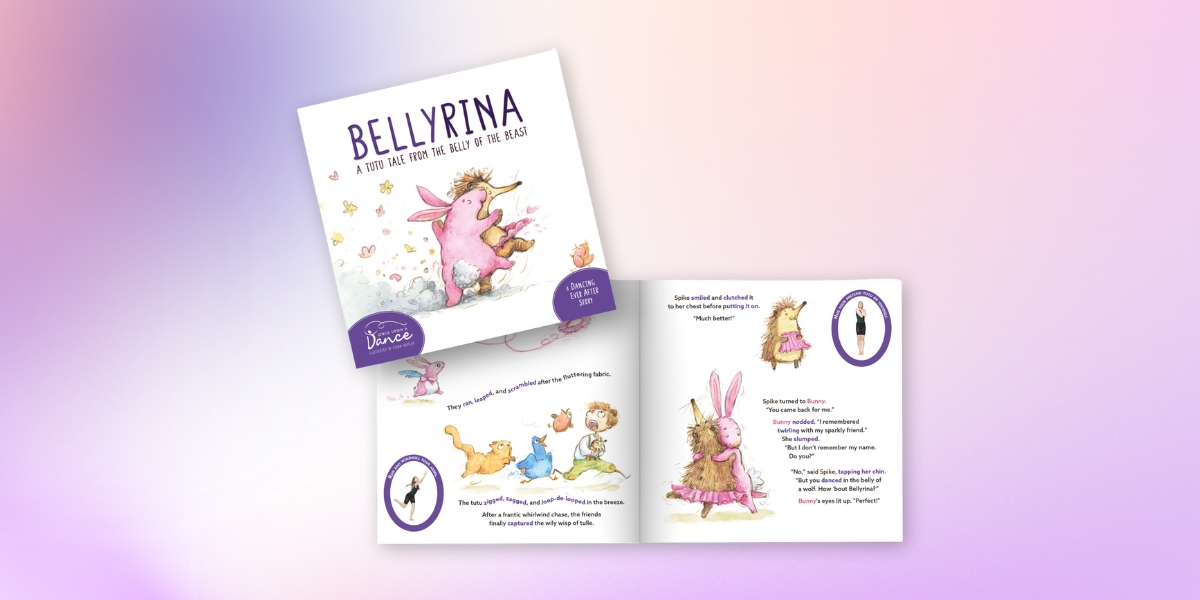
From the earliest titles to the upcoming release Bellyrina: A Tutu Tail from the Belly of the Beast, the Once Upon a Dance library celebrates resilience, joy, and imagination. It’s not just about perfect posture or technical precision; it’s about showing up, trying again, and twirling your way through challenges.

As unicorns twirl and cats leap, Terrel and Ballerina Konora continue to craft new tales for a new generation that value empowerment, expression, and empathy above all.

The Magic of Belief in Marianne’s Magical Journey

By: Matt Emma

In Marianne’s Magical Journey, you’ll meet a young girl whose story begins not in a castle or faraway world, but in a simple home, much like our own. Marianne is bright, thoughtful, and curious, yet she feels somewhat lost in the routine of daily life.

Why do we go to school? Why do people do the same things every day? Why does life sometimes feel dull when it’s supposed to be wonderful?

These quiet questions stir in her heart, leading to sadness she cannot easily explain. But her story suggests that every feeling, even confusion, can be the beginning of something extraordinary.

When Imagination Opens the Door to Magic

Marianne’s turning point comes when she follows her curiosity into a pet store and meets Banu, a radiant parrot who can speak. This single act of wonder, believing in something that seems impossible, seems to transform her life.

Through Banu’s words, Marianne learns about Matori, the wise man of the jungle who is said to keep sadness away and fill every creature’s heart with joy. This story awakens something inside her: a forgotten sense of belief.

In that moment, Marianne steps out of her ordinary world and into the extraordinary, not through spells or wishes, but through the courage to believe that life itself may hold magic.

The Power of Transformation

When Marianne meets Matori and travels to the Amazon, she is given the gift of flight, both literally and spiritually. As she soars through the rainforest, she experiences life in a way she had not before: vibrant, connected, and full of meaning.

Each creature she encounters, the butterfly, the firefly, the birds, reminds her that everything in life could have a purpose. Matori teaches her that the greatest magic might lie in understanding this truth:

“You are part of everything that lives. When you feel that connection, sadness can fade away.”

This realization seems to transform Marianne from a confused girl into a joyful soul. She learns that happiness might not come from answers alone; it could come from feeling alive, grateful, and connected.

Lessons Beyond the Rainforest

When Marianne returns home, she carries with her not just memories of the jungle, but a new way of seeing the world. The world around her, once ordinary, now seems to glow with meaning. The laughter of her family, the flutter of a bird outside her window, and the warmth of sunlight all remind her that magic might exist in everyday life, if only we take the time to see it.

Through her journey, the authors seem to share a timeless truth for readers of all ages: we can lose our joy when we forget that life itself is a miracle. Marianne’s happiness comes not from escaping her world, but from rediscovering its beauty.

The Timeless Gift of Belief

Marianne’s Magical Journey invites us to remember what it might mean to believe, not just in fairy tales, but in ourselves, in kindness, and in the power of connection.

The story suggests that imagination is not an escape from reality; it could be a bridge to understanding it. Like Marianne, when we open our hearts to wonder, we might rediscover the joy that has been within us all along.

Summary: The Magic Never Ends

In the end, Marianne’s greatest lesson is one that lives beyond the pages of her story:

“Magic is not something you find, it’s something you feel.”

Her journey teaches that belief has the potential to heal sadness, awaken gratitude, and remind us that every living thing, from the tiniest insect to the tallest tree, could be part of a beautiful pattern of life.

Through Marianne’s eyes, we are reminded that happiness might not be about escaping reality but embracing it fully, with wonder, compassion, and the courage to believe that the world still holds magic.