Canine Capers: Gary Althaus Turns His Passion for Dogs and Games into a Family Adventure

By: Paul White

Walk into a room filled with laughter, people howling like dogs, or friends racing to find the answer to a riddle on their phones, and chances are you’ve stumbled into a session of Canine Capers. Created by first-time author Gary Althaus, the book is a playful yet educational journey that combines his lifelong love of games with his devotion to dogs. With 16 structured games and more than 400 activities inside, Canine Capers is unlike any puzzle book you’ve seen before—it’s an invitation to families and friends to come together, laugh, and learn. Althaus’s inspiration for Canine Capers came from a blend of two passions: puzzles and pups. A retired teacher, he spent years fusing games into his sixth-grade classroom. “Every Friday afternoon, we’d do games as a reward,” he explained in his interview. That experience convinced him that games not only entertained but also helped children learn.

But the real turning point came about three years ago. While on a trip from Ohio to Florida with his family, Althaus introduced a rough version of his dog-themed game to his grandchildren. What began as a casual test soon turned into a 19-hour car ride filled with nonstop activities. “They wanted me to read every single question,” he recalled. “That’s when I realized this wasn’t just my idea—it was something others truly enjoyed”. The choice of theme was never in doubt. Althaus has lived with six dogs, most of them Australian Shepherds, and now shares his home with a mini Aussie-poodle mix. His bond with his pets naturally shaped the book’s direction. “It was really my love for dogs and my love for games that made me want to make everything about dogs,” he said. Even when the writing process became challenging—coming up with 200 activities was easy, but pushing it to 400 was tough—Althaus drew inspiration from his own pets, the quirks of dog ownership, and facts he unearthed through research.

Inside the book, that love shows. From trivia about the origins of breeds to playful riddles like “What do you call a dog that never barks? A hush puppy,” the activities reflect both humor and knowledge. What makes Canine Capers unique isn’t just the subject matter—it’s the variety. Althaus deliberately structured each of the 16 games to mix riddles, puzzles, pantomimes, trivia, and even light physical activities. One moment, players might be asked to act out a dog going for a ride; the next, they’re debating how many times dogs are mentioned in the Bible (the answer: 37). Phones even come into play for challenges like finding a video of a dog chasing a butterfly. For Althaus, this variety was crucial. “I didn’t want it to be just trivia,” he said. “I wanted to make it inclusive of all kinds of fun activities.” He also broke from the traditional “take turns clockwise” structure by inventing creative ways to choose who plays next—sometimes it’s the tallest person in the room, sometimes the player with the lowest phone battery, and sometimes the one whose birthday falls closest to Halloween. This randomness ensures every round feels fresh and surprising.

The title Canine Capers may sound like a mystery novel, but it’s carefully chosen. Althaus wanted something catchy, memorable, and true to the playful spirit of the book. “‘Capers’ means fun activities, sometimes even a little tricky,” he explained. “It wasn’t just trivia. It was about capturing the joy of dogs in many forms.” The alliteration of the “K” sound sealed the deal. While the book is packed with laughter and lighthearted challenges, it also carries a quiet, personal tribute. At the very end, Althaus included a photograph of his dog Archie with a mysterious string of initials: J, B, R, A, M, S. To most readers, it will look like a puzzle unsolved, but Althaus revealed its meaning—it’s a dedication to his own dogs over the years: Jasper, Bandit, Rex, Archie, Matilda, and Sadie. “I didn’t explain it in the book,” he said. “It’s my way of honoring them privately, even as I share the fun with others”.

Though his main goal was fun, Althaus recognizes the educational potential in Canine Capers. The activities encourage critical thinking, problem-solving, and teamwork. Lateral puzzles, for example, challenge players to think beyond the obvious: “A man and his dog wanted to cross a river without getting wet. How did they do it?” The answer: the river was frozen. Such moments spark not only laughter but also lively discussion, making the book as suitable for classrooms as it is for family game nights. One of the most surprising details about Gary Althaus is his age—82 years old. Despite retiring from teaching, his creative energy remains boundless. “People are surprised,” he admitted, “but I’ve always loved games. I’ve subscribed to Games magazine for fifty years. This book is really the culmination of two lifelong passions.” His journey also shows that it’s never too late to start something new.

Ultimately, Canine Capers is about connection. In an era when screens often dominate our attention, Althaus has created a book that invites people to sit together, laugh, and rediscover the simple joy of play. Whether it’s a child pantomiming a puppy chasing its tail or grandparents recalling trivia about Lassie, the game bridges generations. “Fun was the goal,” Althaus said, smiling. And with Canine Capers, he has succeeded in creating not just a book, but a celebration of dogs, learning, and


John Jung’s ‘The Brain Blueprint’ Challenges Mental Health Norms and Sparks a New Era of Brain Care

By: Paul White

Dr. John Jung is not your typical author. He doesn’t posture as a guru, doesn’t romanticize his past, and doesn’t believe readers need another feel-good story about recovery. What he believes people actually need urgently are answers. In a world where nearly everyone feels mentally overloaded, stressed, or numb, Jung’s new book, The Brain Blueprint: Unlocking Optimal Health with Nutrition, Herbs, Acupuncture, and Beyond, sets out to do one thing: provide practical, proven tools to restore clarity, focus, and calm.

“We’re all brain-fatigued,” Jung says plainly. “Our systems are overwhelmed. People don’t need another theory about why they need to know what to do about it.”

That mindset defines The Brain Blueprint. It’s not a memoir, manifesto, or collection of academic essays. It’s a hands-on manual that delivers clear steps for dealing with the most common mental health stressors: sleep disruption, anxiety, burnout, depression, poor concentration, and emotional instability. Each chapter focuses on what works, drawn from a blend of modern research and timeless wisdom: nutrition, herbs, acupuncture points, nootropics, lifestyle interventions, and daily habits that help the brain heal and perform better.

Jung’s previous works focused on concussion recovery and autoimmune healing, but this third book casts a much wider net. “This one’s for everyone,” he explains. “Because everyone’s brain is under stress whether from screens, poor diet, lack of rest, or constant emotional pressure.”

His goal was to write something that skips the preamble and gets right to the protocols. “People are tired of reading about problems,” Jung says. “They want solutions. This book exists so they can stop Googling symptoms and start fixing them.”

The Brain Blueprint opens with a stark diagnosis of the modern mind: overstimulated, undernourished, and medicated into submission. Jung doesn’t mince words about the failures he sees in conventional mental health care, an industry, he argues, that has become more about maintenance than healing.

He cites statistics showing that over 50% of people on antidepressants report little to no lasting benefit, while many suffer debilitating side effects. “We have this cultural myth that depression equals a Prozac deficiency,” he says. “That’s not science. That’s marketing.”

But Jung isn’t anti-medicine. Instead, he’s pro-accountability and pro-results. “There’s a time and place for pharmaceuticals,” he clarifies. “But we’re using them as the first and often only response. That’s not a treatment. That’s dependency.”

What sets The Brain Blueprint apart is its relentless practicality. Jung organizes each section around direct, usable actions: no fluff, no jargon, no endless theorizing. Readers get checklists, self-assessment tools, and daily micro-habits that yield measurable improvements.

For example:

  • For anxiety and overwhelm: He teaches a simple acupressure sequence that can lower cortisol in minutes, paired with magnesium and breathing techniques that balance the nervous system.
  • For poor sleep: He suggests swapping out nightly melatonin for magnesium glycinate, setting light cues, and resetting the body’s clock through nutrition and movement.
  • For burnout and fatigue: He introduces structured “micro-recovery” breaks two to three minutes of breathwork or light stretching every 90 minutes to rewire energy and focus.
  • For brain fog and attention lapses: He recommends hydration-first mornings, probiotic-rich foods to strengthen the gut-brain connection, and targeted nootropics to boost neurotransmitter balance.

Each protocol is short, science-backed, and easy to apply, designed for people who don’t have the luxury of reading dense medical studies or attending week-long retreats.

Beyond individual tactics, Jung delivers a sharp critique of what he calls the “disease care” model. “We diagnose before we test, and prescribe before we understand,” he says. “It’s backward. We need to get curious about root causes again: nutrient deficiencies, inflammation, sleep deprivation, and chronic stress. These are things we can actually fix.”

His skepticism is balanced with compassion. Having seen patients and families struggle with conditions that were quickly labeled but never fully treated, he wanted to give them tools to take back control. “Knowledge is medicine,” he insists. “When people understand how their brain works, they stop feeling broken and start feeling empowered.”

The book doesn’t shy away from hard questions either: Why are psychiatric drugs being prescribed to infants? Why is nutrition still ignored in mental health? Why are we overrun with data yet starving for wisdom?

These aren’t rhetorical flourishes; they’re challenges to a system Jung believes needs reform from the ground up.

While the message is serious, Jung’s delivery is refreshingly clear and even hopeful. His voice throughout the book is equal parts clinician, teacher, and friend. He simplifies neurobiology and supplements with the same ease he uses to describe acupressure points, making advanced concepts feel intuitive. That accessibility is no accident. “I had my wife and mother read early drafts,” Jung laughs. “If they didn’t understand something right away, I rewrote it. The goal was to make it instantly usable.”

Readers seem to agree. Early feedback has called The Brain Blueprint “the first mental health book that actually tells me what to do,” and “a manual for the everyday brain.”

At its core, The Brain Blueprint is a movement away from passive health consumption toward active self-repair. It’s an invitation to treat the brain not as a mystery organ but as a system that can be nourished, supported, and retrained.

“Neuroplasticity isn’t just a buzzword,” Jung says. “It’s proof that your brain is always capable of change. The problem is, no one’s giving people the manual for how to direct that change. This book is that manual.”

The message resonates because it feels urgent and attainable at once: anyone, regardless of age or background, can take small, daily actions that add up to massive transformation over time. “If you get 1% better every day,” Jung reminds readers, “you’re 365% better by year’s end.”

Dr. John Jung doesn’t promise magic pills or overnight cures. What he promises and delivers is a roadmap. The Brain Blueprint is for anyone who’s tired of feeling foggy, anxious, wired, or worn out, and ready to take their brain health back into their own hands. He plans to update the book annually as new research emerges, ensuring it remains a living resource. “Health doesn’t come from insurance,” Jung says. “It comes from knowledge and the will to act on it.”

In a time when burnout and brain fatigue have become universal, The Brain Blueprint stands out as more than a book; it’s a lifeline for the modern mind.

Disclaimer: The information provided in this article is intended for general informational purposes only and does not constitute medical advice. It is recommended to consult with a qualified healthcare professional before making any changes to your health routine or treatment plan.

Jeff Nuttall’s Jimmy Joe’s First Day of School: Helping Kids Face Their First-Day Fears

By: Paul White

Every parent remembers it: the knot in the stomach, the lump in the throat, and the wide-eyed look on a child’s face the night before the first day of school. For Jeff Nuttall, those memories didn’t just remain as nostalgia; they became the foundation for Jimmy Joe’s First Day of School, a children’s book born from bedtime conversations with his son more than a decade ago. “We wrote that story when he was going into first grade,” Nuttall recalls, “and that’s exactly how he pictured school back then, this big, intimidating place that felt larger than life.” The cover illustration captures that perfectly: Jimmy Joe stands small at the bottom of looming school steps, monsters peeking from the shadows. What looks comical to adults is strongly authentic to children. In the story, Jimmy Joe dreads the day all summer, imagining teachers as vampires and hillbillies with shovels ready to bury him. That blend of humor and fear is exactly what Nuttall set out to portray: a child’s unfiltered imagination colliding with reality.

“Each book is about facing a different fear kids encounter as they grow up,” Nuttall explains. “The monsters look silly on purpose. It’s about reframing anxiety through humor.” That decision isn’t just artistic; it’s therapeutic. When Jimmy Joe finally realizes the monsters aren’t real and instead finds new friends, children reading the book see how laughter helps shrink fear down to size. One of the most memorable scenes comes when Jimmy Joe’s classroom closet, the perfect hiding place for a monster, reveals nothing more than a bright purple ball for sharing summer stories. The relief and the fun remind young readers that not every fear has to stay scary. “Stress is real for kids,” Nuttall says. “But if you can turn monsters into something that looks like it belongs in a Saturday morning cartoon, you’ve already made a big step in addressing the fear.”

Beneath the monsters and laughter lies something deeper: family. Jimmy Joe’s little sister, Maddy May, appears throughout the book, offering both comic relief and sibling authenticity. But it’s the presence of parents that anchors the story. Nuttall is clear about why: “If you tell me as my parent that everything’s going to be okay, then it really feels like it will be. That’s the role of a parent, no matter what it takes, you’re always there.” The book’s dialogue mirrors this. Jimmy Joe tries every trick in the book, pretending to be sick, bargaining to clean his room, and even hoping raccoons stole the car’s gas. But his mom calmly guides him out the door, a gentle but firm reminder that he isn’t facing this alone. It’s a simple yet powerful way of showing children that parents are steady even when fear feels overwhelming.

The subtitle of Jimmy Joe’s First Day of School hints at something bigger: a series. “Parenting is just a never-ending series of what’s next moments,” Nuttall laughs. “As soon as you conquer one fear, another pops up.” Future books will follow Jimmy Joe and Maddy May through new challenges, bullies, sports tryouts, and even encounters with kids who are different from them. One planned story, Nuttall shares, was inspired by a cousin with severe autism. His children struggled to understand at first, so he wrote a tale that turned the experience into something both funny and enlightening. “To this day, my kids are passionate about helping anyone with disabilities,” he says. It’s why part of the book’s proceeds will go to Autism Speaks.

For Nuttall, these books are not just bedtime stories. They are tools for emotional literacy. “Children’s books should make reading fun, but also relatable,” he says. “With technology everywhere, I think the magic of reading, the way it stretches the imagination, is more important than ever.” That magic is clear in the closing pages of Jimmy Joe’s First Day of School. After spending the morning in fear, Jimmy Joe finds himself laughing with classmates, playing kickball, and even giving cool handshakes on his way out of school. The final twist? He wakes up the next day ready to go back. It’s a transformation that children can celebrate, and parents can breathe a sigh of relief over. Beyond classroom jitters, Nuttall envisions his books as openers to bigger conversations about mental health, resilience, and inclusivity. “Society too often brushes aside children’s mental health,” he says. “If you give kids tools early, they’ll likely know how to cope later when the challenges get harder.”

He hopes teachers will use Jimmy Joe’s First Day of School in classrooms, not only to ease first-day nerves but to start discussions. His own daughter, now a college student and pre-K teacher, already plans to read it on her students’ first day. “When parents, teachers, and kids are all on the same page, literally, it creates a sense of community,” Nuttall notes. So what does Nuttall want readers, both children and adults, to take away? His answer is simple: “It’s okay to be afraid. It’s okay to talk about your fears. No one is in this world alone.” That message connects in Jimmy Joe’s journey from dread to delight. It also echoes in the way Nuttall has turned his own family’s moments into universal stories. As Jimmy Joe learns, first grade isn’t the end of the world. It’s the start of discovering resilience, with laughter as a shield and family as a guide.

In Jimmy Joe’s First Day of School, Jeff Nuttall has done more than write a children’s book. He has created a bridge between childhood fear and adult understanding, between silly monsters and serious conversations. It’s a story parents will recognize, children will laugh at, and families everywhere can learn from. And just like Jimmy Joe taking that first step up the school stairs, Nuttall’s series is only beginning.

Akshay Sharma | MarkFly Founder on His Work in Literature, Cinema, and New‑Age Media

By: Aman Jalan

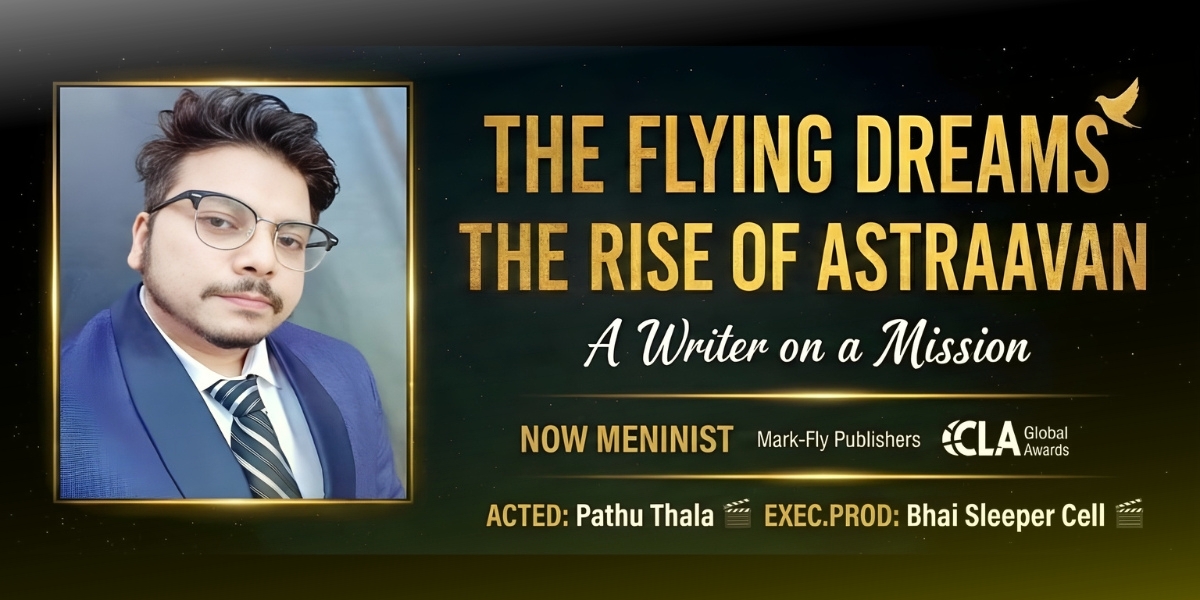
From Coimbatore to New York, and from Indian bookshelves to Times Square, Akshay Sharma has gained recognition as a prominent figure in literature and media at a young age. An author with international reach, a full-time global publisher, an actor in mainstream Tamil and Indian cinema, an independent music composer, and a creator who introduced the world to an entirely new storytelling format, Akshay Sharma’s journey is defined by purpose over popularity.

At the center of this journey stands MarkFly, his company, and Meninist, his upcoming global book. Together, they define his philosophy and long-term legacy, one that now spans New York, London, Los Angeles, Toronto, Dubai, Singapore, Sydney, Colombo, and significant cultural hubs across India and the United States.

Akshay Sharma is the Founder of MarkFly Publishers, the Founder & Director of the Coimbatore Literary Awards (CLA Global Awards), and the visionary force building the Coimbatore Literary Festival—platforms created not for personal fame, but to uplift writers, thinkers, and artists on a truly global stage.

Books: Where the Journey Truly Began

Before cinema, media innovation, or awards, there were books.

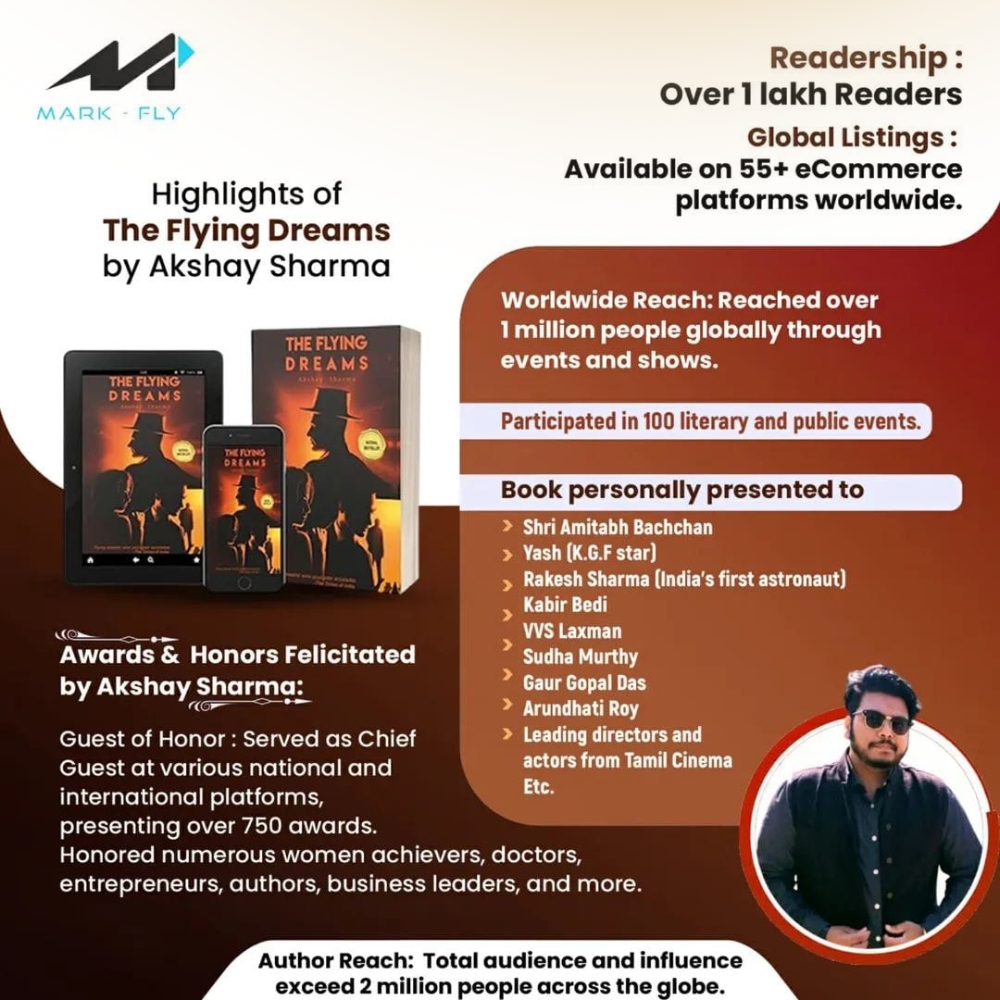
Akshay Sharma’s debut, The Flying Dreams (2018), marked a significant milestone in his career. Instead of focusing solely on sales numbers, the book reached a broad audience, connecting with readers across various age groups and professions. It spread through conversations, classrooms, creative circles, and international readers’ communities.

Akshay has always been clear that reach matters more than the number ofunitss sold. His writing was never meant to sit quietly on shelves; it was meant to travel.

A decisive turning point came in 2018 when he met legendary Indian author and motivational speaker Shiv Khera. That single meeting altered the course of his life. Inspired and challenged, Akshay left his international corporate job immediately, choosing uncertainty over regret. From that decision, MarkFly was born, slowly, honestly, and with vision.

He followed with A Writer on a Mission and later The Rise of Astraavan, which gained attention in numerous countries worldwide. Akshay focuses on writing for impact, longevity, and purpose, rather than pursuing bestseller status.

Readers often quote lines from his books:

“Fly with your dreams, but don’t fly in your dreams.”

Akshay Sharma | MarkFly Founder on His Work in Literature, Cinema, and New‑Age Media

Photo Courtesy: MarkFly

MENINIST & Men in Mystery: Thought Before Timing

Akshay Sharma’s upcoming book MENINIST has sparked significant discussion. The book trailer, released on International Men’s Day (November 19), gained considerable attention across digital platforms ahead of the book’s release.

The book itself is scheduled for later 2026, and Akshay has publicly stated that this may be his only book for the next five years. His focus during this period is clear: running MarkFly Publishers, expanding CLA Global Awards, building the Coimbatore Literary Festival into an internationally respected cultural event, and continuing his work in Indian cinema.

Alongside MENINIST, his global concept “Men in Mystery”—centered on the theme of Respecting Women, Empowering Men—has gained interest in various countries. Readers and audiences across regions like India, the United States, the United Kingdom, the Middle East, and Southeast Asia are engaging with its themes ahead of its release.

MENINIST presents a balanced human narrative: respecting women while acknowledging emotional realities men often experience silently. Experts who align with this thought point out that people frequently change when they believe they have found someone “better.” That emotional insecurity leads individuals to move from relationship to relationship without accountability. The work calls for empathy, emotional maturity, and shared responsibility—without hostility or blame.

A VFX–AI–CGI-Driven Podcast

One of Akshay Sharma’s achievements is the launch of a VFX–AI–CGI-driven podcast, introducing a new approach to podcasting.

By combining cinematic VFX, artificial intelligence, CGI environments, and human conversation, the format introduced a unique visual podcast experience. The podcast has gained attention across social media and international platforms, with notable visibility in cities like New York, Los Angeles, London, Toronto, and Dubai.

This innovative approach has placed Akshay Sharma and MarkFly in a key position, illustrating how technology can support storytelling while maintaining human creativity.

Times Square, New York: A Landmark Moment

In a moment that drew international attention, Akshay Sharma was featured in Times Square, New York. For New York readers and global media, the appearance was viewed as a sign of growing visibility for Indian independent literature on a major cultural stage.

The Times Square feature further strengthened his credibility among U.S. readers, publishers, and creative communities, reinforcing that Indian stories, when driven by authenticity, belong on global platforms.

Akshay Sharma | MarkFly Founder on His Work in Literature, Cinema, and New‑Age Media

Photo Courtesy: MarkFly

Cinema: Built on Trust, Gratitude, and Credit

Akshay Sharma’s identity as an actor was shaped by belief and mentorship. He openly credits Obeli N. Krishna, director of Pathu Thala, as the foundation of his acting career. Obeli N. Krishna trusted Akshay not just as an actor, but as an author with depth, and that belief gave him his cinematic identity.

He has also spoken about the influence of producer Dheeraj Kher, noting his support during Sharma’s early years working in Tamil cinema. Another name Akshay never forgets is Addhava Eshvvara. At the beginning, both supported each other. Akshay is known for one rare quality: he never forgets or omits those who shaped him, irrespective of how far he has reached. He has helped thousands in literature and cinema, yet for him, loyalty to beginnings matters most.

He is also the executive producer of the Tamil film Bhai Sleeper Cell (released in 2025), based on the Coimbatore serial blasts in the late 1990s. The film received positive reviews and played a key role in shaping his growth as a producer.

Icons, One Core Value: Gratitude

Akshay Sharma has connected with numerous personalities across Indian cinema, spanning Tamil, Malayalam, Hindi, Kannada, and Telugu industries. He has shared his books with many of them, focusing on exchanging ideas rather than seeking validation.

These include Legendary Actor Mr. Amitabh Bachchan, Actor Kabir Bedi, Author Mrs. Sudha Murthy, Legendary Cricketer VVS Laxman, television and film actress Tanaz Irani, and many others.

A rare honor followed when Amitabh Bachchan personally sent Akshay Sharma two handwritten letters, acknowledging his two international books, a moment Akshay considers one of the greatest validations of his literary journey.

Inspiration from Space, Wisdom, and Spirituality

Akshay also met Rakesh Sharma in 2019, India’s legendary astronaut, whose words—“Don’t stop with just one book. Keep writing more. I want to see you rise” became a lifelong motivation.

He later met Monk Gaur Gopal Das and presented his book at the Kerala Literature Festival (2019), reinforcing his belief that literature must blend wisdom with lived reality.

From Bangalore: Being Awarded to Giving Awards

Akshay Sharma’s first major award came in 2018 from Bangalore. Years later, the same city now invites him as Guest of Honour and Chief Guest, where he presents awards and addresses large audiences. From being awarded to giving awards across different parts of India, his journey reflects growth rooted in humility: a point he often highlights on SIWAA platforms.

Mr. Deepak Tater Jain & Twell Media Group

Akshay Sharma consistently gives full credit to Mr. Deepak Tater Jain, the Founder of Twell Media Group and the celebrated organizer of SIWAA. Today, Deepak Tater Jain is recognized as a leading cultural organizer, and Akshay openly acknowledges him for his work. The growing-together mindset, with support from each other, has been a Win-Win for both, as we believe in each other’s vision.

Friendship, Boundaries, and the Quiet Cost of Growth

Behind the public milestones and global visibility, Akshay Sharma often speaks with honesty about the personal cost of growth. As his journey evolved, his circle naturally became smaller. Fame, he believes, is powerful, but it is also lonely.

He openly acknowledges a few friends who stood by him from the very beginning, without envy, without expectation, and without transactional intent. Among them are Akash Vedmutha, Abisheik Menon, and Aman Dube, friends who remained constant when there was no spotlight and no global attention.

Events, Politics, and Leadership

With a wide range of events since 2018, including literary festivals, cinema forums, media shows, and political gatherings, Akshay Sharma has engaged with numerous politicians and leaders, steadily establishing himself as a figure who bridges creativity, culture, and public dialogue across India and beyond.

Mark-Fly, CLA & the Road Ahead

Today, Mark-Fly Publishers operates globally, CLA Global Awards continues to recognize writers worldwide, and the Coimbatore Literary Festival is being built as a lasting cultural landmark.

Often described as a one-person army, Akshay Sharma balances creation with leadership. At a young age, he stands as a celebrated global author, renowned publisher, actor, independent composer, and innovator: yet he remains firmly grounded in gratitude.

With Mark-Fly as his engine and MENINIST as his next global book, Akshay Sharma’s journey is not about fame.

It is about remembering every beginning and building a legacy that lasts.

Learn more about MarkFly Publishers: www.markflypublishers.com 

Follow on Instagram-
www.instagram.com/akshay2501

www.instagram.com/markflypublishers

When Dragons Kill: Professor Dr. Bankole A. Johnson’s Journey into the Darkest Corners of the Human Mind

By: Elowen Gray

In the sterile corridors of forensic psychiatry, where science confronts the aftermath of human darkness, Professor Dr. Bankole A. Johnson spent decades asking a question that has long intrigued him: What transforms an ordinary person into a monster? The answers he found were more disturbing than the crimes themselves because the monsters, he discovered, were not born. They were made. By us. By society. By silence, neglect, and the fractures we often overlook.

This realization became the foundation of When Dragons Kill: Stories of Madness, Betrayal, and the Monsters Within, a collection of ten psychological and forensic narratives that explore the fine line between sanity and darkness, innocence and guilt, victim and perpetrator. Written by a world-renowned neuroscientist and molecular geneticist whose groundbreaking work has contributed to global understanding of addiction and mental health, the book is neither a clinical case study nor a conventional thriller. It is something more unsettling: a mirror.

Where Science Meets Storytelling

Professor Dr. Bankole A. Johnson is not a writer who simply incorporates science. He is a physician-scientist who has chosen narrative as a scalpel, one sharp enough to cut through the comfortable distance we maintain from human behavior we call “evil.” Educated at the Universities of Glasgow, London, and Oxford, where he earned a medical degree and two doctoral degrees in Medicine and Neuroscience, he has authored more than 200 peer-reviewed publications, including the world-leading textbook, Addiction Medicine. He holds over 100 patents in molecular genetics, has led major academic and clinical centers, and founded Casa Privée and Miami Stem Cell Clinic, pioneering regenerative approaches to brain science.

But credentials alone do not explain this book. What distinguishes this work is its genesis in three decades of real-world clinical and forensic insight, for which years were spent not merely studying trauma and violence from academic distance, but witnessing how psychological, societal, and neurobiological forces converge to shatter human lives. The book channels that experience into ten stories that function less as fiction and more as psychological autopsies of the soul.

The Anatomy of Darkness

When Dragons Kill: Stories of Madness, Betrayal, and the Monsters Within operates at the intersection of dark psychology, forensic psychiatry, and human behavior, which is a territory where most writers might hesitate to tread with authority. Each narrative explores the mechanisms by which ordinary consciousness fractures: the thin membrane separating sanity from madness, the social conditions that can cultivate violence, and the betrayals that corrode moral foundations. Professor Dr. Bankole A. Johnson examines mob psychology and moral panic, the hysteria that transforms communities into hunting packs, and the cruelty that society performs while claiming virtue.

The book’s forensic psychiatry framework invites readers to consider complexities without offering clear-cut explanations. There are no pure villains here, no monsters conveniently separate from ourselves. Instead, Professor Dr. Bankole A. Johnson reveals how trauma becomes inheritance, how neglect can compound into rage, how the failure to name and confront psychological wounds may allow them to metastasize into something unrecognizable. These are stories about what happens when we look away and what we become when we finally look back.

The narratives draw on neuropsychiatry not as decoration but as architecture. Professor Dr. Bankole A. Johnson understands that crime and violence are not merely behavioral phenomena but neurobiological ones, shaped by brain chemistry, genetic vulnerability, environmental stress, and the accumulated weight of unprocessed trauma. This scientific grounding gives the stories a texture that purely imaginative fiction cannot achieve, providing the sense that you are reading not invented horrors but realistic portrayals, fictionalized only enough to protect the guilty and the dead.

The Dragons We All Carry

The book’s central metaphor—“Dragons”—operates on multiple registers. In one sense, dragons represent the darkness within every human psyche, the capacity for destruction that civilization teaches us to suppress but never truly eliminates. In another, they symbolize trauma itself: the wounds we carry, often invisible, that shape our choices and constrain our capacity for connection, empathy, and moral clarity. And in perhaps the most disturbing sense, dragons represent society’s shadow as collective violence, the systemic cruelties, the institutional betrayals that we participate in while believing ourselves innocent.

“We all have our dragons,” Professor Dr. Bankole A. Johnson writes. “The tragedy is not in having them, but in never learning to name them.”

This philosophy that true strength comes not from denying inner darkness but from naming it, understanding it, and choosing what it becomes runs through every narrative in the collection. It is a philosophy forged not in abstract contemplation but in the crucible of clinical practice, where Professor Dr. Bankole A. Johnson confronted the limits of traditional psychiatry and the entrenched misconceptions that may prevent society from acknowledging the true origins of human suffering and destructive behavior.

A Lifelong Commitment to Understanding

Professor Dr. Bankole A. Johnson’s journey to When Dragons Kill: Stories of Madness, Betrayal, and the Monsters Within began long before he considered writing fiction. It started in medical school, in psychiatric wards, in forensic consultations where he saw how legal, medical, and ethical systems often resist uncomfortable truths about addiction, mental illness, and criminal behavior. His work in addiction medicine, which is a field he helped revolutionize, has taught him that the substances we blame are merely symptoms, that the real disease lies deeper, in the neurobiological and psychological terrain where suffering takes root.

Over decades, Professor Dr. Bankole A. Johnson accumulated not just knowledge but wisdom about human fragility. He learned that the line between patient and perpetrator is thinner than we imagine, that the factors separating functional from dysfunctional, productive from destructive, are often accidents of birth, environment, and intervention. He watched people become what trauma shaped them into. And he realized that science alone, with its peer-reviewed papers, clinical trials, and molecular genetics, could not always capture or communicate these truths.

Fiction became necessary, not as an escape from scientific rigor but as its complement. Stories could reach the parts of understanding that data might not touch. They could make readers feel the weight of psychological collapse, the terror of losing oneself, the horror of becoming unrecognizable. They could force confrontation with the uncomfortable reality that the monsters we fear are often the ones society creates, and the ones we silently carry within ourselves.

An Invitation to Confrontation

When Dragons Kill: Stories of Madness, Betrayal, and the Monsters Within is not entertainment in any conventional sense, it does not offer the satisfaction of justice served or villains vanquished. Instead, it offers something more valuable and more disturbing: psychological truth. Each story functions as a diagnostic tool, revealing not just the pathology of its characters but the pathology of the world that shaped them and, by extension, the pathology we participate in daily.

The book demands that readers confront not only the darkness around them but their own capacity for cruelty, their own unexamined traumas, their own dragons. It is psychological fiction written with the precision of forensic psychiatry and the emotional depth of someone who has spent a lifetime studying what creates and destroys human lives. For readers interested in crime and forensic narratives, mental health themes, and the darker complexities of human behavior, whether general readers, students, authors, or professionals in psychology, medicine, and criminology, this collection offers an unflinching exploration of forces that may shape violence, trauma, and moral collapse.

Professor Dr. Bankole A. Johnson’s work across neuroscience, addiction medicine, and now literary fiction represents a unified project: understanding the human mind in all its beauty and horror. When Dragons Kill: Stories of Madness, Betrayal, and the Monsters Within is the culmination of that project, which is a book that refuses to let us hide from what we are, what we might become, and what we have already done to each other.

The question is whether we have the courage to look.

Discover When Dragons Kill: Stories of Madness, Betrayal, and the Monsters Within, which is available now in eBook and print format on Amazon.

Connect with Professor Dr. Bankole A. Johnson:

Exploring Niche Yet Important Books on Modern Asian History

By: Farzana Bashir

Modern Asian history is rich, complex, and pivotal to understanding the world we live in today. While many well-known books cover broad topics like the rise of China, the legacy of colonialism, or the impact of WWII on the region, there are also several niche but equally essential works that dive into specific events, cultures, and ideologies that have shaped the continent. 

These books often go under the radar for general readers, but they offer invaluable insights into the events and people that have influenced modern Asian history. In this article, we’ll explore four books that provide a deep dive into critical yet often overlooked aspects of modern Asian history. These works are expertly written and meticulously researched, giving readers a thorough understanding of their topics.

Comfort Women: The Japanese Empire and the Trafficking of Women During World War II by Chunghee Sarah Soh

One important, though often overlooked, aspect of WWII is addressed in this book by Chunghee Sarah Soh. Comfort Women: The Japanese Empire and the Trafficking of Women During World War II by Soh is a vital book that sheds light on this harrowing chapter of history. Soh explores the stories of the “comfort women”—a term used to refer to the women, mainly from Korea and China, who served during the Japanese occupation of Asia.

In her well-researched and deeply empathetic account, Soh examines the legal, social, and cultural contexts that allowed such an atrocity to take place and the long-lasting impact it had on the lives of the former comfort women. 

Soh’s writing not only provides historical insight but also personalizes the women’s stories, which have often been overlooked or misrepresented in mainstream historical accounts. Soh’s contribution to the field does not end with this book. She has written other works exploring similar themes, such as The Comfort Women and Sexual Slavery during World War II. These works continue to challenge the historical amnesia that surrounds the comfort women issue and remain essential for anyone looking to understand the full scope of the impact of wartime atrocities in Asia.

Anti-Japan Tribalism: The Root of the Korean Crisis by Kyu Hyun Kim

Kyu Hyun Kim’s Anti-Japan Tribalism: The Root of the Korean Crisis explores the complex and often contentious relationship between Japan and Korea, particularly in the modern era. This book takes a deep dive into the underlying factors that have contributed to anti-Japanese sentiment in South Korea, providing a nuanced look at the cultural, historical, and political drivers of this animosity. Kim’s work challenges conventional narratives about Japan-Korea relations and urges readers to understand how the legacy of colonialism, combined with post-colonial national identities, continues to shape tensions in contemporary East Asia.

Kim, a distinguished academic in East Asian studies, has written extensively on Korean-Japanese relations. His other notable work, Korea and the Politics of Nationalism, further delves into the formation of Korean national identity and how Japan’s occupation of Korea remains a critical source of both collective memory and political division. Anti-Japan Tribalism provides readers with a compelling framework for understanding the roots of the current Korean crisis. It offers a fresh perspective on the broader implications of historical animosities in international relations.

Shanghai 1937: Stalingrad on the Yangtze by Peter Harmsen

Another book that offers a niche but critical perspective on modern Asian history is Shanghai 1937: Stalingrad on the Yangtze by Peter Harmsen. This book examines the Battle of Shanghai in 1937, a crucial but often overlooked moment in the Second Sino-Japanese War. The battle set the stage for Japan’s full-scale invasion of China, which had far-reaching consequences for the course of World War II in the Pacific. Harmsen’s work not only covers the military strategy and events of the battle but also highlights the broader geopolitical context and the human cost of this conflict.

The book’s title, Stalingrad on the Yangtze, emphasizes the scale and intensity of the battle, which was one of the most brutal in modern Asian history. Harmsen’s meticulous research draws on a wide range of primary sources, from both Chinese and Japanese perspectives, to provide a balanced account of the conflict. He also highlights the involvement of Western powers, such as the United States and Great Britain, who were both concerned with maintaining their interests in China and managing their relations with Japan.

Peter Harmsen is no stranger to this kind of detailed historical work. He has written extensively on similar themes, particularly in his book The Chinese War of Resistance, 1937-1945. In 1937, Harmsen brings a momentous event that had long been overshadowed by larger battles in Europe and the Pacific to the forefront, reminding readers of China’s role in the broader context of WWII. Harmsen’s work on Shanghai and the Chinese resistance is an essential contribution to the literature on the Second Sino-Japanese War and WWII in Asia.

Kaigun: Strategy, Tactics, and Technology in the Imperial Japanese Navy, 1887-1941 by David C. Evans and Mark R. Peattie

For those interested in the military history of Asia, particularly in the lead-up to WWII, Kaigun: Strategy, Tactics, and Technology in the Imperial Japanese Navy, 1887-1941 by David C. Evans and Mark R. Peattie is an indispensable work. This book is a comprehensive examination of the Imperial Japanese Navy (IJN) during its period of growth and transformation from the late 19th century to the early years of World War II. The book offers an in-depth look at the strategies, tactics, and technological innovations that made the IJN one of the most formidable naval forces of the early 20th century.

Evans and Peattie bring a level of detail to their subject that is unmatched in most military history texts. They analyze the strategic decisions of Japan’s military leadership, the technological developments that gave Japan an edge in naval warfare, and the broader political and economic factors that shaped the Empire’s maritime expansion. The authors also delve into the cultural and institutional aspects of the IJN, providing readers with a fuller understanding of how Japan’s naval officers were trained and how their ethos influenced key military decisions during WWII.

David C. Evans and Mark R. Peattie have written extensively on the history of the Imperial Japanese Navy. Their co-authored work, The Japanese Naval Air Campaign Against the U.S., 1941-194,2 further explores the military history of the Pacific War, with a focus on Japan’s naval air operations. For anyone looking to understand the historical underpinnings of Japan’s naval strategies and the evolution of its military doctrine, Kaigun is a crucial text.

Overlooked Books on Modern Asian History 

These books, though niche, offer profound insights into different aspects of modern Asian history. From the painful legacy of Japan’s wartime atrocities in Comfort Women to the military strategies of the Imperial Japanese Navy in Kaigun, these works give readers a deeper understanding of the forces that shaped modern Asia. 

Whether exploring the complexities of Japan-Korea relations, as seen in Anti-Japan Tribalism, or examining the pivotal events of WWII in Chi, as seen in Shanghai 1937, these books reveal stories and perspectives often neglected in mainstream historical accounts. They are indispensable reads for anyone seeking to better understand the modern history of Asia and the forces that continue to shape its future.

These authors, including Chunghee Sarah Soh, Kyu Hyun Kim, Peter Harmsen, and David C. Evans & Mark R. Peattie, have contributed significant scholarly work to the field, offering nuanced, thorough, and engaging accounts of the complexities of modern Asian history. Their books, often overlooked, are vital for anyone seeking to grasp the actual intricacies of the region’s past and its ongoing impact on global geopolitics.

Tiffany Williams’ Journey: From Brooklyn to Breakthrough and Resilience

By: William Jones

In the compelling memoir God, Are You Listening?, author Tiffany shares a poignant story of faith, survival, and self-discovery from her early life, which covers her birth and childhood in Brooklyn and Houston through her young adulthood challenges, providing an intimate view of overcoming hardship.

From Brooklyn Roots to Houston Beginnings

The memoir starts with Tiffany’s birth in 1989 at Kings County Hospital in Brooklyn, New York, where she dealt with health issues from birth defects. Adopted by her aunt and cared for by her grandparents at first, her early years felt unsettled. At around age four or five, she moved to Houston with her mother and met her brother. This change highlights the family’s Caribbean background and their strict Jehovah’s Witness beliefs.

In Houston, life brought new difficulties: a small apartment with plastic-covered furniture, strong cleaning smells, and a sense of quiet endurance. Her father, tall and charming but often away on work trips, differed from her mother’s strict rules and preference for her brother, who had seizures. School offered an escape, where Tiffany succeeded in academics and sports, earning awards that helped build her confidence despite home troubles.

Light Amid the Cracks: Faith, Dreams, and Hidden Strengths

The story then explores Tiffany’s inner thoughts, where faith served both as support and as a source of questions. Growing up in a Jehovah’s Witness home with regular meetings and studies, she struggled with ideas of suffering and love. Vivid dreams, such as one in which she rescues her grandfather, suggested divine help, blending real memories with spiritual insights. These parts show her silent prayers at night, seeking comfort from a distant father and a mother whose affection was sometimes limited.

School remained important: special programs, band, and sports gave her recognition. Friendships, such as with Courtney, brought moments of normal life and help. But home was still tough, with arguments, mistreatment, and worries about being separated. Tiffany’s expression grew through writing, music, and small acts of defiance, as she began to doubt the faith that guided yet also restricted her.

Echoes of Adolescence

As Tiffany reached middle and high school, the narrative focused on teenage struggles. She handled school life amid family issues, like her sister’s leaving home and her mother’s worsening problems. Basketball helped, but racism and injuries posed challenges. Her faith shifted; she got ready for baptism while wondering about God’s role in pain.

The account moved to her junior year, filled with heartbreak, the effects of Hurricane Katrina, and denied scholarships. Her father promised a car for good grades, but gave her a Beetle instead of the Mustang she had hoped for, showing unfulfilled hopes. Home violence worsened, with her father harming her mother, leading Tiffany to step in.

Shadows After the Stage

Her graduation, unexpected pregnancy, and assault by a photographer during a modeling job. She had her son in New Orleans, named him after her father, and ended the harmful relationship. Back in Houston, she attended college independently, worked at CVS, and cared for her baby in poverty and loneliness.

“Milk, Prayer, and Smoke” brought new connections, a rapper boyfriend who introduced Islam, leading to a short conversion, and Ron, a tattoo artist with a criminal history and interest in the occult. Tiffany managed parenting, changing beliefs, and unhealthy relationships, culminating with her son’s birth and the father’s departure. Dreams and prayers continued as sources of strength, showing her determination.

Themes of Faith, Family, and Self-Discovery

Tiffany’s tale demonstrates quiet power. Faith is personal, a conversation with God through dreams and prayers. Family reveals patterns of mistreatment and bias, but her successes, school achievements, sports, and early parenting demonstrate her strength. The story addresses racism, sexism, and poverty directly, making it relevant for those with similar experiences.

Tiffany’s style is honest, mixing vulnerability with hope. Her path from a fragile child to a strong mother highlights how hardship can shape identity and how faith can help empower rather than limit.

To Sum up

God, Are You Listening? lays the foundation for an inspiring memoir that urges readers to pay attention to their own lives. Tiffany’s story teaches that voices can rise even in quiet times. For anyone dealing with faith, family, or personal hardships, the book offers comfort and courage. As Tiffany asks God, “Are You listening?” readers find reassurance in her endurance.

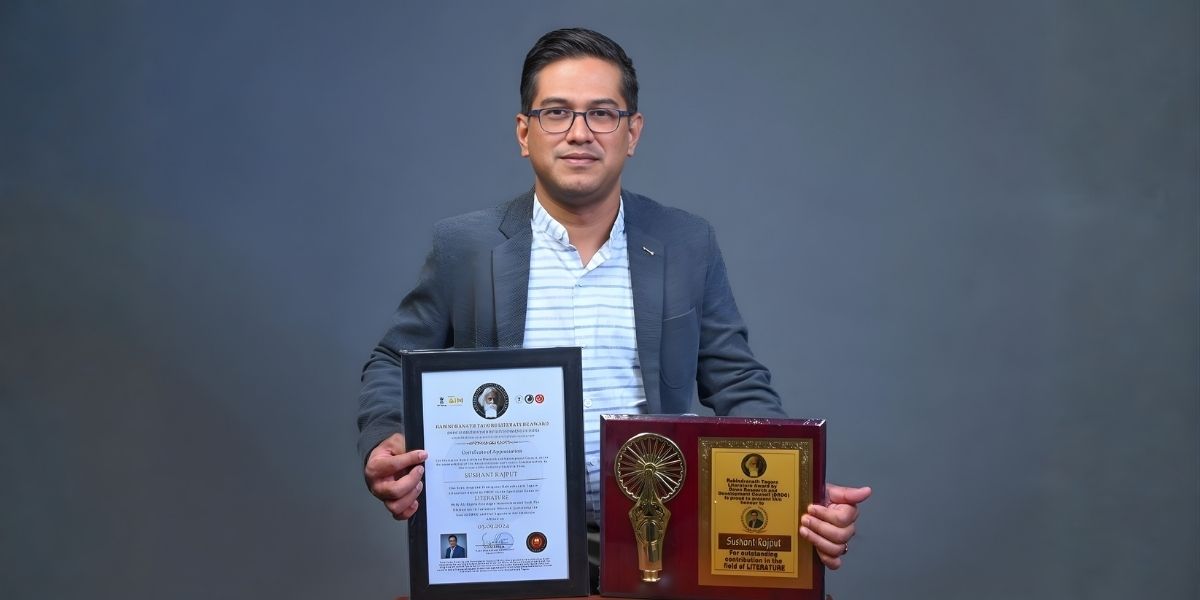
An Industry Leader with a Writer’s Soul: Dr. Sushant Rajput Unveils the Next Chapter of His Evolving Legacy

Dr. Sushant Rajput stands out as a rare blend of corporate leader, author, mentor, and thought leader whose career reflects both professional excellence and deep personal purpose. With over two decades of experience across the IT and ITES industries, he has built a journey that moves seamlessly from technology and finance to leadership, literature, and human development.

Currently serving as Vice President at eClerx Services Ltd., Dr. Rajput leads business development, solutioning, and transformation initiatives, playing a critical role in shaping strategic growth. His professional path has been anything but linear. Beginning with a foundation in Computer Science, he transitioned through Investment Banking Operations and Business Development before evolving into an author and mentor whose work now impacts professionals, students, and leaders alike.

Over the years, Dr. Rajput has held key managerial and leadership roles at globally respected organizations, including HCL Technologies, Société Générale, Cognizant Technology Solutions, and Deutsche Bank. Alongside his corporate responsibilities, he has remained deeply committed to education, serving as a Visiting Faculty and Corporate Mentor at various MBA institutions. In these roles, he actively guides students on career clarity, professional readiness, and essential life skills, areas often overlooked in formal education.

Dr. Rajput’s journey as an author did not begin with a publishing contract or a structured roadmap. Instead, it emerged quietly from lived experiences, unanswered questions, and the emotional weight of a demanding corporate life. Writing often took place late at night, in the margins of professional commitments, accompanied by rejection, self-doubt, and long silences from publishers. Yet the persistence in putting lived truth on paper never faded. For him, writing became less about recognition and more about responsibility, giving voice to thoughts and struggles many experience but rarely articulate, especially during the early and uncertain stages of professional and personal life.

This philosophy is reflected in his books. His debut, I Wish Someone Told Me This Before My First Job, was shaped by years of mentoring young professionals and observing the stark gap between academic success and workplace reality. The book addresses unspoken rules, early failures, emotional shocks, and practical lessons that are rarely taught but deeply felt. Upon its release, it found its audience quietly but powerfully, resonating with first-time professionals, MBA students, and early-career employees. Readers saw their own unspoken struggles reflected in its pages, leading to its recognition as an Amazon Bestseller and establishing it as a trusted, practical guide for those stepping into the corporate world.

His second book, Mindful Momentum: Navigating Procrastination and Overthinking, emerged from a deeply personal phase marked by inner conflict and the need to slow down, reflect, and rebuild focus. Rooted in lived experience rather than abstract theory, the book explores mindfulness, inner discipline, and sustainable progress in an age defined by speed, pressure, and constant noise. Readers did not merely consume the book; they connected with it emotionally. Many described it as grounding, timely, and deeply human, particularly for professionals facing burnout and self-doubt. Its impact was affirmed by strong reader reviews, organic word-of-mouth, and prestigious honors, including the Sahitya Sparsh Award for Productivity and Time Management.

Dr. Rajput is currently working on his third book, Courage Within: Indian Tales of Grit and Values, which is scheduled for publication by MARK-FLY PUBLISHERS. This work is inspired by a deeply rooted belief that values such as resilience, ethics, and courage must be planted early, before life tests individuals, not after it breaks them. Together, his three books form interconnected chapters of a single journey shaped by struggle, reflection, and the conviction that honest words written with purpose eventually reach those who need them most.

Beyond literature, Dr. Rajput’s contributions have earned him wide recognition. He has received multiple national and international awards, including honorary doctorates, global leadership honors, and literary excellence awards. His work and journey have been extensively covered by leading media platforms. Fortune India featured him as a “Leader Rising Each Year” in 2025, while Forbes India profiled him as a visionary leader. Business Today and India Today listed him among the Inspiring Personalities, with additional coverage across Open Magazine, Outlook India, Hindustan Times, Zee News, Fox Story India, and The Literature Times.

Through his leadership roles, books, talks, and mentoring, Dr. Sushant Rajput continues to empower individuals to overcome mental barriers, build meaningful momentum, and live with intentionality, proving that authenticity, guided by purpose, leaves a far more lasting imprint than hype or titles ever could.

How Dr. Julie Powell Hall Turned One Dog’s Final Journey Into a Story of Hope, Healing, and Second Chances

By: Sherry C. Poulson

In a world where stories of compassion feel more needed than ever, Max’s Last Journey: Paws Across America arrives at a time when such messages may resonate more deeply. A heartwarming gift that gently reminds us that love, hope, and togetherness are what can make life meaningful. Based on a true story, the book follows Max, an aging dog whose declining health seems to threaten his once-bright spirit. But instead of accepting the inevitable, his family chooses to embrace love, adventure, and a cross-country journey that transforms not only Max’s final chapter but their own.

At the heart of this unforgettable story stands the author, Dr. Julie Powell Hall, an educator, world traveler, and lifelong believer in the power of inspiration. Her debut book is not just a tale about a dog. It is a tribute to resilience, compassion, and the extraordinary bond we share with our animals. A perfect read for cozy winter nights, family gatherings, or quiet moments of reflection.

Real Love and Real Loss

Max’s Last Journey is rooted in real events. When Max’s health began to deteriorate, the emotional toll on his family was heavy. Many might have considered keeping him home, comfortable, and quiet. But Dr. Julie Hall and her loved ones saw something different in his tired eyes: hope. Determined not to let his final days be marked by sadness, they decided to take him on one last adventure across the United States.

What began as an attempt to lift Max’s spirits gradually became a new experience for everyone involved. Max, who had once seemed withdrawn and defeated, began to come alive again, wagging his tail, exploring new places, and soaking in the love around him. The journey became a celebration of life, a testament to the healing power of movement, change, and companionship. Through panoramic landscapes, quiet roadside moments, and heartfelt reflections, he found joy in every mile.

And Dr. Julie Hall found a story worth sharing with the world, one that may connect with the warmth and giving spirit of the holiday season.

The Woman Behind the Words

Dr. Julie Powell Hall’s own story is one of perseverance and purpose. Raised in Bethany Beach, Delaware, Julie grew up overcoming early life challenges that shaped her resilience and positivity. She has always believed in seeking the good, even during difficult chapters, and this philosophy is woven gently through every page of the book.

Her career reflects the same determination. From 13 years at Eastman Kodak to finance at Dun & Bradstreet, Julie later transitioned to academia, where she spent 17 years at Napa Valley College, eventually retiring as Professor Emerita in Business Administration. During her tenure, she earned a Ph.D. in Education, focusing on Professional Studies, showing her commitment to learning, excellence, and mentorship.

When her mother suffered several mini-strokes, Julie made the heartfelt decision to retire early and step into a caregiving role. This deep sense of responsibility, compassion, and love echoes the emotional themes at the center of Max’s story. Today, she continues to teach as an adjunct instructor at Delaware Technical College, bringing warmth and insight to every classroom she steps into.

Julie’s passions, such as traveling, cooking, photography, entertaining, and connecting with others, shine through her writing. Having traveled to 46 U.S. states and 26 countries, she brings a worldly sensitivity to her storytelling, capturing beauty in both the grand and intimate moments of life.

Why Max’s Story Is Unique

At its core, Max’s Last Journey: Paws Across America is about choosing love over fear, hope over despair, and connection over resignation. It’s a reminder that aging, whether in pets or people, is not an ending, but an evolving experience rich with meaning. Max’s journey teaches us that life, even in its final seasons, can still surprise us with joy, adventure, and deep emotional renewal.

This holiday season, the story might resonate more deeply, encouraging readers to slow down, cherish their loved ones, and embrace the moments that truly matter. Through every challenge and triumph, the story invites us to pause and reflect:

How can we better cherish the moments we have?

How can we bring more compassion into the world?

And how can love inspire us to live fully, even when the road is uncertain?

A Book That Touches the Heart

Warm, emotional, and deeply relatable, Dr. Julie Powell Hall’s debut book is a gift for animal lovers, families, travelers, and anyone who understands the bittersweet beauty of letting go with love.

It reminds readers that healing often happens in motion, on the open road, in the quiet spaces between miles, and in the courage to embrace life even as we face loss. Max’s story doesn’t just inspire; it has the potential to change. This Christmas, give the gift of hope, joy, and a reminder that every life, no matter how small, leaves a lasting impact.

Celebrate the Holidays with Max

Join Max on his unforgettable journey across America and experience the true story that celebrates love, resilience, and the second chances life offers when we open our hearts. Perfect for gifting, or for reading by the fire with a warm cup of cocoa.

Dr. Rafael Gonzalez: Catholic Anthropology and the Balance of Views

By: Velma J. Campbell

Catholic anthropology is the Church’s understanding of what it means to be human. It examines where we come from, why we exist, and what our ultimate destiny is. Unlike other views that see people as either completely good or completely bad, Catholic teaching takes a middle path. It says that human beings are both made in God’s image and affected by sin.

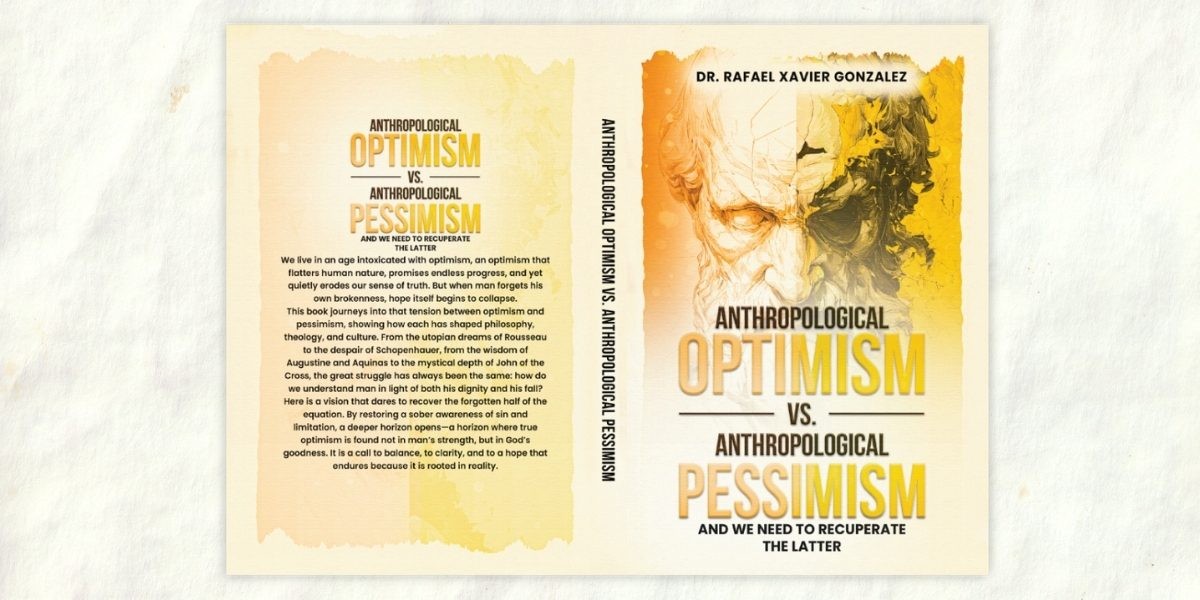
In Anthropological Optimism Vs Anthropological Pessimism and We Need to Recuperate the Latter, Dr. Rafael Gonzalez explores this delicate balance. He argues that both optimism and pessimism have their place when thinking about human nature. However, leaning too far in either direction causes serious problems. A proper understanding of man, according to Catholic thought, requires both faith and reason.

The Danger of One-Sided Thinking

In modern times, many people adopt extreme views about humanity. Some believe that people are naturally good and will do the right thing if given the chance. Others think humans are selfish and corrupt by nature. Dr. Gonzalez warns that both of these positions are incomplete.

When we think people are completely good, we ignore the reality of sin and the need for grace. We create a false sense of confidence in human ability. On the other hand, focusing only on human weakness risks leaving us in despair. We may think that change is impossible and that salvation is out of reach.

Catholic anthropology avoids both extremes. It teaches that human beings are wounded but not destroyed. We are capable of goodness because God makes us. But we also need His help to reach our full potential.

Lessons from Church Tradition

Throughout history, the Catholic Church has held a rich and thoughtful view of human nature. Saints like Augustine and Thomas Aquinas taught that people are created for goodness but must deal with the reality of sin. Their writings show that the Church has always held both truths at once.

Dr. Gonzalez draws on these teachings in Anthropological Optimism Vs Anthropological Pessimism And How We Need to Recuperate the Latter to show how Catholic anthropology remains relevant today. He explains that modern culture has often lost sight of these lessons. In trying to uplift people, society has removed the need for God. But without God, the human person cannot be fully understood.

Church teaching reminds us that true dignity comes not just from being human, but from being called to share in God’s divine life. This is the ultimate balance: to know that we are both lowly and called to greatness.

The Importance of Balance in Today’s World

In our world, messages about self-love, empowerment, and personal freedom are everywhere. While these ideas can be good in themselves, they become harmful when separated from the truth. Without a clear view of who we are, we fall into confusion. We either think we are perfect and need no help, or we think we are worthless and beyond saving.

Dr. Gonzalez believes that recovering a balanced view of man is essential for personal and societal healing. This is not just a religious issue. It affects how we treat others, how we raise our children, how we build communities, and how we shape laws.

A society that denies sin becomes careless. A society that denies dignity becomes cruel. Catholic anthropology calls us to walk between these two extremes with humility and truth.

Conclusion

In Anthropological Optimism Vs Anthropological Pessimism and We Need to Recuperate the Latter, Dr. Rafael Gonzalez presents a strong case for why Catholic anthropology demands a balanced view. He invites readers to move beyond surface-level thinking and to embrace a deeper, more honest understanding of the human condition.

This book is for anyone who wants to understand themselves better, grow in faith, and respond more wisely to the world around them. If you are searching for clarity about what it means to be human, Anthropological Optimism Vs Anthropological Pessimism and We Need to Recuperate the Latter is a valuable and timely resource. It will guide you to think with both heart and mind, grounded in truth and open to grace.

Disclaimer: The views expressed in this article are those of the author and do not necessarily reflect the official position of any religious or organizational entity. This article is for informational purposes only and should not be considered as professional or legal advice.