What Makes Gloria Joanne Kramer-Gordon A Lifelong Advocate for Multilingual Education and Cultural Empathy

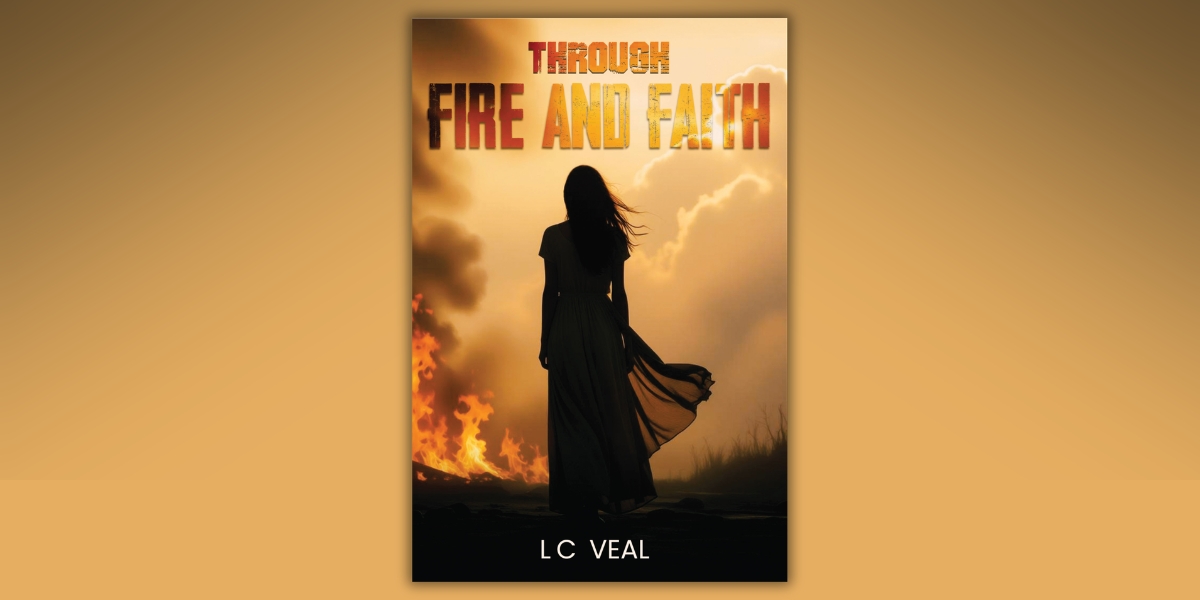
Gloria Joanne Kramer-Gordon, Ed.D., author of the children’s book It’s Raining Fish, has dedicated her career to making classrooms more inclusive and supportive for English Language Learners (ELLs).

With decades of experience in language education, “Joanne,” as she is often called, has developeddeep expertise in teaching and advocating for multilingual students and their unique needs. Her book reflects her insights into the challenges faced by immigrant students and her passion for building classrooms where every voice is valued.

Joanne began her career as a substitute teacher and Spanish instructor, working with students at various levels before transitioning to teaching English as a Second Language (ESL) to K-12 students.

Eventually, teaching ESL became a mission for Joanne, as she worked tirelessly to bridge language gaps and provide essential support to children struggling to learn English.

As an ESL teacher, she recognized the multiple layers of difficulty ELL students face, from mastering the language to adjusting to new cultural norms and expectations. This role allowed her to connect with her students on a personal level, gaining insights that would shape her entire career.

Her leadership skills and commitment to supporting English learners led to her becoming the ESL department chair for elementary schools in her district. In this capacity, she advocated for and developed programs to strengthen students’ language acquisition.

She was instrumental in promoting innovative, effective programs that made language learning more accessible. As department chair, she also mentored other teachers, helping them better understand the needs of multilingual learners and adopt practices that fostered empathy and inclusivity.

Joanne’s dedication to language education didn’t stop there. She soon took on a new challenge, becoming the principal of a dual-language school, where she played a key role in establishing it from the ground up. This role allowed her to shape a learning environment that celebrated linguistic and cultural diversity.

As principal, she built a community where students of all backgrounds could feel seen, supported, and empowered to share their cultures. Joanne’s leadership was crucial in making the school a welcoming space for all, creating a model of what a truly inclusive educational environment could look like.

Furthermore, Joanne was an adjunct instructor at Molly University’s graduate division of education, specializing in Teaching English to Speakers of Other Languages (TESOL). Her work at Molly University enabled her to share her hands-on experience with aspiring educators, instilling in them the values of empathy, patience, and cultural awareness. She encouraged her students to look beyond language barriers and see the depth and richness each learner brings to the classroom.

Currently, Joanne is the TESOL coordinator and an Assistant Professor at SUNY Empire University, where she continues her impactful work in the School for Graduate Studies.

In her current role, she focuses on equipping educators with the knowledge and skills to support diverse learners in various educational settings. Joanne’s research covers a broad range of critical topics, including multicultural education, bibliotherapy, literacy strategies for multilingual students, mental health considerations for immigrant learners, and best practices for teaching English, dual-language, and multilingual students.

Her firsthand experiences deeply influence her work, and her research often highlights the importance of addressing both the academic and emotional needs of students going through new cultural landscapes.

Through her contributions, Joanne remains a powerful advocate for ELLs and a respected voice in education. Her book, It’s Raining Fish, reflects her dedication to breaking down barriers and developing mutual respect between students and teachers of different backgrounds.

By bringing the story of a young boy named Manuel, she sheds light on the complexities faced by ELL students and the potential of educators to make a difference through understanding and open-mindedness.

Joanne’s career shows her commitment to multilingual learners and her belief in the importance of empathy in education. She continues to impact both young students and non-traditional adult learners, advocating for their success with boundless passion and compassion.

Through her book, research, and teaching, Gloria Joanne Kramer-Gordon inspires educators everywhere to embrace inclusivity, making her a trailblazer in multilingual education. 

The Bedtime Story That Floats and Stays With You

There’s a particular kind of quiet that arrives right before sleep: the house dimmed to lamp-light, the hallway holding its breath, the last sip of water negotiated like a treaty. In that hush, children turn into philosophers.

They ask the kinds of questions adults might forget to ask, questions that are less about facts than about how the world feels. In Flying Jelly Beans by Kona, illustrated by Victor Tavares, those questions are met not with lectures, but with a gentle invitation: what if wonder is real, and what if kindness has a color?

This is a picture book built for the ritual of being read aloud. The sentences move with the steady rhythm of a bedtime voice, calm, reassuring, just playful enough to keep a child’s attention without revving it up.

The opening domestic tableau establishes the book’s emotional core: a small child tucked into her own bed while a grandfather sleeps nearby, close enough to feel like a lighthouse in the dark.

Before anything “magical” happens, the book signals what it’s really about: care, closeness, and the peculiar tenderness of a household where love is measured in the ordinary, blankets, warm light, and the safety of a familiar room.

Then comes the hook, the kind that’s instantly legible to a child: a jar of candy that looks like it belongs in a dream, luminous and impossibly promising. Flying Jelly Beans understands that children don’t need elaborate mythologies to be captivated. They need a single object that feels both real (you could hold it) and impossible (it shouldn’t exist). From there, the book leans into something rare in contemporary kids’ publishing: magic that doesn’t exist to show off, but to soothe.

The artwork amplifies that soothing quality. Tavares’s illustrations glow with evening tones and soft gradients, the sort of palette that might make you lower your voice without realizing it. When the book shifts into sky-and-star imagery, it doesn’t suddenly turn loud or frantic; it becomes more expansive, like a lullaby widening into a chorus.

The Flying Jelly Beans themselves are “characters” you may need to track. They’re the sort of figures a child might point to and say, That one is my favorite, not because it’s the hero, but because it matches a mood.

What makes this book special is that it manages to be charming without being saccharine. It offers sweetness, yes—candy literally—but it also makes room for the complicated feelings kids carry around quietly. (Grown-ups, too.) The book’s emotional range culminates in an image of unmistakable poignancy: a child holding the jar, a moment of heaviness settling in alongside the wonder. It’s a reminder that the best children’s books don’t flatten childhood into constant delight. They honor its seriousness.

Who it’s for: families building bedtime traditions, grandparents who want a story that feels like a hug, teachers and librarians looking for a read-aloud that sparks gentle conversation (“What color feels like happy?” “What helps when someone is sad?”) without spoiling anything.

What it offers—without giving itself away: a small-scale miracle, told softly, that leaves readers feeling a sense of steadiness after the story.

Buy Flying Jelly Beans today at your local bookstore or from Amazon, and let tonight’s bedtime story glow.

Two Rings, One Target: A Marriage Tested by Fire and Firepower

What happens when the vows you whispered in a quiet church have to be lived at 80 miles an hour, with headlights in the mirror and danger closing fast?

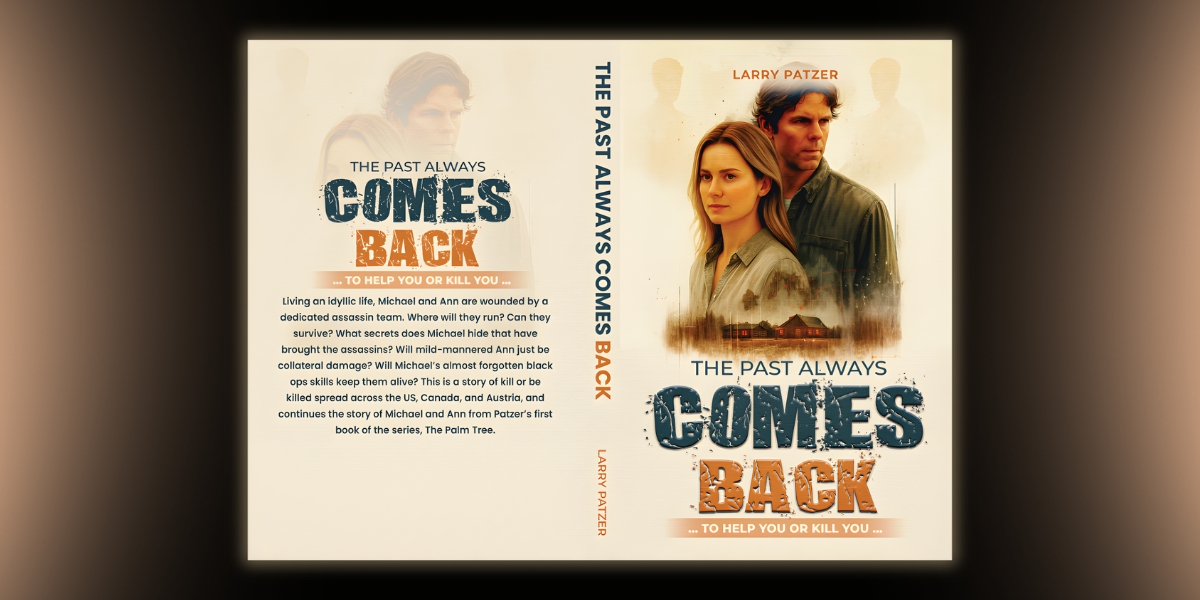
In Larry Patzer’s thriller, The Past Always Comes Back, marriage is not window dressing; it’s the operating system. From the first shock of a home turned to wreckage, Michael and Ann are forced to run on a blend of trust, training, and raw nerve. Two rings, one target. Every decision they make is a joint one, or it’s a mistake.

Michael has a past he’s deliberately shelved: black-ops skills, contingency planning, and a “just-in-case” safe place that Ann never expected to need. When the attack comes, it’s not a random act; it’s deliberate, coordinated, and meant to erase them. Hiding in that ready-but-unused refuge, the couple confronts a truth as urgent as any siren: survival isn’t a service Michael can provide for Ann—it’s a mission they have to execute together. He can’t protect and fight at the same time. She won’t be cargo.

Patzer gives Ann her full human weight. She enters the story as mild-mannered and spiritually grounded, the last person who wants a weapon in her hands. The book refuses the shortcut of instant transformation; instead, it traces the uncomfortable, incremental work of learning to be capable under pressure.

This is a cat-and-mouse story that changes maps as often as it changes angles. The chase springs from a small U.S. college town, routes through Canada, and tightens into Europe, where unfamiliar streets compress time and choices. Geography shapes the suspense: American backroads offer improvisation and distance; border crossings demand timing and discipline; cobblestoned corridors turn split seconds into coin flips. With every new terrain, the roles of hunter and hunted flip—sometimes twice in a chapter. The book’s momentum isn’t just speed; it’s adaptation.

Fans of stripped-down pragmatism, relentless escalation, and textured intelligence will find plenty to love. Patzer’s background (military, engineering, and trauma chaplaincy) hums beneath the surface, lending both the mechanics and the morality a lived-in feel. You get enough detail to trust what’s happening, but the prose never bogs down in instruction manual mode. The scenes breathe, move, and hit.

What distinguishes this thriller, though, is its conscience. The Past Always Comes Back is not about racking up bodies; it’s about counting costs. Every tactical choice casts a moral shadow. How far do you go to stop people who won’t stop? What lines do you refuse to cross, even when crossing them might be safer? Ann’s inner life matters here—her training sessions echo with questions about purpose and aftermath. Michael’s calculus is colder by necessity, but not without its own boundaries. The book respects the reader enough to let those tensions sit in the space between beats.

Importantly, there are no endings spoiled here. You won’t find revelations about who hired whom, which debts from long ago are being collected, or how the final standoff resolves. That’s the author’s to deliver. It’s high-stakes and high-velocity, yes—but it’s also the story of two people refusing to let fear (or firepower) define who they are to each other. That’s why the close calls feel closer, the debates feel sharper, and the victories (when they come) feel earned. You’re not just watching competent operators execute a plan; you’re watching a husband and wife build one in real time, under duress, with everything they love on the line. The thrill is in the chase; the ache is in what the chase threatens to take.

Come for the cat-and-mouse tactics; stay for the portrait of a partnership under fire. Turn the pages for the set pieces; remember the lines for the questions they leave behind.

Ready to see how far two people will go to keep a life and a love intact? Buy The Past Always Comes Back today wherever you get your books, and step into a marriage that fights back.

The Picture Book That’s Bouncing Off the Shelves: Why “Tommy Likes to Play with His Balls” Might Be the Funniest Gag Gift of the Year

Looking for a funny adult book gift that could send everyone into fits of laughter?

Meet Tommy, a sweet boy who just loves playing with his balls. Yes, you read that right. And yes, it’s likely just as hilarious as you’re imagining.

The Inappropriate Picture Book Parody That Started It All

“Tommy Likes to Play with His Balls” is a bestselling style parody book for adults that’s making waves in the comedy world. Written by librarian and self-proclaimed pun enthusiast Marian Page, this inappropriate kids’ book spoof transforms the innocent genre of children’s literature into a potentially laugh-out-loud experience for grown-ups and tired parents.

The premise is brilliantly simple: Tommy is an adorable boy who loves his balls. He plays with them everywhere—at dinner, at school, at church (oh dear!), and even at the zoo. His dog, Richard, plays with them too, leaving them rather hairy. Jenny crushes them. Emma suddenly leaves. His mom eventually has enough and takes them away. It’s all perfectly innocent… and yet.

Why Adults Can’t Stop Laughing

What makes this adult read aloud funny masterpiece so effective is its commitment to the bit. Every page features wholesome illustrations paired with text that maintains complete innocence while your mind does all the heavy lifting. It’s the literary equivalent of a perfectly timed wink.

The laugh-out-loud adult humor comes from the contrast between Tommy’s pure intentions and the reader’s increasingly corrupted interpretation. Lines like “A boy and his balls are never apart—it’s a bond that’s deep and strong” might become comedy gold when read aloud at parties or family gatherings (with the right crowd, of course).

Perfect for Every Occasion (Well, Almost Every Occasion)

This naughty gag gift book has become a go-to present for:

  • White elephant exchanges that need an upgrade

  • Birthday gifts for friends with a sense of humor

  • Bachelor and bachelorette parties

  • Coworker retirement parties

  • Secret Santa for the office comedian

  • Just because you want to make someone laugh until they cry

The beauty of “Tommy Likes to Play with His Balls” is its versatility. It’s cheeky enough to get laughs but innocent enough to maintain plausible deniability. After all, it’s just a story about a boy and his beloved toys, right?

The Reading Experience You Didn’t Know You Needed

Part of what makes this inappropriate picture book parody so memorable is the experience of reading it aloud. Watch as your audience’s expressions shift from confusion to realization to uncontrollable laughter. The rhythm and rhyme scheme mirror classic children’s books, making the double entendres even more effective.

Each page turn brings a new scenario where Tommy’s ball-playing adventures take him to increasingly questionable locations. The zoo page alone might be worth the price of admission, and that dedication at the beginning? Chef’s kiss.

Why This Book Matters (Yes, Really)

When most people want to take everything too seriously, “Tommy Likes to Play with His Balls” reminds us that sophisticated humor doesn’t always require complexity. Sometimes the best comedy comes from a simple, well-executed concept that trusts the audience’s intelligence.

Marian Page has created something memorable here: a book that brings people together through shared laughter. It’s the kind of gift that might get talked about long after the wrapping paper is gone, the kind of book that could be pulled out at gatherings, the kind of humor that might create genuine connection.

Ready to Join the Fun?

Whether you’re shopping for a funny adult book gift or treating yourself to some quality comedy, “Tommy Likes to Play with His Balls” offers exactly what it intends: pure, unadulterated fun. It’s inappropriate in the best possible way: clever, cheeky, and likely to generate laughs.

After all, life without balls can be rough. Just ask Tommy.

Ready to have a ball? Grab your copy of “Tommy Likes to Play with His Balls” and share the laughs with everyone you know. They’re sure to thank you for it.

Reclaiming the Historical Jesus: Why Scholarship Matters for Faith and Skepticism Alike

In an era of polarized debates, Dr. Ademola O. Sodeinde’s work demonstrates that the highest authority on a historical subject comes not from dogma, but from disciplined, empathetic inquiry. This principle guides his important book, Jesus of Nazareth: His Life, Teachings, and Legacy. The book examines a central figure often claimed by believers and dismissed by skeptics. It argues that rigorous historical study does not diminish Jesus of Nazareth. Instead, this careful work clarifies and amplifies his profound significance for everyone.

Many people approach Jesus through a single lens. Some see only a figure of divine faith, separate from ordinary history. Others see only a myth or a simple moral teacher. Both views can miss the grounded reality of a first-century Jewish man whose life sparked a global movement. Historical scholarship builds a necessary bridge. It allows us to encounter Jesus within the world that shaped him. This demands that we examine politics, religion, and daily life under Roman rule. It requires examining ancient sources with both respect and critical care. Dr. Sodeinde excels as a guide in this complex landscape.

His methodology offers a model for serious discourse. He begins by reconstructing the world Jesus entered. This means understanding the weight of Roman occupation, the vibrant diversity of Jewish groups, and the aching messianic hopes of the time. A person is shaped by their context. We cannot understand a teacher’s words without knowing what those words meant to his original listeners. For instance, the phrase “Kingdom of God” was not a vague spiritual idea. It was a loaded term that spoke directly to Jewish longing for justice and freedom. Scholarship illuminates this context, making Jesus’s teachings sharper and more revolutionary, not less.

Furthermore, true scholarly authority honestly assesses the sources. The Gospels are not modern biographies. They are faith documents written decades after the events. A serious historian like Dr. Ademola O. Sodeinde acknowledges this. He explores how these texts formed, how memory and tradition worked, and what other historical records exist. This process does not destroy the narrative. It reveals the profound struggle of early communities to make sense of a life that shattered their expectations. Wrestling with these sources deepens our engagement, whether we approach them as scripture or as history.

This scholarly bridge benefits both faith and skepticism. For the person of faith, history can enrich belief by rooting it in tangible reality. It shows that Christianity is not based on abstract ideas but on historical events experienced by real people. Faith can be strengthened by understanding the brutal political reality of the crucifixion or the tangible shock of the empty tomb accounts. For the skeptic, history provides a credible point of entry. It bypasses theological arguments and asks the basic human questions. Who was this man? Why did he attract followers? Why was he killed? Why did his movement not die with him? The answers are found in evidence and historical reasoning, not assumed belief.

In his book, Dr. Sodeinde performs this bridging work with exceptional balance. He treats Christian belief with clarity and respect. He also gives careful consideration to Jewish and Islamic perspectives. He does not force a single conclusion. He invites readers into a process of understanding. This approach embodies the highest goal of scholarship. It is not about winning an argument. It is about pursuing a clearer, more complex, and more humane understanding of a figure who defies simple categories. Jesus of Nazareth: His Life, Teachings, and Legacy shows that intellectual rigor and open inquiry are not threats to meaning. They are its foundation.

When we reclaim the historical Jesus, we do not find a smaller figure. We find a more compelling one. We meet a teacher whose parables challenged deep social structures. We see a healer whose actions restored outcasts to the community. We witness a man whose fidelity to his vision led him into fatal conflict with power. History allows this man to step forward from the fog of legend and doctrine. It allows his voice to be heard again in its original urgency and challenge.

Therefore, the work of scholars like Dr. Ademola O. Sodeinde is essential. It provides common ground for dialogue. It replaces simplistic caricatures with informed understanding. It demonstrates that truth is not afraid of investigation. Whether one concludes such a study with confirmed faith, expanded questions, or newfound respect, the journey itself is transformed. It promises a meeting with a historical person whose life continues to ask each of us what we believe about power, mercy, and what it means to live well.

For a masterful demonstration of how serious scholarship illuminates rather than diminishes, engage with the comprehensive study presented in Jesus of Nazareth: His Life, Teachings, and Legacy by Dr. Ademola O. Sodeinde. This book offers the grounded, authoritative analysis required for any sincere understanding of this pivotal historical figure.

What Really Happens Behind the Scenes at Dog Shows? This Judge Is Finally Telling All

A longtime insider recounts the moment a routine assignment turned into questions, and how quickly a name can become a story.

There are moments when an entire life’s work seems to rely on a single envelope or, these days, a single line on a screen. In My Life in the SPORT of Purebred Dogs, AKC judge and longtime Dachshund breeder-owner-handler Diane Young McCormack describes one of those moments with the kind of clarity that comes only when the stakes are personal: a letter arrives after a judging assignment in Alaska, and suddenly a career built over decades is reinterpreted by a question.

On paper, it’s a narrow inquiry into travel expenses, who paid for what, and compliance and procedure. In lived experience, McCormack suggests, it becomes something larger: the collision between process and perception, and the way a close-knit world can turn routine logistics into a narrative that might take on a life of its own.

The book does not treat the inquiry as a cheap hook; it treats it as a catalyst, one that forces the author to look back at the long road that brought her there, and to examine what happens when a person’s reputation becomes a subject of contention.

That’s the key to why McCormack’s memoir is compelling even for readers who don’t know a hock from a pastern. The dog fancy, like many specialized communities, runs on expertise, relationships, and trust. Shows are public, but the rules that govern travel, assignments, hospitality, and ethics aren’t always visible to spectators. McCormack’s account invites readers into that hidden layer not by lecturing but by narrating how the system appears from within.

The tension in the opening sections is not merely “what happened,” but how quickly talk begins to shape reality. In a world where everyone knows everyone or knows someone who knows someone, information travels in fragments.

McCormack writes about the stress of trying to interpret official language, the uncertainty that follows, and the way the vacuum fills with speculation. It’s an uncomfortable truth of modern life that a question can sound like a verdict once it hits the rumor mill. Her memoir keeps returning to that theme: how the line between inquiry and assumption can blur, especially online.

What makes the book feel different from a simple “response” narrative is that it’s grounded in a full career rather than a single episode.

McCormack has judged for the AKC since 2002 and writes with the practiced observational skill of someone who has spent years making careful, public decisions under bright lights. That perspective matters here. She’s not writing as an outsider accusing the sport from the sidelines; she’s writing as a participant who understands the pressures, the etiquette, the obligations, and the vulnerabilities of the role.

The book’s later section devoted to the 2024 period is intentionally positioned within a much larger life story. That structural choice does two things: it offers readers context for how a judge is formed, how a breeder thinks, how a competitor learns to lose and to keep showing up, and it raises a subtler question.

If a career is built over thousands of ordinary choices, how should one interpret a single disputed narrative that could flatten all of that into one headline?

McCormack’s writing is at its most affecting when it stays close to the realities: the way a letter can change how you read your inbox, how you talk to friends, how you walk into a show site, how you sleep. She also makes room for the sport itself: the standards, the responsibility, the idealism that brings people in, and the politics that sometimes corrode the experience. The inquiry may be the spark, but the fuel is a lifetime of devotion.

Readers looking for a tidy “recap” will find the book doesn’t aim to be reduced to a few lines. It’s precisely the kind of story that can’t be responsibly summarized in a post or a rumor thread, which is one reason it generates a particular kind of reader urgency.

If you’ve seen how quickly reputations can be made or broken in any niche community—dogs, dance, academia, medicine, tech—McCormack’s account will feel familiar in the most unsettling way.

My Life in the SPORT of Purebred Dogs by Diane Young McCormack is available on Amazon. For anyone curious about how the dog world really works when questions arise, it’s the kind of firsthand narrative you’ll want to read in full, not secondhand.

From Storybook to Svalbard: How Jeanne Bender Turned the Arctic Into a Children’s Adventure That Inspires Courage and Curiosity

As winter blankets much of the Northern Hemisphere in snow and silence, one children’s book series invites young readers to step boldly into the cold and discover warmth in the most unexpected places.

Lindie Lou: On Ice, the fifth installment in the Lindie Lou Adventure Series by author Jeanne Bender, takes readers far above the Arctic Circle to Svalbard, Norway, one of the coldest and most remote inhabited regions on Earth. Set against a backdrop of ice caves, tundra landscapes, and months-long polar night, the story blends real-world geography with imaginative storytelling, introducing children to a part of the world few will ever visit, yet many might find unforgettable.

At the heart of the story is Lindie Lou, a curious and determined canine adventurer who joins her companion Bryan on a scientific expedition to study the northern lights and solar winds. While the adults focus on research, Lindie Lou finds herself drawn into adventures of her own — sliding through ice caves, navigating frozen terrain, and forming unexpected friendships with a playful polar bear cub, a brave Svalbard reindeer, a clever Arctic fox, and a team of hardworking sled dogs.

What makes On Ice stand out is its grounding in lived experience. Before writing the book, Jeanne Bender traveled north of the Arctic Circle to Longyearbyen, the world’s northernmost settlement, immersing herself in the stark beauty and quiet resilience of life in Svalbard. Surrounded by glaciers, wildlife, and a landscape shaped by extremes, she found inspiration not just in the scenery, but in the people and ecosystems that thrive there.

“The Arctic is often portrayed as empty or unforgiving,” Bender has said in past interviews. “But it’s full of life, cooperation, and wonder. I wanted children to feel that.”

That philosophy is woven into the narrative. Visiting the Arctic in December during the darkest time of the year presents Lindie Lou with real danger and uncertainty. When she finds herself in trouble, survival doesn’t come from strength alone, but from bravery, determination, and teamwork. These themes echo throughout the series, positioning Lindie Lou not as a fearless hero, but as a relatable character who learns, adapts, and grows through experience.

Beyond the adventure, On Ice serves as an educational gateway. Young readers are introduced to Arctic wildlife, geography, and environmental conditions in a way that feels organic rather than instructional. Encounters with a baby walrus, Arctic birds, and polar wildlife encourage curiosity about conservation and respect for fragile ecosystems without ever losing the joy of storytelling.

The Lindie Lou Adventure Series has become known for combining travel, science, and emotional storytelling into accessible chapter books for children. Each installment draws from real locations Jeanne Bender has visited, transforming global exploration into narratives that spark imagination and empathy.

In a time when children’s attention is increasingly fragmented, Lindie Lou: On Ice offers something refreshingly immersive — a reminder that stories can still transport readers to faraway places, teach them about the world, and quietly build resilience along the way.

As snow continues to fall across cities and countryside alike, Lindie Lou’s Arctic journey feels perfectly timed. It invites readers to bundle up, turn the page, and discover that even in the coldest corners of the world, friendship, courage, and wonder endure.

In this sense, On Ice becomes more than a seasonal story — it becomes a quiet guide for young readers learning how to navigate uncertainty. As Lindie Lou moves across frozen landscapes, each challenge mirrors the small fears and questions children face in their own lives. The cold, the darkness, and the unknown are never portrayed as obstacles to avoid, but as experiences that shape courage. By the time the final page is turned, readers are left not only with images of the Arctic, but with a deeper understanding that growth can often begin in places that feel unfamiliar and difficult.

Beyond the Toolbox: Why Critical Thinking is a Capacity, Not Just a Skill

In the landscape of modern education and corporate training, “critical thinking” has become a ubiquitous buzzword. It is frequently marketed as a “skill set” or a cognitive “tool” that can be acquired, stored, and deployed to solve problems on demand. However, a groundbreaking new book by Matthew H. Bowker, Ph.D., challenges this utilitarian view, arguing that true critical thought requires a profound psychological shift: the development of the subject.

Now available on Amazon and major online retailers, Critical Thinking and the Subject of Inquiry: Capacities, Resilience, and Power offers a transformative approach for teachers, learners, and trainers.

The Failure of the “Banking Concept”

Dr. Bowker argues that most contemporary approaches to critical thinking rely on what Paulo Freire termed the “banking concept of education”. In this outdated model, teachers deposit knowledge or “skills” into the supposedly empty minds of learners, who are expected to “bank” this capital for later use. Bowker critiques this approach as “lifeless,” noting that when we treat critical thinking as a static tool, we treat ourselves as objects rather than autonomous subjects.

Critical Thinking as a Capacity

Instead of a skill to be memorized, Bowker redefines critical thinking as a capacity—an internal state of being “able”. Unlike a tool that sits idle in a box, a capacity is dynamic, fluid, and deeply connected to the learner’s sense of self. It requires “extraordinary resilience in the face of stultifying powers and pressures arising from within and without”.

Facilitation Over Instruction

The book serves as a guide for moving from traditional instruction to facilitation. A facilitative approach does not dictate answers; rather, it opens a space for learners to question, explore, and create. By focusing on the learner as a “subject”—a mature, autonomous person capable of independent judgment—educators can foster a resilience that withstands the pressures of conformity and authority.

For educators and trainers seeking to move beyond rote exercises in logic and engage the full psychological potential of their students, Critical Thinking and the Subject of Inquiry is an essential resource.

[Get your copy today on Amazon]

Leadership Lessons from the Front Lines: A Trilogy for Modern Change-Makers

What does it take to steer a team through uncharted territory when the stakes are nothing less than life and death? Dr. Erin Coakley had to answer that question in the spring of 2020. Overnight, her hospital transformed into a battleground against an invisible enemy. Without warning, she was asked to lead her hospitalist program—a role she hadn’t sought but couldn’t refuse. In her latest book, Leading By Example During a Crisis, she brings readers into that pivotal moment and demonstrates how effective leadership is forged not in classrooms but in the crucible of crisis.

Rather than retreat behind a desk, Dr. Coakley chose to lead from the front. She rounded on patients herself, meticulously documented their severity of illness, and organized short daily conference calls to keep doctors, nurses, pharmacists, and administrators aligned. She prioritized transparency and fairness, fostering a culture where accountability replaced blame. Her approach embodied a central principle that runs through her trilogy: leadership is not just about issuing orders from a distance but about being present, listening, and communicating clearly.

These initial decisions set the tone not just for her team but for readers. In a world where crises can upend business and society overnight, Dr. Coakley’s lessons may resonate far beyond healthcare. She shows how modelling the behaviours you expect from your team, providing context behind decisions, and showing genuine care for people’s concerns can transform fear into focus. By inviting stakeholders into the conversation—through those brief, focused conference calls—she created space for others to voice concerns, ask questions, and feel part of a shared mission. It’s the kind of leadership every modern change-maker could learn from.

The earlier books in the trilogy deepen this framework. Heartbeats & Homecomings: A Doctor’s Pandemic Experience, the first volume, captures the raw, chaotic early days of the pandemic when hospital corridors were eerily quiet, personal protective equipment muffled voices, and eye contact became the only way to convey concern. Dr. Coakley describes how she and her colleagues became surrogate families for patients isolated from loved ones. These experiences underscore that empathy is foundational to leadership; without trust and human connection, even the best logistical plans may falter.

The second volume, Empathy in Crisis: How Compassion Transformed Care During Covid-19, illustrates that leaders must nurture emotional well-being in addition to managing logistics. Dr. Coakley argues that patients heal better when they feel understood and valued. She offers practical guidance on how to engage in meaningful interactions, respect cultural differences, and support colleagues’ growth. The book highlights how nurses and physicians quickly learned new skills to meet unprecedented demands, demonstrating that effective leadership often involves empowering others to step into new roles.

For professionals seeking a playbook on crisis management and transformative leadership, this trilogy provides real-world insights. It shows how clear communication, empathy, and shared purpose can align teams during uncertainty. Dr. Coakley’s experiences remind us that leadership isn’t just about titles—it’s about showing up, listening, and inspiring collective resilience. Whether you oversee a corporate team, lead a classroom, or manage a household, you’ll find lessons in her journey that can help you guide others through the unknown.

Why Short Stories Work for Busy Lives and Why Paraphernalia Delivers

If you love reading but struggle to carve out hours for a novel, you’re not alone. Most of us read in the margins now, between meetings, on commutes, while the kettle boils. Short stories aren’t a compromise for those margins; they’re a form designed to thrive in them.

Done well, a short story offers a complete arc, a concentrated mood, and an afterglow that lingers, without demanding your whole weekend.

Completion beats intention

We don’t lack the intention to read; sometimes we lack the willpower to finish. Short stories solve that. One sitting, one beginning–middle–end, one clean sense of “done.” That feeling of completion matters. It’s motivating, especially if you’ve fallen out of the habit.

Reading one story today and another tomorrow rebuilds momentum far more effectively than chipping away at Chapter 3 for a week and feeling stalled.

The depth-to-time ratio

Short fiction isn’t “less.” It’s tighter.

Every image, line of dialogue, and beat has to earn its place. Many strong stories hinge on a simple craft spine:

  • A clock (time pressure)
  • A corner (a decision with no easy way out)
  • A cost (what changes if the character acts)

With little room for filler, plot and theme arrive together. The result is high-impact reading, you get movement and meaning in minutes.

Flexible by design

Short stories fit the way we actually live. Ten minutes in a waiting room? Start and finish. Twenty minutes before bed? Read without worrying you’ll forget where you left off.

They’re device-agnostic, phone, e-reader, paper, and attention-friendly, with no heavy re-entry tax after a long day. The format meets you where you are, rather than asking you to rearrange your life.

Built to be reread

A good story invites a second pass. On the first read, you ride the current. On the second, you notice the load-bearing details: an object that keeps appearing, a shift in sound, a line that suddenly carries double weight.

Rereading a 12-page story is realistic. Rereading a 400-page novel often isn’t. Short fiction rewards attention economically.

Great for groups

Book clubs want lively conversation without a three-hour commitment. Short stories make that possible. A focused discussion can happen in under an hour: one object that matters, one moment of decision, one line that resonates.

The format is inclusive. Miss a week,ek, and you can still rejoin without “catching up.”

Where Paraphernalia fits in

Paraphernalia is short fiction for the lives we actually live, quick to start, hard to forget.

Across these stories, small, ordinary objects, a mirror, a bell, a bus ticket, a leaf, become hinges that swing whole lives open. Perth-based author Godfrey Bonavia writes with clarity and precision; place hums through every scene, from island edges to city streets, while the emotional stakes feel universal.

Each story lands cleanly and echoes after. They’re the kind you finish in a sitting and find yourself thinking about all week.

Paraphernalia is now available on Amazon. Read one on a commute, another before bed, and watch how the pieces quietly click together long after you’ve turned the page.