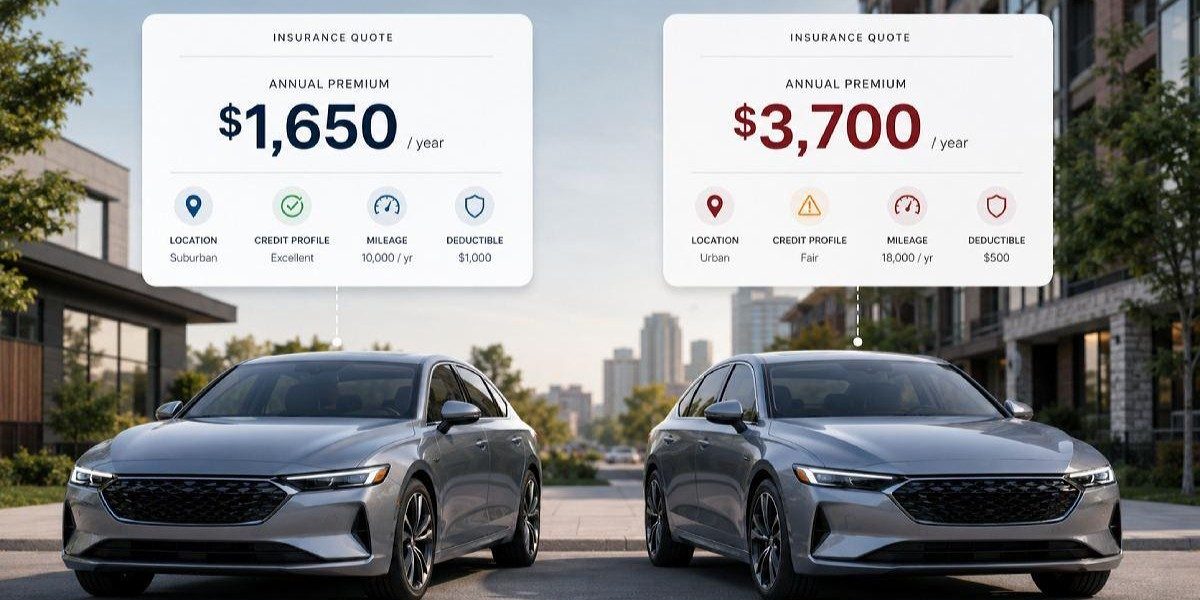

Car insurance rates can differ by more than $2,000 a year even when two people drive similar vehicles and purchase comparable coverage. Market Watch’s 2026 rate analysis found average full-coverage premiums ranging from $1,624 in Vermont to $3,481 in Louisiana a $1,857 difference before individual credit, age, driving history, mileage, and ZIP code are considered. The Zebra also found that drivers with poor credit paid approximately $126 more per month than drivers with very good credit.
The vehicle matters, but insurers are not simply assigning a price to the car. They are estimating the probability and potential cost of future claims connected to the driver, location, vehicle use, and coverage choices.
Understanding that calculation reveals which parts of the premium are difficult to change and which ones drivers can actively improve.
1. Insurers Price the Driver and the Risk, Not Just the Vehicle
The National Association of Insurance Commissioners explains that insurers rely on underwriting and rating. Underwriting estimates how risky an applicant may be, while rating converts that expected risk into a premium.
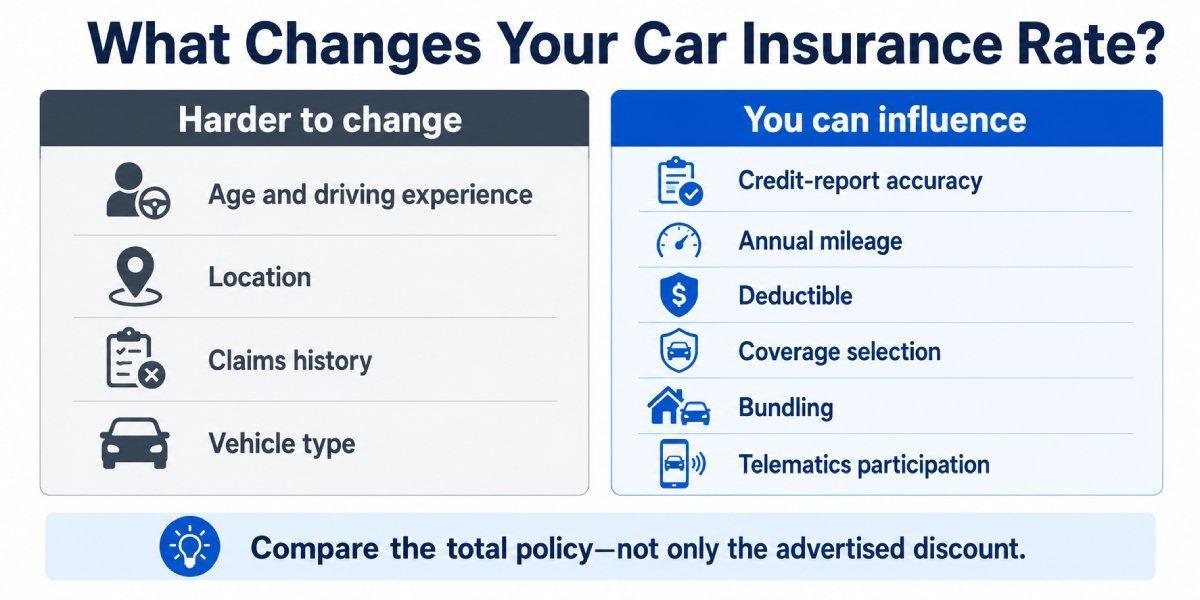
The major factors can include:
● Location and ZIP code
● Age and driving experience
● Driving and claims history
● Vehicle type and use
● Annual mileage
● Previous insurance coverage
● Selected limits and deductibles
● Credit history where state law permits it
That is why two people can insure the same make and model but receive very different quotes. The insurer is evaluating two complete risk profiles, not two identical cars.
2. Location Can Change the Price Before the Driver Does Anything
State insurance laws, local claim frequency, repair costs, theft exposure, weather losses, medical expenses, and litigation patterns can all influence pricing.
A driver moving between states may therefore see a substantial change even with the same vehicle and a clean record. Prices can also differ within a state because insurers consider garage location and ZIP code when estimating exposure.
Drivers cannot quickly change statewide loss trends, but they should update their insurer when a vehicle is moved, stored in a secure garage, or used differently. The information on the policy must accurately reflect where and how the vehicle is normally kept.
3. Credit-Based Insurance Scores Can Create a Four-Figure Difference
A credit-based insurance score is not identical to the credit score a lender uses. According to the NAIC, insurers may use information from credit reports as one rating factor in states where the practice is allowed.
The Zebra’s 2026 analysis found that drivers in its poor-credit category paid approximately $262 per month, or 93% more than drivers with very good credit. The average difference was around $126 per month, equal to $1,512 over a year.
Drivers should therefore review their credit reports for incorrect balances, accounts that do not belong to them, and outdated information. The Consumer Financial Protection Bureau recommends checking credit reports when an insurer offers an unexpectedly high premium and disputing any inaccurate information.
Paying bills on time and reducing outstanding balances may eventually help, although the effect on insurance pricing depends on state law and the insurer’s rating model.
4. Mileage and Driving Behavior Are Increasingly Measurable
Traditional policies estimate risk using broad categories. Telematics programs add information about how the vehicle is actually driven.
The NAIC says usage-based insurance programs may track:
● Miles driven
● Time of day
● Rapid acceleration
● Hard braking
● Hard cornering
● Phone use while driving
● Vehicle location
Some programs use a mobile app, while others rely on a device installed in the vehicle. An NAIC study reported that insurers commonly promoted savings of approximately 10% to 15%, although actual results depend on the program, state, and recorded behavior.
Safe, low-mileage drivers may benefit, but participation should not be automatic. Drivers should first determine what information is collected, how long it is retained, and whether unfavorable driving data can increase the premium rather than merely reduce the available discount.
5. Raising the Deductible Can Lower the Premium But Transfers Risk
A deductible is the amount the policyholder pays toward a covered loss before the insurer contributes.
The Insurance Information Institute reports that increasing a deductible from $200 to $500 may reduce collision and comprehensive costs by approximately 15% to 30%. Moving to a $1,000 deductible may generate greater savings.
However, a lower premium is not a true saving when the driver cannot afford the deductible after a crash.
A practical approach is to choose the highest deductible that can be paid immediately from savings without relying on a credit card or delaying repairs.
6. Bundling Is Worth Testing, Not Blindly Accepting
Combining home or renters insurance with auto coverage is one of the most widely available discounts. New York’s Department of Financial Services lists multi-line home-and-auto discounts among the programs offered by numerous insurers operating in the state.
Bundling also simplifies billing and policy administration. Still, the Insurance Information Institute cautions that the bundled price is not automatically the lowest total price. In some cases, buying home and auto policies from separate companies may cost less than accepting a multi-policy discount from one carrier.
Compare the final combined cost, coverage limits, deductibles, and exclusions not merely the advertised discount percentage.
7. Older Cars May No Longer Need Collision Coverage
Collision coverage pays for covered damage to the insured vehicle after a crash. As a car loses value, there comes a point when the annual cost of coverage may be too high compared with the maximum amount the insurer could pay.
The Insurance Information Institute suggests reviewing collision and comprehensive coverage when the vehicle is worth less than 10 times the annual premium for those coverages.
Suppose a car is worth $6,000 and collision and comprehensive coverage cost $700 annually. Ten times that premium is $7,000, which is already greater than the vehicle’s value. After accounting for a deductible, continuing both coverages may offer limited financial value.
This calculation is mainly relevant to vehicles owned outright. The Zebra notes that lenders commonly require physical-damage coverage when a loan or lien remains on the vehicle.
Why Shopping at Renewal Can Beat Loyalty
Insurance companies periodically change rating models, pricing strategies, discount structures, and their appetite for particular types of drivers. At the same time, the policyholder’s age, credit profile, mileage, vehicle value, address, and claims history may change.
Remaining with one insurer for years without comparing alternatives can therefore mean missing a better offer. The Insurance Information Institute recommends shopping around even when an existing policy includes bundling or telematics discounts.
Working with a car insurance broker rather than requesting a single quote from one company can make comparison easier. A broker can present options from multiple carriers and help identify differences in liability limits, deductibles, exclusions, and available discounts, not just the lowest headline premium.
A Better Rate Starts With a Better Comparison
Drivers cannot control every factor used in insurance pricing. They cannot immediately change their age, statewide claim trends, or years of driving experience.
They can, however, correct credit-report errors, reduce annual mileage, consider telematics, adjust deductibles responsibly, test bundling, review unnecessary physical-damage coverage, and compare the market at renewal.
The goal should not be the cheapest policy at any cost. It should be the best available price for coverage that would still provide meaningful financial protection after a serious accident.
For drivers who want to estimate their costs before requesting carrier quotes, Casey Insurance offers a free car insurance calculator based on driver profile, vehicle details, mileage, location, coverage selections, and deductible level. The result is an educational estimate rather than a binding insurance quote.
Disclaimer: This content is for informational purposes only and is not intended as financial advice, nor does it replace professional financial advice, investment advice, or any other type of advice. You should seek the advice of a qualified financial advisor or other professional before making any financial decisions.