After more than two decades as a chiropractor, an entrepreneur left a successful practice behind to create a patented golf sandal designed for players seeking comfort, traction, and performance in one unconventional package.
Most people would consider leaving a successful healthcare career after 23 years a risky move. For the founder of ZORIZ, it was the logical next step.
Armed with a passion for golf, a laid-back outlook, and years of experience studying how the body moves, he saw an opportunity that larger footwear brands had overlooked. Golfers had plenty of traditional shoes to choose from, but there was little available for players who wanted the relaxed feel of golf flip-flops without sacrificing on-course performance.
That idea eventually became ZORIZ, the company behind a patented performance golf flip-flop.
ZORIZ Golf Sandals: Finding a Gap in the Market
The golf footwear industry is highly competitive, with established brands dominating retail shelves and consumer attention. Entering that space as an independent entrepreneur presented a significant challenge.
Still, the brand’s founder believed there was room for a different kind of product. Many golfers enjoyed the comfort of casual footwear off the course, especially in warm-weather destinations, but traditional flip-flops lacked the stability and traction needed during a round.
The concept behind ZORIZ was straightforward. Create a true performance shoe in flip-flop form. When few companies were exploring the flip-flop golf category, the idea stood apart from conventional footwear options.
That vision led to the development of the company’s flagship product, the ZORIZ Zoomy, a patented design that remains distinct within the industry.
Built Around Biomechanics: The Engineering Behind ZORIZ Golf Flip-Flops
Photo Courtesy: ZORIZ
What sets ZORIZ golf sandals apart from other golf sandals is the design.
Before entering the footwear business, the founder spent decades as a Doctor of Chiropractic. His understanding of biomechanics, foot support, and ground contact became a key influence during product development.
Rather than approaching the product as a novelty item, he focused on how golfers transfer force through the ground during a swing. The result was a sandal engineered to provide traction and stability while maintaining the open, relaxed feel many golfers enjoy.
For players searching online for golf sandals, the ZORIZ Zoomy occupies a category largely of its own.
The patented construction means competitors cannot simply replicate the design. That distinction has helped position ZORIZ golf sandals as a recognizable name within a niche that did not previously exist.
Earning Credibility: Why Golfers Choose Performance Golf Flip-Flops with Spikes
Convincing golfers that a flip-flop could serve as legitimate golf footwear required more than just a good idea.
The company relied heavily on product testing, golfer feedback, and real-world performance data. Over time, those efforts helped build credibility among players looking for alternatives to traditional golf shoes.
A notable milestone came when the ZORIZ Zoomy received a full review feature from GolfPass. The coverage provided third-party validation and introduced the product to a broader golf audience.
The exposure also helped introduce the product to golfers seeking alternatives, such as golf sandals, many of whom were discovering the category for the first time.
Today, golfers seeking spiked golf flip-flops often discover ZORIZ through word of mouth and online searches.
Building a Brand From Scratch: The Rise of Golfing Sandals
Photo Courtesy: ZORIZ
The ZORIZ story is also a lesson in persistence. The company was built largely without outside capital, growing steadily over a decade through direct customer support and product-focused development.
That approach helped the brand surpass 30,000 orders, earning a Shopify milestone award and further validating demand in the category.
The company’s growth has also increased its visibility among golfers interested in ZORIZ golf flip-flops, particularly in warm-weather markets where comfort remains a priority year-round.
As awareness grows, the company remains focused on expanding the reach of the ZORIZ Zoomy and refining its product line.
For golfers who appreciate comfort yet still expect performance, the brand offers a different approach to the game. The founder’s background in chiropractic care continues to influence how the product evolves, keeping biomechanics and on-course function at the center of the design process.
In a sport known for tradition, that combination has helped turn an unconventional idea into a growing footwear category. Whether golfers are searching for golf sandals or golf flip-flops with spikes, ZORIZ continues to build its reputation on a simple premise. Comfort and on-course performance need not be mutually exclusive.
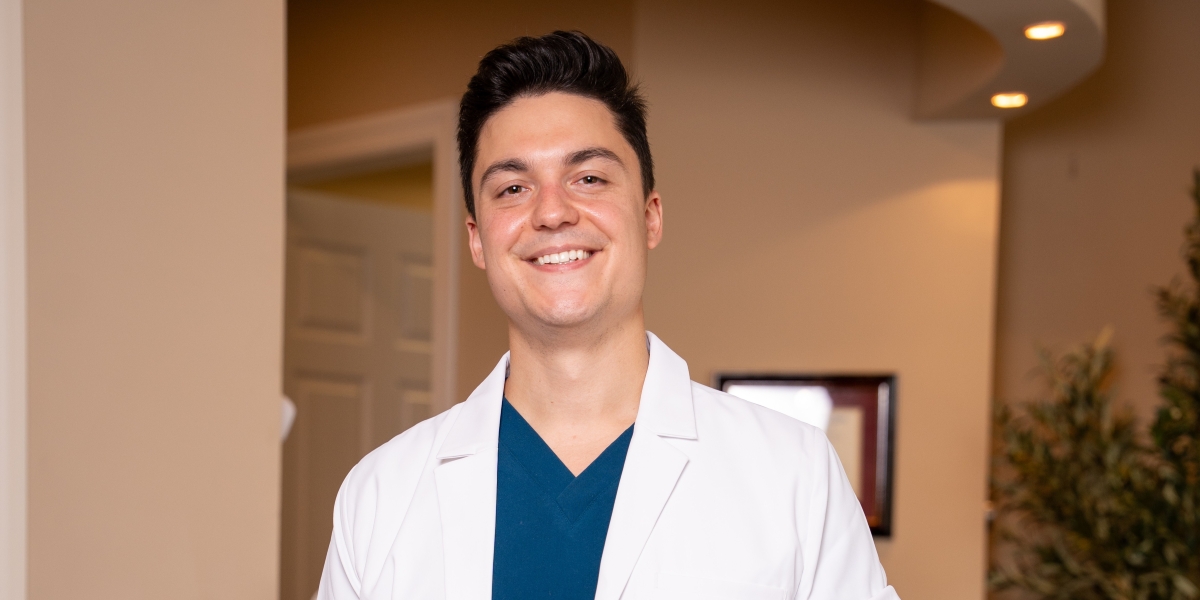
WESTHAMPTON BEACH, N.Y. Residents across Long Island’s East End now have access to specialty dental care with the opening of Evolve Endodontics, a modern endodontic practice founded by Dr. Yigit Gol. Located in Westhampton Beach, the practice was created to address a longstanding need for advanced root canal treatment closer to home, eliminating the lengthy travel many patients previously faced to receive specialty care.
For Dr. Gol, opening Evolve Endodontics represents more than the beginning of a new business. It is the realization of a philosophy centered on preserving natural teeth whenever possible and delivering care through honesty, precision, and compassion.
“I believed the East End of Long Island deserved greater access to modern, patient-centered endodontic care,” says Dr. Gol. “I wanted to build a practice where quality, innovation, and compassion always come before production.”
Unlike many people assume, endodontists are specialists dedicated to diagnosing tooth pain, treating diseases of the dental pulp, and saving natural teeth through procedures such as root canal therapy, retreatment, and microsurgery. While root canals often carry an outdated reputation, Dr. Gol believes modern technology has fundamentally changed what the treatment involves and how patients experience it.
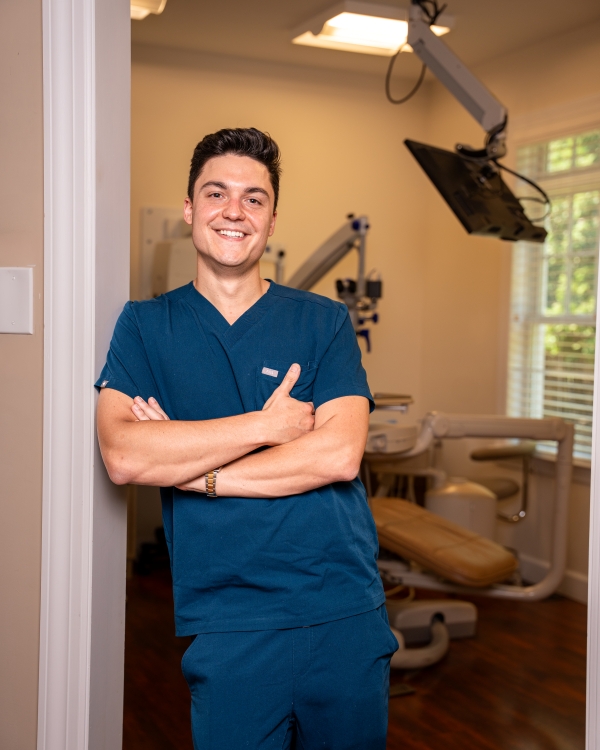
One of the defining features of Evolve Endodontics is its investment in advanced technology. The practice uses three-dimensional CBCT imaging and high-powered dental operating microscopes, which give Dr. Gol a detailed view of the tooth’s internal structure during diagnosis and treatment. CBCT imaging produces a three-dimensional scan of the tooth and the surrounding bone, while the operating microscope magnifies the treatment field well beyond what the unaided eye can see. Both are established tools in contemporary endodontic practice, used to reveal root canal anatomy that conventional two-dimensional imaging can leave unclear.
Photo Courtesy: TILRE Media
Yet Dr. Gol believes technology alone does not define exceptional care.
“A proper diagnosis is the foundation of exceptional endodontic care,” he explains. “Tooth pain can have many causes, and every case deserves careful investigation before recommending treatment.”
That patient-first mindset extends beyond clinical decision-making. Every treatment recommendation begins with an honest conversation about available options, expected outcomes, and whether saving the tooth truly serves the patient’s long-term interests.
“My commitment is not simply to perform root canals,” Dr. Gol says. “It is to recommend the treatment that offers each patient the greatest chance for long-term oral health.”
Patients arriving at Evolve Endodontics notice another difference. Rather than the traditional clinical atmosphere many associate with dental offices, the practice was intentionally designed to feel calm and welcoming. Natural light, comfortable furnishings, lounge music, and considered interior design are all part of that intent. Nitrous oxide is also available for patients who prefer it.
The emphasis on comfort reflects Dr. Gol’s desire to change how patients think about root canal treatment. He notes that expectations about the procedure are often shaped more by its reputation than by the treatment itself.
“With modern local anesthesia and today’s technology, root canal treatment is typically no more uncomfortable than having a routine filling,” he says.
For Dr. Gol, however, the greatest reward isn’t simply completing a successful procedure.
“One of the most rewarding moments is telling a patient that their tooth can be saved,” he says. “Helping patients avoid unnecessary extractions and preserve their natural teeth is at the heart of everything we do.”
Photo Courtesy: TILRE Media
As Evolve Endodontics opens its doors, Dr. Gol hopes to become a trusted resource for both patients and referring dentists throughout Long Island. His long-term vision is built not only on clinical excellence, but on earning trust through integrity, communication, and consistently putting patients first.
For residents of Westhampton Beach and surrounding communities, the arrival of Evolve Endodontics represents more than the opening of another dental office. It brings advanced specialty care closer to home while offering a modern approach focused on preserving natural teeth, relieving pain, and helping patients feel confident throughout every step of their treatment journey.
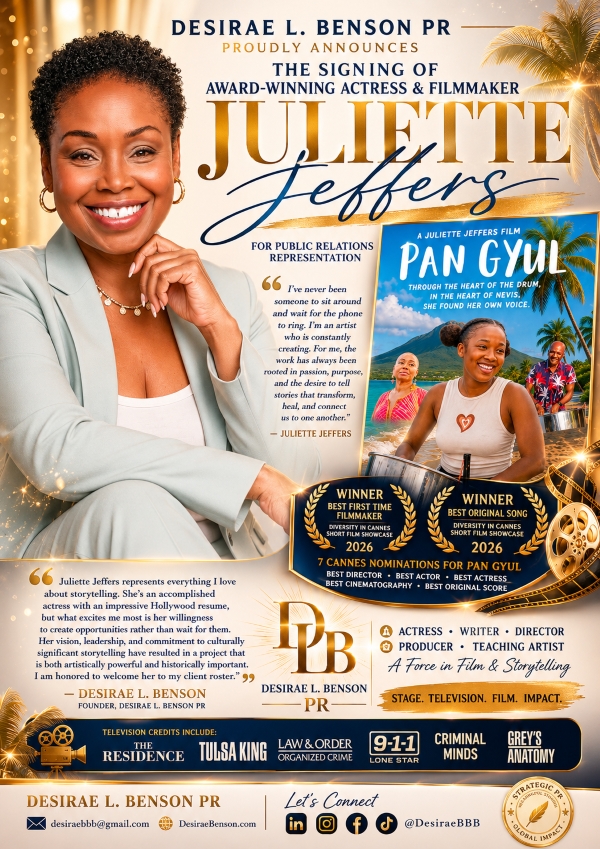
Actress, playwright, filmmaker, and storyteller Juliette Jeffers continues to build an international body of work, and her short film Pan Gyul has now been officially selected for the 2026 BronzeLens Film Festival of Atlanta. The Oscar-qualifying festival, now celebrating its 17th year, is known for showcasing diverse voices in film and television.
Pan Gyul will screen on Thursday, August 27, 2026, at 5:40 p.m. at the historic Tara Theatre in Atlanta as part of BronzeLens’ second weekend of programming, which spotlights local, national, and international filmmakers.
For Jeffers, whose career has centered on creating culturally rich stories, the selection marks another step in a long body of work.
“I’m deeply honored that Pan Gyul has been selected for the Oscar-qualifying BronzeLens Film Festival,” said Jeffers. “It’s an incredible opportunity to introduce even more audiences to the beauty, culture, and spirit of my beloved island of Nevis.”
What Pan Gyul Brings to the Screen
That statement reflects the focus of Pan Gyul, a film built around identity, heritage, and cultural storytelling. Its visuals and performances center the beauty of Nevis, inviting audiences into the island’s traditions, humanity, and resilience.
Storytelling as a bridge between cultures runs throughout Jeffers’ work. As an actress, playwright, producer, and director, she has built a career around authentic narratives that amplify underrepresented voices. Her work returns again and again to family, identity, healing, and the richness of the Caribbean experience.
Photo Courtesy: Desirae L. Benson
A Career Spanning Television, Theatre, and Film
Audiences may also recognize Juliette Jeffers from television productions including Netflix’s The Residence and Paramount+’s Tulsa King. Alongside that screen work, she continues to develop original stories that open dialogue and reflect diverse communities.
The BronzeLens selection follows a festival run that has already introduced Pan Gyul to audiences on several platforms. Each new selection adds to the film’s record on the circuit.
Why BronzeLens Carries Oscar-Qualifying Status
BronzeLens was founded to champion filmmakers and creative professionals of color, and it has become a destination for discovering new films and emerging talent. As an Academy Award-qualifying festival, BronzeLens gives filmmakers a platform to present their work while connecting with industry leaders, distributors, producers, and audiences.
This year’s festival runs across two weekends, August 21 to 30, 2026. The second weekend, which includes the screening of Pan Gyul, features filmmakers whose stories reflect the range of today’s global film community.
Entertainment publicist Desirae L. Benson, who represents Jeffers, says the selection reflects her client’s commitment to storytelling.
“Juliette continues to prove that authentic storytelling has the power to transcend borders,” said Benson. “Every festival selection reinforces what audiences have been discovering for years, that her work is thoughtful, beautifully crafted, and deeply meaningful. Pan Gyul doesn’t simply tell a story; it invites viewers to experience a culture with authenticity, heart, and grace. I’m incredibly proud to celebrate yet another well-deserved milestone in her remarkable career.”
Photo Courtesy: BronzeLens Film Festival
Ahead of the Atlanta screening, Pan Gyul reflects on Jeffers’ approach to filmmaking and her interest in stories that stay with an audience after the credits roll. For those attending the 2026 BronzeLens Film Festival, the screening offers a look at a film grounded in culture, heritage, and the traditions of Nevis.
To learn more about Juliette Jeffers, visit her official website.
To learn more about the film, “Pan Gyul, visit: pangyulfilm.com
How Yimeng Pan’s product vision and Xiang Li’s materials engineering challenged decades of conventional thinking and gave rise to TheraSun.
Stand in any parking lot in America and look at the cars. Half the windows are tinted, and every one of those tints was sold on the same pitch: darker, cooler, done.
Yimeng Pan looked at the same windows and saw a question nobody was asking.
The Question from Florida
When Pan was living in Florida, she learned something most people never think about. UVA, the ultraviolet rays most associated with premature skin aging, can pass through ordinary glass.
The science wasn’t new. What struck her was the contradiction around it. People remembered sunscreen before stepping outside. But once inside a car, an office, or their own home, they assumed the glass around them was enough protection for their skin.
Rather than jumping directly into product development, Pan spent months speaking with automotive installers, drivers, homeowners and commercial customers across different markets. She found that nearly every conversation revolved around the same trade-off. Reducing heat usually meant accepting darker interiors, while preserving daylight often meant sacrificing solar protection.
“Sunlight isn’t a single thing,” Pan says. “It’s ultraviolet, it’s blue light, it’s red light, it’s infrared heat, all in one, each with different effects. If only certain parts are harmful, why should we sacrifice everything else?”
She stopped seeing glass as a barrier and started seeing it as an interface, one that could shape how people experience light. The challenge wasn’t to block daylight. It was to understand it well enough to manage it. What if the problem was never sunlight?
Light, Curated
That question became TheraSun, the New York advanced-materials startup Pan co-founded, and its answer is a window film that works less like sunglasses and more like an equalizer.
Long before the chemistry was finalized, Pan defined what the product needed to accomplish from a user’s perspective: preserve the parts of daylight people enjoy, filter out the parts they don’t, and do so without making spaces feel darker. That product vision became the foundation for a close collaboration with co-founder Xiang Li, whose expertise in materials science helped transform those ideas into manufacturable technology.
The glass stays clear, and the cabin stays bright. But invisibly, the film is making choices, throwing out UV, dialing down harsh blue light, and purposefully letting through the warm red light, the part of daylight that makes a space feel good. The founders call the category they’re building “daylight management.” They describe it simply: “Just daylight, curated for you.”
Turning that idea into a scalable product, however, would take more than a vision. It would take an engineer who was just as fascinated by the challenge as Pan was.
A Livestream, a Message, a Partnership
Pan and TheraSun co-founder Xiang Li met in an unexpectedly ordinary way. After moving to New York, Pan shared an apartment with a roommate who liked to livestream while cooking. The format was simple. While her roommate was making dinner, Pan would talk about entrepreneurship, product ideas, and the less glamorous work that goes into building a company.
Among the viewers was a chemical engineering graduate from Georgia Tech named Xiang Li. He wasn’t looking for a startup. He was looking for advice. One evening after a livestream ended, he sent Pan a message asking about coffee chats and breaking into the startup world.
They stayed in touch, exchanging ideas from their respective worlds. Pan shared the product concepts she couldn’t stop thinking about, while Li shared what he was learning in research labs. So when Pan began exploring whether sunlight could be managed rather than simply blocked, Li was the first person she called. “I remember being fascinated by the challenge,” Li recalls. “It wasn’t an easy one, but it asked us to rethink a long-standing assumption in materials design.”
Pan understood what people needed from the product, while Li understood what the material would have to do to deliver it. Their complementary perspectives made them natural partners.
Brutal to Build
Long before he began working on windows, Li was already fascinated by a simple question. How can a material let some things through while keeping others out? At Georgia Tech, he focused on membrane science, the field devoted to materials that let some things pass and stop others. Water through, salt out. Oxygen through, nitrogen out.
Window film, he realized, was the same puzzle wearing different clothes. Instead of separating molecules, separate light. Easy to say. Brutal to build. The film has to stay clear enough to see through, reject heat, kill UV, and carry a faint warmth in its color, all at once, on a real production line, at a price the market will pay.
The trick happens at the nanoscale. TheraSun’s film embeds engineered nanoparticles between ultra-thin polyester layers, each particle sized and tuned to sort daylight by wavelength, absorbing some, passing others. The physics is unforgiving. The same nanoparticles that shape the light’s warmth also scatter it, so every step toward the right spectrum risks a step away from clarity. Holding onto both at once is the balancing act TheraSun set out to solve.
“The easy version of this product doesn’t exist,” Li says. “If it did, someone would already be selling it.”
TheraSun began by working backward from the experience Pan wanted to create: a brighter, more comfortable cabin on long drives and workspaces filled with daylight but less UV exposure. Li then translated those goals into proprietary formulations and scalable coating processes. That work now forms part of the company’s growing intellectual property portfolio, while the underlying chemistry remains closely guarded throughout manufacturing. “Engineering is often about accepting compromises,” Li says. “Our challenge was deciding which compromises we refused to make.”
TheraSun’s founders made an early decision. The product would be judged by measurable performance, not sweeping wellness claims. Pan and Li spoke with installers, distributors, architects, and end users to understand what the market valued and how professionals evaluated window film. Pan translated those insights into a clearer product and category strategy; Li turned them into testable optical targets, including visible-light transmission, infrared rejection, and UV rejection. “The product has to earn trust on numbers you can verify and on how a space actually feels,” Li says.
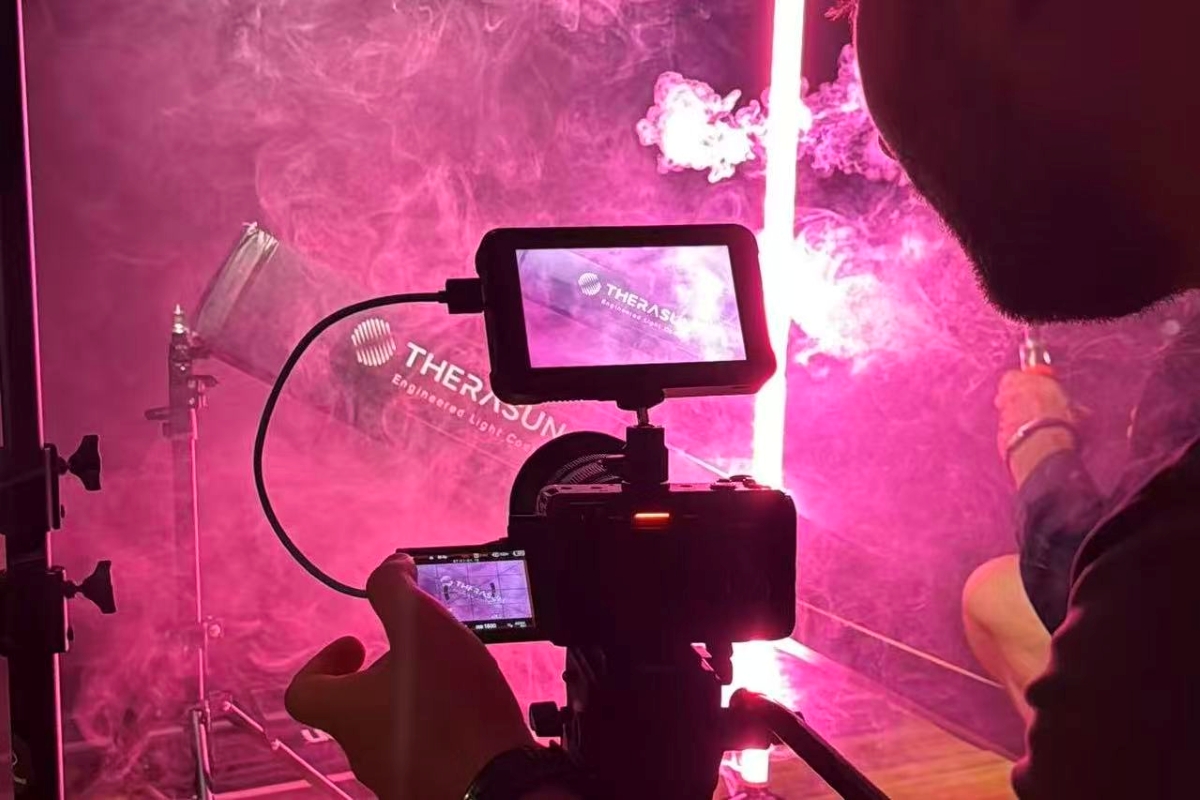
Photo Courtesy: TheraSun (Behind the scenes of a TheraSun production shoot)
More Than Window Film
Today TheraSun sells through tint shops and automotive installers, with a product line that runs from its flagship spectral-selective ceramic film to switchable smart film that flips from clear to private at the touch of a button. The next chapter is buildings, offices, schools and glass facades, where Li’s LEED credential from the U.S. Green Building Council comes into play and where daylight quality is becoming a design requirement instead of an afterthought. “Products evolve. Applications evolve,” Pan says. “But the problem worth solving shouldn’t.”
For Pan, window film is only the first application. The larger goal is to rethink how advanced materials can improve the relationship between people and the environments they live in. That broader vision has also prompted conversations beyond the window-film industry.
In discussions with researchers in membrane materials and spectral engineering, Pan and Li explored how the same spectrum-management principles could be applied to agricultural films for greenhouses and other controlled growing environments. Such films could help crops receive more of the light they use for photosynthesis while limiting unwanted heat, creating a more favorable growing environment.
For Pan and Li, those conversations reinforced a belief at the heart of TheraSun. They were building not just a better window film, but an advanced-materials platform. Not darker windows. Better daylight. It may sound like a small distinction, but it reflects an entirely different way of thinking about light, and it all goes back to the question Pan first asked while living in Florida. What if the problem was never sunlight?
This article is based on interviews with TheraSun co-founders Jasmine Pan and Jimmy Li.
Austin Williams grew up in Midland, Texas, a city that measures itself in barrels. His grandfather was a landman. His father was a maintenance man, his mother an executive assistant. At school, he sat beside the children of oil executives and watched the booms and busts move through their families like weather. Ask him about the industry today, as the founder of Upstream, an Oil & Gas Accounting service provider and the creator of Upstream+, and he rarely starts with technology or economics. He starts with the people.
“Oil and gas was never an industry to me,” Williams says. “It was a family.”
What he means is specific. In Williams’ telling, oil and gas is the rare business where competitors will still pick up the phone for one another. Fort Worth, Dallas, Midland, Odessa, Houston, Oklahoma, Denver: different towns, same family. When somebody is in trouble, somebody else helps, and when somebody figures something out, the word travels. It is a community first and a business second, he says, and the sense that he owes that community something is, by his own account, the reason he never left it.
It is the kind of line that could sound like branding, except that his biography keeps backing it up. Williams arrived at Texas Tech University planning to become a dentist. Organic chemistry ended that plan, and he switched to a dual degree in accounting and energy commerce. It was there, in a lease law class, that he absorbed the lesson that would quietly organize his career: a two-hundred-dollar delay rental payment, missed by thirty days, can forfeit a lease worth a million dollars and twenty years of production with it.
“That is when I understood what oil and gas accounting actually is,” he says. “The accountant is the last line of defense on the asset. In this business, the boring details are the asset.”
The career that followed reads like a tour of the industry’s back offices. He started as a revenue accountant at Pioneer Natural Resources in 2009, where the reports produced by an aging AS400 system were so hard to read that he built a small spreadsheet on the side just to check his own work. That spreadsheet never stopped evolving, with each role adding another layer. At Trey Resources, he learned to slice operating data down to the individual pumper. At Wagner, under the guidance of an experienced controller, he refined advanced reporting techniques that transformed the workbook into a different animal. At Overton Park, he developed his first complete lease operating statement package. At Strawn he strengthened it with audit-grade standards, and at the consulting firm Embark he expanded the model across dozens of companies, adapting it to a wide range of operating environments.
Sixteen years, six employers, one workbook, each version a little smarter than the last. When Williams founded his own firm in 2024, the workbook came with him, handed to clients as a free benefit of the engagement. Engineers and executives who had spent careers squinting at rigid system reports would open his interactive statement and ask what they were looking at, realizing it was far more than another accounting report. Clients hired the firm for outsourced accounting, but they stayed because his approach challenged a long-held assumption: that the Lease Operating Statement could be far more than a report.
Then came the month that nearly ended the story. In August 2025, three clients gave notice in quick succession due to either divestitures or internalizing the role for future growth. The firm had just hired its third employee, and the pipeline was drying up. Williams worked the Permian Basin Oil Show in Midland hoping for signatures and came home with handshakes. That night, in a hotel bed, he stared at the ceiling and weighed shutting the company down against finding a different path forward.
Back home, he sat at the kitchen table running through ideas to diversify revenue: a patent, a technology partnership, a capital raise. The person who finally said it out loud was his wife, Megan. She listened, then told him it was time to commercialize his product. He asked which product she meant. “Your clients value your experience and your team,” she told him, “but the statement tool is what they can’t get anywhere else.”
“She was right, and I genuinely had not seen it,” Williams says. The following week, Williams met Anthony Piccolo, founder of Performance Scoring, for lunch at a local restaurant in Argyle. Over lunch, he sketched out his vision for Upstream+, and Piccolo agreed to build the platform that would transform years of industry experience into a scalable product.
He chose the rebuild. A working product existed within about four months. Paying users arrived within five. Six months out, the platform, named Upstream+, had earned him a ten-page cover feature in CIO Views magazine, and the firm now serves more than forty independent producers, non-operators, and private-equity-backed operators.
For Williams, the technology was never the end goal. Throughout his career, he had come to believe the Lease Operating Statement had never reached its full potential. For decades it had been viewed primarily as an accounting report, while he believed it could become one of the industry’s most valuable decision-making tools. That philosophy became the foundation of Upstream+, redefining the LOS into an interactive platform that gives operators, executives, engineers, investors, and mineral owners the visibility they need to make better decisions.
The product itself is pointedly unglamorous, which is part of its charm to the people who use it. Rather than replacing existing accounting software, Upstream+ builds on it, transforming the traditional lease operating statement into an interactive decision platform. It connects financial and operational data that an owner, executive, or field manager can explore without waiting on a custom report. The stated purpose is plain: put clarity in the hands of the people making decisions, in real time, shaped around what matters most to their operation.
Williams has a phrase for the sixteen-year runway that made the six-month sprint possible. The long way, he likes to say, is the short way. “There is no version of success that skips the part where you show up, do the work, and earn it over time,” he says. “It just does not feel like the short way while you are on it.”
It is advice aimed at founders, but it lands like a Midland sensibility: keep your word, mind the details, take care of your people, and let the work compound quietly until one day it does not look quiet at all. The kid who watched the oil family from the edge of the room now builds the tools that family runs on. He would tell you the two facts are the same fact.
By the early 1990s, the Internet was no longer a mysterious experiment for the military and researchers. It had started to infiltrate the business world, quietly but powerfully redefining industries around the globe. In France, where traditional banks were still tightly controlled by bureaucracy and face-to-face contact, a quiet digital revolution was building up steam.
While the United States was witnessing the emergence of early online trading platforms such as E*TRADE, France was still a few years behind in terms of digitizing financial services. During this period of transformation, some entrepreneurs began to challenge traditional wisdom on how financial markets functioned in Europe. One was Pierre Chaker, whose early entrepreneurial experiences were instrumental in shaping the way people in France approached stock trading and investment technology.
Why France Lagged Behind on Online Trading
The 1990s were rich soil for innovation in financial technology. Around the world, internet usage expanded from a few million people at the start of the decade to hundreds of millions by its close. With that expansion came the new quest for direct, digital access to financial markets.
In the United States, websites such as E*TRADE and Ameritrade provided retail investors direct access to trading without the intermediation of traditional brokerage houses. In France, such access was still limited. Along came Chaker, who had begun his career not in Silicon Valley or a Parisian incubator but in the formal finance world.
From the Paris Trading Floor to a Commodity Trading Advisor
Chaker began working in 1988 for Bacot Alain Warburg, a Paris brokerage firm that later became part of UBS, the global financial behemoth. His initial years as a stockbroker laid the groundwork for a series of endeavors in his career that would bring finance and technology together. It was here that he began to realize the inefficiencies of the European brokerage system and the possibilities that new digital tools could offer individual investors.
Chaker had formed a professional association with Baron Jean-François Empain by 1991. The two then formed Empain-Chaker Futures, a Commodity Trading Advisor (CTA) company in the European financial markets. The initial association between the two was a mutual interest in new market mechanisms, risk analysis, and the use of technology in trading. Although CTAs were already present in the U.S., the model was relatively new in the French financial market, and their enterprise was therefore interesting to business observers.
What Made NetBourse Different in 1995
Chaker’s breakthrough arrived in 1995 with the launch of NetBourse, one of the earliest online brokerage websites in France. As online trading was still a mystery to most French investors, NetBourse offered a simple interface through which individuals could buy and sell shares without intermediaries. It was a bold concept in a market monopolized by large financial institutions and paper-based platforms for years.
NetBourse offered more than convenience. It brought accessibility and clarity to mass investors, a shift that echoed what was occurring in relatively advanced markets like the United States.
How the E*TRADE Partnership Changed French Online Trading
NetBourse soon gained popularity as electronic uptake gained momentum in Europe. Seeing the potential of the platform, America-based E*TRADE partnered with NetBourse under a joint venture. The agreement provided the French firm with access to advanced trading infrastructure and back-end technology that had already been tested in the American market. It also constituted one of the earliest cross-Atlantic partnerships in the fintech sector between an American and a European online broker.
The joint venture was acquired by ETRADE in 1999, by which time it had become ETRADE-NetBourse. It was one of the defining moments in French online finance history. It was the beginning of mass online trading among French investors, and Chaker’s contribution to laying the groundwork for the change made him one of the movement’s pioneers. It was also a business move that aligned with global trends.
Although NetBourse is the most well-known fruit of Chaker’s early works, it was not the only one. His background in commodities and financial services underpinned much of the platform’s working logic. His experience with Empain gave strategic heft and complementary knowledge. Together, they bridged the gap between traditional finance and new digital technology, a change that many in the business were reluctant to accept, let alone adopt.
What distinguished Chaker was not the establishment of an online platform in itself, but when and under what circumstances it was established. France in the mid-1990s lacked a large-scale online infrastructure for brokerage services. Internet penetration was limited, and regulatory frameworks were not yet equipped to handle purely digital financial services.
Against these odds, NetBourse developed into an operational, regulated, and ultimately transnational business. It brought French retail investors in their thousands directly into market participation, and it paved the way for subsequent fintech platforms in France.
What Chaker’s Early Work Left Behind
Following the acquisition by E*TRADE, Chaker turned his attention to other ventures, such as early e-commerce investments in Switzerland and, more recently, healthcare technology and clinic management. His legacy to the online trading history of France is, however, securely rooted in the 1995 to 1999 period when the building blocks of the majority of the country’s digital brokerage model were established.
In 1999, the French technology magazine 01net reported on startups and online finance companies making a splash, and NetBourse was one of them. The finance sector was not typically renowned for dramatic innovation, but companies such as NetBourse paved the way by significantly improving user access and automation.
Now, with fintech continuing to advance through mobile apps and digital-first banking, it is easy to forget the first generation of online trading platforms that shaped investor sentiment. Chaker’s initial efforts were among the first in France, setting the stage for what developed in the 2000s and beyond.
Pierre Chaker is not a name likely to spring immediately to mind beyond the confines of the European finance and business world, but the contribution of his early success is embedded in the fabric of contemporary French retail investment and the ideology that supports it. His story is a textbook example of spotting opportunities through technological uncertainty and taking action before it becomes the norm.
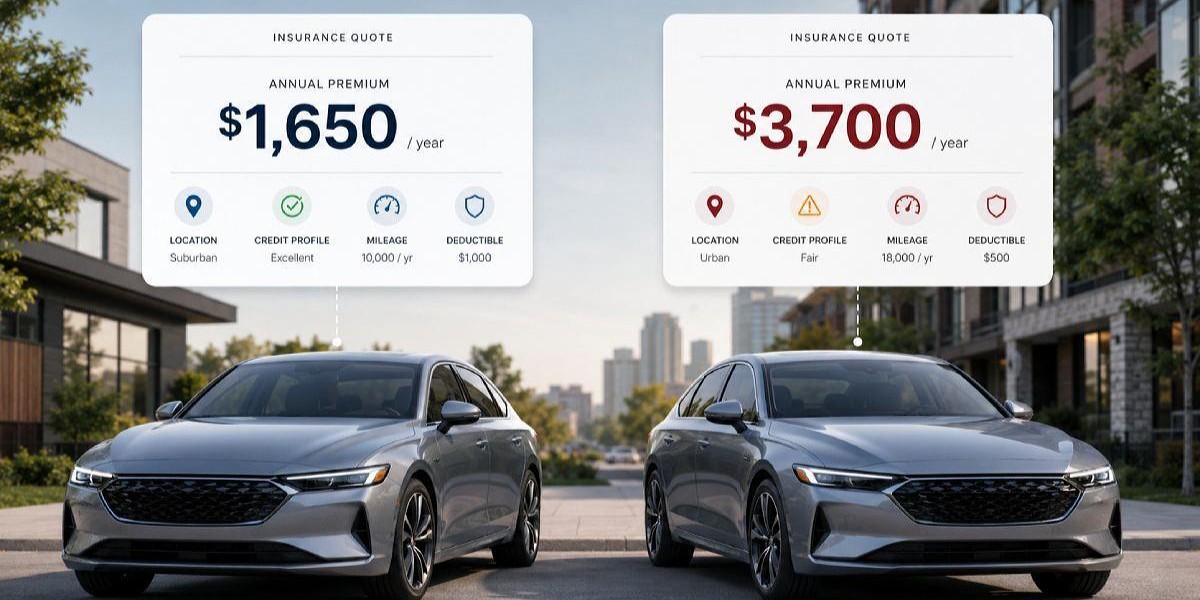
Car insurance rates can differ by more than $2,000 a year even when two people drive similar vehicles and purchase comparable coverage. Market Watch’s 2026 rate analysis found average full-coverage premiums ranging from $1,624 in Vermont to $3,481 in Louisiana a $1,857 difference before individual credit, age, driving history, mileage, and ZIP code are considered. The Zebra also found that drivers with poor credit paid approximately $126 more per month than drivers with very good credit.
The vehicle matters, but insurers are not simply assigning a price to the car. They are estimating the probability and potential cost of future claims connected to the driver, location, vehicle use, and coverage choices.
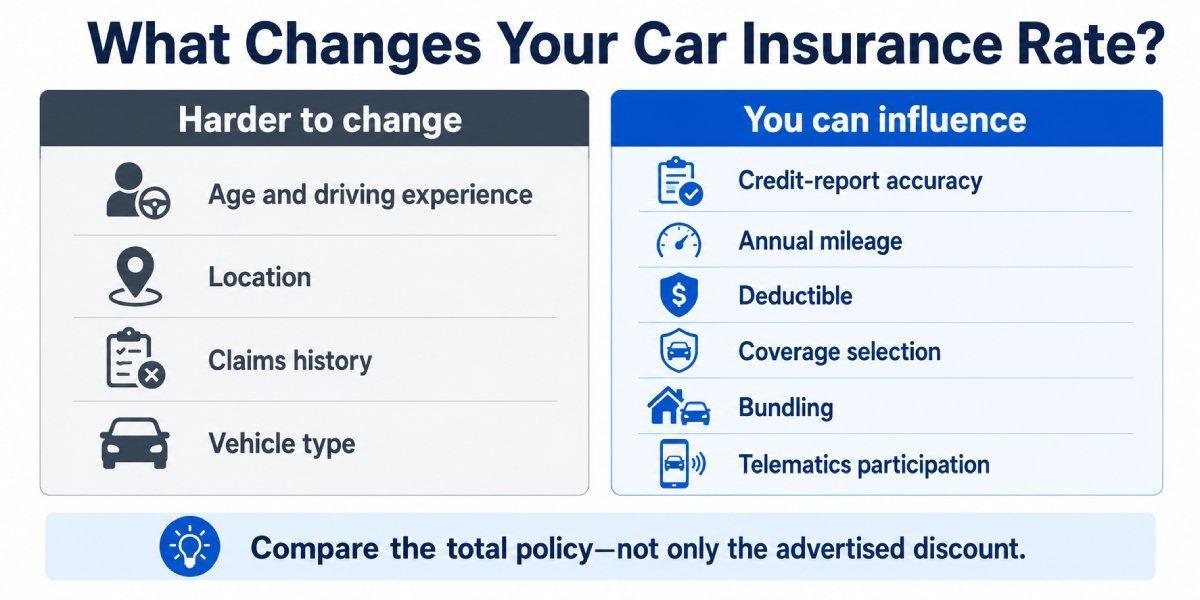
Understanding that calculation reveals which parts of the premium are difficult to change and which ones drivers can actively improve.
1. Insurers Price the Driver and the Risk, Not Just the Vehicle
The National Association of Insurance Commissioners explains that insurers rely on underwriting and rating. Underwriting estimates how risky an applicant may be, while rating converts that expected risk into a premium.
Photo Courtesy: Casey Insurance Companies
The major factors can include:
● Location and ZIP code
● Age and driving experience
● Driving and claims history
● Vehicle type and use
● Annual mileage
● Previous insurance coverage
● Selected limits and deductibles
● Credit history where state law permits it
That is why two people can insure the same make and model but receive very different quotes. The insurer is evaluating two complete risk profiles, not two identical cars.
2. Location Can Change the Price Before the Driver Does Anything
State insurance laws, local claim frequency, repair costs, theft exposure, weather losses, medical expenses, and litigation patterns can all influence pricing.
A driver moving between states may therefore see a substantial change even with the same vehicle and a clean record. Prices can also differ within a state because insurers consider garage location and ZIP code when estimating exposure.
Drivers cannot quickly change statewide loss trends, but they should update their insurer when a vehicle is moved, stored in a secure garage, or used differently. The information on the policy must accurately reflect where and how the vehicle is normally kept.
3. Credit-Based Insurance Scores Can Create a Four-Figure Difference
A credit-based insurance score is not identical to the credit score a lender uses. According to the NAIC, insurers may use information from credit reports as one rating factor in states where the practice is allowed.
The Zebra’s 2026 analysis found that drivers in its poor-credit category paid approximately $262 per month, or 93% more than drivers with very good credit. The average difference was around $126 per month, equal to $1,512 over a year.
Drivers should therefore review their credit reports for incorrect balances, accounts that do not belong to them, and outdated information. The Consumer Financial Protection Bureau recommends checking credit reports when an insurer offers an unexpectedly high premium and disputing any inaccurate information.
Paying bills on time and reducing outstanding balances may eventually help, although the effect on insurance pricing depends on state law and the insurer’s rating model.
4. Mileage and Driving Behavior Are Increasingly Measurable
Traditional policies estimate risk using broad categories. Telematics programs add information about how the vehicle is actually driven.
The NAIC says usage-based insurance programs may track:
● Miles driven
● Time of day
● Rapid acceleration
● Hard braking
● Hard cornering
● Phone use while driving
● Vehicle location
Some programs use a mobile app, while others rely on a device installed in the vehicle. An NAIC study reported that insurers commonly promoted savings of approximately 10% to 15%, although actual results depend on the program, state, and recorded behavior.
Safe, low-mileage drivers may benefit, but participation should not be automatic. Drivers should first determine what information is collected, how long it is retained, and whether unfavorable driving data can increase the premium rather than merely reduce the available discount.
5. Raising the Deductible Can Lower the Premium But Transfers Risk
A deductible is the amount the policyholder pays toward a covered loss before the insurer contributes.
The Insurance Information Institute reports that increasing a deductible from $200 to $500 may reduce collision and comprehensive costs by approximately 15% to 30%. Moving to a $1,000 deductible may generate greater savings.
However, a lower premium is not a true saving when the driver cannot afford the deductible after a crash.
A practical approach is to choose the highest deductible that can be paid immediately from savings without relying on a credit card or delaying repairs.
6. Bundling Is Worth Testing, Not Blindly Accepting
Combining home or renters insurance with auto coverage is one of the most widely available discounts. New York’s Department of Financial Services lists multi-line home-and-auto discounts among the programs offered by numerous insurers operating in the state.
Bundling also simplifies billing and policy administration. Still, the Insurance Information Institute cautions that the bundled price is not automatically the lowest total price. In some cases, buying home and auto policies from separate companies may cost less than accepting a multi-policy discount from one carrier.
Compare the final combined cost, coverage limits, deductibles, and exclusions not merely the advertised discount percentage.
7. Older Cars May No Longer Need Collision Coverage
Collision coverage pays for covered damage to the insured vehicle after a crash. As a car loses value, there comes a point when the annual cost of coverage may be too high compared with the maximum amount the insurer could pay.
The Insurance Information Institute suggests reviewing collision and comprehensive coverage when the vehicle is worth less than 10 times the annual premium for those coverages.
Suppose a car is worth $6,000 and collision and comprehensive coverage cost $700 annually. Ten times that premium is $7,000, which is already greater than the vehicle’s value. After accounting for a deductible, continuing both coverages may offer limited financial value.
This calculation is mainly relevant to vehicles owned outright. The Zebra notes that lenders commonly require physical-damage coverage when a loan or lien remains on the vehicle.
Why Shopping at Renewal Can Beat Loyalty
Insurance companies periodically change rating models, pricing strategies, discount structures, and their appetite for particular types of drivers. At the same time, the policyholder’s age, credit profile, mileage, vehicle value, address, and claims history may change.
Remaining with one insurer for years without comparing alternatives can therefore mean missing a better offer. The Insurance Information Institute recommends shopping around even when an existing policy includes bundling or telematics discounts.
Working with a car insurance broker rather than requesting a single quote from one company can make comparison easier. A broker can present options from multiple carriers and help identify differences in liability limits, deductibles, exclusions, and available discounts, not just the lowest headline premium.
A Better Rate Starts With a Better Comparison
Drivers cannot control every factor used in insurance pricing. They cannot immediately change their age, statewide claim trends, or years of driving experience.
They can, however, correct credit-report errors, reduce annual mileage, consider telematics, adjust deductibles responsibly, test bundling, review unnecessary physical-damage coverage, and compare the market at renewal.
The goal should not be the cheapest policy at any cost. It should be the best available price for coverage that would still provide meaningful financial protection after a serious accident.
For drivers who want to estimate their costs before requesting carrier quotes, Casey Insurance offers a free car insurance calculator based on driver profile, vehicle details, mileage, location, coverage selections, and deductible level. The result is an educational estimate rather than a binding insurance quote.
Disclaimer: This content is for informational purposes only and is not intended as financial advice, nor does it replace professional financial advice, investment advice, or any other type of advice. You should seek the advice of a qualified financial advisor or other professional before making any financial decisions.
The Northeast Missouri artist blends metal, punk, emo, and literary influence into music built for catharsis, confrontation, and meaning.
Music as a Way Through the Dark
For Drexl Bowie, heavy music has never been only about volume. It is about release, confrontation, and the strange clarity that can come from staring directly at the things most people would rather avoid.
Based in Northeast Missouri, Bowie has built his work around that tension. His songs carry the force of metal, nu metal, emo, post-hardcore, and punk rock, but beneath the hard-hitting guitars and painful screams is an artist drawn to deeper questions. War, death, addiction, vice, power, greed, and survival all surface in his work, not as abstract concepts, but as emotional realities.
That approach gives his music a specific kind of weight. Bowie writes for listeners who want intensity, but also want substance. His songs offer a place to process anger and pain while wrestling with the darker structures that shape human life.
A Long Road Into Heavy Music
Bowie began writing music at fifteen, an age when many artists first discover the need to turn private emotion into sound. Since then, music has become both a creative outlet and a form of personal catharsis. He has spent the last three years developing his work as a solo artist, releasing an album and three singles, while also playing guitar in the rock band Secular Era for fourteen years.
With Secular Era, Bowie has been part of two albums and an EP. As a solo artist, he has continued sharpening a voice that feels direct, wounded, and intellectually restless. His background as an author and literary student plays a major role in that identity. Rather than drawing only on musical influences, Bowie draws on ideas from literature, history, philosophy, political science, religion, and rhetoric.
That combination sets him apart in a genre often associated with raw feeling alone. Bowie’s music is emotional, but it is also built with intention. It asks listeners to feel something, then think about why that feeling exists.
The Sound of Catharsis
Bowie’s style pulls from several heavy traditions without settling neatly into one lane. His songs combine clean vocals with screams, distorted guitars, and an emotional pressure that reflects influences ranging from My Chemical Romance and Green Day to David Bowie, Marilyn Manson, and Slipknot.
Those musical references sit alongside a broader creative framework shaped by Friedrich Nietzsche, Stanley Kubrick, and Cormac McCarthy. The result is music that often feels dramatic without losing its grit. Bowie’s work is not designed as background noise. It asks for attention, especially from listeners drawn to songs that make anger, grief, and discomfort feel usable rather than buried.
His audience reflects that. Bowie speaks to fans of metal, punk, post-hardcore, and emo, particularly those seeking catharsis through anger and meaning through confrontation.
“Overdose” and the Weight of Survival
Bowie’s latest release, “Overdose,” brings his artistic purpose into especially sharp focus. The song was first written when he was sixteen, during a suicidal period, and it addresses the horror of addiction and the helplessness that can come with being caught in its grip.
Rather than treating addiction as a distant subject, “Overdose” comes from a place of personal darkness and survival. That history gives the release emotional gravity. It also reflects the larger purpose behind Bowie’s work: to create music that can hold pain without simplifying it.
For Bowie, songs like “Overdose” are part of a broader mission. He wants to make music that is intense and intelligent, music that reveals something within the listener while giving shape to emotions that can otherwise feel chaotic or isolating.
An Artist With a Wider Lens
Recognition has begun to follow Bowie’s work. He has been featured in Earmilk Magazine, Analyze My Lyrics, and Indie Boulevard, thereby increasing visibility for his work as both a solo artist and a member of Secular Era. Additional coverage of Secular Era’s album While Nero Played described a dark, somber release centered on themes of human nature, greed, power, war, and self-destruction, which align closely with Bowie’s artistic concerns.
Looking ahead, Bowie hopes to grow from a studio act into a live act, performing across the Midwest and eventually touring more widely. His aspirations include signing with a label, growing his fan base with each release, winning a Grammy, and performing outside the United States.
Those goals are ambitious, but they fit an artist who treats music as more than performance. Bowie’s work is rooted in the belief that understanding horror is one way to resist it. Through heavy guitars, literary influence, and emotional honesty, he creates songs for people who need their music to hit hard, ask difficult questions, and leave something behind.
Listeners can find Drexl Bowie on Instagram, TikTok, Apple Music, Spotify, YouTube, Facebook, Linktree, and through the release link for “Overdose.”
Many women spend years searching for answers to hormone-related symptoms. Symptoms such as painful menstrual cycles, fatigue, bloating, mood swings, and fertility problems are often treated with medication alone. Patients often feel some relief after taking the medication, but the root causes frequently go unaddressed.
Dr. Jeffrey L. Brown, D.O., founder of Hormone Health with Dr. Brown, believes that long-term hormone health requires a deep dive into the subject. His practice is mainly based on identifying the factors affecting hormonal balance rather than only treating symptoms. Nutritional needs, hormonal assessments, and individualized care are among the aspects addressed in this matter.
His philosophy reflects his background in osteopathic and functional medicine. Rather than asking only what medication should be prescribed, he asks why the body is producing symptoms in the first place.
Why Hormone Problems Often Go Unanswered
Many hormonal disorders develop slowly. Symptoms may appear years before standard testing identifies a clear problem. A woman who suffers from pelvic pain, very painful menstruation, bowel problems related to her period, or inexplicable exhaustion is often told that everything looks fine according to her lab work.
As Dr. Brown stated, symptoms should never be ignored simply because routine blood work falls within a reference range.
“When you don’t feel well, when you have symptoms, that’s your body’s way of trying to communicate with you. We just have to figure out what that is and give the body what it needs to heal itself.”
The connection between lifestyle habits and hormone-related diseases is also becoming more obvious thanks to modern research. A study found that a diet rich in healthy foods reduced the risk of developing endometriosis, while processed and red meats increased that risk.
Why Nutrition Deserves a Bigger Role
However, nutrition is important not only for weight management but also for inflammation, blood glucose levels, the gut microbiome, immunity, and hormonal metabolism, all of which interact.
Dr. Brown often discusses the relationship between gut health and the hormonal system. His approach recognizes that digestive health influences how hormones are processed and eliminated. When the gut is not functioning well, hormone balance may also suffer.
How Dr. Brown Changes the Conversation
Dr. Brown believes that a diagnosis puts people in a box that often doesn’t give the full picture of what’s truly happening, leading them to stay stuck in that identity. And so, not being confined by making a diagnosis first, he begins by considering how his patient’s body works.
“So, in my world, I don’t care about a diagnosis. My goal is to figure out what the body is trying to tell me. It’s about identifying what’s off, where the imbalances are, and what the body needs,” he says.
It shifts the emphasis from treating symptoms to discovering potential causes. Dr. Brown’s evaluation process may include testing hormones, thyroid function, adrenal function, symptoms, and sometimes checking for digestive disorders or food intolerances.
Services That Support Long-Term Hormone Health
Hormone Health with Dr. Brown offers virtual hormone consultations to women throughout the country. The consultations emphasize understanding each symptom in depth before developing a personal care plan. The services offered by Dr. Brown include the following:
• One-on-one virtual hormone consultations.
• Root-cause hormone evaluation.
• Advanced hormone, thyroid, and adrenal testing recommendations when appropriate.
• Assessment of endometriosis and menstrual disorders.
• Guidance for cycle-related digestive symptoms and fertility concerns.
• Bio-identical hormone therapy (BHRT) when clinically indicated.
• Evidence-based nutrition and lifestyle recommendations as part of personalized care.
Vision for the Future
Women’s hormone health continues to evolve as research expands our understanding of nutrition, inflammation, gut health, and hormone function. According to Dr. Jeffrey Brown, any true progress starts with paying close attention to the signals the body sends rather than treating only the symptoms.
“It’s not about coming up with a diagnosis. It’s about understanding what your body is trying to tell you and giving it exactly what it needs to restore healing,” he explains.
By applying the latest in-depth evaluation methods, using nutrition therapy, and providing personalized treatment, Dr. Brown strives to help patients better understand their condition.
Disclaimer: This article is intended for general informational and editorial purposes only. It does not provide medical advice, diagnosis, treatment, nutrition guidance, or hormone therapy recommendations, and it should not be relied upon as a substitute for consultation with a qualified healthcare professional. Hormone-related symptoms, endometriosis, fertility concerns, digestive issues, thyroid or adrenal function, and treatment options can vary based on individual medical history and clinical evaluation. Readers should consult a licensed healthcare provider before starting, changing, or stopping any medication, supplement, nutrition plan, hormone therapy, or medical treatment.
Fashion manufacturing in New York has regained domestic momentum. Vertically integrated factories in Manhattan’s Garment District now offer rapid prototyping, low minimum orders, and 10-to-14-day reorders, while nearshore partnerships in the Dominican Republic bypass tariffs and cut lead times to six weeks. The shift represents a structural realignment: brands spending $50,000 to $100 million annually can now anchor production locally without sacrificing scale.
Key Takeaways
New York Garment District factories now offer 10-to-14-day reorders with minimums as low as 50 pieces, making domestic production viable for emerging and mid-sized brands.
U.S. tariffs on Chinese imports averaged 145 percent as of 2026, pushing per-unit costs to $11.91 versus $5.50 in Indonesia and $6.24 in the Dominican Republic under CAFTA-DR duty-free entry.
Vertically integrated Manhattan facilities like Carina and Apparel Production provide pattern making, sampling, and production under one roof, collapsing timelines that once stretched across continents.
Nearshore factories in the Dominican Republic deliver six-to-eight-week lead times and tariff-free entry, splitting the difference between domestic speed and overseas volume.
The hybrid model anchors prototyping in New York, scales mid-volume orders nearshore, and reserves Indonesia or China for high-volume runs exceeding 2,000 units per style.
This realignment solves three persistent problems at once. Domestic facilities handle speed and precision. Nearshore factories in CAFTA-DR countries deliver duty-free entry. Overseas partners in Indonesia face lower tariffs than China and maintain access to advanced textile infrastructure. The result is a hybrid supply chain centered on New York expertise rather than a single offshore location.
Why Did Domestic Manufacturing Become Viable Again?
Rising tariffs forced a cost reckoning. U.S. tariffs on Chinese imports averaged 145 percent as of 2026, making per-unit costs for a basic T-shirt $11.91 when produced in China versus $5.50 in Indonesia or $6.24 in the Dominican Republic. Even domestic production at $12.15 per unit became competitive once brands factored in speed, control, and Made-in-USA positioning.
New York factories adapted by offering services that offshore production could not match. Carina, a family-owned cut-and-sew manufacturer established in 1996, operates in the Garment District with minimums as low as 50 pieces. Pattern development, muslin prototypes, fittings, and corrections happen on-site, collapsing timelines that once stretched across months and continents.
Vertical integration became the competitive edge. Facilities that house pattern making, grading, sample production, and factory-floor sewing under one roof eliminated the coordination lag and quality drift that plagued multi-vendor offshore chains. Designers could walk into a building on West 38th Street and leave with a sample the same week.
Photo by Adrien Olichon on Unsplash
How Do Nearshore Factories Change the Equation?
The Dominican Republic emerged as the tariff-bypass solution. CAFTA-DR duty-free entry means apparel sewn in the DR enters the United States without the import duties that apply to Chinese or Indonesian goods. Lead times of six to eight weeks split the difference between domestic speed and overseas volume.
Nearshore facilities specialize in knits and wovens at scale. Where New York factories excel at bespoke runs and rapid iteration, DR partners handle mid-volume orders that sit between domestic agility and Asian mass production. A brand can prototype in Manhattan, scale to 500 units in the DR, and reserve China or Indonesia for runs exceeding 5,000 pieces.
Freight cost savings compound the tariff advantage. Regional shipping from the Caribbean to East Coast ports costs a fraction of trans-Pacific container rates and avoids the port congestion that plagued West Coast gateways in recent years. Brands gained predictability in both cost and delivery windows, a shift that mattered as much as the headline tariff rate.
Photo by Ali Mkumbwa on Unsplash
What Role Does Indonesia Play in the Network?
Indonesia replaced China as the go-to location for high-volume, cost-sensitive production. Tariffs on Indonesian imports settled at 10 percent, a steep discount compared to China’s 145 percent. The country’s textile mills and cut-and-sew infrastructure rival China’s in technical capability. Export logistics remain mature and reliable.
Brands that once split orders between China and Bangladesh now route most volume through Indonesia. The cost advantage is straightforward: a hoodie that costs $11.91 per unit from China drops to $5.50 from Indonesia after tariffs. That margin funds domestic or nearshore production for speed-critical styles while keeping overall landed costs competitive.
The shift also diversified supply-chain risk. Brands learned during the pandemic that single-country dependence creates fragility. By maintaining partnerships in New York, the Dominican Republic, and Indonesia, a label can pivot production based on order size, delivery urgency, and tariff conditions without renegotiating an entire vendor network.
Why Hasn’t China Disappeared Entirely?
China’s fabric mill network remains unmatched in breadth and technical sophistication. Advanced knit constructions, performance textiles, and specialty finishes often require access to Chinese mills, even when final assembly happens elsewhere. Some brands source fabric in China and ship it to nearshore or domestic factories for cutting and sewing.
Export logistics and factory management systems in China operate at a scale that newer manufacturing hubs struggle to replicate. For orders exceeding 10,000 units or requiring tight tolerances on complex construction, Chinese factories still deliver consistency that justifies the tariff hit for certain buyers. The country has not exited the conversation. It has simply lost its default status.
How Do New York Factories Support Emerging Designers?
Low minimum order quantities unlocked access for startups. Where offshore factories demand 1,000 or 3,000 units per style, New York manufacturers like Carina accept orders as small as 50 pieces. Apparel Production, a Manhattan-based manufacturer operating since 1947 positions itself as a partner for brands generating $50,000 to $100 million in annual sales and offers rapid prototyping with in-house pattern making and tech-pack development.
The ability to iterate quickly matters more than cost per unit for early-stage brands. A designer can test a silhouette with a 50-piece run, gather customer feedback, adjust the pattern, and reorder within two weeks. That cycle would take three months with an overseas factory. The risk of overproducing an untested style becomes prohibitive.
In-house services compress the vendor count. A single facility provides design consultation, fabric sourcing, pattern making, sample production, and factory runs. That eliminates the coordination burden that once required designers to manage separate contractors for each function, often across multiple time zones and languages.
What Advantages Do Domestic Factories Offer Established Brands?
Speed became a weapon in competitive categories. A 10-to-14-day reorder window allows brands to chase bestsellers mid-season rather than locking inventory six months in advance. If a jacket sells out in two weeks, a domestic factory can replenish stock before the trend cools, capturing revenue that offshore timelines would forfeit.
Made-in-USA labeling carries pricing power in premium segments. Consumers willing to pay $200 for a garment expect transparency and quality signals. A domestic manufacturing stamp communicates both, and brands can defend higher margins by pointing to verifiable labor and environmental standards that offshore production often obscures.
Fitting sessions and quality control happen in real time. A brand can send a technical designer to the factory floor in Manhattan to resolve a construction issue within hours rather than troubleshooting over video calls and waiting for revised samples to clear customs. That proximity reduces defect rates and minimizes the costly rework that offshore production sometimes requires.
How Do Brands Choose Among the Three Production Tiers?
Order volume dictates the starting point. Runs under 200 units per style stay domestic for speed and flexibility. Mid-volume orders between 200 and 2,000 units move to the Dominican Republic for tariff-free entry and reasonable lead times. High-volume runs exceeding 2,000 units go to Indonesia or China, where economies of scale offset longer timelines and logistical complexity.
Product complexity influences the decision. Intricate construction, specialty fabrics, or frequent design revisions favor domestic production, where pattern makers and sewers collaborate directly with the brand. Straightforward styles with stable specifications can migrate to nearshore or overseas facilities once the design locks.
Brand positioning plays a role. Labels that emphasize sustainability, domestic job creation, or artisan craftsmanship anchor as much production as possible in New York. Mass-market brands prioritize landed cost and allocate most volume to Indonesia, reserving domestic capacity for capsule collections or speed-to-market needs.
What Infrastructure Supports This Hybrid Model?
Manhattan’s Garment District retained a critical mass of skilled pattern makers, sample sewers, and factory managers even during the decades when offshore production dominated. That talent pool allows facilities to scale up domestic capacity without the multi-year training lag that would hamper a greenfield operation.
Trade agreements made nearshore partnerships economically rational. CAFTA-DR eliminated tariffs for qualifying apparel produced in Central America and the Caribbean, and brands learned to navigate the rules of origin that determine duty-free eligibility. The administrative overhead of managing nearshore compliance became routine rather than a barrier.
Digital tools streamlined coordination across locations. Cloud-based tech packs, real-time production tracking, and video-enabled quality inspections let a brand manage facilities in Manhattan, Santo Domingo, and Jakarta without the communication friction that once made multi-country sourcing impractical.
Can Small Factories Compete on Technology?
Automation adoption varies by facility size and product category. Large-scale factories in Indonesia deploy automated cutting tables and programmable sewing machines that improve consistency on high-volume runs. Small New York shops rely on skilled labor for complex or low-volume work, where the flexibility of human expertise outweighs the precision of machines.
The technology gap matters less than it once did. Pattern-making software, digital printing, and computerized grading tools are now accessible to independent manufacturers, closing the capability divide that once separated boutique ateliers from industrial-scale plants. A 10-person shop in the Garment District can produce a technically sophisticated garment that rivals output from a 500-worker factory overseas.
Where Does the Supply Chain Go From Here?
Tariff policy remains the wild card. If U.S. trade negotiations reduce duties on Chinese imports, some volume may migrate back to established factories in Guangdong and Zhejiang provinces. If tariffs rise further or expand to other Asian countries, nearshore and domestic production gains more ground. Brands now build flexibility into vendor contracts to pivot quickly when trade conditions shift.
Labor availability in New York could constrain growth. The Garment District workforce has aged, and fewer young workers enter pattern making or industrial sewing as careers. Manufacturers that invest in apprenticeship programs and competitive wages will secure talent. Those that don’t may struggle to accept new clients even as demand rises.
The hybrid model appears durable because it solves for speed, cost, and risk simultaneously. No single location offers all three, but a network anchored in Manhattan with nearshore and selective offshore partners delivers the combination that modern brands require. Fashion’s supply chain didn’t abandon New York. It learned to orbit around it again.
FAQs
What Minimum Order Quantities Do New York Clothing Manufacturers Accept?
New York manufacturers like Carina accept minimums as low as 50 pieces per style. Apparel Production serves brands generating $50,000 to $100 million in annual sales and offers flexible order sizes for prototyping and rapid reorders. Offshore factories typically demand 1,000 to 3,000 units, making domestic facilities the entry point for emerging designers.
How Do CAFTA-DR Tariffs Benefit Nearshore Production?
CAFTA-DR eliminates import duties on apparel produced in the Dominican Republic and other qualifying countries, allowing garments to enter the United States duty-free. A T-shirt produced in the DR costs $6.24 per unit after the 10 percent tariff, compared to $11.91 from China with its 145 percent tariff. The agreement makes nearshore production cost-competitive with Asia while offering six-to-eight-week lead times.
Why Do Brands Still Use Chinese Factories Despite High Tariffs?
China’s textile mills offer unmatched breadth and technical capability for advanced knit constructions, performance fabrics, and specialty finishes. Some brands source fabric in China and ship it to nearshore or domestic factories for final assembly. For orders exceeding 10,000 units with complex construction, Chinese factories deliver consistency that justifies the tariff cost for certain buyers.
Can Small Fashion Brands Afford Domestic Manufacturing in New York?
Yes, because New York manufacturers accept low minimums and eliminate the need for multiple vendors. A brand can access pattern making, sampling, and production at one facility like Carina or Apparel Production. The higher per-unit cost is offset by faster iteration, reduced inventory risk, and the ability to test designs with 50-piece runs before scaling.
How Long Does It Take to Produce a Garment in New York Versus Overseas?
New York factories deliver reorders in 10 to 14 days once a pattern is finalized. Nearshore production in the Dominican Republic takes six to eight weeks. Overseas production in Indonesia or China typically requires 10 to 16 weeks including shipping and customs. The speed advantage makes domestic production strategic for bestseller replenishment and trend-driven styles.
What Services Do Vertically Integrated New York Factories Provide?
Vertically integrated facilities offer design consultation, fabric and trim sourcing, pattern making, grading, muslin prototypes, fittings, sample production, and factory-floor cut-and-sew manufacturing. Brands work with a single partner instead of coordinating separate contractors, compressing timelines and simplifying communication. Carina and Apparel Production both operate this model in Manhattan’s Garment District.
How Do Tariffs on Indonesia Compare to Other Asian Countries?
Indonesia faces a 10 percent tariff on apparel imports to the United States as of 2026, significantly lower than China’s 145 percent. A hoodie produced in Indonesia costs $5.50 per unit after tariffs, compared to $11.91 from China. This cost advantage has made Indonesia the preferred location for high-volume, cost-sensitive production previously handled in China or Bangladesh.