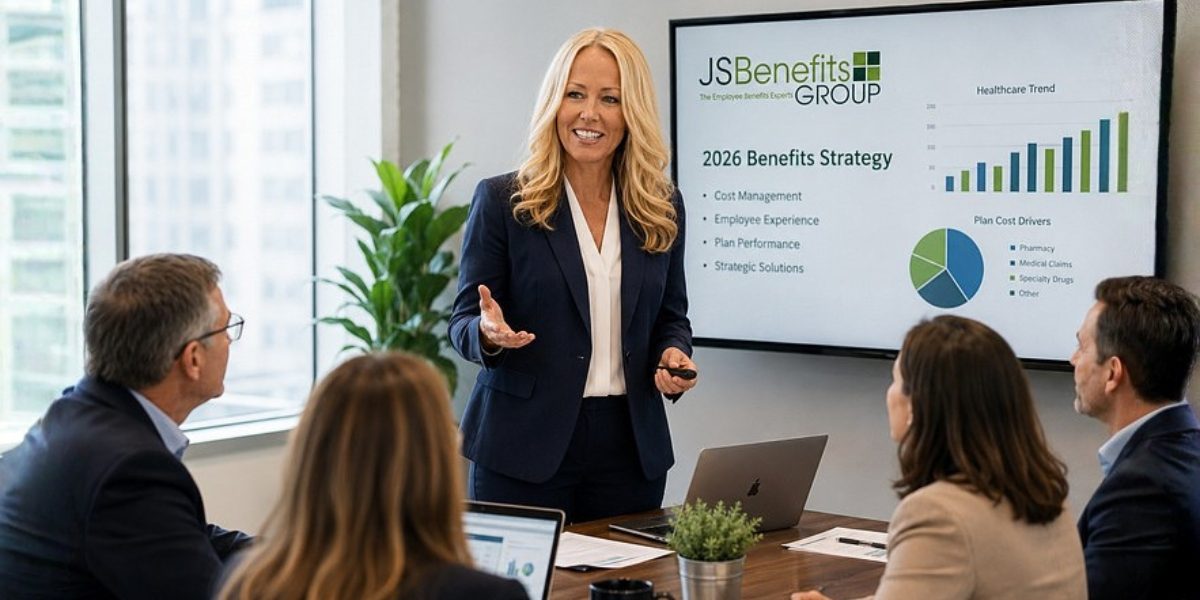

For years, employers treated employee benefits as an expense to be managed down. Rising healthcare costs led to the same difficult conversations every renewal season: raise the deductible, shift more cost to employees, shop the plan and hope for a better number.
Cost still matters. It always will. But the conversation has changed.
Employers today compete for talent in a market where benefits influence employment decisions nearly as much as salary. Employees want affordable healthcare, financial security, flexibility, and evidence that their employer is genuinely invested in their well-being. Candidates ask about mental health coverage in first interviews. Employees compare deductibles the way they once compared job titles.
The organizations that recognize this are treating benefits as a strategic advantage rather than a line item on a budget.
In my work with employers across Pennsylvania, New Jersey, Delaware, and nationwide, I’ve found a consistent pattern: the companies getting the best long-term results are rarely the ones spending the most. They’re the ones making smarter decisions.
Focus on Value, Not Just Cost
Lowering healthcare costs does not have to mean reducing benefits. That assumption drives more bad decisions than almost anything else I encounter.
Most employers have more room to maneuver than they realize. A thorough review of plan design often reveals coverage that isn’t being used and gaps that are quietly driving claims. Alternative funding options, such as level-funded or self-funded arrangements, can give a growing company visibility into its own claims data for the first time, replacing guesswork with evidence. Pharmacy benefit management, frequently the least examined part of a plan, is often where meaningful savings sit untouched. Preventive care programs reduce downstream costs. And year-round education helps employees use what they already have.
None of these levers require an employer to strip benefits away from its people. They require an employer to understand where the money is actually going.
This distinction matters most for mid-sized and growing organizations. A company scaling from 40 employees to 150 is in a fundamentally different position than it was three years earlier, but its benefits strategy often hasn’t caught up. It’s still buying the plan it bought when it was small, renewing it out of habit, and absorbing increases it doesn’t have to absorb. Growth changes what an employer is eligible for and what data it can access. Too few organizations reevaluate accordingly.
Employees who understand how to use their benefits make better healthcare decisions. That improves outcomes and increases the return on an investment the employer is already making.
Benefits Are a Retention Strategy
The cost of replacing an experienced employee routinely exceeds the cost of keeping a competitive benefits package in place. Recruiting expenses, lost productivity, onboarding time, and the institutional knowledge that walks out the door are all real costs, even when they never appear on a single invoice.
When an organization invests in comprehensive healthcare coverage, wellness initiatives, mental health resources, and financial wellness programs, employees notice. Those investments strengthen recruitment, improve engagement, and reduce voluntary turnover.
They also send a message that’s difficult to send any other way. Compensation tells an employee what their work is worth. Benefits tell an employee what they are worth to the organization when they’re sick, when they’re caring for a parent, when they’re planning for a child or a retirement. Employees hear that difference clearly, whether or not anyone says it out loud.
Benefits are no longer separate from culture. They are part of the employer brand.
Communication Matters More Than Ever

The largest untapped opportunity I see is communication.
Many employers offer excellent benefits that their employees do not fully understand and therefore do not fully use. The plan is strong. The enrollment guide is thorough. And yet employees can’t explain the difference between a copay and coinsurance, don’t know a telehealth benefit exists, or never touch the HSA contribution their employer is funding on their behalf.
That’s an expensive gap. The employer pays for the benefit either way. The only variable is whether anyone uses it.
Education that extends beyond open enrollment closes that gap. A single week of communication each fall is not a strategy; it is a deadline. Employers that communicate consistently throughout the year, in plain language and through the channels their workforce actually uses, see better utilization, better health outcomes, and greater appreciation for what they provide.
Clear communication builds trust, supports better healthcare decisions, and reinforces an organization’s commitment to its people.
Looking Ahead
Healthcare costs will keep evolving. Regulatory requirements will keep shifting. Employee expectations will keep rising. None of that is likely to reverse.
But employers don’t have to navigate it alone, and they don’t have to accept every renewal increase as inevitable. Businesses that evaluate their benefits strategy regularly, analyze their own data, and seek experienced guidance are consistently better positioned to control costs while offering the benefits employees expect.
The employers who will win the talent competition over the next decade are not the ones with the biggest budgets. They are the ones who stopped asking how little they can spend and started asking what they’re getting for what they already spend.
Employee benefits should no longer be viewed as an expense. They are an investment in people, in organizational stability, and in long-term business success.
To learn more about employee benefits consulting and healthcare cost management, visit JS Benefits Group:
Explore Jennifer’s Forbes Business Council articles and leadership insights:
About the Author
Jennifer Schaefer, MBA, ChFC®, SHRM-SCP is the Founder & CEO of JS Benefits Group, an employee benefits consulting firm serving employers throughout Pennsylvania, New Jersey, Delaware, and across the United States. Jennifer specializes in employee benefits strategy, healthcare cost management, HR consulting, compliance, and workforce planning. She is a member of Forbes Business Council, a co-host of Executive Leaders Radio, and regularly shares insights on leadership, employee benefits, and business strategy. Learn more at https://jsbenefitsgroup.com.