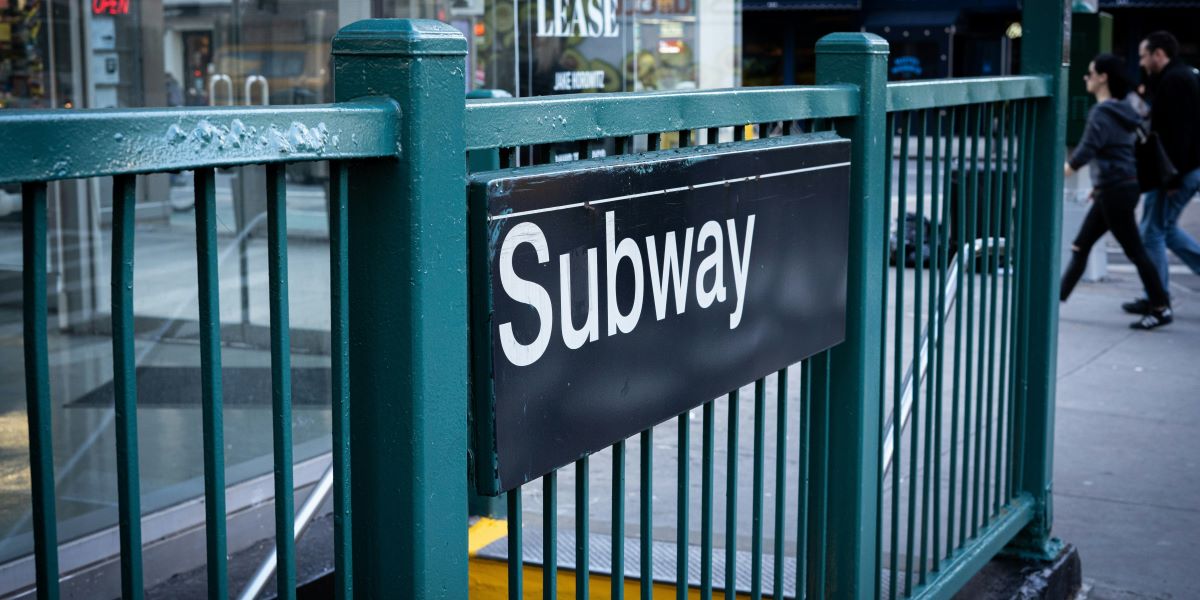

New York City, the State of New York, and the Metropolitan Transportation Authority announced an $800,000 feasibility study on August 10 to test a Thermal Energy Network at the Brooklyn Bridge-City Hall and Chambers Street subway station complex in Lower Manhattan, a project that would capture excess platform heat underground and redirect it to warm municipal buildings during winter months.
Key Takeaways
- Mayor Zohran Mamdani, Governor Kathy Hochul, and MTA Chair Janno Lieber announced a joint partnership to study a Thermal Energy Network (TEN) at the Brooklyn Bridge-City Hall 4/5/6 and Chambers Street J/Z station complex.
- The $800,000 pilot study is funded through congestion pricing revenue and would make the project the first thermal energy network installed in a U.S. transit system.
- Brooklyn Bridge-City Hall station recorded average summer platform temperatures of 96 degrees Fahrenheit in 2025, with some stations reaching 20 degrees above outdoor temperatures.
- Geothermal boreholes drilled 500 to 600 feet underground beneath the abandoned center platform at Chambers Street would store excess heat for winter redistribution to nearby city buildings.
- The feasibility study contract is expected to be awarded this fall, with design work projected to begin in early 2027 if results confirm geothermal viability.
Congestion Pricing Funds the Study Alongside a Full Station Overhaul
The thermal energy study is being layered onto a broader renovation of the Chambers Street J/Z station, one of the oldest active stations in the subway system. The station opened in 1913, and the comprehensive renewal project will rebuild aging structures, replace tiles, upgrade stairways, perform leak mitigation, and address ceiling damage caused by decades of water infiltration. The NYC Mayor’s Office confirmed that both the station overhaul and the thermal energy study are funded through congestion pricing revenues allocated under the MTA’s 2020 to 2024 Capital Plan. The MTA plans to award a contract for the broader station renovation by the end of 2026.
The timing of the renovation creates what city officials described as a unique opening for the TEN study. With construction crews already set to access the station’s infrastructure, the cost and disruption of testing geothermal technology can be folded into work that is already underway. The abandoned center platform at Chambers Street, currently unused by passengers, would serve as the testing ground for geothermal boreholes without requiring any disruption to active service areas.
The Technology Relies on Geothermal Boreholes and Radiant Cooling Panels
The proposed system would operate in two directions depending on the season. During summer months, radiant cooling technology installed on platform walls, ceilings, or floors at Brooklyn Bridge-City Hall would absorb heat from the station environment by circulating chilled water through embedded panels. That captured heat would then be transferred through a network of pipes to geothermal boreholes drilled 500 to 600 feet underground beneath the Chambers Street center platform. The boreholes would store the excess thermal energy in the earth, and during winter months, the stored heat would be extracted and redistributed to nearby municipal office buildings through the same pipe network.
Radiant cooling, the method at the core of the proposed system, operates 25 to 35 percent more efficiently than conventional air conditioning, according to the city. Unlike forced-air systems that blow cooled air into a space, radiant panels lower perceived temperatures by absorbing heat directly from surfaces and occupants. Thermal Energy Networks using similar principles are already operational at hospitals and university campuses across the country, though none have been deployed inside a transit system.
Brooklyn Bridge-City Hall Ranks Among the System’s Hottest Stations
The Brooklyn Bridge-City Hall 4/5/6 station recorded average summer platform temperatures of 96 degrees Fahrenheit during the 2025 season, making it one of the most heat-affected stations in the subway system. The station’s heat profile is driven in part by the 6 train terminal, where trains dwell at the platform and generate sustained thermal output. Across the system, some stations reach temperatures as much as 20 degrees higher than above-ground conditions during summer peaks.
The Metropolitan Transportation Authority noted that while its short-term priority remains running reliable, air-conditioned train service to minimize time riders spend on platforms, the study represents a longer-term infrastructure approach to managing heat. MTA Chair and CEO Janno Lieber acknowledged the difficulty of cooling stations in a system that is more than a century old, with open entrances and ventilation shafts that make climate control a persistent engineering challenge. MTA Construction and Development President Jamie Torres-Springer described the initiative as an effort to convert excess heat from a liability into an asset for both riders and the city.
A Multi-Agency Partnership With a 2027 Design Timeline
The feasibility study will be conducted jointly by DCAS (the Department of Citywide Administrative Services), the Mayor’s Office of Climate and Environmental Justice, the Office of the Deputy Mayor for Operations, and the MTA. The study will assess how much platform cooling the system can realistically achieve and estimate the potential energy cost savings for city-owned buildings that would receive recycled heat during colder months.
The contract for the study is expected to be awarded in fall 2026. If the results confirm that the geothermal approach is viable at the Chambers Street site, design work on the thermal energy network would begin in early 2027. Mayor Mamdani framed the initiative as part of a broader climate resilience agenda that includes heat-resilient bus shelters, outdoor cooling centers, and the city’s Urban Forest Plan, which targets 30 percent tree canopy coverage citywide. The city is also constructing 130 solar installations on public school rooftops and accelerating the electrification of its municipal vehicle fleet, with the Sanitation Department, Parks Department, and DCAS enforcement fleets on track for full electrification by 2030.
FAQs
What Is a Thermal Energy Network?
A Thermal Energy Network, or TEN, is a system that uses underground pipes and geothermal boreholes to move and store heat between buildings and infrastructure. In this case, the system would capture excess heat from subway platforms during summer and store it underground, then extract and redistribute that heat to warm municipal buildings in winter.
When Will the Thermal Energy Network Be Operational?
The current phase is a feasibility study, with the contract expected to be awarded in fall 2026. If the study confirms the approach is viable, design work would begin in early 2027. No date has been announced for completion or activation of a working system.
Which Subway Stations Are Included in the Study?
The study focuses on the Brooklyn Bridge-City Hall 4/5/6 and Chambers Street J/Z station complex in Lower Manhattan. Brooklyn Bridge-City Hall is one of the hottest stations in the system, and the unused center platform at Chambers Street provides a location to test geothermal boreholes without disrupting passenger service.