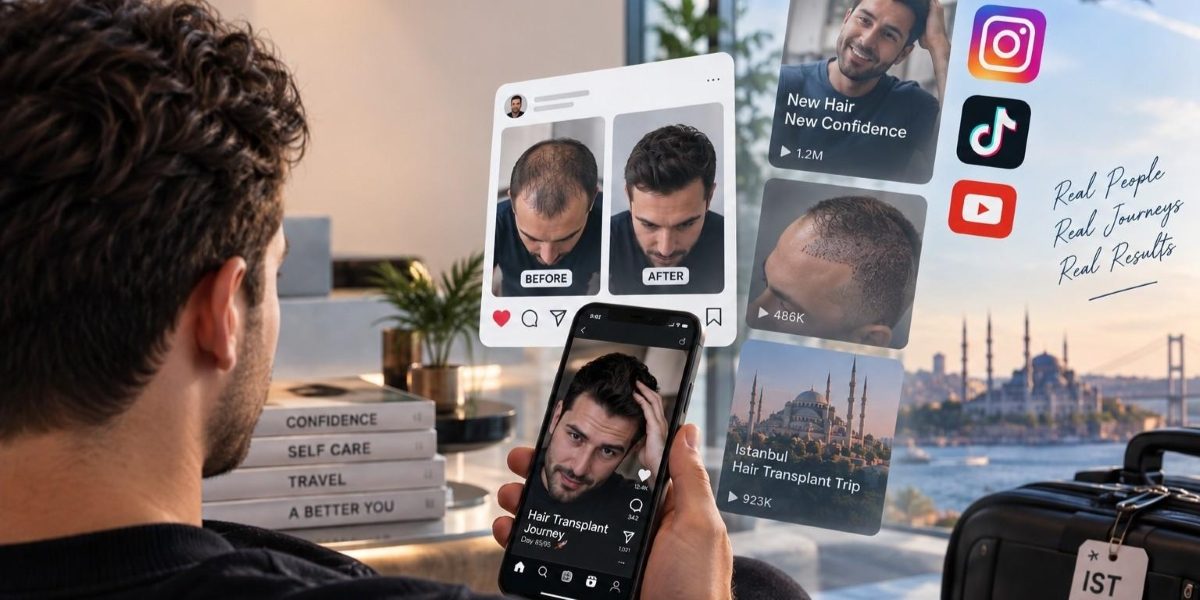

Scroll TikTok or Instagram long enough and the algorithm eventually finds you a stranger’s scalp. Time-stamped selfies, a shaved-head ‘day one’ clip, a slow-motion reveal at the six-month mark as hair transplant content has quietly become its own genre, complete with recurring characters (the skeptical girlfriend, the surprised coworker) and a predictable emotional arc. It’s part medical documentation, part reality TV, and it’s doing more to shape the hair restoration industry than almost any marketing campaign could.
A decade ago, a hair transplant was something men didn’t mention even to close friends, let alone document publicly. Today, entire accounts exist purely to chronicle the process, often racking up millions of views per video. That shift in visibility has done two things simultaneously: it’s normalized a procedure that used to carry real social stigma, and it’s turned would-be patients into remarkably well-informed comparison shoppers before they ever book a consultation.
That second effect is the more consequential one. Patients researching a hair transplant clinic in Turkey today typically arrive at a consultation having already watched a dozen strangers’ procedures, compared visible results at three, six, and twelve months, and cross-referenced surgeon credentials mentioned in the comments. The information asymmetry that used to define this industry, where patients had to simply trust a clinic’s own marketing has narrowed considerably.
It’s also pulled the average patient younger. Where hair transplants were once associated almost exclusively with men in their 40s and 50s dealing with advanced hair loss, clinics report growing interest from patients in their late 20s and early 30s, often catching thinning early and choosing to address it well before it becomes severe. Whether that’s a genuinely proactive health decision or a symptom of a culture that’s increasingly comfortable optimizing every visible trait is, depending on who you ask, either an encouraging trend or a slightly uncomfortable one, probably some of both.
Cost has become part of the public conversation too, in a way it rarely was before. Where patients once had to contact multiple clinics privately just to get a ballpark figure, detailed cost breakdowns are now a staple of transplant content, with creators openly sharing invoices and explaining exactly what did and didn’t get included in their package. That transparency has put real pressure on clinics to be upfront about pricing structure. A quick search for hair transplant cost in Turkey now turns up not just clinic marketing pages but entire threads of patients comparing notes on what they actually paid, and what almost got left off the invoice.
None of this has come without a downside. The same openness that’s demystified the procedure has also created space for bad information to spread just as fast as good information such as miracle timelines, exaggerated graft counts, and confident-sounding advice from creators with no medical training. Industry observers generally advise treating individual patient accounts as one useful data point rather than a substitute for an actual consultation, since results, recovery speed, and candidacy vary enormously by individual.
What seems unlikely to reverse is the underlying cultural shift. A procedure that used to be a closely guarded secret is now, for a meaningful share of patients, actively documented and shared, sometimes as a source of pride, sometimes simply because an audience is watching and expects an update. Larger providers, including operators like BlueMagic Group, have adjusted accordingly, with more clinics now actively working with patients who want to document their journey rather than discouraging it.
Whether hair transplant content stays a niche corner of the internet or keeps growing into the kind of mainstream, unremarkable content skincare routines and gym progress photos have become, the effect on the industry itself already looks permanent: patients walk in more informed, expect more transparency, and increasingly treat a life-changing medical procedure with the same openness they’d bring to any other part of their self-improvement routine.