
Some stories slip through the cracks of history. For 57 years, the men who carried out one of the boldest raids of World War II waited in an unmarked grave a thousand miles from home. A new book finally gives them the place in the record they earned.
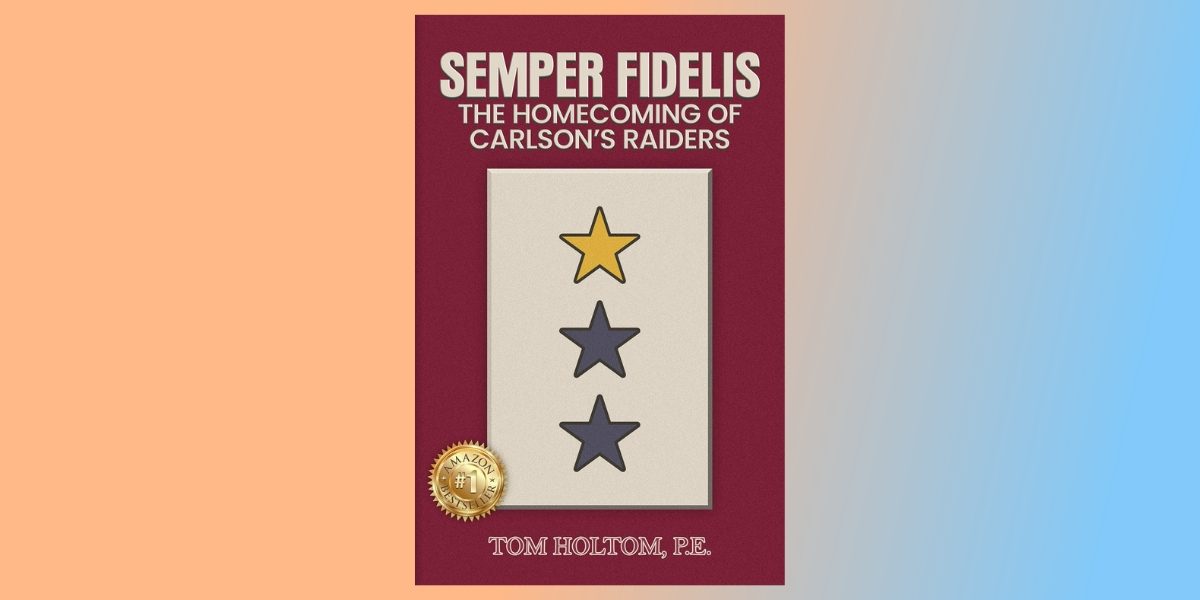
Semper Fidelis: The Homecoming of Carlson’s Raiders follows the men of the 2nd Marine Raider Battalion, better known as Carlson’s Raiders, and their daring strike on Makin Island in August 1942. It reads like history, but it feels far more personal. There is a clear reason for that.
A story the author lived
Tom Holtom did not study this story from a distance. He is the nephew of Captain Gerald Holtom, the only officer killed during the Makin raid and one of just two Marine Corps language officers lost in the entire war. As the family’s Primary Next of Kin, the author stood at the center of the long effort to bring his uncle home.
That connection is what sets the book apart. Many war accounts report events. This one remembers them. Readers feel the weight of a mother sewing a gold star into a window banner, and the quiet promise a family made to keep waiting, however long it took.
The gap it fills
The problem the book confronts is simple and painful. After the raid, nineteen Marines were buried on the island by local Gilbertese residents. Years later, a military board marked their remains “non-recoverable,” and the case effectively closed. For more than half a century, the official record stayed unfinished.
Holtom walks readers through how that began to change, the forensic scientists, the repeated searches, and the witnesses who never forgot where the men were laid to rest. Without giving away the journey, the book shows how a promise honored across generations can rewrite an ending no one saw coming.
Why it matters now
Carlson’s Raiders shaped far more than a single battle. Their training inspired the Navy SEALs, the Army Rangers, the Green Berets, and Delta Force. Their password, “Gung Ho,” entered everyday American speech. Sergeant Clyde Thomason, one of the nineteen, became the first enlisted Marine to receive the Medal of Honor in the war.
For readers who love military history, the book delivers accurate, well-sourced storytelling. For everyone else, it offers something more human: proof that “no man left behind” is not a slogan. It is a debt the Marine Corps pays, no matter how many years pass.
A fitting tribute
What makes this book memorable is its restraint. Holtom never overstates the emotion, because the facts carry it on their own. He names each of the nineteen fallen Raiders, honoring them as individuals instead of a footnote. The result reads less like a war chronicle and more like a homecoming the reader is invited to witness.
History often forgets its quiet heroes. This book makes sure these Marines are not among them. Semper Fidelis: The Homecoming of Carlson’s Raiders closes a 57-year gap in Marine Corps history and gives a remarkable group of men the recognition they were always owed.