
By: Lennard James
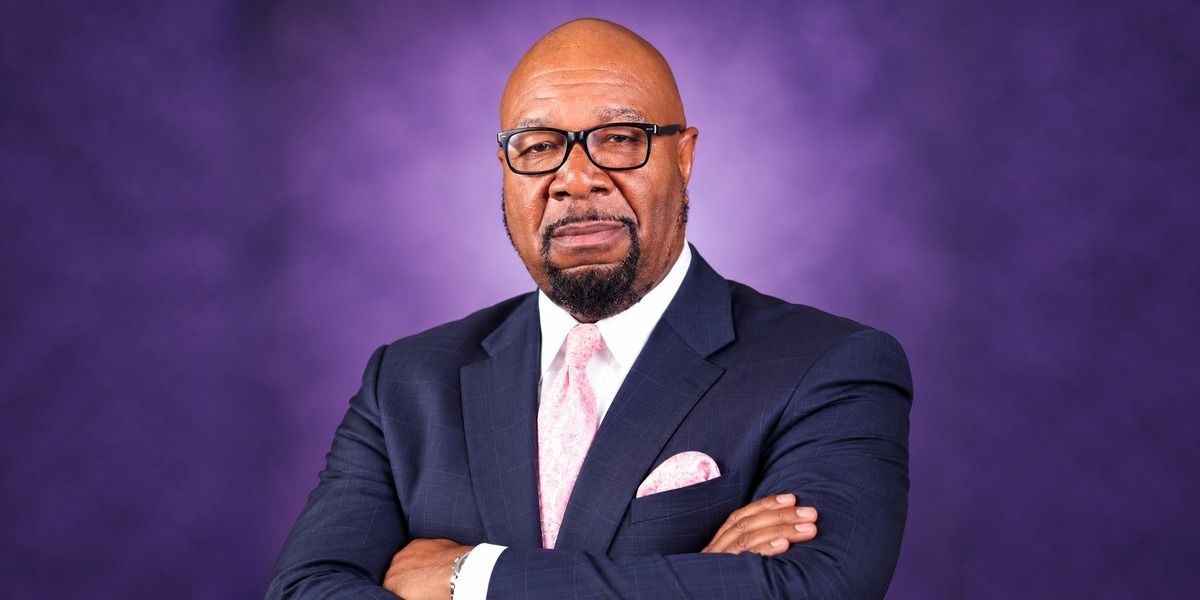
For Roby S. Williams, leadership has never been defined solely by a job title. Across banking, telecommunications, media, mortgage lending, business development and community service, the lifelong Memphian has built a career around opening doors, connecting people with resources and helping entrepreneurs turn opportunities into sustainable businesses.
Williams describes that mission with a phrase that has become central to his professional identity: “I am an opportunity facilitator.”
It is a description that captures a career spanning multiple industries and decades of service to Memphis.
Williams’ leadership foundation began early. He attended Booker T. Washington Leadership Institute in Memphis, where the motto, “We’re Tops. We lead and others follow,” reinforced an expectation of achievement and responsibility. Williams graduated from high school at only 16 years old before continuing his education at LeMoyne-Owen College, one of the nation’s historically Black colleges and universities, where he earned a bachelor’s degree in history.
His professional journey began in banking with First Tennessee Bank. Williams worked in the branch division, commercial and retail lending, and marketing. He also served as assistant to the advertising director for First Tennessee National Corporation. According to his biography, Williams became the first African American to work for First Tennessee National Corporation, an accomplishment that placed him in a position to break barriers while building expertise in finance, marketing and corporate operations.
After five years in banking, Williams moved into sales.
His career included selling Yellow Pages advertising for South Central Bell before transitioning into business marketing, where he sold telecommunications systems and network services. His experience eventually included AT&T in Memphis and later Pitney Bowes, where he sold mailing and manifest systems.
Each position expanded Williams’ understanding of how businesses operate.
He learned banking and lending. He learned marketing. He learned communications infrastructure. Most importantly, he learned how to listen to business owners, identify their challenges and connect them with solutions.
Those skills would become increasingly valuable as his career progressed.
Williams eventually entered broadcast advertising sales, working with two recognizable Memphis radio brands, WDIA and K-97 FM. His media career later moved into television, where he sold advertising for WREG News Channel 3 and WLMT UPN30.
After approximately six years in television sales, Williams entered the mortgage industry, helping finance new homes in Memphis.
By then, his professional background represented an unusual combination of banking, sales, communications, advertising, media and real estate finance. That experience prepared Williams for the role that would become one of the defining chapters of his career.
In October 2002, Williams became president of the Black Business Association, where his mission centered on helping minority- and women-owned businesses strengthen their operations and pursue greater economic opportunity.
His philosophy reaches beyond simply helping someone launch a business. Williams has frequently described his work as an effort to “Create Taxpayers.”
Behind that phrase is an economic-development philosophy: successful entrepreneurs create income, jobs, commerce and tax revenue. A business that becomes sustainable can support not only its owner but employees, families, vendors and surrounding communities.
Williams’ influence, however, cannot be measured only through business transactions or organizational programs.
One of the most significant aspects of his legacy has been mentorship.
Over the years, Williams has shared his knowledge, relationships and professional experience with emerging entrepreneurs and younger leaders. His influence has helped people understand that leadership requires preparation, credibility, relationships and a willingness to create opportunities for others.
For the next generation of Memphis leaders, having access to someone who has navigated corporate America, entrepreneurship, banking, media and community leadership provides something a textbook cannot duplicate: perspective.
Williams understands what it means to enter rooms where few people look like you. He understands the importance of building relationships across industries. He also understands that opening a door carries greater meaning when someone holds that door open for the person coming behind them.
That philosophy is reflected in his extensive record of civic engagement.
His board service has included the Greater Memphis Chamber of Commerce, Better Business Bureau, Shelby Farms Park Conservancy, Emerge Memphis, Lifeblood Mid-South Regional Blood Center and Nexus. He has also held emeritus roles with the Memphis Convention & Visitors Bureau and The Leadership Academy.
That breadth of service demonstrates a commitment extending well beyond any single organization or industry.
From economic development and entrepreneurship to tourism, leadership development and community institutions, Williams has consistently positioned himself where relationships can be created and opportunities expanded.
His journey also represents an important chapter in Memphis business history. Beginning as a young LeMoyne-Owen graduate entering banking, Williams built a career that crossed industries at a time when African American professionals frequently encountered significant barriers to corporate advancement.
Yet his story is not simply about entering those spaces.
It is about what he did once he got there.
Roby S. Williams has spent decades connecting people, businesses and institutions while encouraging entrepreneurs to transform ideas into economic opportunity. His mentorship has helped influence another generation of leaders who are now building companies, serving communities and mentoring others.
That may ultimately be one of the strongest measures of his impact.
Leadership is not simply how far one person travels. It is also measured by how many people are better positioned because that person made the journey.
For Roby S. Williams, being an “opportunity facilitator” is therefore more than a memorable description.
It is a legacy built around creating pathways—and making certain others have the opportunity to follow them. For more information visit: https://www.robywilliams.com/