

Jeffery O Brown’s decades long study of Enoch examines faith, history, and the challenge of interpreting ancient texts
The story of Enoch has long held a distinct place in religious history. He appears only briefly in scripture, yet those few references have inspired generations of discussion, study, and interpretation.
For readers familiar with biblical literature, Enoch is often remembered as a figure described as having “walked with God.” Beyond that brief mention, many questions remain. Those unanswered questions have led scholars, religious readers, and independent researchers to examine related texts and traditions connected to his name.
One of the most discussed works associated with him is the Book of Enoch, often referred to as 1 Enoch. The text has drawn interest because of its unusual themes, layered structure, and complex place within religious history. It includes visions, teachings, angelic figures, and ideas about judgment and divine order.
While the Book of Enoch is not part of the biblical canon for many Christian traditions, it has remained a subject of study and discussion. Some readers approach it as religious literature. Others view it as a historical or theological document that reflects the ideas and questions of its time.
For Jeffery O Brown, the text became the starting point for a long personal and intellectual project.
Brown is a biomedical engineer by training. His professional background shaped the way he approached the material. Rather than reading the Book of Enoch only as a religious text, he examined its structure, continuity, and internal patterns. He was interested in where the text seemed clear, where it appeared fragmented, and where additional context might help readers better understand its themes.
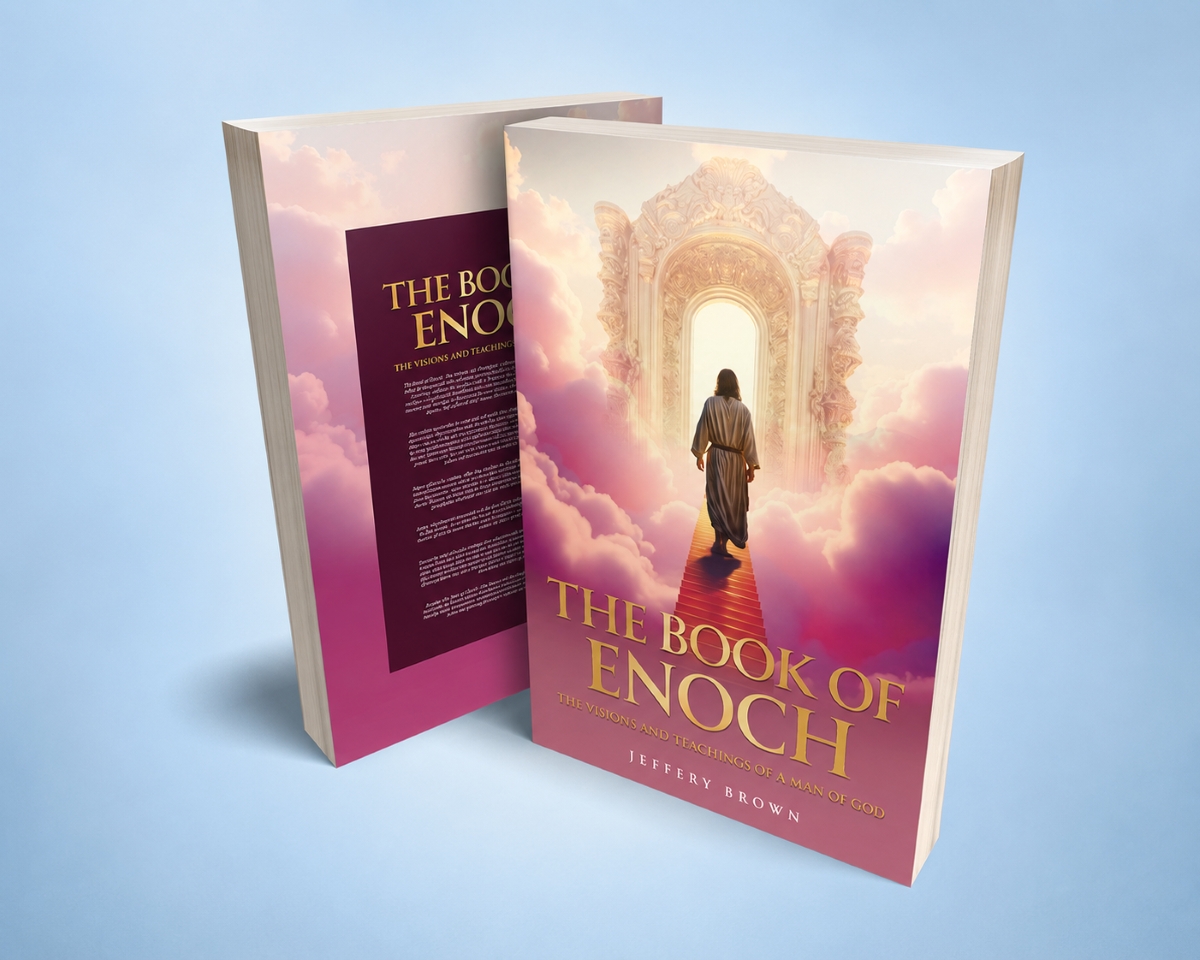
Brown first encountered the Book of Enoch online in 1997. What began as curiosity developed into a long study of related writings, scriptural references, and religious traditions. Over time, he began to explore how different sources might help build a fuller picture of Enoch as a figure of faith and instruction.
His work eventually led to The Book of Enoch: The Visions and Teachings of a Man of God.
The book is presented as Brown’s reconstruction and interpretation of Enoch’s story. It draws from biblical references, apocryphal writings, pseudepigraphal texts, Latter-day Saint scripture, and Brown’s own religious reflections. Brown also describes moments of spiritual impression that informed parts of his process.
Because of that, the book is best understood as a faith-based interpretation rather than a traditional academic edition of the Book of Enoch. It does not claim to replace scholarly study. Instead, it offers Brown’s personal effort to organize, interpret, and present Enoch’s story in a way that reflects his research and beliefs.
That distinction matters.
Ancient religious texts often reach modern readers through complex histories. They may survive in fragments, translations, copies, and traditions shaped by different communities. Readers and scholars may disagree on authorship, dating, interpretation, and theological meaning. Those differences are part of what makes texts like the Book of Enoch the subject of continued discussion.
Brown’s project enters that discussion from a personal and religious perspective. His goal is to revisit Enoch not only as a mysterious figure, but as a man whose story may still hold meaning for readers interested in faith, obedience, vision, and divine instruction.
The book also reflects a broader question that many readers bring to ancient texts: how should people approach records that have been preserved, translated, debated, and interpreted across generations?
Brown’s answer is to compare sources, examine patterns, and remain open to religious insight. Other readers may take a more historical, literary, or academic approach. The value of the subject lies partly in that range of perspectives.
The Book of Enoch: The Visions and Teachings of a Man of God is available through major book retailers, including Amazon.
For readers interested in Enoch, apocryphal literature, and faith-based interpretations of ancient religious material, Brown’s work offers one author’s extended attempt to revisit a figure who has remained a source of fascination for centuries.