TerraLux and the Rise of Purpose-Built Modular Homes

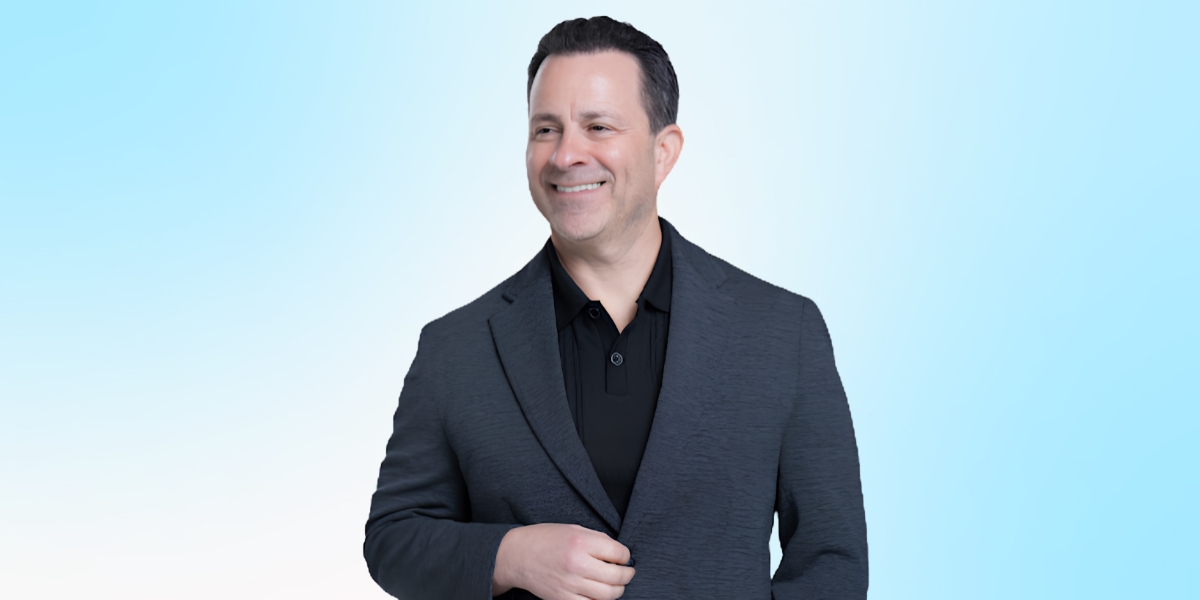
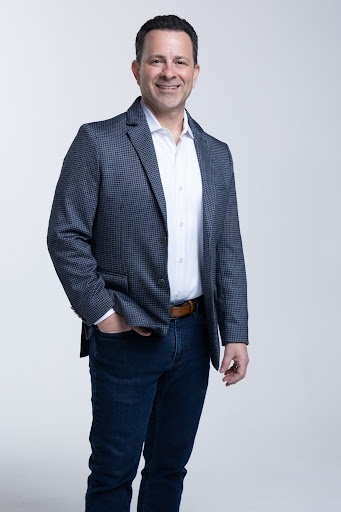
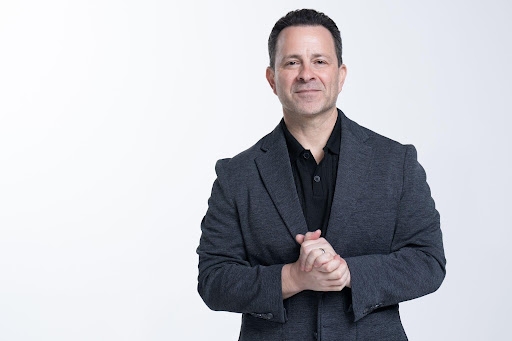
Mayan Metzler has a theory about the American home. In his telling, it sits idle for most of the day, designed for a generic concept of “living” rather than any specific use, and the square footage that piles up does little beyond providing shelter. His New York company, TerraLux, was built to rewrite that job description, one modular home at a time.

“In the future, your home won’t just be where you live,” Metzler has said. “It will be a system that supports your health, your income, and your evolution.” That sentence is the closest thing TerraLux has to a thesis statement, and it doubles as the framework for what the company is now building across the country.

Photo Courtesy: TerraLux (Geodesic Jungle Domes Immersive dome spaces designed to reconnect you with nature, where light, water, and greenery create a deeply restorative environment)

Healing Homes as a Category

The product line at TerraLux organizes around a single unit of design called a Healing Home. Rather than asking one house to handle every part of human life, each Healing Home is engineered for one specific activity. Ten modular homes variants currently anchor the catalog: Sleep, Focus, Recovery, Creator, Performance, Longevity, Kitchen, Garden, Social, and Live.

A Sleep Home is tuned for deep rest. A Creator Home operates as a fully built-out content studio. Recovery modules are designed to host wellness sessions with visiting practitioners, while Performance variants handle physical training. Garden and Kitchen modules cover the domestic essentials, Social anchors gatherings, and Live functions as a general daily hub.

Architecturally, the modular homes resist a single design language by intent. Geodesic domes packed with tropical greenery share catalog space with mirror-clad alpine cabins that fade into the tree line. Earth-integrated structures covered in living vegetation sit alongside clean-lined glass micro-homes and curved cabins built around slow-living principles.

The Homes That Heal Framework

Every TerraLux build runs on a shared design system the company calls Homes That Heal. The framework treats elements that conventional construction tends to ignore as primary design choices rather than upgrades. Air optimization, circadian lighting, filtered and mineralized water systems, sound frequency tuning, low-EMF design, and integrated planting beds for food production all arrive as baseline features.

“The goal is to create spaces that actively support human biology, not just house it,” Metzler has said. The reasoning behind the system is that the parts of a home a person interacts with most often, like the air, the light, the water, the sound, deserve a level of design attention that most builders skip entirely.

Materials follow the same logic. Surfaces and finishes are selected with indoor air quality in mind, and the build process is structured to keep off-gassing chemicals out of the interior environment from the day a unit is occupied.

A Property That Earns Alongside You

Because each module has a defined function, each can also operate as more than a private residence. A Creator Home, with its production studio configuration, can be rented to local freelancers, agencies, or filmmakers looking for a shoot location. Recovery modules can host visiting practitioners with their own client books. Sleep Homes, finished in photogenic exteriors and built for rest conditions, fit into the short-term rental market.

TerraLux frames the shift in plain terms: property moves from cost center to active asset. The modular homes are designed to generate alongside their residential role, a framing that carries weight at a moment when housing eats up the largest share of most household budgets. A building that can earn while serving as a residence changes the basic arithmetic of ownership.

Photo Courtesy: TerraLux

The Spatial Network

The physical product does not stand on its own. TerraLux operates a digital platform called the Spatial Network, which functions as a planning studio inside a browser. Before committing to a build, an owner can drop Healing Homes onto a representation of their land, experiment with different layouts, and see how a finished ecosystem might come together. The tool gives buyers something concrete to iterate on rather than static renderings.

Membership turns the platform into an ongoing relationship rather than a one-time purchase tool. Members access preferred pricing on new units, early visibility into fresh variants at launch, partner benefits across the TerraLux collaborator network, and a direct line into the wider community of owners. Most members, Metzler has noted, end up expanding their footprints over time, so membership operates less as a club and more as an entry point into a longer arc of ownership.

Big Hollow Green in the Catskills

The clearest way to understand what TerraLux is actually building is to visit Big Hollow Green, the company’s flagship location in the Catskills. Sitting about two and a half hours north of Manhattan, the property doubles as a working showroom and a place where guests can stay inside a Healing Home and feel the design choices in real time. Geodesic domes, alpine cabins, and earth-integrated structures sit together on the same land, giving visitors a sense of what a full modular homes ecosystem looks like when assembled at scale.

Big Hollow Green is the first marker in the ground. Metzler has described a longer plan to build a wider network of TerraLux locations across different climates and regions, each one assembling its own mix of Healing Homes suited to how people in that place actually want to live.

What Modular Homes Could Mean Next

Where the vision lands in the broader real estate picture is still an open question. Modular construction has had false starts before, with earlier waves of prefab building stalling on aesthetics, financing, or buyer hesitation. What feels different about TerraLux is the insistence on specific use cases instead of generic prefab, the integration of wellness systems into the baseline rather than the upgrade tier, and the underlying argument that the next generation of American modular homes should do more than serve as a backdrop to everything else happening in a person’s life.

Anyone curious to see these modular homes in person can book a stay at Big Hollow Green. The TerraLux modular homes website covers the broader catalog and the current state of the Spatial Network. For more information on the TerraLux modular homes lineup visit their website.

  • Email Mayan Metzler: mayan@GermanKitchenCenter.com Call: (347) 992–0410
  • To read the full interview with Marco Derhy and Mayan Metzler, visit the source of this article.
  • Media – Contact: Derhy Enterprises 1(310) 613-2773

EliteLink Career Acceleration Summit Unites New York’s Female Leaders and Emerging Changemakers

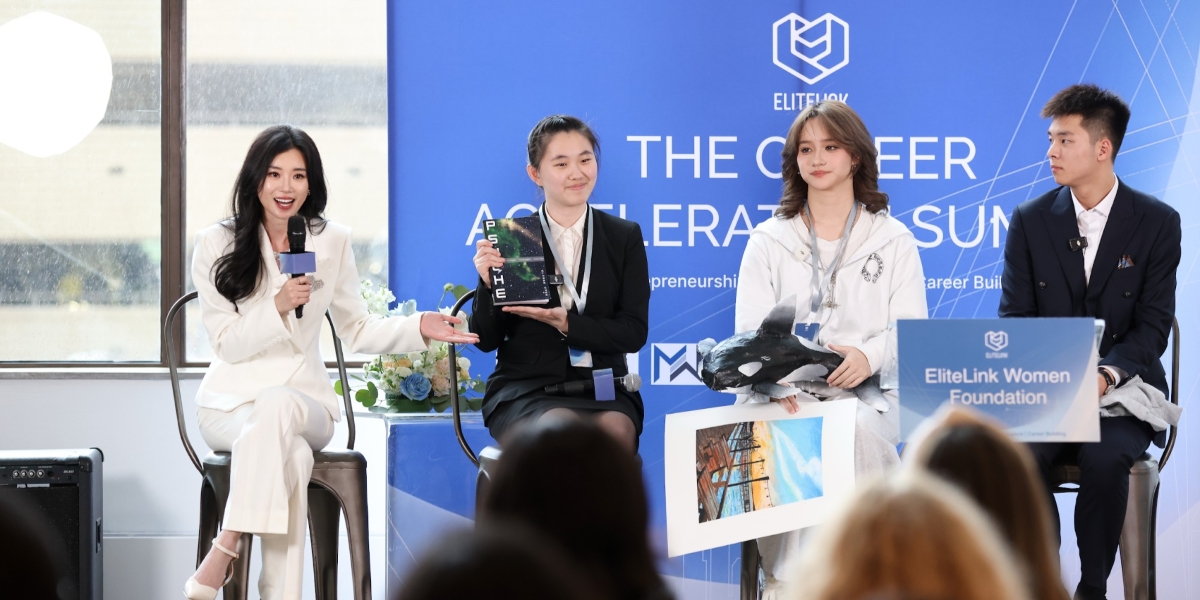
NEW YORK, NY. The EliteLink Career Acceleration Summit brought together a gathering of executives, entrepreneurs, investors, educators, and student leaders in Manhattan for an afternoon dedicated to leadership, career advancement, and intergenerational mentorship.

Hosted by EliteLink Women Foundation, the summit welcomed more than 260 attendees and featured keynote addresses, panel discussions, entrepreneur showcases, and networking opportunities designed to connect accomplished women with the next generation of leaders.

The event reflected EliteLink’s broader mission to create a platform where ambitious professionals and rising talent can access mentorship, strategic insights, and community support.

A Cross-Industry Gathering of Leaders

Attendees included corporate executives, investors, law firm partners, academics from leading universities, artists, student founders, and prominent members of New York’s civic and philanthropic communities. The speaker lineup featured Amy Y. Zhang, Rick Hu, Judge Wendy Li, Serene Wang, Grace King, May Ling Lai, Sherry Li, Macy Kwok, Cathy Huang, Adelaida S. Diaz-Roa, Soojin Choung, and Lauren Petrovic, representing expertise across finance, law, entrepreneurship, real estate, climate tech, luxury innovation, and global leadership.

Spotlight on the Next Generation

One of the summit’s signature moments came during the “Next Gen Voices” segment, where EliteLink students Athena Chao, Hanson Li, Yunqi Chen, and Leo Li presented their entrepreneurial ventures and leadership journeys.

Their participation underscored EliteLink’s emphasis on cultivating leadership early by providing students with opportunities to engage directly with accomplished professionals and industry leaders.

Student Leadership Emerges as a Summit Highlight

Beyond the executive panels and keynote speeches, one of the summit’s most memorable highlights was the prominent presence of EliteLink students, with 15 student volunteers supporting event operations, 4 student speakers presenting on stage, and 2 student showcase booths featuring entrepreneurial ventures, creative projects, and personal portfolios.

For Serene Wang, Founder of EliteLink Education and President of EliteLink Women Foundation, the student participation represented one of the most meaningful moments of the day.

According to Wang, EliteLink’s educators work closely with students throughout the entire development process, from project ideation and strategic planning to narrative development and public speaking preparation.

She emphasized that while elite college admissions remain an important milestone, the organization’s mission extends far beyond placement outcomes.

“Admission is only one milestone,” Wang said. “What matters more is helping students develop the ability to explore the world, define their own competitive strengths, think independently, create boldly, and pursue what genuinely excites them before they ever step onto a college campus.”

For EliteLink, that philosophy remains central to its educational model, and was on full display throughout the summit.

A Mission Beyond the Summit

During the event, Serene Wang shared the organization’s long-term vision of building an ecosystem that supports both women leaders and future changemakers through education, mentorship, and strategic community-building.

“Career acceleration is not just about achievement,” Wang said during her remarks. “It is about building legacy through confidence, capability, and community.”

The program concluded with afternoon tea and curated networking, allowing attendees to continue conversations and build relationships beyond the formal sessions.

Anthropic Releases Claude Opus 4.8 With Cheaper Fast Mode and Honesty Upgrades

Anthropic shipped Claude Opus 4.8 on May 28, 2026, the newest revision of its flagship publicly available model and its second Opus upgrade in under two months. The release holds the same price as Opus 4.7 while adding a faster low-cost processing tier, a parallel-agent feature for large coding jobs, and what the company frames as a measurable improvement in the model’s willingness to admit when it is uncertain.

The compressed timeline is part of the story. Opus 4.7 is barely settled into developer workflows, and the quick turnaround signals an upgrade rhythm built around incremental refinement rather than the longer gaps that defined earlier model generations. Anthropic is candid about the scale of the jump, describing Opus 4.8 in its announcement as a “modest but tangible improvement” on its predecessor — unusually plain language for a frontier launch, and a tone the company carries through the rest of the release.

What changed in Opus 4.8

The headline gains sit in coding, agentic reliability, and reasoning. Anthropic reports improvements across its internal benchmark suite, and launch coverage put the model at a reported 88.6% on SWE-bench Verified, a standard test of real-world software fixes. Independent testers cited cleaner tool use and fewer wasted steps, with one partner reporting an 84% score on Online-Mind2Web, a benchmark for browser-based agent tasks.

The practical read is consistency rather than raw capability. Several enterprise testers pointed to the same trait: Opus 4.8 carries tasks end to end with fewer dropped threads, asks sharper clarifying questions inside Claude Code, and flags problems in its own inputs and outputs that earlier models left for users to catch. Anthropic also notes that Opus 4.8 fixes the comment-verbosity and tool-calling quirks that surfaced in Opus 4.7, which suggests this release is as much about cleanup as expansion.

Trained to flag its own uncertainty

The change Anthropic emphasizes most is honesty. The company trains its models to avoid making claims they cannot support, but acknowledges a persistent failure mode across the field: models that jump to conclusions and confidently report progress on thin evidence. Anthropic says Opus 4.8 is roughly four times less likely than Opus 4.7 to let flaws in its own code pass without comment.

That framing matters for the agentic work Anthropic is positioning the model toward. A coding agent running unattended for hours is only useful if it surfaces its own mistakes, and a model that overstates progress is a liability at scale. Anthropic’s alignment team reported that Opus 4.8 reaches higher marks on prosocial traits such as supporting user autonomy, and that its rates of misaligned behavior — including deception or cooperation with misuse — are substantially lower than Opus 4.7 and close to those of Claude Mythos Preview, the company’s more capable restricted model. The full assessment is documented in the Opus 4.8 system card.

New features shipping alongside the model

Opus 4.8 launches with three updates that extend how the model is used rather than what it knows.

Available in research preview, dynamic workflows let Claude plan a large task, run hundreds of parallel subagents in a single session, and verify its outputs before reporting back. Anthropic says the combination allows Claude Code to handle codebase-scale migrations across hundreds of thousands of lines from kickoff to merge, using a project’s existing test suite as the pass bar. The feature is open to Claude Code users on Enterprise, Team, and Max plans.

Effort control and a Messages API change

A new effort control on claude.ai and in Cowork lets users decide how hard Claude works on a response. Higher settings prompt deeper and more frequent reasoning; lower settings return answers faster and consume rate limits more slowly. The control is available on every plan. On the developer side, the Messages API now accepts system entries inside the messages array, so developers can update Claude’s instructions mid-task — adjusting permissions, token budgets, or environment context as an agent runs — without breaking the prompt cache.

Pricing and a cheaper fast mode

Regular usage is priced identically to Opus 4.7, at $5 per million input tokens and $25 per million output tokens. The notable economic shift is fast mode, which runs the model at 2.5 times the usual speed for $10 per million input tokens and $50 per million output tokens. Anthropic says that fast-mode rate is three times cheaper than it was on previous models, a change aimed at high-volume agentic workloads where latency and per-token cost compound quickly. Opus 4.8 defaults to high effort, with “extra” and “max” tiers available for harder or long-running tasks.

What Anthropic signaled about Mythos

The release doubles as a status note on what comes next. Anthropic reiterated that a small group of organizations is already using Claude Mythos Preview for cybersecurity work under Project Glasswing, and that models at that capability level need stronger cyber safeguards before a wider release. The company said it expects to bring Mythos-class models to all customers in the coming weeks. Opus 4.8 is available everywhere now, with the model identifier claude-opus-4-8 on the Claude API and deployment across Amazon Bedrock, Google Vertex AI, and Microsoft Foundry.

Tuning, Timing, and Life Mastery with Shahryar Sadree

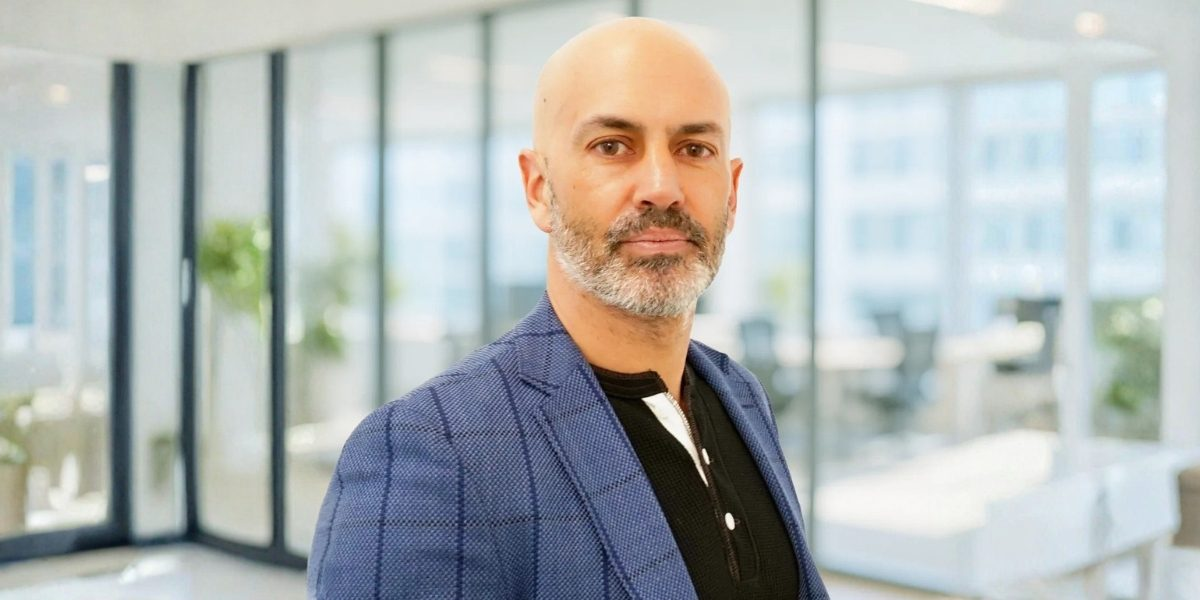
Some people spend a lifetime collecting credentials. Shahryar Sadree spent his collecting questions. The published author, musician, and Solution Specialist has built a body of work that pulls from psychology, philosophy, and lived experience, all of it pointed at one practical aim. He wants people to understand the operating system they were handed at birth and to use it on purpose.

Sadree is a coach, but the title sells the work short. He writes books. He performs music. He builds with stone. He consults on real estate. The common thread is a worldview he has spent decades testing in the field. More about his work can be found at his website.

His central message is direct. Life Mastery is not a mystery. It is a discipline, a way of seeing, and a set of practices that anyone willing to look inward can develop.

A Self-Educated Path to Insight

Sadree was born in Iran and immigrated as a child. The early experience of moving between cultures gave him a particular sensitivity to the energy people carry. He could feel the friction in classrooms and on playgrounds long before he had language for it. That sensitivity never left him. It became a research instrument.

His formal schooling ended at a high school diploma, but his studying never did. He follows curiosity the way some people follow a recipe. When something catches his attention, he disassembles it, mentally and sometimes literally. He spent years in junkyards as a young man taking apart engines just to understand what made them turn. The same impulse later turned toward the human mind, where the questions ran deeper and the answers were harder to source.

Three nonfiction books grew out of that work. The most recent, Down in a Hole, dives into the subconscious. It received positive reviews from The US Review of Books and from independent psychology professionals holding PhDs. The book carries fifteen pages of bibliography and more than one hundred footnotes, which Sadree treats less as a credential and more as evidence that the inquiry was honest.

The Foundation of Life Mastery

Sadree teaches a framework he refers to simply as Life Mastery. It is not branded with a slogan or wrapped in jargon. The starting point is identifying the self correctly. He encourages people to recognize themselves first as spirit and only secondarily as the body they happen to occupy. From that vantage point, the rest of the framework opens up.

He talks about energy as the field everyone is operating inside, whether they realize it or not. He talks about universal laws, the ones that govern outcomes regardless of opinion or effort. He talks about clarity of desire, the kind of detail that turns a wish into a destination. He talks about releasing anchors, the inherited beliefs and accumulated fears that keep most people circling the same patterns. Together, these pieces form the practical scaffolding of Life Mastery as Sadree teaches it.

The framework is not theoretical. He has used it on himself for decades. The application is the point. Knowledge that stays on the page is just paper. Knowledge that gets practiced becomes power.

From Player to Engineer

The phrase Sadree returns to often is the difference between a player and an engineer. Most people, he argues, spend their lives reacting inside a game they did not design. Pain hits them, and they treat the pain as the enemy. He pushes a different frame. The pain, he says, is information about resistance. Once a person sees the resistance for what it is, the change they were fighting becomes the change they were waiting for.

That reframe sits at the center of his coaching practice. Clients usually arrive stuck in a loop. The loop has a particular flavor for each person, but the structure is familiar. They are exhausted by circumstances that keep repeating. Sadree helps them see the engineering underneath. He shows them where the cycle is generated and how to redesign it. Life Mastery, in his telling, is the process of moving from inside the maze to above it.

His perspective draws on his own history. Sadree comes from a family that produced notable Persian writers, poets, and statesmen, including Mohammad-Taghi Bahar. His father, a physician with two specialties, eventually told him that his self-directed education had surpassed a formal one. Sadree considers that the highest recognition he has ever received.

Photo Courtesy: Shahryar Sadree

Music, Coaching, and the Road Ahead

Music remains the parallel current in Sadree’s life. He plays and performs whenever the schedule allows. He describes performing as a way of staying tuned, in the literal sense. When the music goes quiet for too long, he feels the cost. He keeps that signal alive because it feeds every other part of his work, including his approach to Life Mastery.

The future he envisions blends those threads. He sees weekend retreats. He sees coaching programs and lecture tours. He sees one-on-one work with clients who are ready to do the inner work that Life Mastery actually requires. His audience already stretches beyond US borders, and he expects that reach to keep widening. Readers interested in the foundational ideas can explore his book through the Down in a Hole page.

For Sadree, the work comes back to a simple test. Did the conversation, the song, the chapter, or the session help someone else move closer to their own clarity? If so, the work was honest. Life Mastery is not a destination he is selling. It is a practice he is sharing, one student at a time. The tuning and timing matter. Everything else is noise. Anyone serious about Life Mastery has to start where Sadree started, by getting honest about what they actually want and what they are willing to release to get there.

About Shahryar Sadree

Photo Courtesy: Shahryar Sadree

Shahryar Sadree is a published author, musician, and coach who works under the title Solution Specialist. He is the author of three nonfiction books on spirit and mind, including Down in a Hole. A descendant of a Persian family of writers, poets, and physicians, he is the seventh generation in his lineage and a relative of Constantine I of Georgia. Connect with him on YouTube or LinkedIn to follow his work.

The Unfiltered Voice of Deborah Ann Kimberley’s Journey from Pain to Purpose

By: Robert Garcia

Storytelling often leans toward polished narratives and carefully curated truths, but Deborah Ann Kimberley stands apart by being unyielding, raw, and unapologetically honest.

At 69, the Canada-based author is not just writing books; she is documenting a lifetime. Her words don’t simply tell stories. They confront, expose, and demand to be felt.

In a deeply personal conversation, Deborah opened the door to a life marked by trauma, resilience, and an unwavering commitment to truth. And once that door opens, there is no looking away.

A Life Lived in Extremes

Born in Victoria, British Columbia, Deborah’s early life was shaped by constant upheaval, relocations, family struggles, and experiences she now identifies as long-term mental abuse. What makes her story particularly striking is not just the hardship, but the delayed realization of it.

That lack of awareness would later become a defining thread in her work, the idea that many people endure suffering without ever fully understanding it.

Her early adulthood offered little reprieve. Two marriages, both marked by abuse and substance issues, reinforced a cycle that seemed impossible to escape. Alongside this, she battled serious health conditions, including bladder cancer, pelvic inflammatory disease, and the onset of Crohn’s disease, conditions she says were left untreated for years.

Yet even in the darkest moments, something quietly began to take shape. By 1982, Deborah had started journaling, building records that would eventually evolve into court documents and, later, into books. Her work is now collected on her website, authordeborahkimberley.com.

Writing as Survival

For Deborah, writing was never a career choice; it was survival.

“I used to pray that I would be good at something,” she said. “And one day, I got this gift for writing poems.”

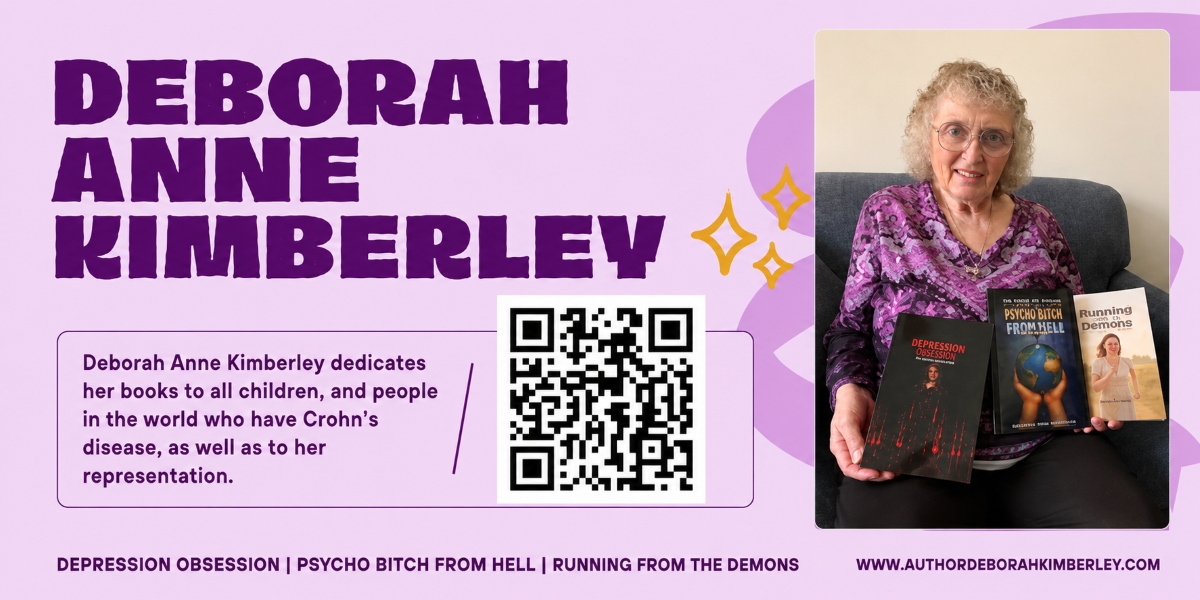
That gift became her first published work, Depression Obsession, a poetry collection that dives headfirst into themes many shy away from, such as trauma, illness, emotional pain, and the fragile thread of hope.

The poems are not structured for comfort. They are designed to be felt. Some explore what she describes as moments of “dying,” while others shift toward reflection, spirituality, and glimpses of beauty. This contrast is intentional.

She has said that readers who get through the heavier first part will find a different tone in the rest, one that opens space for reflection.

Breaking Silence Through Storytelling

Deborah’s later works, Psycho Bitch from Hell and Running from the Demons, expand on her life story with an intensity that is difficult to ignore. Where many memoirs soften the edges, Kimberley sharpens them.

Her writing confronts abuse, systemic failure, and emotional betrayal with a voice that refuses to be diluted. It is this fearlessness that has resonated with readers, particularly women and young adults navigating their own emotional battles.

But her goal is larger than connection.

“I was searching for someone who went through what I did,” she said. “And I couldn’t find them.”

So she became that voice. Her work doesn’t just validate survivors; it challenges those who have never experienced such realities to understand them.

Photo Courtesy: Robert Garcia

The Balance Between Pain and Hope

One of the most difficult challenges in storytelling centered on trauma is maintaining emotional balance, knowing how to tell the truth without pulling the reader into despair.

She layers her narratives with moments of reflection, spirituality, and even subtle humor, not to diminish the pain, but to make it more bearable on the page.

This emotional layering is one of her strongest literary traits. Within a single chapter, readers may encounter grief, anger, resilience, and unexpected warmth all coexisting, just as they do in real life.

Facing the Demons

Running from the Demons is more than a title; it reflects a lifelong struggle with hidden trauma and personal battles. Her life had long been a series of challenges she tried to escape, but writing became the tool that allowed her to confront them head-on.

This shift from avoidance to confrontation is central to her message. By facing the difficulties she once ran from, she found clarity, strength, and a sense of control over experiences that had previously felt overwhelming.

Her story reminds readers that true healing begins when we stop running from our problems and begin to face them with honesty and courage.

A Voice for the Unheard

Her work also carries a broader mission: to speak for those who feel dismissed, misunderstood, or silenced.

Her stories challenge institutions, relationships, and societal norms that overlook or invalidate personal suffering. While her claims and interpretations are deeply personal, the emotional truth behind them is what resonates.

Her writing insists on one thing above all: that every story, no matter how uncomfortable, deserves to be told.

Photo Courtesy: Robert Garcia

The Discipline of Daily Writing

Despite decades of hardship, she has found a form of purpose not in resolution, but in the act of expression itself.

For her, journaling was one of the most powerful tools in understanding her own life.

“Write everything down,” she urged. “Even if you don’t understand what’s happening. You’ll figure it out.”

Today, she continues to write, waking in the early hours of the morning to work on her fourth book. It’s a routine that reflects not just discipline, but purpose.

Looking Ahead

As she approaches 70, Deborah Ann Kimberley shows no signs of slowing down.

Her legacy, she hopes, will be one of awareness, resilience, and truth-telling. She wants her work to spark conversations about trauma, about healing, and about the realities many choose not to see.

Above all, she wants readers to know they are not alone. Her story shows that even in a life filled with darkness, there can still be a voice strong enough to cut through it and brave enough to be heard.

For media inquiries, interviews, or review copies, please contact:

Contact Name: Robert Garcia

Phone Number: +1 747-240-4103

Email Address: robert.garcia@americanbookpublisherz.com

Website: www.authordeborahkimberley.com

Disclaimer: This article is for general informational and editorial purposes only. It discusses Deborah Ann Kimberley’s personal experiences, writing, and stated perspectives. References to trauma, abuse, illness, recovery, and personal hardship are based on the subject’s own account and should not be interpreted as medical, psychological, legal, or therapeutic advice. Readers dealing with similar issues should seek guidance from qualified professionals or appropriate support services.

Truth Edited by Power

Jeffery O Brown’s decades long study of Enoch examines faith, history, and the challenge of interpreting ancient texts

The story of Enoch has long held a distinct place in religious history. He appears only briefly in scripture, yet those few references have inspired generations of discussion, study, and interpretation.

For readers familiar with biblical literature, Enoch is often remembered as a figure described as having “walked with God.” Beyond that brief mention, many questions remain. Those unanswered questions have led scholars, religious readers, and independent researchers to examine related texts and traditions connected to his name.

One of the most discussed works associated with him is the Book of Enoch, often referred to as 1 Enoch. The text has drawn interest because of its unusual themes, layered structure, and complex place within religious history. It includes visions, teachings, angelic figures, and ideas about judgment and divine order.

While the Book of Enoch is not part of the biblical canon for many Christian traditions, it has remained a subject of study and discussion. Some readers approach it as religious literature. Others view it as a historical or theological document that reflects the ideas and questions of its time.

For Jeffery O Brown, the text became the starting point for a long personal and intellectual project.

Brown is a biomedical engineer by training. His professional background shaped the way he approached the material. Rather than reading the Book of Enoch only as a religious text, he examined its structure, continuity, and internal patterns. He was interested in where the text seemed clear, where it appeared fragmented, and where additional context might help readers better understand its themes.

Photo Courtesy: Lincoln Media / Jeffery O. Brown

Brown first encountered the Book of Enoch online in 1997. What began as curiosity developed into a long study of related writings, scriptural references, and religious traditions. Over time, he began to explore how different sources might help build a fuller picture of Enoch as a figure of faith and instruction.

His work eventually led to The Book of Enoch: The Visions and Teachings of a Man of God.

The book is presented as Brown’s reconstruction and interpretation of Enoch’s story. It draws from biblical references, apocryphal writings, pseudepigraphal texts, Latter-day Saint scripture, and Brown’s own religious reflections. Brown also describes moments of spiritual impression that informed parts of his process.

Because of that, the book is best understood as a faith-based interpretation rather than a traditional academic edition of the Book of Enoch. It does not claim to replace scholarly study. Instead, it offers Brown’s personal effort to organize, interpret, and present Enoch’s story in a way that reflects his research and beliefs.

That distinction matters.

Ancient religious texts often reach modern readers through complex histories. They may survive in fragments, translations, copies, and traditions shaped by different communities. Readers and scholars may disagree on authorship, dating, interpretation, and theological meaning. Those differences are part of what makes texts like the Book of Enoch the subject of continued discussion.

Photo Courtesy: Lincoln Media / Jeffery O. Brown

Brown’s project enters that discussion from a personal and religious perspective. His goal is to revisit Enoch not only as a mysterious figure, but as a man whose story may still hold meaning for readers interested in faith, obedience, vision, and divine instruction.

The book also reflects a broader question that many readers bring to ancient texts: how should people approach records that have been preserved, translated, debated, and interpreted across generations?

Brown’s answer is to compare sources, examine patterns, and remain open to religious insight. Other readers may take a more historical, literary, or academic approach. The value of the subject lies partly in that range of perspectives.

The Book of Enoch: The Visions and Teachings of a Man of God is available through major book retailers, including Amazon.

For readers interested in Enoch, apocryphal literature, and faith-based interpretations of ancient religious material, Brown’s work offers one author’s extended attempt to revisit a figure who has remained a source of fascination for centuries.

The Woman Who Became a Nurse After All, Just Not the Way Anyone Expected

Deck: She never wore scrubs or worked in a hospital, but for three years, Irene Tunanidas did the demanding, exhausting work of keeping her mother alive and cared for at home.

At 17, Irene Tunanidas was told that nursing was not for her. Her counselor closed that door, and she moved on. She became a teacher instead, spent forty years in Ohio classrooms, and made a good life out of it. Then, at fifty-one, her mother fell into a basement and became a quadriplegic overnight. For the next three years, Irene did everything a nurse does. Nobody asked her to. She just did it.

The Dream She Was Talked Out Of

Irene always wanted to be a nurse. Growing up, she was the one who took care of her parents and siblings when they got sick. It felt right to her. So when she sat down with her high school counselor to talk about her future, she was ready to commit to that path.

The counselor said no. Nursing required constant communication between staff and patients, and her deafness, in the counselor’s view, made that unworkable. Her resource teacher felt the same way. The conversation ended quickly, and that was that.

Irene did not fight it. She found her way into teaching after a tutoring assignment in Study Hall sparked something in her. She earned her Master’s in Deaf Education from Kent State University in 1972, and she threw herself into the classroom. Over the next four decades, she built a career she was proud of. The nursing dream was something she had left behind a long time ago, or so she thought.

The Morning Her Mother Fell

On the morning of October 7, 2003, Irene was at work tutoring a deaf student at an elementary school in Poland, Ohio. The school principal came in and told her, calmly but urgently, to go to her sister’s house. He did not say why.

She drove over, found the house empty, and eventually made her way to St. Elizabeth Hospital’s Emergency Unit. An elderly man from a local monument shop recognized her when she walked in and told her her mother had been hurt.

Photo Courtesy: Irene Tunanidas

What had happened was this: Irene’s mother, Zenovia, had driven alone that morning to a monument shop to pay for a family gravestone. She entered through a side door and stepped back to check her purse for her checkbook. Behind her was a long set of burlap drapes with no warning sign. Behind the drapes was a stairwell leading down to the basement. She fell backward, hit her head on the concrete wall below, and lost consciousness within seconds.

Irene found her mother on a hospital gurney, wearing a neck brace, badly bruised, and unable to move. Zenovia Tunanidas had become a quadriplegic at eighty-one years old. She would never walk again.

Three Years of Learning on the Job

After more than a month in the ICU and seven months of physical therapy, Zenovia came home. A hospital bed was set up in the house. A Hoyer lift was brought in to move her from the bed to her wheelchair and back again. Irene took over as her full-time caregiver.

She had no medical background. She learned everything as she went. She gave her mother bed baths, brushed her teeth, dressed her, and fed her. She figured out how to balance her mother’s electrolytes and spent time researching home care options online. When her mother developed irritable bowel syndrome after multiple hospital stays, Irene learned to manage the ostomy bags. She changed catheters. She checked on her mother after midnight most nights before going back to bed. On days when her mother felt well enough to go out, Irene drove a secondhand ambulance they had bought just for that purpose, taking her to church and to the park when the spring flowers came in.

The county visiting nurses came by twice a week to check Zenovia’s vitals. They were consistently surprised by how good her numbers were during those first two years.

Irene has said that she did not allow herself to get buried in depression during this time. She stayed focused on the practical work of keeping her mother well, and she leaned on their shared faith to get through the harder days. Every morning and every evening, she and her mother prayed together. It helped both of them.

What It Actually Costs to Watch a Parent Become Helpless

The physical side of caregiving was demanding. The emotional side of it was something harder to name.

Zenovia had not just been Irene’s mother. She had been her closest friend, the person she turned to when things got hard, the one who had helped her find her footing after losing her hearing at three and a half years old. She was the person who told Irene, on difficult days, to stop worrying about other people and stay close to God. Losing her, even gradually, even while she was still present and sharp in her mind, was a different kind of loss.

The Hoyer lift was hard. The midnight check-ins were exhausting. Watching her mother’s health begin to decline in the third year was painful in a way that no amount of preparation could have softened. Zenovia Tunanidas passed away on January 2, 2007. When she was gone, the grief that followed did not come out of nowhere. It had been building quietly for three years, one hard day at a time.

The Answer to a Question She Had Stopped Asking

Irene Tunanidas was told at seventeen that she could not be a nurse. Decades later, without planning for it, she became one in every way that matters. She managed medications, equipment, nutrition, and wound care. She sat through the nights. She kept her mother alive and comfortable for three full years.

It was not the career she had pictured as a teenager. There was no license, no hospital, no salary. What there was instead was a level of care and commitment that most trained professionals would recognize immediately. She did the work because it was her mother, and because no one else was going to do it, and because it turned out that the instinct she had at seventeen had never really gone away.

Some things take a long time to come back around. When they do, they rarely look the way you imagined them. But they come back.

Photo Courtesy: Irene Tunanidas

What Three Years of Caregiving Eventually Became

Rising From the Abyss of Grief was not written from a place of resolution. It was written by someone who knows exactly what it costs to give everything you have to another person and then lose them anyway. Irene does not dress that up. She writes about grief the way she lived caregiving, without shortcuts, without pretending any of it was easier than it was. For anyone who has watched a parent disappear slowly and then had to figure out who they were afterward, this book does not offer a neat answer. It offers something more useful. It tells you that the person sitting across from you in that experience is not as alone as they feel.

[H2] On Air with WDTN-TV’s Living Dayton

Irene Tunanidas’s story has found audiences she did not go looking for. Earlier this year, she was featured on WDTN-TV’s Living Dayton, a segment that brought her life and work to a regional television audience for the first time. The feature did not focus on her as a figure of tragedy or triumph. It presented her as what she is: a woman who made a series of difficult choices across a difficult life and came out the other side with something worth saying. For a story rooted so deeply in private duty and private grief, the public attention has been a quiet kind of recognition.