

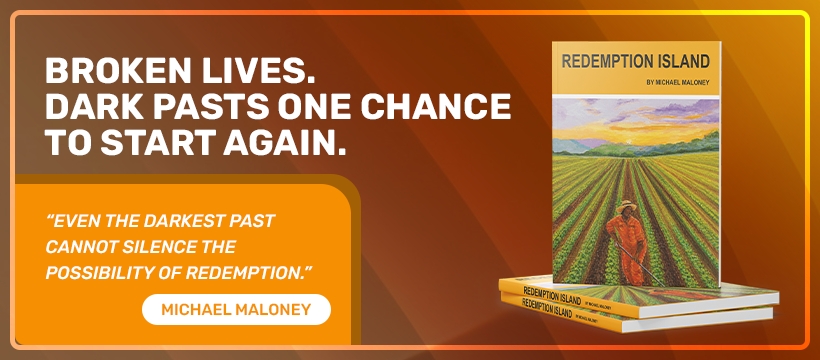
At a time when conversations around prison reform often swing between punishment and politics, Redemption Island enters with a more unsettling and more ambitious proposition. It asks what might happen if the justice system stopped treating incarceration as a holding pattern and started treating it as a structured opportunity for transformation. Built as a novel but grounded in decades of behavioral research, the book presents a fictional rehabilitation model that feels deliberately designed to provoke real-world debate.
Where the Prison Crisis Truly Begins
One of the book’s most striking ideas is that the prison crisis does not begin at sentencing. It begins much earlier, often in the classroom. The author points to a system in which struggling students are passed along without mastering basic literacy.
That failure leaves them shut out from opportunity long before they encounter the criminal justice system. In that framing, prison is not simply a response to crime. It is also the late-stage consequence of institutional failure and missed early intervention.
A Fictional Island Built on Real World Research
Although Redemption Island is a novel, it is not written as a fantasy. Its central model is rooted in the author’s long engagement with behavior analysis, literacy intervention, and structured teaching systems.
In the interview, he makes clear why he chose fiction over an academic format. Academic papers, he says bluntly, are often ignored, while a novel has the power to pull readers into an idea and keep them there. That choice gives the book an unusual dual identity. It is both a story and a policy argument disguised as one.
Why Literacy Sits at the Center of Redemption
At the heart of the novel is the claim that literacy is the first true threshold of freedom. The author argues that a person who cannot read is effectively locked out of work, training, and upward movement. That makes punishment alone feel not only inadequate but circular.
If people leave prison with the same deficits they entered with, the system has done little more than delay the next collapse. In Redemption Island, teaching inmates to read is not treated as a charitable gesture. It is presented as a public safety strategy and a practical foundation for reintegration.
The Human Stories Inside the System
What keeps the book from becoming cold or purely theoretical is its cast. The island is populated by offenders with different histories, different crimes, and different emotional burdens. Some are broken by trauma. Some are shaped by neglect. Some resist change. Others move toward it with surprising force.
These characters give the novel moral complexity because the story refuses to flatten people into symbols. The point is not to excuse what they have done. The point is to ask whether a society can hold people accountable while still creating conditions in which change becomes possible.
What Schools Miss and Why Society Pays for It
The book’s critique of education is sharp and unapologetic. In the interview, the author argues that proven teaching systems remain absent from mainstream classrooms, not because they do not work, but because there is too little accountability for failure.
That frustration runs through the novel. It suggests that when institutions refuse to adopt effective methods, the consequences do not disappear. They simply reappear later in more expensive and more tragic forms through unemployment, social instability, and incarceration.
Reform as Structure Rather Than Sentiment
What makes Redemption Island especially compelling for a business and policy audience is that it does not frame reform as vague compassion. It frames reform as systems design. The island operates through measurable expectations, behavioral consequences, labor, skill building, and incentives tied to progress.
The vision is controversial by design, but it is also practical in its logic. The author repeatedly returns to the belief that behavior changes when consequences are clear, consistent, and connected to meaningful outcomes. In that sense, the book is less interested in slogans than in operational models.

A Provocative Question for the Real World
The novel ultimately asks a question bigger than whether one fictional island could work. It asks whether modern society still believes people can be rebuilt through discipline, education, and responsibility rather than simply contained.
It also challenges leaders in education, justice, and public policy to think beyond maintenance and toward measurable restoration. That is what gives Redemption Island its edge. It does not merely criticize broken systems. It dares to imagine an alternative and insists that the greater risk may be refusing to try one.