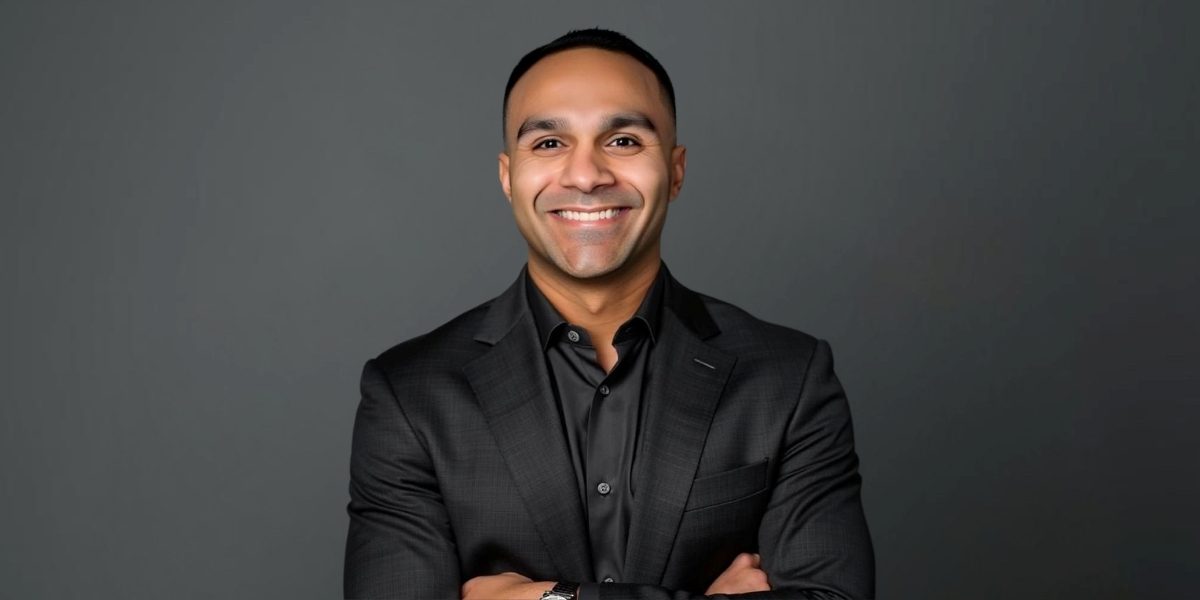

The lending landscape is undergoing a fundamental transformation. For decades, small business owners have faced a narrow gatekeeping system where credit scores, collateral, and traditional financial history determined capital access. But that system is evolving, and Brandon Garcia, CEO of Critical Financing Inc, is watching an industry-wide shift that promises to reshape how lenders evaluate borrowers.
Artificial intelligence and advanced underwriting models are beginning to paint a more complete picture of a business’s financial health. These tools go far beyond the traditional metrics that have long served as industry gatekeepers. For small business owners locked out of conventional lending, this shift means new opportunities and a more equitable path to capital.
Why Has Underwriting Remained Unchanged for Generations
Underwriting has remained largely unchanged for generations. Lenders pulled credit reports, verified income, assessed collateral, and made decisions based on predetermined risk parameters. This approach worked when businesses operated in predictable environments, but the speed of modern commerce, digital business models, and economic complexity has exposed serious limitations in static, backward-looking metrics.
Traditional credit scoring was designed for consumer lending and often fails to capture how small businesses actually operate. A startup founder with limited credit history but a robust business model and strong growth might be rejected, while a business with seasonal fluctuations might appear risky despite entirely predictable cycles. The credit score becomes a blunt proxy for risk when it is actually just one data point among many.
Critical Financing Inc emphasizes that artificial intelligence offers a fundamentally different approach to this challenge. AI-powered underwriting systems can process vastly more information than human underwriters, analyzing transaction histories, cash flow patterns, supplier relationships, and industry trends simultaneously. Rather than asking “Does this applicant fit our traditional risk profile?” lenders can now ask “What is the actual risk, and under what conditions can we lend responsibly?”
AI Assessment Transforms the Credit Score Paradigm
AI underwriting does not eliminate credit scores; they remain one input among many. Instead, it contextualizes them by analyzing bank transaction data directly, measuring cash flow velocity, deposit consistency, withdrawal patterns, and seasonal trends. The system examines invoice histories, supplier payment records, and customer concentration while evaluating client retention, project velocity, and growth trajectories for service-based businesses.
This holistic approach delivers three potential advantages: speed, consistency, and comprehensiveness. In many cases, AI systems can process and analyze data in hours rather than the weeks traditional underwriting requires, promoting greater consistency in decision-making across applications and capturing financial signals that traditional underwriting may miss entirely. It is worth noting that capabilities vary significantly by lender and platform, and responsible implementation requires ongoing monitoring to ensure equitable outcomes.
According to Brandon Garcia, CEO of Critical Financing Inc, the implications are significant: “The way lenders evaluate borrowers is changing. Technology is allowing a more complete picture of a business’s financial health to be considered, which can open doors that would otherwise stay closed.” This perspective reflects a broader industry recognition that outdated assessment mechanisms can be exclusionary, preventing capable business owners from accessing capital they need and can responsibly use.
A business with a lower credit score but exceptional cash flow and a strong growth trajectory might represent lower actual risk than a business with perfect credit but stagnant revenue. AI underwriting creates the conditions for that distinction to be made, something traditional models are structurally ill-equipped to do.
Who May Gain Access Through AI-Driven Lending
Business owners who fall outside traditional lending parameters may gain access to capital they previously could not obtain. Lenders and industry observers have noted that more flexible, data-driven underwriting may open opportunities for founders without extensive credit histories, businesses in emerging or non-traditional sectors, and companies whose revenue structures do not map neatly onto conventional underwriting models. Individual outcomes will vary depending on the lender, the data sources used, and the specific financial profile of the business.
Consider a freelance consultant with a substantial, growing client base but no traditional business credit because they operate as a sole proprietor. A traditional lender might decline them based on personal credit alone, but an AI system evaluating actual revenue, client retention, and growth trajectory may identify them as a strong candidate. Similarly, a retail owner with seasonal cash flow patterns can be assessed more realistically rather than penalized for predictable revenue cycles tied to holiday shopping or tourism.
Brandon Garcia argues that more inclusive lending is also sound business practice, identifying creditworthy opportunities that conventional screening overlooks. Capital directed toward businesses with genuine growth potential, rather than being restricted by criteria that do not reflect actual risk, benefits lenders and borrowers alike.
Preparing Your Business for Data-Driven Lending
For business owners planning to seek capital, the shift to AI underwriting changes how preparation should be approached. Financial data has become more important than ever, not because perfect metrics are required across the board, but because demonstrating actual business financial health is now central to how lending decisions are made. Clean, organized financial records have become a baseline expectation.
Business owners should maintain current transaction data showing real-time business performance, not just tax returns filed months ago. Operating through a dedicated business bank account with clearly categorized transactions strengthens the data picture significantly. Consistent use of accounting software and organized records of invoices, contracts with major clients, and payment schedules all contribute to the financial narrative that AI systems are designed to read.
As Critical Financing Inc has closely observed, lending models are continuing to fragment, with different lenders applying different criteria and drawing on different data sources. This creates more options for business owners but also greater complexity in the decision-making process. The one-size-fits-all banking approach is giving way to a specialized ecosystem where some lenders focus on specific industries, revenue ranges, or financing models that differ substantially from traditional term loans. Success in this environment requires finding alignment with lenders whose evaluation methods match a business’s actual financial profile.
The Broader Shift in Financial Services
The rise of AI underwriting reflects a larger transformation in how the financial services industry approaches lending. Capital allocation has long been constrained by legacy systems designed for a different era, one in which financial information was scarce, expensive to obtain, and slow to process. In today’s environment, where significantly more financial data is available in real time than ever before, those constraints increasingly feel misaligned with the realities of modern business.
The transition will not be instantaneous, and traditional underwriting will remain relevant across much of the market for years to come. However, lenders who assess risk more accurately, through more comprehensive information and more sophisticated pattern recognition, carry clear competitive advantages. They can make better decisions faster and serve broader markets, which creates natural pressure across the industry toward more advanced approaches.
For business owners, this evolution is broadly positive. More accurate risk assessment enables more appropriate pricing. Faster decision-making reduces uncertainty and allows quicker action on growth opportunities. And broader access means more businesses can obtain the capital they need rather than facing exclusion based on criteria that do not reflect actual financial performance.
Business Lending’s Transformation Ahead
The financial services industry stands at an inflection point where available tools, data, and methodologies make more intelligent and inclusive lending possible at a meaningful scale. Critical Financing Inc underscores that the challenge ahead is as much organizational and cultural as it is technological. Lenders must update their processes and risk frameworks. Regulators must ensure these systems are used responsibly and transparently. And business owners must adapt to environments where actual financial performance carries more weight than fitting a traditional mold.
Businesses that thrive in this environment tend to embrace transparency and maintain strong operational and financial discipline. The era of opaque lending decisions is beginning to fade, as data-driven approaches demand greater transparency from both lenders and borrowers, creating systems where better information leads to better outcomes on both sides of the table. For small business owners seeking capital, this is a meaningful and positive development, provided they are prepared to present their financial reality clearly and completely.
About Brandon Garcia of Critical Financing Inc
Brandon Garcia is CEO of Critical Financing Inc, a financial services company specializing in alternative lending and capital solutions for small businesses. He leads the company’s mission to assess borrower creditworthiness beyond traditional credit metrics, enabling faster funding and expanded access to capital. Garcia’s focus on advanced technology and data analysis has positioned Critical Financing Inc as a resource for business owners seeking flexible financing solutions tailored to their actual financial circumstances.