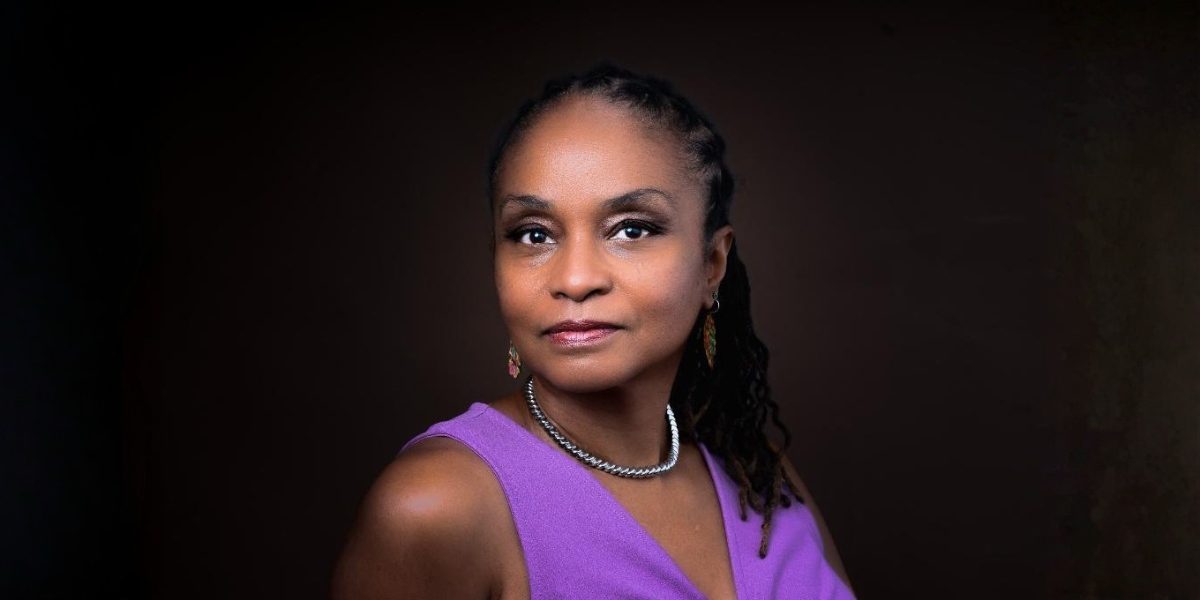

By: Blake Daniels
Motherhood in Carol Mitchell’sA Good Haunting: Stories is not presented as a single emotional state or a predetermined destiny. It can be loving, frightening, complicated, joyful, sacrificial, unwanted, or all of those things at once. Across nine speculative stories, Mitchell places women and families in extraordinary circumstances while asking questions that remain grounded in recognizable relationships.
Mitchell is the author of A Good Haunting, the novel What Start Bad a Mornin’, and nineteen books for children. Her book reviews and short stories have appeared in numerous journals. She holds an MFA and is a fellow of the Virginia Center for the Creative Arts and several other arts institutions. She also teaches writing while continuing her own creative work on a new novel.
A Good Haunting blends myth, magic and realism in stories connected to Caribbean identity and Afro-Caribbean traditions. The settings range from the Caribbean to Europe, Africa and the United States. Death is a recurring antagonist, but the collection is equally interested in the bonds people form, the roles they inherit and the choices they make when those roles become restrictive.
One of the collection’s opening concerns is a woman attempting to transcend traditional Caribbean expectations of wife and mother in order to fulfill what she believes is her real destiny. Elsewhere, maternal devotion becomes morally difficult, even frightening. The stories push beyond sentimental ideas of motherhood by asking what people might do when love, survival and identity pull in different directions.
For Mitchell, those questions are tied to personal experience without being limited to autobiography.
“Being a mother and a daughter are two of the most important relationships in my life,” Mitchell said. “They are beautiful, fulfilling, complex, and sometimes fraught relationships.”
That complexity matters because Mitchell sees a long history of film and literature presenting women with a much narrower script. The familiar cultural message, she said, has often been that every woman should want children, that women are naturally programmed for motherhood and that total sacrifice is an expected duty once motherhood begins.
“This reflects some women’s experiences for sure, but overall it’s a one-sided view that is laughably far from reality,” Mitchell said.
Her goal is not to replace one simplified portrayal with another. Instead, A Good Haunting makes room for conflicting truths.
“I hope that my work contributes to the portrayals of motherhood that leave space for it to be wonderful, complex, and challenging, sometimes simultaneously, and also as a life experience that not every woman desires,” she said.
Speculative fiction gives Mitchell room to make those tensions visible in heightened form. In one story, a mother’s determination to protect her own child leads to devastating choices involving other children. In another, transformation draws on a dangerous figure from Caribbean and African lore. These situations are fantastical, but the emotional questions underneath them are familiar: What is owed to family? What remains of the self inside a prescribed role? What happens when care and fear become inseparable?
Mitchell’s fascination with the natural world also shapes her treatment of female roles. She researches relationships among non-human animals and the functions assigned to females of different species. Those observations can become the starting point for speculative “what if” scenarios.
“I am fascinated in the ways in which nature protects and perpetuates itself in ways that seem fantastical, and I often transfer these abilities to my characters,” Mitchell said.
That method helps explain why the collection can move from intimate family conflict to transformation, immortality and supernatural encounters without losing its emotional center. The unusual event is often a pressure test for an ordinary relationship. That allows Mitchell to question cultural expectations without flattening the women in the stories into examples or arguments. Their decisions can be admirable, conflicted, harmful or understandable, and the speculative settings create room for those contradictions to remain unresolved.
Grief adds another dimension. Mitchell says the recurring presence of death in the collection was initially unplanned, but she later recognized how personal experiences with sudden and complicated losses were continuing to work through her imagination. For her, grief includes not only the death of loved ones but also lost opportunities and lost ways of life.
By bringing motherhood and grief together, A Good Haunting resists easy conclusions about what women should feel or how they should behave. Its characters are allowed contradictions. Love can coexist with resentment. Duty can collide with ambition. Protection can carry a cost. Motherhood can be fulfilling without becoming the only possible measure of a woman’s life.
That fuller range is part of Mitchell’s larger project: portraying Caribbean-connected characters as complete people whose desires and fears are both culturally specific and widely human.
A Good Haunting is available on Amazon.