
Childhood abuse can leave lasting injuries, but the response to a disclosure can shape what happens next. When families or institutions protect their standing instead of a child, the harm extends beyond the original act: trust erodes, survivors may be left isolated, and accountability becomes harder to secure.
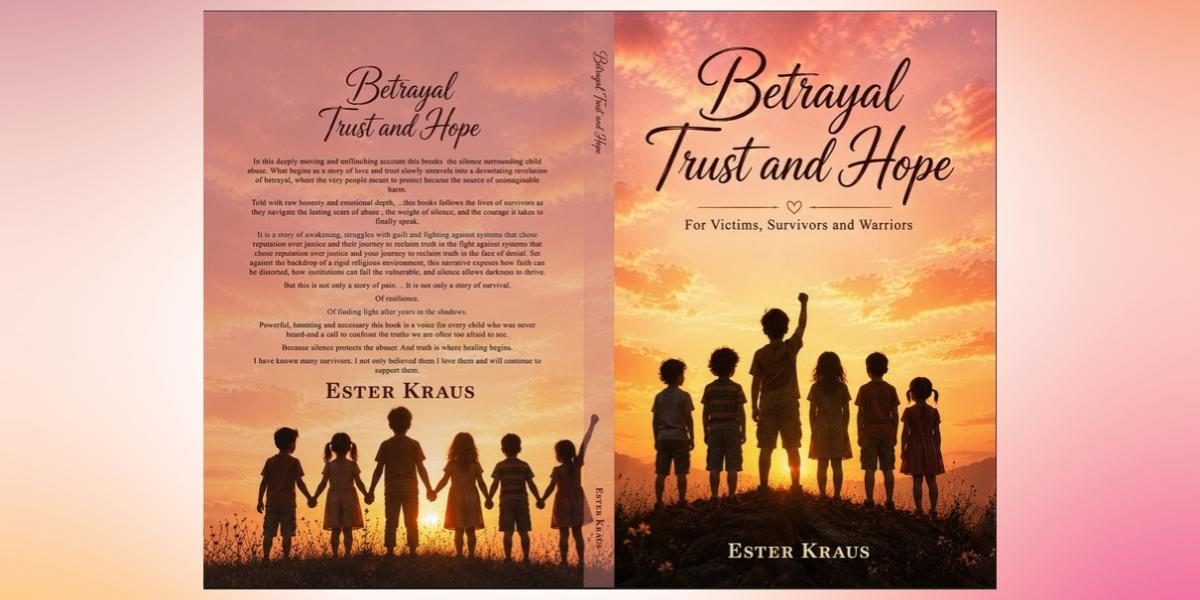
Ester Kraus addresses these linked failures in Betrayal Trust and Hope for Victims, Survivors and Warriors, a 2026 book of poetry, personal reflection and narrative passages devoted to abuse, trauma and survivor advocacy. The result is both a personal account and a wider appeal for communities to examine how they respond when vulnerable people speak.
Harm After the Harm
Across 20 chapters, Ester Kraus considers the emotional and psychological effects that can follow abuse, including grief, guilt, triggers, post-traumatic stress disorder and obsessive-compulsive disorder. These effects can persist in relationships and everyday life long after others assume time has healed the past.
The manuscript also challenges common assumptions about disclosure. Fear of being disbelieved can keep victims silent, and Ester Kraus specifically recognizes the barriers boys and men may face when speaking about abuse. The demand to prove one’s pain adds another obstacle to telling the truth.
When Institutions Choose Silence
A central thread concerns the conflict between institutional reputation and the responsibility to protect children. She asks readers to consider not only who commits abuse, but who benefits when the people harmed are discouraged from speaking. She writes about abuse within a religious setting and the isolation that can follow when concerns are minimized or suppressed. Her criticism is directed at systems that confuse loyalty with silence and authority with moral credibility.
Ester does not treat faith itself as the enemy. She questions how religious belonging is used to discourage scrutiny or prioritize institutional unity over vulnerable people. Her perspective is personal. She recounts the abuse experienced by her children and the pain of facing its consequences as a parent.
From Isolation to Advocacy
Ester Kraus describes finding a wider community of support in Silentlambs, an organization associated with survivors of abuse in religious environments. She volunteered with the organization, served as an international volunteer for the Mint Green Ribbon for the Awareness of Abuse initiative, and participated in an abuse awareness panel associated with SNAP, the Survivors Network of those Abused by Priests.
These experiences inform the book’s emphasis on collective recognition. Isolated stories can be dismissed. When survivors are heard together, patterns become harder to ignore. Shared testimony cannot undo trauma, but it can challenge shame and direct attention toward broader responsibility.
Hope Without Simplifying the Pain
The title’s movement from betrayal to trust and hope is not a promise of easy recovery. Ester Kraus recognizes that healing may involve grief, difficult memories, and professional support. Her closing message urges survivors to seek help, connect with advocacy organizations, and speak when they are able. Its warrior is not someone who never suffers, but someone whose identity need not be confined to what was done to them.
Takeaway
At its core, Betrayal Trust and Hope for Victims Survivors and Warriors asks communities to measure their principles by their actions. Listening to survivors is a beginning, not a substitute for protection or accountability.
Explore Ester Kraus’ book and join the essential work of listening, supporting survivors, and insisting that children’s safety must always come first.