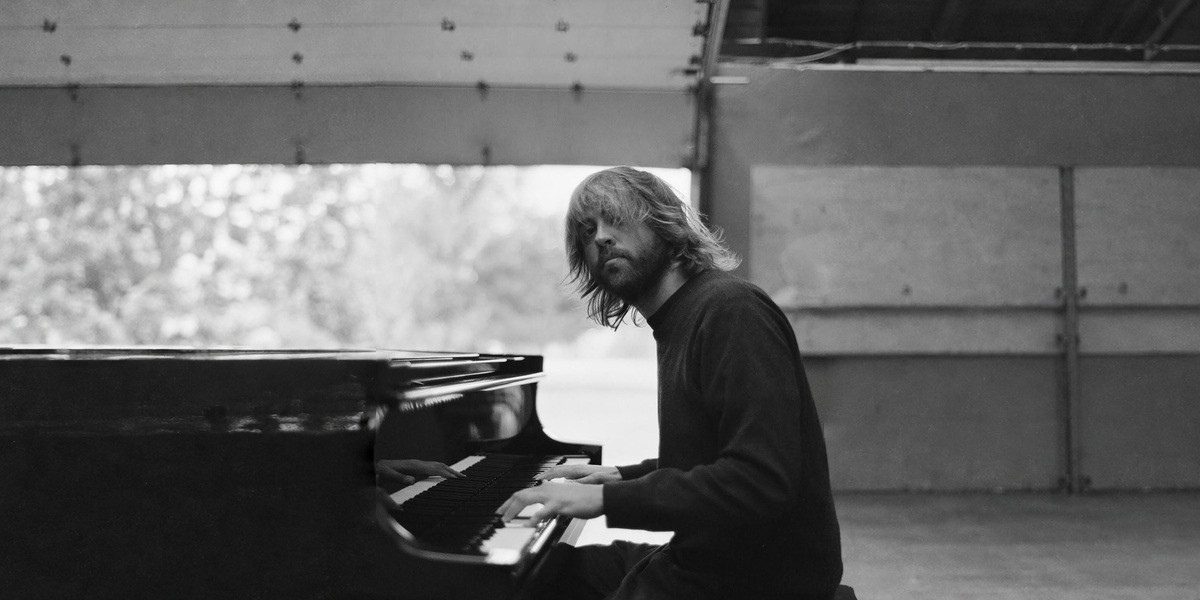

From a childhood filled with four-hand piano music to an ambitious new recording project, pianist Axel Quincke reflects on the delicate balance between mastery and spontaneity, and the possibilities of bringing classical music closer to its listeners.
Music can be learned through scales, scores, and disciplined repetition. But the reason an artist returns to an instrument, day after day, is often harder to explain. For Axel Quincke, that reason lies not in a particular prize, stage, or career milestone, but in the experience of entering a musical world where ordinary language becomes unnecessary.
The piano is at once a demanding craft and a place of freedom, a way to explore emotion, lose track of time, and communicate without deciding in advance what another person should feel.
Shaped by Beethoven, Chopin, Rachmaninoff, and the example of Martha Argerich, Quincke’s artistic outlook now points toward a future that blends classical repertoire, improvisation, and more intimate performances.
A Musical Language Learned at Home
Long before the piano could be described as a profession, it was part of the atmosphere of Axel Quincke’s home. Both parents played, sometimes sitting together to perform four-hand works, with two people sharing one keyboard and one musical conversation. Classical music was not an occasional event or a distant cultural ideal. It was familiar, immediate, and woven into everyday life.
Yet the first creative impulse was not limited to sound. As a child, Quincke was drawn to drawing, fascinated by the chance to invent images and express ideas visually. The shift toward music came gradually.
Piano lessons began around the age of nine, and over time the instrument became the most natural outlet for imagination. What drawing once offered in lines and colors, the piano began to offer through touch, rhythm, harmony, and silence.
There was no decisive moment of announcing a lifelong career. In fact, Quincke recalls never really thinking of music primarily as a way to earn a living. Its importance came before any professional calculation. “The piano became a way of expressing things that couldn’t be expressed through words, and in many ways, it still is,” Quincke explains.
Rather than a career selected at a single turning point, music became an ongoing relationship with the instrument, renewed with each return to the keyboard.
Why Perfection Is Not Enough
Classical piano demands extraordinary precision. Notes must be learned, difficult passages refined, and technical problems solved through patient repetition. There is no shortcut around the physical and intellectual work. Yet technical excellence, in Quincke’s view, is only the beginning of artistic communication.
“You can play every note perfectly and still communicate very little,” Quincke says. The statement challenges the easy assumption that a flawless performance is necessarily a moving one. Technique makes expression possible; it does not create the expression by itself. The deeper question is what kind of human presence can be heard through the polished surface of a piece.
For this artist, individuality, sensitivity, and authenticity separate a memorable musician from a merely accomplished one. A performer can master the conventions of phrasing, timing, and tone, yet still sound as though the music belongs entirely to someone else. A distinctive artistic voice emerges when those learned skills are absorbed deeply enough to serve a personal understanding of the work.
The most striking moments are not always the loudest or fastest. “Sometimes a single note can communicate more than an entire passage of extraordinary technical difficulty,” Quincke observes. One carefully placed sound can contain hesitation, longing, resolve, or tenderness. Its impact depends not on complexity alone but on the intention and quality of attention behind it.
Virtuosity still matters, but its purpose is to expand expressive possibilities. When technique and personal feeling meet, the audience hears an individual perspective rather than just an impressive sequence of notes.
Finding Freedom in Inner Silence
What, then, should an audience feel during a performance? Some musicians might describe a specific emotional journey they hope to create. Axel Quincke approaches the question differently. “I don’t really think about what I want the audience to feel,” Quincke says. The experience of listeners matters, but it is not something to engineer or dictate.
Instead, attention turns inward. During the deepest moments of performance, the ordinary awareness of time can fall away. So can the sense of a separate self consciously directing each gesture. Music seems to unfold with a momentum of its own. The player is fully involved, yet the experience does not feel controlled in the usual way.
Quincke describes a connection to “inner silence” (not silence in the literal absence of sound, but a state in which thought recedes and listening becomes especially clear). “The more connected I am to that inner silence, the more naturally the music flows,” Quincke explains. What happens in the hall may grow out of that state rather than from a predetermined plan for the audience.
There is a paradox here: years spent mastering details can make it possible to stop consciously controlling them. Preparation makes spontaneity possible, allowing attention to move beyond mechanics.
Quincke speaks of the flow of music as if it comes from an intelligence beyond deliberate thought. It is a personal description rather than a technical theory, and it points to an aspect of live performance that is difficult to measure. A concert is more than a reproduction of a score. It is an encounter with what becomes possible when a performer is deeply present in the moment.
The Composers and Artists Who Opened Doors
The earliest great influence was Beethoven. As a child, Quincke was captivated by his sonatas, works whose dramatic contrasts and expressive scope offered an invitation to the instrument itself. Listening to Beethoven was among the reasons the young musician wanted to begin playing. In that sense, the composer was not simply a name in the repertoire; he helped ignite the desire to make music.
Another formative presence was Martha Argerich, admired for her extraordinary technique, intensity, and sense of freedom. One of Quincke’s piano teachers worked as Argerich’s manager in Argentina, creating a personal connection to her musical world. Recordings of her performances became a source of fascination during childhood. For an emerging artist, such examples can make a lasting impression. They reveal how an instrument governed by exact notation can still sound fiercely alive and spontaneous.
Chopin has remained a constant source of inspiration, too. His music can make intimacy feel expansive, finding emotional depth in a phrase, a pause, or a shift of color. More recently, Quincke has developed a stronger appreciation for Rachmaninoff, whose music offers its own combination of lyricism, architecture, and expressive intensity.
These influences are not a fixed formula. Each reveals different possibilities for the piano. The challenge is to learn from admired artists without becoming an echo of them.
The Work That Must Become Invisible
Audiences encounter the result of preparation, rarely the full process. They may hear an apparently effortless sequence of phrases without knowing how many times a passage was isolated, questioned, adjusted, and practiced. For Axel Quincke, one of the central challenges is balancing that demanding discipline with the freedom that makes a performance feel alive.
The same compositions must be revisited again and again, sometimes over a period of years. What once seemed technically impossible may eventually become familiar, but familiarity brings its own risk. Repetition can drain a piece of surprise if the musician stops listening with fresh attention. The discipline lies in doing the work and in protecting the curiosity that made the work meaningful in the first place.
Technical problems can be remarkably private. A listener might never notice a particular obstacle, nor appreciate the time required to solve it. That invisibility is, in some respects, the goal. Quincke wants the effort behind the performance to recede until what remains is the feeling of music moving naturally.
The classical piano world is relatively small, so building a career also demands persistence, creativity, and independence. Artists must think about how to reach audiences beyond conventional recitals.
Even with those pressures, Quincke returns to the same essential priority: the original pleasure of playing cannot be lost. Without it, discipline risks becoming an end in itself. With it, hard work remains connected to the curiosity of the child who first sat down at the keyboard.
The Same Score, a Different Human Being
An interpretation is never entirely fixed because the interpreter is never entirely fixed. As Quincke grows older and gains experience, familiar works begin to reveal different meanings. A passage played one way years earlier may now call for more patience, less force, or a different understanding of its emotional weight.
“The notes may remain exactly the same, but the person playing them is constantly changing,” Quincke says. This is especially true when returning to pieces written late in a composer’s life. Their emotional and structural complexity can become more accessible as a performer develops greater personal maturity. Experience outside music can sharpen perception inside it.
Over time, Quincke has become increasingly drawn to simplicity, space, and the expressive importance of letting music breathe. Those qualities are not necessarily signs of playing less. They can reflect a more precise sense of what deserves emphasis and what should be allowed to remain understated. A phrase may be transformed not by adding detail, but by giving it enough room to speak.
A performance is a temporary understanding, not the final definition of a work. The same music can be rediscovered at another age, in another mood, or before another audience.
Taking the Piano Beyond the Traditional Stage
That openness to change now extends beyond interpretation to the shape of a concert itself. Axel Quincke is developing a solo album that will bring classical music together with original improvisations. Subtle electronic textures and atmospheric sounds may also find a place in the recording. The project is not described as a rejection of tradition, but as an intimate extension of an approach already present in live performances, which move freely among established repertoire, improvisation, and different musical languages.
Improvisation offers a particular kind of immediacy. Where a written score creates a conversation across time with a composer, improvisation allows the musician to follow an idea as it emerges. Bringing the two together can make a program feel both rooted and exploratory. If electronic elements become part of the album, their role appears intended to support atmosphere and reflection rather than overwhelm the central voice of the piano.
The same curiosity shapes Quincke’s interest in rethinking where and how audiences listen. Earlier performances took place largely in conventional concert settings. Increasingly, however, the musician has been drawn to more intimate arrangements in which listeners might sit close to the piano, or even around it. Such proximity changes the experience. The instrument becomes less remote, the performance less formal, and the act of listening more immediate.
Unconventional venues are part of that vision. A classical piano performance need not always unfold in the setting people expect. Moving the instrument into an unexpected space can invite fresh attention from listeners and loosen assumptions about who classical music is for. The aim is not novelty for its own sake but a more direct musical encounter.
Ultimately, Quincke’s ambitions are less about naming one coveted stage than about broadening the possibilities of the form. A new recording, experiments with atmosphere, and a closer relationship between performer and listener all point in the same direction, honoring the depth of the classical tradition while allowing the experience around it to evolve.
The journey began with two parents sharing a piano and a child discovering that music could speak where words could not. For Axel Quincke, years of practice and changing interpretations have deepened that discovery. What remains is the search for a moment when effort gives way to freedom and performer and listener meet in the same attentive silence.