Industrial Plumbing, Essential Systems for Modern Industrial Facilities

Industrial plumbing is an essential part of the infrastructure that supports factories, warehouses, manufacturing plants, processing facilities, and other commercial and industrial environments. Unlike residential plumbing, which primarily focuses on supplying water and removing wastewater from homes, industrial plumbing involves more complex systems designed to handle large volumes of water, specialised equipment, demanding operating conditions, and strict safety requirements.

These systems may include water supply networks, drainage systems, industrial piping, process water lines, and equipment connections. Depending on the facility, plumbing infrastructure may also need to accommodate high temperatures, pressure variations, chemical exposure, and continuous operation. A properly designed system helps businesses maintain productivity, protect their equipment, and provide a safe working environment for employees.

Understanding the requirements of industrial plumbing allows facility managers and business owners to make informed decisions about installation, maintenance, repairs, and long-term infrastructure planning.

The Importance of Proper Industrial Plumbing Design

Effective plumbing design is fundamental to the performance of an industrial facility. Before installation begins, professionals must evaluate the building’s layout, water consumption, drainage requirements, production processes, and future expansion plans. These factors influence the selection of pipes, fittings, valves, pumps, and other essential components.

An industrial facility may require several independent plumbing networks to serve different purposes. For example, ordinary water supply lines may operate separately from process water systems, cooling equipment, or specialised drainage infrastructure. Separating these systems appropriately helps prevent contamination and ensures that each network operates according to its intended function.

Material selection is another important consideration. Depending on the application, engineers may specify stainless steel, copper, approved plastics, or other suitable materials. Each option has different properties relating to durability, corrosion resistance, pressure tolerance, and temperature performance.

A well-planned system also considers accessibility. Pipes, valves, and connections should be positioned so technicians can inspect and service them without unnecessarily disrupting operations. Careful planning at the design stage can reduce future repair costs and help businesses avoid expensive modifications.

Common Industrial Plumbing Systems and Applications

Industrial plumbing encompasses a wide range of systems that support everyday business operations. Water distribution is one of the most important, providing the supply needed for manufacturing processes, sanitation, cleaning, cooling, and employee facilities. Depending on the industry, water quality and pressure may need to meet specific operational standards.

Drainage and wastewater management are equally important. Industrial facilities often generate wastewater from equipment cleaning, production activities, and routine maintenance. Drainage systems must be designed to handle the expected flow while complying with applicable environmental and plumbing regulations. Certain facilities may also require pretreatment systems before wastewater can enter the public sewer network.

Industrial piping systems connect machinery, tanks, pumps, and other equipment. These networks must be suitable for the fluids they carry and the conditions under which they operate. Incorrect pipe sizing, unsuitable materials, or poorly installed connections can lead to leaks, pressure problems, and operational interruptions.

Plumbing can also work alongside heating, ventilation, and air conditioning systems. For example, water lines and drainage connections may be necessary for cooling equipment, boilers, and other mechanical installations. Coordinating plumbing with electrical and HVAC infrastructure helps create a more reliable and efficient facility.

Preventive Maintenance and Reliable Performance

Regular maintenance is essential for keeping industrial plumbing systems operating efficiently. Because many industrial facilities depend on uninterrupted production, even a relatively small plumbing fault can affect multiple departments, delay orders, and increase operating expenses.

Preventive maintenance involves inspecting pipes, valves, pumps, joints, and drainage components to identify potential problems before they become serious. Technicians may look for corrosion, unusual pressure changes, leaks, blockages, damaged insulation, and signs of equipment deterioration.

Water quality should also be monitored where mineral deposits, sediment, or chemical imbalances could affect performance. In systems that use heated water, cooling equipment, or specialised industrial processes, appropriate cleaning and treatment procedures can help reduce scaling and corrosion.

Maintenance schedules should reflect the facility’s operating conditions, equipment specifications, and the consequences of a possible failure. High-demand systems may require more frequent inspections than infrastructure used occasionally.

Maintaining accurate service records is another useful practice. Documentation of repairs, inspections, component replacements, and recurring faults helps facility managers recognise patterns and plan future maintenance budgets. This approach supports better decision-making and reduces the likelihood of unexpected disruptions.

Safety, Compliance, and Professional Installation

Industrial plumbing projects must account for safety throughout the design, installation, and maintenance process. Improperly installed pipes, leaking connections, inadequate drainage, and unsuitable materials can create risks for workers, equipment, and the surrounding environment.

Compliance requirements vary according to the facility’s location, industry, and intended use. Projects may need to meet local plumbing codes, building regulations, backflow prevention requirements, wastewater standards, and relevant workplace safety rules. Systems carrying hazardous or specialised substances may require additional controls and carefully selected components.

Professional installation helps ensure that plumbing systems are correctly sized, securely connected, and tested before being placed into service. Qualified contractors can assess existing infrastructure, identify potential weaknesses, and recommend solutions that match the building’s operational requirements.

Coordination between plumbing professionals, mechanical contractors, electricians, engineers, and facility managers is particularly important during new construction and major renovations. Clear communication helps prevent conflicts between systems and ensures that maintenance access, equipment placement, and utility connections are properly considered.

Businesses should also ensure that employees know how to report leaks, recognise plumbing-related hazards, and follow established emergency procedures.

Improving Efficiency and Planning for the Future

Modern industrial facilities increasingly focus on reducing water consumption, controlling operating costs, and improving the reliability of essential building systems. Industrial plumbing can contribute to these goals through efficient fixtures, leak detection, appropriate pressure regulation, and water recycling where technically and legally suitable.

Monitoring water consumption can help businesses identify unusual usage patterns that may indicate hidden leaks or inefficient processes. Upgrading outdated pipes, pumps, and valves may also improve performance, particularly when existing components require frequent repairs or no longer meet operational demands.

Long-term planning should consider changes in production capacity, new equipment, and potential building expansions. Designing infrastructure with sufficient flexibility can make future upgrades easier and reduce the need for major reconstruction.

Industrial plumbing is ultimately an investment in the reliability, safety, and efficiency of a facility. By combining thoughtful design, professional installation, routine maintenance, and responsible resource management, businesses can protect their infrastructure and support consistent operations. Working with experienced plumbing professionals helps ensure that systems meet current requirements while remaining adaptable to future industrial needs.


D-BAT, Cade Griffis, and Kyle Griffis, The Company’s Approach to Training, Equipment, and Continued Growth in Baseball and Softball

Sports training businesses often face a basic challenge as they grow. A program that works at one facility must be adapted without losing the features that made it useful in the first place. That challenge becomes more visible when a training company operates across many locations. Staff, equipment, instruction, and customer services all have to work within a common framework. D-BAT has built its business around this combination of training facilities, instruction, equipment sales, and franchising. The company was founded in 1998 in Addison, Texas, by Cade Griffis and Kyle Griffis. Its development since then has included new training services, equipment sales, franchising, and expansion beyond its original market.

The company’s early model grew from a practical need identified by the Griffis brothers. According to D-BAT’s account of its history, Griffis had been traveling to different cities to provide private baseball lessons. The brothers concluded that an indoor facility could provide a dedicated setting for players in the area. Their first facility opened in Addison in 1998. The company describes the original goal as creating an indoor environment suited to players at different levels. The business later expanded its services beyond lessons and cage rentals. Camps, clinics, equipment sales, and other forms of training became part of the model as D-BAT developed its network.

The training model has remained tied to physical facilities. D-BAT locations provide batting cages, pitching machines, lessons, camps, and clinics. Its current materials state that the company serves players from youth levels through professional baseball, while its main customer group is generally between ages six and 18. The company also lists more than 50 camps and clinics annually at some locations, although offerings vary by facility. Membership programs provide another way for players to use training equipment, with benefits that can include pitching machine access and discounts on lessons, camps, clinics, and pro shop merchandise. These services give individual facilities several ways to structure their training operations.

Equipment has also been part of the business since its early years. D-BAT expanded into manufacturing through D-BAT Sports, producing wooden bats and importing other baseball equipment. In a 2017 interview with the Dallas Business Journal, Griffis said equipment represented about $3 million of the company’s previous year’s revenue. The same report said D-BAT had generated $18 million in revenue across its U.S. sites in 2016. Those figures provide a view of the company’s business at a particular stage of its expansion, before its later growth in locations. They also show that equipment sales were an established part of the company rather than a recent addition to its training operations.

The equipment business has changed as the company has grown. D-BAT’s current facilities offer products that include wooden bats, gloves, batting gloves, and baseball and softball accessories. Its facilities have also worked with established equipment brands. D-BAT materials describe a partnership with Rawlings and Easton that allows participating facilities to carry products from both companies and provide opportunities for customers to test selected bats in batting cages. The arrangement places equipment alongside instruction rather than treating the two activities as unrelated parts of the business. This reflects a broader structure in which the facilities serve as training centers while also functioning as locations where players can access and purchase sports equipment.

Franchising became a major stage in D-BAT’s development. The company says it began franchising operations in 2008, while its historical material describes the first franchise locations as opening during the following period. Independent coverage from D Magazine reported that D-BAT had 24 academies open by 2015, with additional locations under construction or already sold. The report also described franchise investments of about $350,000 to $500,000 per location at that time. By 2017, the Dallas Business Journal reported 32 U.S. sites and 41 territories sold. These figures show how quickly the business moved from a single Addison facility toward a larger franchise network.

The company’s international plans followed its expansion within the United States. In 2017, D-BAT announced a deal with a group in China, with commitments for three cities and plans for 10 locations within two years. The company also identified Canada, Mexico, and the Dominican Republic as markets it was considering at the time. The China expansion was significant because it marked a move beyond the U.S. franchise system. The available reporting does not establish that every proposed location opened or that each market developed as initially planned. It does establish that international growth had become part of D-BAT’s strategy by 2017, alongside continued domestic franchising.

D-BAT’s current materials present the company as a network combining training facilities with products and instruction. Its stated mission is to provide a teaching environment and instruction for players from Little League through professional levels. The company also lists several major league players and former prospects who have trained at its facilities, including Clayton Kershaw, Ben Zobrist, Dylan Bundy, Archie Bradley, and Jordan Walden. Such listings are company claims and should be treated as evidence of the athletes associated with its facilities rather than proof of particular training outcomes. The distinction matters when assessing the company’s wider role in player development, especially because independent evidence about individual results is not uniform across the network.

The scale of the network has changed substantially since the Addison facility opened. D-BAT’s own history now describes a network of more than 170 locations and a staff exceeding 1,600 people, while client-provided figures place the wider network at more than 215 locations in later years. Because location counts can change and published figures differ by date, the most useful point is the direction of growth rather than treating one number as permanent. The company has moved from one Texas facility in 1998 to a franchise system spanning multiple states and international markets. That development has kept training, equipment, and franchise operations linked under the D-BAT model.

Looking ahead, the available public record supports continued operation of that combined model more clearly than it supports claims about specific future products or expansion targets. D-BAT continues to offer training, memberships, camps, clinics, equipment, and franchise opportunities through its network. Its history also shows repeated changes in scale, from the original Addison facility to a national franchise system and attempted international expansion. Griffis remains associated with the company as its chief executive, while the business continues to operate through the structure developed over more than two decades. For Cade Griffis, the company’s trajectory places his entrepreneurial work within a longer record of baseball training, equipment sales, and franchise development.

Cade Griffis’s role in building D-BAT therefore sits at the intersection of baseball experience and business development. The company began with private lessons and an indoor facility in 1998, then added equipment manufacturing, product sales, franchising, and international expansion. Its present structure reflects those successive stages rather than one single change in strategy.

Back Pain After Work? What Your Daily Routine Might Be Missing

If your back hurts after work, your daily routine might be missing regular movement, short breaks and simple adjustments that help you stay comfortable, while persistent pain may need support from a physical therapist.

Key Takeaways

  1. Back pain after work can result from prolonged sitting, standing, repetitive movements, stress, or poor sleep.
  2. Small daily changes, like taking short breaks, moving regularly, and adjusting your workspace, may help ease discomfort.
  3. Persistent or worsening back pain may be a sign it’s time to seek help from a physical therapist.

Why Does Your Back Hurt After Work?

Your back may hurt after work because you’ve spent hours in the same position or doing the same movements. But that doesn’t always mean you’ve injured your back.

Maybe you spend most of your day at a desk, going from one meeting to another. When you finally stand up, your lower back feels tight. Or maybe you’re on your feet all day, lifting, bending, and carrying things. By the time you get home, all you want to do is sit down and rest, but your back is bothering you.

And it’s not always just about work. Poor sleep, stress, or back pain you’ve had before can also affect how you feel.

Noticing when your back starts hurting is a good first step. But it doesn’t always tell you why.

What Can Help Ease Back Pain After Work?

When your back hurts after work, spending the whole evening in bed usually isn’t the answer. Gentle movement and a few simple changes can help you feel more comfortable.

Here are some things you can try when you get home:

  1. Take a short walk. You don’t need a workout after a long day. Try walking around your home or outside for a few minutes, as long as it feels comfortable. If something makes your pain worse, don’t push through it.
  2. Try heat or cold. If your back feels tight or stiff, a warm pack may help. A cold pack may also ease soreness. Just remember to wrap either one in a towel to protect your skin.
  3. Rest, but don’t stay in bed all evening. It’s fine to take a break when your back is bothering you. Find a comfortable position, rest when you need to, and return to light activities as you feel able.
  4. Pay attention to what helps. Over the next few days, notice when your back starts hurting and what makes it feel better or worse. You can even keep a quick note on your phone.

What helps one person may not work for another. The important thing is to find what feels comfortable for you without making the pain worse.

What Can You Change During Your Workday?

You can’t always change your work setup. Maybe you spend hours standing in front of a computer screen that’s too low, and you’re not allowed to move it. Being told to “just fix your workspace” isn’t much help when you don’t have that option.

But there may still be small changes you can make to help your back feel more comfortable, even if your job doesn’t give you much flexibility.

Here are some things worth trying:

  1. Change positions throughout the day. If you sit at a desk, try standing during a phone call or adjusting how you sit. If you’re on your feet for hours, take a chance to sit when your job allows it.
  2. Take advantage of short breaks. Between meetings or tasks, get up to refill your water or walk around for a minute. You don’t need to set aside a big chunk of time to move.
  3. Make your workspace more comfortable. Keep your screen in front of you, your feet supported when sitting, and the things you use most within easy reach. If you’re constantly stretching to reach something, see if you can move it closer.
  4. Make physical tasks easier when you can. If you spend your day moving boxes or carrying supplies, use a cart when one is available. Ask for help with anything too heavy or awkward to lift safely. And if you keep having to bend or reach in ways that hurt your back, let your supervisor know. Sometimes the work setup needs to change, not you.

You don’t have to get everything right at once. Start with the changes that fit your job and see what feels better for you.

When Is It Time to Get Help for Back Pain?

If your back pain keeps coming back, isn’t getting better, or makes everyday activities harder, it might be time to see a physical therapist.

Maybe you’ve tried making changes at work, but your back still hurts by the end of the day. Or perhaps the pain is starting to affect things you enjoy, like going for a walk, playing with your kids, or getting a good night’s sleep.

A physical therapist can do more than simply tell you to stretch. They can look at how you move, ask about your symptoms, and work with you on a plan that fits your daily life. Depending on what you need, that might include specific exercises, hands-on treatment, or guidance on getting back to activities you’ve been avoiding.

You don’t have to wait until back pain takes over your day to ask for help.

How an Ordinary Life Becomes a Legacy

Some lives announce themselves with achievement. Others leave their mark in quieter ways. A meal prepared before sunrise, a hand placed on a tired shoulder, a house repaired one board at a time, a child taught to finish what he starts. The Life They Carried: A Sumrall Story by Katherine “Lainey” Wilks belongs to the second category. Its power lies not in spectacle, but in the accumulation of ordinary acts that gradually become a life.

The book begins with Reubin Sumrall’s birth during a violent storm, when his mother, Ruth, gives birth in a weathered barn with only a midwife beside her. From its opening pages, the story establishes its central idea: hardship does not always announce itself as a single catastrophe. Often, it arrives as a succession of difficult mornings, limited choices, and responsibilities assumed too early.

A Boy Made Older

At five, Reubin is already working the fields. He pulls a plow intended for a mule, his small body straining against equipment heavier than he is. Ruth teaches him not merely how to work, but how to continue: slowly, steadily, one step at a time. That lesson becomes one of the book’s quiet structural principles.

Reubin’s childhood is marked by deprivation, but the manuscript refuses to reduce him to hardship. One of its most revealing scenes occurs when the exhausted boy encounters an injured bird. Though his hands are blistered from labor, he stops to comfort the frightened creature. The bird eventually dies, but Ruth teaches him that kindness still matters even when it cannot repair what is broken. That moment anticipates the man Reubin will become.

Choosing a Life

At sixteen, Reubin makes a decision that changes the direction of his life. He enlists in the Army, hoping to send money home and give his family possibilities the fields cannot provide. His mother fears losing him, but ultimately understands that she cannot choose his path for him.

War strips away any romantic notion of adventure. Reubin encounters cold, fear, violence, and the burden of memories that cannot simply be left behind. He learns to function under pressure, but the experience also reinforces something his mother taught him before he ever wore a uniform: hardship does not have to determine the kind of person he becomes.

When he eventually meets Marie, their relationship begins almost accidentally, a wrong number, an ordinary encounter that becomes something lasting.

Built, Not Announced

Their marriage is deliberately understated. There is no grand spectacle. There are promises, work, and the gradual construction of a shared life.

Reubin builds what is needed. Marie creates structure. He works; she works. Children arrive. The house fills. Their partnership is expressed less in declarations than in repetition: showing up, noticing what needs doing, carrying responsibilities without keeping score. That is where Katherinefinds the emotional center of the story.

The life Reubin and Marie create is not presented as flawless. It is presented as theirs. Their legacy emerges from thousands of seemingly insignificant decisions. The meals, the repairs, the conversations, the sacrifices, and the quiet trust that accumulates between two people who continue choosing one another.

Takeaway

The Life They Carried ultimately asks what gives an ordinary life its lasting value. Its answer is not wealth, recognition, or public achievement. It is what remains in other people. A child who remembers what was taught. A family that knows where it belongs. A spouse who stays beside the other when words are no longer necessary. For readers who are interested in stories about family, endurance, and the meaning hidden inside everyday life, Katherineoffers something intimate and deeply human.

Read The Life They Carried: A Sumrall Story and spend time with a family whose greatest legacy was simply the life they built together.

Beyond the Notes: Axel Quincke on Freedom, Silence, and Connection

From a childhood filled with four-hand piano music to an ambitious new recording project, pianist Axel Quincke reflects on the delicate balance between mastery and spontaneity, and the possibilities of bringing classical music closer to its listeners.

Music can be learned through scales, scores, and disciplined repetition. But the reason an artist returns to an instrument, day after day, is often harder to explain. For Axel Quincke, that reason lies not in a particular prize, stage, or career milestone, but in the experience of entering a musical world where ordinary language becomes unnecessary.

The piano is at once a demanding craft and a place of freedom, a way to explore emotion, lose track of time, and communicate without deciding in advance what another person should feel.

Shaped by Beethoven, Chopin, Rachmaninoff, and the example of Martha Argerich, Quincke’s artistic outlook now points toward a future that blends classical repertoire, improvisation, and more intimate performances.

A Musical Language Learned at Home

Long before the piano could be described as a profession, it was part of the atmosphere of Axel Quincke’s home. Both parents played, sometimes sitting together to perform four-hand works, with two people sharing one keyboard and one musical conversation. Classical music was not an occasional event or a distant cultural ideal. It was familiar, immediate, and woven into everyday life.

Yet the first creative impulse was not limited to sound. As a child, Quincke was drawn to drawing, fascinated by the chance to invent images and express ideas visually. The shift toward music came gradually.

Piano lessons began around the age of nine, and over time the instrument became the most natural outlet for imagination. What drawing once offered in lines and colors, the piano began to offer through touch, rhythm, harmony, and silence.

There was no decisive moment of announcing a lifelong career. In fact, Quincke recalls never really thinking of music primarily as a way to earn a living. Its importance came before any professional calculation. “The piano became a way of expressing things that couldn’t be expressed through words, and in many ways, it still is,” Quincke explains.

Rather than a career selected at a single turning point, music became an ongoing relationship with the instrument, renewed with each return to the keyboard.

Why Perfection Is Not Enough

Classical piano demands extraordinary precision. Notes must be learned, difficult passages refined, and technical problems solved through patient repetition. There is no shortcut around the physical and intellectual work. Yet technical excellence, in Quincke’s view, is only the beginning of artistic communication.

“You can play every note perfectly and still communicate very little,” Quincke says. The statement challenges the easy assumption that a flawless performance is necessarily a moving one. Technique makes expression possible; it does not create the expression by itself. The deeper question is what kind of human presence can be heard through the polished surface of a piece.

For this artist, individuality, sensitivity, and authenticity separate a memorable musician from a merely accomplished one. A performer can master the conventions of phrasing, timing, and tone, yet still sound as though the music belongs entirely to someone else. A distinctive artistic voice emerges when those learned skills are absorbed deeply enough to serve a personal understanding of the work.

The most striking moments are not always the loudest or fastest. “Sometimes a single note can communicate more than an entire passage of extraordinary technical difficulty,” Quincke observes. One carefully placed sound can contain hesitation, longing, resolve, or tenderness. Its impact depends not on complexity alone but on the intention and quality of attention behind it.

Virtuosity still matters, but its purpose is to expand expressive possibilities. When technique and personal feeling meet, the audience hears an individual perspective rather than just an impressive sequence of notes.

Finding Freedom in Inner Silence

What, then, should an audience feel during a performance? Some musicians might describe a specific emotional journey they hope to create. Axel Quincke approaches the question differently. “I don’t really think about what I want the audience to feel,” Quincke says. The experience of listeners matters, but it is not something to engineer or dictate.

Instead, attention turns inward. During the deepest moments of performance, the ordinary awareness of time can fall away. So can the sense of a separate self consciously directing each gesture. Music seems to unfold with a momentum of its own. The player is fully involved, yet the experience does not feel controlled in the usual way.

Quincke describes a connection to “inner silence” (not silence in the literal absence of sound, but a state in which thought recedes and listening becomes especially clear). “The more connected I am to that inner silence, the more naturally the music flows,” Quincke explains. What happens in the hall may grow out of that state rather than from a predetermined plan for the audience.

There is a paradox here: years spent mastering details can make it possible to stop consciously controlling them. Preparation makes spontaneity possible, allowing attention to move beyond mechanics.

Quincke speaks of the flow of music as if it comes from an intelligence beyond deliberate thought. It is a personal description rather than a technical theory, and it points to an aspect of live performance that is difficult to measure. A concert is more than a reproduction of a score. It is an encounter with what becomes possible when a performer is deeply present in the moment.

The Composers and Artists Who Opened Doors

The earliest great influence was Beethoven. As a child, Quincke was captivated by his sonatas, works whose dramatic contrasts and expressive scope offered an invitation to the instrument itself. Listening to Beethoven was among the reasons the young musician wanted to begin playing. In that sense, the composer was not simply a name in the repertoire; he helped ignite the desire to make music.

Another formative presence was Martha Argerich, admired for her extraordinary technique, intensity, and sense of freedom. One of Quincke’s piano teachers worked as Argerich’s manager in Argentina, creating a personal connection to her musical world. Recordings of her performances became a source of fascination during childhood. For an emerging artist, such examples can make a lasting impression. They reveal how an instrument governed by exact notation can still sound fiercely alive and spontaneous.

Chopin has remained a constant source of inspiration, too. His music can make intimacy feel expansive, finding emotional depth in a phrase, a pause, or a shift of color. More recently, Quincke has developed a stronger appreciation for Rachmaninoff, whose music offers its own combination of lyricism, architecture, and expressive intensity.

These influences are not a fixed formula. Each reveals different possibilities for the piano. The challenge is to learn from admired artists without becoming an echo of them.

The Work That Must Become Invisible

Audiences encounter the result of preparation, rarely the full process. They may hear an apparently effortless sequence of phrases without knowing how many times a passage was isolated, questioned, adjusted, and practiced. For Axel Quincke, one of the central challenges is balancing that demanding discipline with the freedom that makes a performance feel alive.

The same compositions must be revisited again and again, sometimes over a period of years. What once seemed technically impossible may eventually become familiar, but familiarity brings its own risk. Repetition can drain a piece of surprise if the musician stops listening with fresh attention. The discipline lies in doing the work and in protecting the curiosity that made the work meaningful in the first place.

Technical problems can be remarkably private. A listener might never notice a particular obstacle, nor appreciate the time required to solve it. That invisibility is, in some respects, the goal. Quincke wants the effort behind the performance to recede until what remains is the feeling of music moving naturally.

The classical piano world is relatively small, so building a career also demands persistence, creativity, and independence. Artists must think about how to reach audiences beyond conventional recitals.

Even with those pressures, Quincke returns to the same essential priority: the original pleasure of playing cannot be lost. Without it, discipline risks becoming an end in itself. With it, hard work remains connected to the curiosity of the child who first sat down at the keyboard.

The Same Score, a Different Human Being

An interpretation is never entirely fixed because the interpreter is never entirely fixed. As Quincke grows older and gains experience, familiar works begin to reveal different meanings. A passage played one way years earlier may now call for more patience, less force, or a different understanding of its emotional weight.

“The notes may remain exactly the same, but the person playing them is constantly changing,” Quincke says. This is especially true when returning to pieces written late in a composer’s life. Their emotional and structural complexity can become more accessible as a performer develops greater personal maturity. Experience outside music can sharpen perception inside it.

Over time, Quincke has become increasingly drawn to simplicity, space, and the expressive importance of letting music breathe. Those qualities are not necessarily signs of playing less. They can reflect a more precise sense of what deserves emphasis and what should be allowed to remain understated. A phrase may be transformed not by adding detail, but by giving it enough room to speak.

A performance is a temporary understanding, not the final definition of a work. The same music can be rediscovered at another age, in another mood, or before another audience.

Taking the Piano Beyond the Traditional Stage

That openness to change now extends beyond interpretation to the shape of a concert itself. Axel Quincke is developing a solo album that will bring classical music together with original improvisations. Subtle electronic textures and atmospheric sounds may also find a place in the recording. The project is not described as a rejection of tradition, but as an intimate extension of an approach already present in live performances, which move freely among established repertoire, improvisation, and different musical languages.

Improvisation offers a particular kind of immediacy. Where a written score creates a conversation across time with a composer, improvisation allows the musician to follow an idea as it emerges. Bringing the two together can make a program feel both rooted and exploratory. If electronic elements become part of the album, their role appears intended to support atmosphere and reflection rather than overwhelm the central voice of the piano.

The same curiosity shapes Quincke’s interest in rethinking where and how audiences listen. Earlier performances took place largely in conventional concert settings. Increasingly, however, the musician has been drawn to more intimate arrangements in which listeners might sit close to the piano, or even around it. Such proximity changes the experience. The instrument becomes less remote, the performance less formal, and the act of listening more immediate.

Unconventional venues are part of that vision. A classical piano performance need not always unfold in the setting people expect. Moving the instrument into an unexpected space can invite fresh attention from listeners and loosen assumptions about who classical music is for. The aim is not novelty for its own sake but a more direct musical encounter.

Ultimately, Quincke’s ambitions are less about naming one coveted stage than about broadening the possibilities of the form. A new recording, experiments with atmosphere, and a closer relationship between performer and listener all point in the same direction, honoring the depth of the classical tradition while allowing the experience around it to evolve.

The journey began with two parents sharing a piano and a child discovering that music could speak where words could not. For Axel Quincke, years of practice and changing interpretations have deepened that discovery. What remains is the search for a moment when effort gives way to freedom and performer and listener meet in the same attentive silence.

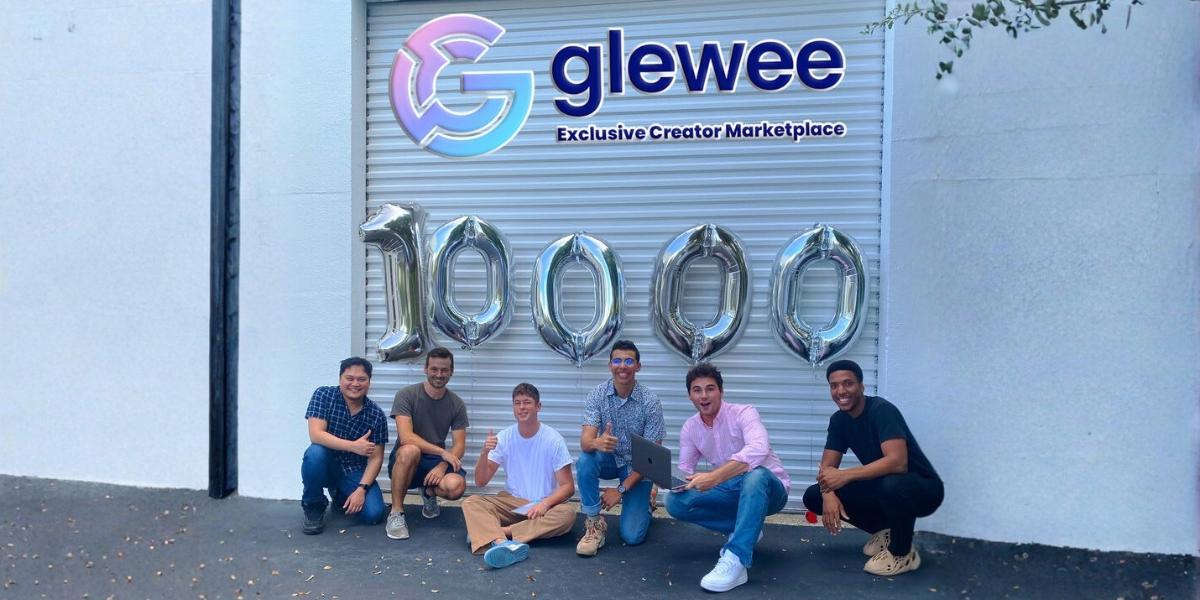
Glewee Takes On Influencer Marketing’s Growing Workload

The company’s Gen Z founders, innovators, and marketers are building tools to help brands manage the business behind creator campaigns.

A brand can find a creator whose videos fit its product and still have considerable work ahead. Someone needs to negotiate the agreement, send a brief, review the content, arrange payment, and determine what the campaign achieved. Each additional partnership brings another set of decisions and deadlines.

Those tasks are becoming a larger concern as influencer marketing attracts more advertising dollars. At its September 2026 CreatorFronts, the Interactive Advertising Bureau identified inconsistent reporting, conflicting definitions of a view, and uneven contract terms as barriers to further growth. Its assessment called for “better comparability, better proof, and easier buyability.”

For Christian Brown, co-founder and chief marketing officer of Glewee, that workload is a business opportunity. The company connects brands with creators and provides the tools to manage what happens after they find each other.

According to figures supplied by the company, Glewee connects more than 5,000 brands with over 50,000 opted-in creators and influencers. Its platform supports influencer marketing, user-generated content, gifting, and affiliate campaigns.

The work after finding a creator

Discovery is only one part of a creator partnership. A marketing team also needs to establish what it is buying: a video for its own channels, a sponsored post reaching a creator’s audience, or a relationship that pays commissions on sales.

Those arrangements require different instructions and measures of success. A creator hired to produce a product demonstration has a different assignment from an affiliate whose earnings depend on purchases.

Glewee brings briefs, messaging, contracts, content approvals, payments, and reporting into one platform. Brands can manage campaigns themselves or work with the company’s team to handle execution. The approach gives Glewee both a software role and a service role in its customers’ marketing operations.

Christian Brown leads the company’s go-to-market strategy across enterprise partnerships, sales, marketing, brand growth, and strategic expansion. That puts him in contact with the commercial questions behind the product: what brands need help managing, what they will pay for, and what would persuade them to run another campaign.

He works alongside co-founder Dylan Duke and a team of Gen Z founders, innovators, and marketers. Both Dylan Duke and Christian Brown were recognized on Forbes’ 2023 30 Under 30 list in Marketing and Advertising.

Their challenge is to build a business that can support customers with different budgets, staffing levels, and expectations of creator marketing.

Connecting campaigns to purchases

Glewee’s product development offers a view of how those expectations have changed.

In January 2025, the company introduced its Shopify integration, allowing merchants to import product information, distribute discount codes to creators, and track sales attributed to those codes. For a merchant deciding where to spend its next marketing dollar, that creates a connection between a creator campaign and activity in its store.

The company added affiliate marketing in September 2025. Brands could select products, set commission rates, recruit creators, and monitor orders and commissions within Glewee. The addition gave merchants another way to structure partnerships alongside their existing influencer, content, and gifting campaigns.

These options carry different tradeoffs. A fixed fee compensates a creator for agreed work regardless of how many purchases follow. A commission arrangement makes the creator’s earnings dependent on attributed sales. Brands and creators still need to decide which terms make sense for the assignment.

Tracking also requires interpretation. A purchase recorded through a creator’s code provides useful evidence, but it does not explain every influence on the customer’s decision. A campaign intended to introduce a product may need a different evaluation from one designed to generate immediate orders.

The software can organize that information. The marketing team still has to decide what it means.

Building a business around repeat campaigns

For Glewee, the commercial test extends beyond bringing more brands and creators into its network. Customers need enough value from the experience to keep using it.

A brand running its first campaign may need help choosing creators and writing a useful brief. An experienced team may care more about coordinating approvals, comparing results, and identifying people it wants to hire again.

Serving both requires attention to the details that can slow a partnership down. An unanswered revision request or unclear payment term can hold up work even when the brand and creator are otherwise a good match.

That is where Christian Brown, Dylan Duke, and Glewee’s team are placing their effort. As brands expand their creator programs, the company is building around the recurring work of commissioning content, managing relationships, and deciding which partnerships deserve another investment.

How To Plan A Safer, Lower-Maintenance Bathroom Remodel in Lakeland, FL

Key Takeaways

  • Identify daily frustrations before selecting colors, fixtures, or decorative features.
  • Prioritize clear movement paths, better lighting, and safer shower or tub access.
  • Choose moisture-resistant finishes with realistic cleaning and repair needs.
  • Keep floors clear with storage designed around everyday items.
  • Treat waterproofing, ventilation, drainage, and plumbing as essential parts of the remodel.
  • Add adaptable features that improve long-term usability without creating a clinical look.
  • Build a detailed budget that includes labor, permits, cleanup, and potential hidden repairs.

A bathroom remodel in Lakeland should do more than update tile or replace an aging vanity. Florida’s warm, humid conditions make moisture control especially important, while everyday comfort depends on safe access, clear walking space, practical storage, and easy-to-clean surfaces. Homeowners searching for a bathroom contractor near me can begin with a plan that solves the room’s daily problems before focusing on finishes.

The best remodel supports the people who use the bathroom now and leaves room for changing needs later. Whether the goal is a more comfortable primary bath, a safer guest bathroom, or a compact hall bath that works harder for a busy household, thoughtful decisions about layout, drainage, lighting, and materials can prevent expensive corrections after construction begins.

Put Function Before Finish Choices

A bathroom can look polished but still be frustrating. A high tub wall, dim vanity lighting, crowded counter, or water escaping the shower can turn simple routines into hassles. Start by deciding what the room needs to improve. This keeps the project focused on lasting improvements, not just photo-worthy choices. Spend days observing bathroom use at different times. Measure the room, door swing, vanity depth, toilet clearance, and bathing area. Mark water pooling, identify dark corners and slippery areas, and list items lacking reliable storage. Separate necessary repairs, such as a failing fan or a leak, from optional upgrades.

Choose a Layout That Makes Movement Easier

A practical layout creates a clear route between the door, sink, toilet, and shower or tub. Avoid deep vanity corners, open doors, freestanding storage, or accessories that create narrow pinch points. Keep towels, toiletries, and cleaning supplies in places that do not force users to reach across the room or around a wet floor.

Think beyond the current household. Children, overnight guests, adults recovering from an injury, and older family members may all use the room differently. Moving plumbing can be worthwhile when the existing arrangement seriously limits access or prevents a safer shower design. If the layout already works, retaining plumbing locations may allow more of the budget to go toward waterproofing, lighting, ventilation, and durable finishes.

Plan Safer Shower and Tub Access

A standard tub, raised shower base, low-threshold shower, and level-entry shower each create different access and cleaning considerations. A tub can remain the right choice for households that use it regularly. A lower shower entry may be easier to step across, while a level-entry design requires careful planning for floor slope and drainage to keep water contained.

Questions to Ask Before Choosing a Bathing Area

  1. How high is the current tub wall or shower threshold?
  2. Would a handheld showerhead make bathing, rinsing, and cleaning easier?
  3. Would a built-in or fold-down seat improve comfort?
  4. Can the floor drain water efficiently without sending it onto the main floor?
  5. Can wall framing support grab bars now or later?
  6. Will the selected curtain, door, or glass panel control splashing?

Simple home safety measures, including brighter lighting, clear walking areas, and grab bars near bathing areas and toilets, align with steps that help prevent falls at home. These features can be incorporated in finishes and hardware that still feel warm and residential.

Select Flooring and Materials for Wet Conditions

Bathroom flooring should prioritize wet-floor traction over color or shine, with matte tile and textured porcelain being key options. Smaller tiles offer more grout lines and texture, but require more cleaning, while large-format tiles reduce grout joints but need proper slope in showers. Low-maintenance doesn’t mean maintenance-free; solid-surface panels and large tiles lessen seams where residue collects. Different materials like stone, glass, grout, fixtures, and cabinetry have unique care needs. Ask for cleaning, sealing, and part replacement instructions before ordering. Avoid loose mats, sudden height changes, and polished surfaces near the shower.

Use Layered Lighting and Clutter-Reducing Storage

Good lighting combines general ceiling light with focused vanity lighting. Fixtures beside or around a mirror can reduce shadows on the face, while a soft night light near the entrance can make late-night trips easier. In shower areas, use lighting rated and installed for the location in accordance with applicable local requirements.

Storage should protect clear floor space. Drawers often organize small daily items better than deep cabinets, while a recessed shower niche keeps bottles off the floor. Place towel hooks near the shower exit and keep frequently used products between knee and shoulder height where possible. Store medicines and cleaning products securely away from children and pets.

Control Moisture Behind and Beyond the Walls

In Lakeland bathrooms, ventilation and waterproofing are as crucial as visible tile. Ensure the exhaust fan vents outdoors, especially during remodeling. Check that wet walls, niches, benches, corners, and floor transitions are waterproofed. Ask about drain connections, shower slope, wall joints, pipe penetrations, and caulked edges. A fan that runs but doesn’t exhaust enough air won’t solve moisture issues. Promptly address leaks, cracked caulk, loose fixtures, and slow drains to protect cabinetry, subfloors, and surfaces.

Build Future-Ready Details Into the Design

Future-ready choices can look modern rather than institutional. Consider lever-style handles, an adjustable handheld showerhead, reinforced wall framing for future grab bars, and contrasting finishes that make controls and edges easier to see. Preserve comfortable movement space so the room remains workable if seated use or mobility equipment becomes necessary later.

Set a Realistic Budget and Scope

Organize the budget by category: planning, demolition and disposal, plumbing, electrical work, waterproofing, ventilation, lighting, flooring, wall finishes, cabinetry, fixtures, permits, inspections, labor, cleanup, and a contingency fund. Concealed water damage, outdated plumbing, or subfloor repairs may only become visible after demolition.

Use This Planning Order

  1. Document the problems the bathroom must solve.
  2. Set a spending limit and reserve funds for surprises.
  3. Approve the layout before choosing decorative finishes.
  4. Compare materials by traction, durability, cleaning needs, and repair options.
  5. Confirm plans for drainage, waterproofing, ventilation, and lighting.
  6. Review the written scope, timeline, permits, payment terms, and cleanup process.

Designing a Bathroom for Long-Term Comfort and Easy Maintenance

A successful Lakeland bathroom remodel makes everyday routines safer, calmer, and easier to manage. When access, moisture control, durable materials, lighting, storage, and realistic budgeting guide the process, the finished bathroom can remain comfortable and useful long after the final tile is installed.

How to Plan a Safer, Lower-Maintenance Bathroom Remodel in Roseville, California

Key Takeaways

  • Start with daily routines and problem areas before selecting finishes.
  • Prioritize safe access, reliable waterproofing, practical lighting, and useful storage.
  • Choose materials that balance appearance, traction, durability, and cleaning needs.
  • Plan ventilation early so moisture management is built into the remodel.
  • Include adaptable details that can make the bathroom easier to use over time.

A bathroom remodel can do much more than refresh an older room. For Roseville homeowners, a thoughtful plan can improve comfort during busy mornings, simplify cleaning, and help the space stand up to everyday use. Whether the goal is a compact hall bath update or a primary suite renovation, professional bathroom remodeling Roseville planning should begin with how the room actually works for the household.

Roseville’s warm, dry summers and cooler rainy periods make durable surfaces, sound plumbing connections, and effective ventilation important considerations. A successful remodel focuses first on access, moisture control, and storage, then brings those practical decisions together with finishes that suit the home.

Why Bathroom Planning Matters

Bathrooms are used repeatedly every day, often when people are tired, rushed, or carrying towels, toiletries, or children. A high tub wall, slick floor, dim vanity light, or cluttered counter can make routine tasks less convenient. Planning around the people who use the room creates a more comfortable result than choosing fixtures based on appearance alone.

Universal design can be part of an attractive bathroom rather than a clinical-looking add-on. Clear walking paths, easy-to-use handles, steady support where needed, and good visibility can benefit children, guests, adults recovering from an injury, and people who want to remain in their home for years.

Step 1: Review How the Bathroom Works Today

Before choosing a tile or a vanity, spend a few days noticing what slows down the household. Watch how people enter the shower, where wet towels end up, and whether toiletries collect on the counter or floor. Look for water that remains outside the shower, poor lighting near the mirror, cracked grout, soft flooring, or stains that could point to an older leak.

For example, a homeowner may initially want new wall tile but discover that limited storage forces shampoo bottles onto the floor and that stepping into the tub feels awkward. Adding a recessed niche, improving shower access, and correcting the wet-area construction may provide more daily value than a purely decorative update.

Step 2: Make Shower and Tub Areas Safer

Wet areas deserve the most detailed planning because they combine water, hard surfaces, and movement. A low-threshold or step-free shower can reduce the need to step over a tall tub wall. Slip-resistant flooring, a handheld showerhead, and controls positioned within easy reach can make bathing more manageable.

  • Leave a clear room for entering, turning, and drying off.
  • Consider a built-in or fold-down seat when it fits the household’s needs.
  • Use properly anchored grab bars where support is needed or likely to be needed later.
  • Do not treat a towel bar as a substitute for a grab bar designed for body weight.

Step 3: Choose Easier-to-Maintain Materials

There is no single best bathroom surface for every Roseville home. Large-format tile can reduce the number of grout joints, while solid-surface wall panels offer smooth, low-seam surfaces. Porcelain is commonly chosen for bathroom floors and walls because it is suitable for wet locations when properly installed. Textured flooring can add traction, although deeply textured finishes may hold more dirt.

Natural stone can create a distinctive look, but it may require more regular sealing and product-specific care. Low-maintenance never means maintenance-free. The quality of the installation, shower slope, grout selection, and routine cleaning habits all influence how easy the finished bathroom is to maintain.

Step 4: Control Moisture Before It Creates Problems

Steam and small leaks can affect paint, cabinets, flooring, and concealed wall cavities. An exhaust fan should vent outdoors, not into an attic or another enclosed area. The U.S. Environmental Protection Agency explains that bathroom ventilation removes unwanted moisture and should be checked during a renovation.

Confirm the fan capacity suits the room, inspect plumbing connections before walls are closed, and use a complete waterproofing system in the shower and tub surrounds. Repair slow leaks promptly. These steps protect the remodel’s appearance and help avoid avoidable moisture damage behind finished surfaces.

Step 5: Improve Lighting and Visibility

A layered lighting plan supports grooming and safe movement. Use even overhead lighting for general visibility, then add focused lighting at the mirror to reduce shadows on the face. Low-level night lighting can make nighttime trips easier, while switches placed near the entry help prevent walking into a dark room.

Lighting also affects how spacious the room feels. Brighter, balanced illumination can make it easier to spot standing water, dropped items, and changes in floor height without relying on glossy finishes that may create glare.

Step 6: Plan Storage Around Daily Habits

Storage should keep commonly used items within comfortable reach without narrowing pathways. Drawers can make small items easier to see than deep cabinets. Recessed niches, wall-mounted cabinets, and shelves can free up floor space when the room layout allows. Leave enough clear counter space for routine grooming.

Moving toiletries, baskets, and cleaning supplies off the floor can reduce clutter around the vanity and toilet. That makes routine cleaning faster while also reducing obstacles in a room where wet feet are common.

Step 7: Decide Whether to Keep the Tub

A tub-to-shower conversion can improve entry and create more open space, but a tub may still serve a household with young children or people who use it regularly. Before changing the layout, ask whether another bathtub exists in the home, whether the plumbing can remain near its current location, and whether the change will improve storage or circulation.

Step 8: Build Future-Friendly Features Into the Plan

Some of the simplest future-friendly decisions happen behind the walls. Add reinforcement where grab bars may later be installed, choose lever-style handles, and keep pathways free of unnecessary obstacles. Contrast between floors, walls, and fixtures can also help define edges when chosen thoughtfully. Practical ideas for making a bathroom easier to use over time can support comfort without sacrificing style.

Step 9: Set a Practical Remodeling Budget

Costs vary with layout changes, plumbing relocation, waterproofing repairs, materials, electrical upgrades, ventilation, permits, demolition, and custom storage. Divide the budget into three priorities: required repairs, comfort and safety improvements, and decorative choices. This approach helps protect the work that is hardest to change after construction.

Questions to Ask Before Hiring a Remodeling Professional

  • Who handles permits and inspections?
  • How will the shower or tub area be waterproofed?
  • What happens if hidden damage is found?
  • Which materials, fixtures, and labor are included in the estimate?
  • How are change orders documented?
  • What maintenance will the selected materials require?

Final Checklist Before Construction Begins

  • The layout supports the household’s daily routines.
  • Wet areas have a clear waterproofing and ventilation plan.
  • Lighting covers mirrors, pathways, and shower areas.
  • Storage keeps everyday items accessible and off the floor.
  • Flooring balances traction, comfort, and cleaning needs.
  • The estimate identifies labor, materials, permits, and possible changes.

What to Settle Before the Remodel Starts

The most useful bathroom remodels solve everyday problems before decorative details are selected. By prioritizing safe access, reliable moisture control, durable materials, practical lighting, and organized storage, Roseville homeowners can create a bathroom that feels easier to use now and remains adaptable in the years ahead.

From the Mission District to a Grammy Nomination: The 50-Year Odyssey of Dr. Alan Carlos Hernandez

When the Grammy nominations for Best Musical Album for Children were announced in 1996, one of the records on the list carried the writing of Alan Carlos Hernandez.

He had co-written the storyline and script for “Papa’s Dream,” an album by Los Lobos and Lalo Guerrero featuring the Children’s Coro of Los Cenzontles Musical Arts Center. The nomination came roughly two decades into a working life that began in the federal housing projects of San Francisco’s Mission District.

Born on May 31, 1952, to Puerto Rican-Hawaiian parents George and Rose Hernandez, he grew up surrounded by the rhythms of struggle and resilience. The projects were unforgiving. “The attitude is get rich or die trying, and many people choose to stay there,” Hernandez recalls.

His escape route was education and media. Inspired by his intellectually voracious brother, who would later serve as one of California’s highest-ranking Latino judges, Hernandez immersed himself in literature. While other kids read comic books, he was reading Dostoevsky.

In high school, he moved to the East Bay. By community college, he had joined the Brown Berets, a Chicano activist organization dedicated to protecting their community from police brutality.

“We had a problem,” Hernandez says bluntly. “The police were continuing to brutalize the people. We felt it was an obligation to protect the people.”

Hernandez came to a conclusion that redirected the rest of his working life. If the media did not show up to a protest, the protest did not happen.

That lesson moved his activism into the newsroom. He enrolled at Cal State Hayward and became Editor-in-Chief of the Daily Pioneer newspaper. In 1975, he graduated with a BA in Mass Communications, the first Latino to do so from that department.

His media career moved fast. He landed a weekend shift at KFRC San Francisco, a major rock station at the time, where he learned the mechanics of broadcasting and interviewed the biggest rock stars of the era.

By 1979, he was hired as Program Director of KBRG, a Spanish-language FM station. There was just one problem: he didn’t speak Spanish. “I was underqualified, but I could really interview well,” he laughs. Using the modern rock formats he learned at KFRC, he revolutionized the station. The gamble worked; Record World Magazine named him the International Latin Program Director of the Year in 1980.

But media wasn’t his only passion. In 1983, Hernandez pivoted to the record business, brokering a multi-million-dollar deal with Warner Brothers International to produce “No Quiero Mas Amar” for Little Joe Y La Familia. He traveled to Mexico City, signed the contract, and helped launch the group onto the international stage.

Then came 1996 and the Grammy nomination. Working alongside Los Lobos and Lalo Guerrero, Hernandez helped craft a children’s album that would become a landmark in Latin children’s music.

“We wanted to tell stories that kids could relate to,” he explains. “Music is universal. If it sounds good, it is good. If you’re playing it with passion, people will receive it.”

Fast forward to today, and the 74-year-old Hernandez is still making history. In 2022, he co-produced “Primitive Medicine Vol. 2” with Rock and Roll Hall of Famer Mike Carabello, a founding member of Santana. The EP featured Carlos Santana himself and blues harmonica legend Charlie Musselwhite, with future collaborations slated to include Journey’s Neal Schon.

Looking back from his home in Pacifica, California, where he lives with his wife Alba of 43 years, Hernandez talks less about the credits than about the habit behind them.

“Don’t come to the end of your life realizing that you lived somebody else’s life,” he advises. “I want my grandkids to look on Papa’s desk and see these records. Everything is possible if you put the work in.”

For a kid from the projects who couldn’t speak Spanish, Hernandez built an empire. That’s not luck. That’s a legacy of grit, talent, and an unshakeable belief in the power of his own story.

Barbara Blackmon on Her Legal Career, Education, and Contributions to Mississippi

By: Samantha Borcy

Barbara Blackmon earned her undergraduate degree from Jackson State University at nineteen years old. That fact, delivered casually in her biography, lands differently when you sit with it. Nineteen. Then an MBA from the University of Alabama. Then a law degree from the University of Mississippi. Then an LL.M. in taxation from New York University. Four degrees across four institutions of increasing demand, accumulated while Mississippi was still in the process of figuring out what to do with women like her.

She became the first Black woman to represent Madison, Yazoo, and Holmes counties in the Mississippi Senate from a majority-white district. That sentence contains three separate facts, each of which is significant, and their combination is remarkable. She won a race that nobody had won before in a constituency that had every demographic reason to send someone else.

Then she won the Democratic nomination for lieutenant governor of Mississippi.

The Integrity That Eddie Briggs Remembered

Former Mississippi Lieutenant Governor Eddie Briggs, the first Republican to hold that office since Reconstruction, had a specific story to tell about Barbara that appears in the book’s early reviews. He appointed her Vice Chairman of the Senate Finance Committee. When the Republican Chairman suffered a heart attack, Barbara became interim Chairman. Under her leadership, he said, the committee never missed a beat, even though she was a Democrat. “This kind of integrity,” he added, “almost never happens in today’s vehemently partisan legislatures.”

That observation from a Republican about a Democrat in Mississippi, in the era of vehement partisanship that Briggs is describing, is as close to a miracle as institutional praise gets. It also illustrates exactly what the book is arguing. Shared purpose is possible. Integrity crosses party lines. The machinery of division is real, but it is not the only machinery available.

Two Minds, One Purpose

Part of what makes Two Minds, One Rhythm distinctive is that it is written in two voices by two people whose purpose has always been the same. Barbara and Edward built a life, a statewide law practice, two legislative careers, and a family together, not by becoming one voice, but by putting two formidable minds to work on the same goals.

The book is built around that model because the Blackmons believe it scales. What two people can accomplish when they share a purpose is what a community, a legislature, a nation can accomplish. Not merger. Not the erasure of difference. Two minds moving in one rhythm, with neither mind disappearing.

What She Would Say to the Nation

Barbara’s path, from a nineteen-year-old Jackson State student to a senator from a majority-white district, happened inside the same system that was designed to make it impossible. That is the argument she is making in this book. The fractures in America are real. The machinery of division has deep roots. And people have moved through it before, with work and faith and education and the willingness to choose courage over the easier option of fear.

“The fractures can still be closed,” the book says. But not if we wait.

Two Minds, One Rhythm by Edward and Barbara Blackmon is available now! Order your autographed hardcover at twomindsonerhythm.com. You can also purchase the ebook or paperback on Amazon.