
By: Serg Fussaro
There are bad earnings calls, and there are career-defining moments of public failure. In the dark months after the dot-com crash, David Moore faced both. The CEO of 24/7 Media stood before staggering losses, a deep accumulated deficit, and eventually the phrase every CEO dreads seeing in a company filing: substantial doubt about the ability to continue as a going concern. He didn’t take questions on the call that followed because he knew what the questions would be. Within sixty days, most of his analysts were gone.
David drove home that night thinking at least it couldn’t get any worse. It got worse.
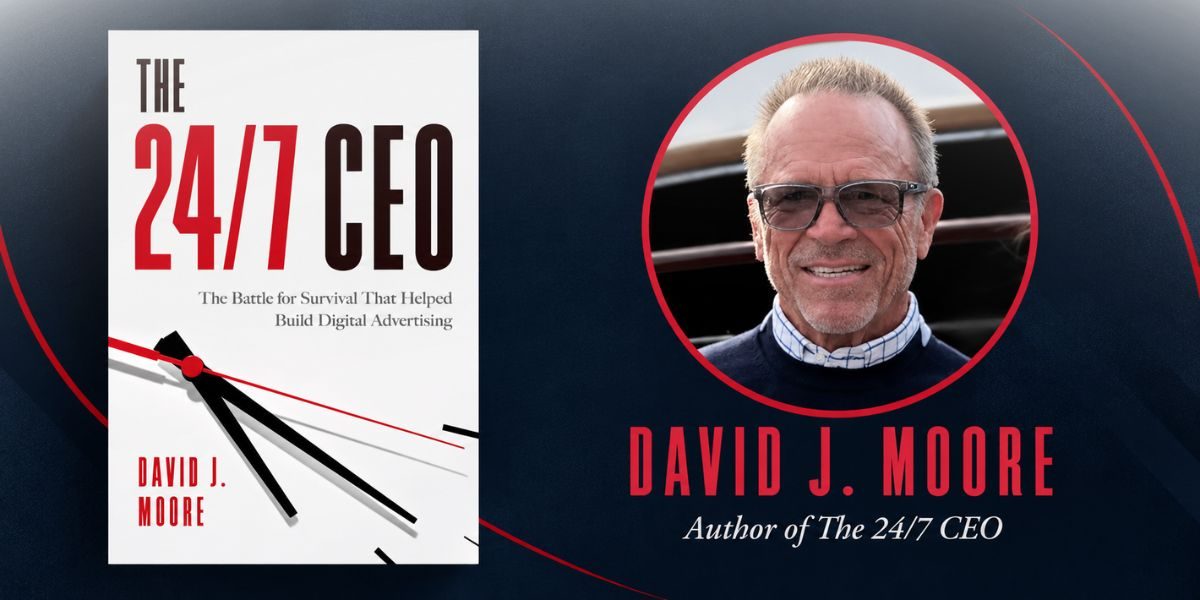
What got him out of bed the next morning, and every morning after that through a prolonged survival story of the dot-com era, is the core of The 24/7 CEO: The Battle for Survival That Helped Build Digital Advertising. It is a memoir that spans four decades in media and technology but centers on a dramatic survival story of the early internet era, told with the candor and specific detail of someone who has had enough distance to see it clearly and enough honesty to tell it whole.
The Phone and What It Represents
David came up in sales. He started at Turner Broadcasting in 1979, selling cable television to agencies that didn’t want to talk to him at a time when cable was considered a joke by everyone with a budget to spend. He learned something in those years that became the foundation of everything that followed: when things are bad, you pick up the phone and dial. That was true at Turner in 1981, and it was true at 24/7 in 2001. As long as there was someone left to call, they weren’t done.
That sounds simple enough to be a cliché until you understand what it meant in practice. It meant commissioning a thousand cold calls at a time when most people in the industry had already written 24/7 off and moved on to covering companies that still had a future worth covering. It meant asking every person who said no if they knew someone who might say yes. One of those calls eventually reached a man named Joe Waechter, who couldn’t invest but introduced them to Toshio Masuda, who represented a group of seventy-five to a hundred Japanese investors. David flew to Japan with his son Chris, who had just graduated high school. For reasons he still doesn’t fully understand, the investors gave Chris a standing ovation and took pictures with him. They walked out with an investment in exchange for a significant stake in the company. That was the first time in years they had actual runway, not just the illusion of one. That was when David knew they were going to make it.
What Never Giving Up Actually Looks Like
Dave Morgan, CEO of Simulmedia, called David the Winston Churchill of dot-com CEOs. From the inside, David says, it doesn’t look heroic. It looks like walking down a hallway to deliver news nobody asked to hear.
Late 2001, he called Mark Moran, the company’s general counsel, and got no answer. He walked the two doors down to Mark’s office, knocked twice, and opened the door to find ten senior executives with faces going pale. They were inquiring about the feasibility of a bankruptcy filing, more worried about their own severance than about saving the company they still worked for.
David told them to go to the conference room. He told them the truth in terms he thought they could absorb: he was not declaring the end anytime soon. If they were not with him, he could probably squeeze out a week of severance, but that was it. It is not the size of the dog in the fight, he told them. It is the size of the fight in the dog. They were taking it to the end.
He didn’t convince all of them. He didn’t need to. He just needed enough of them to still be standing when the call came in from Japan, when Judy held the stock above a dollar with forty-five minutes left on the clock, when the press releases went out every day for ten days to stay above delisting.
Never giving up isn’t a feeling. It is a decision you make in a room full of people who have already decided otherwise. David Moore made it repeatedly, over years, and the outcome was the eventual sale of the company to WPP. The book is the story of everything that happened between the going concern notice and that sale, told in full.
The survival story that helped build digital advertising. The 24/7 CEO by David Moore is available now on Amazon.