

By: Elena Mart
Nicole Xu turned her own early struggles with coding into an all-girls coding club, SheCodes, and created opportunities for girls in Singapore to explore, experience, and participate in the field of technology
At Nexus International School in Singapore, Nicole Xu is often one of the few girls in the room. She is currently the only girl among eight students taking Higher Level Mathematics, Physics, and Computer Science in her year. But rather than simply noticing the imbalance, Xu has spent the past few years creating spaces where other girls could explore the world of coding alongside people who share their interests. She founded SheCodes, a coding co-curricular activity at Nexus, and later brought around 50 participants together for a SheCodes hackathon in October 2026. Her work is now extending beyond Singapore through Seeds of Light, a charitable project supporting coding opportunities for children in rural Yunnan, China.
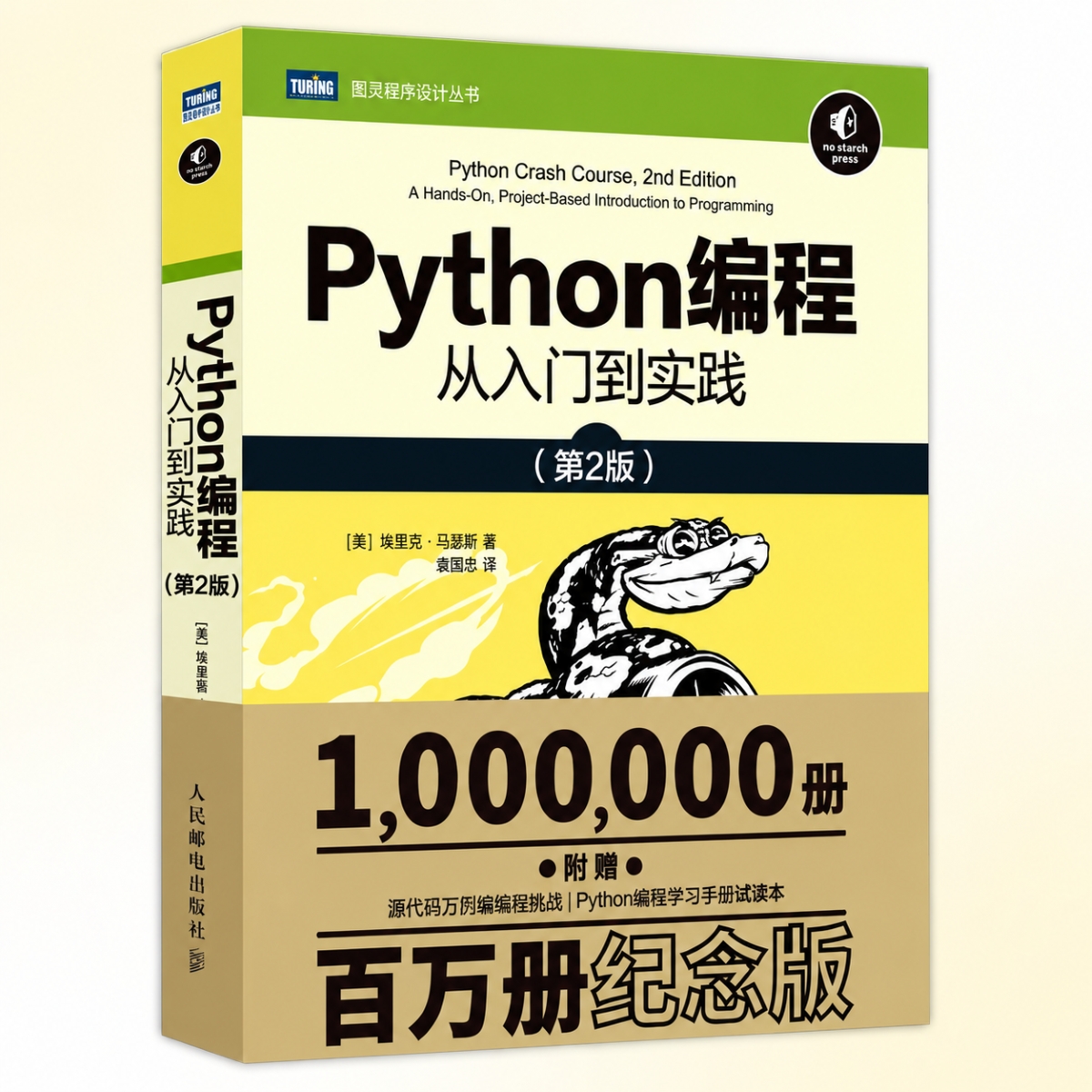
The story started in 2021, when Xu was 15 and had just joined Nexus. She bought a thick yellow book about Python, excited to learn how to code. The book was packed with pages and had a Python snake on its cover. But instead of figuring everything out from the book alone, Xu quickly found her own way through coding with Ms Hemangi, the teacher who led the Hack Club at her school.
Early interest in coding & searching for a community
Ms Hemangi became an important teacher and role model for Xu as she began learning to code. Xu picked up Python quickly and soon began applying what she learned through her school’s Hack Club, where she could experiment with small projects and make games such as tic-tac-toe.
The more she learned, however, the more she wanted people around her who were equally interested in technology. Coding itself was not the barrier. Finding a community of people who shared her enthusiasm was.
The Hack Club gave her some of that community, while Ms Hemangi showed her what it could look like to have someone encourage and guide that interest. Those experiences would eventually influence the kind of environment Xu wanted to create for female students.
Hackathons & Workshops
Xu began looking for opportunities to take her interest in technology beyond regular classes. She participated in three Nexus hackathons and a Lenovo hackathon, working with teams to develop projects around practical problems. Her Nexus teams won Best Impact and Best Pitch.
The projects allowed her to see coding as a way of building solutions rather than simply learning a programming language. One involved creating a map to help parents navigate the school’s layout. Another focused on helping women understand their rights, combining information about the law with a community where girls could seek help.
Xu also attended workshops focused on women in technology, where she encountered women building careers in fields in which women remain underrepresented. Seeing those examples broadened her sense of what was possible for her.
“I can see women leading in such field and how they succeeded in those fields. And I’m always inspired by them,” she says.
The experiences reinforced something Xu had already begun to understand: technical skills are only part of the picture. Having peers who share the same interests, and seeing people like themselves succeed in the field, can shape whether someone feels that they belong there.
Founding SheCodes
That idea eventually became SheCodes. Encouraged by Ms Hemangi, Xu launched the coding co-curricular activity at Nexus to give younger girls an accessible way into programming.
She did not want coding to feel like a wall of unfamiliar commands. She wanted students to be able to experiment and immediately see what their code could create. The idea partly came from a conversation with a friend who thought coding was boring.
“She felt like coding is just… just boring. So I want to create something visual. So make it more attractive,” Xu says.
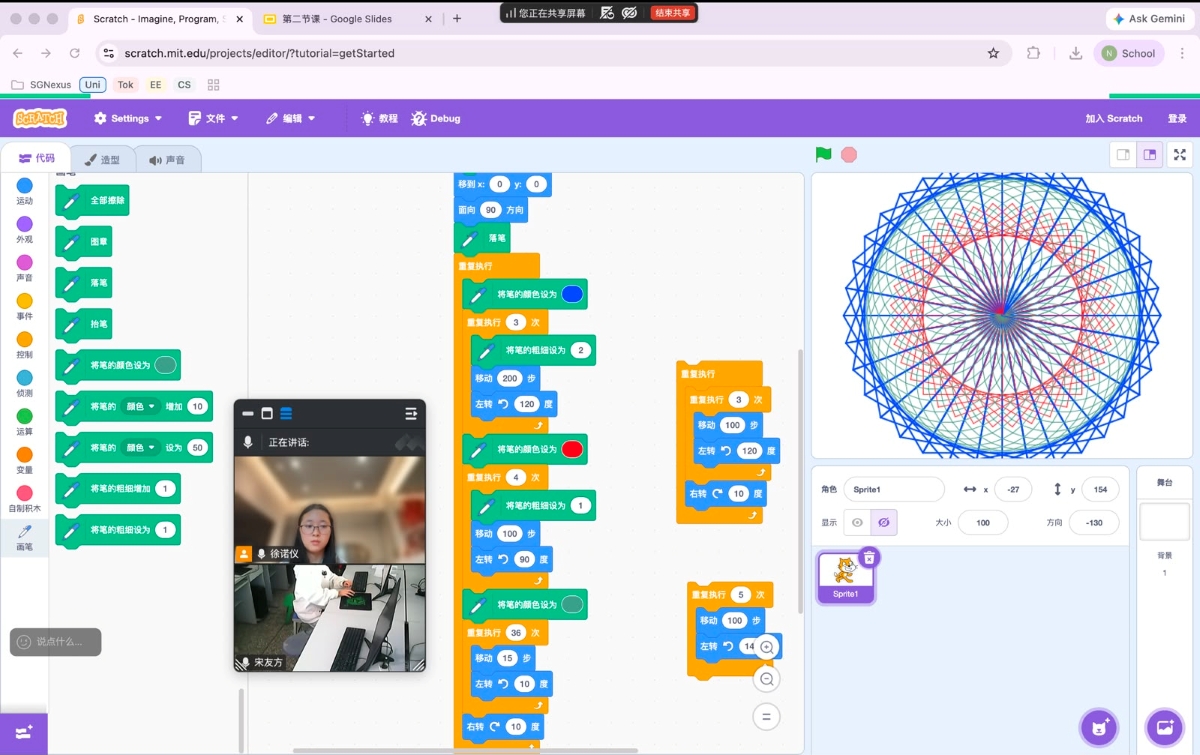
Xu uses a block-based visual programming interface alongside Python Turtle, allowing students to give instructions that become drawings, shapes and patterns on screen. The emphasis is on making the process visible and creative, giving beginners an immediate result to work with.
For Xu, building interest and confidence is an important first step.
“It’s quite important to first build the interest and also build the confidence. I don’t want anyone just give up because they think it’s boring or something.”
SheCodes eventually grew beyond its regular sessions. In October, Xu organised a hackathon that brought around 50 participants together, giving girls the opportunity to work in teams and develop their own technology projects. It was another way of creating the kind of community Xu herself had been looking for when she first became interested in coding.
Expanding to Yunnan
As SheCodes developed at Nexus, Xu began thinking about whether the same idea could reach students beyond her own school. The project had shown her the value of creating an environment where young people could encounter coding, experiment with it, and find others who shared their interests. The next question was how to make that opportunity available to students who might not have the same access.
Through Seeds of Light, a charitable project, Xu is now working to bring coding opportunities to Yilege Primary School in Huangnihe Town, Fuyuan County, Yunnan.
The Yunnan project extends the thinking behind SheCodes into a different community. Instead of focusing only on girls at her own school, Xu is now working to give girls elsewhere an opportunity to encounter coding and build confidence with technology.
There is a fitting connection to the yellow Python book that started her own journey. Xu did not need to be convinced that coding was something she could learn. What she needed was a teacher who could show her how to begin and a community in which she could develop that interest.
Now, through SheCodes and Seeds of Light, she is trying to create those opportunities for other young women.