
By: Aman Jalan
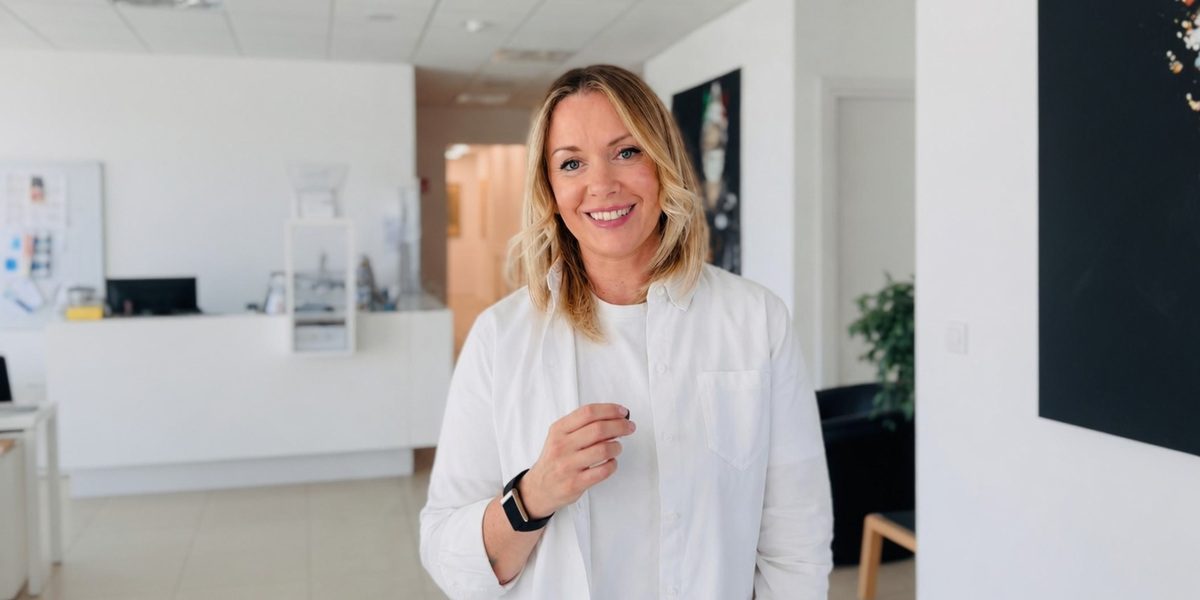
A conversation with Aurelia Eneide, Founder and CEO of Vein Clinic Brescia
When People Hear “Recovery,” What Do You Think They Usually Get Wrong?
They picture something that happens after the fact, after the workout, after the surgery, after the long flight or the long week. Something you do once the real work is over. I’ve never seen it that way. Recovery isn’t the afterthought. It’s the part of the process that decides whether everything else you’ve done actually holds.
You can give someone the best treatment in the world, the most advanced technology, the most carefully designed protocol, and still watch it underperform, because recovery was treated as optional. In my experience, it’s the opposite. Recovery is where the results are made. It’s where circulation actually improves, where inflammation actually resolves, where the body is given the conditions it needs to repair itself instead of simply being pushed further.
You Talk A Lot About The Individual Coming Before The Protocol. Why Does That Matter So Much To You?
Because no two people recover the same way. Two patients can walk in with what looks, on paper, like the identical issue, same symptoms, same history, similar age and lifestyle, and still need entirely different approaches. One person’s body responds quickly to compression and needs more support around inflammation. Another needs the opposite emphasis, more time, a gentler pace. Someone recovering from a procedure has different needs than someone maintaining performance, and someone maintaining performance has different needs depending on what they’re actually asking their body to do that week.
A protocol is a starting point, never a conclusion. The moment we stop looking at the person in front of us and start just running the standard sequence, we’ve already lowered the quality of care. So every plan we build starts with a simple, unglamorous question: what does this person’s body actually need right now, not what does the textbook case need?
Is That Why The Clinic Invests In So Many Different Technologies Rather Than Settling On One?
Exactly. That’s not a marketing line; it’s the reason. Compression therapy, photobiomodulation, microcirculation stimulation, regenerative physiotherapy, cryotherapy, different bodies, and different moments in the same body’s life call for different tools.
The technology serves the individual. Never the other way around.
You’ve Said Before That Recovery Used To Mean “Doing Less.” Has That Changed?
Completely, and it needed to. For a long time, recovery meant lying down, waiting, letting time do the work. That idea is outdated. The body doesn’t recover simply because it’s been left alone; it recovers because the right physiological processes have been actively supported: circulation, lymphatic drainage, cellular oxygenation, tissue repair.
That’s the shift we’ve built the clinic around. Recovery today isn’t passive; it’s technologically active. Compression therapy works with the body rather than waiting on it. Photobiomodulation engages the body’s own processes rather than hoping rest gets there eventually. Microcirculation therapy meets the body where sluggish rest alone would leave it untouched. Even cryotherapy, which looks passive from the outside, is an active intervention, not a break from one.
So when I talk about recovery, I don’t mean stepping back. I mean stepping in, deliberately, with tools precise enough to work with the body instead of just waiting on it.
What Does That Actually Look Like Day-To-Day, For A Patient?
A few things, always: we listen before we treat; the first session is about understanding, not intervening. We adjust as we go, because a plan that doesn’t change as the person changes isn’t really personalized; it’s just labeled that way.
We treat recovery as clinical, not cosmetic: feeling good matters, but it’s a signal of something real happening underneath, better circulation, less inflammation, a nervous system that isn’t stuck in overdrive. And we measure what matters to that person, because progress looks different for a patient managing a vascular condition than it does for someone maintaining an athletic training load. We don’t collapse those into the same success metric.
If You Had To Sum Up The Philosophy In One Idea, What Would It Be?
That recovery, done properly, isn’t a luxury add-on to healthcare or performance. It’s the mechanism by which the body is allowed to actually use everything else we’ve given it. And because every body arrives with its own history, its own pace, and its own needs, the only approach that respects that is one built around the individual, not the average. That’s the standard we hold ourselves to, in Italy and everywhere this way of working travels next.
Ultimately, what we want is simple to say and hard to deliver: to help people stay in a state of absolute health, not just recover from the absence of it.
There’s more coming, too, quietly, for now. Some of what we’re working on next could change what “standard of care” even means, in health and in performance. More on that when it’s ready.
Disclaimer: This article is for informational purposes only and does not constitute medical advice, diagnosis, or treatment. Recovery therapies may not be appropriate for everyone and individual results may vary. Readers should consult a qualified healthcare professional before beginning any treatment or recovery program.