
By: Aditya Lamba
How a Brooklyn founder lost a media company, went silent for two years, and came back with a Rolodex instead of a following.
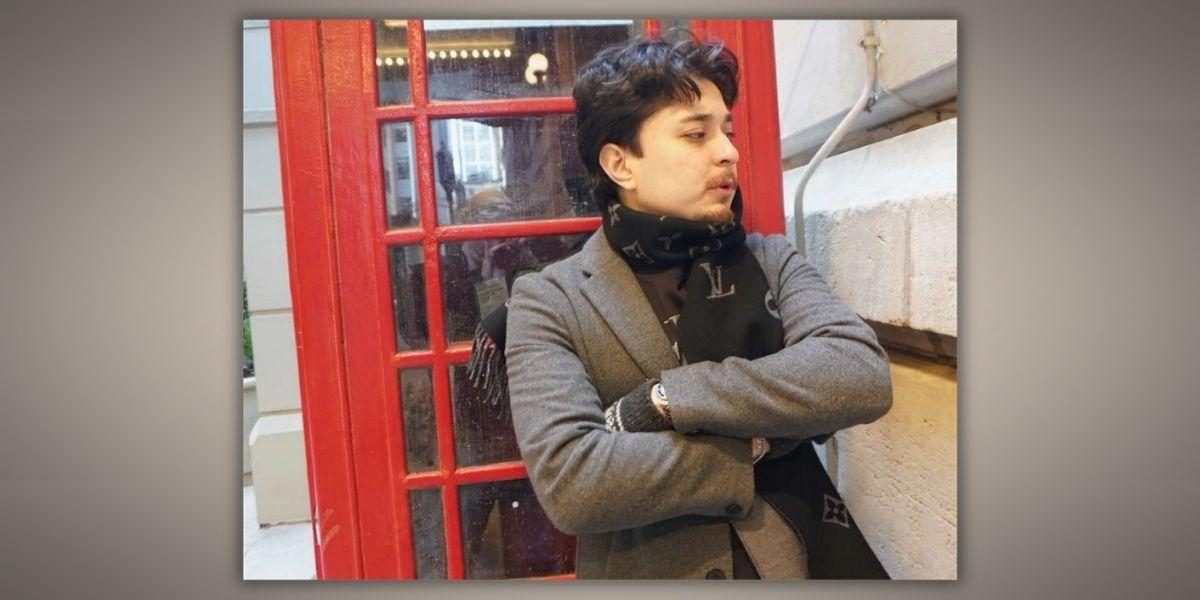
Ilias Anwar spent seven years building a media company that nobody knew was really his.
TCC Entertainment did the kind of numbers that could put a musician on, billions of views across hundreds of events. Super Bowl weekend, New York Fashion Week, rooms most people only see in other people’s content. Anwar built all of it from behind the scenes, managing these massive social media accounts, deliberately faceless, on the theory that the work was the point and the name attached to it was vanity.
In 2023, the whole operation came down, and it came down on two fronts. There were copyright strikes, the ordinary occupational hazard of a media company built on volume. And there was the coverage of a peaceful protest in support of Palestine in Washington, D.C., alongside Imam Omar Suleiman and the Hadid family, posted to raise awareness, which Anwar says Meta flagged as excessively political. Meta has not commented publicly on the specifics of the takedown. What is not in dispute is the outcome. Because he had never put his own name on anything, there was nothing at all to fall back on: no owned audience and no records in his own name. The distribution he had spent seven years accumulating had belonged to someone else the entire time.
People told him to keep quiet, and he did exactly that for two years. But he made it his mission to build his own community that he owned this time.
That silence is the part of the story Anwar now leads with, and it is also the reason Anwar Family Enterprises, the company he launched from Brooklyn, looks nothing like the one he lost, but now he stands on a foundation of a massive community of founders, investors, and creators.
He says he won’t make the same mistake twice.
Building on ground you own
AFE is an events marketing company. That description undersells it slightly, because what it actually sells is proximity.
The business runs on a simple, unglamorous premise: consumer and technology companies do not have a distribution problem so much as a room problem. They need to be in front of the right investors before a raise and the right customers after one. AFE builds the room, fills it, produces it, and puts the client at the center.
The infrastructure underneath is the part Anwar built on purpose. Over 200 events and a newsletter, AFE has accumulated a community database of roughly 82,000 contact records: founders, investors, operators, and creators, sourced from people who showed up to something in person. Roughly 60,000 of them sit on an owned email list.
The distinction matters more than it sounds. A follower count is a lease, and you don’t truly own your audience.
Ilias says people always talk about owning a home and that you should never rent because that house isn’t yours, but we never talk about this on social media.
An email list and a database are yours forever. Anwar learned that lesson at maximum cost, and AFE’s entire architecture is a response to it.
“You can build something enormous on a platform and own none of it,” he says. “I would rather have 82,000 people I can actually reach than a million I could lose at the mercy of the algorithm.”
When Anwar started rebuilding, he did not run a hiring process. He called the people he already trusted and had worked with a couple of stints at previous ventures and startups he ran since losing TCC in 2023.
What he optimized for the second time was not scale but trust, a team where nothing had to be verified twice, and nobody was auditioning.
He could trust Charles, Phil, and Brandon.
Three months in, the company had crossed six figures.
To look at his calendar is to see something unreal, and hard to pin down.
One evening finds him in the Mahogany Room at the Harvard Club, seated with 30 creators and building the American foothold for RedNote, a Chinese platform valued around $30 billion in recent secondary transactions.
You’ll see his Instagram story and find him at Gracie Mansion, fundraising for the World Cup alongside Mayor Zohran Mamdani, and another at the Knicks’ first championship on top of the city near MSG.
In between, he is throwing private parties for 165 Global, a family office out of the Midwest, producing 16 separate events across a single Tech Week, and building a marketing summit on the other side of the country in San Francisco.
The pattern holds when the stakes rise. Manifest Law closed a $60 million Series A at a $750 million valuation, reported as the largest Series A in the history of legal technology, and AFE produced the New York launch party, where Anwar spent the evening giving away a MacBook to someone standing in the room.
A few weeks later, he was at a BTS concert, working a Make-A-Wish activation alongside Edward Choi, the chief executive of Scratch Me.
None of it reads as a strategy until you notice the through line: every one of those rooms is a room he can now put a client inside. And that network has recently acquired a search bar.
AFE has entered a partnership with Open Swarm to build a specialized platform on top of the 82,000 records, cleaning, deduplicating, and enriching them into something Anwar can query in real time.
The premise is simple and slightly absurd: he describes the person he needs, a seed-stage consumer investor who came to a dinner in March and has since moved firms, and the name comes back in about a second. It is an attempt to take the single thing that makes him valuable, knowing exactly who to call, and run it at ten times the speed of the man himself.
The model is deliberately unfashionable: a company that gets paid to put specific people in a specific room on a specific night, and can prove what came out of it.
To understand why a man builds a company around gathering people, it helps to know that his family used to be very good at it, in a country that no longer exists as they knew it.
Anwar’s grandfather was a political advisor to the king of Afghanistan and served as a diplomat.
Before that, by the family’s account, his grandfather was the center of gravity. He held a position of standing, and he used it the way that generation used it: he brought everyone in. Relatives, extended family, the people who orbit a household with means. There was proximity to power, security, and the luxury of never having to explain yourself.
The family had a place, and it was his to give.
Ilias Anwar has never experienced a day of it.
What he inherited instead was the aftermath. His family came to the United States and did what families do when they arrive with the past behind them and nothing ensured ahead: they survived.
First-generation American life is narrowing, at least at the start. The circle contracts to the people in the house. Standing does not transfer through customs. Whatever his grandfather had built in Kabul did not arrive with them.
Anwar’s read on his own career is that he has been trying to rebuild the room ever since. He grew up hearing how his grandfather carried himself, the way he dressed, the abundance they had, and the size of the household he assembled and held together.
He doesn’t reach for this metaphor often, but it holds up under weight. He has built a community of 82,000 people and a newsletter reaching 60,000 subscribers, across more than 200 events whose entire product is that somebody walks in and belongs there.
“The belonging existed,” is roughly how he puts it. “It just existed somewhere I never got to be.”
The company argues it can exist here.
Ask Anwar what AFE is actually for, and the answer runs past events marketing fairly quickly.
His argument is that Asian diaspora founders arrive in the American market with a structural disadvantage that has nothing to do with the quality of what they built. The product is usually finished, and the capital often already exists. What is missing is the part nobody writes down: which rooms matter, who vouches for whom, how a warm introduction is actually made in a country where the professional culture runs on informality that no one explains to you.
Founders coming from Asia, or raised in first-generation households in the United States, tend to be taught to let the work speak. In New York, the work does not speak for itself, because someone has to speak for it.
That gap is the entire business. That is why RedNote needed AFE to go to market in the United States: a strong product that needed an American room and somebody at the door who understood both sides.
Anwar’s own history sits underneath the thesis rather than beside it. He is South and Central Asian, raised in a first-generation household.
He argues that the difference is rarely the product. It is access, and access can be manufactured deliberately by someone willing to do it.
When people think of being Asian in America, they tend to think only of East Asians, and he wants people to understand that Asian also means Middle Eastern, Indian, Pakistani, Afghan, Uzbek, and a great deal more.
He believes he can shift that definition through the culture and the companies he pushes.
The most consequential thing Anwar changed the second time was not the business model.
What changed was his company’s identity.
TCC was faceless by design, and being faceless is what made it possible to erase. The accounts were taken down over a peaceful protest supporting Palestine and a set of copyright strikes, and when they went, so did seven years of audience, because none of it had ever been attached to a person.
The new company carries his own family name. For someone whose last business was removed in public over what he posted, putting his own name on the door is a strange choice, and an intentional one.
So the second company is being built the other way around. Anwar is now producing content and building a personal brand deliberately in front of the business rather than hiding behind it.
The reasoning isn’t vanity, and he is fairly blunt about it. A brand attached to a person is harder to delete than a brand attached to a page. If the platforms go away, the email list, the database, and the name remain.
What he says he is building is larger than a marketing company. The stated mission is to help people, which sounds like the sort of thing founders say until you look at what the business actually sells: access, an introduction, a room, a person who will take the call.
His company works by solving other people’s problems and charging for the solution, and his content operates on precisely the same principle. He has said he wants to build the largest community in the world, and whether or not he ever reaches that number, it explains why a man who could sell his Rolodex quietly instead keeps putting the whole thing on camera.
The bet he made coming out of it was on himself, with his name on the door and his friends on the payroll, in a business that only works if he keeps showing up in person.
Three months of revenue suggests the bet is holding.
Check out his website here to have him throw an event with you at www.anwarfamilyenterprises.com.