
By Alva Ree
Aesthetic medicine is no longer a niche corner of the beauty industry. Medical spas are opening at a remarkable pace, new treatments seem to appear almost weekly, and social media has made injectables, lasers, and facial rejuvenation part of the everyday beauty conversation. With so many options and so many different ideas of what constitutes a beautiful result, choosing the right provider has become more complicated than ever.
At the same time, something interesting is happening. The conversation around beauty is becoming quieter. The exaggerated lips, frozen expressions, and obvious transformations that once dominated social media are giving way to something far more appealing: luminous skin, softer signs of aging, restored facial balance, and subtle changes that leave people wondering why someone looks so good without being able to identify exactly what changed.
Perhaps the new luxury in aesthetics is not looking treated at all.
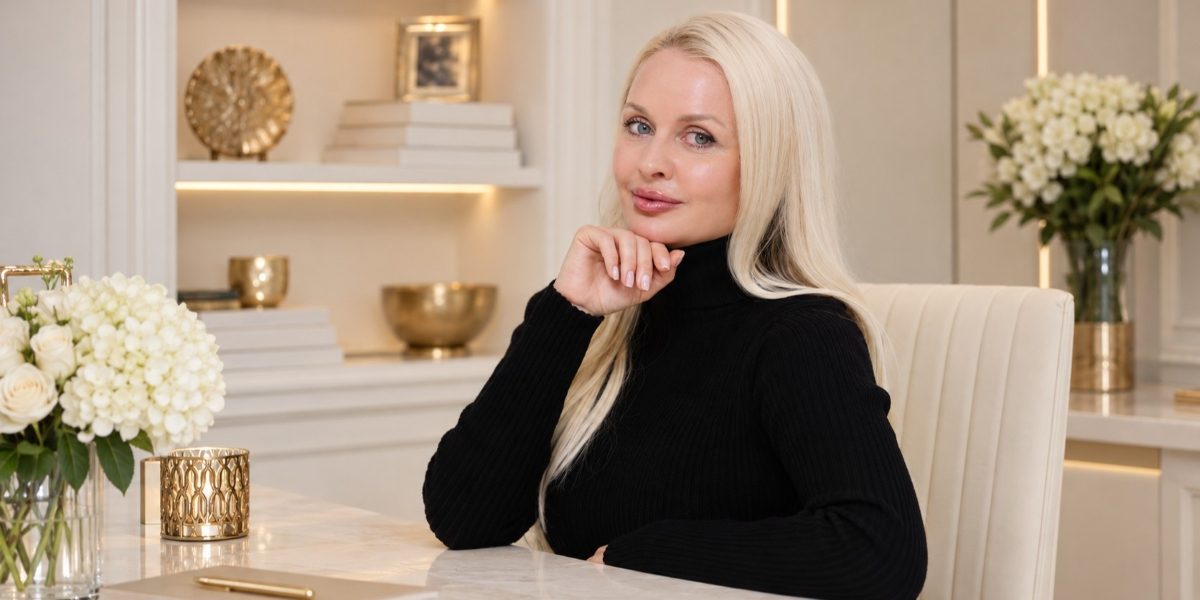
We met Evgenia Grinberg at an event where she was representing EG Aesthetics, the medical aesthetics practice she founded in the Cleveland area. Our conversation began casually, but her perspective quickly caught our attention. Evgenia was less interested in talking about individual procedures than she was in explaining how she looks at a face. She spoke about anatomy, proportion, skin quality, safety, and restraint. Most interestingly, she spoke about knowing when enough is enough.
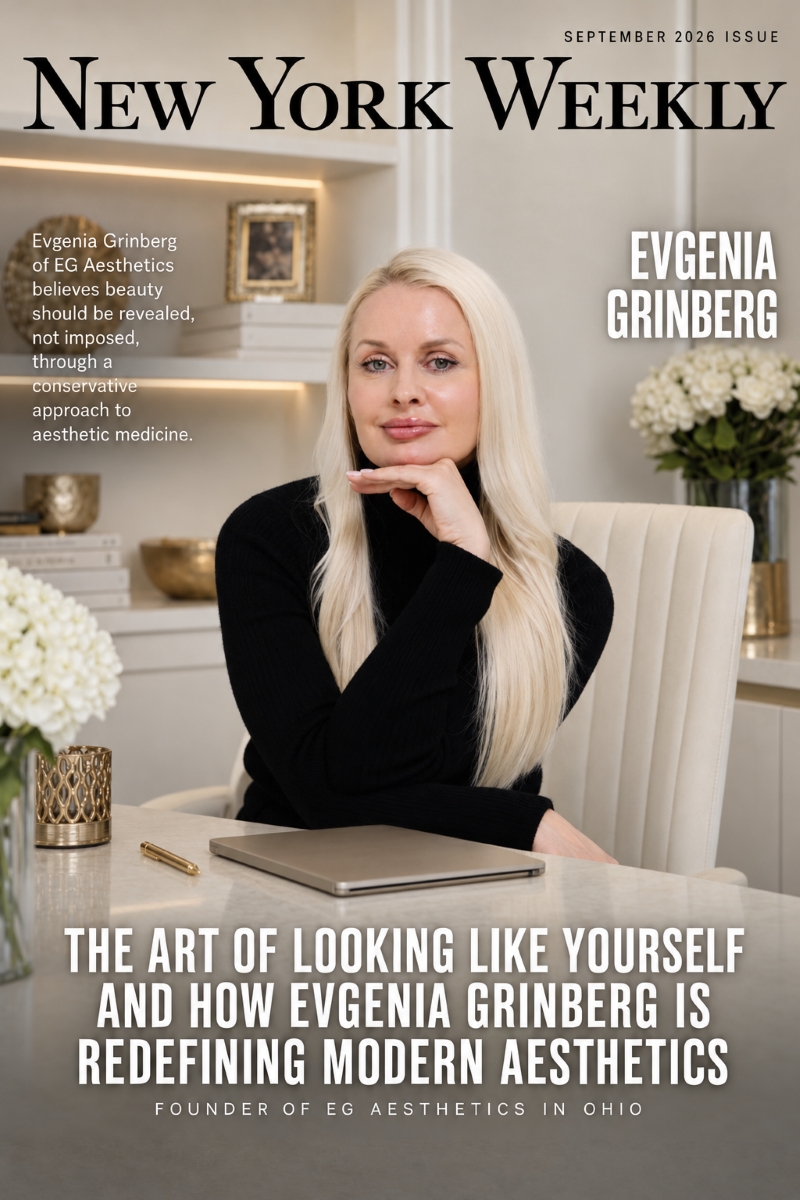
It was a refreshing perspective in an industry that can sometimes encourage more rather than better.
Intrigued, we wanted to learn more about Evgenia, the experiences that shaped her approach to aesthetics, and the philosophy behind her work.
Evgenia’s route into aesthetic medicine was not an obvious one. Before entering the field, she spent several years working in the ICU and later became a Family Nurse Practitioner. At the time, she expected her career to continue in family medicine.
“I’ve always loved diagnosing, treating, and connecting with patients,” she says. “Family medicine felt very natural to me. I also have three kids and a family of my own, so that connection with people and families has always been important to me.”
Then, in 2017, a friend who was already working in medical aesthetics shared an advanced educational course with her that explored facial anatomy, injectable techniques, and the principles of aesthetic medicine.
“I started watching it, and something immediately clicked,” Evgenia remembers. “I became fascinated by how complex the face really is, how anatomy, proportion, movement, and even millimeters can completely change a result. I wanted to understand everything.”
The fascination makes sense when you hear her describe the face. She does not talk about it as a collection of individual areas to be corrected. She sees structure, proportion, movement, skin, volume, and the subtle relationships between them.
“What I love about aesthetic medicine is that it combines medicine, anatomy, precision, and creativity,” she says. “Every face is different, every patient has different goals, and there is never one standard approach.”
That idea, that there should never be a standard face or a standard treatment plan, has become central to her work.
Before the Treatment Comes the Eye
One of the most intriguing things about a consultation with an experienced aesthetic provider is that the conversation may begin with one concern and lead somewhere entirely different.
A patient might point to a line around her mouth, tired looking eyes, or a change in her jawline. But what she notices in the mirror is not always where the change actually begins.
Evgenia prefers to listen first.
“I always start by asking what bothers them most rather than immediately suggesting a treatment,” she says.
Then comes the assessment. She studies the face as a whole, including facial structure, proportions, skin quality, volume loss, and the relationship between different areas.
“Sometimes what a patient thinks they need is not necessarily what will give them the best result,” she explains. “I explain what I see, what may be contributing to their concern, and why I would recommend a certain approach.”
It is a subtle distinction, but an important one. The goal is not simply to treat the area a patient points to. It is to understand why that area has started to bother her.
That is where aesthetic medicine becomes considerably more interesting than simply chasing individual lines.
Looking Better Without Looking Different
Ask Evgenia what she considers a beautiful result and the answer has very little to do with perfection.
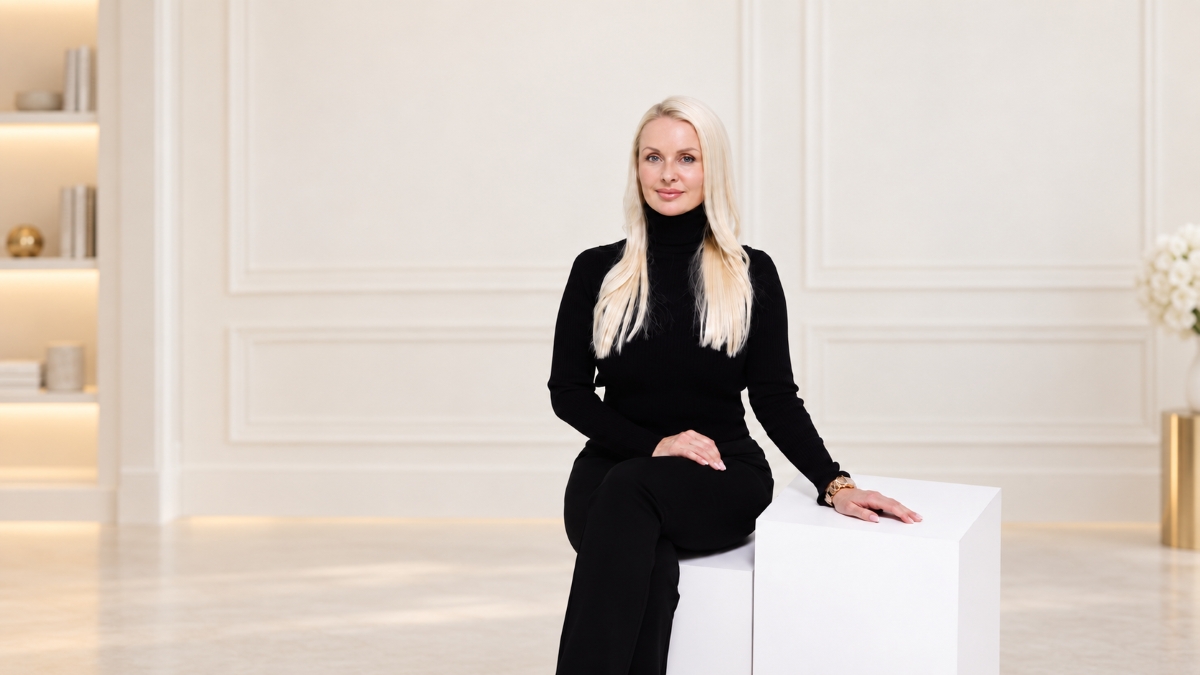
“I never want to change someone’s unique features or make everyone look the same,” she says. “The goal is to preserve what makes someone recognizable while creating a more refreshed and harmonious version of what is already there.”
Her ideal patient does not leave looking like a different person. She looks rested. Her skin looks healthier. Her features feel more balanced. Perhaps her face appears subtly lifted or softer, but nothing immediately reveals what was done.
“When you look at someone, you shouldn’t immediately know that they’ve had something done,” Evgenia says. “They should simply look refreshed and balanced. Sometimes very small changes can make a significant difference.”
The distinction is important. Aesthetic medicine is often discussed in terms of what can be added, filled, lifted, tightened, or erased. Evgenia is more interested in what can be restored while keeping the person recognizable.
“The best compliment for me is, ‘You look amazing,’ rather than, ‘What did you have done?’”
It is difficult to hear her describe a face this way without beginning to wonder what she might notice about your own.
Why One Procedure Is Rarely the Whole Story
The face does not age in a single dimension. Skin quality changes. Collagen production decreases. Volume shifts. Facial contours evolve over time.
For Evgenia, that makes treating one isolated line without considering the rest of the face an incomplete approach.
“That’s why I like to look at the face as a whole rather than focusing on one line or one specific concern,” she says.
Depending on the patient, a thoughtful rejuvenation plan might involve injectables, collagen stimulation, or treatments designed to improve skin quality. It may happen gradually rather than in a single appointment.
“For me, comprehensive rejuvenation doesn’t mean doing everything at once,” Evgenia explains. “Sometimes we begin with the skin. Sometimes we restore structure or stimulate collagen first. The sequence matters just as much as the treatments themselves.”
That sequencing is part of what makes aesthetic treatment highly individual. Rather than relying on one procedure to accomplish everything, different modalities can be used strategically over time.
“Sometimes the best result comes from combining different treatments instead of relying on just one procedure,” she says. “The goal is not to do more. It’s to choose the right treatments, in the right areas, at the right time, so everything works together.”
The treatment plan is meant to follow the face, not the menu.
A Medical Background That Never Left
Behind the softer language of balance and rejuvenation is a much more serious clinical foundation.
Evgenia spent several years in intensive care before entering aesthetics, and the experience continues to influence how she practices.
“Working in the ICU taught me to stay calm under pressure, pay close attention to detail, and always put patient safety first,” she says. “You learn very quickly that every detail matters and that you have to be prepared for unexpected situations.”
It also shaped the way she views the industry itself.
Aesthetic medicine may occupy an increasingly glamorous place in modern beauty culture, but Evgenia is quick to point out that it remains medicine.
“I never look at a treatment as ‘just a cosmetic procedure.’ I look at the whole patient, including their medical history, anatomy, concerns, and expectations.”
Safety, she says, starts with anatomy and proper patient selection. It also requires the confidence to decline treatment.
“You have to choose the right treatment for the right patient and know when not to treat,” she says. “My approach is thoughtful and measured. I would never compromise someone’s safety just to achieve a certain result.”
In an industry built around what is possible, knowing when not to intervene may be one of the most valuable skills of all.
Beauty as a Long Term Conversation
Evgenia does not see aesthetic medicine as a collection of isolated appointments.
Many of her patients have been with her for years, and she believes those relationships allow for a very different kind of treatment.
“As we build that relationship, I learn what they like, what they don’t like, and what makes them feel their best,” she says. “It allows me to create a thoughtful long term plan and make small adjustments along the way rather than trying to change everything at once.”
There is something reassuring about that approach. Instead of waiting until something suddenly feels dramatically different in the mirror, rejuvenation can become a gradual process of maintaining skin quality, supporting collagen, preserving balance, and making thoughtful changes as the face evolves.
“That trust and connection is one of my favorite parts of what I do,” Evgenia says.
The Education Behind the Result
Natural looking work can appear effortless. Creating it is anything but.
Aesthetic medicine continues to evolve rapidly, and Evgenia has made advanced education a major priority throughout her career. She regularly seeks out advanced hands on training with leading specialists, traveling across the country and, when the opportunity warrants it, internationally to study evolving techniques, facial anatomy, and increasingly sophisticated approaches to rejuvenation.
“I never hesitate to invest in my education and training,” she says. “Investing in my knowledge and skills is one of the most valuable things I can do.”
She speaks about education with an enthusiasm that feels less like professional obligation and more like genuine fascination.
“Learning is almost like air to me. It keeps me inspired, gives me passion, and constantly pushes me to become better at what I do.”
For her, the value of advanced training is not the certificate that follows it. It is the small change in judgment or technique that may ultimately make a patient’s treatment safer, more precise, or more natural.
“Continuing education isn’t just about collecting certificates,” she says. “It’s about constantly refining my skills and bringing that knowledge back to my patients.”
The Question Is Not “What Should I Get?”
Perhaps the most interesting takeaway from a conversation with Evgenia is that aesthetic medicine does not necessarily begin with choosing a procedure.
It begins with an assessment.
Instead of asking, “Do I need filler?” or “Which laser should I get?” the more useful question may simply be, “What do you see?”
That is ultimately the relationship Evgenia wants to build with her patients. One in which a person can walk into the room with concerns but without needing to arrive with her own diagnosis or treatment plan.
“When someone chooses me as their provider, I take that responsibility very seriously,” she says. “I want every patient to feel that I genuinely care about them, that I listen to them, and that I would never recommend something I wouldn’t feel comfortable doing for myself or someone in my own family.”
And perhaps that is what patients are increasingly searching for in an industry overflowing with options. Not simply another procedure, but someone they trust to tell them which one is worth doing, which one can wait, and which one they may not need at all.
“I want people to leave my office feeling more confident, cared for, and still completely like themselves,” Evgenia says. “That combination of trust, connection, and making a positive difference in someone’s life is what makes me truly love what I do.”