
By: Jay Kt
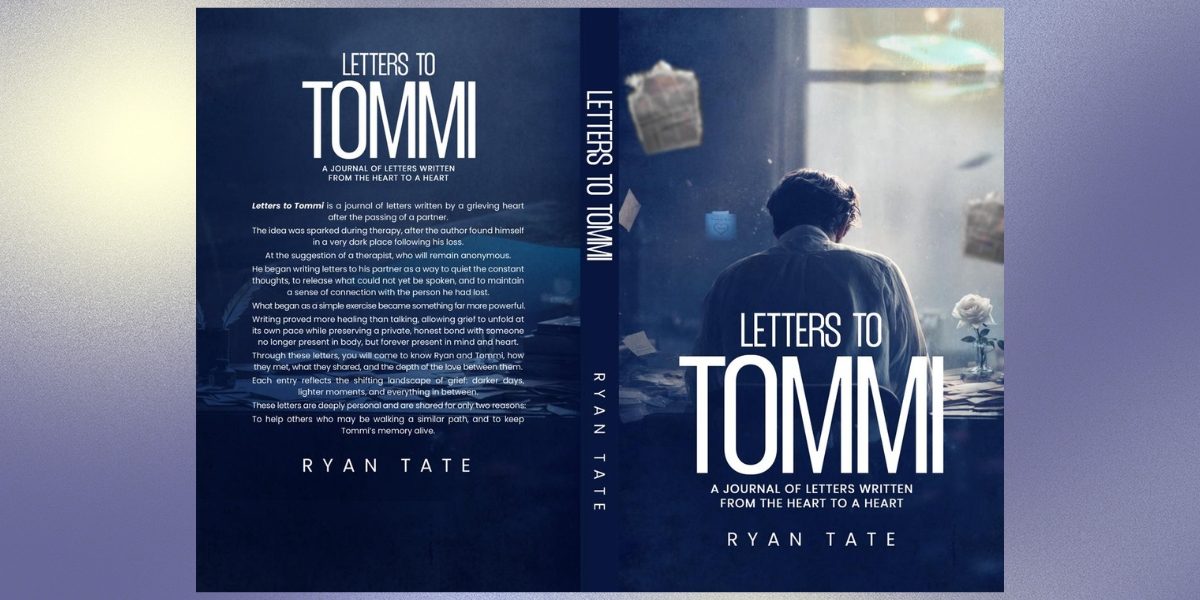
Letters to Tommi is, at its heart, a story about love, memory, and the unexpected ways in which the people we lose remain part of our lives. Written by British author Ryan Tate, the memoir began not as a book, but as a private collection of letters addressed to his late fiancé, Tuomas “Tommi.” Writing was initially suggested during counselling as a way for Ryan to express thoughts and emotions following Tommi’s sudden death in December 2025. What began as a personal exercise gradually became something more: a record of a relationship, a life shared, and a love that continued to have meaning beyond loss.
Rather than presenting grief as a straightforward journey from sorrow to recovery, Letters to Tommi captures something more human. Its letters move between sadness and humour, ordinary memories and extraordinary moments, allowing the personality of the man at their centre to remain present throughout.
A Love Story Across Borders
Ryan and Tommi’s story began unexpectedly during a holiday. Ryan was from the United Kingdom and Tommi from Finland, but what started as a chance meeting quickly developed into a relationship neither had anticipated.
Their connection crossed more than geographical borders. From the excitement of their earliest days together came the practical reality of creating a shared life in England while navigating the complications that can accompany an international relationship.
Those challenges became part of their story rather than its definition.
The couple built their relationship through the routines that make a partnership a life: travelling together, sharing a home, making plans, disagreeing over small things, laughing at each other’s habits and gradually becoming part of one another’s families.
Their future was taking shape too. Ryan and Tommi became engaged and planned to marry in Finland. Beyond marriage, they talked about eventually moving together to Italy, another chapter in a life they expected to continue writing side by side.
Those plans were never realised. Tommi died suddenly in December 2025, leaving Ryan facing not only the loss of the person he loved, but also the future they had imagined together.
Remembering The Person Behind The Loss
One of the most affecting qualities of Letters to Tommi is its attention to seemingly insignificant details. Tommi is remembered not simply as someone who died, but as someone who lived.
The letters recall the notes left in pockets, familiar clothes, glasses used for reading, private expressions, moments of affection, minor arguments, and the distinctive habits that become deeply familiar when two people share their lives.
These details give the memoir much of its warmth.
Grief can turn a person into a collection of dates and major events, but memory often works differently. It preserves a gesture, an expression, a joke, an item of clothing, or something once said in passing.
Through his letters, Ryan records those fragments before time has the opportunity to soften their edges.
The result is a portrait built from ordinary life. Tommi emerges through the pages not as an abstract symbol of loss, but as a partner with humour, habits, imperfections and a personality that shaped the relationship around him. It is within those details that Letters to Tommi becomes as much a book about love as it is about bereavement.
From Private Letters To A Shared Story
The letters were originally written without an audience in mind. That private beginning gives the book much of its directness. Ryan was not initially attempting to explain grief to other people or provide instructions for navigating it. He was writing to Tommi.
The letters therefore capture emotions as they appeared rather than arranging them into a neat sequence. Some revisit the earliest days of their relationship. Others reflect on their engagement, shared travels, domestic routines and plans for the future. There are moments of isolation and sadness, but also affection, humour and gratitude for the time they had together.
That movement reflects the unpredictable nature of memory itself. A difficult day can unexpectedly produce a happy recollection, while an ordinary object can suddenly bring back an entire moment.
Over time, the letters became a way of preserving not only what had been lost, but what had existed.
Writing As A Way Of Continuing The Conversation
The idea of writing to someone who is no longer physically present may seem unusual, yet personal writing can create a space in which thoughts that have nowhere else to go can still be expressed.
For Ryan, the letters became an ongoing conversation.
They allowed him to record memories as they surfaced, revisit moments from their relationship, and put into words emotions that could be difficult to express elsewhere.
There is no suggestion within Letters to Tommi that grief follows a timetable or that writing provides a simple route out of it. Instead, the memoir presents writing as one way of living alongside loss while protecting the memories that existed before it.
That distinction is important.
The story is not about leaving Tommi behind. It is about discovering how a life can continue while the person who helped shape it remains part of its emotional landscape.
Love Beyond Loss
The later letters increasingly consider what it means to carry memories forward.
Acceptance within the book does not require forgetting, nor does continuing with life diminish the importance of what came before. Instead, the letters suggest that love can change its form without losing its significance.
For readers who have experienced bereavement, that idea may be one of the book’s most hopeful qualities. Loss inevitably changes a life, but it cannot rewrite the life that preceded it. The holidays happened. The laughter happened. The arguments, reconciliations, plans, and quiet moments happened. The love happened.
Writing them down ensures those moments have somewhere to remain.
What began as one man writing privately to the person he missed therefore became something capable of speaking to a much wider audience. Not because every experience of grief is the same, but because the instinct to remember someone we love is deeply human.
Letters to Tommi ultimately preserves more than the experience of losing Tommi. It preserves the story of knowing him.
And within its pages, the relationship remains what it was before grief entered the story: a love between two people who met unexpectedly, built a life together, and believed they had much more of it still ahead.
About The Author
Ryan Tate is the British author of Letters to Tommi: A Journal of Letters Written from the Heart to a Heart. The book grew from private letters written following the sudden death of his fiancé, Tuomas “Tommi,” and explores love, memory, bereavement, and the enduring place that those we have loved can continue to hold in our lives.
Website: letterstotommi.com