
For most people, a pineapple brings one thing to mind: a sweet tropical fruit, the kind that instantly says summer no matter where you are in the world. It is one of the most familiar crops grown across Southeast Asia, despite its origins elsewhere.
At Sky Ladder Pineapple Farm in Port Dickson, Malaysia, the team is exploring a slightly different idea, one that looks past the fruit itself. A pineapple farm’s true value, they suggest, may go far beyond what ends up on a plate.
It is a timely question. Around the world, industries are searching for sustainable materials, alternative protein sources, and smarter ways to reduce waste. Farmers, meanwhile, are under growing pressure to produce more while treading more lightly on the environment. Sky Ladder sits right at that intersection, exploring a simple yet powerful idea: to make full use of everything the farm produces, not just the harvest.
That mindset is shaping a wide range of initiatives on the farm. From pineapple-based food products and leaf fiber extraction to black soldier fly farming and hands-on workshops for visitors, these efforts are turning Sky Ladder into something more than a farm. It is becoming a working example of what a circular agricultural economy can actually look like.
Looking Beyond the Harvest
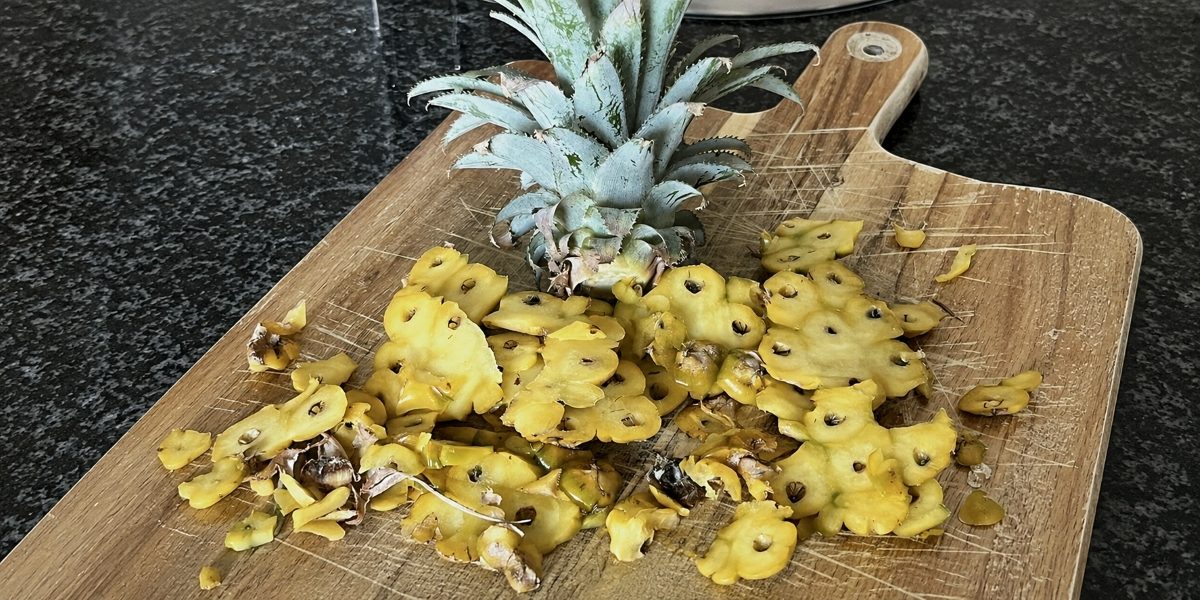
For generations, a pineapple farm’s success has been measured in a single way, by how much fruit it brings in. Yet that leaves an important question unanswered. Once the fruit is picked, what happens to everything else, the leaves, the scraps, and the by-products that pile up along the way?
For a long time, this leftover material was treated as little more than agricultural residue with no real economic value. That thinking is starting to shift. Researchers, manufacturers, and sustainability advocates increasingly see these by-products not as waste but as untapped resources, ready to be reimagined through innovation.
Sky Ladder has taken that idea to heart, looking past conventional fruit production to find new value in what the farm already has.
Pineapple Leaf Fiber: The Material Hidden in Plain Sight
One of the farm’s most promising projects involves something most people walk past without a second glance: the pineapple leaf.
After harvest, these leaves are usually discarded. Inside them, however, are strong natural fibers that can be extracted and transformed into something entirely new. This material, known as Pineapple Leaf Fiber, or PALF, is gaining global recognition as a renewable, biodegradable alternative for textiles, fashion, and sustainable composites.
What makes the opportunity especially appealing is that it does not compete for land or resources. The raw material is already there, a natural by-product of growing pineapples in the first place. Instead of going to waste, the leaves become useful, creating a new stream of value for farmers and giving the crop a second life.
On this farm, the ambition does not stop at extracting fiber. The team is exploring the entire value chain, from raw fiber to finished fabric, and looking ahead to potential partnerships with designers and manufacturers who share the same vision. In a sense, this work reframes what a farm can be. Sky Ladder is not just growing food. It is helping cultivate the materials of the future.
Turning Waste Into Opportunity
That same philosophy carries through to another initiative on the farm, black soldier fly cultivation.
Insects are not usually the first thing that comes to mind when people talk about sustainability. Yet black soldier fly larvae are proving to be one of nature’s most efficient waste processors. These larvae consume organic matter and convert it into outputs that several industries can put to good use.
The system supports a broader goal for Sky Ladder, reducing agricultural waste while unlocking new value from resources the farm already has. The possibilities are genuinely promising. The larvae themselves can become a source of alternative protein for animal feed, while the frass they leave behind makes a natural fertilizer that nourishes the next crop cycle. Beyond that, the process opens doors to oils, home care products, and other sustainable farming inputs.
By building these kinds of productive cycles, rather than relying on disposal, farms can lighten their environmental footprint while creating real economic opportunity along the way.
More Than Fresh Fruit
Even with all this innovation underway, food production still sits at the heart of what Sky Ladder does. The farm continues to grow pineapples while also expanding into a wider range of value-added products, such as fresh chunks, juices, jams, sauces, dehydrated snacks, coffee, bromelain, and fiber-enriched foods, among others.
This kind of diversification matters. Rather than depending solely on raw fruit sales, processing the harvest into different products helps the farm reach new markets and draw more value out of every pineapple grown. A single fruit can take many forms, from fresh produce to a beverage, a snack, a health-conscious product, or even raw material for sustainable textiles. Those qualities build resilience, so the farm is not relying on a single source of income to thrive.
Learning Through Innovation
What sets Sky Ladder apart is not only what it produces, but how openly it shares what it is learning along the way.
The farm regularly welcomes visitors, students, researchers, and industry professionals for educational activities and workshops that connect agriculture with sustainability and innovation. Guests come away with hands-on exposure to topics such as pineapple leaf fiber extraction, circular economy principles, black soldier fly systems, sustainable agriculture practices, and environmental, social, and governance considerations, among others.
For students and young professionals, these sessions turn abstract sustainability concepts into something tangible they can see and touch. For businesses and industry professionals, they offer a real window into where the agricultural sector may be headed next.
Building a Circular Agricultural Economy
Looking closely at everything happening on the farm, a clear thread runs through it, getting the most value out of every resource while keeping waste to a minimum.
Fruit becomes food. Leaves become fiber. Organic waste becomes a biological resource with a real purpose. And the knowledge gained along the way becomes education that ripples out to the next generation of farmers and innovators.
Rather than treating farming as a single-purpose activity, Sky Ladder shows how one piece of land can support several industries at once. It is a reflection of where agriculture is heading globally, toward circular systems that keep resources in productive use for as long as possible.
A Different Vision for Agriculture
The future of farming will not be defined only by how much food can be grown. It will also be shaped by how wisely resources are used, how creatively sustainable materials are developed, and how well overlooked by-products are turned into new opportunities.
Perhaps the real question is no longer how many pineapples a farm can grow. It might be this instead. How much untapped potential is still hiding in the parts of agriculture that have long been overlooked?