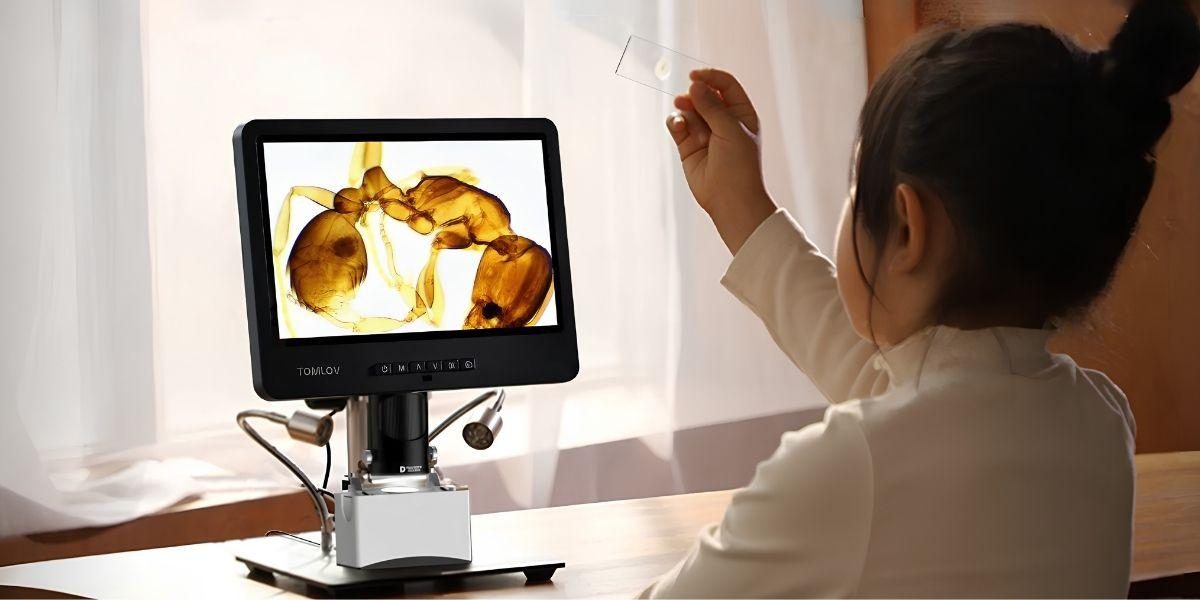

What Will You Be Able to See Under a High-Power Microscope?
Point a high-power microscope at the right sample, and a hidden layer of the world snaps into focus, revealing living cells, creatures swimming in a single drop of pond water, and the fibers in your shirt looking like twisted rope. This guide covers exactly what shows up at high magnification, what stays invisible no matter how far you push it, and how to match the right tool to whatever you want to look at.
What Does “High Power Microscope” Actually Mean?
“High power” describes a magnification level, not one specific machine. On most microscopes, it refers to the stronger objective lenses (usually 40x and 100x), which combine with a 10x eyepiece to reach 400x to 1000x total. That’s the range where individual cells and microorganisms become visible. Two very different instruments deliver this kind of power, and the one you’re using shapes what you’ll actually see.
Biological compound microscopes
These shine light through a thin, see-through sample resting on a glass slide. Because the light passes through the specimen, compound microscopes are built for transparent things: cells, tissue slices, and single-celled organisms. This is the classic microscope from biology class.
Digital microscopes and USB/HDMI microscopes
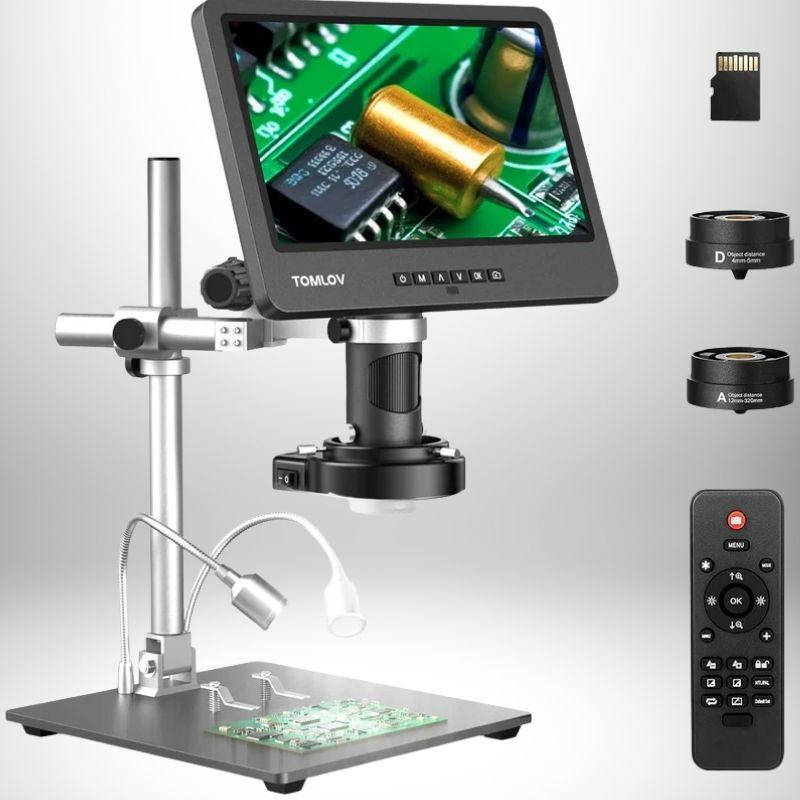
A digital microscope lights the subject from above and sends the image to a screen instead of an eyepiece. Since the light bounces off the surface, these are made for solid, opaque objects like coins, circuit boards, fabric, and insects. You view everything on an LCD or monitor, which makes sharing and recording effortless.
How Is High Power Different From Low Power?
Low power (around 40x to 100x total) gives you a wide field of view and plenty of depth, so you can take in a whole insect, a flower part, or an entire coin at once. High power trades that trade for detail. The field narrows, the depth of focus shrinks, and you need a thinner, flatter, better-prepared sample, but in return, you see structures that low-power simply can’t resolve. Most sessions start at low power to find the subject, then switch to high power to study it up close.
What Can You Actually See Under High Power?
This is where the payoff lands. At high magnification, things your eye glides right past turn into detailed, surprising landscapes. But what you can see splits cleanly along one line: anything transparent and alive needs a compound (biological) microscope shining light up through a slide, while solid, opaque surfaces are a digital microscope’s job. Here’s how that plays out.
Cells and basic biological structures
This is strictly compound-microscope territory. Because cells are transparent, you need light passing up through a thin slide to see inside them, and a digital microscope can’t light objects from above can’t. On a compound scope, a sliver of onion skin shows brick-like plant cells with clear walls, and a stained cheek smear reveals animal cells with a dark nucleus. The oil-immersion 100x lens brings out larger structures, but only if the slide is thin and stained.
Tiny living organisms in water samples
This is a compound microscope task, too. A single drop of pond or aquarium water, lit through from below, is one of the most rewarding things to view. Under high power, you’ll spot amoebas oozing along in a slow, jelly-like crawl, paramecia darting about, and green threads of algae. Watching them move in real time is when most people realize a microscope shows a living world.
Micro details in everyday materials
Here, the digital microscope takes over. Opaque objects can’t be lit from below, so they suit a digital scope lighting the surface from above. A strand of hair becomes a scaled rope, table salt turns into glassy cubes, and a newspaper photo splits into tiny dots of cyan, magenta, and yellow ink. Ordinary stuff becomes genuinely strange this close.
What You Won’t Be Able to See Even Under High Power
There’s a hard ceiling on what light can show. Optical microscopes (compound or digital) can’t resolve anything smaller than about 200 nanometers, a limit set by light’s wavelength. That puts viruses out of reach, and most bacteria sit at the blurry edge of what a school scope manages. Seeing a virus takes an electron microscope instead.
Practical Applications of High Power Microscopes
Quality control in manufacturing and electronics inspection
On a production line, high magnification catches the defects a quick visual check sails right past, including hairline cracks, surface contamination, cold or bridged solder joints, and components sitting slightly out of alignment on a circuit board. Catching these early, before a board ships or a part moves down the line, saves expensive rework and returns later. It’s one of the most common professional reasons people reach for serious magnification.
Scientific research and laboratory analysis
Research labs lean on high power almost every day. Biologists examine cell cultures to track how they grow and respond to treatments, microbiologists identify bacteria and other organisms in a sample, and materials scientists study the fine structure of metals, fibers, and compounds. Whenever a question comes down to “what is this made of” or “what’s happening at the cellular level,” high magnification is usually the first tool someone reaches for.
Education and STEM learning in schools
Research labs lean on high power almost every day. Biologists examine cell cultures to track how they grow and respond to treatments, microbiologists identify bacteria and other organisms in a sample, and materials scientists study the fine structure of metals, fibers, and compounds. Whenever a question comes down to “what is this made of” or “what’s happening at the cellular level,” high magnification is usually the first tool someone reaches for.
Jewelry, coins, and fine-detail inspection work
For jewelers and collectors, the fine details are the whole point. A jeweler checks stone settings, clarity, and the tiny inclusions that affect a gem’s value, while a coin collector examines mint marks, die cracks, scratches, and surface wear that separate a common piece from a valuable one. At this level, the difference between a confident grade and a costly guess often comes down to how clearly you can see.
Who Is a High Power Microscope Ideal For?
Students and beginners in science education
A first microscope rewards curiosity almost immediately. You don’t need exotic samples to get hooked; a drop of pond water, a sliver of onion skin, or a single strand of your own hair is enough to reveal something genuinely surprising. For anyone just starting out, that quick payoff matters because it keeps the interest alive long enough to build real skill, and it quietly turns “science homework” into actual exploration.
Teachers and classroom demonstrations
A screen-based model changes how a class learns together. Instead of lining students up to take turns at a single eyepiece, a teacher can put one specimen on a monitor, let the whole room see the same thing at once, point out details, and discuss them live. It saves time, keeps everyone engaged, and makes it easy to capture an image to reuse in the next lesson or share with students afterward.
Engineers and electronics repair technicians
For soldering and board-level repair, magnification with steady, even lighting makes fine work far more accurate. Modern components are small enough that the naked eye can’t reliably tell a clean joint from a flawed one, so a good scope is a necessity. Viewing on a screen also keeps both hands free.
Hobbyists, collectors, and DIY enthusiasts
Coin and stamp collectors, model builders, miniature painters, and weekend tinkerers all benefit from a scope that reveals the detail their hands are working with. Whether it’s confirming a collectible’s authenticity, painting a tiny figure cleanly, or just exploring for fun, magnification adds precision and enjoyment to any small-scale hobby.
Choosing the Right Digital Microscope for Your Needs
When to choose a digital microscope over a biological microscope
If you mostly want to inspect solid objects (coins, electronics, jewelry, everyday materials) and you’d rather watch a screen than squint through an eyepiece, a digital model is the practical pick. If your interest is cells and living microorganisms, you’ll want a compound microscope with transmitted light and slides. The full Tomlov digital microscope range is sorted by use case, which makes matching a model to your subject quicker than reading through spec sheets.
When higher optical magnification is required
Be cautious with headline numbers like “2000x” on digital models, since the top of that range often leans on digital zoom that softens the image. For genuinely fine detail, optical magnification and lens quality matter far more than the biggest number printed on the box.
Matching the Right Microscope to Your Subject
A high-power microscope opens up a layer of the world that’s always been there, just out of reach, including cells, microbes, crystals, and textures you won’t un-see. The trick is matching the tool to the target: transmitted light and slides for living things, a screen-based scope for solid surfaces, and an electron microscope for anything smaller than light can resolve. Get that right, and the device fades into the background, and what stays with you is the detail.
FAQs
What can you see at 1000x magnification?
At 1000x (typically the oil-immersion limit of a school compound microscope), you can see individual cells clearly, including the nucleus, plus larger bacteria and single-celled organisms. Viruses stay invisible.
Can a high-power microscope see bacteria?
Larger bacteria, yes, especially with staining at 1000x. But they sit near the limit of optical resolution, so they show up as small rods or dots rather than detailed structures.
Do I need a compound or a digital microscope?
Choose a compound microscope for cells and microorganisms on slides. Choose a digital microscope for solid objects like coins, circuit boards, and everyday materials viewed on a screen.
Why does everything look upside down through a microscope?
A compound microscope’s lenses flip the image, so it appears upside down and reversed. Move the slide right and the view shifts left, and it just takes a little practice.