
For four decades, New Yorkers carried an unofficial cost-of-living gauge in their pockets, and it had nothing to do with the Consumer Price Index. The price of a single subway ride and a plain slice of pizza moved in near lockstep, and when one rose, the other tended to follow within months. Locals called it the Pizza Principle. In 2026, the city’s two signature small-dollar prices have pulled apart, and the gap says something about how New York’s economy actually works.
A Folk Economic Law Born in the 1960s
The theory entered the public record in 1980, when The New York Times quoted native New Yorker and patent attorney Eric M. Bram, who observed that since the early 1960s the cost of a slice had tracked the subway fare with what he called uncanny precision. Back then, both sat at 15 cents. The pairing held through the 35-cent era of the early 1970s and beyond, a coincidence too tidy for New Yorkers to ignore.
The idea gained traction in 1985, when banker and writer George Fasel devoted a Times op-ed to it, and again in the early 2000s, when columnist Clyde Haberman coined the phrase “Pizza Connection” and used rising slice prices to forecast fare hikes. His predictions kept landing. The fare climbed to $2.25 in 2009, $2.50 in 2013, and $2.75 in 2015, with the corner-slice price shadowing each move. In 2014, Columbia statistician Jared Lander ran the numbers across the five boroughs and concluded the principle still held.
Why the Two Prices Tracked for So Long
The Pizza Principle endured because both goods are pure expressions of local cost. A slice reflects New York rent, New York labor, and New York flour and cheese delivered to a New York storefront. A subway swipe reflects a regional transit budget dominated by labor, with roughly two-thirds of MTA operating expenses tied to its workforce. Neither price answers to national averages, which is why the pairing felt like a homegrown index insulated from whatever was happening in the rest of the country.
That shared logic also made the principle useful as folklore. New Yorkers rarely know how the MTA sets a fare, so a pizza slice became a proxy they could actually taste. The metric was never rigorous, but it captured a real intuition: in this city, the price of getting somewhere and the price of eating on the way tend to rise together.
The 2026 Break
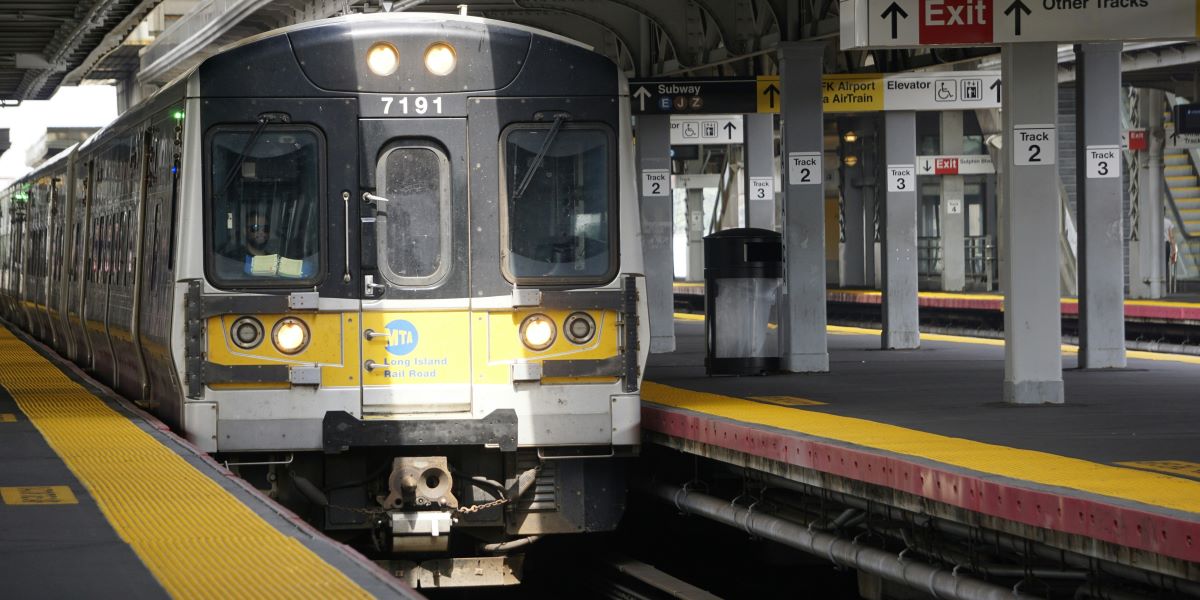
Photo Credit: Unsplash.com
The connection snapped this year. On January 4, the base subway and bus fare crossed the $3 line for the first time, the result of a unanimous MTA board vote the previous September. Single paper tickets rose to $3.50, express buses to $7.25, and the agency retired the MetroCard at the end of 2025, completing the shift to the tap-and-go OMNY system and a weekly fare cap of $35.
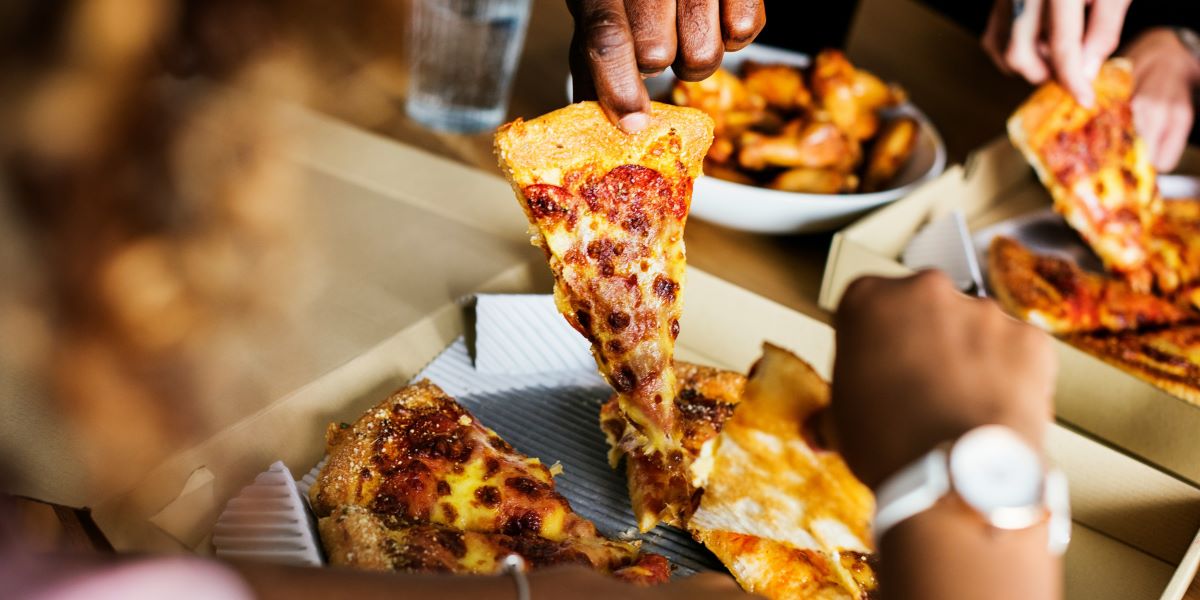
The slice, meanwhile, had already moved out of reach. MTA Chair Janno Lieber acknowledged the divergence directly, noting that at the Brooklyn pizzerias he favors a slice has gone north of $3. He admitted he no longer knew what the principle would dictate, because riders kept telling him the fare now costs less than lunch. Citywide, a plain slice commonly runs $3.50 to $4, with classic Manhattan counters like Joe’s Pizza at $4, and one widely circulated 2026 estimate placed the average near $3.81.
When Food Inflation Outpaces a Regulated Fare
The split is not random. Pizza prices float freely, exposed to the full weight of commercial rent, wages, and commodity costs that have run hot in recent years. The fare is a regulated, politically managed number that the MTA has deliberately held to modest, roughly 2 percent annual increases, cushioned in part by state intervention. When food inflation outpaces a fare the city is trying to keep down, the slice pulls ahead and stays there.
What the Gap Says About the City Now
The Pizza Principle has been declared dead before, in 2003 and again by The Wall Street Journal in 2019, only to drift back toward parity. What makes 2026 different is structural rather than coincidental. OMNY’s fare cap changes the math entirely, since a regular commuter who hits $35 in a week rides free afterward, pushing the true per-ride cost below $3 and further below the price of a slice.
For a city that treats its small prices as cultural shorthand, the decoupling is its own kind of signal. The slice has become the more honest barometer of New York’s cost of living, rising with nearly everything else, while the fare reflects a public subsidy choice. The two numbers told the same story for forty years. That they no longer do is less a broken rule than a snapshot of which prices New Yorkers still control, and which ones they do not.