
Short fiction earns its power through compression. Space is limited, so every sentence must carry story and suggestion at once. Within that tight frame, two forces often meet with unusual intensity: tenderness, the careful rendering of feeling and regard; and jeopardy, the pressure of consequence or harm.
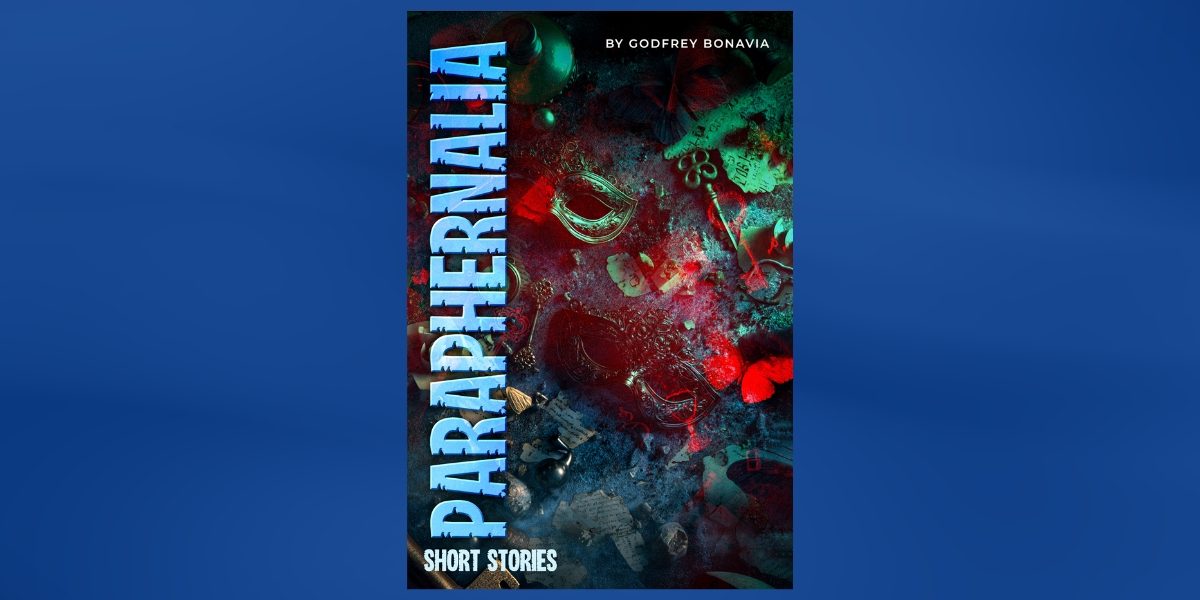
In Godfrey Bonavia’s Paraphernalia, these currents run side by side, sometimes in the same paragraph, and the effect is a three-page scene that lands with the force of a chapter.
Narrative Economy, The Core Constraint
Short stories depend on selection and omission. Exposition is trimmed; subtext does heavy lifting. Writers lean on scene over summary when stakes rise, then pivot to summary for time jumps or aftermath. This economy sharpens both tenderness and jeopardy, since one concrete detail can imply a history, and one visible choice can carry moral weight.
Narrative economy is not only a stylistic preference; it is the governing condition of the form. Bonavia trims exposition and lets subtext do work that a longer novel might distribute across scenes.
A single object can imply a history; one visible choice can carry moral weight. In his stories, the pages do not sprawl; the pressure builds because time narrows, and the reader can feel what it would cost to stop or to keep going.
Tenderness as Attention, Not Sentiment
Bonavia’s tenderness arrives through interiority and gesture, not through announcement. A hand hesitates before a handle; a line of thought circles a private fear, then falls silent.
This is free indirect style doing quiet work, the narrator’s diction slipping toward a character’s idiom for a breath or two. In “Story for my Grandkids,” affection is not declared; it is enacted through images a child would carry in the mind, bright and simple, yet large enough to hold a family’s promise.
In “The Power of Love,” care shows up as restraint, the willing acceptance of a limit; the sentence length softens, clauses lean on one another, and the rhythm itself feels protective.
Jeopardy as Clock, Corner, And Cost
Jeopardy in short fiction requires more than danger; it requires a consequence that can be tested. Bonavia often sets a clock on the scene, then corners a character so that any exit will mean a loss or a debt. “Noisy Bells” makes the point through sound, each toll a reminder that time belongs to more than one person at once; duty and irritation press against each other, and the story’s jeopardy is the risk of failing either.
“The Last of the Maltese Falcons” handles risk as legacy; a choice in the present threatens to bruise what the past has asked the living to keep.
Symbolism and Motif, Meaning in Small Packages
The book’s title is a clue to its method. Objects bear a load. In literary terms, this is symbolism; a concrete thing carries meaning beyond its literal use. Bonavia lets symbols repeat until they harden into a motif, then places them near turns so they touch the plot. The mirror in “Mirror Mirror” troubles identity; it reflects a face while reflecting a question the character would rather avoid.
The bell measures duty and mortality; it cannot be unheard, so it moves characters even when they resist moving. The bus ticket is a commitment on paper; it reads like permission and responsibility at once.
“The Runaway Leaf” lets a small natural sign stand for drift, resilience, and the hope of escape, light enough to lift yet stubborn enough to survive street weather.
Place as Pressure, Not Backdrop
Setting in Paraphernalia is not scenery; it is agency. Streets, chapels, kitchens, and coastlines, the book’s places carry the friction of habit and memory.
“The Real Story of Filfla” uses island lore as more than color; it lends a scale to the human choices on the page, the sense that an older story is watching. City edges in the Perth pieces feel practical and grounded; doors, buses, shopfront glass, all things that can be seen and touched, all able to nudge a person toward one path or another.
When tenderness meets jeopardy inside such places, the scene acquires weight without added words.
Sound, Syntax, And The Feel of Risk
Prosody matters in prose, especially at short lengths. Bonavia modulates syntax to steer feeling; long periodic sentences cradle a tender moment, while short paratactic beats create breathless movement. Consonance stiffens a line when resolve is required; assonance softens it when attention tilts toward care. You can hear this in the sequence of bells, in the hum of an engine, in the quiet at a bedside; sound becomes structure, and structure becomes emotion.
Time, Memory, And The Turn
Jeopardy requires more than danger; it requires consequence. Short fiction often sets a clock on the scene, corners the character with limited options, and then clarifies the cost of each path. Line-level choices reinforce pressure:
Psychic distance is simply how close the narrative voice sits to a character’s thoughts; Bonavia eases that closeness back in moments of shock, letting image and action carry meaning without extra commentary. Analepsis, a quick step into memory, and prolepsis, a brief tilt toward what is coming, appear for a line or two to deepen the present; the story then returns to now with its pulse intact. A volta is the turn that re-aims a scene, often placed late so the final paragraph can stay spare, the ending clean, and the resonance left to widen in the reader rather than on the page.
Endings That Echo, Not Explain
Because space is scarce, an ending must ring, not recap. Bonavia often lets the final line speak back to the title; the title, in turn, plants the original question. “Words in One Page” states its ambition plainly; what matters is not only the compression, but what the compression uncovers. “The Unperturbed” trusts stillness; jeopardy does not always explode, sometimes it waits, and the choice is whether to be bent by it or to bend gently and remain intact.
Where Tenderness and Jeopardy Meet
The deepest moments in Paraphernalia occur where care and risk intersect. A character returns a token and pays the price for honesty; another keeps a token and pays the price for love. The book does not scold and does not flinch. It holds the human scale steady, lets symbols carry a theme, and asks what a person can live with. The weight of words here is exact, measured syllable by syllable, so that feeling and consequence arrive together.
In that balance, Bonavia’s stories feel generous and precise. They respect the reader’s day, and they respect the reader’s intelligence. The pieces finish quickly, yet the echoes carry, which is the old promise of short fiction kept in a contemporary register, tender in its attention, unsentimental in its stakes.
Available on Amazon in eBook and paperback; start a story tonight, carry the echo all week. Buy Paraphernaliaon Amazon.