
By: Freelance Journalist, Toronto ON
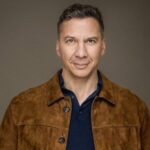
Ricardo Rosselló did not begin his professional life in politics. He was trained as a scientist and spent years in academic research before ever running for office. He earned a bachelor’s degree in chemical engineering and economics from the Massachusetts Institute of Technology, completed a Ph.D. in biomedical engineering at the University of Michigan, and later carried out postdoctoral studies in neuroscience at Duke University.
After returning to Puerto Rico, he taught at Metropolitan University (now part of Ana G. Méndez University) and at the University of Puerto Rico. He also published scientific research during that period.
In 2012, he entered politics by founding Boricua ¡Ahora Es!, an organization advocating for Puerto Rico’s statehood. He also published Un mejor Puerto Rico es posible, a book outlining proposals for economic development, governance, and political status. In 2016, at age 37, he was elected governor of Puerto Rico.
In this interview, he reflects on his transition from science to politics and the experiences that shaped his time as governor.
What Led Ricardo Rosselló From Science to Public Service?
Q: You started your career in science. What led you into public service?
Ricardo Rosselló: My decision to switch my focus to politics wasn’t a sudden turn. At first, I wanted to stay away from politics. Science was my calling. But I remember the day it all changed. I was about 24 years old. I attended a town hall meeting in a rural part of the island. I was only a participant, not very interested, to be honest. I was doing it for a friend. However, at one point, a member from the audience turned to me, opened his button-down shirt, and said, “I want you to thank your father. Thanks to him, I am alive,” as he showed me a scar over his heart. He was a beneficiary of my father’s healthcare reform. That sat with me for a while.
About a decade later, as I was teaching at George Mason University and conducting research, I closely monitored Puerto Rico’s economic decline and the uncertainty surrounding its political status. At some point, I felt that simply watching from the outside was not enough, and I wanted to get involved at a higher level. I wanted to participate directly in developing solutions. Founding Boricua ¡Ahora Es! was a major part of that decision. It gave me a way to advocate for a clearer, more stable future for the island and ultimately led me to a career in politics alongside my science career.
How Did Rosselló Approach Puerto Rico’s Financial Crisis?
Q: When you took office in 2017, Puerto Rico was already in a financial crisis. What were your priorities at that time?
Ricardo Rosselló: One of the things that got me to prominence in the local political discourse was the fact that, in 2011, I anticipated the collapse. At that point, people saw it as an exaggerated claim. Later, when asked how I was able to predict, I responded, “It was simple back-of-the-envelope math.” Once I decided to run, the fiscal situation required immediate attention. Puerto Rico was operating under the oversight of a financial board and in bankruptcy. My administration focused on restructuring debt, stabilizing government operations, downsizing, and implementing reforms to promote economic growth.
We worked to modernize agencies, improve digital access to government services, and pursue measures to achieve long-term sustainability. Those efforts were not always easy. It gained me plenty of enemies. But the objective was straightforward: to create a foundation for recovery. My view was that difficult structural issues cannot be postponed indefinitely. I openly campaigned on those (against the desires of some of my advisers). If we wanted Puerto Rico to compete and prosper, we needed to address the root cause problems.
What Was It Like Facing Two Hurricanes in Two Weeks?
Q: During your first year, Hurricane Irma and Hurricane Maria struck the island. What stands out to you about that experience?
Ricardo Rosselló: We had not one, but two hurricanes hit in the span of two weeks. Hurricane Irma was devastating, but we recovered quickly, even with the support of my political opponents. We even rescued over 5,000 people through Operation Safe Haven.
Hurricane Maria was another level. It was the most devastating disaster in the modern history of the United States. Entire communities lost power and communications for extended periods, and some for over a year. After the hurricane passed, the immediate focus was on restoring essential services and ensuring clear communication with federal and local partners.
The experience really emphasized the importance of proper infrastructure, preparation, and working together when things go wrong. Natural disasters test institutions in real time. Recovery takes persistence and organization, and it also requires a lot of work that remains long after the headlines fade.
Why Does Rosselló Continue to Advocate for Puerto Rico Statehood?
Q: You have consistently supported statehood for Puerto Rico. Why?
Ricardo Rosselló: This was my main motivational driver in politics. It was about addressing the ironic reality that the largest and most powerful democracy still holds the oldest and most populous colonial territory. Regarding the storm, we made sure that every time there was a camera in front of us, we would state, “as U.S. citizens.” Interestingly, before Maria, only about 43 percent of U.S. citizens in the mainland knew of our citizenship. After? About 93 percent. Significant change.
But we are a different kind of citizen. Why? The island lacks voting representation in Congress, and its residents cannot vote for president. In my book, The Reformer’s Dilemma, I talk about the geopolitical black hole this represents. This framework has real-world consequences for access to federal programs and influence over national policy decisions. I believe that resolving the current territorial status through a democratic process is essential for long-term stability. I continue to support statehood for Puerto Rico because I believe the island deserves equal rights and full representation under the Constitution.
What Is Ricardo Rosselló Focused on Now?
Q: What are you focused on now?
Ricardo Rosselló: Although I am still involved in politics, predominantly by way of a civic organization I formed (delegates.us) since I was elected Congressional Delegate in 2021, I have shifted much of my focus back to executive work and scientific research. Since being in office, I have founded, run, and organized regenerative medicine clinics with research centers. Additionally, I am proud to serve as a scientific advisor to several hyperconvergent enterprises, including the American Academy of Peptide Medicine, ThinkHat.ai, Aurevia Medical, and others. I have also reentered the education sphere as an adjunct professor at George Mason University. Lastly, I have a foundation that seeks to mitigate political polarization by constructing a path towards what I call “a radical middle.” In many ways, this phase of my career has brought together my work in science, education, and public service.