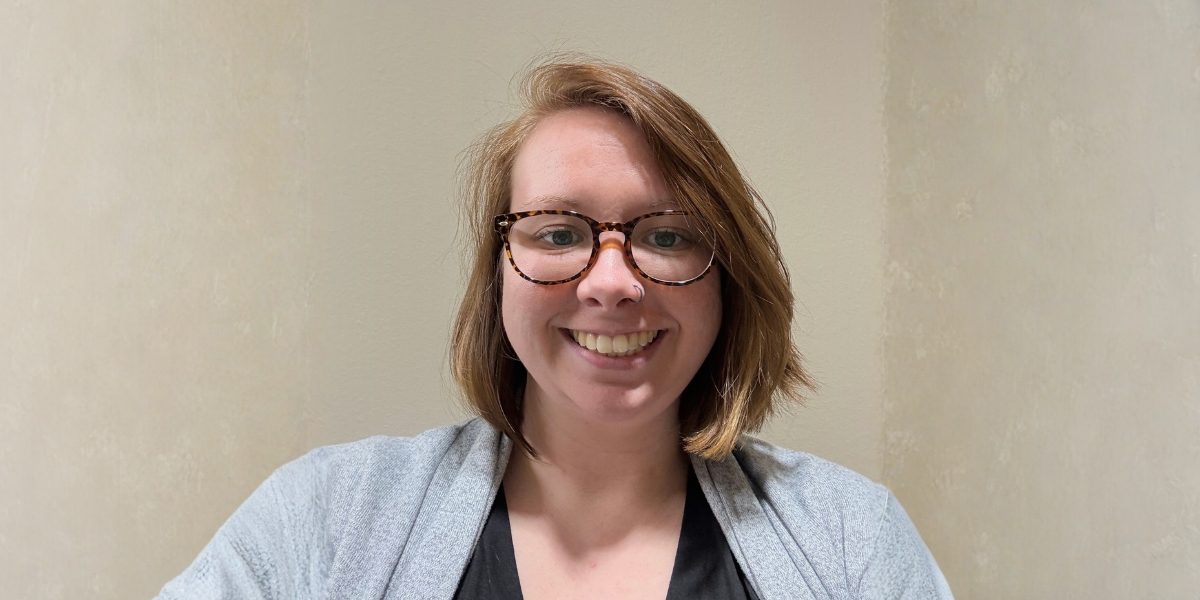

When a poet writes from the edge, what she risks most is not language, but exposure. In Poems from a Borderline Heart, Ashley Gannon does not flinch from that risk. Her debut collection, published in 2025, is less a book of verse than a reckoning, a life reconstructed through fragments of pain, recovery, and self-recognition. It is a body remembering itself, one poem at a time.
Gannon writes from the unvarnished interior of mental illness, Borderline Personality Disorder, depression, PTSD, and from the fraught terrain of survival that follows. Yet Poems from a Borderline Heart resists the tidy arc of redemption that so often smooths the rough edges of trauma narratives. Instead, it insists on the complexity of being both wounded and alive. Her voice is raw, yes, but also lucid, startlingly aware of the ways language can both conceal and reveal.
“I am a girl who has come a long way,” she writes. “I am not broken, / I am not bruised. / I am me / And unapologetically so.”
Those lines arrive late in the book, and by then the reader has felt what it costs to write them. Gannon’s poems inhabit the aftermath of survival where forgiveness is a daily negotiation, and love, especially self-love, is an act of rebellion. The title poem is not included because there is no single text that could contain this kind of feeling; the “borderline heart” beats through them all.
Poetry as Testimony
It is tempting to call Gannon brave, but bravery implies choice. The truth is more elemental: writing was her way out. The poems, written over years of therapy, hospitalization, and slow healing, form a chronicle of persistence. In her author’s note, Gannon acknowledges poetry as the instrument through which she learned to survive her own mind, a means to give coherence to the chaos she once lived inside.
What distinguishes her work is its intimacy. Each poem reads as if it were written not for publication but as a message left for the next version of herself, the girl she once was, or the woman she is still becoming. This is poetry as correspondence, not confession. There’s a tenderness in the way she addresses her “little me,” or the therapists and friends who stayed when others left. Yet the book is not sentimental. It carries the residue of scars, literal and otherwise, and the hard-won clarity that comes from naming what nearly destroyed you.
The Sound of Unfiltered Honesty
Gannon’s language is plainspoken but piercing, her rhythms shaped more by thought than by meter. There’s no artifice, no attempt to aestheticize pain. Instead, she writes in a cadence that feels like conversation, sometimes like confrontation. It’s as if she’s speaking to a mirror that finally answers back.
Her poems often move between first and third person, between the self and the shadow. The effect is disorienting but purposeful, a formal echo of the instability that defines her subject matter. In one piece, she refers to herself as “a girl who was severely misunderstood,” and in another, she writes, “Someone stayed.” That shift, from the depersonalized “she” to the self that can finally say “I,” becomes the book’s quiet narrative arc.
Beyond Diagnosis
While Poems from a Borderline Heart foregrounds mental health, it refuses to be reduced to it. The diagnosis that once defined Gannon becomes only one part of a larger human story of resilience, forgiveness, and the messy beauty of being alive. What emerges is not pathology, but personhood.
Gannon’s work reminds us that survival is not a single act but a daily practice, that healing is not linear, and that self-compassion may be the most radical form of love there is.
A Voice That Stays
By the end, Gannon achieves something rare: a voice that feels at once fiercely individual and quietly universal. Her poems don’t offer closure; they offer company. They speak to anyone who has ever looked in the mirror and seen a stranger, to anyone who has ever had to rebuild a life from what was left.
Poems from a Borderline Heart is, in the end, not about illness but about endurance. It’s about the long, often invisible work of becoming whole, and the poetry that helps us believe it’s possible. Order your copy today to explore new poems from a Borderline Heart.
Disclaimer: The content of this article is intended for general informational and educational purposes only. Readers are encouraged to seek professional assistance for any specific emotional, psychological, or medical concerns.