
By: Sophia Mudanza
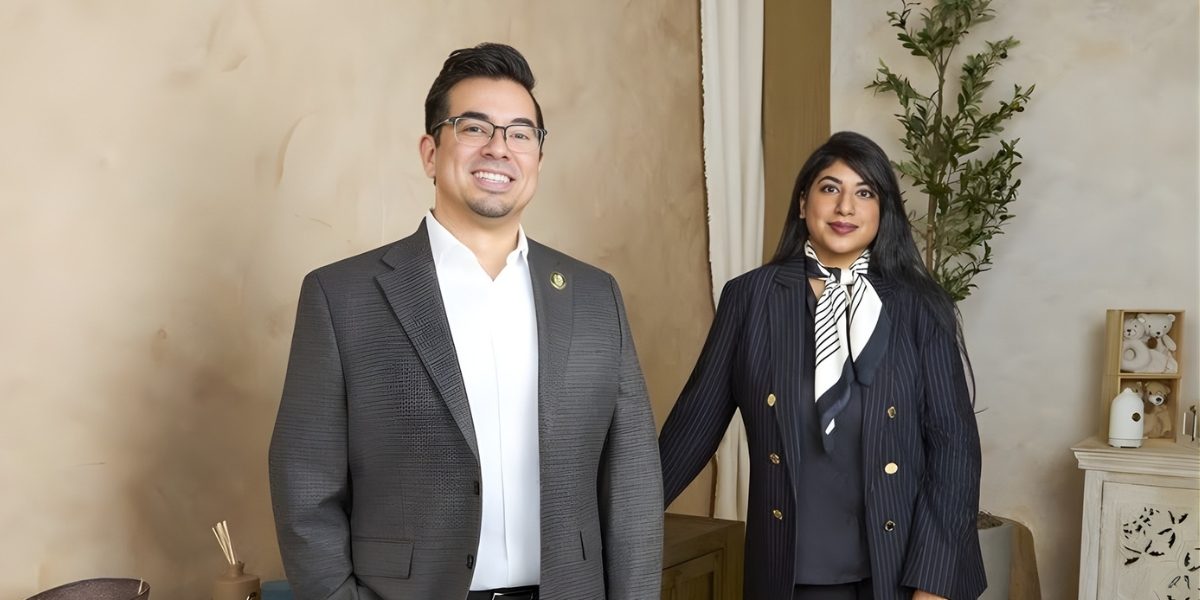
The studio sits on Coleman Boulevard, where the scent of premium woods and hand-selected florals drifts through rooms designed with the kind of intentionality rarely found outside historic European ateliers. For bespoke fragrances, clients arrive by appointment only, drawn by word-of-mouth recommendations and the commitment of something increasingly scarce in modern retail: a fragrance created exclusively for them, crafted without synthetic compounds or industrial shortcuts. FLOR Lifestyle, the venture founded by Tara Flores and Jonathan Flores, represents a quiet rebellion against an industry where mass production and chemical formulations have become standard practice.
The luxury fragrance market is experiencing significant growth, with a noticeable shift in consumer preferences that established brands have been slow to recognize. Wellness-conscious buyers now scrutinize ingredient lists with the same intensity they apply to food labels, seeking transparency in products that touch their skin and permeate their living spaces. The Floreses recognized this tension early, building their business model around a principle that sounds deceptively simple: every element, from candle wax to room diffusers, must derive from organic sources.
“We started asking why the industry accepts chemical additives as inevitable,” Tara Flores explains during a walkthrough of the Frisco studio. “Clients would come to us after years of purchasing from established brands, and they’d describe headaches, respiratory irritation, and concerns about what their children were breathing at home. The disconnect between luxury marketing and actual product composition became impossible to ignore.”
A Two-Decade Foundation Built Through Commercial Projects
The couple’s path to fragrance began in spaces far removed from retail. Tara Flores spent over twenty years managing assets and designing interiors for hotels, spas, and commercial properties across three states, developing an understanding of how environments shape human experience. Her work emphasized natural materials and handcrafted elements, positioning her in a niche segment of the design world where authenticity commanded premium pricing.
Jonathan Flores brought complementary expertise, and together they managed several projects before establishing FLOR Lifestyle. Their client retention rate remains high, reflecting relationships built through multiple engagements rather than one-time transactions. This foundation proved essential as they pivoted to fragrance, enabling them to view scent as an extension of spatial design rather than a standalone product category.
The studio’s methodology diverges sharply from conventional fragrance houses. FLOR Lifestyle operates as a private atelier. Each fragrance commission begins with extensive consultation, exploring not only preferred scent profiles but also the emotional qualities a client seeks to cultivate in their environment. Florals sourced from specific regions combine with premium woods selected for their aromatic properties and aging potential, resulting in formulations that are difficult to replicate.
Organic Purity as Market Differentiator Against Chemical Standards
The fragrance industry has long relied on synthetic compounds to achieve consistency and reduce costs. Aldehydes, phthalates, and petroleum-based carriers allow mass producers to deliver identical products across millions of units. FLOR Lifestyle’s rejection of these ingredients requires substantially different supply chains and production methods. Tara Flores sources organic florals and premium woods internationally, working directly with suppliers who can document cultivation practices and extraction methods.
This commitment extends beyond fragrance into interior elements. In addition to interior design services, the studio offers handmade organic décor, prioritizing artisans whose work aligns with sustainability principles. Revenue growth in recent periods indicates strong demand for this model, despite its higher price point compared with conventional alternatives. Annual revenue is substantial for a boutique operation, reflecting the value of its unique offering.
“The wellness movement has created space for businesses willing to document their entire supply chain,” notes Dr. Elena Vasquez, a fragrance chemistry researcher at the University of Texas. Consumers increasingly understand that ‘natural’ and ‘organic’ carry specific meanings, and they’re prepared to pay premiums when those claims withstand scrutiny. The challenge lies in scaling such models without compromising the authenticity that justifies higher pricing.”
The critique raises questions the Floreses acknowledge. Their current geographic footprint covers New York, California, and Texas, with plans for nationwide expansion. Growth requires production capacity that maintains quality standards while serving clients who expect the same attention whether they’re the tenth customer or the thousandth. Solutions include developing training protocols for additional artisans and establishing verification systems to maintain organic certification at higher volumes.
Convergence of Scent and Space Reshapes Client Expectations
FLOR Lifestyle’s dual focus on fragrance and interior design creates a service category that traditional competitors don’t directly address. Clients who commission a custom scent often return for design consultations to ensure coherence between olfactory and visual elements in their homes or commercial spaces. This integration reflects broader shifts in how affluent consumers approach their environments, viewing them as holistic systems rather than collections of independent choices.
The studio’s design philosophy emphasizes measured repose and refined stillness, qualities that translate into material selections favoring natural stone, untreated wood, and textiles produced through low-impact methods. Projects incorporate antique pieces alongside contemporary craftsmanship, avoiding the homogeneous aesthetics that characterize many luxury interiors. Each commission receives documentation that details provenance and care requirements, providing clients with narratives they can share when hosting or selling properties.
“What we’ve discovered is that people want to understand the decisions embedded in their spaces,” Jonathan Flores observes. “They’re not satisfied with generic explanations about trends or designer preferences. They want to know why this particular textile, why this specific wood finish, how these choices connect to broader values around sustainability and craftsmanship.”
The approach positions FLOR Lifestyle within the upper tiers of luxury while sidestepping conspicuous consumption patterns that are increasingly subject to social criticism. Clients signal their values through material selections and production methods rather than brand logos or price tags alone. This shift aligns with research showing that younger high-net-worth individuals prioritize experiences and authenticity over traditional status markers, suggesting the Floreses have identified durable demand rather than a fleeting fashion trend.
Building Infrastructure for Expanded Reach Without Dilution
The couple’s expansion plans confront operational challenges inherent to scaling artisanal production. Their sustainability model includes reinvesting profits into artisan partnerships, creating dependencies on skilled craftspeople who cannot be rapidly replaced or substituted. Training new collaborators takes months, limiting how quickly the studio can increase capacity. Geographic expansion compounds these constraints, as shipping organic fragrances and coordinating design installations across greater distances introduces logistical complexity.
Technology offers partial solutions. Virtual consultations allow the Floreses to serve clients outside their primary markets without requiring physical travel for every interaction. Digital documentation helps standardize processes while preserving customization. Yet certain elements resist automation. Scent evaluation remains subjective and requires in-person sessions in which clients experience the formulations directly. Design installations require on-site presence to ensure materials are handled correctly and placements achieve the intended effects.
The studio currently maintains a five-star rating across review platforms, reflecting consistent service delivery despite growth pressures. Maintaining this reputation while expanding requires systems that preserve attention to detail even as client volume increases. The Floreses describe their approach as deliberate, prioritizing sustainable expansion over aggressive scaling that might compromise the qualities that attracted initial clients.
Industry observers debate whether FLOR Lifestyle represents a viable alternative to mass production or an exceptional case unlikely to inspire broader transformation. The fragrance sector has historically consolidated around major houses with extensive distribution networks and marketing budgets measured in hundreds of millions. Boutique producers face challenges accessing retail channels and achieving brand awareness among consumers conditioned to recognize established names.
Yet luxury markets have demonstrated the capacity for disruption when new entrants identify underserved demand. Direct-to-consumer brands reshaped multiple categories by eliminating intermediaries and emphasizing transparency. FLOR Lifestyle’s appointment-only model and focus on bespoke creation positions it within this evolution, serving clients who view mass-produced luxury goods as contradictions rather than aspirations.
“We’re not trying to replace any brands on their terms,” Tara Flores emphasizes. “Our clients come to us precisely because they’ve exhausted what other brands offer. They want something that reflects their specific preferences, something they can’t find in a retail store. That’s a different proposition, and it attracts a different kind of buyer. We believe in promoting a serene lifestyle that brings people into a state of inner peace, where stillness becomes sacred, and life reflects the harmony God designed for us as mentioned in Psalm 46:10”