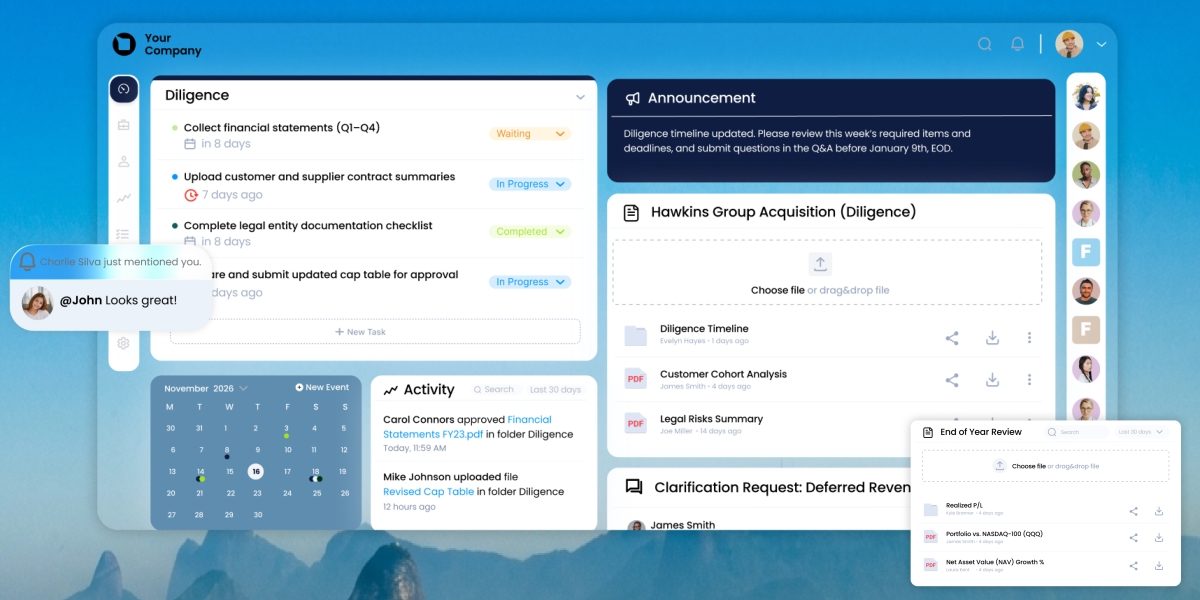

By Tayfun Bilsel, CEO, Clinked
The anatomy of a corporate transaction has changed substantially over the past decade. Where due diligence once involved a small group of advisors reviewing documents in a supervised physical setting, modern deal-making now spans multiple time zones, involves dozens of external stakeholders, and requires the controlled exchange of thousands of sensitive files often under significant time pressure.
This evolution has introduced a fundamental tension at the heart of M&A due diligence: how do organizations share the breadth of confidential business documents that buyers, lawyers, auditors, and regulators require, while maintaining precise control over who sees what, and when?
According to McKinsey & Company’s Merger Management Compendium, in more than 40 percent of deals, due diligence fails to provide an adequate roadmap for capturing synergies and creating value; a finding that points not only to analytical shortcomings, but to structural weaknesses in how information is managed and shared throughout a transaction.
So now the infrastructure supporting document exchange is no longer a background operational consideration but a strategic variable.
Tayfun Bilsel, CEO of Clinked, has spent years working with organizations on how they structure their document environments during high-stakes transactions. His consistent observation is that most deal teams focus their energy on the substance of due diligence: the financials, the contracts, the compliance landscape, while underestimating the degree to which their document governance infrastructure will either enable or impede the process. “The quality of a transaction often reflects the quality of the information environment in which it takes place,” Bilsel notes. “And that environment doesn’t build itself.”
The Risk of Conventional File-Sharing Methods
For many organizations approaching their first significant transaction, the instinct is to use familiar tools: email attachments, shared cloud drives, or internal file servers. These methods often work well in ordinary operational contexts. In the context of due diligence, however, they introduce categories of risk that can remain invisible until they materialize.
Email is the most straightforward example. Sending confidential financial statements or legal agreements as attachments provides no mechanism for controlling how documents are subsequently handled. Once a file leaves an inbox, its lifecycle is outside the sender’s control; recipients can forward, copy, or print content with no record of any of it. In processes involving multiple bidders or competing advisors, the absence of visibility carries meaningful consequences.
Generic shared drives present a different set of limitations. Most such platforms were designed for collaboration, not for the controlled disclosure environment that M&A due diligence requires. Folder-level permissions are broad instruments; they rarely support document-level access controls, restrict download or print rights, log which specific files have been viewed, or allow access to be revoked once a file has already been retrieved.
IBM’s 2024 Cost of a Data Breach Report placed the global average cost of a data breach at $4.88 million, a 10 percent increase from the prior year and the steepest single-year rise since the pandemic. The same report found that more than one-third of all breaches involved shadow data: information stored in unmanaged systems outside governed environments. That category of exposure maps directly onto the informal, multi-channel document workflows that many deal teams rely on during due diligence.
What to Expect from a Virtual Data Room Provider
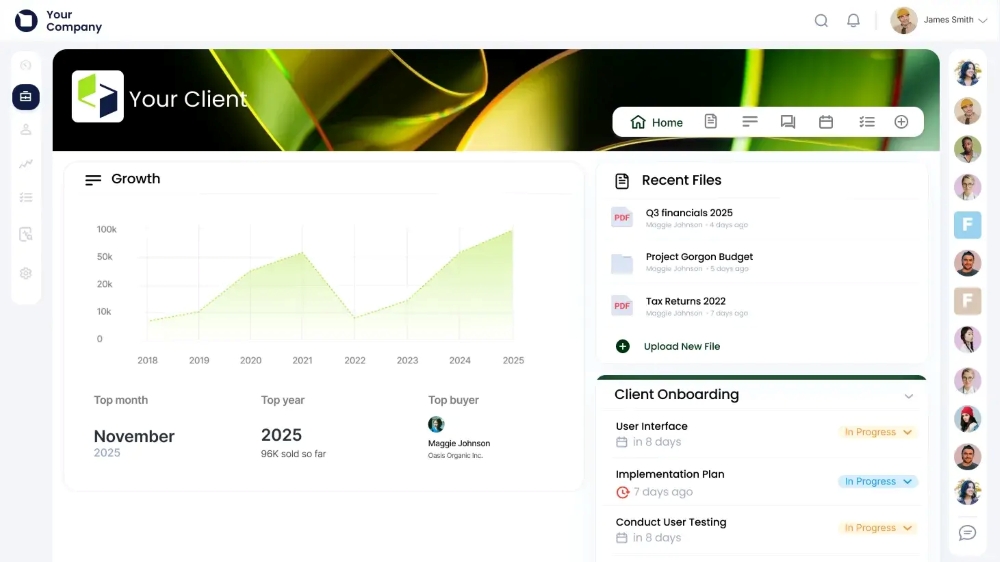
Not all secure document environments are built to the same standard, and the distinction matters considerably when a transaction’s integrity depends on the platform. Organizations conducting due diligence increasingly rely on a dedicated virtual data room provider to maintain control over sensitive information, monitor user activity, and streamline document reviews throughout the transaction process.
Clinked, for example, provides secure virtual data room capabilities for teams that need controlled document sharing, permissions, audit trails, and branded workspaces during confidential business processes.
At the core of any capable virtual data room offering is a permission architecture designed to reflect the actual complexity of a deal. Role-based access controls allow administrators to assign different levels of document access to different stakeholder groups, buyers, sell-side advisors, legal counsel, and regulators, without any single party gaining visibility beyond their authorized scope. Granular document permissions extend this further, enabling organizations to govern not just who can access a document, but what they can do with it: whether it can be downloaded, printed, forwarded, or only viewed within a secured interface.
Audit trails are among the most operationally valuable features of a well-configured virtual data room. A complete, time-stamped log of user activity recording, which documents which documents were opened, by whom, and when, gives deal teams the oversight and documentation they need to manage information flows with confidence. In the event of a compliance inquiry or a post-deal dispute, a detailed audit trail can be a material asset. Version control adds a complementary layer of integrity, ensuring that all parties are working from current materials and that the revision history of every document is preserved.
Activity tracking serves an immediate deal-management function as well. Sell-side teams can observe which documents are receiving the most attention from prospective buyers, which sections of the data room remain unreviewed, and whether counterparties are engaging at the depth the timeline requires. That intelligence allows deal teams to manage the information disclosure process actively rather than reactively.
The Cost of Poor Document Governance
The consequences of inadequate document governance in M&A transactions manifest in delayed timelines, compliance exposure, diminished buyer confidence, and, in serious cases, information leakage that undermines the integrity of the deal itself.
Document-related delays are more common than deal teams tend to acknowledge. When buyers cannot locate specific materials, when version conflicts emerge across channels, or when access permissions must be manually reset each time a new advisor joins the process, the cumulative effect on transaction timelines is significant. In competitive processes where timing influences outcome, those inefficiencies carry direct financial weight.
Regulatory exposure is a separate but equally important concern. Data protection frameworks across major jurisdictions impose specific obligations on organizations that process and transfer personal data in a commercial context. Informal document workflows that fall outside governed systems can create compliance liabilities that persist regardless of whether the transaction closes.
The reputational dimension is harder to quantify but equally relevant. When a sell-side team struggles to provide organized, consistently accessible documentation, the signal to a prospective buyer is difficult to ignore: if this is how information is managed during a structured process, it raises questions about operational discipline more broadly.
IBM’s 2024 report also documented a 27 percent rise in intellectual property theft compared to the prior year, with the average cost per compromised record reaching $173, an 11 percent increase year-over-year. Transactions involving patents, proprietary technology, customer contracts, or other sensitive commercial assets call for a document environment designed to prevent that exposure once and for all.
How Modern Virtual Data Rooms Support Due Diligence
The operational benefits of a well-implemented virtual data room extend beyond security controls. When configured properly, a modern platform converts due diligence from a fragmented, multi-channel exchange into a centralized, auditable process that serves both sides of a transaction.
Centralized document management creates a single authoritative repository for all transaction materials. Rather than information dispersed across email chains, shared folders, and ad hoc handovers, a virtual data room provides a structured environment in which files are organized, indexed, and accessible through a controlled interface. That structure reduces coordination friction and lowers the risk that material information is missed or duplicated.
Staged document release allows sell-side teams to align disclosure with the deal timeline: making materials available as negotiations progress, revoking access if a counterparty withdraws, and applying dynamic watermarking to discourage unauthorized reproduction. Q&A functionality integrated within the platform keeps information requests, responses, and document references in one place, with all activity logged.
McKinsey’s research on large deal failures has observed that misunderstandings and miscommunications between buyers and sellers tend to surface most acutely during the due diligence stage and that transparent, structured information exchange is consistently associated with smoother deal completion. A disciplined document environment is one of the most practical tools available for creating that transparency.
A Risk Management Decision, Not a Technology Purchase
The decision to implement a virtual data room in support of due diligence is sometimes approached as a technology procurement question, a matter of features and pricing. That framing leads organizations to underweight the more consequential question of what the platform enables or prevents.
Virtual data room adoption is more accurately understood as a risk management decision. It determines whether an organization can demonstrate, with documentary evidence, that confidential information was handled appropriately throughout a transaction. It determines whether a deal team can deliver the transparency that informed buyers require while protecting information that should remain restricted. And it influences, in ways that are predictable and manageable, whether a process runs to schedule or extends unnecessarily.
McKinsey has noted that roughly 70 percent of mergers fail to achieve their original objectives, a figure that has held broadly consistent across decades of research. While no single variable accounts for that outcome, the quality of information governance during due diligence is a structural contributor that tends to receive less attention than it deserves.
Organizations that treat document infrastructure as an afterthought accept a category of deal risk that is foreseeable and, in most cases, preventable. Tayfun Bilsel’s view is straightforward: the platforms and processes used to share confidential information are not administrative details. They are foundational to whether a deal is executed with the discipline, speed, and integrity that convert a signed agreement into lasting value.
Tayfun Bilsel is the CEO of Clinked, a provider of secure client portal and virtual data room solutions for professional services firms and organizations managing confidential business transactions.