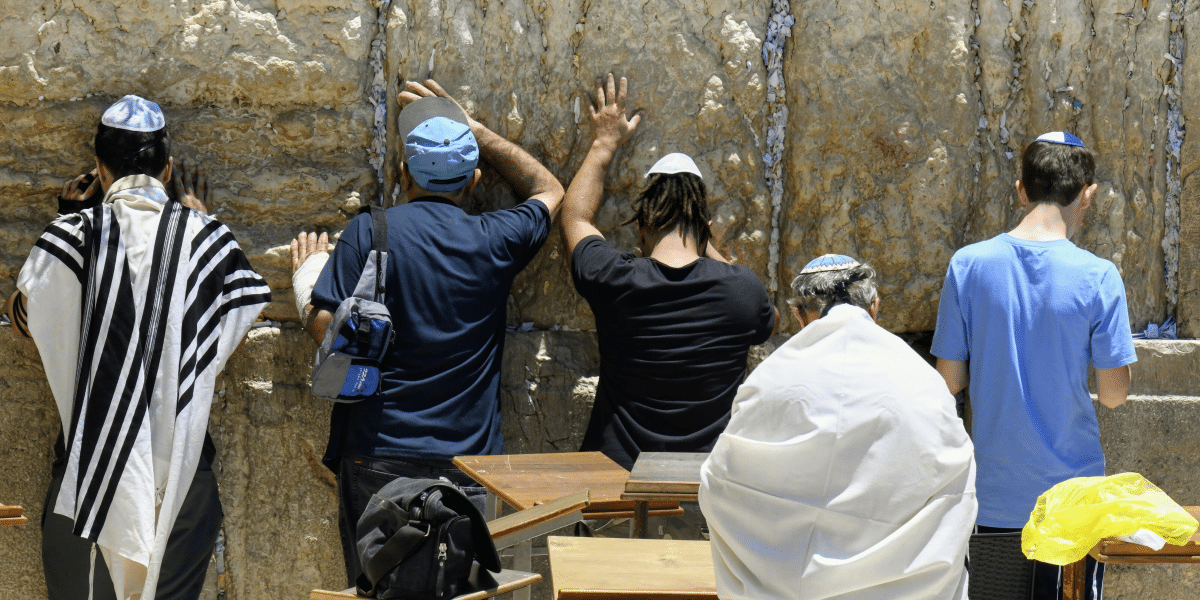

When we talk about Jewish communities worldwide, the idea of unity is top of mind. But what does global Jewish unity look like, and why is it so significant today? In a world that’s increasingly connected yet divided, fostering a sense of togetherness among diverse Jewish groups is both a challenge and an opportunity.
Jewish communities span across continents, each with unique traditions, languages, and practices. These differences can make unity seem distant. Unity brings strength, resilience, and a shared sense of purpose. It embodies celebrating what unites us while respecting the diversity that enriches our global community.
Shavei Israel, a non-profit seeking to assist in uniting the global Jewish community, explores the obstacles to achieving global Jewish unity and the promising pathways to bridge these gaps.
Historical Context of Jewish Unity
The journey of Jewish unity is a tapestry woven from historical events and the experiences of the Jewish diaspora. Understanding this history helps us appreciate the current efforts toward fostering global Jewish unity.
The spread of Jewish communities outside their ancestral homeland meant that, over time, Jews migrated to various parts of the world, including Europe, North Africa, the Middle East, and eventually the Americas and beyond. This spread has shaped cultural and religious identities within the Jewish community.
As Jews settled in different regions, they adapted to local cultures while preserving their unique heritage. This balance between assimilation and tradition created diverse expressions of Jewish life. For example, Sephardic Jews, originally from Spain and Portugal, developed distinct customs and liturgical practices compared to Ashkenazi Jews from Central and Eastern Europe.
Despite these differences, the shared core values and religious practices have acted as glue, keeping Jewish people connected. Festivals like Passover and Hanukkah, along with rituals such as Shabbat, serve as universal symbols of Jewish faith and heritage.
Impact of Historical Events
Major historical events have significantly impacted Jewish unity. The Holocaust, one of the darkest periods in Jewish history, united Jews worldwide in shared grief and a renewed commitment to their identity. The atrocities committed during World War II underscored the need for a haven for Jews, leading to the establishment of the State of Israel in 1948.
Israel’s creation was a pivotal moment. It offered a homeland for Jews scattered across the globe and became a central point of cultural and spiritual connection. The state’s existence continues to influence Jewish unity by providing a focal point around which Jews from different backgrounds can rally. These events have also highlighted the challenges of maintaining unity.
“Differences in political views, religious practices, and cultural traditions can sometimes lead to friction,” says Shavei Israel founder, Michael Freund. “The shared history and the common goal of survival and continuity often outweigh these differences. The deep scars of the past and the hope symbolized by Israel encourage ongoing dialogue, cooperation, and solidarity among Jews worldwide.”
Understanding these historical contexts illustrates the complexity of Jewish unity but also underscores its importance. The lessons from the diaspora and significant historical events continue to influence efforts to foster a cohesive and united global Jewish community.
Current Challenges to Unity
Building bridges to foster global Jewish unity is no small task. The Jewish community is diverse, with members spanning the globe. This diversity, while beautiful, can also present challenges to unity.
Jewish communities around the world practice their faith in unique ways. These cultural and ideological differences can sometimes make unity difficult. Imagine a family where each sibling has a different way of doing things. One might prefer a quiet Shabbat at home, while another loves a lively gathering with friends. These differences don’t diminish their bond but can create friction.
Notes Freund, “In Jewish communities, the variety of cultural practices stems from historical journeys.”
Sephardic Jews have customs influenced by Spain and Portugal, while Ashkenazi Jews follow traditions shaped by Central and Eastern Europe. Mizrahi Jews have practices inspired by Middle Eastern cultures. These diverse practices can sometimes lead to misunderstandings or a misplaced sense of “us versus them.”
Ideologies also play a significant role. Within the Jewish community, there are various streams: Orthodox, Conservative, Reform, Reconstructionist, and others. These groups have different interpretations of Jewish law and practice. For example, Orthodox Jews adhere strictly to traditional Jewish law, while Reform Jews may take a more liberal approach. These differences can create gaps in understanding and cooperation.
Recognizing and respecting this diversity is crucial for fostering unity. It is like creating a quilt where each patch represents a different tradition, and all patches together form a vibrant, unified whole.

Photo: Unsplash.com
Strategies for Fostering Unity
Creating a sense of unity within the global Jewish community requires thoughtful and deliberate strategies. Different approaches can be taken to ensure everyone feels included and connected.
“Fostering unity begins with the youth. They are the future leaders of the community, and by engaging them early, we can instill a lifelong sense of belonging and responsibility. Educational programs play a crucial role in this process,” says Freund.
Schools and community organizations can offer programs that emphasize shared Jewish history and values. Camps and retreats are particularly effective because they provide immersive experiences where young people can bond over their shared heritage.
The journey towards global Jewish unity holds immense promise. By building bridges, we create a future where a unified Jewish identity is both possible and thriving. Communities working together can break down barriers and foster stronger connections. Each initiative, no matter how small, contributes to a larger mosaic of global unity.
Published By: Aize Perez