
In today’s evolving era, the utilization of cutting-edge digital tools has transformed various sectors, including interior design. Gone are the days when interior designers depended solely on pen and paper to bring their visions to fruition. The incorporation of tools into design services has not only boosted efficiency but also unlocked a realm of fresh creative opportunities. This piece delves into digital tools’ role in shaping day interior design services.
Enhancing the Design Process through Visualization
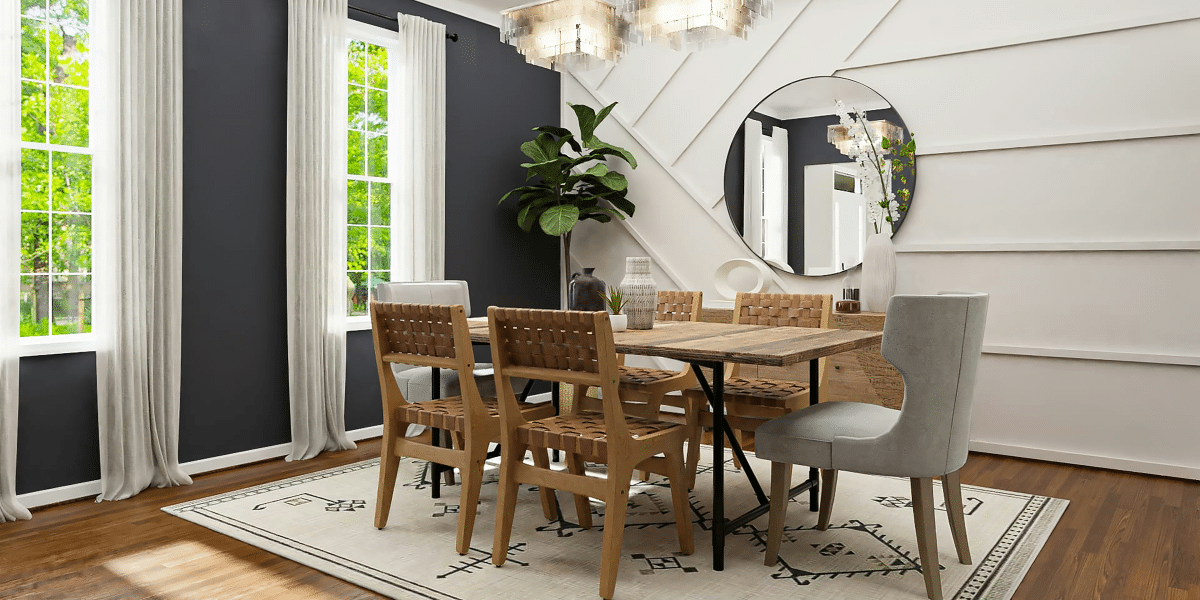
A key benefit of integrating tools in interior design services lies in the capacity to craft lifelike 3D visualizations. These rendered images empower clients to visualize their spaces before any physical elements are put in place. By utilizing visualization, interior designers can effortlessly experiment with color schemes, furniture arrangements, lighting choices, and overall aesthetics without the need for tangible samples or prototypes. This streamlines the design process and facilitates prompt and precise decision-making.
Closing Communication Gaps with Reality
Another noteworthy utilization of tools in interior design is Virtual Reality (VR) technology. Through immersing clients in environments, VR allows them to explore and experience their space as if it were already completed. Clients have the opportunity to explore environments, experiment with various materials, and engage with objects in a simulated setting. This interactive experience assists customers in visualizing dimensions effectively and making well-informed decisions regarding furniture placement, finishes, textures, and other design elements. Virtual reality serves as a significant tool in bridging the communication gap between designers and clients by providing a shared context for discussions, thus fostering collaboration throughout the project.
Improving Efficiency through Project Management Software
The intricate nature of design projects necessitates organization and coordination among team members for tasks such as budget management, material procurement, contractor scheduling, and progress monitoring. Digital project management tools play a role in streamlining these processes by offering a platform that facilitates seamless collaboration. Through software, designers can. Share project schedules, allocate tasks, set reminders, monitor expenses, and communicate effectively with clients. The integration of project management software enhances efficiency by simplifying management and ensuring alignment among all involved parties.
Enhancing Design Precision with CAD Software
While traditionally associated with architects and engineers, Computer-Aided Design (CAD) software has become increasingly prevalent in the realm of design. This technology empowers designers to produce 2D or 3D floor plans, elevations, sections, and customized furniture designs.
By utilizing a platform of traditional blueprints or sketches, designers have the flexibility to make adjustments to designs, easily explore different options quickly, and accurately determine dimensions. This accuracy helps minimize errors during the construction phase while allowing for modifications to meet client needs.
Adopting Sustainable Design Through Environmental Analysis Tools
In the realm of design projects where sustainability plays a vital role, environmental analysis software is gaining traction within modern interior design services. This software empowers designers to assess the impact of their choices. By offering insights on energy efficiency, indoor air quality, and water usage metrics. Among factors. These tools steer designers towards eco decisions. Whether it involves choosing VOC paint or utilizing materials like bamboo or recycled glass countertops, these digital resources play a key role in creating environmentally friendly spaces without compromising on style or functionality.
Enhancing Cost Efficiency with Estimation Software
Accurate cost estimation is important in designing projects to prevent budget overruns that could strain client relationships and profitability. Nowadays, professionals turn to estimation software to develop budgets by considering expenses like material costs, labor fees, and permit charges more efficiently than manual calculations could achieve. Software that estimates calculations effectively reduces error, saves time, and enhances cost transparency for decision-making.
In summary, digital tools have become essential in design services. They streamline the design process through visualization and virtual reality to improve efficiency, using project management tools and estimating software. These innovations have transformed the industry by promoting practices, accuracy, and cost-effectiveness. With technology advancing and offering opportunities, interior designers must adopt digital tools to remain competitive in a changing landscape. These tools empower designers to turn their ideas into reality while surpassing client expectations in ways.
Published by: Khy Talara