Bryant Park Winter Village Reopens With Free Ice Skating

Bryant Park Winter Village reopened in Midtown Manhattan on October 28, 2026, with free-admission ice skating and more than 180 holiday shops. The rink is free for visitors who bring their own skates, but timed reservations and additional fees still apply. The 2026-27 schedule sets different closing dates for skating, shopping and dining.

Key Takeaways

  • Bryant Park Winter Village reopened October 28, 2026, with a 17,000-square-foot outdoor skating rink scheduled to operate through February 28, 2027
  • Visitors bringing their own skates can skate without an admission fee, but must reserve a timed ticket in advance
  • Skate rentals range from $18.72 to $64.48 before taxes, depending on the selected date and session
  • More than 180 Holiday Shops are scheduled to operate through January 3, 2027, while The Rink and The Lodge remain open through February

Bryant Park Winter Village has returned for its 25th year, bringing outdoor ice skating and seasonal shopping to Midtown Manhattan. The reopening restores free rink admission for visitors with their own equipment, while rental fees and reservation requirements determine the cost and availability of individual skating sessions.

The seasonal attraction includes The Rink, the Holiday Shops operated by Urbanspace, and The Lodge food hall. Although the three attractions opened together on October 28, they operate on different schedules, with the holiday market closing nearly two months before the skating season ends.

Bryant Park Winter Village Free Skating Requires Reservations

Free admission remains a central feature of Bryant Park Winter Village, but visitors must book a time slot before entering the rink. Those bringing personal skates are required to obtain a complimentary “Bring Your Own Skates” ticket through the reservation system.

According to Bryant Park’s published skating rules, free reservations become available daily for dates one week in advance. Visitors must present their own skates when entering with a complimentary ticket, and possession of personal equipment alone does not guarantee admission.

The booking policy also limits the number of sessions available to each person. Individual skaters may reserve one session per day, with a maximum of five tickets permitted in a single booking. Consecutive free sessions are not allowed, preventing visitors from extending their skating time by booking multiple adjoining slots.

Most standard sessions provide approximately 50 minutes on the ice. The scheduled skating period begins about 20 minutes after the reservation’s listed arrival time, allowing skaters to check in, prepare their equipment and reach the skating area.

The first session of the day generally provides additional skating time. Other sessions follow the rink’s published schedule, which includes intervals for ice resurfacing throughout operating hours.

Late arrivals are handled according to availability. Bryant Park states that guests arriving a few minutes late may still be accommodated, but visitors arriving several hours after their reservation face greater restrictions, particularly during peak periods.

Skaters receive wristbands for access to the ice, where safety and equipment rules apply. Phones, cameras, headphones and bags are prohibited on the skating surface, while the center of the rink is reserved for lessons and figure skating activities.

Children under 14 must be accompanied by an adult. Guardians who intend to skate must hold skating tickets, while non-skating adults are subject to separate chaperone rules.

The rink occupies Bryant Park between 40th and 42nd Streets and Fifth and Sixth Avenues, within Midtown Manhattan’s cultural core. The location is accessible from the 42nd Street-Bryant Park subway station, served by the B, D, F and M lines, with the 7 train also nearby.

Skate Rentals and Additional Services Affect Total Costs

Although rink admission is free, visitors without personal skates must pay for rental equipment. Bryant Park lists standard skate rental prices between $18.72 and $64.48, depending on the selected date and time.

These amounts include administrative fees but exclude applicable taxes. The published pricing structure identifies off-peak sessions as a lower-cost option, with weekday mornings and less crowded dates among the periods suggested by the park.

Rental reservations are made through the same booking system used for free skating sessions. Visitors selecting a paid rental ticket receive access to the skating session and the necessary rental equipment, while additional services may carry separate charges.

Bank of America debit and credit cardholders can receive a 10% discount on eligible online skate rental purchases during the season. The discount applies under the published cardholder terms and does not extend to every Winter Village service.

Equipment costs can also vary for families and beginner skaters. Helmet rentals are complimentary, while skating aids are listed at $26, including the administrative fee. Bryant Park provides free skating aids before 10:30 a.m., subject to availability.

The skating aids include several designs intended for different heights and experience levels. Availability is limited, and equipment is distributed on a first-come, first-served basis rather than guaranteed with every reservation.

Storage presents another possible expense. Standard bag check costs $6.24 per item, while oversized belongings, including luggage and strollers, are subject to an $18.72 charge.

Shoe check remains free, and a limited number of lockers are available for visitors bringing their own locks. Locks and socks can also be purchased for $6.24 each.

The storage rules prohibit bags from being taken onto the ice. Coats must either be worn or checked, and unattended belongings are not permitted in skating areas.

Additional ticket categories offer extended skating sessions on selected dates. Bryant Park lists Express Lane admission for visitors bringing their own skates at $18.42 to $36.86, while the version including rental skates costs $87.52.

These upgrades are separate from standard free admission and are not required for visitors using the complimentary reservation option.

Families should also review the chaperone policy before booking. One non-skating chaperone may enter free for two children under 14 when no skating parent or guardian is present. Additional non-skating chaperones require paid tickets under the park’s published rules.

Paid booking changes are subject to restrictions. Bryant Park generally does not offer standard refunds for seasonal skating purchases, although eligible rental reservations may be rescheduled or canceled for store credit up to one hour before the scheduled session.

Holiday Shops Close January 3 as Ice Skating Continues Through February

The reopening also brings back the Holiday Shops, an outdoor market featuring more than 180 vendors across Bryant Park. Operated by Urbanspace, the market includes businesses selling accessories, clothing, handmade goods, food and seasonal merchandise.

The shopping area is scheduled to remain open through January 3, 2027. Standard hours are 11 a.m. to 8 p.m. Monday through Friday and 10 a.m. to 8 p.m. on weekends, although individual vendors may extend operating hours during the holiday season.

The market features a rotating Small Business Spotlight program involving four New York City businesses. Bank of America announced the participants on October 29, with each receiving temporary retail space and booth setup without rental charges.

Queens-based Rolly Poly Studios occupies the featured space from October 28 through November 13, offering ceramics and stationery. Brooklyn bakery Pan De Arwah follows from November 14 through November 30, with sourdough bread and other baked goods among its products.

SouveDeer, a Long Island City business specializing in handcrafted home decor and fragrances, is scheduled for December 1 through December 17. Manhattan accessories brand Lewis Cho takes the final period from December 18 through January 3.

The four businesses participate on a rotating schedule, making their availability dependent on the date of a visitor’s trip. Their products are sold separately from skating admission and other Winter Village activities.

Other vendors operate throughout the main market period. The 2026 lineup also includes Serendipity3, bringing its desserts to the seasonal market, alongside returning food and retail businesses.

Bryant Park’s seasonal shopping program is distinct from its other public events, including outdoor film screenings and poetry readings held during warmer months. Those activities form part of Manhattan’s cultural offerings beyond nightlife, while Winter Village operates under its own seasonal calendar.

The Lodge, located beside the skating rink, provides another dining option during the winter season. Its participating vendors include Cafe ‘cito, S’mores N’more and Stout Sausage Co., offering sandwiches, pastries, desserts and other food items.

The Lodge is scheduled to remain open through February 28, 2027, with regular operating hours from 10 a.m. to 10 p.m. Extended hours apply on selected peak-season dates, when the venue may stay open until 11:30 p.m.

The rink operates on a separate schedule. Standard skating hours are 8 a.m. to 10 p.m. daily, including holidays, while the seasonal timetable extends operations until midnight from November 19 through January 3.

A shorter schedule is listed for January 31, when skating is expected to close at 8 p.m. Visitors selecting reservations for specific dates should account for those changes when reviewing available sessions.

Weather may also affect skating operations. The rink generally remains open during rain, but heavy rainfall and severe conditions can result in temporary closures. Bryant Park states that visitors will receive email notifications if their scheduled sessions are canceled because of weather.

Accessibility arrangements are available throughout the attraction. Bryant Park identifies accessible entrances along 40th and 42nd Streets, while staff can provide portable ramp assistance for holiday kiosks with raised entrances.

The main Holiday Shops are scheduled to close January 3, but skating reservations and rinkside dining continue through February 28. The separate operating dates allow visitors to distinguish between the holiday market’s final day and the end of the full Winter Village season.

Frequently Asked Questions

Is ice skating free at Bryant Park Winter Village?

Yes. Bryant Park Winter Village offers free rink admission for visitors bringing their own skates. A complimentary timed reservation is required, and skate rentals or optional services carry separate charges.

How much does it cost to rent skates at Bryant Park?

Standard skate rentals range from $18.72 to $64.48, depending on the date and session. These advertised prices include administrative fees but exclude applicable taxes.

How far in advance can visitors reserve free skating tickets?

Bryant Park releases complimentary skating reservations daily for dates one week in advance. Each person is limited to one skating session per day, with up to five tickets allowed in a single booking.

When does Bryant Park Winter Village close for the season?

The Holiday Shops are scheduled to close January 3, 2027. The ice skating rink and The Lodge are scheduled to remain open through February 28, 2027, subject to operating conditions.

Does the Bryant Park ice rink close when it rains?

The rink generally operates during rainfall, although heavy rain or severe weather may cause closures. Visitors whose reservations are affected receive email notifications, and paid booking adjustments follow the park’s published policies.


Declan Lohan and the Transition from Russian Time to UNI-Virtuosi Racing in Formula 2

A name change doesn’t always mean a racing team starts from scratch. In Formula 2, with cars, personnel, and technical expertise potentially carried from one season to the next, an entity can keep functioning even as its nature changes. This happened when Russian Time pulled out of the series at the end of 2018. Virtuosi Racing, having managed the Russian Time team since 2015, took control of its slot and assets and operated in the 2019 series as UNI-Virtuosi. Thus, the Formula 2 project was renamed, but the framework Russian Time had built largely remained intact.

The restructuring happened in December 2018, giving the new entity a base to start the next season. Russian Time claimed the title of Teams’ Champions in 2017 under Virtuosi’s management and achieved fourth place in 2018, winning four races and reaching the podium eight times. Andy Roche still oversaw the team, while Paul Devlin handled the technical side. Declan Lohan was listed as an owner alongside Roche and Devlin. Reports at the time also indicated that the engineering personnel and general structure would remain largely unchanged. In practical terms, the Russian Time name disappeared, but the organisation built around the entry continued.

For its first season under the UNI-Virtuosi name, the team selected Ghiotto and Zhou. Ghiotto already had experience with the organisation, having raced for the Russian Time entry in 2017, while Zhou arrived after competing in the European Formula 3 Championship. The new team finished second in the 2019 Teams’ Championship with 347 points, behind DAMS on 418. Ghiotto took four wins and ended the Drivers’ Championship third with 207 points. His victories came in Bahrain, at the Red Bull Ring, Silverstone and the Hungaroring. Zhou finished seventh with 140 points and added three podiums, including second in Russia and third at Yas Marina.

The following season brought another driver change. Ghiotto moved to Hitech Grand Prix, and Callum Ilott took Zhou’s seat. Ilott had raced in Formula 2 for the Sauber Junior Team by Charouz in 2019 and was set to compete in the 2020 season as a Ferrari Driver Academy member. He began to look like a top title contender, winning three times and finishing runner-up with 201 points, behind Mick Schumacher on 215. Zhou collected 151.5 points for sixth place. UNI-Virtuosi also finished second in the Teams’ Championship for the season, this time with 352.5 points. PREMA Racing won the title with 392 points. Ilott’s wins were at the Red Bull Ring, Silverstone and Monza, and he was still in the championship race at the conclusion in Bahrain.

Zhou remained on the team into 2021 with Drugovich joining him. Zhou was now a member of the Alpine Academy. Zhou was already one of the most seasoned drivers in the category. He won four times that season, at Monaco, Silverstone and Abu Dhabi, and also took third place in the Drivers’ Championship with 183 points. Drugovich scored 105 points to finish eighth. UNI-Virtuosi accumulated 288 points to be runner-up in the Teams’ Championship for the third year in a row, behind PREMA’s 444.5, while in the Drivers’ category. At the season-ending round in Yas Marina, Zhou impressed with a narrow second place in the first race followed by victory in the second Sprint Race. A few weeks earlier, Alfa Romeo confirmed that Zhou would be driving for their Formula 1 team in 2022.

The three seasons also illustrated how Formula 2 functions as part of the wider single-seater ladder. Ghiotto’s 2019 season followed his prior experience with the team, and Ilott’s 2020 effort made him a championship contender before he entered a test and reserve seat at Ferrari for the 2021 season. Zhou raced for three seasons at the team before going on to become the first permanent Chinese driver in F1 after joining Alfa Romeo. This wasn’t entirely down to UNI-Virtuosi, as other factors played a role. Still, the team operated at the upper level of junior single-seater racing. In contrast, each of the three drivers pursued a route toward Formula 1.

For Lohan, the transition continued the ownership role he had held since Virtuosi’s early involvement in professional single-seater racing. The move to UNI-Virtuosi did not require the organisation to build a new Formula 2 operation from scratch. Roche continued to manage the team, Devlin remained involved in the technical operation, and Lohan stayed among the owners. Much of the staff and working structure also carried over from Russian Time. This continuity mattered because the team could begin its first season under its own name with an established technical base, rather than spending a year rebuilding its operation.

By the close of 2021, UNI-Virtuosi had completed three Formula 2 seasons and finished second in the Teams’ Championship in each of them. The driver line-up changed from Ghiotto and Zhou to Ilott and Zhou, and then to Zhou and Drugovich, but the underlying organisation remained comparatively stable. Lohan, Roche and Devlin remained associated with the operation’s ownership and management, while drivers connected with the team moved on to further opportunities in international single-seater racing. The period therefore represented an important stage between Virtuosi’s Russian Time years and its later development under the Invicta name. For Declan Martin Lohan, it was also a period in which the racing organisation he had helped establish operated under its own identity for the first time.

The Village That Raised Chrissy

How a Mother’s Stand, a Residential Campus and a Band of Bikers Shaped the Life Ronald Aubrey Lee Shares in I Am Chrissy

Chrissy Lee never spoke a word. In her father’s new book, a whole community speaks for her.

Ronald Aubrey Lee, a retired command sergeant major from South Carolina, spent decades caring for his daughter, Chrissy, who was born in 1978 with microcephaly and a profound intellectual disability. In I Am Chrissy, he tells her life story in her own imagined voice. Along the way, the book becomes a portrait of the people and places that made a full life possible for a girl who needed help with nearly every part of daily life.

It is a reminder that families raising a child with profound disabilities rarely do it alone, and that the support they find often has to be fought for, built and kept alive.

A Teacher Who Would Not Take No for an Answer

The first fight came in 1983. When Chrissy’s mother, Linda, a teacher trained in special needs education, tried to enroll her in their local school, an administrator said the district had no program and no funding for children who could not walk, talk or feed themselves. Linda taught in that same district and put her own job on the line. Her reply, as the book recounts it, was blunt: “I’ll see you and the school district superintendent in court!”

The district answered the next day with a classroom, a certified teacher, transportation and physical therapy. Within a couple of months, other children with disabilities had enrolled, partly because Linda sought out their families. The superintendent later thanked her personally, and years afterward she was named District Teacher of the Year.

Lee’s book raises a question every community should ask: Who speaks up for the children who cannot speak for themselves?

A Campus That Became Home

In 1985, after careful research and emotional family conversations, Chrissy’s parents enrolled her at Whitten Center, one of the state’s regional centers for people with developmental disabilities, about thirty miles from home. Lee describes a college-like campus where Chrissy had a roommate, a nurse, caregivers, teachers and a daily routine. She rode horses in an equestrian program, enjoyed therapy in the campus pool, graduated from Whitten Center Hallet School at 18 and was crowned queen at the annual spring prom.

• What does a full life look like for someone who will always need care?

• Who keeps the extras going when the funding runs out?

Bikers, Yard Sales and a Parents’ Club

That second question runs through the book. When state funding dried up, the equestrian program ended, and the pool closed. Then a motorcycle group calling itself Friends of Whitten Center stepped in, raising more than $20,000 for the Parents’ Club in its first year, Lee writes, through raffles, rides, auctions and poker runs. Later, the Woodlawn Ramblers, led by Bub Lollis, took up the cause and have raised funds for the campus for more than 36 years. Chrissy, whose father once drove her around a biker event in his golf cart, called them her heroes.

The Parents’ Club, founded in 1953, covers what state budgets do not, from birthday celebrations to the annual Christmas party, where Lee played Santa Claus. After retiring from teaching, Linda served as its president, advocating for every resident.

Caregivers at the Bedside

The final chapters cover the hardest years: COVID-19 restrictions that let Chrissy’s parents see her only once in nine months, repeated hospital stays, and her death on May 25, 2024, a month after her 46th birthday. Through each stay in intensive care, doctors and nurses bonded with her, sorry to see her go and glad every time she recovered. Even at the end, the circle held. Hospital nurses became what Chrissy calls her guardian angels, and Whitten Center caregivers gathered at her bedside in hospice beside her mother.

Lee closes by inviting readers to learn more about Whitten Center through Whitten Center Friends. For families just starting out on this road, his message is clear: find your people, and never stop speaking up for your child.

One mother’s stand can open a classroom…

One campus can become a home…

One community can be a voice for those without words…

In I Am Chrissy, it takes a village, and Chrissy had one of the very best!

Author Name: Ronald Aubrey Lee

Book Title: I Am Chrissy

Published By: Blue Crown Books

Testing Firmoo and An Editor’s Experience Buying Glasses Online

Firmoo pairs prescription lens options and accessible prices with frames that let everyday eyewear carry real personal style.

I’ve worn glasses since I was 12, and there is one moment in the process that never changes: the prescription changes, the old pair starts feeling outdated, and the search begins again. The practical questions arrive first. Will the frames suit my face? Will the lenses offer the right options? How much will everything cost by the time the purchase is complete?

Then comes the less practical, though equally important, part. Does the frame actually feel like something worth wearing every day?

For most of my life, buying glasses meant either paying more than I wanted at a mall optical shop for frames I only sort of liked or gambling on an online retailer and hoping the prescription came out right. When a friend mentioned that she had ordered her last three pairs from Firmoo, I was skeptical but curious enough to try it myself.

Firmoo is an online glasses retailer founded in 2009 by a group of opticians and designers. Its premise is simple: prescription eyewear can be professionally made, visually interesting, and priced within reach of shoppers who do not want to spend a large sum on a single pair.

For those who want to buy prescription glasses online, Firmoo makes a case for treating eyewear as part of a wardrobe. The site carries prescription glasses, sunglasses, reading glasses, sports eyewear, and children’s frames, with thousands of options across several distinct style collections. That range opens up a more flexible way to shop, whether the goal is a dependable daily pair, a screen-time option, or a frame chosen purely because it makes an outfit more interesting.

Beginning With the Usual Online Shopping Questions

My first question was the one I bring to any eyewear website: Could the process feel manageable without standing in front of a wall of frames at an optical store?

Firmoo organizes its catalog by style, material, and function, which gives the browsing process a useful starting point, and its Instagram profile offers another way to look through the frames. Its Balance Series emphasizes frame balance and ergonomics, while the Less Series focuses on clean, Nordic-inspired minimalism. The Punk and Baddie collections take a different route, favoring more fashion-conscious silhouettes, hardware details, and color.

The brand also provides an AI-powered virtual try-on tool. I uploaded a photo and used it to preview multiple frames on my own face before making a decision. Having previously ordered glasses that looked different from the product photo once they arrived, I found that the tool removed some of the guesswork. It cannot replace an in-person fitting, but it addresses one of the central anxieties of online eyewear shopping: wondering whether a bold choice will actually work.

Firmoo says its average price runs about $40 to $50, including custom prescription lenses, and new customers can find first pairs beginning at $4.95. My first pair cost $4.95 through the new-customer offer. As someone used to the price shock that can follow a routine eye exam, that pricing structure changes the calculation. It makes room for a second pair rather than treating every glasses purchase as a one-frame commitment.

Choosing a Frame With an Edge

My browsing experience became more focused when I reached the Punk collection. The silver #Punk017, priced at $27.99, is a semi-rimless metal frame with an open lower edge and metallic piercing details.

Its design lands somewhere between sharp office polish and light-punk styling. The upper metal rim gives it structure, while the lower-rimless construction lets the lenses appear to float beneath it. The result is distinct without becoming overwhelming, which appealed to me because I was curious about punk-style eyewear but did not want a frame that feels limited to one type of outfit.

At a listed 13 grams, the Punk017 also belongs in the conversation around lightweight metal eyeglasses. Weight matters for people who spend long workdays in glasses, especially when they already deal with pressure points from heavier frames. The listed specifications suggest a frame designed to bring visual detail without adding unnecessary bulk.

This is where Firmoo’s style-focused approach becomes useful. The Punk017 can sit alongside silver jewelry, black denim, and leather, but it can also add a slightly architectural element to a simpler outfit. It is a frame that asks to be noticed, though it does not demand all the attention in the room.

A Burgundy Pair for the Y2K Revival

Photo Courtesy: Firmoo

Another frame that caught my attention was Firmoo’s burgundy #Baddie22, a $25.99 full-rim acetate frame shaped in a compact oval silhouette. Its rich color and retro proportions make it a natural fit for the ongoing popularity of Y2K glasses.

The Baddie22 has the visual energy of early-2000s fashion without relying on neon colors or exaggerated proportions. Burgundy gives it a more wearable foundation, while the oval shape keeps the reference clear. It struck me as the kind of pair that could turn a simple black top and jeans into a more considered look.

Acetate creates a different visual effect from the Punk017’s metal construction. It feels fuller and more color-forward, lending itself to people who want their glasses to be a visible accessory. That makes the two styles a useful illustration of Firmoo’s broader catalog. One pair offers a light, metallic edge; the other leans into richer color and retro styling.

I ultimately ordered a pair from the Baddie Series as well as one from the Punk Series. The Baddie design gave me the Y2K-inspired look I had initially gone to the site hoping to find, while the Punk pair became the more practical option for weekday wear. Once the glasses arrived and I began wearing them, the difference between the two felt useful rather than redundant: one pair worked as a visible accessory, while the other felt noticeably lighter on my face after a full day at my desk.

The Lens and Service Details Behind the Frames

Style may drive the first click, but prescription needs decide whether a frame becomes part of everyday life. Firmoo offers custom prescription lenses along with options such as progressive multifocal, photochromic, driving, polarized, and blue-light-filtering lenses. Because I work at a screen for much of the day, I added blue-light filtering to both pairs. I was also able to see the available lens choices and updated cost while moving through the ordering process.

Firmoo states that it operates its own manufacturing facilities and employs optical professionals. The brand also says its products are produced under FDA, CE, and ISO 9001 quality-management certifications. Those details matter because affordability alone does not resolve concerns about prescription eyewear. Buyers still need confidence that a low-cost pair comes with options designed around vision requirements.

My other concern was what would happen if the frames did not fit as expected. I did not need to contact customer support, but knowing that Firmoo provides a 60-day return or exchange window and a 365-day warranty made placing the order feel less risky.

Firmoo at a Glance

• Price range: Average $40 to $50, including custom prescription lenses.

• Best for: Daily commuting, study and office work, fashion styling, outdoor UV and sun protection, and active sports needs.

• Key features: Thousands of frame styles, self-owned manufacturing facilities, professional lens options, and company-reported compliance with applicable FDA, CE, and ISO 9001 standards.

• Customer benefits: AI virtual try-on, free shipping on orders over $79, 60-day returns or exchanges, and a 365-day warranty.

My Verdict on Firmoo

The strongest argument for Firmoo glasses is not that every shopper needs a dramatic frame. It is that glasses can serve different roles in the same person’s life. My Punk pair supports long days at my desk, while the Baddie pair gives me an option for the days when I want my glasses to become part of the outfit.

For consumers comparing affordable stylish eyeglasses, Firmoo offers a broad entry point: prescription options, fashion-specific collections, and prices that may make owning more than one pair realistic. It may particularly suit shoppers who want to balance daily vision care with a more expressive approach to style.

Based on my experience, I would recommend Firmoo to glasses wearers who know their prescription and want access to more styles without paying traditional optical-store prices for every pair. The virtual try-on cannot guarantee a perfect physical fit, so it is still important to compare the listed measurements with a pair that already fits well. For me, however, the selection, ordering process, pricing, and difference between the two styles made taking that initial chance on Firmoo worthwhile.

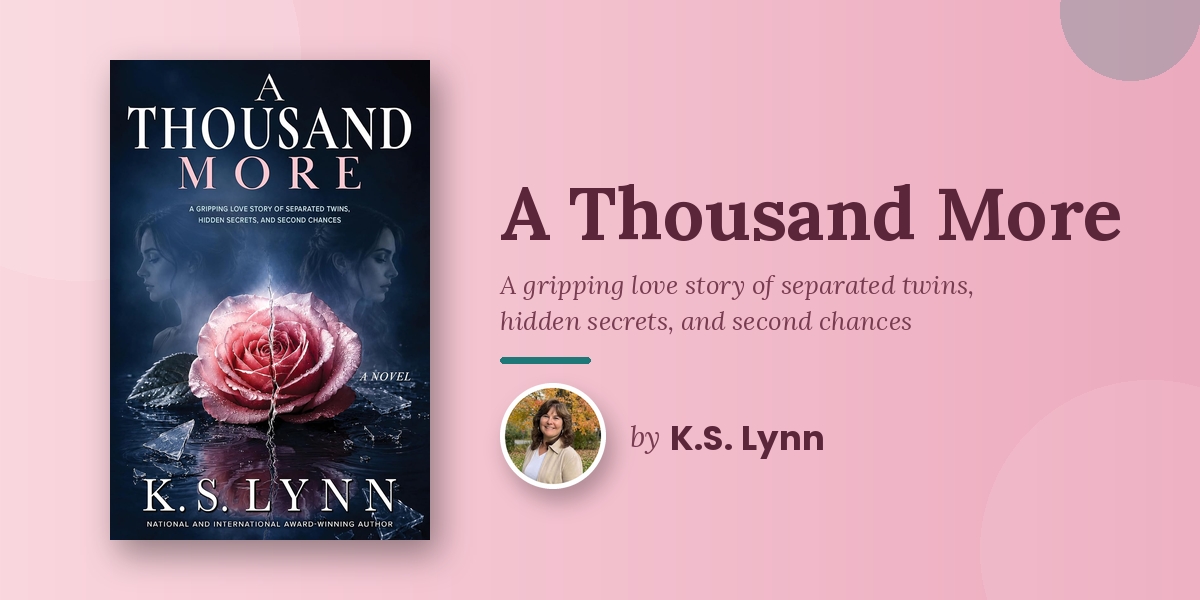
Ann Carrington’s 1982 Decision Shapes Generations in K.S. Lynn’s A Thousand More

By: Macie Forman

The most powerful family sagas are not built around dramatic events alone but around the long, quiet, accumulating consequences of choices that seemed survivable in the moment and that reveal their full cost only across decades. K.S. Lynn understands this instinctively, and A Thousand More is the novel that demonstrates that understanding across more than thirty years of narrative time, following the rippling aftermath of Ann Carrington’s devastating 1982 decision through the separate lives of the twin daughters that decision created and the families that formed around each of them without knowing the other existed.

K.S. Lynn lives in Upstate New York, married to her high school sweetheart of forty-two years. A Thousand More, her debut novel, was born from a dream in 2005, and she abandoned the story until 2019, when her desire to write returned. The patience of that return is visible in the novel itself, which has the settled confidence of a story that has been fully imagined rather than urgently executed, and that moves through its decades of narrative time with the ease of a writer who knows exactly where she is going and trusts the journey to do its own work.

When Ann Carrington’s dream of motherhood is shattered by a devastating choice in 1982, the consequences ripple through the lives of two identical twins, separated at birth and raised in worlds apart. As Michelle and Shelby’s parallel lives unfold, love, betrayal, and fate draw them together decades later, culminating in a heart-stopping moment that will change everything. When the truth slowly unravels, their families must face the fallout of tragedy and mistaken identity that leads to a heart-wrenching decision.

What Lynn does most skillfully throughout the novel is maintain genuine empathy for all of the people inside the situation, including Ann, whose choice created the circumstances that her daughters have been living inside without knowing it. The novel asks the reader to hold the complexity of loving someone who has done something that altered the course of other people’s lives without their knowledge or consent, and it asks this without simplifying either the love or the damage. That moral intelligence, the refusal to make any of the novel’s major characters simply a villain or simply a victim, is what gives the eventual convergence of Michelle and Shelby’s lives the full weight it deserves.

The novel received the International Impact Book Awards for Romance Saga Fiction, the Global Book Awards Bronze Medal in Contemporary Romance, multiple Outstanding Creator Awards first-place wins, and first place in Romance at the Speak Up Talk Radio International Firebird Book Awards, as well as an Honorable Mention at the New England Book Festival. That accumulation of recognition reflects the consistent quality of something that has connected with judges and readers across multiple evaluative frameworks, and it reflects a debut that earns the attention it has received.

If you want a multigenerational family saga with the emotional range to hold heartbreak and hope in the same narrative breath and the moral intelligence to refuse easy villains and easy redemptions, A Thousand More by K.S. Lynn is exactly the novel you have been looking for. Pick up your copy on Amazon today and follow Michelle and Shelby from the 1982 choice that separated them to the moment that finally brings their worlds together.

Kate Osborne on the Cost of Building a Business That Depends on You

At 21, Kate Osborne answered a newspaper advertisement in London asking whether she had a caring nature. The work involved looking after people nearing the end of their lives. One of them, a Swiss businessman she calls Mr Z, became her first mentor.

Osborne says caring for him during his final year changed how she thought about her own future. She wanted to travel, take chances, and reach the end of her life without regretting the things she had left undone.

Years later, that experience still helps explain the question behind her work with business owners: what kind of life is the company allowing its founder to lead?

Osborne, the founder of KOKO Matrix, works with leaders facing problems with team culture, accountability and the demands of growth. Her interest in those pressures developed through running businesses herself.

After studying psychology at the University of Queensland and travelling to 38 countries, she joined Flight Centre and became a shareholder of two stores. In her account, the September 11 attacks disrupted both the travel business and the financial plans she had built around it. She had to reconsider how she would reach her goals. Her tell-all keynote also describes navigating the Ansett collapse and SARS during her travel-industry career.

She subsequently moved into business coaching. Osborne describes being recruited into a franchise network with hundreds of male coaches and few women. The company wanted to broaden its appeal to female founders. For Osborne, the opportunity also offered the possibility of earning a full-time income while raising a family.

That ambition has remained part of her approach to advising other owners. Family commitments, health and time away from work influence what a founder can sustain, even when those concerns rarely appear in a business plan.

Giving Difficult Conversations a Structure

Osborne says she collaborated with clients and industry experts to develop the KOKO Matrix in 2011 to help growing businesses work through conflict by asking important questions in a deliberate sequence.

The company describes the framework as an eight-by-eight matrix covering 64 overlapping operational sectors and more than 360 business parameters. Its purpose is to give owners and their teams a structured way to examine the business and agree on action.

In practice, Osborne’s emphasis is on helping people discuss what is holding them back, understand individual strengths and establish clearer priorities. She draws on her psychology studies and uses soft skill workshops and profiling tools to tailor her approach to the people involved.

Accountability is another part of the work. Kate says clients value having someone who keeps progress moving while maintaining morale. Her ten-week workshop follows a similar progression, moving from diagnosis through leadership and communication issues to a strategic plan.

What That Work Looks Like for an Owner

Studio Pilates International offers a specific example of the pressures Osborne describes.

In a testimonial, founders Jade and Tanya Winter recall working 100-hour weeks while trying to meet demand. They describe operating in a shared space that flooded regularly and struggling to build a team aligned with their plans.

They credit Osborne with helping them introduce a leadership process, remain accountable, and work toward franchising and establishing a training school. Their account also mentions something more personal: having time to raise their son as the business expanded internationally.

For Osborne, the relationship between business performance and an owner’s life is central to the work.

She sees a similar leadership challenge emerging as founders introduce artificial intelligence. In her view, delegating repetitive tasks to AI creates a responsibility to help existing employees develop skills for more demanding work. Owners still have to decide how roles should change and communicate what they expect.

Her concern is what happens inside the team as those decisions take effect. New tools may change how work gets done, but people still need direction, responsibilities they understand and a way to raise problems.

The ambition Osborne described when she entered coaching remains a useful measure of her work today: a business that provides an income and leaves room for a family. For the founders she advises, defining that balance is part of deciding what growth should achieve.

Prof. Dr. Kathrin Kind Wants Quantum Computers to Show Their Work

After 25 years moving technology from test benches into mass production, the CEO of QubitNexus.AI is building software that makes quantum computers of every kind more reliable, comparable and usable by people who are not physicists.

Prof. Dr. Kathrin Kind’s career began in 1999 at Siemens, in quality engineering for international mobile networks. The work came down to one question, and she has been answering versions of it ever since: will a technology that behaves in the lab keep behaving once millions of people depend on it?

In the automotive industry, the same question carried higher stakes. She went on to develop technology for Bosch, ZF, Magneti Marelli, BMW, Mercedes-Benz, Audi and the Volkswagen Group, working on engine management, braking, steering, cockpit infotainment, driver assistance and autonomous driving platforms. A braking system that passes on the test rig still has to work in every car that leaves the factory. Later she became Chief Data Scientist and AI Director at Cognizant, where she helped large organizations put AI into production. By her count, she has industrialized more than 200 software platforms across 20 industries for large enterprise clients.

Quantum computing is her latest test case. The field has produced plenty of laboratory records and very few systems an enterprise can run with confidence. Her company, QubitNexus.AI, writes software that works across quantum machines of every type, and its case to industry rests on reliability.

Errors Decide Who Reaches Industry

Quantum computers store information in qubits, which can hold a blend of 0 and 1 and can be linked to one another. In principle, that lets them solve certain problems in chemistry, optimization and AI that overwhelm ordinary computers. Qubits are also fragile. Heat, vibration and stray signals knock them off course, and in 2018 the physicist John Preskill warned that noise in quantum gates would limit how large a circuit could run reliably. QubitNexus.AI sees errors as the main barrier between quantum computing and industrial use.

The hardware market adds a second problem. An enterprise can rent time on superconducting machines chilled to a fraction of a degree above absolute zero, on neutral-atom systems that hold individual atoms in laser beams, on photonic processors that compute with particles of light, or on classical simulators. Each type has its own error patterns and output formats, so a result from one machine is hard to compare with a result from another. QubitNexus.AI was designed to address both problems without tying itself to any single kind of hardware.

Photo Courtesy: Prof. Dr. Kathrin Kind

A Language That Rejects Risky Code

The company’s approach starts with a programming language. Q11L™, which Dr. Kind invented, is proprietary and comes with its own compiler, the program that turns code into instructions a machine can execute.

Its central idea rests on a basic rule of quantum physics. A qubit cannot be copied, and once it is measured, the information it held is gone. Code that treats a qubit as reusable will fail, often after it has already consumed expensive machine time. Q11L uses what computer scientists call affine types, a rule that each value may be used at most once, so the compiler rejects such programs before a job reaches a quantum computer. The error gets caught at compile time, on the developer’s own machine.

In simulations on NVIDIA’s platform, Q11L showed higher reliability than conventional layered software frameworks and improved error correction. The results come from simulation and have yet to be confirmed on physical quantum hardware. Working in Q11L, the team has also developed proprietary algorithms that are now built into the company’s software stack.

One Yardstick for Many Machines

QubitNexus.AI’s main differentiator sits on top of that reliability work. Its unified platform sends the same job to several different quantum computers at once, collects the outputs, normalizes them and reports two things for each machine: the outcome and a reliability score on a common scale.

For an enterprise, that answers two questions it otherwise has to guess at. Which machine produced the better answer, and how far should the result be trusted? Superconducting, photonic and neutral-atom hardware can be judged side by side, along with classical simulators. A buyer gets a measured basis for deciding where to run a workload.

Quantum for People Who Are Not Physicists

Quantum hardware also needs constant tuning, known as calibration, and that job has traditionally fallen to specialists. TongueChow, the company’s patent-pending calibration and AI engine, is built to take that burden off users who are not quantum experts. QubitNexus.AI describes it as a practical interface to quantum computing designed for laypeople, the kind of tool an analyst or engineering manager could use without a physics degree.

Q11L and TongueChow sit within a full software stack. Beneath the language, the QNAI operating system and runtime translate Q11L into physical operations on whichever machine runs the job. A data management framework records where quantum-AI data came from and checks its quality. QNAI Synergy carries the proprietary algorithms. It is a hypervisor, which in ordinary computing is the layer that lets software run independently of the physical machine underneath. Synergy-QNAI™ runs today on NVIDIA GPUs and is designed to target both cryogenically cooled quantum computers and room-temperature hardware. The team builds and simulates with NVIDIA’s CUDA-Q and plans to scale simulation and hybrid quantum-classical training with cuQuantum.

The breadth serves the company’s mission of carbon-neutral intelligence, quantum AI that is “faster, leaner, and greener.” Catching errors before a job runs is designed to save machine time and the energy behind it, and support for room-temperature machines gives customers a route that avoids the power cost of deep cooling. The core products, including Q11L™, TongueChow and QNAI Synergy, are protected by trademarks and pending patents.

Photo Courtesy: Prof. Dr. Kathrin Kind

The People Behind It

Dr. Kind teaches as well as builds. She is Professor of Artificial Intelligence and Quantum Computing at the Paris School of Management and at SSBM Geneva, and a technical editor for Springer Nature and CRC Press. She holds a doctorate in AI applied to business, an MBA in artificial intelligence and a master’s degree in software engineering.

Her governance work runs in parallel. She is a member of the World Economic Forum’s Global Future Council on Data Frontiers, the Responsible AI Governor for Switzerland at the Global Council for Responsible AI, and an Honorary Ambassador for the UN Support Action Centre (JDI). QubitNexus.AI takes part in UN digital cooperation work and related responsible-AI and digital-governance initiatives. At the company, responsible AI includes counting the carbon.

Around her is a team with more than 400 years of combined experience, including physicists, engineers and quantum architects from MIT, NUS, TU Wien, Cambridge, Columbia and ETH Zurich, alongside operators from large corporations. Its board also includes an AI, which holds the title of Chief Marketing Officer.

QubitNexus.AI has funded itself from the start. It spent its first year on pure research, and in its second it signed eleven paying enterprise and institutional customers on advisory and training contracts, with more enterprise deals in its pipeline. Its services also include consulting on the move to post-quantum cryptography and quantum training for executives and engineers.

Making Quantum Measurable

Quantum computing has spent years setting records under laboratory conditions. The harder test is the one Dr. Kind has faced in networks, cars and enterprise AI: whether the people who depend on a technology can measure it and trust it, at an energy cost a responsible business can defend. QubitNexus.AI is betting that software built for every kind of quantum machine can pass that test at enterprise scale.

Prof. Dr. Kathrin G. Kind is Global CEO of QubitNexus.AI and Professor of Artificial Intelligence and Quantum Computing at the Paris School of Management and SSBM Geneva. She is a member of the World Economic Forum’s Global Future Council on Data Frontiers. qubitnexus.ai

Ahead of the Curve: Chris Wisniewski and Heat Pumps

By: Alexandra Perez

Chris Wisniewski was working with advanced heat pump technology long before it became a major conversation in residential heating and cooling. While much of the HVAC industry questioned whether heat pumps could reliably heat homes through harsh Northeast winters, his team at Integrate Comfort Systems was already installing them in some of New York City’s most demanding residential properties.

It was not a calculated attempt to get ahead of an emerging trend. It was simply part of the work the company had learned to do well.

Founded by his father in 1990, Integrate Comfort Systems originally served commercial and industrial clients throughout New York City. Chris joined full-time in 2000, having already gained experience working during school breaks. As the company expanded into high-end residential projects, its technicians encountered increasingly sophisticated mechanical systems designed for brownstones, penthouses, and luxury properties.

These projects demanded precision, creativity, and an understanding of how mechanical systems interact with architectural design.

One particularly challenging project involved a New York City brownstone requiring heating and cooling across 19 individual indoor zones. With limited outdoor space and a rooftop intended for use as a deck, installing 19 conventional outdoor condensers would have consumed nearly the entire rooftop.

Photo Courtesy: Chris Wisniewski

Instead, the Integrate Comfort Systems team developed a variable refrigerant flow (VRF) heat pump solution that served all 19 zones using just two outdoor condensers.

The redesigned system also eliminated the need for a traditional boiler and chimney, preserving valuable rooftop space while maintaining individually controlled comfort throughout the residence.

It was the kind of project that demonstrated the company’s ability to look beyond equipment and consider the building as a complete system. Rather than allowing mechanical requirements to dictate architectural compromises, the team found a solution that respected both.

During the early 2000s, Japanese manufacturers were making significant advancements in heat pump technology. Improved cold-weather performance and VRF systems were beginning to challenge long-held assumptions about electric heating.

While many contractors remained skeptical, Integrate Comfort Systems had already gained firsthand experience installing and refining these technologies.

The team worked from engineered designs, observed system performance, and gradually developed the confidence to design similar solutions independently. Each project strengthened their understanding of equipment selection, installation requirements, and the building conditions that influence performance.

By the time heat pumps began attracting widespread attention through efficiency programs and government incentives, the company had already accumulated years of practical experience.

Chris describes the opportunity simply: “We’re using the expertise we’ve gained anyway as an opportunity for us to be, you know, the leaders in it.”

That experience became especially valuable when the business faced an unexpected turning point.

When COVID-19 disrupted construction activity in New York City, Integrate Comfort Systems began shifting its focus toward residential projects in New Jersey.

However, the transition was not an attempt to enter an unfamiliar market. The company had spent years developing sophisticated residential HVAC solutions for some of New York City’s most demanding properties.

What changed was not the team’s technical capabilities, but the market where those capabilities were being applied.

The shift allowed Integrate Comfort Systems to bring the same design expertise, installation discipline, and understanding of building performance to a broader residential customer base.

Today, Chris estimates that approximately 80 percent of the company’s projects involve heat pumps. The business continues to serve light commercial customers, but its residential expertise has become central to its identity.

Importantly, the team does not assume a heat pump is automatically the right solution for every homeowner.

Some customers arrive having researched the technology extensively. Others initially request conventional heating and cooling equipment before learning about alternatives.

For Integrate Comfort Systems, the responsibility is to explain those choices clearly and establish realistic expectations.

Heat pumps operate differently from traditional furnaces, particularly during cold weather. Defrost cycles, operating sounds, and heating patterns may be unfamiliar to homeowners experiencing the technology for the first time.

Helping customers understand those differences is just as important as explaining efficiency ratings or potential energy savings.

And while heat pumps have become a major part of the business, Chris refuses to confuse product innovation with guaranteed performance.

“I think most companies still underestimate the fundamentals of good commissioning, good installation.”

For Integrate Comfort Systems, the technicians responsible for installing equipment play a critical role in protecting its long-term reliability. Proper evacuation, nitrogen purging, and startup procedures are essential steps that cannot be sacrificed simply to finish a project faster.

Many installation mistakes do not produce immediate failures. A system may appear to operate perfectly while hidden problems gradually compromise its performance.

That reality reinforces the company’s emphasis on technical training, documented procedures, and accountability throughout the installation process.

Chris also recognizes that the future of heat pumps depends on factors beyond the equipment itself.

Improved insulation, tighter building envelopes, and better windows are reducing heating and cooling demands in modern homes. These developments can make heat pumps increasingly practical. However, rising electricity costs and changing energy policies complicate the financial equation for homeowners.

“I think there’s gonna be more adoption,” Chris says.

That optimism comes from experience rather than speculation. He has already watched technology once dismissed by many contractors become central to his company’s work.

For Integrate Comfort Systems, the lesson extends beyond heat pumps. Businesses cannot always predict which technologies will succeed or what circumstances will force them to change direction. They can, however, develop the expertise, adaptability, and discipline needed to respond when opportunities emerge.

After 26 years in the industry, Chris Wisniewski understands that staying ahead is not necessarily about moving faster than everyone else, but about learning continuously, adapting thoughtfully, and ensuring the people behind the technology know how to make it work.

Patrick Stewart’s Death Brings West End Tributes as New York Looks Back on His Broadway Career

Patrick Stewart died October 28, 2026, at his Los Angeles home at age 86, and London’s West End will dim its theatre lights for two minutes at 7 p.m. on Tuesday, November 3, in his memory. New York, where he worked on Broadway across four decades, has not yet announced a formal tribute.

Key Takeaways

  • Patrick Stewart’s family announced his death on October 29 through his longtime spokesperson, Kelly Bush Novak.
  • The Royal Shakespeare Company credits him with more than 40 productions during a 27-year association that began in 1966.
  • Ian McKellen, his scene partner in his final Broadway run, posted a tribute on X recalling their early days at the RSC.
  • Patrick Stewart’s only Tony Award nomination came for Macbeth, which played Broadway from April 8 to May 24, 2008.
  • As of October 30, the Broadway League had not announced plans to dim Broadway’s marquees.

Patrick Stewart’s Death Follows a Brief Illness, His Family Says

Patrick Stewart died at home in the care of his wife, Sunny Ozell, after what his family described as a brief journey with Alzheimer’s disease and Lewy body dementia. The statement, posted to his social media accounts, framed his final days in personal terms, noting he was surrounded by family, friends and music.

The family also pointed to the causes he championed off stage, including support for survivors of domestic violence, refugees, veterans’ mental health services and animal welfare. Born July 13, 1940, in Mirfield, West Yorkshire, Patrick Stewart was knighted in 2010 for services to drama.

West End Theatres Will Dim Their Lights for Two Minutes on November 3

The Society of London Theatre confirmed that West End venues will darken their exterior lights at 7 p.m. on Tuesday, November 3. Hannah Essex, co-chief executive of the Society of London Theatre and UK Theatre, called Patrick Stewart “an acting giant” and said the industry was proud to pay tribute to a seven-decade career.

The gesture is one London reserves for figures whose careers shaped its stages. For Patrick Stewart, that reach began long before television made him famous, during years spent in classical repertory in Stratford-upon-Avon and London.

The Royal Shakespeare Company Remembers a 27-Year Association

Patrick Stewart joined the Royal Shakespeare Company in 1966 and remained a core member until 1982, moving from supporting parts in Peter Hall’s ensemble to leading roles that included Shylock, Prospero, Macbeth, Antony and Claudius. RSC Co-Artistic Directors Daniel Evans and Tamara Harvey described him as “a colossus of both stage and screen.”

Former RSC Artistic Director Greg Doran, who directed Patrick Stewart during his 2006 to 2008 return, said coming back to play Antony felt like a homecoming for the actor. That same stretch included Prospero and a double turn as Claudius and the Ghost opposite David Tennant’s Hamlet. RSC Associate Artist Joseph Millson added that Patrick Stewart sought him out during the 2006 season to offer encouragement that changed his outlook on his own work.

Ian McKellen Recalls a Friendship That Began at the RSC

Ian McKellen and Patrick Stewart first met as young actors at the RSC, though they were not cast in the same productions. In his tribute on X, Ian McKellen remembered running into Patrick Stewart on a London street when the offer to lead Star Trek: The Next Generation arrived, and admitted he had questioned whether it was a wise move for a stage actor. He went on to credit that decision with bringing Patrick Stewart to new audiences on screen and on stage.

Patrick Stewart’s Broadway Career Spanned More Than Four Decades

Patrick Stewart’s New York story began in 1971, when he made his Broadway debut as Snout in Peter Brook’s production of A Midsummer Night’s Dream. Film and television kept him away for two decades, but his returns to Broadway grew more frequent once he was established on screen.

A Solo A Christmas Carol Returned to Broadway Four Times

In 1991, Patrick Stewart brought his own one-man adaptation of A Christmas Carol to Broadway, playing every character himself. It won the 1992 Drama Desk Award for solo performance and returned for the holidays in 1992, 1994 and 2001. The format still draws New York audiences, as seen in Billy Crystal’s solo show 860 at the Imperial Theatre this fall.

Macbeth Earned Him His Only Tony Nomination

Patrick Stewart also appeared on Broadway in The Tempest, The Ride Down Mt. Morgan, The Caretaker and David Mamet’s A Life in the Theatre. His 2008 Macbeth at the Lyceum Theatre, directed by Rupert Goold, brought him a Tony nomination for Best Actor in a Play, the only nomination of his career.

His Final Broadway Run Paired Him With Ian McKellen

Patrick Stewart’s last Broadway appearance came from November 24, 2013, to March 30, 2014, when he and Ian McKellen performed Samuel Beckett’s Waiting for Godot and Harold Pinter’s No Man’s Land in repertory at the Cort Theatre, now the James Earl Jones Theatre. During that run, the pair posted photos of themselves in their Godot bowler hats at New York landmarks, from Times Square to Coney Island.

Broadway Has Not Yet Announced a Dimming of Its Marquees

On Broadway, the decision to dim marquee lights rests with the Broadway League’s Committee of Theatre Owners. As of October 30, no announcement had been made for Patrick Stewart, and no formal statements had come from New York institutions such as The Public Theater or Lincoln Center. For a city that hosted him from his 1971 debut through his 2014 farewell run, any tribute would mark the close of a Broadway career that spanned 43 years.

FAQs

When did Patrick Stewart die?

Patrick Stewart died on October 28, 2026, at his home in Los Angeles. He was 86, and his family announced his death the following day.

Will West End theatres dim their lights for Patrick Stewart?

Yes. West End theatres will dim their lights for two minutes at 7 p.m. on Tuesday, November 3, according to the Society of London Theatre.

Will Broadway dim its lights for Patrick Stewart?

No announcement had been made as of October 30. The Broadway League’s Committee of Theatre Owners decides when Broadway marquees are dimmed.

What was Patrick Stewart’s last Broadway show?

Patrick Stewart’s final Broadway run was Waiting for Godot and No Man’s Land, performed in repertory with Ian McKellen at the Cort Theatre from November 2013 to March 2014.

Was Patrick Stewart nominated for a Tony Award?

Yes, once. Patrick Stewart received a Tony nomination for Best Actor in a Play for Macbeth in 2008.

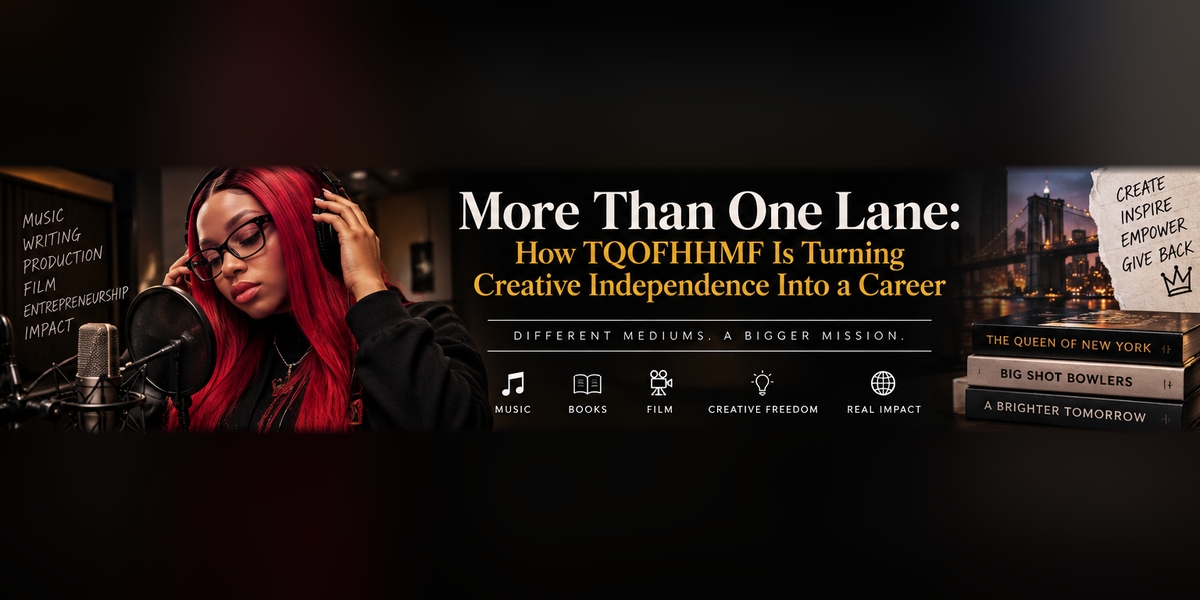
More Than One Lane: How TQOFHHMF Is Turning Creative Independence Into a Career

The modern creative career rarely follows a straight line.

A musician can become a producer. A performer can become a writer. A screenplay can become a novel. A book trailer can lead someone toward a story, while a story can send that same person back toward an artist’s music.

TQOFHHMF is building her career inside that kind of creative ecosystem.

Her public work spans recording, writing, directing, producing and fiction, giving audiences more than one way to encounter her ideas. Rather than treating those disciplines as unrelated ventures, her growing catalog suggests something broader: a creative identity designed to move across formats.

The foundation began in Queens. Her official biography identifies Southside Jamaica, Queens, as part of her early story and describes her progression through rap performances, mixtapes and entertainment ventures before the expansion of her work into books.

Today, one of the clearest expressions of that expansion is The Queen of New York.

When a Creator Moves From Tracks to Chapters

Music teaches an artist to make an impression quickly. Fiction demands patience. Those two creative disciplines may appear opposite, but the combination can be powerful.

A recording artist develops sensitivity to rhythm, phrasing and vocal identity. A novelist takes those same instincts and applies them to dialogue, pacing and character.

TQOFHHMF’s music catalog provides part of that background.

Material in her author profile lists music associated with The Queen of Hip Hop Mecca4ever, including Aight, Queen Tut, Blow, Truth Serum and Scared. She also appears as a featured artist on the 2024 release Gilded Streets alongside other credited performers.

But books offer something music cannot provide in quite the same way: time. A three-minute recording can create a feeling. A novel can build an entire environment around it.

Enter Snow Bedero

In The Queen of New York, that environment belongs to Snow Bedero.

She emerges from Rikers Island into a 1993 New York crime landscape where she must navigate rivals, organized crime, law-enforcement attention and difficult personal alliances.

Yet Snow’s challenge is not simply surviving dangerous people. It is managing the consequences of becoming someone other people perceive as powerful.

Influence sounds desirable from a distance. Up close, it can produce isolation, suspicion and responsibility.

The stronger the reputation, the harder it may become to admit weakness. The more people who depend on someone, the fewer decisions remain entirely personal.

Snow’s relationship with her brothers and the grief surrounding her family add emotional pressure to the outward battle for authority.

That allows The Queen of New York to operate simultaneously as a crime story and as an examination of what power can do to the person holding it.

An Idea That Refused to Disappear

Some stories arrive quickly. Others refuse to leave their creator alone. The Queen of New York appears to belong to the second category.

A previous branded feature traced the project to a screenplay conceived in 2007. Its eventual development into a novel gives the story an unusually long creative timeline.

There is something revealing about returning to an idea years later. The creator has changed. The industry has changed. The audience has changed. But some element inside the original concept remains strong enough to demand another form.

For TQOFHHMF, fiction offered that form.

A screenplay is built for collaboration. Actors, directors, editors, cinematographers and production teams eventually contribute to what viewers see.

A novel has a more direct relationship between writer and reader. Every room exists because the language created it. Every pause lasts exactly as long as the reader remains inside it.

That intimacy gives an established idea another life.

Creating a Catalog Instead of a Moment

The next phase of TQOFHHMF’s career may become even more revealing.

Her announced follow-up book, Big Shot Bowlers: Turning the Hood into Hope, introduces a title with a noticeably different emotional direction. Promotional information also indicates that a trailer has been released through social media while the book remains upcoming.

That expansion matters because sustainable creative careers are rarely built around one moment. They are built around catalogs.

One song leads to another. One book creates curiosity about the next. Someone who discovers the author through fiction may eventually explore her recordings. Someone who has followed the music may encounter the novels because the name is already familiar.

That cross-pollination becomes especially powerful when every project feels connected to a recognizable creative identity without becoming repetitive.

Faith, Integrity and the Measure of Success

TQOFHHMF has also publicly connected her work with faith and personal values.

Her Spotify artist statement speaks about devotion to Jehovah and Jesus Christ, integrity, encouraging talented people rather than obstructing them, motivational work and helping humanity.

Whatever form a creative career takes, those stated principles introduce another measure of success.

Numbers matter. Audience matters. Recognition matters. But longevity also depends on how someone works, who remains willing to work with them, and whether audiences sense consistency between public identity and creative output.

The Bigger Picture

What makes TQOFHHMF’s current position interesting is not simply that she makes music and writes books.

The more compelling development is the possibility that those disciplines are beginning to reinforce one another.

Music establishes voice. Production builds visual instincts. Fiction creates room for deeper narrative. Trailers translate stories back into sound and image.

Each medium can direct attention toward the others. That is how a collection of individual projects begins becoming a body of work.

With The Queen of New York already available and Big Shot Bowlers: Turning the Hood into Hope positioned as the next chapter, TQOFHHMF is no longer simply moving between creative lanes. She is building the road connecting them.

Explore the book:The Queen of New York on Amazon

Author website:TQOFHHMF official website