

By: Alexandra Perez
Chris Wisniewski was working with advanced heat pump technology long before it became a major conversation in residential heating and cooling. While much of the HVAC industry questioned whether heat pumps could reliably heat homes through harsh Northeast winters, his team at Integrate Comfort Systems was already installing them in some of New York City’s most demanding residential properties.
It was not a calculated attempt to get ahead of an emerging trend. It was simply part of the work the company had learned to do well.
Founded by his father in 1990, Integrate Comfort Systems originally served commercial and industrial clients throughout New York City. Chris joined full-time in 2000, having already gained experience working during school breaks. As the company expanded into high-end residential projects, its technicians encountered increasingly sophisticated mechanical systems designed for brownstones, penthouses, and luxury properties.
These projects demanded precision, creativity, and an understanding of how mechanical systems interact with architectural design.
One particularly challenging project involved a New York City brownstone requiring heating and cooling across 19 individual indoor zones. With limited outdoor space and a rooftop intended for use as a deck, installing 19 conventional outdoor condensers would have consumed nearly the entire rooftop.
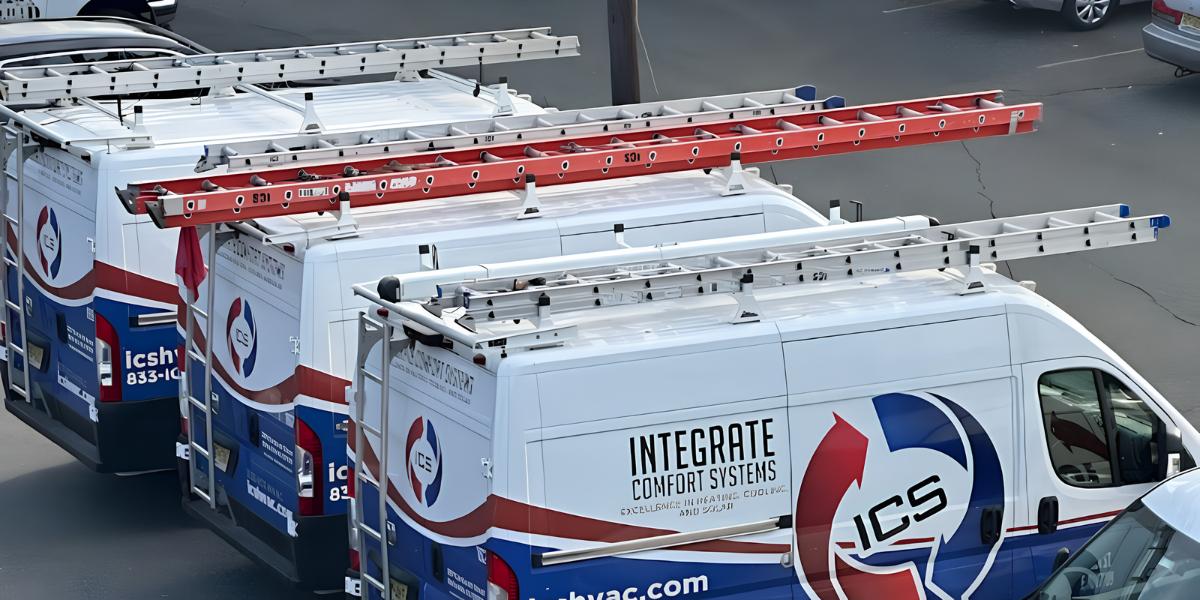
Instead, the Integrate Comfort Systems team developed a variable refrigerant flow (VRF) heat pump solution that served all 19 zones using just two outdoor condensers.
The redesigned system also eliminated the need for a traditional boiler and chimney, preserving valuable rooftop space while maintaining individually controlled comfort throughout the residence.
It was the kind of project that demonstrated the company’s ability to look beyond equipment and consider the building as a complete system. Rather than allowing mechanical requirements to dictate architectural compromises, the team found a solution that respected both.
During the early 2000s, Japanese manufacturers were making significant advancements in heat pump technology. Improved cold-weather performance and VRF systems were beginning to challenge long-held assumptions about electric heating.
While many contractors remained skeptical, Integrate Comfort Systems had already gained firsthand experience installing and refining these technologies.
The team worked from engineered designs, observed system performance, and gradually developed the confidence to design similar solutions independently. Each project strengthened their understanding of equipment selection, installation requirements, and the building conditions that influence performance.
By the time heat pumps began attracting widespread attention through efficiency programs and government incentives, the company had already accumulated years of practical experience.
Chris describes the opportunity simply: “We’re using the expertise we’ve gained anyway as an opportunity for us to be, you know, the leaders in it.”
That experience became especially valuable when the business faced an unexpected turning point.
When COVID-19 disrupted construction activity in New York City, Integrate Comfort Systems began shifting its focus toward residential projects in New Jersey.
However, the transition was not an attempt to enter an unfamiliar market. The company had spent years developing sophisticated residential HVAC solutions for some of New York City’s most demanding properties.
What changed was not the team’s technical capabilities, but the market where those capabilities were being applied.
The shift allowed Integrate Comfort Systems to bring the same design expertise, installation discipline, and understanding of building performance to a broader residential customer base.
Today, Chris estimates that approximately 80 percent of the company’s projects involve heat pumps. The business continues to serve light commercial customers, but its residential expertise has become central to its identity.
Importantly, the team does not assume a heat pump is automatically the right solution for every homeowner.
Some customers arrive having researched the technology extensively. Others initially request conventional heating and cooling equipment before learning about alternatives.
For Integrate Comfort Systems, the responsibility is to explain those choices clearly and establish realistic expectations.
Heat pumps operate differently from traditional furnaces, particularly during cold weather. Defrost cycles, operating sounds, and heating patterns may be unfamiliar to homeowners experiencing the technology for the first time.
Helping customers understand those differences is just as important as explaining efficiency ratings or potential energy savings.
And while heat pumps have become a major part of the business, Chris refuses to confuse product innovation with guaranteed performance.
“I think most companies still underestimate the fundamentals of good commissioning, good installation.”
For Integrate Comfort Systems, the technicians responsible for installing equipment play a critical role in protecting its long-term reliability. Proper evacuation, nitrogen purging, and startup procedures are essential steps that cannot be sacrificed simply to finish a project faster.
Many installation mistakes do not produce immediate failures. A system may appear to operate perfectly while hidden problems gradually compromise its performance.
That reality reinforces the company’s emphasis on technical training, documented procedures, and accountability throughout the installation process.
Chris also recognizes that the future of heat pumps depends on factors beyond the equipment itself.
Improved insulation, tighter building envelopes, and better windows are reducing heating and cooling demands in modern homes. These developments can make heat pumps increasingly practical. However, rising electricity costs and changing energy policies complicate the financial equation for homeowners.
“I think there’s gonna be more adoption,” Chris says.
That optimism comes from experience rather than speculation. He has already watched technology once dismissed by many contractors become central to his company’s work.
For Integrate Comfort Systems, the lesson extends beyond heat pumps. Businesses cannot always predict which technologies will succeed or what circumstances will force them to change direction. They can, however, develop the expertise, adaptability, and discipline needed to respond when opportunities emerge.
After 26 years in the industry, Chris Wisniewski understands that staying ahead is not necessarily about moving faster than everyone else, but about learning continuously, adapting thoughtfully, and ensuring the people behind the technology know how to make it work.