
By: Ethan Rogers
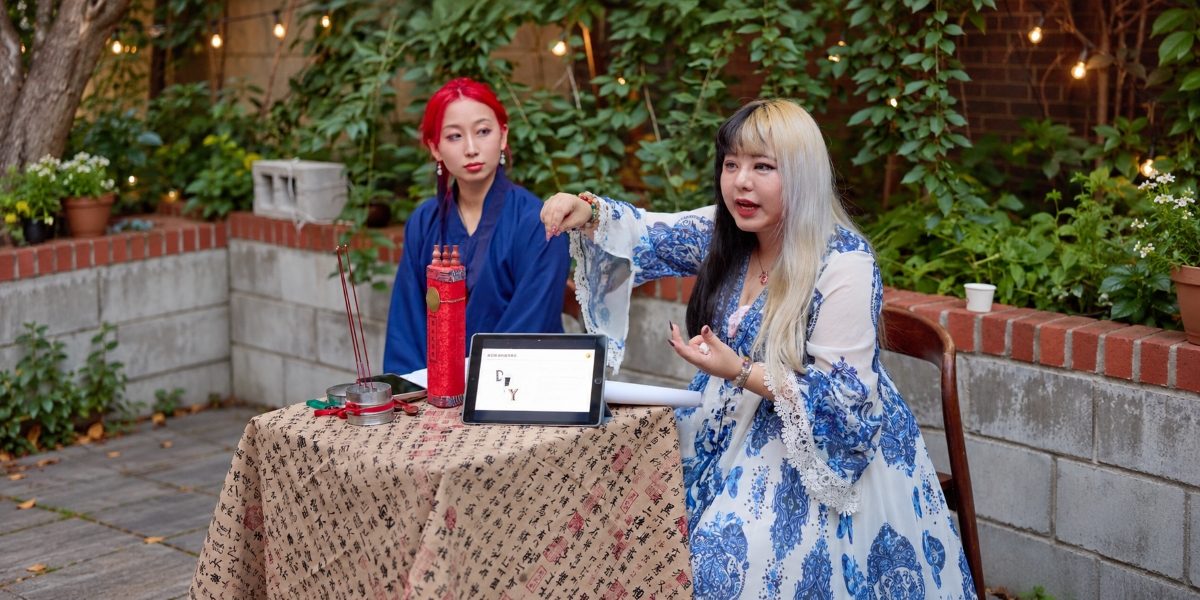
On August 28, 2026, “Between the Mysteries: An East-West Metaphysical Experience Night” took place at Lately Cafe in Long Island City, New York. Co-organized with the participation of the Taoist Association of New York, the event brought together metaphysics, divination, and spiritual practices from different Eastern and Western traditions. A panel discussion, open exchange, and interactive experiences gave participants a chance to compare how these systems work.
The speakers were Chengze Wu, President of the Taoist Association of New York, and Tara Li, a specially appointed cultural consultant on astrology and Feng Shui for diplomatic missions and a practitioner and inheritor of intangible cultural heritage related to shamanic traditions.
Li has traveled to several countries to study folk traditions and has conducted academic research on folk rituals and ceremonial practices. She has also been featured as a “Light of Chinese Studies” in Figures of the New Era. Both speakers are researchers of folk traditions in their fields and have received coverage and recognition from major media outlets including China Central Television (CCTV). They have long worked to promote cultural exchange between China and the international community and to help the public tell informed practice from misconception.
What Should We Believe When We Feel Something We Cannot Explain?
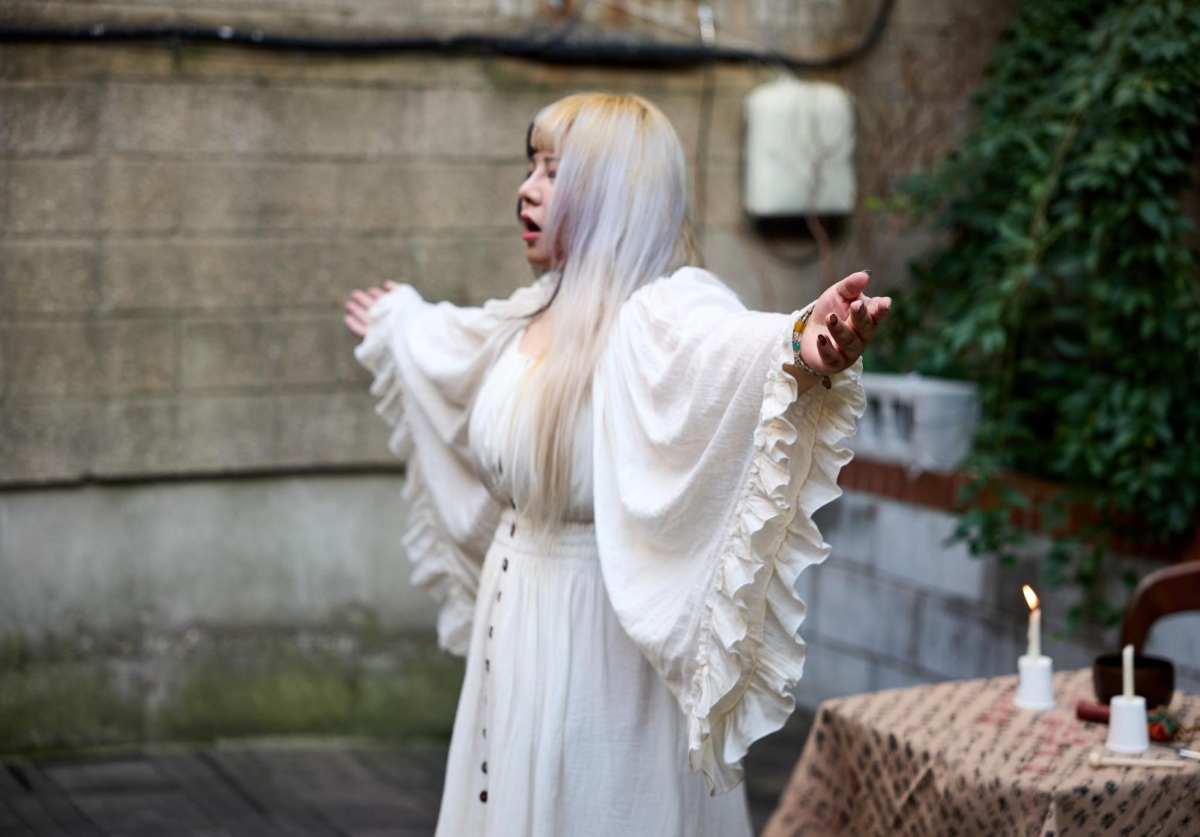
The discussion opened with a question many people have considered at some point. “Have you ever experienced a premonition, an unusual dream, an intense intuition, sleep paralysis, or an inexplicable sense of discomfort after entering a particular space?”
Both speakers said the first step should not be to label such experiences “supernatural phenomena.” It should be to examine, differentiate, and verify them.
Drawing on psychology, perception, and Western esoteric practice, Tara Li explained that some experiences commonly read as paranormal have physiological or psychological explanations. The phenomenon described in Chinese as “being pressed down by a ghost” fits what sleep science calls sleep paralysis. A “sixth sense” or premonition, similarly, may come from the brain unconsciously integrating large amounts of information that never fully reach awareness.
Wu approached the question through Eastern traditions and his own religious practice. Some traditional systems, he explained, distinguish unusual perceptions by whether information arrives visually, aurally, or through internal sensation and intuition, and individuals vary considerably in their sensitivity to each.
The two worked within different frameworks but reached one shared conclusion.
Something being unexplained does not mean it should immediately be attributed to supernatural forces.
Wherever possible, an unusual experience should be cross-checked for physiological, psychological, environmental, and cognitive explanations before other possibilities are considered.
Remain open, but do not abandon verification. Remain respectful, but do not abandon reason.
Is It Safe to “Create Magic at Home”? Lineage and Transmission
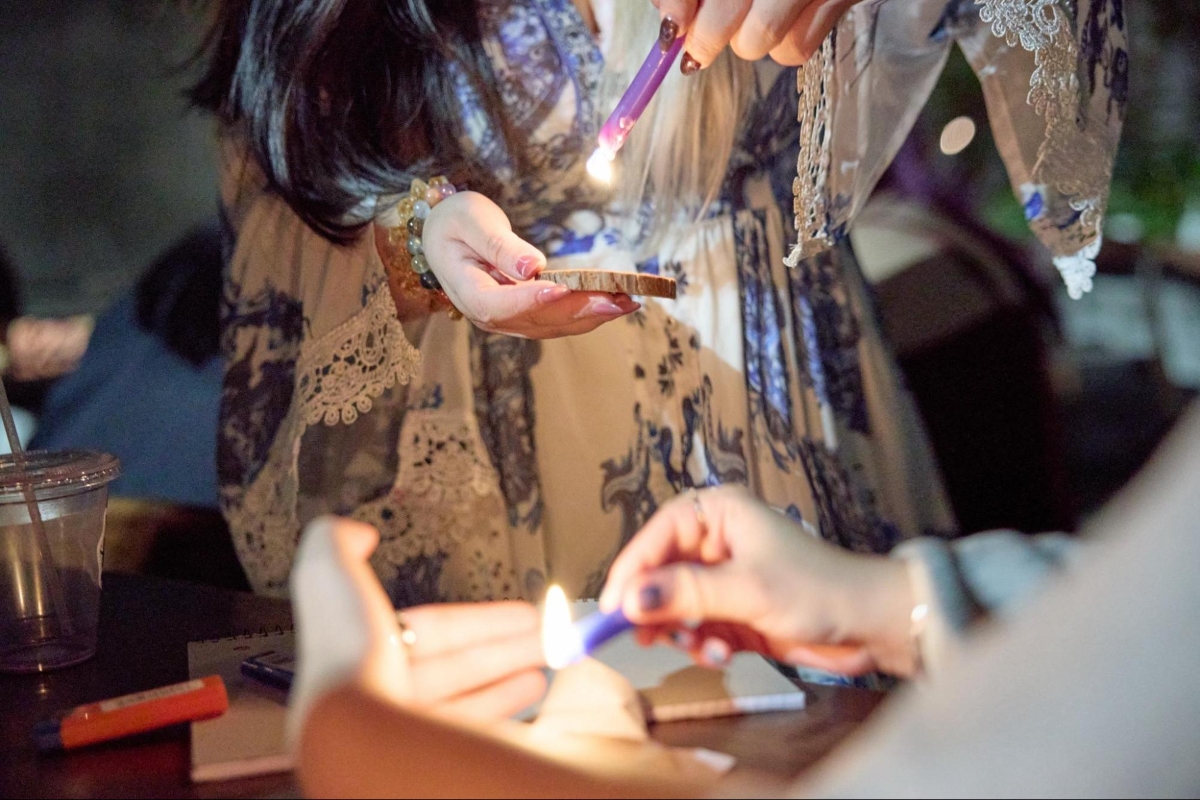
The second topic was the growing culture of self-teaching in online occult and spiritual communities. One question captured it. “If lineage is not considered essential, can someone simply learn from the internet, books, or personal experience and create rituals or so-called ‘magic’ at home? Could doing so involve risks?”
Tara Li explained that formal lineage is not an absolute requirement in some modern Western occult traditions. As modern Western esotericism has taken on more individualism, psychological interpretation, and deconstructive approaches, personal practice and experiential verification have become more prominent. Still, “not requiring lineage” does not mean “creating anything one wants without foundational knowledge.”
Li noted that elements of classical ritual traditions, including fasting, preparing ritual space, formal opening and closing procedures, purification, and banishing, can be read as structures that give practitioners psychological boundaries, order, and a sense of safety. Intensive practice without adequate grounding may carry real risks, such as excessive suggestion, obsessive thinking, sleep disturbances, or cognitive disorientation.
Wu, speaking from Taoism and traditional religious lineages, took a firmer position.
Within Taoist ritual and esoteric traditions, lineage and transmission occupy a central role.
A Taoist lineage, he said, passes on more than knowledge from teacher to student. It carries ritual standards, accumulated experience, ethical expectations, and ways of guiding and correcting practitioners built up over generations. Much practical knowledge never appears in public texts. It moves gradually through teacher-disciple relationships and long study.
“Previous generations plant the trees; later generations enjoy their shade.” Wu used this traditional Chinese saying to describe what lineage means. For practices that involve real religious ritual and intensive spiritual work, he argued, an established tradition gives practitioners boundaries and guidance on what can be done, what should not be done, and how to respond when difficulties arise, rather than leaving them to rely on personal feeling alone.
The exchange revealed two developmental paths. One emphasizes individual experience and the possibility of deconstructing established systems. The other gives more weight to teachers, lineage, and historical continuity. Both pointed to a similar warning.
Freedom to explore does not mean the absence of boundaries.
Can You Get Anything You Think About? Rethinking the Law of Attraction
Among the most actively discussed subjects was the Law of Attraction and Manifestation, concepts widely circulated on social media.
Tara Li noted that New Age spirituality is not a single religious system with one doctrine. It is a loosely connected cultural phenomenon drawing on many religious, philosophical, and spiritual sources. Concepts tied to yoga, chakras, and meditation have often been removed from their original contexts and repackaged for new audiences.
Commercialization has flattened terms such as “high vibration,” “low vibration,” and “manifestation” into the idea that holding the “right” thoughts is enough to get whatever one wants. That logic creates its own problem. Facing illness, poverty, unemployment, or major setbacks, people may find the complex social, economic, and personal circumstances behind those difficulties reduced to a claim that their “frequency is too low.” Normal emotions such as grief and anxiety may be treated as “low-vibration states” to be eliminated.
Spiritual practice should not become a reason to deny material reality.
Wu answered the question of whether human desire can change reality from a Taoist perspective, using the metaphor of a container. Even if people are connected to the universe in some way, he argued, that does not remove the practical limits of an individual life.
“A cup and a large vessel can both hold water, but they do not have the same capacity.”
In his reading, Taoism does not deny that conduct, cultivation, and accumulated effort can influence the course of a life. But change does not come without conditions. The Taoist ideas of merit and blessings (gongde and fubao) tie what a person receives to long-term conduct, responsibility, and contributions to others, not to repeatedly visualizing an outcome.
Wu suggested that instead of endlessly “making wishes to the universe,” it may be more meaningful to understand oneself accurately, accept present circumstances, and recognize the limits of one’s abilities, resources, and capacity. From there, a person can gradually expand what they are able to carry, achieve, and sustain through cultivation and concrete action. The task is less about repeating “I can have anything I want” and more about asking three questions.
Who am I now? What am I currently capable of carrying? And how can I develop the capacity to carry what I hope to achieve?
Both speakers returned to the same conclusion. In Eastern or Western spiritual language alike, spiritual intention cannot replace action in the real world.
Why Did Eastern and Western Esoteric Traditions Develop Differently?
The conversation then turned to a deeper historical comparison. Tara Li traced a path from classical Western magic, Neoplatonism, and Hermeticism through modern esoteric orders to later movements such as Chaos Magic. Western esotericism, she said, gradually moved from highly structured cosmologies and ritual systems toward practices that stress individual will, psychological mechanisms, and the deconstruction of symbols.
Wu explained why teacher-disciple transmission has stayed important in Eastern religious traditions. A religious system that continues over a long period lets the practical experience of earlier generations accumulate. Transmission, in his view, is not only identity or certification. It preserves knowledge. Scriptures record theory and doctrine, but many practical details and methods of judgment still require long person-to-person instruction.
Using the Taoist system of formal memorials and petitions (biaowen) as an example, Wu noted that religions are not static. Institutions, language, and culture change, and those changes shape how rituals are expressed. “Tradition” does not mean every external form has stayed fixed for thousands of years. A tradition can adapt to new circumstances while keeping its core worldview and its relationships of transmission.
The contrast was plain. Modern Western esotericism increasingly emphasizes the individual’s direct relationship with the sacred and the deconstruction of established structures. Taoism puts more weight on lineage and the continuity of knowledge within a religious community. The speakers did not declare either model superior.
First understand how a system was constructed; only then discuss how it might be deconstructed.
Do Tarot Cards Have “Spirits”? Divination Is Not Mediumship
The event also addressed misconceptions common among people exploring metaphysical subjects. One audience question asked whether Tarot cards have their own spirits and whether frequent divination can harm the practitioner.
Both speakers urged participants to separate divination tools, structured systems of metaphysical calculation, and mediumistic or spirit-communication practices. Wu explained that Eastern traditions have historically treated divination and mediumship as different categories.
“Someone who knows fortune-telling does not necessarily know how to conduct religious rituals, and a Taoist priest does not necessarily practice fortune-telling.”
Traditional systems such as Bazi and hexagram-based divination, he said, have their own symbolic structures, rules, and interpretive methods, and practicing them takes logic, experience, and associative judgment. Reading every act of divination as “connecting with a spiritual entity” can create unnecessary fear and misunderstanding. A tool’s link to mystical culture does not automatically mean its use should be explained by supernatural intervention.
How Can People Engage With Metaphysical Practices in a Healthy Way?
At the conclusion of the event, the speakers summarized the evening’s discussion through several practical principles.
First, people should understand the historical, geographical, cultural, and religious contexts in which a practice developed rather than extracting isolated concepts from social media.
Second, they should maintain the ability to test claims against reality. Any practice claiming to replace modern medicine, legal advice, or responsible financial decision-making should be approached with a high degree of caution.
Third, people should consider whether a practice is making their everyday lives, psychological state, and interpersonal relationships more stable, or whether it is causing them to become increasingly detached from reality.
The event also introduced techniques such as five-senses grounding and breathing exercises, which can help individuals redirect attention toward their bodies and immediate surroundings, while also discussing cultural concepts of personal and spatial purification and protection found in different Eastern and Western traditions.
At the conclusion of his remarks, Wu emphasized two words:
Respect and reverence.
Reason does not require ridiculing every tradition that cannot be fully explained. Reverence, likewise, does not require abandoning one’s own judgment.
In an era when metaphysical content can spread across short-form video platforms within minutes, and when “healing,” “manifestation,” and various forms of “certified spiritual guidance” are increasingly commercialized, perhaps the most important question is no longer simply:
“Do you believe in metaphysics?”
Instead, the deeper questions may be:
Do you know why you believe what you believe, and are you capable of testing and examining those beliefs?
This was also one of the central reflections that “Between the Mysteries: An East–West Metaphysical Experience Night” sought to leave with its participants.
Photo Credit: LipManTV
Photos courtesy of LipManTV, a content production company specializing in high-impact visual storytelling across finance, technology, real estate, art, and music, helping brands stand out through compelling visual content.
Disclaimer: This article is intended for informational, cultural, and educational purposes only. References to metaphysical, spiritual, religious, psychological, or divination practices reflect the perspectives discussed by the event participants and should not be interpreted as scientific facts or as medical, legal, or financial advice. Readers should consult appropriately qualified professionals for matters involving health, mental well-being, legal concerns, or financial decisions.