The Mindset Shifts That Make Better Founders, Leaders and CEOs

By: Gesche Haas, Founder of Dreamers & Doers, a curated community and PR Hype Machine™ for extraordinary women entrepreneurs.

There’s a version of leadership growth that looks like a pivotal hire, a strategy overhaul, or a new system finally clicking into place. That’s the version that makes for a clean story.

The real version, though, tends to be quieter and more personal. It looks like catching yourself mid-conversation and choosing a different response. It looks like letting go of a habit that used to feel like strength. It looks like changing how you relate to uncertainty, your team, and yourself, and watching everything around you shift as a result.

The founders, CEOs, and leaders featured here from the Dreamers & Doers community didn’t transform their companies with a single breakthrough moment. They transformed them through daily practice: the way they showed up in hard conversations, made decisions under pressure, and rebuilt trust when it frayed. These are the mindset shifts that changed how they lead.

They Left Urgency Behind and Started Leading With Intention

While it’s tempting for leaders to operate constantly from a place of rushing, performance and reactivity, these modes don’t lend themselves to day-to-day thriving and success. Ashley Graham, speaker, podcast host and editorial writer of Simply Ashley Graham, was inspired by motherhood to rethink how she shows up in her business on a regular basis. Doing so changed everything in her work.

“I stopped performing productivity and started leading from presence,” Graham says “I am stepping into a new stage around what I call ‘conscious visibility’, showing up with intention rather than volume, and it is completely shifting how I attract new connections, partnerships and opportunities. When you lead from who you actually are, everything becomes more aligned.”

Realty Collective principal Victoria Alexander has also made major strides as a leader since prioritizing genuine presence and communication over efficiency for efficiency’s sake. Today, she creates space to name what’s actually at stake for each person involved in a sale, and to let that answer evolve.

“What we’re really navigating isn’t a transaction, but a transition,” Alexander says. “The shift made me better at supporting my clients because I stopped mistaking efficiency for care.”

UMI’s founder and CEO, Esosa Edosomwan, finds curiosity a critical skill for effecting similar change as a leader.

“I started asking clarifying questions before responding in any situation, whether with investors, partners, or my team,” she says. “That shift has led to more meaningful conversations and win-win outcomes across the board. I stopped reacting and started responding, which made me a far more effective communicator and a steadier leader.”

NTT DATA Inc.’s chief of staff Candice Ooi also feels strongly about the power of inquiry in upleveling your leadership game. After joining a global IT company without any background in the industry, she had to get comfortable not being an expert and with being honest when she didn’t know something.

“My value is not domain expertise,” Ooi says. “It’s the questions I ask when I am the only person in the room without a side. That discomfort, for me and for me, is where the magic happens.”

For Jasz Rae Digital founder Jasz Joseph, growth came when she stopped trying to meet every client’s tight deadline and instead owned her role as a big-picture thinker.

“Lead generation as a service tends to attract founders who need sales yesterday,” Joseph explains. “For years, I matched that urgency because I thought it meant I was being useful. The shift was showing up day-to-day like the long-game strategist I actually am: calm, patient, focused on building systems that compound.”

As a result of her new relationship with timelines and rushing, Joseph reports a shift in customer needs and expectations as well. Instead of showing up desperate for rescue, her clients now look for repeatable engines and solutions, allowing the business to evolve even further.

Some leaders benefit from this reduction in speed. For others, success looks like the opposite. Julie Zhu, for example, challenged herself to become more proactive.

“I became more comfortable reaching out, following up, negotiating and having open conversations instead of waiting for permission or the perfect moment,” says the founder and CMO of Julie Zhu LLC. “It helped me build stronger relationships and create more opportunities.”

When leaders create space for better conversations and better decisions, growth follows, no matter the pace.

They Learned to Trust Themselves More

Effective leaders aren’t afraid to ask questions and seek out experts, but they also know when to trust themselves. A combination of self-leadership, confidence, and emotional regulation makes it happen, especially if they can get out of their own way.

As the founder of Her Tech Community, Rochelle Sonnenberg has been on a journey to leave self-doubt behind. This shift, she says, has “helped me make clearer decisions, stay focused on what truly serves the community and show up with more confidence and calm.” She hopes to empower Her Tech’s members to show up with a similar conviction and with less pressure to constantly perform.

Inner critics are tough to eradicate entirely, though, so Natalie De Vincenzi started reframing hers as an inner coach.

“I’m backing myself more and learning to respond to challenges with support and solutions instead of shame and spiraling,” says the founder and CEO of You Are Enough Co. “Ironically, becoming kinder to myself didn’t make me less ambitious. It made me more resilient, creative, and effective as a founder because I stopped wasting so much energy fighting myself internally.”

Reframing language is another effective tool. Rather than using the phrase “I have to,” GreenPortfolio’s CEO Bonnie Gurry shifted to “I get to.” The change may seem minor, but the nuance is impactful.

“No one is forcing me to run a mission-driven startup,” Gurry says. “I get to do that. I get to pick who I want to work with, and I get to pick the problems we’re trying to solve. This small change in language infuses gratitude into difficult tasks and is a great reality check. When you stop treating your own ambitions like obligations, you start showing up with a completely different energy.”

In her earliest days as founder and CEO of m times v, Monisha Bajaj recalls spending a lot of time obsessing over what executives should stop doing in order to grow into their roles. To regain focus in the business, she tuned out the noise and instead started to trust her ability to master her day-to-day work. Doing so, she says, “created room for my team to step up and own their roles and keeps me energized at work.”

Like the pressure to appear like the perfect CEO, the pressure to be in constant motion can cause even the best-intentioned leaders to get in their own way. Lona Vincent let this go, and is more effective in her role as a result.

“Someone described their career as ‘constantly in motion but rarely in alignment,’” says the founder of WOW Health. “I couldn’t unhear it. That was my shift. I had spent years leading teams, driving outcomes, delivering results, and wondering why it never felt like enough. The shift that changed everything was stepping out of that motion and into a mission that finally felt like mine.”

While entrepreneurship and executive-level work involve no shortage of external challenges, some of the biggest are actually internal. Leaders who aren’t afraid to have hard conversations with themselves will reach new levels of trust and confidence in their ability to steer teams, clients, and missions forward.

They Became More Visible and More Authentic

Previous generations of leaders got the memo that to be successful, they had to leave their personal lives and struggles behind. Those days are gone. Now, honestly, visibility and authenticity are their own form of professional currency.

Peri Finkelstein owns her truth in her work as founder and CEO of Team Peri Foundation, with the help of a communication device and an AI-generated voice that empower her to communicate more boldly.

“At first, I felt ashamed because the technology made me feel more disabled and dependent,” Finkelstein says. “I realized that asking for help and using tools that support me is a strength, not a weakness. By embracing it publicly, I’ve been able to raise awareness for those who utilize augmentative and alternative communication, share my story more authentically and help others recognize the importance of disability inclusion.”

Myra Deshmukh had her own lesson to learn about authentic communication. For her, progress was necessary in her ability to talk about herself and her work.

“Now, I think of every interaction, new meeting and client call as an opportunity to get clearer on how to communicate our offers, my value and what we do,” the Leadership Lab founder and CEO says. “It’s not about getting it right, but getting clearer.”

For leaders like Finkelstein and Deshmukh, change happened when they stopped worrying about looking or being perfect and committed instead to total honesty.

They Realized Leadership Is About Creating Meaning

Everyone shows up to a leadership role with a different idea of the impact they’d like to make. For many, there’s a common theme: leadership is about storytelling and mission just as much as it’s about budgets and management.

Given her background in media, Eileen Wu has long understood the power of narrative. After stepping into the CEO seat at Mavryx, she realized that storytelling could do more than simply market a product or communicate a company’s values. Today, she thinks of it as leadership infrastructure, which she’s shared beyond her organization’s walls.

“It’s a perspective I help founders, investors and companies use to build differentiation, narrative coherence and long-term competitive advantage in increasingly noisy markets,” Wu says.

After two decades working as a brand strategist, Erika Brechtel knew how to support women leaders on a mission to define their voices. But for her, transformation happened after a 2015 volunteer trip to Morocco, which inspired her to show up in a brand-new way in her daily life and work. That experience filled Brechtel with a new sense of purpose and conviction, forming the basis for Élanoura. The stories she heard from young girls in Morocco, she realized, were a form of leadership unto themselves.

Netta Ness finds meaning in her role as founder at Chance Management LLC by adopting intentional positioning and selective visibility.

“I chose to be under the radar, non-commercial, hard to get and hard to forget,” Ness says.

The story of Ness’s brand is one of standing out rather than blending in and of work that is intimate, authentic, original, and highly tailored. Leading with those values empowers her to work only on projects where she feels she and her team can help create a major leap.

Strong leaders know that communication isn’t just about transmitting information. It’s about how they create trust, clarity, culture, and momentum. Happy Brand Company’s marketing and accountability coach Jessie Sanchez believes in the power of reliable communication as an act of care that sets the tone for how she chooses to work and lead. She is on an ongoing mission to further refine how she communicates about timelines, particularly when that means telling a client she needs an extension.

“It keeps me accountable and helps my clients feel supported and informed,” Sanchez says.

The shifts that make someone a better founder, CEO or leader rarely happen all at once. More often, they reveal themselves in ordinary moments: the pause before responding instead of reacting, the courage to ask one more question, the decision to trust your instincts, communicate more honestly or show up a little more authentically than you did yesterday.

Taken individually, these changes may seem small. Together, they reshape how teams operate, how relationships are built and how organizations grow. The leaders here demonstrate that the strongest leadership is built day by day through intentional choices that create more trust, more clarity and more meaningful impact, for themselves and for everyone they lead.

All individuals featured in this article are members of Dreamers & Doers, a highly curated community and PR Hype Machine​​™ amplifying extraordinary women entrepreneurs and leaders through authentic connections, credibility-boosting visibility, and opportunities that accelerate big dreams.


Lori Lane of LLANE & Co Weighs In On How The Resale Slowdown Could Be New Construction’s Opening

By: Susan Rogers

New housing data shows buyers remain constrained by rates and affordability, while the resale market continues to wrestle with the mortgage-rate lock-in effect. Lori Lane says the bigger opportunity for builders may be reaching those buyers before they ever rule out a new home.

The latest housing numbers delivered another reminder that today’s homebuyer is facing a market defined less by a lack of desire and more by a lack of comfortable options.

U.S. existing-home sales declined 1.7% in July to a seasonally adjusted annual rate of 4.06 million, marking the second consecutive monthly decline, according to data released August 11, 2026 by the National Association of Realtors. Sales were still 0.7% higher than a year earlier, but inventory declined to 1.54 million homes, representing just 4.6 months of supply. The median existing-home price rose 2% from a year ago to $434,100.

For Lori Lane, Founder and Qualifying Broker of Atlanta-based new-home sales and marketing firm LLANE & Co., those numbers tell a larger story than another month of sluggish resale activity.

“When buyers are struggling with affordability and choice in the resale market, that creates an opportunity for new construction, but only if we make the value of new construction clear enough and early enough,” said Lane. “The buyer has to understand what’s available to them before they automatically default to resale.”

That distinction may be increasingly important.

Buyers Are More Open to New Homes Than Many Realize

Zillow’s 2026 research into new-construction buyers found that 84% of prospective buyers would consider purchasing new construction, yet only 41% identify it as their first choice. Even more revealing: 70% of buyers who ultimately purchased an existing home said they never visited a new-construction sales center, with perceived cost cited as the leading reason.

For builders, Lane sees the gap between those numbers as one of the clearest marketing opportunities in the current housing market.

“The opportunity isn’t convincing buyers to consider new construction; they already are,” Lane said. “The opportunity is moving new construction to the top of the list before they choose something else. If seven out of ten resale buyers never even walk into a new-home sales center, we have to ask what we could have communicated differently before they made that decision.”

That means the sales process increasingly begins well before a buyer reaches a model home.

Digital marketing, pricing strategy, product positioning and the way builders communicate financing incentives may now be as important as the experience buyers have once they arrive.

The Affordability Story Is Changing

New construction has historically been perceived as the more expensive alternative. Current national data complicates that assumption.

The U.S. Census Bureau reported that the median price of a newly sold single-family home was $398,300 in June, down 2.7% from a year earlier. By comparison, the median existing-home price reported for July was $434,100. The figures are not directly comparable (the datasets cover different months and different mixes of homes), but the narrowing and, at times, reversal of the traditional new-home price premium is another reason buyers should examine the actual numbers rather than assume new construction automatically costs more.

Builders are also aggressively addressing affordability.

In July, 63% of builders reported using sales incentives, according to the National Association of Home Builders/Wells Fargo Housing Market Index. Thirty-seven percent cut prices, with the average reduction holding at 6%. Builder confidence remained subdued at an index reading of 34, underscoring the pressure the industry continues to face from mortgage rates, land costs, material prices and affordability concerns.

Lane argues that those incentives cannot simply exist. Buyers have to understand what they mean.

“Buyers may shop by price, but they live by the payment,” Lane said. “If a builder has the ability to create affordability through financing, closing-cost assistance, incentives or a move-in-ready opportunity, we have to translate that into language the consumer immediately understands.”

New Construction Has Something Resale Cannot Always Replicate

Higher mortgage rates are creating challenges on both sides of the resale transaction.

The 30-year fixed mortgage rate averaged 6.69% in early August, according to Freddie Mac data cited by Reuters, the highest level since July 2025. That “lock-in” dynamic contributes to constrained resale inventory, while affordability is limiting buyers.

New-home builders operate under a different set of circumstances.

They can bring new inventory into the market. They can offer homes that are already completed or nearing completion. They may have the ability to use financing incentives, adjust pricing or contribute toward closing costs. And they can design communities and homes around the floor plans, finishes and lifestyle features current buyers say matter most.

Zillow’s research also found that move-in-ready homes are the leading reason buyers are attracted to new construction, while floor plan, finishes and staying within budget have become increasingly important considerations.

For Lori Lane, that means the opportunity is not to portray new construction as immune from the challenges facing housing. It is to recognize where builders possess tools the resale market simply does not.

The Next Battle May Be Won Before the Sales Center

The July numbers show a housing market that remains highly sensitive to affordability. Existing-home sales are slowing. Resale inventory remains constrained. Builders are offering incentives. And a large majority of prospective buyers say they are at least willing to consider new construction.

The disconnect is what happens next.

“We spend a tremendous amount of time thinking about what happens when the buyer walks through the sales-center door,” Lane said. “The data is telling us we need to spend just as much time thinking about why they would walk through that door in the first place.”

For builders, that could mean putting monthly-payment advantages ahead of generic incentive messaging, marketing available and move-in-ready inventory more aggressively, explaining the financial differences between new and resale homes, and reaching buyers earlier in their digital search.

The resale slowdown is not automatically a win for new construction. But it may be an opening.

And in a market where 84% of prospective buyers say they would consider buying new, the builders who communicate their value most effectively may be best positioned to turn that opening into an opportunity.

When the Phone Rang, Everything Changed

By: Jaxon Lee

In Only God Can Unravel, Elizabeth Castrillo Tells the Story of the Worst Day of Her Life, and the Faith That Outlasted It

Elizabeth Castrillo was babysitting two of her grandsons on a June morning in 2005 when the phone rang. It was her oldest daughter, talking too fast to follow. Her two-and-a-half-year-old grandson, the one everyone called Turtle, was not breathing. Hours later, he was gone. Within a day, her daughter had been arrested in connection with his death, and the family pulled apart. She describes it as the morning her world “shattered in a blink of an eye.” Her memoir, Only God Can Unravel, is what she made of the long stretch of years that followed.

The Book Does Not Clean It Up

Most grief memoirs build toward a lesson. This one stays in the wreckage a good deal longer than that. Castrillo writes it almost hour by hour. The drive to the hospital. The visits in Phoenix heat that hit 116 degrees, her husband standing in line outside the jail because it was the one useful thing left to do. That first evening home, he tries baking brownies, though by her account he was no baker, and they turn out so well the kids pile on all at once: “Sorry, Mom, they’re even better than yours.” It is a small, strange thing to find in the worst week of a family’s life, and it says more about how they held together than any summary could.

Other scenes cut the other way. A visit where a sheet of plexiglass is the only thing between her and someone she loves, both of them with a hand pressed to the same spot on the glass. Her young granddaughter begging, “Grandma, please, take us home with you?” when there is no version of the answer that does not hurt. A car wash the family throws together to cover funeral costs, Castrillo out on the corner holding a sign with the toddler’s photo on it while strangers pull over, some handing money through the window and waving off the wash. She lets these moments stand on their own, without forcing them into a lesson.

She does not pretend the faith came easily, either. She puts her prayers straight onto the page, arguments with God included. She owns the moments she got it wrong: the warning she talked herself out of, the fear that closed her throat on a witness stand when she badly wanted to speak. None of it is dressed up as inspiration. The faith in this book is something she keeps losing and clawing back.

Why She Wrote It at All

By her own account, she is not an author and never wanted to be. “I am not a writer, and I could never see God’s picture of me as one, either,” she writes. But she wrote it anyway, over years, drafting and redrafting, because the idea would not leave her alone. Part of what would not leave her alone was the sense that the wrong story had been told. The death became a criminal case, her daughter served time, and Castrillo remains convinced the full truth never reached the courtroom. The book is her account of it, set down as she lived it. That comes through on the page. The prose is plain, sometimes rough, and completely without performance. The roughness is the point. A smoother book would not be true to what happened.

Photo Courtesy: Elizabeth Castrillo

This is not the first loss she has carried, and she does not hide the others. She buried an infant daughter decades earlier. She leans, more than once, on a foster mother who shaped her faith and who turns up again at the moment she needs her most. Those threads give the book its spine. The tragedy at its center did not land on someone who was new to hardship. It landed on a woman who had already learned, the hard way, how to keep standing.

Who It’s For

This is not a book for people who want their faith stories tidy. It is for the person in the hospital corridor who has just been handed the worst news of their life, and for whoever is still awake at three in the morning afterward, wondering if they believe any of it. Castrillo does not give them a resolution. She gives them proof that someone went all the way to the bottom and climbed back. “Humans fail,” she writes. “God moves mountains.” She had every reason to stop believing that and did not. Writing to the grandchildren she made all of this for, she tells them love wins in the end, “just like the rainbow after the storm.” In most hands, that is the kind of line a reader nods past. From her, after everything on the pages before it, it reads like a fact she paid for.

Only God Can Unravel by Elizabeth Castrillo is available on Amazon. More about her work appears on Castrillo’s author website.

Kathy Yu’s Deadline Makes the Invisible Pressure of Digital Work Visible Through Motion Design

Behind every polished digital image is a process the audience rarely sees. Revisions accumulate, expectations shift, technical problems interrupt creative decisions, and hours of work are compressed into a final result that appears effortless.

In the award-winning motion design work Deadline, motion designer and digital artist Kathy Yu brings that hidden process to the screen. Developed and completed in New York in 2024, the short-form animated project transforms the pressures of contemporary creative production into a surreal visual world shaped by time, repetition, and mounting tension.

Rather than presenting a literal image of a designer working at a computer, Deadline turns psychological pressure into a physical environment. Spaces contract, movements become increasingly strained, and ordinary production demands take on emotional weight. Through animation and motion design, the work gives visual form to an experience familiar to many professionals working in digital creative industries.

“People usually see the final image, but they do not see the many decisions, revisions, and hours behind it,” Yu says. “I wanted to create a project about what that invisible process feels like.”

A Motion Design Practice Shaped by New York

Yu is a Los Angeles–based motion designer and digital artist whose practice spans animation, 3D design, art direction, and moving image. Before relocating to California, she earned an MFA in Computer Arts from the School of Visual Arts in New York. She also holds a BFA in Design from Tongji University in Shanghai.

Her professional practice moves between commercial motion design and independently developed visual work. Across both areas, she is interested in the ways technology, labor, time, and visual systems shape contemporary experience.

Deadline emerged from that intersection. The technical discipline Yu developed through motion design production became part of the project’s artistic language. Instead of rejecting the polished visual tools associated with commercial imagery, she used them to examine the demanding conditions under which digital images are often produced.

The work’s carefully controlled surfaces gradually reveal an unstable world underneath. Its visual precision does not conceal the subject of labor. Instead, that precision becomes a way of exposing it.

Through composition, lighting, scale, color, and movement, Yu created a visual system in which design decisions communicate emotional pressure. The result demonstrates how motion design can function not only as a commercial communication tool, but also as a medium for personal and cultural reflection.

Turning Time Into a Motion Design System

Deadline follows a creative worker attempting to complete an increasingly overwhelming assignment, but the experience is not presented through conventional workplace realism.

In the animated world of Deadline, time behaves less like a number on a clock and more like an atmosphere. Pressure changes the scale and structure of the environment. Characters move through spaces governed by emotional rather than physical logic, while repetition and acceleration reflect the protagonist’s growing anxiety and exhaustion.

The environment gradually becomes an extension of the character’s mental state.

Yu led the project’s narrative and visual development while working across design, modeling, shading, lighting, and compositing. She co-directed the work with Yazhi Zheng, who also contributed 2D motion design. CG artist Xiaoxiang Long developed character rigging and animation, while composer Joe Basile created the original score.

The collaboration allowed character movement, visual pacing, design, and sound to build tension together. The finished piece sits between experimental animation, narrative visual design, and contemporary motion design.

Its visual system is not merely decorative. Composition, scale, lighting, and movement are used to translate psychological pressure into an animated environment. The escalating rhythm allows the audience to experience the deadline not simply as a narrative device, but as a force that reorganizes the character’s entire world.

This approach reflects Yu’s broader interest in system-driven motion design. Rather than treating individual scenes as isolated images, she develops relationships between movement, space, timing, and visual hierarchy. Each element contributes to the emotional direction of the work.

Photo Courtesy: Kathy Yu

Recognition for Motion Design and Art Direction

Deadline has received recognition from creative and cultural organizations for its motion design, art direction, animation, and visual storytelling.

The work received Gold in Craft: Motion Design at the Collision Awards and Silver in Craft: Art Direction at the Telly Awards. It was also selected by the Girona Film Festival and presented at Reel Ladies Night in Los Angeles on July 30, 2026.

Recognition in both motion design and art direction reflects the range of Yu’s contribution to the project. The work’s impact depends not on a single technical element, but on the coordination of design, lighting, composition, animation, sound, and narrative pacing.

These distinctions position Deadline within professional contexts that recognize excellence in motion design and visual communication. They also reflect the project’s ability to connect technical execution with a broader examination of contemporary creative labor.

The subject of Deadline extends beyond motion designers. Animators, illustrators, editors, designers, visual artists, and other creative professionals increasingly work within systems shaped by rapid revision, continuous communication, and expectations of constant output.

Digital tools have made creative production faster and more accessible. At the same time, they have accelerated the structures surrounding creative work. Projects can be revised immediately, feedback can arrive continuously, and designers are often expected to produce more material in less time.

Deadline asks what happens when technologies intended to support creativity also intensify the pace at which creativity is expected to happen.

Authorship in Contemporary Motion Design

The questions raised by Deadline have become more visible as artificial intelligence and automated production tools enter motion design and other creative fields.

Yu does not approach technology as either a complete solution or an unavoidable threat. Instead, she focuses on the judgment required to transform technical possibilities into intentional visual communication.

In her broader practice, emerging tools may contribute to experimentation or early visual development, but the final result still depends on selection, redesign, composition, lighting, animation, timing, and revision. For Yu, authorship is located in this accumulation of decisions.

“Technology can generate possibilities, but it cannot decide what an image should mean,” she says. “The artist is still responsible for the rhythm, atmosphere, judgment, and emotional direction of the work.”

As software becomes capable of generating more visual material at greater speed, the role of the motion designer may increasingly depend on determining which possibilities deserve attention and how they can be shaped into coherent visual experiences.

This distinction is central to Deadline. The project is technically precise, but its meaning does not come from software alone. It comes from the design choices that shape its visual world, control its rhythm, and determine how pressure is communicated to the audience.

Photo Courtesy: Kathy Yu

Looking Beyond the Finished Image

Although Deadline emerged from Yu’s experience in motion design, it is not simply a story about being overworked. It examines how contemporary production systems affect attention, memory, imagination, and personal identity.

Every animation, title sequence, advertisement, interface, and digital campaign contains an unseen history of choices, revisions, technical challenges, and collaboration. Audiences typically encounter only the final result, separated from the labor and uncertainty that produced it.

By transforming that process into a fictional animated world, Yu makes an ordinarily invisible structure visible.

The work suggests that the real subject is not the clock itself, but the form of creative life that the clock controls. Through Deadline, Yu asks viewers to look beyond the seamless final image and consider the human decisions, pressure, and labor that made it possible.

No-Drill TV Setup Ideas for Renters and Flexible Living Spaces

If you want to keep the wall completely untouched, the simplest approach is to make the TV independent from the wall. A freestanding TV stand with mount supports the screen from the floor, so you can raise the TV without drilling holes, installing anchors, or creating a permanent mounting point.

That makes this type of setup especially useful for renters and for rooms where the layout may change later. The important part is not just choosing something labeled “no-drill.” You need to confirm that the stand is truly wall-free, fits the room, safely supports your TV, and remains practical if your setup changes.

Make Sure the Setup Is Truly Wall-Free

“No-drill” can mean different things. Some products avoid a conventional power drill but still require nails, pins, wall brackets, or anti-tip straps fixed to the wall. If your goal is zero wall penetration, those systems do not fully meet the requirement.

Before buying, check the installation instructions rather than relying only on the product description. A truly wall-free stand should support both its own structure and the TV from the floor without requiring a wall anchor or other permanent wall connection.

This check is especially important for renters. If your lease does not allow wall modifications, look for instructions that clearly show the stand functioning as a complete freestanding unit. If wall attachment is listed as a required installation step, rule that model out before spending time comparing its other features.

The same principle applies even if you own the home. Decorative wall panels, brick, concrete, or newly finished surfaces may all be reasons to avoid drilling, but the solution remains the same: choose a stand whose stability does not depend on the wall.

Choose a Wall-Free Setup for Your Room Layout

Once you know the stand can work without wall attachment, check whether it actually fits the room.

Start with the base. Find the product’s footprint dimensions and mark that area on the floor with removable tape. Then walk past it, open nearby doors or cabinets, and check whether it crowds other furniture. A stand that looks slim from the front can still have a deep base, so measuring only the visible width is not enough.

Next, check the viewing height. A useful starting point is to place the center of the screen around 42 inches (107 cm) from the floor, although your actual seated eye level should take priority. Try to keep your line of sight close to the center of the screen; a vertical viewing angle of about 15° or less above or below center is a practical comfort guideline.

Swivel should also be judged by the room, not by the feature list. If everyone watches from one sofa facing the TV, a fixed screen may be sufficient. If the screen needs to serve both a sofa and a dining area, sit in both positions and estimate how far the TV would need to turn. Then check whether the stand’s stated swivel range can cover those angles.

If a fully freestanding setup fits these needs, apply the same room-fit checks when comparing options from FITUEYES or elsewhere. Focus on adjustments that solve an actual viewing or space problem rather than simply choosing a stand with more features.

Check Compatibility Before You Buy

A stand can fit the room perfectly and still be the wrong choice if it cannot safely support your TV. Check compatibility in a fixed order.

First, find the weight of your exact TV model in the manufacturer’s specifications. Compare that number with the stand’s maximum load capacity. Do not rely only on statements such as “supports TVs up to 75 inches,” because two TVs with the same screen size can have different weights. If your TV exceeds the stated limit, exclude the stand.

Next, check the VESA pattern. VESA refers to the horizontal and vertical spacing between the four mounting holes on the back of the television. For example, if your TV uses a 400 × 400 mm VESA pattern, that exact pattern needs to appear within the stand’s supported range. A matching screen-size range does not make up for incompatible mounting holes.

Finally, check how the base will sit in the actual room. It should rest fully on a flat, level surface without rocking or extending into a busy walkway. For a larger TV, favor a solid, stable base and use only compatible stabilization methods that do not require wall attachment. If a model requires a wall-fixed anti-tip strap or anchor for safe use, it does not meet the requirements of a fully wall-free setup. In homes with children or pets, stability and secure TV attachment should be treated as requirements rather than optional extras.

If the stand fails any of these three checks: weight, VESA, or stable placement, keep looking.

Check Whether You Can Reuse the Stand Later

One advantage of a wall-free setup is that it can move with you, but only if the stand is flexible enough to work beyond your current room.

If you expect to move, check whether the stand can be disassembled and reassembled using standard included hardware. Clear instructions make it easier to set up again without turning a move or room change into a complicated installation project. For a larger TV, having a second person help with lifting and mounting is still a sensible safety step.

If you expect to upgrade your TV later, avoid choosing a stand that already places your current screen close to its maximum size, VESA, or weight limits. Leaving some compatibility range gives you a better chance of reusing the stand with a larger or heavier TV instead of replacing the entire setup.

The goal is not to buy for every possible future scenario. It is simply to avoid choosing a stand that works only for one exact TV and one exact room.

Practical Considerations

A fully no-drill TV setup should keep the screen completely independent from the wall while still giving you a stable, practical viewing position. For renters and flexible spaces, start by confirming that the stand requires no wall attachment, then check whether its base fits the room and whether its weight and VESA limits match your TV.

Once those requirements are met, choose height adjustment, swivel, and future compatibility only when they solve a real need in your space. This keeps the decision focused on what matters now without limiting how the setup can work later.

New York City Gets a Partial Solar Eclipse Today as the Path of Totality Sweeps Across Europe

New York City will experience a partial solar eclipse on Wednesday afternoon, August 12, 2026, with the moon clipping roughly 9% of the sun’s disk between 1:07 p.m. and 2:38 p.m. EDT. The event is part of a total solar eclipse whose path of totality crosses northern Siberia, Greenland, Iceland, and northern Spain, but the five boroughs sit well outside that corridor, limiting the local spectacle to a modest lunar bite visible during the early-to-mid afternoon.

Key Takeaways

  • The partial eclipse in Manhattan begins at 1:07 p.m. EDT, reaches maximum coverage of approximately 9% at 1:54 p.m., and ends at 2:38 p.m.
  • The path of totality runs from northern Siberia through the Arctic Ocean, Greenland, Iceland, the North Atlantic, and into northern Spain and a sliver of northeastern Portugal.
  • Certified ISO 12312-2 eclipse glasses or handheld solar viewers are required for the entire duration of a partial eclipse; there is no safe moment to view the sun without protection outside the totality path.
  • A six-planet alignment was visible before sunrise the same morning, and the Perseid meteor shower peaks overnight into August 13 under ideal new-moon conditions.
  • The next partial solar eclipse visible from New York City will not occur until January 2028, with only about 3% coverage.

What New Yorkers Will See and When

According to NASA’s eclipse data for the August 12 event, New York City’s partial eclipse window spans approximately 91 minutes. The moon will begin crossing in front of the sun at 1:07 p.m. EDT, gradually covering a narrow crescent along the solar disk’s edge. Maximum eclipse arrives at 1:54 p.m., when about 9% of the sun’s surface area is obscured. By 2:38 p.m., the moon will have moved clear of the solar disk entirely.

At the point of maximum coverage, the sun will sit roughly 62 degrees above the horizon, placing it high in the southern sky. The forecast for Wednesday calls for mostly sunny conditions in the city, which should give observers a clear sightline to the event, though the small percentage of coverage means the effect will be subtle. There will be no noticeable darkening of the sky or temperature drop at street level.

The Totality Path Reaches Europe for the First Time Since 1999

While New York gets a modest partial view, the real show is happening across the Atlantic. The eclipse’s path of totality begins in far northern Siberia near the North Pole and tracks south through the Arctic Ocean, crossing western Iceland, including Reykjavik, before reaching northern Spain in the late evening local time. Cities like León and Zaragoza in Spain will see the sun fully eclipsed for roughly two minutes, while Barcelona will experience 99% coverage just short of totality.

This marks the first time a total solar eclipse has been visible from mainland Europe since August 11, 1999, making it a generational event for the continent. The eclipse occurs approximately 2.2 days after the moon reached perigee on August 10, meaning the moon’s apparent diameter is slightly larger than average, producing a magnitude of 1.0386 and a maximum totality duration of 2 minutes and 18 seconds over the North Atlantic.

For observers in Spain’s path of totality, the sun will be low on the western horizon when it goes dark, creating what astronomers are calling a “sunset eclipse,” a rare alignment of total eclipse and golden-hour light that is expected to produce dramatic visuals for photographers and researchers alike.

Eye Safety Remains Non-Negotiable for Partial Viewing

NASA and the American Astronomical Society have reinforced that anyone watching the partial eclipse must use certified solar viewing glasses that comply with the ISO 12312-2 international safety standard. Standard sunglasses, regardless of tint, do not provide adequate protection. Safe eclipse glasses are thousands of times darker than conventional eyewear and are designed specifically to filter the sun’s visible, ultraviolet, and infrared light.

During a partial eclipse, there is no moment when looking at the sun without protection is safe. That distinction matters: during the April 8, 2024, total eclipse, observers within the path of totality had a brief window to view the sun unaided. No such window exists for New York City on Wednesday. Observers are also warned against looking through camera lenses, binoculars, or telescopes without front-mounted solar filters, as concentrated light can damage equipment and retinas instantly.

For those without eclipse glasses, NASA recommends indirect viewing through a pinhole projector, which casts an image of the sun onto a nearby surface. Tree canopies also function as natural pinhole arrays, projecting crescent-shaped images of the eclipsed sun onto sidewalks and walls beneath them.

August 12 Delivers a Rare Triple Celestial Lineup

The eclipse is only one component of an unusually active astronomical day. Before sunrise on Wednesday, a six-planet alignment placed Jupiter, Mercury, Mars, Saturn, Uranus, and Neptune along the eastern horizon. Mars and Saturn were visible to the unaided eye, while Uranus required binoculars and Neptune a telescope.

After dark, the Perseid meteor shower reaches its annual peak on the night of August 12 into the early morning hours of August 13. The Perseids, produced by debris from comet 109P/Swift-Tuttle, are one of the most prolific annual meteor showers, capable of producing upward of 100 meteors per hour under dark-sky conditions. This year’s peak coincides with a new moon, meaning there will be no competing moonlight to wash out fainter meteors.

City observers will face the usual challenge of Manhattan’s light pollution, but rooftops, riverfront parks, and clearings in Central Park and Inwood Hill Park offer the widest sky views. For those willing to travel, the Catskills and Adirondacks offer some of the darkest skies in New York State and historically strong Perseid viewing.

New York’s Next Eclipse Opportunity Is January 2028

Wednesday’s partial eclipse is the only solar eclipse of any kind visible from New York City in 2026. The next partial solar eclipse over the five boroughs is not expected until January 2028, when the moon will obscure only about 3% of the sun’s disk. For a total solar eclipse visible from New York City, residents will have to wait until May 1, 2079.

FAQs

What time does the solar eclipse start in New York City?

The partial eclipse begins at 1:07 p.m. EDT on August 12, 2026. Maximum coverage of roughly 9% occurs at 1:54 p.m., and the event ends at 2:38 p.m.

Can New Yorkers see a total solar eclipse on August 12?

No. New York City is outside the path of totality, which crosses Greenland, Iceland, and northern Spain. The city will only experience a partial eclipse with about 9% of the sun’s disk covered at peak.

Is it safe to watch the partial eclipse without glasses?

No. Certified ISO 12312-2 eclipse glasses or a handheld solar viewer are required for the entire duration of a partial eclipse. Regular sunglasses do not provide adequate protection, and there is no moment during a partial eclipse when it is safe to look at the sun unaided.

When is the next solar eclipse visible from New York City?

The next partial solar eclipse visible from New York City is expected in January 2028, with approximately 3% solar coverage. The next total solar eclipse visible from the city will not occur until May 1, 2079.

Dr. Kanans Visvanats Gains Scientific Recognition for Advancing More Accessible Cancer Medicines

The conversation surrounding cancer care often focuses on scientific breakthroughs, but access remains one of the industry’s persistent challenges. Dr. Kanans Visvanats, Founder of Zoar Limited, has spent years working at the intersection of pharmaceutical research, manufacturing, and healthcare accessibility, with a particular focus on emerging markets.

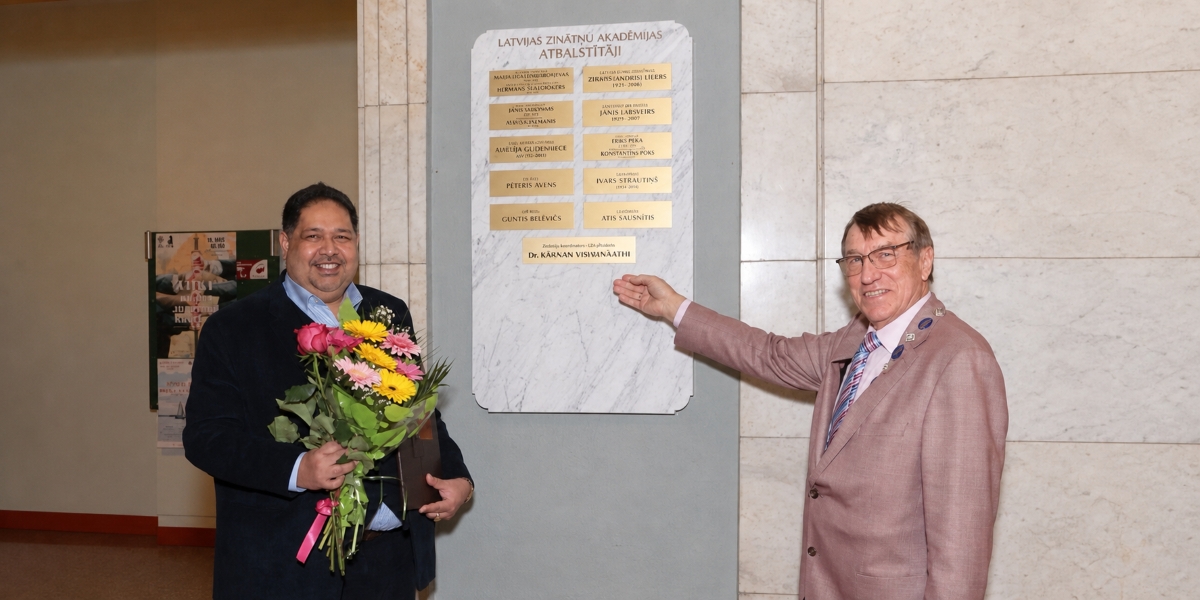
His efforts have now received an academic acknowledgment. Dr. Visvanats has been admitted as an Honorary Member of the Latvian Academy of Sciences, LZA, in Riga, in recognition of his reported contributions to research and development involving more affordable cancer medicines.

The honor adds international recognition to a career centered on making pharmaceutical innovation more accessible.

Where Pharmaceutical Research Meets Healthcare Access

Dr. Visvanats’ approach begins with a practical concern. Advanced medical treatments can remain out of reach for patients when their cost becomes prohibitive.

This challenge is especially significant in emerging markets, where healthcare systems and families can face substantial financial limitations. His work has therefore focused on developing pharmaceutical approaches that consider affordability as part of the innovation process.

Through Zoar Limited, Dr. Visvanats has pursued research involving targeted, natural extract-based therapeutics. His research portfolio reportedly includes 15 world patents for anti-cancer and anti-malarial treatment areas, reflecting his long-term involvement in pharmaceutical development.

A Broader Definition of Innovation

Rather than viewing pharmaceutical progress purely through the lens of scientific discovery, Dr. Visvanats has promoted a model in which accessibility becomes part of the definition of success.

His Mass Science philosophy is built around the idea that scientific advances should have the potential to benefit large populations. From research and development to manufacturing and distribution, each stage should ultimately contribute to making healthcare solutions more practical and accessible.

That perspective has become a defining part of his professional mission.

Why the Latvian Honor Matters

The decision by the Latvian Academy of Sciences to admit Dr. Visvanats as an Honorary Member recognizes his reported contributions to the development of lower-cost cancer medicines intended for emerging markets.

The distinction also reflects a relationship with Latvia that extends beyond this latest achievement.

Dr. Visvanats has been granted citizenship in Latvia and has developed connections throughout the country’s academic and scientific community. He serves as a Council Member and Director at the Institute of Economics of the Latvian Academy of Sciences and previously received an Honorary Doctorate in Economics from the Senate.

His involvement demonstrates an ongoing interest in bringing together academic research, industry, and international collaboration.

Photo Courtesy: Dr. Kanans Visvanats

A Permanent Recognition in Riga

The significance of the honorary membership is further highlighted by the reported placement of Dr. Visvanats’ name on a commemorative plaque inside the Academy of Sciences building in Riga.

According to Dr. Visvanats, only a small number of distinguished figures have previously been represented on the plaque throughout the Academy’s history.

The recognition has therefore become both a professional milestone and a lasting symbol of his connection with Latvia’s scientific community.

Keeping the Focus on Patients

Despite the significance of the honor, Dr. Visvanats’ attention remains directed toward the broader healthcare challenge.

His work is rooted in the belief that pharmaceutical research should ultimately translate into meaningful benefits for patients. That requires more than developing new compounds or securing intellectual property. It also requires finding ways to manufacture and deliver treatments in markets where affordability can influence whether patients receive care.

This patient-centered perspective continues to influence his work with Zoar Limited and his wider international collaborations.

A Mission That Continues

The honorary membership of the Latvian Academy of Sciences represents an important recognition of Dr. Kanans Visvanats’ contribution to pharmaceutical research and healthcare accessibility.

As he continues working across research, industry, and international academic networks, his focus remains on developing approaches that may help address the global demand for more affordable medical treatment.

His career reflects a growing understanding within healthcare that innovation can become more meaningful when it reaches beyond the laboratory. For Dr. Visvanats, the next chapter is therefore not simply about creating new solutions, but about expanding the possibility that those solutions can reach more people who need them.

More information about Dr. Kanans Visvanats and his work is available at DKV World.